This Week In My Classes: Writing and Talking

escher12“‘It’s the season when the s–t hits the fan,” I observed to the students in my Intro class on Monday. And that’s the truth for all of us: from this point on in the semester, if we want to stay in control it’s all about setting priorities, managing time, and getting things done. For this class in particular, this week they turn in the first fairly heavily weighted essay (they’ve already done two short warm-up assignments, for practice and to clarify expectations). Today they brought in drafts and did a peer-editing exercise. I was pleased that everyone seemed to be taking it seriously. As I told them several times, even professional writers have editors, and editing is a crucial part of the writing process. I think it’s also interesting for them to see how their classmates have approached the same assignment. Sometimes it seems that students believe there’s One Right Way and if only they could guess what it is they could get one of those magical A things, but of course there isn’t, and that’s exactly what makes this kind of work both challenging and interesting. In any case, even those who might think they got little out of the workshop itself will benefit from having almost three more days to review and revise their own essay. I hope they take advantage of it!

The essay they’re working on is a comparative one on Night and The Road. This wraps up our mini-unit on horror and despair. Friday we start on A Room of One’s Own, which we’ll follow up with Unless: I was very pleased with this pairing last year, despite some fretting about the particular challenges of teaching feminism, and I hope it works as well again this time around.

In Women & Detective Fiction, we’re part way through our discussions of Sara Paretsky’s Indemnity Only. Discussion was so sluggish on Monday that I left class feeling quite fed up with everything! I even came up with a cunning plan for today in case I had the same pulling teeth sensation and decided drastic measures were called for … but they weren’t, which is definitely the happier outcome of the two. Still, there is a much larger cohort of non-talkers in this group than I’m used to in a seminar, which is an ongoing frustration. I have long had an explicit policy of not doing cold-calling in seminars: there are incentives built in for participation, and usually that’s enough even for quite shy students. Also (despite what some people may think) I go out of my way to be receptive and respectful: I hope students feel that when they do contribute to discussion, they are listened to and encouraged. I suppose that being really listened to may itself be a bit intimidating!

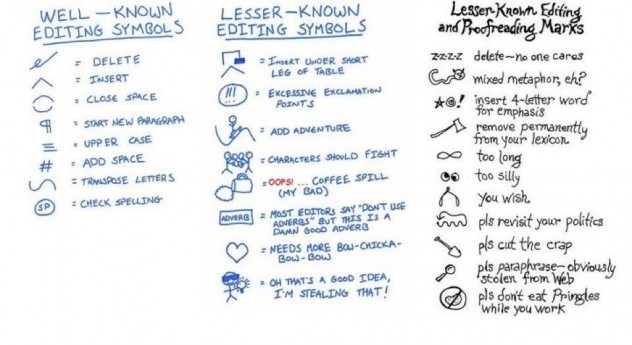
In this class too, deadlines are looming: they will be submitting paper proposals next week, so if I’m smart I’ll mark the first-year papers very promptly so I don’t have two sets of assignments on my conscience. The past couple of weeks have been very busy with administrative work, but after this Friday the schedule of meetings will lighten up, which will help me keep my mind on these tasks. I’ve also more or less completed two short-ish writing projects I agreed to do for a website being created by the British Library (I’m pretty excited about being involved with something for them!). They were harder than I expected, but also interesting. I was actually working on one of them last night, and as I struggled to fit in all the parts I wanted while not going too wildly over the proposed word limit, I felt a real kinship with my students, out there somewhere laboring over the drafts of their essays! I don’t know if it means anything to them, but I often mention in class now that I too have writing deadlines and challenges and editors. I even pass on little tricks I’ve developed that help me work through the frustrations of producing that “shitty first draft” — putting stuff I’m not happy with in different colored fonts, or surrounding it with XXX’s, or including editorial questions to myself in brackets, for instance, all of which frees me (at least a little) from thinking that because it’s not perfect yet I shouldn’t move on to write the next part. I know that for me it has been helpful to realize that I’m surrounded by writing that did not in fact magically appear in all its current erudition and elegance but had to be done by someone, worked on by someone, edited by someone … In our own ways, we’re all in this together, just trying to put words in the right order and contribute to the big, disorderly, kaleidoscopic conversation about literature!

“For Myself Only”: Elena Ferrante, The Story of a New Name

ferranteI’m glad I kept going with Elena Ferrante’s Neapolitan trilogy. I wasn’t bowled over by My Brilliant Friend: I described myself as interested but not emotionally gripped. To some extent, I felt the same about The Story of a New Name, but now I’m more interested: having spent this much more time with the characters, I’ve caught the “I want to know how this all turns out” bug.

This second book takes the central characters, friends (and antagonists) Elena and Lila, through the first phases of their lives as young adults. For Lila, this means through the years of her marriage to Stefano Carracci. There’s a literal but also a symbolic way in which her transformation into “Signora Carracci” is the source of the novel’s title:  it’s the story of her experiences as a young married woman, but also the story of her ceaseless struggle to retain control of her identity. A crucial sequence involves her remaking an enlargement of her wedding photo — made to use as a promotional image for the shoe line she has helped create. When she’s finished with it, Elena realizes, Lila has managed “to erase herself”:

With the black paper, with the green and purple circles that Lila drew around certain parts of her body, with the blood-red lines with which she sliced and said she was slicing it, she completed her own self-destruction in an image, presented to the eyes of all in the space bought by the Solaras to display and sell her shoes.

This act of paradoxically simultaneous construction and destruction is characteristic of Lila’s energy, which seems always to be at once positive and dangerous. Somehow she is more fiercely herself the more she rejects, repels, or opposes attempts to name her or in any way fix who she is. Later, watching Lila deliberately slicing at the bonds of her stifling and violent marriage, Elena remembers “what she had done to the wedding-dress photograph” and thinks that now “she is behaving in the same way  . . . with the very person of Signora Carracci,” trying “to tear off her condition of wife.” Later still, when Lila has left her husband and imagines that she is starting over, “she was again fascinated . . . by erasing herself.”

In contrast, over the same period Elena is resolutely creating herself, determined to “live for myself only”:

In the past there had been Lila, a continuous happy detour into surprising lands. Now everything I was I wanted to get from myself.

Elena ended My Brilliant Friend despairing that she might never find a way out of the grimly claustrophobic neighborhood of her childhood, and her path is certainly not a straight or easy one. Even as she moves on from high school to college, she feels she cannot escape her upbringing, which — through her accent as well as her ignorance of more sophisticated mores — marks her as a misfit in the more cosmopolitan circles she enters:

I arrived at the university very timid and awkward. I immediately recognized that I spoke a bookish Italian that at times was almost absurd . . . I began to struggle to correct myself. I knew almost nothing about etiquette, I spoke in a loud voice, I chewed noisily; I became aware of other people’s embarrassment and tried to restrain myself.

Gradually, she learns to speak and act like someone who belongs, particularly by downplaying the very intellectual abilities that made her move possible in the first place: “by never appearing arrogant, by being ironic about my ignorance, by pretending to be surprised at my good results.”  She becomes a promising student, gets involved with a well-to-do but militantly Communist boyfriend who takes her to Paris and thus expands her mental horizons as well as her literal ones. Then she takes another step: she begins to write about her life, in a novel, which is immediately accepted for publication. Elena feels, understandably, “very pleased with myself.” Surely this proves that she has an identity of her own, one that will carry her away from her past. But this, too, is not so simple, for no sooner has she written herself into her new existence than she comes across an old manuscript of Lila’s, a story called “The Blue Fairy” that Elena had admired so devotedly as a child. On Lila’s behalf, she had given the story to their teacher, her mentor, Maestra Oliviero, who had never returned it. But there it is among her papers, the pages “full of her wonderful, goods, very goods.” Elena rereads “The Blue Fairy” and discovers that once again, her life and Lila’s are entangled:

Lila’s childish pages were the secret heart of my book. Anyone who wanted to know what gave it warmth and what the origin was of the strong but invisible thread that joined the sentences would have had to go back to that child’s packet, ten notebook pages, the rusty pin, the brightly colored cover, the title, and not even a signature.

No signature: again, Lila has cut herself out, but Elena can no longer imagine that she is the sole author of her own identity.

The interplay of their two characters and stories is intricately developed, and Lila is a fuller presence here because a significant section of Elena’s narrative draws on Lila’s notebooks to present events more or less from her point of view. The emotional intensity of their lives is probably the quality of the novels that strikes me the most . . . and yet, as before, I’m not myself emotionally gripped. The prose itself has a somewhat flat affect: this may be the effect of the translation, of course, but I’m almost tempted to call it plodding: one thing after another is recounted, with no conspicuous change in register. I’ve been reading some of the reviews I linked to last time, trying to see what I’m missing. James Wood’s description of My Brilliant Friend is disconcertingly unlike my own experience of the book: he calls it “beautiful and delicate,” for instance, when I would have said it is ruthless and raw; he calls it “amiably peopled” and thus makes me wonder if he met the same people in it that I did (find me one “amiable” character!); he talks about the “joy in the book not easily found in [Ferrante’s] earlier work.” If My Brilliant Friend is joyful by comparison, I’m not sure I’m up to reading the earlier books! Catherine Morris’s discussion in the TLS comes much closer to what I thought about the novels, and she helped me appreciate what she calls Ferrante’s “forensic attention to psychological states.” But she likes the flat writing style more than I do: “Scenes of high emotion . . .  are all the more powerful for being simply rendered.” Morris praises Ferrante’s “doggedness in unearthing – and fearlessness in articulating – thoughts that usually remain unspoken.” Ivan Kreilkamp’s essay on Ferrante in the LARB is called “A Rage That Had No End.” I wonder if the critical enthusiasm for these novels is connected to the current anxiety about niceness in female characters: is anger the new obligation of the “serious” woman writer, or the new touchstone for critics of women’s writing? Claire Messud’s much-hyped The Woman Upstairs was also all anger, all the time: I found it tedious, and also not all that innovative (Charlotte Brontë was doing anger a long time ago, after all).

That said, I’ve spoken out myself in favor of books, writers, and characters who are interesting: that isn’t everything I look for in a novel, but it’s a lot (and a lot better than boring, that’s for sure). When the third volume in the triology comes out, I’ll definitely read it.

The First Ever Novel Readings Book Giveaway!

When I put up my last post, I realized that it was #899 – making this my 900th post at Novel Readings. That seemed like a milestone that ought to be recognized with something a bit out of the ordinary! But what? As I was musing about options, I remembered that not long ago I had contemplated holding a book giveaway for my anthology, The Victorian Art of Fiction, to put a more positive spin on its rather sluggish sales. (OK, “sluggish” is putting it nicely: my last royalty statement shows it selling -3 copies in Canada!) Clearly this is the perfect opportunity for just such a special event. It can also double as my way of celebrating World Book Day!

WP_20140306_002

Lest the sorry story of my book’s recent sales makes you skeptical that you even want a free copy, let me tell you just a little bit about it. (You can also read more about it at Wuthering Expectations, where once upon a time it was the book of the week!) It’s actually the project I was working on in 2007 during the same sabbatical that I launched this blog, making it the perfect prize for this occasion. (The first person to joke that “second prize is two copies” is banned from Novel Readings forever.)  I had been reading quite a lot of Victorian essays about and reviews of fiction — partly because I was asking questions about the kind of criticism we do and how it sometimes seemed to me to fit the primary sources uncomfortably. I wanted to get a better sense of the contemporary conversation into which the Victorian novels actually emerged. I found this material fascinating but also diffuse, and I thought a collection of the choicest examples would be a nice thing to make available, for interested readers as well as for students and teachers of the history of criticism; happily, Broadview Press agreed.

My introduction to the volume that resulted sums up some key themes across the various readings as well as what seemed to me some notable and thought-provoking differences between the way they did criticism then and the way we do it now. But the real fun is in the essays themselves. There are some that are canonical (as far as that concept can even be applied to 19th-century essays about the novel): George Eliot’s “Silly Novels By Lady Novelists,” for instance, and Henry James’s “The Art of Fiction.” There are some by writers whose names are certainly familiar to readers of Victorian fiction: Margaret Oliphant’s “Modern Novelists – Great and Small,” or Anthony Trollope’s “Novel Reading.” There are some by people who, though not widely known today, were major critical or intellectual figures at the time: David Masson’s “Thackeray and Dickens” or Walter Bagehot’s “The Novels of George Eliot.” There are essays on “lady novelists,” sensation fiction, and the morality of fiction; there are discussions of Jane Austen and Charlotte Brontë by writers including George Henry Lewes and Leslie Stephen. The essays are perceptive, idiosyncratic, sometimes puzzling, often surprising, and occasionally profound. Above all, they reflect a common conviction that fiction is an art form worth talking about, which is a feeling I think is likely to be shared by anyone stopping by a blog called Novel Readings.

So here’s the plan. If you’d like a chance at a free copy of this elegant, entertaining, and edifying volume, just say so in the comments below, in the next 24 hours (it’s 10:00 a.m. Atlantic time here in frosty Halifax, so that will be the cut-off time tomorrow). As an extra incentive, I will also include a pretty bookmark in an appropriately bookish pattern made by a local paper artist! Then I’ll put all (both? the only?) names in a hat and Maddie will draw out one winner. I’ll identify the winner in the comments and invite him or her to contact me by email to sort out mailing information. (With regret, after looking at international shipping rates on Canada Post, I do have to limit this offer to US, Canadian, and UK addresses only. Maybe for my 1000th post I’ll go completely global.)

I hope someone is interested. If it turns out that I can’t even give copies of the book away, just think how depressed I’ll be: what could be sadder than so much ardent labour all in vain? And so, as James says in the exuberant conclusion to “The Art of Fiction,” go in!

UPDATE: It’s heartening to see so much interest in the book! I wish I could send everyone a copy – but I can’t. The ‘contest’ is now closed. I promised Maddie she could do the actual drawing, so it will have to wait until after work. Then I’ll make the big announcement of the winner. Thanks to everyone for joining in!

AND THE WINNER IS …

This Week In My Classes: Marching Along

February break is only a memory now: even this short distance into March, it feels as if we’re hurtling towards the end of term. I usually find this an invigorating time in my classes, as all the ‘getting to know you’ stuff is over, we’ve developed some routines and, ideally, some rapport in the classroom, and we’re far enough along in the material that usually students’ confidence for engagement is greater.

I’m not feeling quite this surge this term. One reason is that the attendance in my Introduction to Prose and Fiction section has not been … robust. I’m trying not to take it personally; it helps that I’m hearing plenty of anecdata suggesting that absenteeism is a conspicuous issue for my colleagues and maybe more broadly around campus these days (“I’m glad it’s not just me,” said yet another colleague as we chatted about this on the stairs on Friday). I have been speculating that a discussion-based class might seem particularly expendable to students because of the excessively results-oriented culture they are currently steeped in: if they aren’t intrinsically drawn to the material (which is likely, in a course often taken to fulfill a requirement) and the results of attending (or not) aren’t overtly quantifiable, other things might well take priority. Naturally, I think that’s a shame: one day they may look back and realize that they missed a fairly rare (and potentially transformative) opportunity to get involved in a conversation with at least one person guaranteed to be “listening very intently to everything” they say. But who knows: maybe I (inevitably, egotistically) overestimate the value of spending that time in the room with me following my lesson plan! I have tried hard in recent years to make quite explicit the ways I see our classroom work feeding into the assignments on which they will be evaluated (and the skills and objectives both of these aspects of the course serve). But if they don’t see the pay-off  (or they aren’t even present to hear the peroration) and don’t care about the discussion for its own sake, there’s not much more I can do. Once again the gym analogy seems apt.

road

For those Intro students who are coming to class, we’re working our way through The Road. I put a lot of work in preparing materials when I taught it for the first time last winter, so it’s nice to have a file of ideas and notes and handouts to draw on this time around, and to feel more certain what are useful lines of inquiry. For tomorrow’s class, where we’ll be focusing on McCarthy’s style, one of the most useful resources I have is my own blog post from last year, in which I asked (not disingenuously) whether McCarthy is a terrible writer – working through the post and then keeping up with the discussion that ensued was very stimulating, and as I’ve been rereading the book this year I’ve kept trying to figure out if there’s any way to answer the question more confidently than I could then. I’m still not sure, but I will say that on this rereading I’m taking what I can only describe as a tactile pleasure in his writing: I pause to read individual words or phrases out loud and enjoy their crunkly feeling, their resistance to easy reading — “rachitic,” “gryke,” “kerfs,” “claggy” — or, more rarely, their rhythmic poetry: “Borrowed time and borrowed world and borrowed eyes with which to sorrow it.” I also found, a bit to my surprise, that having spent more time intellectualizing the novel has not distanced me from it: rereading the final section this afternoon I found myself weeping uncontrollably. As I remarked on Twitter, I realize that crying over the book does nothing to settle the question of whether McCarthy’s a “good” writer. I wonder what value, if any, does attach to this kind of visceral response. There’s a way in which being moved to tears by a book is inarguable proof of at least something — but is it something about the reader or something about the book? It’s about the connection between reader and book, I suppose, that mysterious alchemical combination by which language becomes meaning and feeling of a particular, and sometimes particularly personal, kind. I value that kind of emotional connection: surely you would hardly choose to specialize in Victorian literature if you didn’t! But at least when I’m wearing my ‘professor’ hat I try to retain some skepticism about it too. Just because you can make me cry doesn’t make you right!

In my Women and Detective Fiction seminar, I’ve also been fretting a bit, not so much about attendance (though this group has not been as reliably present as I am used to in upper-level seminars) as about participation. Last week’s classes were pretty sluggish. But yesterday there was an up-tick in energy, so for now I have deferred my cunning plan to use some of the strategies I’m more accustomed to deploying in lower level classes: “think-pair-share” exercises, break-out groups, and so on. We are currently reading Sue Grafton’s ‘A’ is for Alibi: I had the sense on Friday that they mostly hadn’t even tried to do more than just read it, and I wonder if at first they were lulled into passivity by the fast-paced prose and suspenseful plot and forget to apply the critical frameworks we’ve been developing. By tomorrow we’ll have read to the end, so I expect we’ll talk a lot about [spoiler alert!] what it means that Kinsey turns out to have been sleeping with not just a suspect but one of the murderers: the novel raises all kinds of interesting questions about the temptations and risks of submission and the ways sexual desire can undermine a principled commitment to independence. The novel focuses especially on sexual politics as played out in marriage, but Kinsey’s role as a detective also prompts us to consider how these “private” issues intersect with wider questions of justice and accountability. I haven’t taught Grafton in a while and I’ve appreciated getting reacquainted with her tongue-in-cheek approach to the genre. I kept up with the series for a long time, but my interest in it has flagged over the years, partly because the humor that keeps this first one so fresh gives way to a much more sententious style. I should probably hunt up the latest ones just to see where things have gone. We start Indemnity Only next week and at this point I’m one Sara Paretsky behind as well.

Open Letters Monthly, March 2014

b_j__novak

The March issue is up! Please come on over and take a look. And while you’re there, wish us a happy birthday: now we are seven! In internet years, I think that’s about eighty, but all in all we’re still feeling pretty spry. We didn’t do a special birthday issue this time, but for our fifth anniversary, in 2012, we put out our Criticism issue, which I still think is one of the best we’ve ever done.

In case I haven’t said this often enough, we are always keen to work with new contributors, so if you have ideas for essays or reviews, just get in touch with me and we can confer! One of my favorite things about Open Letters is that we aren’t constrained to the newest, shiniest literary things but also relish pieces for our ‘Second Glance‘ or ‘Absent Friends‘ features. Basically, if you want to follow your (reading) bliss and are willing to expose yourself to the editing process we fondly call “the shark tank,” we’re interested.

But if you just like to read what we put up every month — or much more often, if you also consider Steve’s astonishing output at Open Letters Weekly and the regular posts from our four affiliated blogs, including this one — do help us get the word out by sharing links with your friends. Finally, if you really like us, consider contributing a little through our PayPal button to help cover our operating costs.

Philip Gourevitch, We Wish to Inform You That Tomorrow We Will Be Killed With Our Families

gourevitchA couple of weeks ago I mentioned that I had been reading an excerpt from Gourevitch’s book with my Intro class (his first chapter is included in our reader). I was particularly struck by his comments about the awkwardness but also, in his view, the necessity of “looking closely into Rwanda’s stories.” His argument is that “ignoring them makes me even more uncomfortable about existence and my place in it”; when, reading Wave, I was worrying about the morbid voyeurism of contemplating other people’s tragedies, this line echoed in my head, as it implies that what we ought to feel uncomfortable about is looking away.

Another part of our excerpt that lingered, and which became especially resonant as we began our discussions of Elie Wiesel’s Night, is this one:

I had never been among the dead before. What to do? Look? Yes, I wanted to see them, I suppose; I had come to see them — the dead had been left at Nyarubuye for memorial purposes — and there they were, so intimately exposed. I didn’t need to see them. I already knew, and believed, what had happened in Rwanda. Yet looking at the buildings and the bodies, and hearing the silence of the place, with the grand Italianate basilica standing there deserted, and beds of exquisite, decadent, death-fertilized flowers blooming over the corpses, it was still strangely unimaginable. I mean one still had to imagine it.

“One still had to imagine it”: how can this be, if you already know and believe — if you’re looking right at the terrible evidence? It’s not so much that it happened that he can’t comprehend as how and why. (“How many hacks to dismember a person?” “What is required above all is that they want their victims dead. They have to want it so badly that they consider it a necessity.”) And yet even the remains of the dead (“the strange tranquility of their rude exposure”) are not really enough to make their bleak reality real to him: “I wondered whether I could really see what I was seeing while I saw it.” Disbelief and the inability to imagine: it’s against these forces that a book like Night, or a book like this one, is written.

Now that I’ve read all of Gourevitch’s book, I appreciate the grim sensitivity he brings to his task of telling us (as his subtitle says) “stories from Rwanda.” He doesn’t undertake to explain the genocide: “nothing really explains that,” he says bluntly. That doesn’t mean he presents his stories without context: more of the book than I expected, actually, is devoted to the history and politics of Rwanda and its neighbors, and to the culture of “authority and compliance” that contributed both to the genocide and, later, to the country’s restoration (“you put in a new message, and — presto! — revolutionary change”). Gourevitch is particularly specific and scathing about the failings of international intervention before and during the genocide, and the horribly, perhaps cynically, misguided provision of “aid” to the refugee génocidaires after: “This was one of the great mysteries of the war about the genocide: how, time and again, international sympathy placed itself at the ready service of Hutu Power’s lies.” I read Roméo Dallaire’s Shake Hands with the Devil not long after it came out in 2003, and remember being just as outraged and bewildered then at the complete and utter disaster that the UN mission to Rwanda became. Gourevitch’s style tends towards understatement: he lays out what he sees and hears and often leaves the implications unstated, which is usually effective because the extremities he depicts require little glossing, while the quandaries he exposes defy complacent editorializing. When he shows himself, however, it’s often with a lash or sting, as when he recalls looking at newspaper photos of Rwandan genocide victims while lined up to visit the U.S. Holocaust Memorial Museum:

Looking up from the paper, I saw a group of museum staffers arriving for work. On their maroon blazers, several wore the lapel buttons that sold for a dollar each in the museum shop, inscribed with the slogans “Remember” and “Never again.” The museum was just a year old; at its inaugural ceremony, President Clinton had described it as an “investment in a secure future against whatever insanity lurks ahead.” Apparently all he meant was that the victims of future exterminations could now die knowing that a shrine already existed in Washington where their suffering might be commemorated, but at the time, his meaning seemed to carry a bolder promise.

Dallaire, Gourevitch reminds us, “declared that with just five thousand well-equipped soldiers and a free hand to fight Hutu Power, he could bring the genocide to a rapid halt. No military analyst whom I’ve heard of,” Gourevitch goes on, “has ever questioned his judgment, and a great many have confirmed it.” But instead the UN force was cut by 90% and almost all they could do was look on. “The West’s post-Holocaust pledge that genocide would never again be tolerated,” Gourevitch concludes,

proved to be hollow, and for all the fine sentiments inspired by the memory of Auschwitz, the problem remains that denouncing evil is a far cry from doing good.

But though reminders of these hollow promises recur throughout the book (and the epigraphs from the final section are taken from Primo Levi’s Survival in Auschwitz and The Drowned and the Saved), We Wish to Inform You is not a polemic but an extension of the instinct Gourevitch describes in that first chapter: “to look a bit more closely.” “I couldn’t settle on any meaningful response,” he tells us;

revulsion, alarm, sorrow, grief, shame, incomprehension, sure, but nothing truly meaningful. I just looked, and I took photographs, because I wondered whether I could really see what I was seeing while I saw it, and I wanted also an excuse to look a bit more closely.

Looking closely does not mean turning the victims of the genocide into a spectacle: We Wish to Inform You is not “disaster porn.” Gourevitch is self-conscious about the problem of aestheticizing violence. He wonders at one point, explaining about his own resistance to seeing the dead at Nyarubuye, “does the spectacle really serve our understanding of the wrong?” or does it cause us to “become inured to — not informed by — what we are seeing”? As far as is possible with a subject like his, in fact, Gourevitch spares us specific horrors. We hear a lot about “killings,” but mostly get the general idea (machetes, shootings) rather than detailed rehearsals of exactly what, exactly how. The scale of killing is overwhelming, so he makes it at once personal and comprehensible by attaching us to a few specific individuals, survivors whose experiences are not held up as representative but only as examples of shocking, inexplicable loss but also good fortune — for after all, the people he talks to are all survivors (“to those who were targeted, it was not death but life that seemed an accident of faith”).  When we do learn of particular deaths, they thus have the traumatic force they might lose in any attempt to give a more comprehensive chronicle. In Kigali, Gourevitch encounters Edmond Mrugamba, who “invited me to join him for a visit to the latrine into which his sister and her family had been thrown.” They walk around the house to the holes, “neat, deep, machine-dug wells”:

 Edmond grabbed hold of a bush, leaned out over the holes, and said, “You can see the tibias.” I did as he did, and saw the bones.

“Fourteen meters deep,” Edmond said. He told me that his brother-in-law had been a fanatically religious man, and on April 12, 1994, when he was stopped by interahamwe at a road-block down the street and forced to lead them back to his house, he had persuaded the killers to let him pray. Edmond’s brother-in-law had prayed for half an hour. Then he told the militiamen that he didn’t want his family dismembered, so they invited him to throw his children down the latrine wells alive, and he did. Then Edmond’s sister and his brother-in-law were thrown in on top.

This story alone is devastating enough that it is indeed unimaginable that such inhumane things happened on the scale that we know them to have happened: the mind recoils. It’s also inconceivable that so many outsiders could so blithely have urged reconciliation. “It’s offensive,” says Edmond, standing by the latrine that became his family’s grave. “Imagine talking to Jews of reconciliation in 1946.” Nonetheless, uneasily, improbably, often violently, the people of Rwanda — the survivors and the genocidal killers — began the transition to being neighbors, colleagues, and citizens again. Describing the return of thousands of Hutu refugees to the communities they ravaged and then fled, Gourevitch observes,

Never before in modern memory had a people who slaughtered another people, or in whose name the slaughter was carried out, been expected to live with the remainder of the people that was slaughtered, completely intermingled, in the same tiny communities, as one cohesive national society.

That too seems unimaginable, even as it is also, in some sense, clearly necessary, and much of Gourevitch’s book addresses the moral chaos of this world in which “true justice” is impossible.

Gourevitch ends on a cautiously optimistic note. “Power consists,” he says early on, “in the ability to make others inhabit your story of their reality”; later, he reiterates the importance of “how we imagine ourselves and of how others imagine us.”  An effort of imagination, then — an effort to tell a different story, to insist on a different version of reality — is the best, or at least the only meaningful, resistance. We Wish to Inform You is full of failures to resist in this way, from those Rwandans who accepted the Hutu Power narratives of antagonistic identities and hatreds to the outsiders who envisioned “the Rwandan catastrophe … as a kind of natural disaster — Hutus and Tutsis simply doing what their natures dictated, and killing each other.” Gourevitch’s final story from Rwanda is not a happy one. At a boarding school in 1997, seventeen schoolgirls, faced with Hutu Power militants, refused to identify themselves or each other as Hutu or Tutsi and thus as enemies. It would be nice if their show of solidarity had won over the génocidaires, but in fact their refusal to discriminate caused them to be “beaten and shot indiscriminately.” Seventeen of them died. But in rejecting the militants’ reality, they stood up courageously for their own, and their world was one of friendship, not hate. Imagine that.

February Break(down) Posticle

IcebergIt’s odd how it sometimes seems I need to break the ice on my own blog — but as I’m sure other bloggers can attest, leave a blog alone for long enough (which in my experience needn’t even be very long) and it starts to loom imposingly and inhospitably across the horizon of one’s other activities. How can this be — why should this be — when blogging is something I do wholly voluntarily? It’s possible, actually, that its gratuitousness adds to the difficulty: there’s no obligation, no accountability — and so when you fall into a slump, there’s no external pressure to get on with it. There’s just, at least in my case, an uncomfortable feeling of disappointment in myself that, as the days go by, becomes a self-defeating conviction that when — if — I ever post something again, it had better be good!

In my defense, it has’t really been that long. Also, it is our February break from classes, and so I’ve been doing other writing, which often leaves me mentally lazy by the end of the day. It hasn’t helped that I’m struggling much more than expected with what I thought would be a fairly straightforward writing project, so when I stop working I feel little sense of accomplishment, only bemused frustration. I’ve also (and I know from Twitter that I’m not alone!) been rather in the doldrums. It’s partly because of this dreary winter, which just makes everything harder to do; it’s partly because I’ve fallen prey to a bad case of what I think of as ‘Salieri Syndrome’ (I’m guessing the symptoms are familiar to all aspiring writers but perhaps especially those who spend a lot of time online); it’s partly that I worked for several days preparing a public talk that apparently wasn’t of much public interest, which was both anticlimactic and a bit demoralizing; and it’s partly that — probably because for a few years now my center of intellectual gravity has been tilted away from my academic colleagues and department — I’ve been feeling somewhat adrift and even unmotivated at work. I’ve actually started dreaming about retirement, which isn’t necessarily a good thing as it will be many years (18, but who’s counting?) before I reach retirement age and even then it isn’t clear I will be able to realize my dream of finally moving back to Vancouver. (And as far as that goes, I seem to have regressed significantly since the progress I had made towards reconciling myself to Halifax.)

I don’t need anyone to tell me how lucky I actually am and that this is all hardly the stuff of great tragedy. I know!  But it’s been enough to make me feel kind of blah, and during this break I’ve chosen to hunker down and read or watch TV and just try to be cozy while I have the chance. Classes start up again Monday and from that point on we will hurtle unrelentingly towards the end of term. There won’t be time for moping!

And actually I’ve about had enough with moping in any case, while as far as this blog goes, I’ve decided to forget about good and settle for posted. Then perhaps I’ll get my momentum back. So here’s my own version of the much-loathed (including by me) “listicle” — a “posticle” of things I have almost but (obviously) not actually posted about in the past week or so.

  1. Attendance. This was going to be the next entry in my “This Week In My Classes” series but every time I turned to it, it turned into a rant and I didn’t really want to stir up that kind of negative energy. Seriously, though, what’s up with students not coming to class, and especially with the accelerating trend of students leaving early for and returning late from scheduled breaks? I believe very strongly that you learn to be a critic by trading ideas with other readers (coduction!) and that in English classes we both exchange and analyze information and practice vital skills. So I take attendance seriously — and I also take it literally, every class meeting. Over the years I have used various policies to encourage students to attend regularly, from strict “every [unexcused] absence counts against your mark” versions to “there’s no explicit penalty for missing class but there are also no make-ups for graded in-class work.” I have tried being authoritarian, paternalistic, encouraging, or simply detached (“come or don’t come, it’s your choice — just don’t make it my problem”); I have even cited research (it is out there!) showing that good attendance is strongly correlated with success in a class. I try not to take it personally when, as last week in my Intro class, a whole mess of people just don’t show up … and yet, inevitably, I do take it personally, because I not only show up but work hard preparing for every precious hour we have together…oops. This is getting rant-like! Fellow teachers, what do you do about attendance?
  2. Books we “should” read. I spent a fair amount of my scarce mental energy this week imagining a response to the recent piece at The Millions urging us (tongue in cheek? surely!) to choose our next book to read for some pretty random reasons. Even assuming the author didn’t actually mean her suggestions, or at least not the silliest ones (“read the book that you find left behind in the airplane seat pocket”? “read the book whose main character has your first name”?) I wonder if there isn’t a better conversation to be had about whether there are any books we “should” read, or about how we pick and choose among the many books we could read, given just how many more books there are than we’ll ever have time to read (well, unless we’re Steve!). I wouldn’t want to rule out serendipity altogether, of course, but it seems pretty risky and, indeed, wasteful to follow around behind random strangers, see what makes them cry, and assume that is the best next option for me. They might be idiots! But I don’t find it much better to line up behind (most) reviewers either. When I’m not reading deliberately (for work or research or reviewing myself, that is) I tend to listen to other readers I trust, whose take on books I find sharp and interesting, whose taste I think I understand something about. Where there’s a good conversation, I usually expect to find good reading, or at least reading I won’t regret. I do also think, though, that depending on the relationship you want to have to literature, or the conversation you want to be part of, there probably are some books you should read. How do you choose your next book? Do you think there should be no “shoulds” in reading?
  3. Middlemarch on Toast. Actually, I think I do need to write this post, but it’s going to take me a while to do the reading and thinking for it. Ever since The Toast ran its My Life in Middlemarch book club I’ve been brooding puzzling thinking about why I felt so incapacitated by it. When I first heard about it, I thought it might create some synergy with my Middlemarch for Book Clubs site. It totally didn’t, and once it was underway I could see why not: by and large, the kinds of things I built into my site, including into its discussion questions, were not the things people were talking about at The Toast. There were plenty of sharp comments, and there was also plenty of enthusiasm, but somehow the conversation was in a different register, and it was mostly (eventually I’m going to do some statistical analysis!) about characters and motives, not about literary form, narration, history, philosophy… which is fine, of course: people should (there’s that word again) talk about what interests them in a book (“to start with,” says the irrepressible teacher in me). I wasn’t very familiar with The Toast before they did this, and what I’ve seen of it since suggests that it aims for a certain hip insouciance. So I should not necessarily take away any lessons from this about how to revise my own materials. Or should I? The number of people who want to chat at The Toast (like, apparently, the number of people who like the idea of choosing their next book from their neighbor’s trash can or something) is apparently  much higher than the number of people who want … oh dear, here comes Salieri again.
  4. Rules of Civility. I enjoyed reading this novel a lot. And yet, this is as much as I felt like writing about it. (But here’s an excellent review of it by Lisa Peet at Like Fire.)
  5. Farthing. I also mostly enjoyed reading this novel, and yet. (Jo Walton is a good example of a writer I picked up because so many other readers I’m interested in have mentioned her.)

OK, that’s the dam broken. It’s actually a relief to clear those topics out of the way, even though I still feel annoyed with myself for not having addressed each of them properly in turn in its own post. Now I’m reading We Wish to Inform You That Tomorrow We Will Be Killed With Our Families, which I mentioned as a pending interest in my post on Sonali Deraniyagala’s devastating memoir Wave. Then I’ve got Elena Ferrante’s The Story of a New Name lined up; it’s the sequel to My Brilliant Friend. In class Monday we’re picking up with Night in Intro and An Unsuitable Job for a Woman in Women & Detective Fiction (Dorian’s probing post has helped rekindle my interest in it). My book club, which met last week to discuss This Rough Magic, is following Amateur Reader’s advice and reading The Murderess for next month. It seems impossible that with so much interesting material around, I won’t be blogging up a storm. We’ll see, anyway.

“A Continuous Game of Exchanges and Reversals”: Elena Ferrante, My Brilliant Friend

brilliant-friendElena Ferrante’s My Brilliant Friend, the first in her trilogy of ‘Neapolitan novels,’ tells of the childhood and adolescence of two friends, Elena and Lila, living in a rough edge of Naples in the 1950s. This is not the familiar Brit. Lit. Italy of balmy escapism or emotional liberation. “I feel no nostalgia for our childhood,” Elena reports:

it was full of violence. Every sort of thing happened, at home and outside, every day, but I don’t recall ever having thought that the life we had there was particularly bad. Life was like that, that’s all, we grew up with the duty to make it difficult for others before they made it difficult for us. . . . The women fought among themselves even more than the men, they pulled each other’s hair, they hurt each other. To cause pain was a disease. As a child I imagined tiny, almost invisible animals that arrived in the neighborhood at night, they came from the ponds, from the abandoned train cars beyond the embankment, from the stinking grasses called fetienti, from the frogs, the salamanders, the flies, the rocks, the dust, and entered the water and the food and the air, making our mothers, our grandmothers as angry as starving dogs. They were more severely infected than the men, because while men were always getting furious, they calmed down in the end; women, who appeared to be silent, acquiescent, when they were angry flew into a rage that had no end.

 As the girls grow older, they gradually learn more about the histories — both personal and political — behind these daily hostilities. One of the big questions of the novel (though Elena doesn’t articulate it clearly for herself until near the end) is how, or even whether, it is possible to move beyond the intricate web of hatreds, obligations, and loyalties that entangle all the families in the neighborhood. What else is there? Where else is there to go? In an early escapade that comes to seem symbolic, Lila convinces Elena “to skip school, and cross the boundaries of the neighborhood.” “What was . . . beyond its well-known perimeter?” Elena wonders, as she lies awake the night before. They head out through the “shadowy light” of a tunnel, and Elena feels “joyfully open to the unknown.” But as they walk and walk down the road that they believe leads to the sea — past the “small snotty children” and the “fat man in an undershirt who … showed us his penis” — the adventure becomes tiring; they get hungry and thirsty, and then a thunder storm moves in, and they end up running, “blinded by the rain,” soaked, frightened, back towards home, where anger and beatings await.

For most of My Brilliant Friend it seemed obvious that the title referred to Lila. But near the end, it’s Lila who turns to Elena and says, “you’re my brilliant friend, you have to be the best of all, boys and girls.” It’s an important moment, because up to that point we have been given little idea what Lila thinks of Elena or why, from her perspective, they have been friends for so long. Naturally enough, given the novel’s point of view, we know a lot more about what Elena thinks about Lila, who is part muse, part rival, part antagonist. Yet Lila herself seemed oddly opaque to me: I couldn’t really understand her or her motivations, and I can’t tell if this is a problem with the novel or one of the points of the novel (the result, for instance, of Elena’s limitations, perhaps of her inability to see Lila except in relation to herself).

Throughout the novel there is a constant push and pull between the two friends, at least in Elena’s mind. Her incessant measurement of herself against Lila motivates her and shapes her response to her own life; even as they take different paths, it seems to her that they are playing some kind of zero-sum game, as if she can only flourish if Lila falters:

I traced lines between moments and events distant from one another, I established convergences and divergences. In that period it became a daily exercise: the better off I had been in Ischia, the worse off Lila had been in the desolation of the neighborhood; the more I had suffered upon leaving the island, the happier she had become. It was as if, because of an evil spell, the joy or sorrow of one required the sorrow or joy of the other; even our physical aspect, it seemed to me, shared in that swing. In Ischia I had felt beautiful . . . But Lila now had retaken the upper hand, satisfaction had magnified her beauty, while I, overwhelmed by schoolwork, exhausted by my frustrated love for Nino, was growing ugly again.

“What I lacked she had, and vice versa,” Elena reflects, “in a continuous game of exchanges and reversals that, now happily, now painfully, made us indispensable to each other.” Close as they are, the distance between them widens as they mature. Though as a child Lila excels at school, seemingly without effort, her family circumstances and her own aspirations turn her away from her education, and it’s her physical beauty (which has always set her apart) that makes her exceptional: “When you saw her, she gave off a glow that seemed a violent slap in the face of the poverty of the neighborhood.” Elena, in contrast, persists with her studies, even continuing to the high school in Naples. Lila dedicates herself to the family business and eventually becomes engaged to someone who can finance her ambition to transform it from a simple cobbler’s shop to a  high-end artisanal footwear company. Elena dreams of being a writer — and, as always, holds herself up against Lila and feels inadequate:

she would start talking about . . . shoes, shoe factory, money, and I would slowly feel that the novels I read were pointless and that my life was bleak, along with the future, and what I would become: a fat pimply salesclerk in the stationery store across from the parish church, an old maid employee of the local government, sooner or later cross-eyed and lame.

Perhaps their two different paths both lead away not just from the poverty of their neighborhood and the brutality of their immediate families, but from the past that surrounds them all. After Lila’s engagement, Elena wonders at the way she and her fiancé decide to “rise . . . above the logic of the neighborhood”:

They were behaving in a way that wasn’t familiar even in the poems I studied in school, in the novels I read. I was puzzled. They weren’t reacting to the insults . . . They displayed kindness and politeness toward everyone, as if they were John and Jacqueline Kennedy visiting a neighborhood of indigents. . . . Was this her latest invention? Did she want to leave the neighborhood by staying in the neighborhood? Did she want to drag us out of ourselves, tear off the old skin and put on a new one, suitable for what she was inventing?

But Lila’s path is not an escape route after all: though she marries well, as the novel ends Elena looks at her brilliant friend and sees that Lila is, in fact, trapped:

As a child I had looked to her, to her progress, to learn how to escape my mother. I had been mistaken. Lila had remained there, chained in a glaring way to that world, from which she imagined she had taken the best. And the best was that young man, that marriage, that celebration, the game of shoes for Rino and her father. . . . I should take note, I thought: not even Lila, in spite of everything, has managed to escape from my mother’s world.

But “I have to,” Elena realizes; “I can’t be acquiescent any longer.” If she wants a different life she has to embrace her own alienation from those she has grown up with. She sees how — through her education, through her writing — but even as she grasps at the possibility, it seems to elude her. Years before her teacher, Maestra Oliviero, pressed Elena to be ambitious for herself: “Do you know what the plebs are,” asks Maestro Oliviero;

“The plebs are quite a nasty thing.”

“Yes.”

“And if one wishes to remain a plebeian, he, his children, the children of his children deserve nothing. Forget [Lila] Cerullo and think of yourself.”

There at Lila’s wedding, she tries to do just that, but she meets instead with a disappointment that seems to her a sign that she has no higher destiny:

At that moment I knew what the plebs were, much more clearly than when, years earlier, she had asked me. The plebs were us. The plebs were that fight for food and wine, that quarrel over who should be served first and better, that dirty floor on which the waiters clattered back and forth, those increasingly vulgar toasts. The plebs were my mother, who had drunk wine and now was leaning against my father’s shoulder, while he, serious, laughed, his mouth gaping, at the sexual allusions of the metal dealer.

Elena is left feeling that her best is not good enough — that “studying was useless.” But though My Brilliant Friend ends on this dispiriting note, we know from the Prologue, which takes place many years later, that Elena does move on, while Lila “had never left Naples in her life.” And we also know that though, in their ongoing “game of exchanges and reversals,” it was Lila who was the better writer (or so Elena thought), the novel itself stands as Elena’s ultimate triumph: angry at her friend’s latest trick, “I turned on the computer and began to write — all the details of our story, everything that still remained in our memory.” What we don’t know is how she got away — these details of the story are presumably told in the sequel.

I found My Brilliant Friend very interesting, and yet I can’t decide how high a priority it is for me to read on in the series. As I tried to write about the novel, it seemed richer and more complicated in some ways than it had while I read it, yet I didn’t find myself emotionally gripped by it and I’m curious but not anxious to know what happens next. One issue was, as mentioned, Lila’s opacity, though the one thing we do know about her experience of the world — her occasional bouts of “dissolving boundaries” — made her less, rather than more, understandable to me. I also (and this may just be a failure of my reading, of course) had persistent trouble telling the other characters apart, especially the boys (eventually, the young men). Even when I looked them up in the Index of Characters, I could not summon up more than a perfunctory recollection of what was notable about them (except the thug-like Solara brothers). Is this, again, perhaps a feature rather than a failure of Ferrante’s characterization? Is the tendency of their lives to suppress their individuality? By the final chapter, I had Nino and Stefano straight, at least. On the plus side, there’s a wonderful particularity to Ferrante’s descriptions, and though words like “evocative” and “atmospheric” seem like reviewers’ clichés nowadays, they do seem apt for the way she conveys the sights and sounds of Lila and Elena’s gritty, turbulent environment. As a story of female friendship, My Brilliant Friend is perhaps also notable for its unsentimentality and the room it makes for jealousy (but not, refreshingly, romantic rivalry), anger, and ambition.

I know Liz has read My Brilliant Friend, because she very kindly sent me her copy: I’m eager to hear her thoughts about my mixed reaction, and also to hear from anyone else who has read this or any other of Ferrante’s novels. She’s getting a great deal of attention (e.g. here, here, here – I have not read these closely yet, as I have been trying to sort out some of my own thoughts first, and also fear spoilers about the second book, but I notice James Wood calls My Brilliant Friend “a large, captivating, amiably peopled bildungsroman,” at least one word of which takes me by surprise).

The Enchanted Island: Mary Stewart, This Rough Magic

stewartIt was very interesting reading This Rough Magic so soon after Jamaica Inn. My book club likes to follow a thread from one book to the next; we picked Stewart as another good example of vintage romantic suspense, and settled on This Rough Magic because it’s one of her most popular titles. We did better than we knew: This Rough Magic turns out to have more than genre in common with Jamaica Inn, for it too turns on secrets pursued in the dark of night, and on the threat and power of the sea. Both novels highlight close relationships in an isolated and, to our outsiders’ eyes, exotic community, and both writers spend a lot of time on the landscape that provides the setting for their characters’ adventures.

The juxtaposition was not really to Stewart’s advantage, though. Her novel seemed thin by comparison: her landscapes are picturesque but unlike du Maurier’s they do not evoke unfolding layers of character and plot; her story is simplistically suspenseful — it induces curiosity about how things will turn out — but not ingenious, twisty, or, again, layered; her people are deceptive on the surface but offer no surprises once they are known as good guys or bad guys. I enjoyed reading This Rough Magic, but it didn’t provoke me to much thought: unless I really missed something, it doesn’t have much “aboutness.”

This is not to say that there’s nothing notable about This Rough Magic. Most obvious is its saturation with allusions to The Tempest: there’s the title, of course, but also the epigraphs to every chapter are from the play, and a number of characters are named for it too. The novel is set on Corfu, and much is made of the possibility that the Greek island is the play’s “real” setting. It has been a long time since I knew much about The Tempest, so I could be wrong about this, but it didn’t seem to me that this material was being used more than decoratively — to create an atmosphere of otherworldly enchantment. It’s a highly theatrical novel, quite literally, as the heroine, Lucy Waring, is an aspiring actress and the nearby “Castello” has been rented out to Sir Julian Gale, a legendary actor whose mysterious ailment folds into the rest of the novel’s mysteries. They both have occasion to use their acting skills in service of the plot, but I didn’t see this as a thematically telling development except to the extent that in any mystery, a lot of people are “acting” parts that aren’t entirely their own.

Another notable feature of the novel is its attention to its literal setting. Stewart is clearly fascinated by a certain vision of Greece — and of Greeks, Greek men in particular. There’s actually a character named “Adonis,” for instance:

In a country where beauty among the young is a common-place, he was still striking. He had the fine Byzantine features, with the clear skin and huge, long-lashed eyes that one sees staring down from the walls of every church in Greece; the type which El Greco himself immortalised, and which still, recognisably, walks the streets. Not that this young man conformed in anything but the brilliant eyes and the hauntingly perfect structure of the face  . . .

Corfu

Stewart knows she and Lucy are trading in clichés and saves the moment by having Adonis himself wink at it: “It’s a bit much, isn’t it?” he says. But he and the rest of the Greek characters really do seem little more than types, and like the allusions to The Tempest, the details of local culture fill in the setting but add no particular meaning. They also feel somewhat touristy — that is, this is Greece for visitors that we’re seeing, with its quaint parades and stoic villagers and handsome young men and blue, blue water. I recognize it, because I was there once (that’s me on Corfu many years ago) and saw it much the same way. It’s a very beautiful place to look at (or let one’s imagination linger in), but This Rough Magic is not a novel about Greece in any meaningful way. Not that there’s anything wrong with that! But I wonder if I could convince my book club to read Zorba the Greek next.

The other really memorable thing about This Rough Magic is the dolphin. I think maybe the dolphin is the reason the novel needs The Tempest — and Corfu, for that matter. Corfu makes the dolphin plausible, but  The Tempest allows the dolphin to be magical.

“All the birds in the world should be dead”: Sonali Deraniyagala, Wave

wave-coverWave is at once an easy and a very difficult book to read. It moves at first as relentlessly as the tsunami that sweeps away Sonali Deraniyagala’s family – her husband Steve, her two sons, Vik and Malli, and her parents. “I thought nothing of it at first,” she says, in the flat monotone that persists, unnervingly, through every emotionally harrowing page. “The ocean looked a little closer to our hotel than usual. That was all.” Because we already know what’s happening, there’s no suspense, only a brief interval of dramatic irony as she and her companions watch and wonder—and then helpless vicarious panic and horror as they turn from the window and try to outrun the water. The next time we see the hotel, it’s “flattened”:

There were no walls standing, it was as though they’d been sliced off the floors. Only those clay-tiled floors remained, large footprints of rooms, thin corridors stretching out in all directions. Fallen trees were everywhere, the surrounding forest had flown apart. As if there’d been a wildfire, all the trees were charred. A signboard fallen in the dirt said Yala Safari Beach Hotel. I stumbled about this shattered landscape. I stubbed my toe on this ruin.

On the drive there, she reports, “we had to stop often, so I could vomit.”

“I stumbled about”: the literal disorientation she describes is also an apt image for how she feels in her life after the shockingly abrupt loss of the family that had shaped it. The narrative itself becomes episodic, associative; it’s personal, not logical. Her world, after all, is no longer rational. The most mundane details become bewilderingly painful:

There were all those first times. The first time I came downstairs in my aunt’s house, frightened, knowing I wouldn’t see a heap of shoes by the front door, as there was at home. The first time I walked on a Colombo street and couldn’t bear to glimpse a child, a ball. The first time I visited a friend and was nearly physically sick. Steve and I had been here with the boys just weeks before, my children’s fingerprints were on her wall. The first time I saw money, I was with my friend David, who wanted to buy a comb, having come from England without one. I trembled as I peered at that hundred-rupee note in his hand. The last time I saw one of those, I had a world.

There was the first time I saw a paradise flycatcher. I thought then that I should never have allowed my friends to open the curtains in my room. I had been much safer in blackness. Now sunlight splintered my eyes, and that familiar bird trailed its fiery feathers along the branches of the tamarind tree outside. No sooner I saw it, I turned away. Now look what’s happened, I thought. I’ve seen a bird. I’ve seen a flycatcher, when all the birds in the world should be dead.

She makes no pretense of heroism, offers no inspiring stories of coping. But there’s no self-pity, either, in her account of how unmoored she became: “They don’t want me to drink. Some cheek, I fumed. . . . Then suddenly every evening I was drunk.”  She takes pills—too many pills—and mixes them with alcohol, enjoying the hallucinatory results: “My world gone in an instant, I need to be insane.” She hardly knows who she is anymore:

Mum. Sometimes I find it hard to believe that I was their mum. . . . Was I really? Was it me who could predict a looming earache from the colour of their snot, who surfed the Internet with them looking for great white sharks, and who cuddled them in blue towels when they stepped out of the bath?

I know it was me, of course, but that knowing is cloudy and even startling at times. Strange. For one thing, they are dead, so what am I doing alive?

Inevitably, though just as irrationally, she blames herself: “I failed them. In those terrifying moments, my children were as helpless as I was, and I couldn’t be there for them, and how they must have wanted me.” “I might feel more like their mother,” she thinks, “if I was constantly weeping and screaming and tearing my hair out and clawing the earth.” But as Wave shows, you don’t need to rise to that pitch of hysteria to prove the extremity of your grief. Its effects are all the more painfully evident because Wave offers no resolution, no uplifting conclusion, no epiphany. Time passes. Some things get easier, but hidden dangers still lurk in the most ordinary places: “I can’t touch Steve’s oyster knife. I dare not open his cookbooks. It would be too much to see a chili oil stain on a barbecued squid recipe or a trace of a mustard seed on the aubergine curry page of his Ceylon Daily News Cookery Book.”

didionI was propelled swiftly through the book by the directness of Deraniyagala’s voice, and by her sharp, often startlingly poetic images. Yet I was also uneasy about the uncomfortable voyeurism invited by this aestheticized mourning.  I had a similar response to Joan Didion’s The Year of Magical Thinking:

 It is intensely personal, and thus poignant and compelling in the intimacy of its revelations about Didion’s grief, but thus also the reading experience seemed to me oddly voyeuristic—which made me puzzle over why someone would want to publish such an account. I didn’t notice that this issue is ever explicitly addressed, though I suppose we can fill in some good guesses, such as the therapeutic effects of writing it all out, the opportunity to pay a kind of literary tribute to her husband, or just the idea that writing is, after all, what a writer does.

Deraniyagala did in fact write Wave as part of her healing process, so her motivation is transparent. It’s harder to understand why I would read it—and why, once I began, it became so gripping. Teju Cole asks and answers a version of this question in the New Yorker:

That Deraniyagala wrote down what happened is understandable. But why would some unconcerned individual, someone who has not been similarly shattered, wish to read this book? Yet read it we must, for it contains solemn and essential truths.

He doesn’t say exactly what he thinks those truths are—is that because they would inevitably sound like clichés? Life is uncertain; death is a part of life; cherish the ones you love. Kerry Clare, in her excellent post on Wave, suggests that we read it “To be stirred . . . to have our quiet disturbed. Perhaps this is why we should read this, or any book.”

Is there also an aesthetic reason to read these books, even some kind of artistic obligation? (Is that even a relevant or appropriate question about the narrative of someone else’s actual suffering?) As it happens, just before I read Wave I read Katherine Mansfield’s “The Garden Party,” in which the main character Laura (“the artistic one”), forbidden to walk through the impoverished neighborhood that borders on her elegant home, believes she should do so nonetheless, because “one must go everywhere; one must see everything.” I think that by the end of the story her idea is shown to be wrong, or at least inadequate, because to her it means treating suffering as spectacle rather than entering into the human reality of it. The story also suggests, though (to me, at least) that art must embrace both the beauty and the tragedy of life—both what’s in and what’s outside of the garden. I can’t decide if this story has anything to do with Wave, really, but I kept thinking about it as I read, perhaps because Deraniyagala’s book is very beautiful, even though the story it tells is terrible.

I also kept thinking (perhaps with equal irrelevance) about the excerpt I recently read with my class from Philip Gourevitch’s We Wish To Inform You That Tomorrow We Will Be Killed With Our Familiesespecially this bit:

Like Leontius, the young Athenian in Plato, I presume that you are reading this because you desire a closer look, and that you, too, are properly disturbed by your curiosity. Perhaps, in examining this extremity with me, you hope for some understanding, some insight, some flicker of self-knowledge—a moral, or lesson, or a clue about how to behave in this world: some such information. I don’t discount the possibility, but when it comes to genocide, you already know right from wrong. The best reason I have come up with for looking closely into Rwanda’s stories is that ignoring them makes me even more uncomfortable about existence and my place in it. The horror, as horror, interests me only insofar as a precise memory of the offense is necessary to understand its legacy.

Perhaps it is not wrong or voyeuristic to be an audience to stories of suffering after all: perhaps what would be wrong would be to ignore them, as if they have nothing to do with me or my world. Wave is different in a crucial way, though: the tsunami is not an “offense”—nobody is responsible. So is there anything, really, to understand? There certainly isn’t for Deraniyagala: there’s no meaning, only feeling—and remembering, which becomes here not just agony but also art, which is always, implicitly, a form of joy:

Now I sit in this garden in New York, and I hear them, jubilant, gleeful, on our lawn.