A Tether In Time: Penelope Lively, Dancing Fish and Ammonites

lively-cover

Memory and anticipation. What has happened, and what might happen. The mind needs its tether in time, it must know where it is — in the perpetual slide of the present, with the ballast of what has been and the hazard of what is to come.

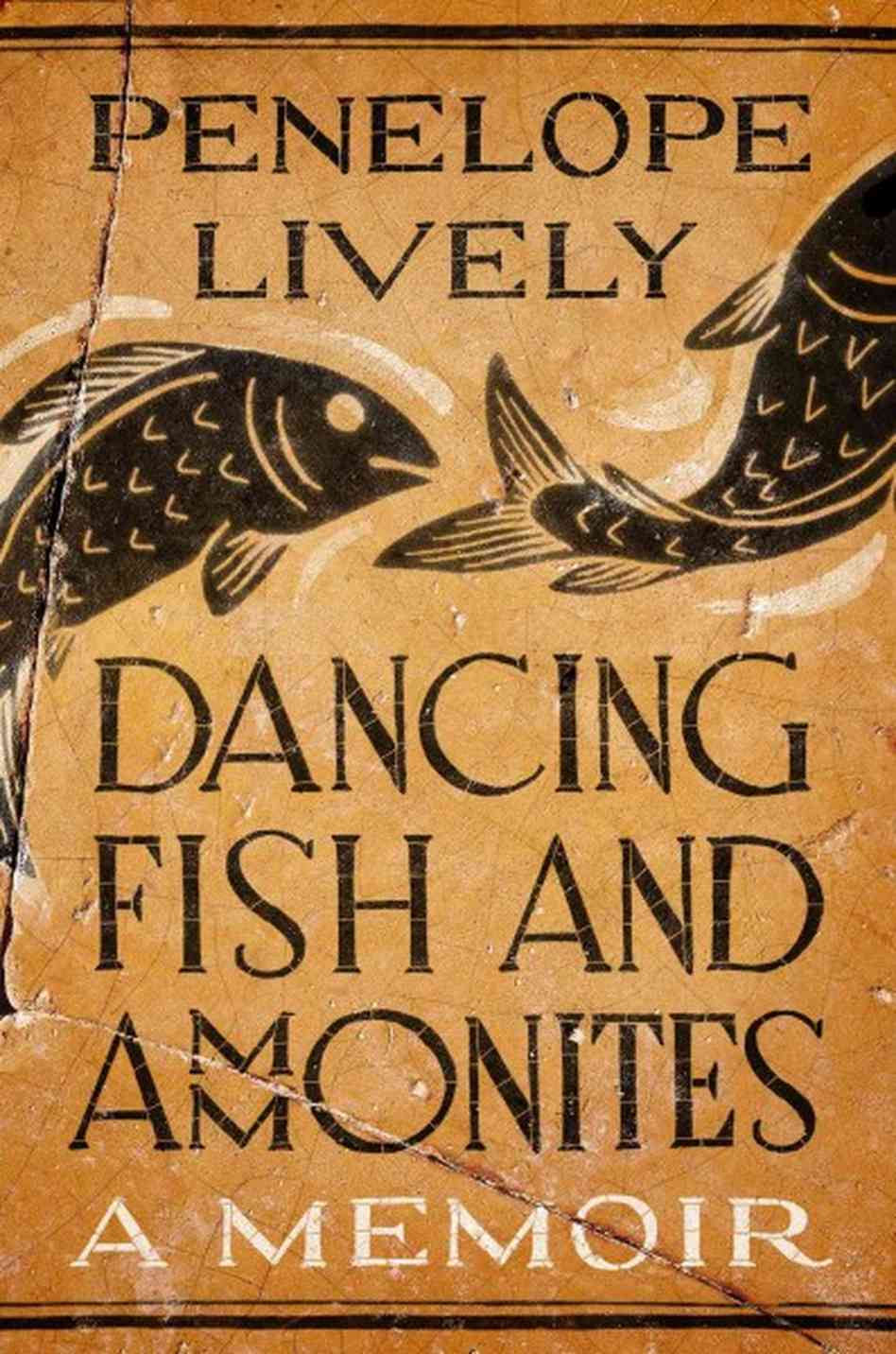
I mostly enjoyed Penelope Lively’s Dancing Fish and Ammonites — which is not, strictly speaking, a memoir but, as she says in the Preface, “the view from old age.” But I also thought, as I read it, that she had been given a free pass somewhere along the editorial line. Perhaps the thought was that having published so much finely-wrought prose already, she had earned the right to ramble on a bit, to opine and speculate and meander at will.

Dancing Fish and Ammonites is not a boring book, though by and large it covers familiar territory. Lively herself often remarks in passing that she’s talked about the biographical details elsewhere (in Oleander, Jacaranda, for instance), and the central themes are ones she acknowledges have been central to her fiction: memory; fact and fiction; history, both personal and public; the meaningful tangibility and endurance of objects (“I am an archaeologist manquée,” she says in one of the book’s least likely but most engaging chapters, “Six Things”). A newer preoccupation, or at least one with more urgency here, is aging. “Old age is in the eye of the beholder,” she says in her chapter on that topic; “I am eighty, so I am old, no question.” So her reflections on her continuing themes are colored — shaded, often — by her awareness that her time to think (and write) about them is probably running out, and a desire to understand and remember the life she has had, especially as marked out by the books and objects that surround her now. “These, then, are the prompts for this book,” she says:

age, memory, time, and this curious physical evidence I find all around me as to what I have been up to — how reading has fed into writing, how ways of thinking have been nailed.

And that’s what she goes on to talk about. There’s a chapter — unflinching, but also strangely bracing — on old age: “I remember my young self, and I am not essentially changed, but I perform otherwise today.” There’s a chapter on “Life and Times” — for me, the least successful of the book, but an interesting concept, to highlight the major historical events of her lifetime and “fish out what it felt like to be around at that point,” a personal counterpoint to “the long view, the story now told.” There’s a chapter on memory that moves between specific memories of her own and reflections on what we now know about the varieties and functions of memory — it raised questions for me about what makes someone else’s memories interesting, as the ones she offers from her own life are almost defiantly ordinary (“I am staying with my aunt Diana and her family in Kent. Winter 1947, and bitterly — famously — cold. I remember going to bed with all my clothes on”) and yet in the mundane details, “the trawl from the mass of lurking material,” there is something captivating. Maybe her trick is tacitly implying that our memories, too, no more extraodinary than hers, are also worth lingering over.

The most inviting chapter for me was “Reading and Writing.” “I can measure out my life in books,” she says;

They stand along the way like signposts: the moments of absorption and empathy and direction and enlightenment and sheer pleasure.

She doesn’t talk in detail about any of them, but she writes well about what it’s like to be a reader. I particularly liked her tribute to libraries:

Early reading is serendipitous, and rightly so. Gloriously so. Libraries favor serendipity, invite it; the roaming along a shelf, eyeing an unfamiliar name, taking this down, then that — oh, who’s this? Never heard of her — give her a go? That is where, and how, you learn affinity and rejection. You find out what you like by exploring what you do not.

And I was struck by what she says about reading as a writer. “Henry James and Elizabeth Bowen,” she says, “taught me that writing can be expansive and complex but still be accurate and exciting;”

I had no thoughts then of writing myself — I was reading purely as a gourmet reader, refining taste, exploring the possibilities. Now I think that a writer’s reading experience does not so much determine how they will write as what they feel about writing; you do not want to write like the person you admire, even if you were capable of it — you want to do justice to the very activity, you want to give it your own best, whatever that may be. A standard has been set.

That rings true to me, or at any rate it sounds right to me, like what a writer should feel about writing.

In the final chapter, called “Six Things,” she picks out six objects from her home and offers a kind of “thick description” of them: what they are and look like and feel like, where they came from, how they fit into the stories and themes of her life. This chapter felt particularly random, and yet at the same time that is its point, its structure, so that seems an unfair criticism. I like poking around people’s homes and seeing what they have: people’s things can be so revealing (“tell me what you like,” Ruskin said, “and I’ll tell you what you are”) and that’s the underlying justification here, a last attempt by Lively to explain (archaeologically, as it were) who she is, by excavating her life and interpreting a sample of its remnants — “the detritus of the past.”

“Time itself may be inexorable, indifferent” Lively writes in her chapter on memory, “but we can personalize our own little segment: this is where I was, this is what I did.” Dancing Fish and Ammonites isn’t a revelatory book, but it adds to the other writing Lively has done to personalize her little segment. I liked spending this further time with her.

“Shaped Into Stories”: Carol Shields, Small Ceremonies

smallceremonies

It’s the arrangement of events which makes the stories. It’s throwing away, compressing, underlining. Hindsight can give structure to anything, but you have to be able to see it. Breathing, waking and sleeping: our lives are steamed and shaped into stories. Knowing that is what keeps me from going insane, and though I don’t like to admit it, sometimes it’s the only thing.

I didn’t love Carol Shields’ Unless the first time I read it. Over time, though, my appreciation for it has grown a lot. It is smart and interesting about abstract literary problems (how we define literary greatness, for instance, or what kinds of stories we consider important), and it’s told in a wry, self-aware voice that invites intimacy but also allows for some distance. It seems to me a novel that wants us to think along with Reta, its narrator, rather than pressuring us to identify with her. Her discoveries — about her life, about her family, about herself — provoke us to discover things about ourselves, partly through discovering how far we agree with her. I enjoy the experience of being with Reta, who is sometimes abrasive, sometimes pedantic or overly insistent, but who is always trying, especially to find the meaning, the story, to make sense of things.

Shields’ first novel, Small Ceremonies, turns out to have a lot in common with Unless. It too has a writer for a narrator, one who through her work is trying to shape lives into stories. Judith is a biographer whose current subject is the Canadian pioneer writer Susanna Moodie. She’s perplexed by Susanna’s character, which she feels she can’t clearly discern through the materials available to her, including Moodie’s own voluminous writings. The problem of figuring out who people are is one unifying theme of the novel: Judith is puzzled, also, by her husband’s lingering opacity, by her childrens’ otherness, by her friends, by herself. Biography seems a natural form for someone so preoccupied with how externals reflect but also conceal internal qualities. But biography also epitomizes the limits we always face in understanding other people. “I can’t quite pin it all down,” she says, speaking in context about the Moodie biography but in a phrase that applies much more widely to her perceptions across the novel.

The plot of Small Ceremonies turns on Judith’s attempts to switch from biography to fiction. Unable to get a novel off the ground, she ends up stealing an idea from another writer (we have to take her word for it that it’s a brilliant idea, fresh and original), only to have “her” idea stolen in turn by her writing instructor after she has abandoned it. I found this plot itself pretty thin; its interest comes from the questions it provokes about literary originality and indebtedness. “Writers can’t stake out territories,” says the writer who persisted where she did not and turned the twice-purloined idea into a successful novel; “one uses what one can find. One takes an idea and brings to it his own individual touch.” Is he right? In a way, he is. “Where did Shakespeare get his plots?” he demands when Judith attacks him, angrily declaring him a “swine.” But these abstract questions prove less important, though (or so I thought), than the moral one: Judith herself is most upset by the dishonesty, the “casual treason,” of her friend and teacher. The situation becomes another opportunity for inquiry into character as defined by external actions, or, looking at it another way, for character to define itself in response to events.

As with most first-person narrators, Judith is the most important character in Small Ceremonies. Like Reta in Unless, she has a lot of rough edges. She’s hasty, blunt, and sometimes mean, as when she scorns her Milton-professor husband’s idea to weave a tapestry conveying the intricate patterning of themes in Paradise Lost. She is not the kind of “likeable” character much-debated (and often dismissed) in recent discussions of the place of anger in women’s fiction: rather, she is flawed in ways that aren’t at all extraordinary. Shields is good at this kind of thing, at creating people and families that are normal enough to bristle with irritation, to turn querulous or defensive, but also to soften into affection, in the familiar emotional oscillation of everyday life. I think Unless is a much more polished and elegant version  — the various parts and ideas of Small Ceremonies didn’t feel as well-coordinated, and the language was sometimes overdone in ways I found distracting. This isn’t surprising, of course, as Unless was Shields’ last novel, written almost three decades later than Small Ceremonies.

Something else I found distracting in Small Ceremonies was a brief but virulent attack on Middlemarch that occurs , quite unexpectedly, about half way through. “When I was about fifteen years old,” Judith tells us,

I read a very long and boring novel called Middlemarch. By George Eliot yet. I got it from the public library. (All girls like me who were good at school but suffered from miserable girlhoods were sustained for years on end by the resources of the public libraries of this continent.) Not that Middlemarch offered me much in the way of escape. It offered little but a rambling plot and quartets of moist, dreary, introspective characters, one of whom was accused by the heroine of having ‘spots of commonness.’

The point turns out to be that Judith sees “spots of commonness” in the man who ends up stealing her (stolen) plot. But that doesn’t begin to explain this particularly petulant squib! (It’s also inaccurate — it’s not “the heroine” but the narrator who contemplates Lydgate’s “spots of commonness.”) The degree to which this paragraph threw me off track in my reading is partly idiosyncratic, I realize. It made me fretful for the rest of the novel, though, not just because harumph WRONG!!!, but because it seemed potentially important precisely because it appeared so uncalled for. Is this seemingly gratuitous section actually doing some important intertextual or metafictional work — giving us clues, for instance, about Judith’s own writing or Shields’ own fiction? Is it a deliberate attempt to make Judith look bad? If so, to what ends? I wondered if Judith would come back to Middlemarch later on and reconsider her immaturely dismissive view of it; when she didn’t, I wondered if that passage was there to drive a wedge between Judith and Shields for us — because I can’t believe that Shields, who used the squirrel’s heartbeat passage from Middlemarch as the epigraph for Unless, could ever have seen Eliot’s novel that way. Maybe she did, but that still doesn’t explain why she needed to say so in this way (“moist”? “yet”?) at this point in her own novel. At any rate, I find it easier to forgive Judith for this bad moment than Shields, but it’s true that 1976, when Small Ceremonies was published, was very early days for feminist criticism.

Back Again — With Books!

VancouverBooks

Why is book shopping part of any vacation I take? It’s not as if we don’t have bookstores in Halifax. I think it’s something to do with the feeling of freedom from constraints that holidays bring. If I’m not responsible for work, regular meals, or housecleaning, surely I can be irresponsible in other ways too! Not that buying books is necessarily irresponsible. As my wise sister once pointed out to me (and she’s a person who has bought a book or two in her day…) a new book costs about the same as a decent (not even a really good) bottle of wine — and it lasts a lot longer and can be shared more widely! Besides, I’m an English professor, a critic, and a book blogger: books are necessities, not luxuries, right? (I feel pretty safe asking this rhetorical question here, since people who disagree are unlikely to be reading.)

My book haul this time is actually quite modest, especially considering some were gifts and one is a loan from my mother. I could actually go “book shopping” just on her shelves and make out better than in most bookstores, as there is a lot of overlap between our interests and tastes. Her Bloomsbury section alone is a treasure trove! And if you want to read about the history of the Balkans, she’s there for you. But I restrained myself and took only Carol Shields’s Small Ceremonies. I’m teaching Unless again this fall and this is one of Shields’s that I have never read. It has a great opening line — understated but immediately engaging in a way that reminds me of Anne Tyler: “Sunday night. And the thought strikes me that I ought to be happier than I am.”

olafsdottirMy mother and I made our traditional trip to Hager Books in Kerrisdale, which has a relatively small but carefully curated selection that always provides many tempting options. Here too I was restrained, though! I chose Penelope Lively’s Dancing Fish and Ammonites, which I had eyed there last year in hardcover but which is now available in a neat paperback. I liked Oleander, Jacaranda a lot; this later memoir looks as if it will focus more on Lively’s writing life. My other choice was more impulsive. In general my book browsing this trip was influenced by my frustration with the highly-touted The Goldfinch, and as a result I was drawn to books I had heard little or nothing about — which has its own risks, of course! (Serendipity isn’t always the worst guide, though, as I found when against all precedent I chose Molly Peacock’s The Paper Garden a few years back.) I don’t know exactly what made me pluck Audur Ava Olafsdottir’s Butterflies in November off the shelf, but once I had, everything about it appealed to me, from the cover design to the description of it as “a charming story of a free-spirited woman who reaches a life-changing juncture and embarks on a whimsical Icelandic road trip that sets her on a new course.” Who could resist? (I’m not sure if I mean the book or “a whimsical Icelandic road trip,” which actually sounds pretty inviting to me. If you come calling in a month or two and I’m nowhere to be found, I may be in Reykjavik.)

Small-Blessings_tpWords like “charming” can be warning signs for me, and yet I was also drawn to Martha Woodroof’s Small Blessings, which has a blurb from Oprah.com calling it “a charmer.” Oh dear, right? But it’s about a college professor and a book store manager, and (like Small Ceremonies) it looked like it would have an Anne-Tyleresque vibe. I looked at it in Hager Books but decided against it. When I stopped in at Indigo a couple of days later, though, there it was again, and this time I bought it. I read most of it during my long travel day home and finished it up this morning. It is charming. It’s not as good as the best of Anne Tyler, but it has the same interest in fairly ordinary people figuring out how to be happy, which is nowhere near as small a topic as it sounds. I appreciated how unpretentious the novel was: it never seemed to be straining after something the novelist couldn’t do. Usually I admire ambition: once again, I blame The Goldfinch — which, while not exactly a failure, seemed arrogantly inflated — for my seeking modesty for a while. Small Blessings does a lot less than The Goldfinch, and it doesn’t even aspire to be a novel of ideas (as far as I could tell). But what it does, it does nicely, with (yes) charm.

My other Indigo purchase is similarly small-scale, though not necessarily unambitious: I chose a volume of Alice Munro stories to add to the too-few I already have. I’m always vowing to read more short fiction in general and more Munro in particular. I chose Hateship, Friendship, Courtship, Loveship, Marriage because it includes “The Bear Came Over the Mountain,” which I have read and found thrilling and deeply moving. (It’s the basis for the film Away from Her, which I thought was very good.)

The only other book I bought on the trip was a slim book about Emily Carr, from the Vancouver Art Gallery. I have always loved Carr’s paintings, particularly the ones that are almost entirely trees: they so wonderfully capture the mystery and majesty of the coastal forests I grew up beside. Perhaps because her work was so casually familiar to me, I have never tried to actually learn about Carr as an artist, though I have owned her autobiography Klee Wyck since I was a child. There’s something poignant about looking at Carr’s rich, dark woods now, when fires are burning along the coast and this kind of dire forecasting is in the news:

Over the next century, climate scientists predict that Vancouver Island’s iconic trees—such as the cedar redwoods, western hemlocks and Douglas Firs—could die off in large numbers, completely transforming the island from a rainforest ecosystem to something else entirely.

The other books in my photo are also artsy. One is a collection of Arts & Crafts postcards, a souvenir from my parents’ recent trip to England. (My problem with this sort of thing is that the cards are always so lovely that I hesitate to use them as they are intended! Maybe I should buy one of those photo frames with a whole bunch of spaces and create something decorative out of them.) And finally, we visited a wonderful woman who is a dear friend of my parents and who recently celebrated her 100th birthday. Knowing my love of 19th-century literature, she very kindly gave me a beautiful Jane Austen “daybook” from the British Library. It is full of elegant illustrations and choice quotations from Austen’s novels. I hate to sully it with my not-so-elegant handwriting, but it would be very useful for me to enter the birthdays of everyone in my family: maybe if I did that I wouldn’t be late with gifts for anyone again!

StudyinBlue

My trip was about a lot more than books, of course: that’s just the part it seems appropriate to write much about here. Most important was the chance to spend time with my parents, and with my brother and sister and their families, and to catch up with some of my cherished friends. I was very happy to be able to do all that, even in the middle of a heat wave (and even when the city was blanketed in smoke from the fires). It’s good for my soul to reconnect with them all, and it’s also always restorative to soak in the beauty of the mountains and the sea.

KitsSunset


Briefly: Donna Tartt, The Goldfinch

  It seems a bit perverse to write a short post about a book as long as The Goldfinch. But even if I weren’t still on vacation, I don’t think I would want to write a long one, because despite the book’s length I find I have little to say about it — or maybe that’s because of its length, which really wore me down.

I know, I know: I read long books for a living! And it seems as if hardly a reviewer missed the chance to call The Goldfinch “Dickensian.” The thing about Dickens, though, is that he’s The Inimitable, and Tartt is … hmmm. Well, I don’t have much to go on, but based on The Goldfinch I’d say Tartt is a competent contemporary novelist with big ambitions who really needed a more assertive editor.

Yes, I held the length of The Goldfinch against it. Not at first: I enjoyed the feeling of tipping over into a big immersive novel, and the story-telling, at first, was very good. Things started to drag in Las Vegas, though, and really they dragged for the rest of the book. I found myself strongly tempted to skim — a temptation I did not always resist — because I didn’t find the writing very interesting, or Theo, and Boris thoroughly annoyed me, and both Pippa and Kitsey were cliches in their own ways. I zipped through the “climactic” section in Amsterdam paying only enough attention to find out what happened, and that’s not the worst: the worst is that I barely cared.

And then I got to the very last section, in which Theo philosophizes about art and life and the meaning of it all — and it seemed so unearned, by him and by the novel. Where was that perspective — where were any of those deeper questions — for the rest of the novel? In itself, it was an interesting meditation on beauty and despair and what lasts and what we value and why. I can imagine finding it deeply satisfying as a way to end a novel about those things. Up to that point, though, I just hadn’t found The Goldfinch to be that book.

No doubt ingenious readers can explain how in fact that’s somehow the point, or how if you just look at the earlier parts the right way, they turn out to be profoundly illuminating about something besides drug-addled idiocy and vomiting. I could probably spin a story like that myself about the novel if I put my mind to it! It’s festooned with praise and prizes: I’m quite prepared to be persuaded that it’s better than I thought. I’m certainly not going to read it again to double-check, though, and I’m always going to be happy to reread David Copperfield.That’s my test of what’s really “Dickensian”!

On Vacation!

I am in Vancouver enjoying some relaxing and sociable time with family and friends. As seems to be traditional, I have arrived in the middle of a heat wave! Happily, my parents have a lovely shady garden where we can shelter from the sun.


In the meantime, the July issue of Open Letters is live, so head on over for lots of good bookish reading, including my review of Kate Atkinson’s A God in Ruins. After much debate — internal but also with my wise co-editors — I decided to “spoil” the ending of the novel because my reaction to it was so specific I could not see how to have the discussion I wanted about the novel without going into details. So if spoilers are something that bother you and you haven’t read A God in Ruins but expect to, consider yourself warned.

There’s lots more to read in the new issue, including Anne Fernald on a recently released biography of Virginia Woolf, Steve Donoghue on a new translation of The Tale of Genji, Robert Minto reviewing the reviewers of a new biography of Saul Bellow, and our traditional summer reading feature, with lots of “cool” recommendations from the OLM team.

Enjoy, and Happy Canada Day!

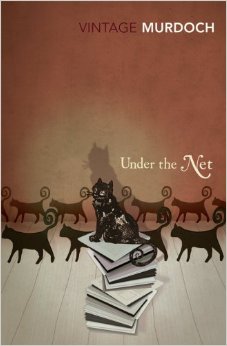
“Ragged, Inglorious, and Apparently Purposeless”: Iris Murdoch, Under the Net

murdoch

Like a fish which swims calmly in deep water, I felt all about me the secure supporting pressure of my own life. Ragged, inglorious, and apparently purposeless, but my own.

In the very last chapter of Under the Net, I finally arrived at a passage that was the kind of writing I’d expected from Iris Murdoch:

Events stream past us like these crowds and the face of each is seen only for a minute. What is urgent is not urgent forever but only ephemerally. All work and all love, the search for wealth and fame, the search for truth, life itself, are made up of moments which pass and become nothing. Yet through this shaft of nothings we drive onward with that miraculous vitality that creates our precarious habitations in the past and the future. So we live; a spirit that broods and hovers over the continual death of time, the lost meaning, the unrecaptured moment, the unremembered face, until the final chop chop that ends all our moments and plunges that spirit back into the void from which it came.

OK, “the final chop chop” is unexpectedly colloquial, but overall this is more or less what I thought a “philosophical novelist” would sound like, or write about.

I’m not sorry Under the Net was not like that all the way through. In fact, I’m thrilled and relieved that it wasn’t, because imagine how dreary and pretentious it would have been! I am sorry, though, that I had so little understanding in advance of what Under the Net actually is like, or is about, because most of the time while I was reading it I felt quite adrift — not in an angrily puzzled way, but in an off-balance, faintly delirious way. I could tell that the novel was some kind of kunstlerroman — that Jake was somehow becoming something more or other, especially as a writer, than he was at the start. It felt like a quest plot, too, though a strangely erratic one, as Jake rushed off in one direction and then another, each time quite sure of what he was doing but rarely of exactly why or to what larger end. “There was a path which awaited me,” Jake says at one point, “and which if I failed to take it would lie untrodden forever.” His challenge, and thus our challenge, is first to discern it, and then to follow it.

For a while I concluded that the aimlessness, the fits and starts, were themselves the point: that Jake’s peripatetic misadventures stood in for a vision of life as itself without direction or purpose. I’m still not entirely sure that’s not the point — but at the end of the novel there’s a sense, not of everything coming together into a shapely unity, but of Jake gathering up the loose ends and preparing to make something more out of them. If I’d read the Introduction first, rather than last, I would have  seen this coming. Instead, the Introduction confirmed it for me: “In a nutshell,” says Kiernan Ryan helpfully, “Under the Net is Jake Donaghue’s account of how he became the writer who wrote Under the Net.” Aha! Although where, in Under the Net itself, qua novel, is the evidence of that slow-growing self-awareness and control? Maybe that’s to imagine Jake becoming a different kind of writer — the kind Pip is, for instance, in Great Expectations, one who infuses the story of his past inadequacies with the wisdom they helped him acquire. Maybe Jake has not acquired any wisdom, or maybe he doesn’t believe in art with such a moralizing bent. Ryan notes the novel’s affinity with a literary tradition I don’t know well at all: “the French surrealist Raymond Queneau, to whom the novel is dedicated, and the novels of Samel Beckett,” for instance. My disorientation arose, that suggests, from my associating the idea of a “philosophical novelist” with a different tradition — with George Eliot and Henry James, for instance, not just in their realism and moral seriousness but in their overt designs on their readers. What in either of them could have prepared me for the Marvellous Mister Mars?

Ryan’s introduction points out a whole range of things that I really didn’t grasp about Under the Net and philosophy — or as philosophy. If I reread Under the Net, I would try to focus on the meanings he sets out for its motley array of characters and its bizarre, seemingly haphazard events. That would be the way to a good reading of the novel, or at least a better one than I managed this time. In my defense, though, I don’t think that happy confusion is an illegitimate first response to Under the Net. Murdoch’s choice of an unaware first-person narrator means that we are necessarily in a different position than we are with Eliot or James: short-sighted or deluded where he is, hampered by his limitations of perception and insight. This doesn’t mean we can’t tell when he’s screwing up, but it does make it more of a pleasant surprise when he arrives at some self-knowledge, as when it occurs to him that his former lover Anna “really existed now as a separate being and not as part of myself”:

Anna was something which had to be learnt afresh. When does one ever know a human being? Perhaps only after one has realized the impossibility of knowledge and renounced the desire for it and finally ceased to feel even the need of it. But then what one achieves is no longer knowledge, it is simply a kind of co-existence; and this too is one of the guises of love.

There he goes again, being philosohical! And this, too, is near the end of the book, so it feels like somewhere Jake has arrived after some effort. The puzzle of Under the Net is how exactly he figured this out — and also how seriously we are  supposed to take it, given how bad Jake’s understanding of himself, of others, of life, has been up to this point. It feels more like a revelation than like any form of Bildung, and simply happening upon a significant idea is not a particularly philosophical method.

I could quote more of the introduction about how this all actual reflects “the fundamental wisdom that suffuses Iris Murdoch’s fiction,” and how the novel is “the imaginative embodiment of Murdoch’s artistic creed,” but that would be to borrow someone else’s comprehension as a mask for my own ongoing bemusement. Under the Net is the first Murdoch I’ve read. Maybe the pieces will fall into place as I read more! In the meantime, I look forward to my book club’s discussion tomorrow.

“Could Anything Matter More?” Atul Gawande, Being Mortal

gawande

It is much harder to measure how much more worth people find in being alive than how many fewer drugs they depend on or how much longer they can live. But could anything matter more?

I decided to read Atul Gawande’s Being Mortal for what he would probably consider the best reason of all: because I really, really did not want to. There’s nothing I find scarier or more depressing than death — and that feeling, he emphasizes throughout the book, is the source of many of our worst problems as we face either serious illness or “just” old age: “We do not like to think about this eventuality. As a result, most of us are unprepared for it.”

The argument Gawande makes is a simple one, in theory, anyway: that by making old age and death exclusively medical problems, we have turned the end of life into a traumatic time in which suffering is often exacerbated in the (usually vain) pursuit of just a little more time. Time for what, is his question — or, what kind of time? Phrases like “quality of life” may sound empty but in fact they are key, and one particularly interesting and important point Gawande makes repeatedly is that quality of life cannot — must not — be measured exclusively in terms of longer life. Physical pain or disability is one set of factors, but ultimately it’s autonomy that turns out to matter most: “all we ask is to be allowed to remain the writers of our own story.” “Our most cruel failure in how we treat the sick and the aged,” Gawande says,

is the failure to recognize that they have priorities beyond merely being safe and living longer; that the chance to shape one’s story is essential to sustaining meaning in life.

One of the worst aspects of many “nursing” homes or “assisted living” communities, for instance (and the book includes a fascinating overview of the history of both kinds of institutions) is the loss of control over one’s own ordinary activities, from getting up in the morning to getting a snack or using the bathroom. The most humane and, ultimately, healthy living conditions for seniors are those that do not coerce residents into an institutionalized schedule, stripping them of their sense of self and reducing them to cogs in someone else’s mechanistic efficiency scheme. It’s heartening that Gawande is able to find so many places that have found better ways to operate. (One of my Facebook friends recently posted this link about one residence that’s doing something innovative to foster a sense of life and connectivity.) The governing principle should be trying to support people in a life that still feels meaningful to them, on whatever terms they set.

I found it interesting that although Gawande explains how the experience of aging has changed as families stopped assuming primary responsibility for their oldest members, he does not argue that the cure for poor elder care is for young people to step up. Changes to intergenerational structures in industrialized societies have not “demoted the elderly,” he says, but the whole family, in favor of “veneration of the independent self,” and he suggests that this value is now widely shared by older people as well as their children. Thus the appeal for all concerned of retirement communities that preserve independence and individuality while providing essential support services.

Gawande makes a similar argument about people facing death from illness: that the key issue should not simply be one of physical survival, but of understanding what makes life worth living. As a doctor himself, he was accustomed to always reaching for the next medical trick, even if there was little likelihood that it would make much difference in the long run and much more certainty that it would worsen things in the sort term. “The trouble is,” he says,

that we’ve built our medical system and culture around the long tail [of unusually long survival rates or good outcomes]. We’ve created a multitrillion-dollar edifice for dispensing the medical equivalent of lottery tickets — and have only the rudiments of a system to prepare patients for the near certainty that those tickets will not win.

Often, his examples show, the feeling of control patients get from choosing yet another treatment — however arduous or experimental — is ironic, because the negative side-effects of many treatments are often what ultimately reduce them to greatest helplessness. The great difficulty is weighing “the mistakes we fear most — the mistake of prolonging suffering or the mistake of shortening valued life.” There is no one formula, no one-size-fits-all answer: the greatest insight Gawande acquires and passes on to us, from his research and from his personal experience (one of Gawande’s central examples is his own father’s illness and death), is that there needs to be a hard conversation with the person most directly concerned — the person whose life is ending — that focuses on what that person considers most important. “We’ve been wrong about what our job is in medicine,” Gawande concludes. It is about “health and survival,” but “really it is larger than that”: medical interventions “are justified only if they serve the larger aims of a person’s life.” The doctor’s job includes helping patients understand their illness and their options in that context.

Gawande’s book didn’t make death any less terrifying to me. If anything, it raised my anxiety by being so frank and so vivid about the realities of aging and disease and death. But he did convince me that it is essential to think and talk about these things, because inevitably, one way or another, we will have to deal with them. Denial may be more comfortable, but it leaves us unprepared, and making decisions when you or a loved one is in extremis is not only going to be more stressful in the moment if nobody knows what principle should guide them, it’s also likely to lead to more regret and grief afterwards. Being Mortal seems to me particularly valuable precisely because these thoughts and conversations are so difficult. It prompts an inner dialogue, and may also provide an opportunity for open conversation about dying framed in the positive way he enables: what matters most to you? what trade-offs are you willing to make? what steps will best support you in having the life you want, even when you’re “weak and frail and can’t fend for [yourself] anymore”? For these reasons I think it’s a book that could make a great gift — but it’s also likely to be an unwelcome one.

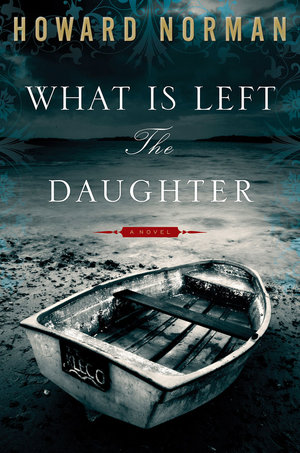
“That Hellish Day”: Howard Norman, What Is Left the Daughter

howardnorman

“The day Hans Mohring came to make amends, that day was hell on earth. Two, three, four months earlier? I couldn’t have found a day like that on the map. And now that hellish day’s my permanent address.”

When people write “think”-pieces excoriating Twitter, I always end up puzzled: clearly their Twitter is very different from my Twitter, and yet they seem to have no idea how variable the experience is, or how many of us use it and value it for completely different reasons than the ones they are fixating on. They also often seem strangely helpless: seriously, if your Twitter is “terrible most of the time,” maybe you should follow different people and use it for different conversations.

I was thinking about this because I read Howard Norman’s darkly gripping novel What Is Left the Daughter thanks to a recommendation from Mark Athitakis on Twitter. Mark is one of many people I’ve come to think of as a Twitter friend — though he and I knew each other as bloggers, too, before Twitter was quite so much of a thing. Though I haven’t met most of my Twitter friends in person, I do feel that I have come to know a lot of them pretty well, and I cherish the connections and conversations I have with them. In particular, I don’t have many people near to hand in “real life” to talk to about books (odd, perhaps, to say that as an English professor, but it’s true). Like blogging, Twitter has become a great compensation for that, and there are many books, authors, and indeed entire genres that I have learned about thanks to people I know there.

It’s kind of funny that I came to What Is Left the Daughter by way of someone in Phoenix via Twitter: it’s such an intensely local book — and yet I had never heard of it, or of Howard Norman, before. The novel takes place in Halifax and in the small Nova Scotia town of Middle Economy, on the Minas Basin. (As far as I can tell, there is actually no “Middle Economy,” though there is an Upper and Lower Economy.) It begins in the late sixties but its action is really during the Second World War, a time when the naval port of Halifax was busy with wartime activity and the waters of the North Atlantic and the Gulf of St. Lawrence were full of Allied ships, and of German U-boats hunting them. One of the central incidents in Norman’s novel is the real-life sinking of the passenger ferry SS Caribou in October 1942 — one of the novel’s characters is on board.

The character who’s lost on the Caribou is Constance, the narrator Wyatt’s aunt, who with his uncle Donald has taken Wyatt in after both of his parents commit suicide on the same night (each of them jumps off one of Halifax’s harbor bridges). This intensely personal tragedy merges with the general atmosphere of loss that permeates the novel, which focuses on the destructive effects of war on the home front. The constant sense of threat cultivates a corrupting xenophobia that motivates terrible crimes — explicable, as we see, but not forgivable, as they exemplify the reduction of individual people into hated abstractions. In wartime, the novel emphasizes, you have to work harder not to do that, but Donald in particular can’t sustain the effort. He becomes obsessed with his enmity, papering his workshop with news stories about the war, and especially about U-boat attacks. Constance tries to dissuade him from his angry fixation:

You are allowing into our house the wrong Germans out of history, Donald! You’re letting the wrong ones into our house! . . . Donald, those war broadcasts are all murder, aren’t they? All Hitler and death and ships lost at sea. I’m saying Beethoven’s not those things.

Beethoven’s music may make an intangible case for transcending war’s polarities (Kate Atkinson uses a performance of Beethoven’s 9th to the same purpose in A God in Ruins). But the possibility of a good German is embodied more directly in Hans Mohring, a German student studying philology at Dalhousie. Though his family has escaped Hitler’s Germany and is now living in Denmark, Donald is unable to see him as anything but an alien invader, and Hans’ marriage to Donald and Constance’s adopted daughter Tilda sets the stage for a tragedy that is ultimately precipitated by the sinking of the Caribou.

The story is told by Wyatt in a letter to his and Tilda’s daughter Marlais. We know this relationship from the novel’s first page, but it takes the rest of the novel for us to understand why it has been such a fraught one, and especially why Wyatt has not seen his daughter in so many years. Wyatt’s role in the novel’s central crime is an equivocal one: it seemed to me to return us, obliquely, to something his uncle says at the news of yet another ship sunk by the Germans:

Isn’t there one living, breathing soul — where’s Adolf Hitler live? It’s in Berlin, isn’t it? Isn’t there one person in all of goddamn Berlin, Germany, with enough goddamn sense and gumption to shoot Hitler in the head?

In addition to Hitler’s extraordinary culpability, that is, there’s the guilt born by those who stand by and do nothing, and then, in heightening levels of blame, of those who help in whatever way to enable his murderous policies. Wyatt is not guilty, but he’s not innocent either, and the same is true of other characters who have inadvertent roles in other people’s catastrophes — the woman, for instance, whose relationships with both Wyatt’s mother and his father led to their suicides. Though there are grey areas, though, there’s no ambiguity about Hans Mohring, who is wholly a victim of prejudice, of a failure of humanity. Looking at a photograph taken in a Halifax bar that coincidentally captured both Hans and the navigator of the U-boat that sank the Caribou, Wyatt’s friend Cordelia says thoughtfully, “what’s strange is that, as I’m standing here staring at it, I see different Germans. There’s the ones who did harm and Hans who didn’t.”

Wyatt offers Marlais his whole sordid story, knowing that he risks her curiosity turning “abruptly sour to disgust, or worse.” But, as he says, “the truth is the truth, and in the end it can’t be lost to excuses, cowardice, or lies.” At the novel’s end Wyatt expresses his hope that Marlais might prove to be his “anodyne” — that she might help restore him to the community where he no longer belongs. Can the wounds of the past be healed? Norman doesn’t promise it, but Wyatt’s resolute attempt to be honest even though the truth is ugly seems like a step in the right direction. His love for his daughter, too, frames a story of violence and unreason (one that is also, at its heart, a doomed love story) with good that perhaps outweighs the bad, or would, if we could all remember that the most important difference is between those who do harm and those who don’t — and if we could all do better than Wyatt at choosing sides.

I really enjoyed What Is Left the Daughter. It felt original to me — and in addition to being suspenseful, it was also thought-provoking, and evocative of a difficult period in local history. Thanks for the recommendation, Mark!

This Week In My Sabbatical: Winding Down and Waiting

  My sabbatical ends officially on June 30. I leave on June 29 for a week’s vacation in Vancouver, so that will mark the transition nicely. I already feel a shift, though, not just in how I’m using my time but in my attitude: the big push I was making to get new writing done has yielded to a period in which I have to wait and see what comes of it, and while I haven’t stopped writing (or planning more new writing), I’ve started doing some prep work for my fall classes, like setting up Blackboard sites. I could put that stuff off until later in the summer, but I don’t enjoy doing it, so picking away at it a bit at a time works best for me. I also like the sites to be up and running before term begins, so that students can check them out.

I suppose another approach would be to rush headlong at these last two weeks and see how much else I can get done. Also, the summer months are meant for research and writing as well, so it’s not as if June 30 is my last day! I will certainly try to do what Jo calls “laying down some breadcrumbs,” so that after my vacation I can keep going, both with the George Eliot material and with some other ideas I have about possibly “pitchable” pieces. I love writing for Open Letters (honestly, I don’t think you’ll get better edits anywhere you submit — I never have), and I don’t intend to stop, but I also want to branch out a bit if I can, for the experience and exposure, for my own self-confidence, and, just a little bit, for the health of my c.v., so that I can point to work I’ve had accepted at places where I’m not on the masthead…in case, just for instance, I decide it’s time I applied for a promotion or something like that.

But speaking of Open Letters, that’s where much of my attention has been this week, as I’ve been working on a review of Kate Atkinson’s A God in Ruins for the July issue, wrangling contributors for our annual Summer Reading feature, and doing my share of editing on the other new pieces we’ve got.

I wish I had something more exciting to report!  But it has been a pretty uneventful week, really, at least where sabbatical stuff is concerned. It is also my son’s last week of high school, so that’s eventful in its own way: it has made me more sentimental than I expected, and very conscious of the passage of time. I’m kind of in between books, so I’m rereading Venetia just for fun; my book club meets in a week or so to discuss Iris Murdoch’s Under the Net, so that’s probably my next serious read.

Meeting The Penderwicks and Thinking of Old Friends

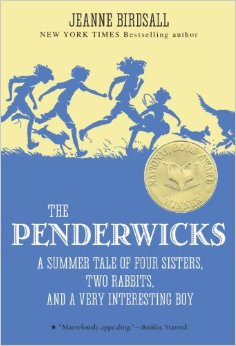
penderwicksOn the warm recommendation of two of my favorite readers, Sarah and Dorian, I read The Penderwicks this weekend. It’s charming! And, as the cover blurbs suggest, it’s a bit of a throwback, a children’s book of a gentler kind that seems (and is packaged, at least in the edition I read) to have come from an earlier time. This is not to say that it is simplistic: I would describe it as both sweet and sprightly, with just enough shadows (a dead mother, an evil step-father-to-be, a bit of tween angst, a ruined planter of jasmine) to keep it interesting. I enjoyed it — though I admit I did not love it, and can’t see myself rushing off to read the rest of the series. If I had a young reader to share them with, perhaps, but without taking any general stance on the whole adults-reading-kids’-books thing (I said my piece on that already, here), I’ll just say that for this adult reader, this one was a bit too thin and predictable to feel right for the reader I am now. (I’m bracing for your counter-arguments, you Penderwick lovers! Keep in mind I led with “it’s charming”!)

It got me thinking about the books I enjoyed when I was about the age The Penderwicks seems written for — the School Library Journal says Grades 4-6, but allowing for readers who are more precocious than they expect, let’s say ages 7 to 10-ish. Most of my favorites were historical fiction, one way or another: Alison Uttley’s A Traveller in Time, for instance (which I’m thrilled to discover has been reissued in the New York Review Children’s Classics collection), or Barbara Willard’s The Lark and the Laurel and The Sprig of Broom. I still have my crumbling copies of these, along with Barbara Leonie Picard’s Ransom for a Knight. I read all the Little House on the Prairie books, of course (I still have my original box set), and the Anne books, and Little Women (in my mother’s illustrated edition) — but it was the ones about brave girls having adventures in long-ago times that appealed most to my imagination. Those books were the gateway drugs to the “adult” historical fiction I read avidly throughout my tween and teen years, especially Jean Plaidy’s many series (also, I see, now being elegantly reissued) — which in turn led me to, well, where I am today, though I thought at the time that I would end up a historian. uttley

When you look back on your youthful reading, do you see signs in it of the person you grew up to be? Are there cherished childhood volumes on your shelves that have, like mine, survived moves and purges, and perhaps time in your own children’s custody? (Neither of my children ever caught the historical fiction ‘bug’: Maddie finally told me straight up to stop buying her books that I would like, which to be fair, is entirely the right advice. Plus Ransom for a Knight is pretty fragile, so it’s a good thing she never wanted to read it. Harumph!)