Recent Reading: Lodge and Lively

I enjoyed both David Lodge’s Deaf Sentence and Penelope Lively’s Cleopatra’s Sister. Both take what turns out to be a deceptively light tone to explore ideas that are actually quite serious and interesting.

Deaf Sentence lures us in with the funny side of deafness, particularly the misunderstandings, frustrations, and mishaps that arise from Desmond Bates’s attempts to carry on as if he can hear what someone says. Drawing on his own experience, Lodge is very specific about the technical options available to those struggling with hearing loss, including about their inconveniences and shortcomings. But as he remarks early on, deafness is not, really, very funny, and even as he points to the greater pathos conventionally attached to blindness, he frequently invokes the suffering of famous “deafies” including Philip Larkin and, of course, Beethoven, to illustrate the deprivation and isolation that follows from losing one’s connection with the sounds of the world. There are a lot of pretty lame puns (of the “deaf in Venice” variety), but the wry chuckles they invite also prove a kind of trickery, as the most common slippage is between “deaf” and “death,” and that relationship turns out to be the central one in the novel: death is, after all, our ultimate “sentence,” the ultimate end to conversation and relationships. Everything comic in it thus becomes infused with tragic potential: as we age, the novel incessantly reminds us, we lose things–our hearing, our coordination, our minds, control over our bodies, our friends and families, ourselves. There’s nothing really very funny about any of that. As Desmond concludes, “‘Deafness is comic, blindness is tragic,’ I wrote earlier in this journal, and I have played variations on the phonetic near-equivalence of ‘deaf’ and ‘death,’ but now it seems more meaningful to say that deafness is comic and death is tragic, because final, inevitable, and inscrutable.” The novel, then, explores the uneasy borderland between the comic and the tragic, or perhaps the uncomfortable proximity between the two (the most slapstick comedy depends on the wince of pain, after all). Deafness functions as a comic device, but also as a metaphor for our inevitable isolation from other people, which culminates in death:

The sure extinction that we travel to
And shall be lost in always. Not to be here,
Not to be anywhere,
And soon; nothing more terrible, nothing more true.

Philip Larkin [ Desmond reflects], the bard of timor mortis.

Deaf Sentence is not, I think, an altogether successful novel. Its various parts did not feel well integrated. The apparent main line of the plot, for instance, about the wacky graduate student with her morbid project on linguistic analysis of suicide notes, leads to some funny scenarios. But as the rest of the novel, especially the decline of Desmond’s father, took on substance, I had trouble understanding what she really contributed. Like many of Desmond’s little set pieces about contemporary life, technology, and politics, the trip to Auschwitz seemed more like something Lodge himself wanted to say than something that had to be in the novel. Of course, the Auschwitz excursion is relevant to the theme (if that’s the right word) of death, but its gravitas seemed excessive for the rest of the book, though I thought Lodge’s writing during that section was among the best in the novel–strong, spare, and evocative, whereas much of the rest of the novel is a bit too prosy and self-indulgently academic (the academic narrator / protagonist can take the blame, of course, as all this is in character, but still…).

Overall, though, I appreciate that this novel is about something. I’ve been thinking lately (for another project) about David Masson’s line that “the desirable arrangement might be either that our novelists were philosophers, or that philosophers were our novelists” (and, as a contrast, Henry James’s objection that in George Eliot’s fiction “the philosophical door is always open” and letting in a cooling draft). Events strung together do not make a great novel, though they may make a briefly entertaining one (take note, writers 0f popular historical fiction). It is much more rewarding, as a reader, to feel engaged with a view of the world and how we live in it, whether the emphasis is primarily ethical, aesthetic, political, or something else. Kazuo Ishiguro made a comment in an interview that I like a lot, about fiction being “an appeal for companionship in experiencing life,” with the author implicitly saying, “it’s like this, isn’t it? do you see it this way too?” You can agree or disagree, but either way, you’re in a good conversation. Lodge is not playing with any particularly obscure or profound ideas, I don’t think, but he’s trying to see and say something about where we stand in relation to other people, and what the inevitable end of our life means, or might mean, or should mean, for how we think about ourselves and how we act. In doing so through a (more or less) comic novel, perhaps he’s also suggesting we not take these problems too seriously, not so seriously, anyway, that they prevent us from enjoying life’s absurdities.

Cleopatra’s Sister is another novel thinking about things. In this case, Lively is preoccupied with the issue of contingency: why one thing and not another? She plays out variations on this theme elegantly across the different aspects of the novel, from the big evolutionary questions confronted by her paleontologist protagonist Howard Beamish, to the day-to-day incidents of chance that drive lives forward–Howard’s discovery of his first fossil, for instance, which turns out to initiate a life-long interest and thus his career. How far are we responsible for our own lives? is probably the novel’s central interest. Co-protagonist Lucy Faulkner, for instance, works hard to develop her credentials as a journalist, but many of her professional advances result from her being in the right place at the right time. If she seizes the moment, is it luck, or can she take credit for her success? What about all the “what ifs”? So many other things might have happened, if things had been just a little different, if somebody had made a different choice, even a minor one. The novel explores the randomness of life: every event is explicable, looking backwards (in this, Lively’s outlook resembles George Eliot’s version of determinism). But it is not predictable, looking the other way, a fact of which Howard and Lucy are repeatedly reminded, sometimes jarringly. The central episode of the plot, in which Howard and Lucy are among a group of British tourists taken hostage in the fictional country of Callimbia, is the ultimate example of the way events are formed by contingencies: the plane happens to have mechanical problems which happen to become urgent as they are closest to Callimbia, where, as it happens, there has just been a political coup (which, as we know from the interspersed chapters recounting the history of the imagined nation, is itself the outcome of a series of unlikely events). That both Howard and Lucy are on this particular plane is coincidental, or, more accurately, meaningless until later events give their meeting the aura of fate–or would, in a different novel. There is an inevitability about each step, and yet at every moment, it might have been otherwise.

Here, as in Moon Tiger, Lively is particularly interested in the way these moments are collected into histories, which give retrospective meaning because, in hindsight, we can see the steps that made a difference, that turned things in one direction or another. The juxtaposition of the Callimbia ‘history’ highlights this process (with due reference to the “Cleopatra’s Nose” theory of history), and also allows for some play on another theme familiar from Moon Tiger, which is the paradoxical relationship of unimportant individuals to the larger narratives of history. Lucy realizes at one point that all the ‘little’ people are the real stuff of which politics is made; this is true too of history, and yet most people live historical lives without knowing it. Thus Lucy and Howard’s chance experience of the political chaos and violence of Callimbia is also a reminder to them that they do not live outside of history: that their own lives can, for instance, become part of something Lucy might write a feature article about, or end without leaving descendents, like the fossil specimens Howard collects. I won’t spoil the ending–the second half of the novel becomes quite suspenseful, and as in Deaf Sentence, the comic potential of the set-up and the light handling of the prose leads us unwarily into much darker territory.

Next up: Joseph O’Neill’s Netherland, I think. [Update: What actually happened is that I picked up my copy of Daniel Mendelsohn’s The Lost to take a look and became totally engrossed; I actually stayed up much later than I should have last night because I couldn’t stop reading it, which is something I haven’t felt strongly for a while. It’s a remarkable book.]

Oprah Producer Reads Starts Middlemarch

Back in June, I noted that one of the producers of Oprah’s Book Club was planning to read Middlemarch this summer. Then her blog went completely silent. Now we learn that although she “hit the beach” with several versions of the novel and good intentions, she didn’t manage to read it, but she’s still trying. Maybe I should send her a link to my interview with Nigel–although I’m not sure I inspired him to finish it either. The good news is that other people have been reading the book because of her. I always think that the more people who read Middlemarch the better!

Anglo-Egyptian Fiction

As I putter away at my project on Ahdaf Soueif, I’ve been trying to think of other modern novels that qualify as “Anglo-Egyptian”: that is, novels by English novelists but set primarily (or at least significantly) in or about Egypt. For my purposes, I think I would exclude novels about Ancient Egypt (which in my experience tend to be of the costume-and-jewelry form of historical fiction–not that there’s anything wrong with that, and also Pauline Gedge’s Child of the Morning is an old favourite of mine). I would also not expect to be interested in lighter fiction, such as mysteries, for which Egypt is really just a conveniently exotic setting. I could be persuaded, of course, to look at interesting examples from either of these categories. But I’m mostly looking for “serious” or literary fiction, fiction with some ambition, if you like, primarily because that’s where I would expect to find interesting ideas about what it means for an English novelist to write about Egypt. The obvious examples I’m aware of are Lawrence Durrell‘s Alexandria Quartet, Olivia Manning‘s Levant Trilogy, and Penelope Lively‘s Cleopatra’s Sister and (another old favourite) Moon Tiger. Other suggestions?

Update: Now that I’ve read it, I realize that Lively’s Cleopatra’s Sister is not actually about Egypt.

Ian Colford, Evidence

“Evidence of what?” might reasonably be a reader’s first question, heading into this volume that is not quite a novel, not quite a collection of individual stories, but instead an assortment of incidents in the unsettled (and unsettling) life of Kostandin Bitri, described in the jacket blurb as “a wanderer uprooted by war.” Each incident teases and disturbs with what it leaves out as much as what it includes (and some of them include elements that are, in fact, quite disturbing). They are not presented in chronological order, and the continuities between them are primarily of tone: Kostandin narrates in a flat, expository tone, like someone who has seen and done so much that he can no longer be surprised or deeply moved. And yet the content, the action, often turns on surprising and moving moments of connection–or, even more often, failed connection. Unlikely meetings become fragments of unsustainable relationships. People want or expect too much of each other, or of themselves; they cling to hope, they ask for help, but they receive or extend pain and disappointment.

Kostandin’s specific history is offered in fragments throughout the volume. “You’re from one of those countries over there that used to be part of Yugoslavia. I’m right, aren’t I?” asks one of his employers, and Kostandin opts “to let him think what he wanted about where I was from”; later he tells the members of a group counselling session about the “tribal” customs of his home country; an orphan, he eventually returns to seek the remains of his parents in a mass grave for which Communists are blamed. Even if we trust what he tells us, the details are left just vague enough that Kostandin’s stories seem to be about trauma, loss, and betrayal as ongoing conditions of human life rather than attempts to render, literally, the effects of historically specific events. Kostandin himself is sometimes victim, sometimes criminal. His world does not allow for heroism; in it, also, acts of generosity, including his own, lead nowhere in particular. There is evil, or at least cruelty. In one episode, Kostandin awakes in the hospital, badly injured; he is unable to recall what happened, and the absence of an explanation seems to epitomize the meaninglessness of the damage people inflict on each other, and the larger mystery of human motives–a mystery that cannot, after all, be solved but for which each of this strange episodes is partial, oblique evidence.

Throughout, the language is precise and controlled; details of colour and sound, rooms and personalities, emerge in sharp focus. Emotive language proves redundant, or at least optional. The situations Colford conjures for us through Kostandin’s almost clinically detached observations speak eloquently enough of strain and yearning, love and failure. The stories end rather than conclude or resolve. Perhaps because of the many questions they leave unanswered, they linger, uncomfortably, hauntingly, in the mind.

Red Hot Classics


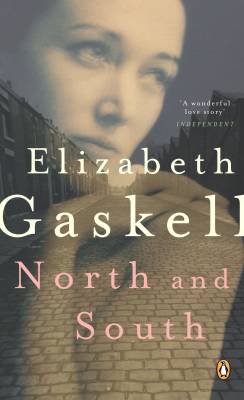
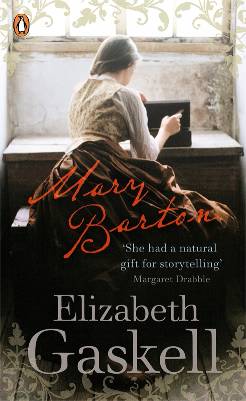
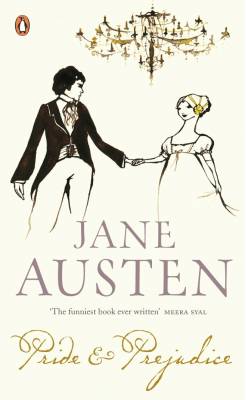
Somehow I hadn’t seen any of these editions before today, when I ran into a couple of them as I was browsing through Chapters (thanks, again, to parents who hold their children’s birthday parties at The Putting Edge across the way!). I’m fascinated by the marketing approach: an unwary reader might well pick these up not even realizing they are “classics” …which is not necessarily a bad thing, of course. I’m also interested that Jane Austen gets such different covers:

Your Vote Counts!

At least, it might. Pretty soon I have to finalize book orders for a new course I’m teaching in the winter term, a second-year survey of “British Literature Since 1800.” I feel strongly that despite the pressure it will put on the very limited time I have available to cover a vast range of material, I can’t teach such a course without including at least one 19th-century novel and one 20th-century novel–but picking just one puts a lot of pressure on each choice! I’ll be using the second volume of the Norton “Major Authors” anthology, which will take care of poetry, non-fiction, and short fiction. I’ve been thinking that if you’re going to showcase a single Victorian novelist, it simply has to be Dickens, and as we have at most two weeks and I will mostly have students without much literary experience, I’ve been thinking it has to be one of the shorter Dickens, meaning basically Hard Times or Great Expectations. Before I put the order in, though, I thought I’d see how many people agreed with me and how many would consider someone else the “must read” author of that century, or another book a better choice. So I’ve put a little poll at the side; feel free to place your vote there and/or to put a suggestion in the comments. For what it’s worth, my underlying theme in the course will be something like “what do people think literature is for, and how do they use literary form to get this done?” And the 20th-century novel I’ve almost decided on is Atonement, for lots of reasons, one of which is that it is kind of a two-for-one deal, given its engagement with Woolf-ian modernism (which we will address through readings from the anthology too).

Weekday Miscellany: Reading, Writing, Teaching

It sure is quiet around the blogosphere, including around here. Must be summer! It’s not that I haven’t been reading, but for some reason–no particular reason–I haven’t been writing up as many of the books I read as I used to. At this point I’m more likely to do a full write-up only if a book has deeply engaged me, for better or for worse. This approach makes some sense, but it also means a certain slackening of discipline, so perhaps I’ll try to get back in the habit of finding at least something to say about most of my current reading….we’ll see. Right now I’m working on quite a varied collection, including Evidence, by fellow Dalhousian Ian Colford, Stieg Larsson’s The Girl with the Dragon Tattoo (I’m only 400 pages in, but I’m pretty sure I disagree with Val McDermid’s claim that I won’t “read a better book this year”), and, of course, Villette. I just finished re-reading Villette this afternoon, and I was completely drawn in by the intensity of both the language and the vicarious experience of Lucy’s passions and sorrows. In the end, I think I like her because she’s a fighter; she has pride, and wit, and perseverance, even sheer cussedness. But I like her best when she cries out, “My heart will break!” More about that tomorrow. Discussion at The Valve has rather petered out, but I’m hopeful that we’ll see a surge of energy around the novel’s conclusion. Overall there have not been nearly as many comments as during last year’s Adam Bede reading, but on the other hand the comments have been extremely interesting and thoughtful. I kind of wish more of the regular Valve authors had participated…but then, catch me reading some of the stuff they post on! So no hard feelings.

As another project, I’ve been working on a piece about Trollope at the invitation of Steve Donoghue at Open Letters. Now, I’m very enthusiastic about Trollope, and so, it turns out, is Steve, and I love having this opportunity to put my thoughts into some kind of readable form. It turns out, though, that a lot of the self-conciousness I thought I had fought off by blogging all this time has come back: all the material I have so far seems both dry and obvious, and I’m riddled with anxieties about tone and audience. I guess the only thing to do is to keep writing, in the spirit of Trollope himself, who famously said, “I was once told that the surest aid to the writing of a book was a piece of cobbler’s wax on my chair. I certainly believe in the cobbler’s wax much more than [in] inspiration.” (Ah, but he didn’t know about the internet, which lets you stay quite fixed in your chair but wander, mentally, far from the task at hand….)

And, as September comes relentlessly closer, even as I cling to the hope that I’ll make more real progress on my major research projects, I find I can’t stop thinking about my fall and winter classes. I actually really enjoy planning classes, setting up the syllabi and assignments, organizing the reserve lists and Blackboard sites and so on. Of course, this is a good thing–but it’s also a bad thing, when in fact I don’t need to do this stuff so early and should be leaving it until the very eve of my first class, as apparently most of my colleagues do (hence the crowds at the photocopier in early September). I like the concrete tasks involved: there’s something satisfying in checking specific items off the to-do list, like “first day handouts” or “links for BLS” or “study questions for Aurora Floyd“. But as a result, I often choose to do these tasks instead of the more amorphous, mentally demanding, never-really-done tasks that make up my research. Really, it’s a question of self-discipline, so starting tomorrow, I vow to spend at least half of every work day on research and writing. Or maybe I can use a rewards system: for every two hours spent in concentrated work of other kinds, I can spend half an hour getting something in order for the fall or winter.

One of the biggest distractions related to my upcoming teaching is that I want to try some new things (new to me, that is, not new in any sense of breaking pedagogical ground), and so I have to figure out how to make them work. For a winter term class, for instance, a lecture class on “British Literature Since 1800,” I am thinking of a wiki assignment that I hope will help students attend to and process the material they hear in lectures, taking more responsibility for it and engaging with it more creatively. My idea (still in development) is to have each tutorial group responsible for its own wiki; a specific student would be responsible for posting his or her notes on each lecture, with the whole group responsible for editing and amplifying them until, by the end of the term, they have a collaboratively-produced study guide for the whole course. I thought perhaps we could liven things up by making a bit of a game of it, with a prize for the best wiki (pizza for the group?). I quite like this idea, in theory anyway. I try hard to make my lectures engaging (though I now understand that I really do talk pretty fast), but I also try hard to make students see that just sitting listening, passively, is not enough. I imagine that this exercise will not only make sure at least someone is listening hard some of the time, but also reveal to them that each of them may hear me differently, may pick up on an example or an argument and think differently about it. I think the wiki format will give them room to challenge each other’s interpretations as well as mine, and to put in counter-arguments, link to additional contexts, and so on. But I am only just learning how to use PBWorks (formerly PBWiki), and before I can assign something of this kind for credit I have to be quite confident about the technology myself, and I have to think hard about how to explain it to them and how to define the requirements and expectations. (If any of you have used wikis in your teaching, advice would be welcome, now, before it’s too late!)

I’m also thinking about having the students in my George Eliot graduate seminar help me build up a really good website (very primitive version started here): I’ve been surprised at the relative dearth of good web resources on GE. Here I’m more confident about the mechanics of it, but I need to think through the academic and scholarly aspects: the what, why, and how of the information we would present. I feel as if this kind of project might help them define an audience and purpose for their work that might motivate them more than sticking to the conventional seminar-presentation-and-paper format, though probably a paper would still be part of the course requirements as well. I asked one of my PhD students, now done with her coursework, what she thought of the idea, and she was very enthusiastic, which was encouraging. But again, more thinking and experimenting to do. At least this, like the wiki idea, is for a course that won’t start until January.

For fun, I’ve also just watched both seasons of In Treatment, which I found totally mesmerizing. Gabriel Byrne can come and listen to me any time.

Virginia Woolf, Mrs. Dalloway

I finally read Mrs. Dalloway. It was a strangely unsettling experience. I had tried to read it many times before but never made it past the second page: my problem was (and continues to be) that I don’t altogether understand how to read this novel. It drifts and wanders, and then pauses in a place that doesn’t seem very significant, but becomes so as it is allowed to just be and develop on the page. You have to be patient–which may sound like a strange thing for a Victorianist to struggle with, but it’s a different kind of patience than the kind you need for Dickens or Thackeray or George Eliot. So, although I have been very interested in the novel for a long time, I kept starting it and then putting it aside. This time I decided I should stop trying so hard and just keep reading, allowing myself to drift and wander and come back. When I did that, I started to fall under the spell of the language, which is beautiful and langorous but shot through with moments of startling clarity and, sometimes, brutality. And then, finally, I began to feel I was brushing up against the ideas of the novel, not in the abstract way I had considered them by reading about the novel, but more immediately, sensually as well as intellectually. So much has been written on this novel that I won’t add any more commentary of my own, except the brief observation that I hadn’t realized it was so much about London. Instead, here are my two favourite passages (so far):

Big Ben struck the half-hour.

How extraordinary it was, strange, yes, touching, to see the old lady (they had been neighbours ever so many years) move away from the window, as if she were attached to that sound, that string. Gigantic as it was, it had something to do with her. Down, down, into the midst of ordinary things the finger fell, making the moment solemn. . . . Why creeds and prayers and mackintoshes? When, thought Clarissa, that’s the miracle, that’s the mystery; that old lady, she meant, whom she could see going from chest of drawers to dressing-table. She could still see her. And the supreme mystery which Kilman might say she had solved, or Peter might say he had solved, but Clarissa didn’t believe either of them had the ghost of an idea of solving, was simply this: here was one room; there another. Did religion solve that, or love?

And,

She had once thrown a shilling into the Serpentine, never anything more. But he had flung it away. They went on living (she would have to go back; the rooms were still crowded; people kept on coming). The (all day she had been thinking of Bourton, of Peter, of Sally), they would grow old. A thing there was that mattered; a thing, wreathed about with chatter, defaced, obscured in her own life, let drop every day in corruption, lies, chatter. This he had preserved. Death was defiance. Death was an attempt to communicate; people feeling the impossibility of reaching the centre which, mystically, evaded them; closeness drew apart; rapture faded, one was alone. There was an embrace in death.

Villette Chapters 1-35: “Oubliez les Professeurs!”

The thread is now open at The Valve for discussion of this week’s installment of Villette. In case you are wondering whether you should have joined us in this project, taste this:

What was become of that curious one-sided friendship which was half marble and half life; only on one hand truth, and on the other perhaps a jest?

Was this feeling dead? I do now know, but it was buried. Sometimes I thought the tomb unquiet, and dreamed strangely of disturbed earth, and of hair, still golden and living, obtruded through coffin-chinks.

Clearly the folks behind Pride and Prejudice and Zombies are behind the curve: the undead lurk already in Charlotte Bronte’s perverse imagination.