Weekends are a pretty miscellanous time for me. I don’t usually even try to do much concentrated reading, though occasionally I surprise myself and burn through a book when circumstances conspire, for once, in my favor (or the book does not require particularly hard concentration). But in between errands and cooking and laundry and family activities and a lot of what (thanks to Mr Casaubon) my husband and I call “desultory vivacity,” I browse around online and see what’s on offer. Here are a few things that caught my eye, or that I went back to read again, this weekend:
In the Guardian, Rachel Cusk writes about D. H. Lawrence. I read Lady Chatterley’s Lover once but that and a couple of short stories (‘The Odor of Chrysanthemums,” for instance) are the total of my Lawrence experience. The section on Lawrence in Booth’s The Company We Keep is about the only thing I’ve read that made me consider changing that. Cusk’s piece is interesting, but comments like this always puzzle and frustrate me, and undermine my trust in the critical faculties of the writer:
The Victorian novel routinely used individual characters as emblems of wider social and geographical realities, to the extent that its concept of character often strikes the modern reader as stylised and lacking in reality. Dickens, Eliot, Gaskell: despite their interest in social change, regionalism, community, the position of women, these great English novelists have nothing in common with Lawrence at all. In The Rainbow Lawrence does more than part company with Victorian modes of narration – he destroys them by completely inverting the literary and actual function of “man” as a representative of “mankind”.
Dickens, Eliot, and Gaskell actually have relatively little in common with each other at all, and generalizations about “Victorian modes of narration” should be much rarer than they are. It strikes me that writing about Lawrence tends to make people hyperbolic (“reading him remains a subversive, transformative, life-altering act”).
In the New York Times Book Review, Nancy Kline reviews Rosalind Brackenbury’s Becoming George Sand, which I recently downloaded from NetGalley. I read the first instalment of the contemporary story and wasn’t very engaged, so I haven’t pressed on into the George Sand bit. Kline doesn’t convince me that I should; indeed, leading off the discussion by saying that if the book “does nothing more than send us back to the source, it will have done its work” really damns and blasts the novel with faint praise, doesn’t it? Because surely sending us to a different novelist is not at all the “work” of the current novelist. On the other hand, Sand is another novelist I haven’t actually read, despite having read about her quite a bit. As Kline remarks, “Her admirers included Balzac, Turgenev, Dostoevsky, Margaret Fuller, Walt Whitman, Elizabeth Barrett Browning, George Eliot and Charlotte Brontë. The last three thought her the greatest French stylist of her time.” That’s a fan club worth having! But, on the other other hand, George Eliot also greatly admired Sir Charles Grandison and Henry Esmond (which I have read).
At The Millions, Lydia Kiesling takes her turn convincing us that Lolita,”with its veritable panoply of horrors,” is nonetheless “the most bracing and perfect work of art I know.” Lolita has always seemed to me the kind of “great” literary work that really forces us to confront the problem, not of the good or bad book, but of the good or bad reader. Our standard of tolerance surely must be set by the good reader, the one who gets it that we are not supposed to (that we must not) share Humbert Humbert’s values. But we seem to be living in a moment–or maybe it is always such a moment?–in which unreliability, irony, or narrative distance are easily misunderstood or just rejected: I’m thinking, for example, of the recent decision to ban the Dire Straits song “Money for Nothing” from Canadian radio, or of the “cleaned-up” edition of Huckleberry Finn. Good thing nobody reads Victorian poetry, or someone would probably come after Browning pretty soon.
At The Second Pass, John Williams followed his round-up of women critics on women writers with an interview about the VIDA statistics with Jennifer Szalai, former book review editor at Harper’s; if you didn’t see it already, I think it adds some useful perspective to the discussion (a wide-ranging round-up of which can be found here):
The statistics approach the issue from two angles: reviews written by gender, and the books being reviewed by gender. How separate or entangled are those issues to you? What do you consider unique elements of each?
I suspect the issues are connected in some way, though I’m not sure whether it’s as straightforward as claiming that the dearth of reviewed books by women derives directly from the dearth of reviews written by women. In fact, Ruth Franklin at The New Republic concluded that “the magazines are reviewing female authors in something close to the proportion of books by women published each year.” She then wonders whether the numbers have anything to do with how “we define ‘best’ and ‘most important’ in a field as subjective as literature, which, after all, is deeply of influenced by the cultural norms in any given age.” She raises the possibility that the dismal proportion of books published by women has to do with unconscious biases, but then she doesn’t go so far to provide a confirmation one way or the other — an approach that, to my mind, is less evasive than it is honest. With a work as complicated as a book, whose creation and reception is dependent on so many factors, I’d find it hard to believe anyone who claimed they could pinpoint exactly why so few women were published. We should also keep in mind that Ruth’s sample excluded those “books that were unlikely to be reviewed — self-help, cooking, art” — which also happen to be books that are often written by women.
This connects to the question of which books are considered “important” enough to review. I do think there are a whole host of cultural norms that come into play — among them the bizarre obsession with “the Great American Novel,” as well as a condescension toward certain subjects like motherhood and a young woman’s coming of age — but then it’s hard to see how this contributes to the gender imbalance among reviewers (though I can see how it might very well derive from it).
At American Fiction Notes, Mark Athitakis reviews The Late American Novel, a collection of essays about the future of books and reading:
The majority of the essays are structured by the writer’s taking notice of the alarms—e-books, tablets, an ever-destabilizing economy for writers, readers’ decreased attention spans, the novelist’s loss of centricity in the culture—and then choosing to ignore them. We’re wired for story; story will never die; writing is worthy labor; there will always be readers who appreciate it; and hey, didn’t Choose Your Own Adventure books prove the physical book can play with form well before the iPad? The arguments’ shape, along with their homily-like brevity, reminded me of a line from Roger Lambert, the bitter, pervy divinity-school teacher at the heart of John Updike‘s Roger’s Version: “Raise the doubts, then do the reassurances. People have no idea what they’re hearing, they just want a certain kind of verbal music. The major, the minor, and back to the major, then Bless you and keep you, and out the door to the luncheon party.”
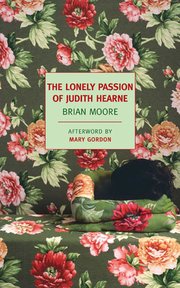
This weekend I’ve also finished up The Lonely Passion of Judith Hearne, but I won’t be writing it up until after my book club meets this week. And I’ve just begun Shirley Hazzard’s The Transit of Venus, which is this month’s pick for the Slaves of Golconda group. Anyone who’s interested is welcome to read along and contribute to the discussion. So far I am liking the novel a lot. I find aspects of Hazzard’s prose perplexing (what’s with the words that are just not there, at the end of sentences, for instance?) but it’s difficult in a more inviting way than Christina Stead’s ranting cadences (The Man Who Loved Children has been retired, for now–just not a mental space I could be in).