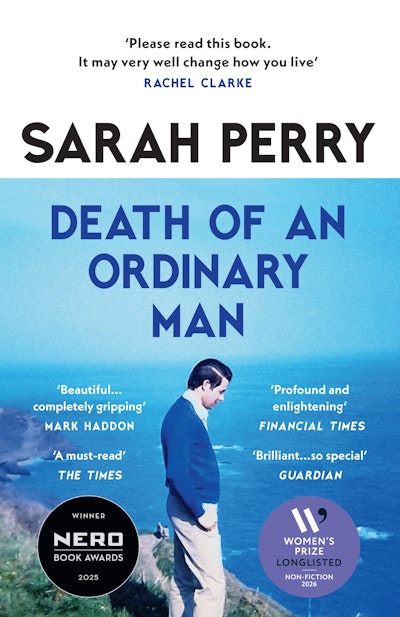
But now I understand there are no ordinary lives–that every death is the end of a single event in time’s history: an event so improbable it represents a miracle, and irreplaceable in every particular. So here I am, counting out the particulars of my father-in-law’s life, and trying to preserve them in ink–it’s precious that he drank weak Yorkshire tea in footed mugs printed with blue flowers, and artificially sweetened with tables he called ‘depth charges’ as he jettisoned them in, laughing at his own joke. It’s precious that he disliked dogs, but could calm a feral cat; precious that he kept sugar-free mints in his pocket, and would thumb them free from the tube and into his mouth without looking; precious that each summer he grew rather tough green beans and froze them to be eaten at Christmas, and had a weakness for ice cream, but could never tolerate broccoli . . . all of this remarkable only because it can never be repeated or retrieved.
Sarah Perry’s Death of an Ordinary Man is simple in its premise, unsparing in its execution, and almost unbearably poignant in its tenderness. In it, Perry recounts–in meticulous detail–her much-loved father-in-law David’s death from oesophageal cancer. From diagnosis to death, it took a scant nine days; in that short space, she and her husband Robert and especially, of course, David himself went together through one of the most commonplace human experiences. That in general we know so little about it–that we avoid thinking about it, until forced to, and so are rarely ready for it–is one of the reasons Perry wrote this book. “It isn’t wisdom I have,” she says near the end, “it’s only experience; and experience of only one death.” Nonetheless,
I am still standing by the gate, and I keep it open, because there are things I want to tell you. I want to tell you that even a good and easeful death may have its indignities and pains, but to know this–to have seen it–is to fear death less, not more.
Above all she wants to share the realization she came to, as she traveled with David along his road to death and then was left behind, that “dying is a part of living, and like living it has its events, both difficult and marvellous.” She doesn’t expect her account to make living less fearful, but to “bring the act of dying into the scope of living,” just one more part of what we all, one way or another, go through, of our events and struggles.
She is conscious even as David is dying that she is attending him not just with love and patience and grief but with the eye of a writer, “with the assessing acquisitive eye of a magpie.” It is to her credit, or a credit to her intelligence and craft, that the result feels authentic and immediate, not artificial or mannered. That she quotes poetry and philosophers seemed unsurprising precisely because she is a writer, and thus also a reader and a thinker, about meaning and about life. Her Gothic novel Melmoth is, I thought, a genuine novel of ideas; her novel Enlightenment, which she has just finished when David begins to die, is about science and philosophy and our place in the universe. All of us who live our lives in part through others’ words find that those words come to us in our own most intense moments (as I found, and still find, that thinking of Owen brings lines of poetry, long familiar, now hauntingly so, echoing in my mind).
Most of the book, though, is not literary, or philosophical, in any conspicuous way. (The absence of that kind of conspicuous literariness is itself exceptionally careful, artful: I don’t mean that the book is at all haphazard.) It is, mostly, very literal: Perry seems to have realized that there is enough power in the simple facts of David’s death–his physical decline, unthinkably rapid; his shifts in mood; his brief returns to energy and lucidity; his graceful submission (Perry’s word)–that just to describe them will also be enough.
That said, the other task of the book is to tell us about David’s life. Some of this is done neatly, efficiently, in the first short section of the book–aptly called “Life.” But Part Two, “Death,” fills in more details, partly through the simple device of Perry noting what she sees when she looks around David’s home–photos, slippers, dishes, his favourite magazine (the Antiques Gazette), his stamp collection, all the paraphernalia of an ordinary life. Something Death of an Ordinary Man captures with great vividness is the sudden diminution of these things when the person whose life they seemed to constitute steps away from them. How quickly they become just clutter, even as they also serve as tangible reminders and connections. David’s illness progresses so quickly that he has no way of knowing, in the moment, that he is putting his slippers on for the last time, drinking his last tea, sleeping for the last time in his own bed.
There’s a lot of medical detail in the book, not the specialist kind the doctors and nurses know, but the kind family members learn perforce when they become caregivers: artificial saliva, commodes, “WendyLett sheets,” which are “fitted with handles and woven in a particular way which allowed us to move David without hurting his body, or ours.” All of this is gripping reading in a way I wouldn’t have expected. There aren’t villains or heroes in the story, but a visiting doctor fills Perry with anger at what she perceives as unfeeling briskness, while the night nurse who comes so they can sleep brings them, and David, calm ease; an oncologist friend offers honesty that comes as a different kind of relief.
I realize that little about this may sound uplifting, and I can imagine people who have gone through the illness and death of a loved one might not at all want to read Perry’s account, though I can also imagine that for some there might be (as there has been for me with some things I have read about depression and suicide) some–what? not consolation, but companionship, in any recognition it offers, and that strange pleasure in finding that someone has found words to express what we perhaps have struggled to ourselves. The TLS review praises the book for being “unsentimental”: I am a fan of sentiment, and I am not sure that Death of an Ordinary Man isn’t a bit sentimental. There is immense pathos in it, at any rate, and raw grief. There is some comedy, too, and anger, and frank admissions of failures of empathy and possible errors of judgment.
Above all, and perhaps this is the most important and surprising thing about Death of an Ordinary Man, even though it is focused on how David died, it gives a really rich sense of him as a man who lived. Death is universal, but there will never be another life exactly like his, or another man exactly like him. That, as Perry observes, is anything but ordinary.
 For the first time ever, I have assigned Scenes of Clerical Life in one of my classes—more accurately, a scene of clerical life, “Janet’s Repentance.” My re-reading of it some years ago had lodged the possibility of assigning the story (novella?) in my mind, but I hadn’t found what felt like the right opportunity until this term’s all-George Eliot, all the time seminar. We are discussing “Janet’s Repentance” in the seminar this week, so I thought that was a good enough reason to lift this post out of the archives.
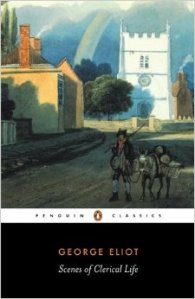 “Do you wonder,” asks our narrator, as the sordid tale unfolds, “how it was that things had come to this pass — what offence Janet had committed in the early years of marriage to rouse the brutal hatred of this man? . . . But do not believe,” she goes on,
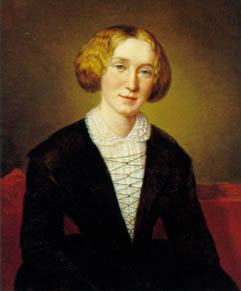
 Another January, another new term! I’ve got two classes this term of two quite different kinds. The first is our second-year survey course British Literature After 1800, so its aim is to cover a broad sweep of territory; the other is a combined Honours and graduate seminar on George Eliot, a rare opportunity to zoom in on a single writer—a privilege rarely accorded, in our program anyway, to anyone besides Shakespeare!
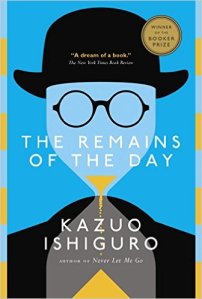 Something that was very much on my mind as I prepared for this particular class meeting was the last time I taught this course, which was the winter term of 2020. In early March of that term, we were all sent home; my notes leading up to what turned out to be our last day in person have a number of references to contingency plans, but none of them (none of us) anticipated the scale of disruption. It came on so quickly, too, as my notes remind me. We were part way through our work on Woolf’s Three Guineas on our final day; quite literally the last thing I wrote on the whiteboard was “burn it all down.” I got quite emotional many times while revising the course materials for this year’s version: that term stands out so vividly in my mind as “the before time,” before COVID, which is also, for me, before Owen died. We were still essentially in lockdown, after all, when he died in 2021; we had only just been able to start coming together as a family again. I don’t usually have a lot of emotional investment in my course materials, but it was unexpectedly difficult revisiting these and thinking of how much has changed. Tearing up over PowerPoint slides: it seemed absurd even as it happened, but it did. That said, because of COVID I ended up cutting The Remains of the Day from the syllabus in 2020, and given that it is in my personal top 10, that I rarely have the opportunity to assign relatively contemporary fiction, and that I am running out of years to assign anything at all, I am stoked about being able to read through it with my class this term. If only it didn’t feel so timely!
 I am also super stoked about getting to spend the whole term reading and talking about George Eliot with a cluster of our best students—not just our brightest but honestly, I know most of these students from other classes and they are some of the nicest and keenest and most engaged and curious people you could hope to work with. I felt so much good will from them today as we did our ice-breaker (nothing too “cringe,” just everyone’s names and anything they wanted to share about their previous experience, or lack of experience, with George Eliot). I hope their positive attitude survives Felix Holt, not to mention Daniel Deronda! Knowing that a number of them had read Adam Bede and/or Middlemarch with me in other recent courses, I left both of these off the reading list for this one. Middlemarch especially feels like a gap, but on the other hand, I don’t think I could have realistically asked them to read both Middlemarch and Daniel Deronda in the same term (unless I didn’t assign anything else), and Daniel Deronda is pretty great. I had quite a debate with myself about Felix Holt vs Romola: just for myself, I would have preferred to reread Romola, but I’ve taught Felix Holt in undergraduate courses before and it is actually pretty accessible. Sure, Felix is so wooden he makes Adam Bede look lively and nuanced, but, speaking of timely, a book about the pitfalls of democracy when the population is not (ahem) maybe sufficiently wise to make good choices seems on point. Along with those two, we will be reading “Janet’s Repentance,” The Mill on the Floss, and Silas Marner. I’m already a bit worried that it’s going to be too much reading . . .
 The last time I taught this class was 2015, and then it was a graduate seminar only. I had stepped back a bit from teaching in our graduate program: we get at most one seminar a year, and my favourite classes to teach have always been our 4th-year or honours seminars, so I made them my priority. OK, that’s not entirely truthful: I had also felt increasingly uncomfortable with graduate teaching, both because of my own loss of faith in aspects of academic research and publication (
 Believe it or not, I’ve been posting here about my teaching
  2025 was a less chaotic year for me—literally and psychologically—than 2024. I wish I could say that this meant I read more and better, but instead both my memory and my records show that it was a pretty uneven reading year, with a lot of slumps. The summer especially, which used to be a rich reading season for me, had almost no highlights: the best books I read in 2025 were at the very beginning and the very end of the year.
 Connie Willis’s
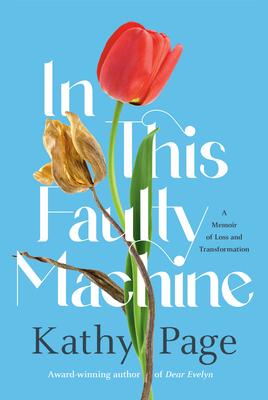
 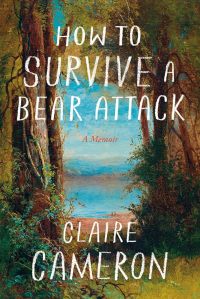 The best non-fiction I read was Claire Cameron’s memoir
 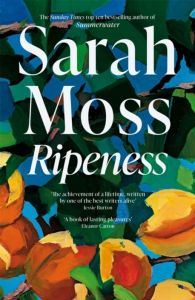 A near miss:
  And on that faintly elegiac note I will add that I reread
 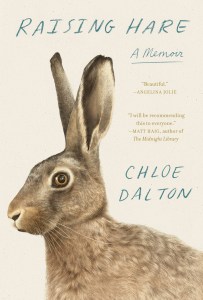 I have still not deciphered the mystery of the hare. She remains the elusive, indefinable core that explains, perhaps, why we humans have projected so many of our fears and desires onto the species, investing hares with supernatural powers from the most evil to the most inviting, confirming our tendency to either worship or demonise those things we struggle to understand. The hare lends itself as a symbol of the transience of life and its fleeting glory, and our dependence on nature and our careless destruction of it. But in the hare’s—and nature’s—endless capacity for renewal, we can find hope. If it is possible, as William Blake would have it, ‘to see a world in a grain of sand’, then perhaps we can see all nature in a hare: its simplicity and intricacy, fragility and glory, transience and beauty.
 It is not an idyll: lovely as Dalton’s descriptions of the fields and woods are, the hare’s world is still that of nature “red in tooth and claw,” full of hazards and threats, violence and death, hawks and stoats and foxes. The worst carnage, however, is wrought not by nature but by man’s machinery. One day a pair of huge tractors harvest potatoes from the field next door. When they are finished, Dalton walks the furrows and finds them (in a scene worthy of Thomas Hardy) littered with dead or injured hares:
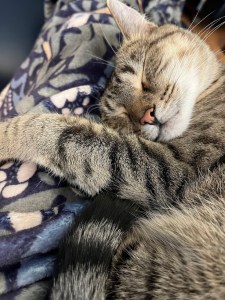 One reason Raising Hare resonated with me is that over the past six months, since Freddie came to live with me, I have been experiencing on a small scale some of the same adjustments to my own sense of time and priorities. Living close to the hare helps Dalton better understand people’s bonds with their pets:
 There is more to life than great chess. Okay, great chess is still a part of life, and it can be a very big part, very intense, satisfying, and pleasant to dwell on in the mind’s eye: but nonetheless, life contains many things. Life itself, he thinks, every moment of life, is as precious and beautiful as any game of chess every played, if only you knew how to live.
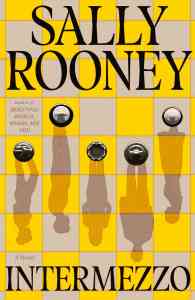 Like Rooney’s other novels Intermezzo takes people’s intimacies and relationships and feelings very seriously. It is a novel on a small scale, about two brothers muddling through some deeply felt but inadequately processed grief for their recently dead father while also muddling through their romantic entanglements, Ivan with an older woman, Margaret; Peter with a younger woman, Naomi, as well as his ex-fiancee Sylvia. I wasn’t always interested enough in Peter to care about his struggles, though that might have been the fault of the awkward style of his sections (Manov: “more Yoda than Joyce”—ouch!), or maybe it was due to my own greater sympathy, just instinctively, for Ivan’s story. Compared to Beautiful World, Intermezzo seemed less expansive, not in length but in reach. It didn’t convince me that the problems of these particular little people amounted to more than a hill of beans—and yet something felt true about its preoccupation with their problems, which really just reflects their own preoccupation with their own problems. We do, mostly, live like that, right? Even those of us who in some sense are committed to “the life of the mind” spend most of our time immersed in the petty and personal.
 Novel Readings