Vera Brittain, Testament of Friendship

Whether or not the spirit of man is destined for some unknown flowering in a life hereafter, the benevolence of the good and the courage of the undefeated remain, like the creative achievements of the richly gifted, a part of the heritage of humanity for ever.

I’m not sure that I would have fully appreciated the rarity of Testament of Friendship if it weren’t for Carolyn Heilbrun’s thoughtful introduction to my edition–and in a way, that’s part of the lesson I take away from the book, namely, that there isn’t really anything extraordinary about strong, supportive, important friendships between women. Women live these (if we are lucky); we know their value. What’s unusual is to find a story of such a friendship, something for which, as Heilbrun notes it is difficult to find a literary model. “Friendship between women is seldom recounted,” she observes; “[f]rom the love of women for one another as they work and live side by side … recorders of civilization have averted their eyes.” Vera Brittain makes a similar observation in her Prologue:

From the days of Homer the friendships of men have enjoyed glory and acclamation, but the friendships of women, in spite of Ruth and Naomi, have usually been not merely unsung, but mocked, belittled and falsely interpreted.

Heilbrun sees Brittain and Holtby’s friendship as unusual because for them it meant, “as it had long meant for men, the enabling bond which not only supported risk and danger, but comprehended also the details of a public life and the complexities of pain found there.” It is true that their lives, and thus their friendship, had what have more typically been masculine aspects, but too much emphasis on this point risks reinforcing the division of norms into masculine and feminine, and Brittain’s own account shows that she and Holtby lived and worked among many women who were also publicly active, and that they looked back to a tradition of other such women. Obviously, it’s important to acknowledge that this was not the norm, that there were practical as well as ideological obstacles to women’s participation in public life–but at the same time reality has never been neatly bifurcated into male and female spheres and there’s nothing intrinsically masculine about public life, only the expectation or belief that there is.

Though Brittain, like Holtby, is an avowed and articulate feminist, Testament of Friendship is only implicitly a protest against both the narrative and the political constraints on her friend’s life story. Though Holtby was an extraordinarily busy public intellectual (just how busy, I had absolutely no idea until I read this book), Testament of Friendship is a personal tribute–and yet, having said that, it seems artificial to separate out the personal dimensions of her life or of Brittain’s recounting of it from her public ambitions and activities. A better way to put it might be that Brittain celebrates her beloved friend in her entirety, seeing a complete union of principle and character across all aspects of Holtby’s life. Unable to refuse a friend’s request for help or a listening ear, Holtby was equally unable to countenance injustice or failures of principle in the world at large. While travelling in South Africa, for instance, she recognized the parallels between prejudice and systemic discrimination on the basis of sex and on the basis of race:

At camp one night in the Transvaal, she had heard two black servants teaching each other to read from a child’s exercise book. But wherever she went, the white people whom she met talked to her pessimistically about the native question. They told her that higher education was bad for natives and gave them ideas and undermined their loyalty; that political power was unsuited to natives, since they were not ready for it; that segregation and the Colour Bar and the disenfranchisement of the black men in the Cape were necessary for the preservation of white civilization and the safety of white women and the happiness of the home.

Sometimes, as Winifred meditated on these statements, they seemed to have a familiar ring. Suddenly, one day in Pretoria, she realised why. In her mind she began to substitute the noun “women” for the noun “natives,” and found that these fiercely held, passionately declared sentiments of white South Africa coincided almost word for word with the old arguments in England against women’s enfranchisement, women’s higher education, and women’s entry into skilled employment. She even perceived–as Olive Schreiner had perceived before her–a close relationship between the two forms of subjection . . . .

Henceforth Holtby is equally tireless in her crusade against both forms of oppression.

Brittain’s admiration for Holtby–for her radiant beauty, her astonishing energy, and above all her moral integrity–energizes what might otherwise be a somewhat pedestrian recounting of Holtby’s life and career from her childhood in a small Yorkshire village to her sadly early death. We get, I think, at least as strong a sense of what Brittain thinks about her friend as about that friend herself, who is–perhaps inevitably–an idealized figure. I don’t think we ever hear of her as anything less than keen, enthusiastic, and generous. Interestingly, Brittain is not so uniformly positive about Holtby’s novels: though she refers to them often, frequently bringing out parallels between Holtby’s views and her characters, finding ways Holtby refracts her personal experience through her creative imagination, Brittain is frank about their shortcomings, seeing all the early ones as subordinate in skill and interest to South Riding. As South Riding is the only one I’ve read, I have only Brittain’s word to go on, but the others do sound a rather motley assortment. Her comments on South Riding, though, did make me want to reread that novel, which I feel I have so far under-appreciated. South Riding represented, Brittain suggests,

the reconciliation, at long last, of the artist and the social reformer who had wrestled for so many years within her personality. Thanks to the wisdom of growing maturity, she realised that for her there could be no final victory of the one over the other, so she found material for literature in those preoccupations which had hitherto dragged her away from it. In South Riding she threw down a challenge to pity, the deadly and recognised enemy of her achievement, and pity itself, captured, enthroned and crowned, became the apotheosis of her art.

The result was a story which, for all its differences of time and place, bears a close family resemblance to Ibsen’s play, An Enemy of the People. Would the clever literary critics who maintain that the political and social themes of Winifred’s novels put her outside the ranks of the artist take, I wonder, the same view of Ibsen? To mirror universal values in local or personal experience is surely a major function of art; and in this Winifred superbly succeeded.

The comment here about “clever literary critics” is a reminder that Holtby is publishing her socially-conscious fiction during the same years that, say, Virginia Woolf is writing and publishing her very different works (Holtby’s first novel, Anderby Wold, appeared in 1923; South Riding was published in 1936)–or, for that matter, Elizabeth Bowen’s early novels are appearing. Though she didn’t use this terminology, Holtby knew perfectly well she was not a Modernist. Writing to a friend about her decision to write about Woolf for a series of ‘Modern Writers on Modern Writers,’ she says,

I took my courage and curiosity in both hands and chose the writer whose art seemed most of all removed from anything I could ever attempt, and whose experience was most alien to my own. . . . I found it the most enthralling adventure–to enter, even at second-hand, that world of purely aesthetic and intellectual interests, was to me as strange an exploration as it would have been for Virginia Woolf to sit beside my mother’s pie and hear my uncles talk fat-stock prices and cub-hunting. I felt that I was learning and learning with every fibre of such brain as I have.

According to Brittain, Holtby’s work on Woolf  “enabled Winifred to state her own basic problem–the conflict between means and ends, between practical measures for bringing the good life nearer, and the creation of enduring beauty which is part of the good life itself. The [Woolf] book is one prolonged analysis of the meaning of true art and the method of its attainment.” Studying Woolf’s books helped Holtby “formulate more clearly her own philosophy of life and death,” Brittain says, and then quotes this passage from Holtby’s book describing “the flashes of insight” some of Woolf’s characters achieve:

These are the moments of revelation which compensate for the chaos, the discomfort, the toil of living. The crown of life is neither happiness nor annihilation; it is understanding. The artist’s intuitive vision; the thinker’s slow, laborious approach to truth; the knowledge that comes to the raw girl, to the unawakened woman–this is life, this is love. These are the moments in which all the disorder of life assumes a pattern; we see; we understand; and immediately the intolerable burden becomes tolerable; we stand for a moment on the slopes of that great mountain from the summit of which we can see the truth, and thus enjoy the greatest felicity of which we are capable.

This is not the ‘literary criticism’ we are now accustomed to: it has what I have heard described as the “whiff of belles lettres” about it–and in many circles (especially academic ones) that’s a smell as unwelcome as anything you might unwarily step on in the dog park. As an artist’s reflections, though, and as a commentary on the experience of reading Woolf, it has the ring of truth.  I admire Holtby’s open-minded eagerness to learn from someone unlike herself, which seems to have been one of the unifying characteristics of all of her work, and indeed of her life.

Reading this book has added to my sense that we let the Modernists win too easily–by which I mean that in the literary history I am familiar with, the important thing about the first part of the 20th-century is, singly, exclusively, Modernism: there isn’t a place in the story for any of the writers who did not take up their commitment to “purely aesthetic and intellectual interests.” Some confirmation comes from peering at our most recent description for our course on ‘British Literature of the Early 20th Century’: I see only Conrad, Joyce, Lawrence, Lewis, Wilde and Woolf on the reading list. Neither Brittain nor Holtby appears on our 20th-Century British reading list for Ph.D. students’ qualifying exams, and neither does Antonia White, Rosamond Lehmann, Elizabeth Taylor, Margaret Kennedy, Barbara Comyns–not even Rebecca West, and certainly not Dorothy Sayers.* (Actually, the most recent student to take these exams in 20thC British added Sayers’s Murder Must Advertise–it was conspicuous to me that her supervisor had not taken the Sayers seriously as anything but a token specimen of genre fiction, and the only question the novel prompted from him was a derisive one about the relevance of the cricket match. Ahem: we can do better!) It’s possible that I can’t make sense of, say, Margaret Kennedy‘s novels because they aren’t actually very good. But it seems at least as possible to me that they don’t seem very good because I don’t know why they do the things they do–I don’t understand the story to tell about them. Holtby’s cheerful determination to undertake strange explorations of unfamiliar minds is a good model for all of us.

*I’d be curious to know from those of you at other institutions: How typical is this? Also, apparently Elizabeth Bowen doesn’t rate either, even though she is a Modernist (as far as these labels hold up, of course). Is that typical?
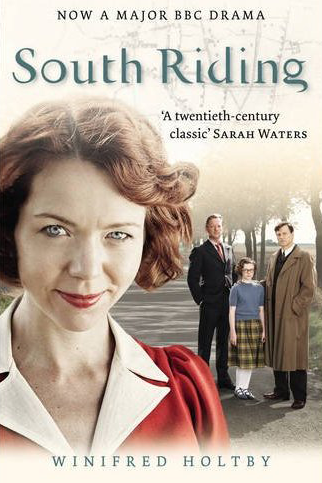
Winifred Holtby, South Riding

I finished up South Riding yesterday and enjoyed it right up to the end–though overall I’m not as impressed by it as I expected to be. It didn’t seem quite balanced, somehow. One thing that really threw me off was Sarah Burton’s falling in love so precipitously with Robert Carne. I knew something of the sort was coming, not just by fictional convention (and I would have been glad to have that expectation disappointed), but because the back of my edition says she “finds she is drawn to him.” Still, when the moment of revelation arrived, it felt much too sudden. Where was it prepared for? What motivated it? Even she acknowledges she hardly knows the man. And yet we get this:

“I love him!” she cried aloud, as though struck by sudden anguish. Immediately she felt that she understood everything. All her past slid into an inevitable and discernible pattern; all her future lay before her, doomed to inevitable pain.

She knew love; she knew its aspect, its substance and its power. She knew that she faced no possible hope, no promise, no relief.

I didn’t like it! More to the point, I didn’t believe it! Where does this melodramatic posturing come from? Is it actually ironic, at Sarah’s expense? A bit, I think, at least at a metafictional level, given how things turn out, but overall her passion is given full credit as sincere. What is the source of these sudden strong feelings? Why are they nearly allowed to derail her characterization, so vivid and sparky to this point, by giving her a tendency to mope as well as a predilection for self-loathing, for her failure (as she believes) to win his love in return? I know, I know: how can I complain when I enjoy so much the burst of melodrama that carries Dorothea into Will Ladislaw’s arms at the end of Middlemarch? But that moment is anticipated by all kinds of hints and indications of Dorothea’s needs and feelings, not to mention by their much closer relationship (unlike Sarah and Carne, Dorothea and Will have had numerous long conversations, for one thing), and by thematic pressures such as … well, I won’t go into this since I’m writing about South Riding, not Middlemarch, but I don’t quite see the thematic necessity or satisfaction of Sarah’s love, and as a plot development, it felt contrived, though after that jarring moment its effects and implications are worked out in very interesting ways.

I really liked the diffuse attention of the novel, the way it held true to an idea of community, giving pretty much equal time to all of its diverse range of characters. The emphasis on Sarah as a central protagonist–not just in the cover blurb, but in the small amount of criticism I’ve looked into–seems misleading to me, insisted on almost as if we don’t know what to do with a novel that doesn’t really have one main character. Though Sarah’s work at the school is significant, and the school itself is a useful organizing point for some of the intersecting plot lines, the novel does not spend a lot of time there or focus conspicuously on Sarah as a newcomer or force for change–she’s not a female version of Dr. Lydgate, for example, just to keep up the Middlemarch comparisons. Am I underestimating her centrality to the novel’s larger concerns? Because I felt she was really just one element among many, it seemed odd that she takes up so much of the novel’s conclusion, and yet the values she articulates do seem to represent what the novel is itself trying to show us.  Again, something felt not quite balanced–straining, almost–about the conclusion. And yet it is rousing nonetheless. (I wonder if this is what Lauren Elkin means when she says Holtby is more interested in the possibilities of message than of form.)

Because the novel kept making me think of Middlemarch, I was struck by the difference between its ending and that novel’s Finale. George Eliot emphasizes the importance of honoring the individual contribution to the ‘growing good of the world,’ insignificant as it may seem at first glance or when measured against more grandiose forms of heroism. In contrast, Holtby celebrates the participation of the individual in a communal enterprise, almost to the point of submerging the one in the many:

She was one with the people round her, who had suffered shame, illness, bereavement, grief and fear. She belonged to them. Those things which were done for them–that battle against poverty, madness, sickness and old age, the battle which Mrs Beddows had called local government–was fought for her as well. She was not outside it.

Local government is the structuring idea of this “English landscape” (geez, even the subtitle provokes Middlemarch comparisons!) so the horizontal structuring makes sense. What makes less sense to me is why Sarah needs to go through the crucible of love and loss to realize her place in this landscape. That said, there is something surprising about her standing alone at the end, though I’m still thinking about Susan Leonardi’s argument (in The Somerville Novelists):

That Holtby’s heroines triumph convincingly and unequivocally attests to the success of her strategy for telling in a traditional narrative the story of the educated woman: the systematic elimination of men from the lives of her heroines and from her texts.

I haven’t read any of Holtby’s other novels, but I didn’t see men being eliminated from South Riding, just from Sarah’s immediate (romantic) future. If Sarah triumphs, what is it over, and how unequivocal is it?

I liked South Riding best, as it turned out, at the level of its sentences, which are constantly strong, frequently funny, and often surprising. Of Mrs Beddows, for instance, we’re told, “Her clothes were a compromise between her spiritual and chronological ages”; of Carne, “His unfeigned pleasure in killing the correct animals at their orthodox seasons made him an affectionately respected neighbour.” These fondly acerbic epigrammatic lines remind me (you guessed it) of Middlemarch.

Monday Miscellany: Friday Night Lights, South Riding, Ian McEwan, & a Musical Bonus

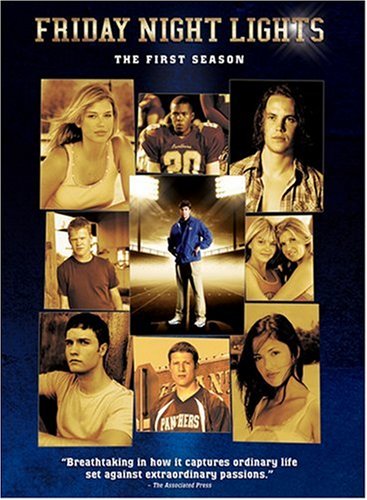
We’re finishing out a four-day weekend here based on a holiday we don’t even celebrate in its hopelessly commercial secular form–Maddie is the only one of us who’d really appreciate Easter Bunny stuff but she’s allergic to both eggs and nuts, so never mind, and just as well too, really. It doesn’t seem like much really went on or got done, but the grown-ups did finish up the first season of Friday Night Lights, which I’d heard buzz about on Twitter from folks including Maud Newton (and Daniel Mendelsohn held it up as a counter-example in his recent smackdown of Mad Men, as well). I was finally motivated to get going on it by Sonya Chung’s post on it at The Millions. We both enjoyed it, which is no small thing considering that I wouldn’t ordinarily ever watch that much football. The characters are engaging and brought to life very convincingly, and there’s plenty of interest in the storylines. But we weren’t swept away by it: it already seems to be falling into the usual TV drama pattern of just one damn plot twist after another–when in doubt, throw in a crisis!–with the additional fairly melodramatic use of the football games to bring things to fever pitch (my husband, who does watch football, was amused that nearly every game was won or lost on the last play, in the final seconds). So far, there’s no sense of a larger project or developing insight of the kind that you get with The Wire or Deadwood, and the premise itself is not as breathtakingly stark and unexpected as In Treatment. I appreciate good storytelling, and I share Chung’s appreciation for the show’s commitment to heartfelt emotion, even to sentimentality.  It’s just that now we know it’s possible to do something more ambitious within the same basic structure. I’ll probably watch at least the second season (though I think my husband won’t), to see if it builds over time into something more, or at least to see if my initial attachment to the characters keeps me hooked, wanting to know what happens next.

In the meantime, I’m about 2/3 throug Winifred Holtby’s South Riding and enjoying it a lot–for some of the same reasons I liked Friday Night Lights, actually, including its straightforward commitment to character development and its interest in the dynamics of a tight knit community under pressure. I particularly like Holtby’s narrative voice, which is smart and analytical without being pedantic. The introduction to my (badly proofread) BBC Books edition promptly and plausibly compares it to Middlemarch. If I were writing one of those annoying “X meets Y” jacket blurbs for it I might call it “a post-war Middlemarch written by a socialist Anthony Trollope,” because while it has the wide range of Middlemarch and the sensitivity to the ways multiple stories can be interconnected, it has none of the formal sophistication of the earlier novel: in fact, it is structured very much like Friday Night Lights or any other conventional multiplot fiction, simply moving from focus to focus while progressing more or less linearly towards its conclusion. Not that there’s anything wrong with that! And in fact it’s a more interesting choice in 1940 than it was in 1860, if only because by then other alternatives had been so abundantly demonstrated, and Holtby’s own awareness of her more immediate literary context is pointed to by conversations within the novel itself about writers including Virginia Woolf. Lauren Elkin has some thought-provoking comments about this at Maitresse, comparing Holtby to Elizabeth Bowen (whom I’ll be reading for one of my book clubs soon, making Lauren’s post doubly relevant!):

It would be a stretch to classify South Riding within the category of modernism.  Although they share thematic concerns, Bowen seems more interested in the possibilities of form, whereas Holtby seems more interested in the possibilities of message. “We are members of one another,” Holtby writes in her prefatory letter to her mother, quoting Paul’s letter to the Romans (Romans 12:3-8). She is not only referring to members of the same community, of course, but to the community of humanity. Bowen’s citydwellers, on the other hand, feel more alienated than ever, and have an awareness of themselves as estranged from anything as conventional as a community. Communities, for Bowen, are in the process of being dissolved, and there is not much that can be done about it. Bowen’s novels and essays constantly interrogate and ironize concepts like “community,” and “humanity.”  Her novels interpret themselves for the reader, her sentences twist in syntax to avoid banality, her young heroines are intensely aware of themselves as young heroines, her novelistic forms double back on themselves. Andrew Bennett and Nicholas Royle call this aspect of Bowen’s work the “dissolution of the modern novel.”

I’m intrigued by the phrase “the possibilities of message,” and I’ll think more about how or whether Holtby’s form is or is not integral to the “message” of her novel as I finish it up–tonight, perhaps!

On a completely different topic–or maybe not, since it’s also about novels and what ideas inform them–I found this discussion with Ian McEwan about books that have influenced his fiction very interesting. Not surprisingly, he emphasizes books about science. An excerpt:

I don’t need to ask what the influence on your novels is here, as science plays a big part in many of them – most noticeably in Solar, but also in Saturday and Enduring Love. What is the nature of your individual relationship, as a writer, with science?

I would like to inhabit a glorious mental space in which books like Slingerland’s would not need to be written. In other words – and this comes back to the notion of mental freedom – your average literary intellectual, just as much as your average research scientist, would take for granted a field of study in which the humanities and sciences were fluid, or lay along a spectrum of enquiry. This is the grand enlightenment dream of unified knowledge. If you think of the novel as an exploration or investigation into human nature, well, science undertakes a parallel pursuit. Of course, much science is concerned with the natural world, but increasingly it has invaded the territory of the novelist. Neuroscience routinely deals with issues not only of consciousness, but of memory, love, sorrow, and the nature of pain. I went to a fascinating lecture on revenge and the reward system by a German neuroscientist a few years ago.

I’m sometimes asked by a literary intellectual in an on-stage discussion – often through the medium of a puzzled frown – why I’m interested in science. As if I was being asked why I had a particular fascination for designs of differential gears in old Volkswagens, or car-parking regulations in Chicago in the 1940s. Science is simply organised human curiosity and we should all take part. It’s a matter of beauty. Just as we treasure beauty in our music and literature, so there’s beauty to be found in the exuberant invention of science.

Finally, once before I posted a sample of one of Owen’s original compositions. If you’re interested, you can follow this link to another, this time the slow movement of the Sonatina for Piano and Violin that was his entry in the composition category at this year’s Kiwanis Festival. It’s an amateur recording of a live performance, so not studio quality, but I think it’s beautiful…