 Last week in my classes it was Reading Week, a.k.a. the February “study break.” Although overall this term has not been nearly as hectic as last term, I was still grateful for the chance to ease up. Work is tiring. Winter is tiring. Grieving is tiring (yes, still). It doesn’t help that I continue to wake up a lot at night with shoulder pain, something I have been trying to fix for years now. (I am getting closer, I think! I am working with an orthopedist who seems pretty confident about what needs doing, although we are waiting for an ultrasound to confirm that the issue is my rotator cuff.)
Unfortunately being tired is not especially conducive to reading. Overall, February has been a slow month for me, although I remind myself that I have done quite a bit of reading for work, including Gaskell’s Life of Charlotte Bronte and Bronte’s Villette, as well as all of the books to date for the mystery fiction course. My book club met early in the month to discuss Wuthering Heights, which I reread and still did not like, but besides that I’d only read For Thy Great Pain Have Mercy on My Little Pain before the break – and it’s so short it hardly counts!
Things started out well enough with Connie Willis’s Blackout, which is the first of her two time-travel novels set during the Blitz. It’s good in the same ways or for the same reasons that Doomsday Book is good: Willis has a real knack for historical scene setting, for conjuring up the immediacy of the moment while keeping us engaged a bit more analytically through her device of visiting ‘historians’ from the future who are always assessing and contextualizing. But as I neared the end of Blackout I was finally getting a bit tired of her fixation on people not being able to find each other, either literally (wandering the streets) or chronologically, or just by telephone, and I wasn’t feeling a lot of momentum, which was worrisome given the size of the second book, All Clear. Still, I felt enough trust in Willis to move on to All Clear when I’d finished Blackout— and then that lack of momentum became a problem, because I didn’t really feel like reading more of All Clear most nights, but I am usually a “finish one book before starting the next” kind of reader. 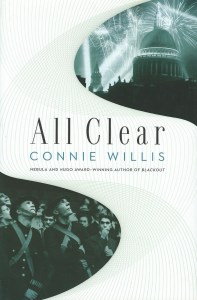
I compromised by beginning, not another novel at the same time, but Roland Allen’s The Notebook: A History of Thinking on Paper, which was my Valentine’s Day present to myself. (See also: I can buy myself flowers!) This had been on my radar since I first saw mention of it at the Biblioasis site, and then Shawn discussed it with the author himself on his channel and that really sold me on it. It was a good choice: it is a nice balance of a niche topic and a wide-ranging survey, covering the history of different kinds of notetaking, the invention of paper notebooks, and lots of different uses over the centuries, with attention to both famous and (to me anyway) completely obscure names. It’s a good book for reading a chapter or two at a time, so I could go back and forth between it and All Clear without too much stress. I’m still happily puttering through it, and trying not to let its contagious enthusiasm for its subject lead to too many extraneous stationery purchases.
But. I still found myself struggling to stay engaged with All Clear so I finally decided I should put it aside for another time. I really do expect I will finish it one day, and hopefully the gap between now and then won’t mean I forget who everybody is.
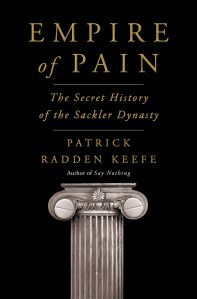 The one other book I got all the way through last week was actually an audiobook: my hold on Patrick Radden Keefe’s Empire of Pain came in, and it proved truly gripping, surprisingly so given that I knew a fair amount about the whole story from various other sources (including the harrowing series Dopesick). I was so caught up in it that I spent longer hours than usual working on my current jigsaw puzzle—which I think contributed to my shoulder pain somehow, so that was a weird confluence as it had me thinking a lot about how tempting the promise of relief would be even for chronic pain as relatively mild as mine. Of course the whole story is also infuriating and outrageous and horrific, and perhaps it would have been more calming to stick to my usual, more benign, program of literary podcasts!
I have a couple of books in my TBR pile now that I’m pretty keen about: Olga Tokarczuk’s The Empusium is one, and Charlotte Wood’s Stone Yard Devotional is another. But I was listening to some of my friends bonding over their enthusiasm for the Cazalet Chronicles the other night and that reminded me that I have wondered if my own relative indifference to The Light Years was a “me” problem rather than the book’s, so I plucked it off the shelf on the weekend and began rereading it. I am a bit shocked how vague my recollection is of it, given that it was not that long ago that I read it for the first time. But it was also not that long after Owen’s death, and there’s a lot I don’t really remember about those months—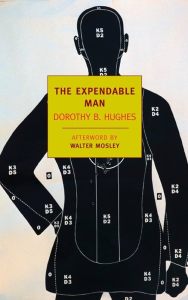 and that timing may well have been the real reason for my middling reaction to it. So far I am enjoying it just fine; we’ll see if when I get to the end this time I feel like reading on in the series.
And now Reading Week is over and it’s just another week—with lots of reading in it! For Victorian Women Writers we have begun working through North & South, and when we’re done with that in a week or so it’s Middlemarch until the end of term: that’s something to look forward to. In Mystery & Detective Fiction we’re on The Maltese Falcon and then next week we start Dorothy B. Hughes’s The Expendable Man, which is one I have not taught before, so I am rereading it now on top of our current books as I begin to sketch out how I will approach it in class.
 I don’t want you to blame yourself for what happened. I know you would have come to get me if you could, but I couldn’t have gone anyway, not with Agnes ill.
 This is very much Kivrin’s experience, and thus ours, as we read both Willis’s conventional narration of Kivrin’s time in 1348 and the more fragmentary bulletins Kivrin records for those back home in her own time, which gradually take on more and more the character of the few remaining testaments of those who actually lived through the plague years, documents which had once seemed to Kivrin melodramatic and implausible. Where the archive is scant, as it must be in such dire circumstances, we rely on our imaginations to fill in the blanks and to fully humanize it. I don’t think anyone could read Doomsday Book and not be overcome with horror and pity for those who faced what they understandably believed was the end of the world.
 —until his turn comes as well. It turns out that Father Roche sees Kivrin’s arrival as literally miraculous, her presence among them a kind of gift or grace from God, whose love and mercy he never doubts, in spite of everything he sees and experiences. For Kivrin, fighting against a malicious, invisible enemy, and always thinking of those who care for her and especially of her tutor, Mr. Dunworthy, whom she believes to the very end will come to her rescue, the line between science and religion starts to blur. Who is Mr. Dunworthy to Kivrin, after all, but an unseen presence—the thought of whom gives her hope and strength in her darkest hours—and an audience for her testimony, which is spoken into a recording device which it had seemed so clever to place in her wrist, so that she would appear to be praying? “It’s strange,” she says in one of her final such messages to someone who may or may not ever receive it;
 Novel Readings