 We’re back from our February break and now nothing stands between us and the end of term except everything we have to get done before then!
In the short term, that means pressing on with East Lynne in “Victorian Sensations.” The portion we are reading this week could be subtitled “Crime and Punishment”: Lady Isabel, having, in a fit of jealous pique, abandoned her kind but somewhat distracted husband for a handsome cad, has been living abroad, miserable and repentant, for a year. Things only get worse after she gives birth to the sad little baby who could have been legitimate if only her lover weren’t such a complete jerk. How much of a jerk is he? Well, after initially hiding from her the news that her divorce is final so that she can’t insist he marry her, he then tells her that he can’t lower himself to marry a divorced women–even though her husband’s grounds of her divorce is her affair with him! Double standards ftw.
On the bright side, by that time she wants nothing more to do with him–even though her only other options are poverty, despair, and death. Then [spoiler alert] a train wreck (a bit conveniently, we thought) kills the poor baby and everyone thinks it has also killed Isabel, so she is free (if that’s the right word) to roam the world like a miserable, repentant ghost…an opportunity she uses to go back to the home and children she abandoned, where thanks to the literally defacing effects of the accident and her “grief and remorse,” she is able to serve, unrecognized, as her own children’s governess under the management of her husband’s new wife.
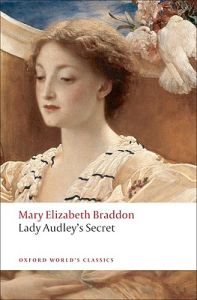 Although I am more and more convinced that East Lynne is overall a pretty bad novel, it is certainly a provoking one, and our discussions have been much livelier than Isabel herself ever is. Our previous two novels have offered significant critiques of the many constraints on Victorian women’s lives–economic, social, political, and sexual. The most transgressive women don’t necessarily fare well–Marian Halcombe, for instance, may outwit her enemies and climb around on rooftops in the first half of The Woman in White but she loses her gumption in the second half and ends up happy just to be an honorary aunt, while Lady Audley is “buried alive” (metaphorically! but still…) for her sins. Still, it’s impossible to read either of those novels and not appreciate these subversive characters as contrasts to the tedious passivity of their more angelic counterparts. Isabel’s grievances, on the other hand, are mostly in her mind, and while we can see that things would have gone better for her if she’d been differently raised and more self-sufficient, it’s hard to conclude that she’s anything more than a cautionary tale. “Oh reader, believe me!” exclaims our narrator:
Lady–wife–mother! should you ever be tempted to abandon your home, so will you waken! Whatever trials may be the lot of your married life, though they may magnify themselves to your crushed spirit as beyond the endurance of woman to bear, resolve to bear them; fall down upon your knees and pray to bear them: pray for patience; pray for strength to resist the demon that would urge you to escape; bear unto death, rather than forfeit your fair name and your good conscience; for be assured that the alternative, if you rush on to it, will be found far worse than death!
Lady Isabel certainly thinks so: she is not so unladylike as to pray for her own death, the narrator reassures us, “but she did wish that death might come to her,” which seems rather a hair-splitting distinction to me. I think my students would be glad if she used her undercover job as a chance to strike back at the woman who has taken her place, as Lady Audley surely would in such a situation–but alas! From here to the end of the book things are only going to get more miserable, for her and thus for us.
 Lady Audley has a closer cousin in Brigid O’Shaughnessy, whose acquaintaince we are just making in Pulp Fiction. Like Lady Audley, she’s a dame making her way in a man’s world, using her beauty as a resource, playing the damsel in distress (the noir version of the angel in the house!) when it suits her purposes and showing her more demonic side when she can’t win any other way. Sam is a better match for her than Robert Audley is (at first) for Lady Audley, though, because he is never under any illusions: he’s always suspicious, of everyone, and so never beguiled by her beauty. Or is he? One of the subtler mysteries of The Maltese Falcon is whether he does in fact love her–a question which in its turn provokes more questions about what exactly we mean by “love.” “If they hang you, I’ll always remember you” may not sound very romantic to us, but coming from Sam it’s a lot, I’d say. And yet of these two novels I think it is The Maltese Falcon that–if only implicitly–puts the higher value on idealism and tender feelings. By the end of Lady Audley’s Secret it’s pretty clear that to be a hero Robert has to toughen up and fulfill his role and duties as a real man. Sam lives up to a similarly hardhearted standard in The Maltese Falcon, but I always find Effie’s “broken” request that he keep his distance–“You’re right. But don’t touch me–not now”–suggestive of the price he has paid, as is the fate he faces with his own shiver of distaste: “Iva is here.” Braddon’s novel concludes, as she blithely declares, with “all the good people happy and at peace.” There’s little peace and even less happiness for Sam.
 Not only is February a short month already but it includes two of the winter term’s time-outs (times-out?): Munro Day and Reading Week. Because February is often one of our most difficult months weather-wise, it’s usually a big relief to have the pressure ease up at work a bit, even if there’s always still plenty to do. This year, the February weather actually hasn’t been that bad, but the change of pace is welcome just the same.
 I haven’t started a new book since I finished Tinker, Tailor, Soldier, Spy, though I did reread Georgette Heyer’s Devil’s Cub last week after recommending it to a Twitter friend looking for a Valentine’s Day present for his wife. I hope she liked it! Sometimes I reread just the final third but this time I started from the beginning. It does take a little while for all the pieces of Heyer’s plot to get lined up, but once they’re in place it’s comedy gold, I think, and also pretty romantic–though YMMV depending on your tolerance for bad boy heroes. (But Mary is so having none of his self-indulgent nonsense!) It’s also good preparation for teaching Lord of Scoundrels, which will be up in Pulp Fiction in just a few weeks!

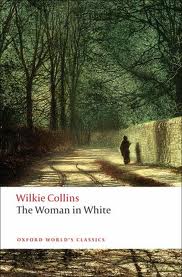
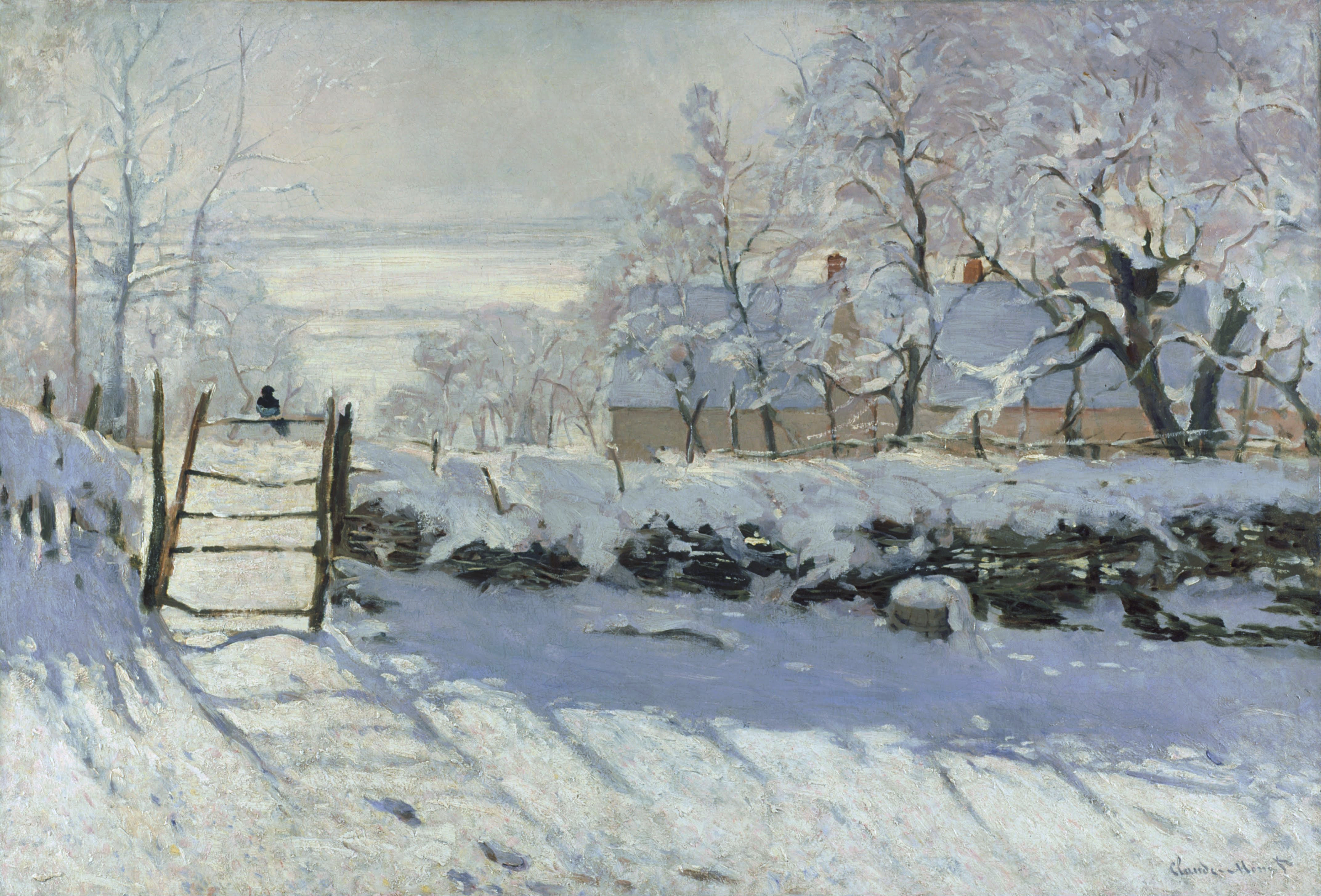

 We’re hunkered down bracing for the big storm that is working its way up the Eastern seaboard. It isn’t clear yet whether Halifax will get much snow or mostly rain and freezing rain, but the biggest threat seems to be strong winds and thus power outages. Happily, the school board cancelled classes preemptively and classes at Dalhousie don’t start until Monday, so none of us has anywhere to go. [January 5 update: Our power went out almost as soon as I pressed ‘publish’ on this post and we just got it back. It got pretty cold in the house but otherwise we got off easy–and there was no measurable snow in Halifax at all, so no shoveling!]
 One specific innovation–a modest but, I hope, a valuable one–is that this year I am going to take some time to talk explicitly about note-taking strategies. Particularly for class meetings that are discussion based, I often get the sense that students do not know what to write down. Many clearly do not record anything at all, while those that think of themselves as conscientious note-takers often seem to be trying to transcribe every word. I’ve been reading up on the Cornell system and I think it’s easily adapted to the kinds of class sessions I typically run, so that’s what I’m going to focus on. Once I’ve gone over it, I will try to make it a common practice to take the last few minutes of a class to have students literally compare notes. (The image here is from the
  The overall structure of the course will be the same, though, as will the readings, which means I can draw on the notes I had to develop more or less from scratch last year. We’re starting with some general discussion about how and why “pulp” and “genre” fiction get differentiated from “literary” fiction. Then we’ll work through our examples of Westerns, mysteries, and romances, with Valdez Is Coming, The Maltese Falcon, and Lord of Scoundrels complemented by a selection of short fiction and, for Westerns, one poem (Sherman Alexie’s “My Heroes Have Never Been Cowboys”). The only one of the readings I really had second thoughts about was The Maltese Falcon, not because it wasn’t perfect for the course but because it is the only one of our three novels easy to cheat about. This year I will take that into account in the paper topics I assign about it. (Sadly, that means nobody gets to write about Brigid O’Shaughnessy as a femme fatale.)
 My other course is a 4th-year seminar on Victorian sensation fiction. I have taught it several times before but not recently–in fact, to my surprise, I realized I haven’t taught it since 2009! I have, of course, assigned a couple of the key texts we’ll be reading in it for other courses: I have often covered both The Woman in White and Lady Audley’s Secret in 19th-Century Fiction. Even The Woman in White hasn’t been on my syllabus since 2012, though. I started rereading it yesterday and I am really looking forward to discussing it with my students. I’ve never taught Ellen Wood’s East Lynne in any other course: it is such a strange novel! In previous versions of this course the fourth sensation novel on the reading list was Braddon’s Aurora Floyd, but I always thought it was less than ideal to have two novels by the same author, however different they are, so this year I have substituted Rhoda Broughton’s
  In many ways, I’m looking forward to the term. There are only two real sources of anxiety (besides the usual anticipatory stage fright). One is just that it’s winter, which always brings complications. The other is that it’s a bargaining year and negotiations between the administration and the faculty association seem to be dead ended. Last time around, they were right up against the strike deadline when a deal was finally reached, and it was very hard on everyone but especially the students. I’m not in the faculty association myself (technically I am appointed to the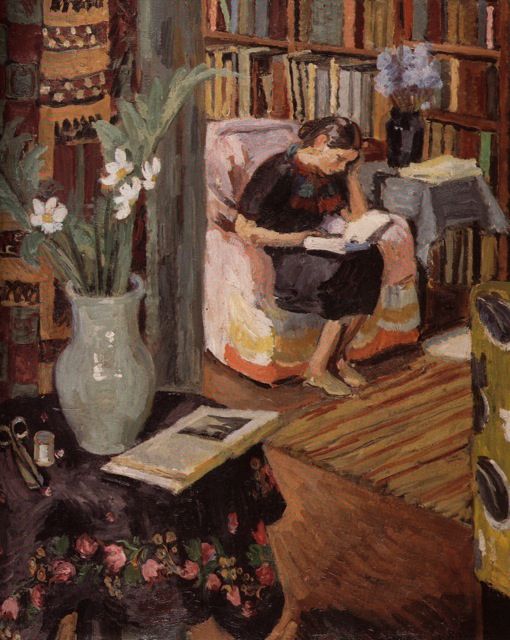
 Today is the last day of fall term classes. I’ve felt a bit confused all day because while it is a Tuesday really, we had Monday classes, thanks to a scheme some committee cooked up to “equalize” the exact number of days every class meets. (Next term the same geniuses have ordered that we have thee “Fridays” in a row, one actually on a Friday, then two more on the following Monday and Tuesday. You tell me how much sense that makes if your Friday meetings are usually tutorials…)



 That’s OK: it happens, especially around this time of term. It is startling to realize how far through the term we are, actually. We had an unusually warm October, and I think all the pleasant, sunny weather contributed to the sense that we were still in the opening phases. But here we are on November 1, and by the time we get back from our protracted study break (all of next week, plus the following Monday ‘in lieu of Remembrance Day’) we will be hurtling towards the end of it.
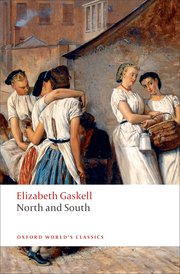 So that class went better than expected, but then my afternoon class went a bit worse: participation was pretty minimal (though everything that was proffered was really useful) and there was a lot of that whole “look down intently at your book every time she asks a question” thing that clearly signals “don’t ask me! don’t even look at me!” Again, that’s fine–up to a point! Everyone’s busy and reading for my class can’t always be everyone’s top priority, even if it is North and South. I was disappointed, though, because usually it’s a class favorite and today’s was a good installment, taking us right through the strike to the remarkable scene on the steps of Marlborough Mill:
