 From the Novel Readings Archives: Since I started this blog almost ten years ago, one of its most important roles for me has been as a place for me to reflect on my teaching, which is the part of my professional life I value the most and that takes up, usually, the majority of my time and energy.
Universities talk a lot about the importance of teaching, but in practice, as we all know and are frequently reminded, in big ways and small, it’s of secondary — possibly tertiary — value when it comes to our professional advancement. A lot of the discussion about teaching at the higher levels of administration seems to turn on the lure of new technologies or the promise of impersonal kinds of efficiency. To those of us who stand in the classroom every day — at least, those of us in the humanities — much of that discussion misses the point entirely. What we want is to engage with our students in ways that are at once rigorous and profound, that serve both the head and the heart.
Standing in front of my students this morning, talking with them as passionately as I could about the final sequences, and the beautiful Finale, of Middlemarch, I hoped I had gotten better at combining the intellectual and what, for want of a better word, I’ll call the spiritual. If I have, it’s partly through the work I’ve been doing outside the classroom (indeed, outside the university altogether), including here on this blog, and including especially the kinds of thinking out loud I did in this post from 2010. I’m so grateful to everyone who reads and comments for helping me sustain and improve this ongoing project of finding (and sharing) both meaning and inspiration in literature.
Standing in Chartres Cathedral Unmoved
I’ve been thinking more about this passage from May Sarton’s The Small Room that I quoted in my earlier post on the novel, from Lucy’s irate speech to her students on returning their woefully inadequate assignments:
Here is one of the great mysterious works of man, as great and mysterious as a cathedral. And what did you do? You gave it so little of your real selves that you actually achieved bordeom. You stood in Chartres cathedral unmoved. . . . This is not a matter of grades. You’ll slide through all right. It is not bad, it is just flat. It’s the sheer poverty of your approach that is horrifying!
I’ve been marking assignments myself (in my more benign moments, I call it ‘evaluating assignments,’ which sounds less adversarial). But that’s not actually what has had the line about standing in Chartres cathedral unmoved running through my head. Instead, it’s our recent class meeting on James Joyce’s “The Dead,” which I know I am not alone in finding one of the greatest pieces of modern fiction: smart, patient, subtle, powerful, poignant. My very smart talented teaching assistant led the class, and as always happens when I hand over the reins, I learned a lot and was reminded why I ended up where I am today, namely, because I loved being an English student. (I had the same treat today because another of our very smart and talented graduate students kindly took over the class on T. S. Eliot. Boy, we can pick ’em!)
Because I was sitting among the students, I couldn’t see their faces, so I had less than my usual sense of whether they were engaged or listening, but there was certainly not a flurry of responses in answer to Mark’s questions about the story. Now, it’s not a hugely forthcoming group anyway, and for that I partly blame both the style in which I have decided to teach the course (basically, lectures, with some Q&A, which seemed to fit the purpose of the course) and also the room we were assigned (quite a formal tiered lecture hall, narrow but deep, which exaggerates the distance and difference between the front of the room and the back and makes the prospect of throwing up your hand to volunteer an idea more intimidating, I expect, to any usually reticent students). Anyway, I sat listening to Mark and looking at the moments on the page he called our attention to and filling up with the old excitement–but also simmering a little at what seemed to me an undue lack of excitement in the rest of the room. ‘Aha!’ I thought. ‘This is what Lucy was talking about! Here they are, in Chartres cathedral, unmoved!’
But the more I’ve thought about that moment and my reaction, the less satisfied I am–not with them (though come on, it’s “The Dead”!), but with myself and with the unfair lose-lose situation I am (silently) putting the poor students in.
The thing is, my classroom is nothing like Chartres cathedral. And I don’t mean just in the look and layout, though here are some pictures so you can imagine the scene for yourself:


No, the dissimilarity I’m thinking about is one of atmosphere. Or, perhaps more accurately, attitude. As I remarked in my write-up of The Small Room, Sarton seems to me to be appealing to”an old-fashioned view of literature as a kind of secular prophecy,” imagining a world in which “the professor’s scholarship giv[es] her the wisdom to speak ‘from a cloud,’ a ‘creative power,’ a ‘mystery.'” I wasn’t–and I’m not–lamenting that this is not my academy. I’m not a secular priest; I have no special creative power, no authority to speak to them from some mysterious height– no interest, either, in evoking spiritual revelations. That’s not my business. We can’t just stand there and emote, after all. There’s not much point in their bringing their “real selves” to their work in the way Lucy seems to want it: what would I grade them on? Failure (or success) at having their own epiphanies, rather than failure (or success) at explaining the concept of ‘epiphany’ in the context of Joyce’s fiction in general and “The Dead” in particular? As Brian McCrea writes,
People who want to become English professors do so because, at one point in their lives, they found reading a story, poem, or play to be an emotionally rewarding experience. They somehow, someway were touched by what they read. Yet it is precisely this emotional response that the would-be professor must give up. Of course, the professor can and should have those feelings in private, but publicly, as a teacher or publisher, the professor must talk about the text in nonemotional, largely technical terms. No one ever won a National Endowment for the Humanities grant by weeping copiously for Little Nell, and no one will get tenure in a major department by sharing his powerful feelings about Housman’s Shropshire Lad with the full professors.
And as I wrote in response to McCrea in a (much) earlier post,
While we can all share a shudder at the very idea, to me one strength of McCrea’s discussion is his admission that marginalizing affect, pleasure, and aesthetic response is, in a way, to be untrue to literature, and that the professional insistence on doing so also, as a result, marginalizes our conversation, alienating us, as McCrae says, “from our students, our counterparts in other academic departments, our families [unless, he allows, they include other professional critics–otherwise, as he points out, even they are unlikely to actually read our books and articles], and, ultimately, any larger public” (164-5). (In Democracy’s Children, John McGowan makes a similar point: “There remains a tension between the experience of reading literature and the paths followed in studying. . . . To give one’s allegiance to the academic forms through which literature is discussed and taught is to withdraw [at least partly] allegiance to literature itself” [65]).
 They aren’t standing in Chartres cathedral unmoved. I’m slamming the door of Chartres cathedral in their face. They might well have been feeling all the excitement I could hope for, or at least those who actually did the reading for the day might have. But it wouldn’t be their fault if they thought the CIBC Auditorium was no place to bring it up. It wouldn’t be Mark’s fault either, or mine. We do show enthusiasm and appreciation for the literature we’re covering, to be sure, but it’s not of the viscerally rapturous variety, or even the aesthetically transcendent variety. It’s a heavily intellectualized variety, and while I don’t think that makes it inauthentic, it isn’t something they are quite ready to emulate, not yet. I want them to feel the readings, and to show that they feel them, but there’s really no appropriate way for them to express that feeling in the ways they would find natural.
But what are we to do? I’m not a fan of the unreflexive response, and taking down the nets would open up our class discussions (at least potentially) to a particularly banal and subjective kind of verbal tennis (“I really like this” / “Can you say more about why?” / “Not really, I just thought it was nice / beautiful / relatable”). Nobody learns anything from that. I usually just hope that my enthusiasm (however peculiar its variety) catches their interest and makes them read more, and more alertly, then they otherwise would. I try to give them tools to notice and think about their more personal responses, too: how they might have been achieved by the formal strategies of the work, and what their implications might be. I was remembering, though, a conversation of my own with one of my undergraduate professors. We had been reading Matthew Arnold, including “To Marguerite–Continued,” at a time when a lot of emotionally difficult things were going on in my life, and after our seminar (in which, as I recall, we talked about things like faith and doubt, and modern alienation, and verse forms, and metaphors) I very tentatively went up to the professor–one of my favorites, a wry 18th-century specialist who always looked faintly sardonic (as is only fitting, of course, for that period). “But don’t you think,” I remember saying (and those who know me now would not, probably, believe how nervous it made me even to stand there and ask this kind but intimidating man anything at all) “don’t you think that life is like he says? that we are isolated like that?” “Perhaps,” was his only reply–that, and a quizzical lift of his eyebrow. Well, what else could he say? What did my angst have to do with his class?
But (I’m full of these equivocations tonight, apparently) I can’t help but think that, for all the gains involved in professionalizing the study of literature, one of the reasons our students don’t graduate and go out into the world and absolutely trumpet the value and significance of the work they did with us is precisely that we have given up that prophetic role. We stood with them outside the cathedral, perhaps, and told them it mattered, and explained its history and architecture and social role and so forth, but left them to stand inside, moved, on their own. To be sure, they might have ignored it altogether if it weren’t for us (how many of these kids would pick up Joyce on their own?), but no wonder they are left thinking that when it came to the things that really mattered, we weren’t there for them.
Originally published in Novel Readings November 10, 2010.
 This week will be our first ever week-long fall break, one of several adjustments to the academic schedule that have come into effect this year. I’m against it in principle, because no matter how long the break, more and more students (in my experience) leave early for it and come back late, which, along with the extra effort it always takes to get back into the rhythm of classes, means more lost time and attention at this point in the term than I’d like. However, I find myself completely in favor of it in practice: for one thing, it means I haven’t spent the weekend prepping for or worrying about my Monday classes, and I’ll have some time this week to do non-course-related reading and writing.
 My other work-related ambition for this reading week is to buckle down and do more preparatory research for the Pulp Fiction class, specifically background reading for teaching
 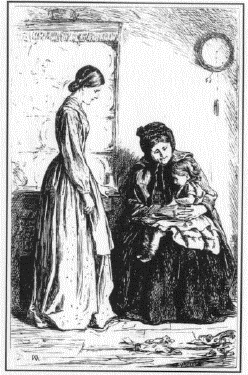 Our reading for today in The Victorian ‘Woman Question’ was Elizabeth Gaskell’s 1850 short story “
 Gaskell’s most obvious literary device in the story is pathos.
 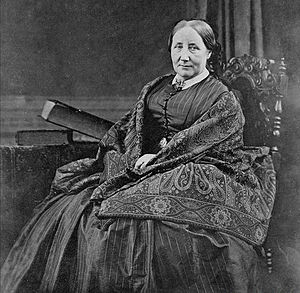 Gaskell was a minister’s wife and “Lizzie Leigh” casts its story of forgiveness in explicitly Christian terms. Susan “is not one to judge and scorn the sinner,” Anne insists to her son Will, for instance (soothing his horror that she has shared Lizzie’s story with one he sees as “downright holy”); “She’s too deep read in her New Testament for that.” What I think is so powerful about the story is the way Gaskell pits Anne’s (and Susan’s) definition of Christian virtue against the “hard, stern, and inflexible” judgments, first of Anne’s husband James (who had forbidden her to seek out “her poor, sinning child”) and then of Will, who has inherited his father’s patriarchal role and with it his rigid righteousness. Anne grows into her own authority as the story progresses, eventually confronting Will directly:
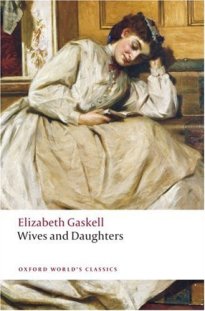 There are definitely things about “Lizzie Leigh” that are hard to take, including the fate of “the little, unconscious sacrifice, whose early calling-home had reclaimed her poor, wandering mother” as well as the extreme seclusion that is Lizzie’s fate after her reclamation. She’s not (like Hetty, or Little Emily) sent entirely out of her world, but Gaskell can’t quite imagine a place for her fully in it either. What I love about “Lizzie Leigh,” though, is the same thing I love about Mary Barton, North and South, and
  I’ve been feeling a bit downcast since Friday, because attendance absolutely plummeted in the tutorials for my Close Reading class and I can’t stop worrying about why — and wondering what to do about it.
 But that is a general pet peeve that’s probably never going to get resolved, while Friday’s collapse is a specific instance that I’d actually like to get to the bottom of. Is it because we’re spending so many weeks on Middlemarch that this first tutorial seemed expendable? (But why would anyone think that, given how much material we clearly have to work through? It isn’t as if we’re going to spend all those weeks on Book I.) Are a lot of students finding the novel difficult to engage with? (But wouldn’t that be an incentive to come to class and learn and talk more about it, rather than opt out — to increase the odds that you’ll enjoy the next 4 weeks?) Do some of them figure they’ve got this covered and don’t need to do the tutorial exercises? (But in that case, they could still come and help out their classmates with their insights, raising the quality of the experience for everyone — and maybe even learning a little something new themselves.) Is the pay-off from our tutorial work in general not clear enough, or actually less than I fondly imagine? On Friday we worked on tracking the movement of point of view in particular passages — but we also just talked about the themes and characters set up in the first section of the novel: both activities seemed pretty valuable to me, at least.
 First of all, where did this past week even go? It feels like just yesterday I was writing my previous post, in a flush of enthusiasm about
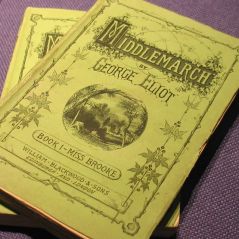
  In Close Reading, we’ve just started Middlemarch — always a happy occasion for me, of course! Here’s hoping I can make it a good experience for the students as well. In a break from the usual rhythm of this course, I open with a fairly formal lecture to establish some biographical and philosophical context: as I explained to the class, with short texts it’s reasonable to expect them to be able to put specific details into the context of the whole right away, but with a text this long we can’t do meaningful close reading exercises without my providing some preliminary interpretive frameworks. I’ll do a bit more of that tomorrow, and then they’ll have some general concepts to guide their reading and analysis as we keep going. We’re only reading Book I this week: it’s always nice to move through it relatively slowly (we’ll take about two more weeks on it in Close Reading than I usually allow for it in my 19th-century fiction class).
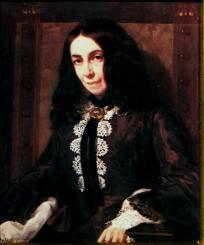
 In my seminar on the Victorian ‘Woman Question,’ we started work last week on Elizabeth Barrett Browning’s 1856 verse-novel Aurora Leigh. It’s usually kind of hard going for the students: although it does have many of the familiar features of a Victorian marriage plot novel, it also includes (among quite a bit of more miscellaneous material) long meditations on, and also arguments about, the nature and purpose of poetry in the modern world — and its 9 books of blank verse add up to a total of approximately 15,000 lines of iambic pentameter, which, let’s face it, is not the easiest reading even when the verse itself is thrilling … which, frankly, for long stretches Aurora Leigh is not.

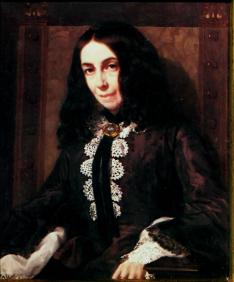 That Aurora Leigh has not lost its radicalism — that we are still fighting on some of the same fronts — was made unexpectedly clear to me this past weekend, as with so many others I watched the story of Donald Trump’s now-infamous bus tape break, and then one pontificating man after another denounce it in the name of his daughters (or his wife or his great aunt or whatever). For some men — too many men — women are still seen primarily as complementary, their value uncomfortably entangled with ownership (all those possessive pronouns!), their right to respect and dignity somehow contingent on their belonging to someone else (someone else male, of course). My
  Over the past few weeks in Close Reading we have been working on disentangling specific elements of poetry and fiction in order to improve the precision of our analysis. We’ve focused, for instance, on tone and diction, on figurative language, on imagery, on symbolism, on rhythm, on point of view, on narrative voice, on characterization, and on setting. Often separating these elements is quite an artificial exercise, but there’s value in it nonetheless, as it helps us moves from impressionistic responses to focused observations that can be the foundation of critical conversation and analysis.
 I was struggling over what to write about in this post, which begins the 10th season of my
  I opened Close Reading on Wednesday with a lecture focused primarily on choices: first ours, in the department, to include the course among our suite of requirements; then theirs to take it, which includes their choice to major in English (not something I’ve ever heard of anyone being pressured into); then, moving into the course materials, the choices writers make, from the biggest (to write anything at all) to the smallest (to use this word or that one). My broader pitch is for the connection between aesthetics and ethics; I quote Wayne Booth, which won’t surprise regular visitors here:
 In today’s tutorials we looked at one writer’s specific choices, comparing Robert Frost’s “In White” to the later, much more famous version, “Design.” You can see the two poems side by side
  For a somewhat different perspective, we’re also reading Margaret Oliphant’s essay “The Condition of Women.” (Both are in Susan Hamilton’s excellent
  It happens so gradually at first: there’s a slight chill in the evening air, the sky is a little darker on my morning run, the leaves look just a little less green. Then a faint hum begins on campus: more people are in their offices, the sidewalks are a bit more crowded, signs of arrivals and departures — abandoned sofas and mattresses, extra trash bags, boxes for recycling — appear in the neighborhood. It’s at once depressing and enlivening: summer is over, and soon we’ll be back at school.
 So, what will I be busy with this term? I have just two classes, both ones I usually enjoy teaching very much and both of which I haven’t taught since 2011-12. The first is English 3000, Close Reading, which is part of our suite of required classes for majors and honours students. They don’t have to take English 3000 in particular: they have to chose one of our ‘theory and methods’ courses, which also include The History of Criticism and Contemporary Critical Theory. The first time I taught English 3000, in 2003, that wasn’t the case: then, it was one of two classes we’d introduced that were to be core requirements for every student in our program (the other was a survey, Literary Landmarks). Then, it had an enrollment of 120; this year, it is capped at 60 and right now has 42 students in it — so, quite a different undertaking. Still, my approach to the class was shaped by thinking about it as something that should be as useful and as engaging as possible to every English student — to every reader, in fact. It is actually the most conceptually interesting class I’ve ever developed (for me, at least) because it isn’t organized around content, the way my classes usually are, but around a method, a habit, a practice.
 In addition to working on how to read attentively (including learning precise vocabulary for explaining what we read), I try to focus our attention on why it matters to read carefully, not just for class but for life. In working out my approach, I drew especially on Wayne Booth’s The Company We Keep and on the ways he links aesthetics to ethics. My hope is that this connection motivates students to see our work, not as an intellectual parlor game, but as something with vital implications for living an examined life. We’ll be reading a selection of poetry and short fiction, and then really digging into Middlemarch and The Remains of the Day. The juxtaposition of these two very different novels has proven extremely fruitful in past iterations of the course. There is always some grumbling about Middlemarch (“it’s TOO LONG to read in a one-term course,” a student once exclaimed in her course evaluation — which amuses me because of course I always teach it in one-term courses, which are all we offer now, and usually with four other fairly long books). My justification is that if we’re going to pay really close attention to a novel, it should be a novel that I am confident will reward that attention. And we take five whole weeks to read it, so we don’t exactly rush through it.
 My other fall class is an upper-level seminar, The Victorian ‘Woman Question.’ It has 23 students in it, which is actually pretty big for a seminar — it’s going to be a tight fit, for instance, getting in all the student presentations. But if past years are any indication, the discussion should be fairly robust. I’ve done this class with an exclusive focus on fiction, but this year I’m doing my more standard mix of genres. We’ll start with some non-fiction, including Mill’s The Subjection of Women and essays by Frances Power Cobbe and Margaret Oliphant (included in Susan Hamilton’s excellent Broadview anthology Criminals, Idiots, Women, and Minors), then we’ll read The Tenant of Wildfell Hall, The Mill on the Floss, Aurora Leigh (all of it, hooray!), The Odd Women, and an array of other short poems and stories. From the outset I emphasize that there wasn’t just one ‘question’ about women’s roles, and there certainly, too, wasn’t just one ‘answer.’ I provide some historical context at the outset, including information about women’s legal, economic, political, and educational realities, and then we approach each of our readings to see what terms it sets for the debate: how it poses and answers the ‘woman question.’
 I had hoped that
  I’ve been roughing out schedules for my 2016-17 courses — even the winter term ones, because before I can order books for them I need some idea of how the readings will fit in. As I consider how best to allocate class time, especially for my first-year class, I’ve also been thinking about a very interesting conversation I had recently with a former student who now works in a Dalhousie office concerned, among other things, with understanding student retention.
 Novel Readings