I’ve put off writing this post, hoping that I’d get some bright idea about what to say in it. Is it possible that I’ve been reporting on my weekly class business for too long? Everything I have to say seems like something I’ve said before. Actually, that in itself might be worth considering, because I have also been feeling as if a couple of the topics and activities I’ve covered in my classes since the start of term have lost their interest or their urgency for me, and that as a result it has been harder for me to present them with as much conviction as usual. I don’t think (or at any rate, I hope) that my students are likely to have noticed, since they don’t have previous iterations of these courses to compare their own experience to. But if things are feeling a bit repetitive here, that is almost certainly a sign that I may be repeating myself a bit too much in the classroom, and that it’s time to shake things up, if only for my own sake.
In Close Reading, for instance, I am feeling impatient with the basically very good textbook I’m using. Its explanations of key terms and its models of close reading are as sound as before, but this is the third time I’ve used it, and it has quite a limited selection of poems and stories, many of which the author uses extensively in her own discussions, leaving me with even fewer to choose from for the students’ assignments. In our poetry unit, I do bring in “outside” texts sometimes for in-class exercises (tomorrow, for instance, we’ll be discussing Robert Graves’s “The Cool Web,” which as I’ve mentioned before here is not just one of my favorite poems but the one that transformed me into an English major). There are logistical, copyright, and other reasons, though, why this gets harder as we move into short fiction. I’m hoping not to teach this class again next year, partly because there are other courses I haven’t had a chance to teach in a while and partly because I’d like to look around again for different possible readers. The first couple of times I taught it, back in 2003 and 2004, I used a somewhat eccentric book from Broadview Press called Visions and Revisions: The Poet’s Process. Comparing different versions of the same poem is a great way to focus attention on the effects of particular words, forms, or rhythmic variations. I don’t know if I’d go back to it: the range of really usable options was not that great in it either, as I recall.
 This is not to say that I’ve tired of enthusing over Donne’s “Death, be not proud,” even in the context of trying to teach scansion, and I am absolutely looking forward to teaching both Middlemarch and The Remains of the Day again. As the great Samuel Johnson said, “When a woman is tired of Middlemarch, she is tired of life!” OK, he didn’t exactly say that–but surely it is true. Similarly, I am enjoying working through Persuasion in 19th-Century Fiction from Austen to Dickens — which I haven’t actually done that recently, since last time around I made the mistake of assigning Pride and Prejudice. I mentioned last week that Persuasion might be losing its place as my favorite Austen novel; if that were true, Pride and Prejudice would certainly replace it. But Persuasion has the great advantage, in the classroom, of being not nearly so familiar, beloved, or frequently adapted. (It is familiar, beloved, and adapted plenty, as all things Austen are … but I will back slowly away from the rant this topic too easily provokes.) I do feel it’s time to rework my start-up material for this course, and for its alternate (19th-Century Fiction from Dickens to Hardy). I always give an overview of “the rise of the novel” and talk a bit about social contexts, publication methods (like serialization), and other background information that I can’t assume the students have learned about before: I think this is important, and I try to keep it up to date, and to tweak it, also, to reflect the particular novels we’ll be reading and any specific issues they raise. But I would like to find a catchy way to start off that doesn’t make the students so passive, because as I move out of lecture mode and into Socratic mode, it takes a while for participation to pick up. I’m pretty sure to be teaching the Dickens to Hardy class next fall, so this is something I will put on my to-do list for the summer.
We’ve just wrapped up work on Persuasion in that class and on Monday we start Vanity Fair. I’m excited, even if the one student in the class who read it ahead of time already told me she didn’t like it. I will convert her! Or maybe not, but I do believe, not least because I’ve so often found it to be the case with my own reading, that it is possible to learn to appreciate something, if not necessarily to like it. (Update: Another student who has just started it tells me she’s finding it “hilarious” so that’s encouraging!)
On a side note, the painting that is my first graphic here is Duncan Grant’s “Interior with the Artist’s Daughter”: it has no particular relevance to this post but I like paintings of readers and I can’t find any of teachers.
 We’re one week into the fall term and I’m starting to feel that I’ve got my sea legs back. Every new term seems a bit herky-jerky at first, but before long it smooths out, or at least becomes routine again.
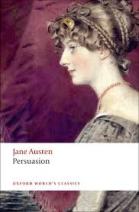 In 19th-Century Fiction, we’re reading Persuasion. For a long time I have identified Persuasion as my favorite Austen novel, but this time through, my allegiance is wavering: more than usual when reading it I am frustrated by Anne Elliot’s not speaking, when all it would take to bring about the consummation so devoutly to be wished is a few clear words at the right moment. I know, I know: her reticence and self-control are admirable, and just going for what you want makes you Louisa Musgrove, a literally fallen woman who clearly signals the dangers of undisciplined desire. When Anne finally does say something (“she speaks!” say my marginal notes at one point) it is also always significant: a breakthrough of feeling, an assertion of principle, a lesson in values. Still, one key to the novel’s happy ending is that she finds her voice, or figures out how to use it to win for herself the kind of happiness someone of her high character can accept: not simple pleasure or self-gratification, but a marriage of true minds.
 Or maybe not. I hope not. I don’t mean that my students in the classes that started up today made a bad impression on me–far from it, in fact, as they seemed pretty attentive and ready to go, which is impressive considering the circumstances of my first class meeting this morning, at least. But their first impressions of me probably could have been better, and given the research that shows students make up their minds about professors pretty quickly (for better and for worse), it’s a bit discouraging to start the term off this way.
 My morning class was Close Reading. I don’t think it was a disaster–I did more or less get through my introductory lecture, in which I lay out the underlying concepts of the course as I’ve developed it–but it did not go well. One problem both was and wasn’t my fault. It was my idea to find us a new room when I saw that we’d been assigned to one of the dreary (and very dusty) rooms in our
  Well, I’m sure they’ve seen worse–right? I did at least cover what I’d meant to, and I think I made helpful noises when students asked questions, and now we are working on relocating the class again so none of us have to endure quite that level of discomfort again. Ironically, the only room that is currently available is the same one in Life Sciences that I worked so hard to get out of. If it’s big enough and not too hot, I guess I can put up with having a chalk board instead of a white board and needing to sign out cables any time I need to hook up my iPad for slides. (I won’t be using my laptop again, that’s for sure: I don’t need that extra layer of worry!)
 My version of “otherwise” has
 I have also appreciated the way reviewing has expanded my reading, particularly when the books are suggested by other editors rather than hand-picked by me to suit my own known tastes and sensibilities. I would point, for example, to the increase in Canadian titles I have read since taking on some commissions for Quill & Quire and, more recently, Canadian Notes and Queries, though the best example of a writer I would probably never have discovered on my own but loved would be
 I haven’t disappeared or given up blogging! It’s just that as soon as my final grades went in, I had to buckle down and finish two reviews that have been haunting me — not because I didn’t want to write them, but because though I have had the books for some time and had even started reading them, it just hadn’t been possible for me to get the hard work of writing thoughtfully about them done. The result was that even though neither of them was technically late, I felt guilty for weeks! But one went in last week and the other today, and while I now have to wait and find out what the editors think, including what revisions they want, I’m out from under that shadow and ready to contemplate the rest of my summer.
 However! Rain is perfectly good weather for taking stock and making plans, and that’s the stage I’m at now. I actually feel as if I need some dedicated time for that, because I’m not really sure right now what my top priorities are. I spent a lot of the last two summers doing work related to
  Some of that was due to my specific teaching assignments this year. My fall term courses were both ones I have taught before and really enjoy. Since I first designed my version of Close Reading, I have tried to infuse its more technical aspects with both critical and moral purpose, and the result is that it generates some of the most interesting discussions and assignments I get. It was also balm to my soul to spend five weeks on Middlemarch for this class: that is not enough time, of course–what would be?–but still feels comparatively luxurious (when I teach Middlemarch in my standard 19th-century fiction class, we get three weeks). Finishing with The Remains of the Day is always marvelous, but Ishiguro’s novel felt
  One thing I realized as the term went by is that the big questions that, in my mind, really motivated the course–questions about the difference between “pulp” or “genre” fiction and “literary” fiction, for instance–were not of great interest (at least, as far as I could tell) to most of the students: they did not seem to be invested in either the distinction or arguments against it. My guess is that most of them had never thought much about genre categories or literary prestige before; certainly I got no sign that they believed themselves to be victims of or participants in any kind of “culture war” by virtue of having been assigned Elmore Leonard and Loretta Chase instead of Shakespeare and Jane Austen. It’s possible that some of them are now more interested in how and why we might draw these kinds of lines, but it was at once disorienting and refreshing to realize that they were not nearly as exercised about them as people often are in the media or in the world of literary criticism and book reviewing. In the end it was just another thing I was trying to teach them about.
 OK, I exaggerate slightly: I’ve also had some papers to grade. But the final exams for both of my winter term classes were this Tuesday. At 3 hours each, with set up and pack up time that meant over 7 hours straight in the dreary Dalplex fieldhouse, and I walked away with 120 exams which I will be working my way through until next Tuesday at least. Overall, it’s not exhilarating work: there are certainly bright spots (many of which so far have been in the essay answers from students in the 19th-century fiction class), but a lot of this marking is more or less drudgery. I do try to make the questions not just relevant but, where possible, interesting, for me as well as for the students, but as I’ve written about here before, the main value of exams for me is simply, and kind of sadly,
  I have been managing to get some reading done: some serious reading, with an eye to reviewing deadlines coming up, and some light reading. I just finished Julie James’s newest, The Thing About Love — and did not love it. It was entertaining enough, and she’s good at both plot and banter, but the awkwardness I always notice in her prose seemed particularly conspicuous this time. I can’t believe better editing couldn’t smooth a lot of it out: she has tics like explaining new names by adding “referring to etc. etc.” after them. I was diverted by the book, but also disappointed in it, especially as I like her previous novel, Suddenly Last Summer, a lot. I am really looking forward to doing some immersive reading that’s not for work (or for formal reviews, for that matter). I have some birthday gift cards I’m going to use to treat myself to some new books as soon as I file final grades! It will probably be pretty quiet around here until then.
 Anyway, the unusual silence here mostly reflects just how busy I’ve been, along with how tired I’ve been feeling when the work is done — too tired to do much good reading, too tired to do much extra writing. The reading I’ve done outside of work has mostly been light: I just finished both of
  I didn’t plan it this way, but it turns out that teaching Lord of Scoundrels at the end of a term that has also included Bleak House, Adam Bede, and Tess of the d’Urbervilles is a good way to bring home the truth of
  And yet, while the overt and (ultimately) happy sexiness of Lord of Scoundrels is indeed “awesomely excellent,” it’s not entirely fair to set up modern romance fiction as the positive alternative to punishing Victorian fiction, which I think can actually be quite “sex positive,” albeit usually in a much more subtle, and sometimes perverse, way. For one thing, the women who pay such a high price for breaking society’s rules are very often portrayed as victims: the novelists direct our disapprobation not against them but against the world that treats them so cruelly for something so understandable or natural. Lady Dedlock should not have died cold and alone reaching for her lover’s grave: all the moral and emotional force of Bleak House is directed against that outcome. It’s true that the implication may still be that she has sinned, but she deserves to be forgiven and brought back into the loving embrace of her long-lost daughter, our moral exemplar. Eliot and Hardy make it particularly clear that their “erring” heroines are participating (more or less willingly, of course) in a natural process made shameful and dangerous by social codes, not because it is intrinsically wrong. If only some reconciliation could be made between flesh and spirit, between nature and law — so much shame and fear and violence could be avoided!
 The March madness continues – indeed, I’ve been wondering how I managed not just to read but also to blog about actual books more than once last week. I felt quite on top of things for a bit, but two sets of papers have just come in, more paper proposals are incoming even as I write, and by Friday I’ll have another set of tests to mark … whew! The trick is just to take it one item at a time, and to take regular breaks for tea and treats. 🙂
 In 19th-Century Fiction we’ve been finishing up
  Novel Readings