 For the first time ever, I have assigned Scenes of Clerical Life in one of my classes—more accurately, a scene of clerical life, “Janet’s Repentance.” My re-reading of it some years ago had lodged the possibility of assigning the story (novella?) in my mind, but I hadn’t found what felt like the right opportunity until this term’s all-George Eliot, all the time seminar. We are discussing “Janet’s Repentance” in the seminar this week, so I thought that was a good enough reason to lift this post out of the archives.
I’m not sure when I last read George Eliot’s first published fiction, Scenes of Clerical Life. It might have been as much as 15 or 20 years ago that I read any of the stories right through, though I have certainly dipped into “Amos Barton” once or twice when thinking or writing about her realism and her intrusive narrator. I picked the book off my shelf again this week because I have been thinking (and will be writing) about scenes of visiting in Eliot’s novels. So many of her climactic moments are set up that way, with a sympathetic visitor bringing comfort or guidance to someone in crisis: Dinah visiting Hetty in prison in Adam Bede, for instance; Lucy visiting Maggie near the end of The Mill on the Floss; perhaps most notably, Dorothea visiting Rosamond in Chapter 81 of Middlemarch. The key thing, of course, is that these are human, rather than divine, “visitations” and thus neatly encapsulate her ongoing translation of religious beliefs into secular practices. As I was collecting examples, I had a vague memory of Edgar Tryan visiting Janet in “Janet’s Repentance,” so I thought I’d go back to the story and see what it adds to the pattern I’m exploring.
“Janet’s Repentance” is interesting for lots of reasons, including its grim account of Janet’s abusive marriage, which has driven her, in her misery and shame, to drink:
‘I’ll teach you to keep me waiting in the dark, you pale, staring fool!’ he said, advancing with his slow, drunken step. ‘What, you’ve been drinking again, have you? I’ll beat you into your senses.’
He laid his hand with a firm grip on her shoulder, turned, her round, and pushed her slowly before him along the passage and through the dining-room door, which stood open on their left hand.
There was a portrait of Janet’s mother, a grey-haired, dark-eyed old woman, in a neatly fluted cap, hanging over the mantelpiece. Surely the aged eyes take on a look of anguish as they see Janet — not trembling, no! it would be better if she trembled — standing stupidly unmoved in her great beauty while the heavy arm is lifted to strike her. The blow falls — another — and another. Surely the mother hears that cry — ‘O Robert! pity! pity!’
 “Do you wonder,” asks our narrator, as the sordid tale unfolds, “how it was that things had come to this pass — what offence Janet had committed in the early years of marriage to rouse the brutal hatred of this man? . . . But do not believe,” she goes on,
that it was anything either present or wanting in poor Janet that formed the motive of her husband’s cruelty. Cruelty, like every other vice, requires no motive outside itself — it only requires opportunity. . . . And an unloving, tyrannous, brutal man needs no motive to prompt his cruelty; he needs only the perpetual presence of a woman he can call his own.
“A woman he can call his own”: that remark is strongly reminiscent of Frances Power Cobbe’s powerful 1878 essay “Wife-Torture in England,” in which Cobbe emphasizes the corrupting effect of presumed “ownership”:
The general depreciation of women as a sex is bad enough, but in the matter we are considering [spousal abuse], the special depreciation of wives is more directly responsible for the outrages they endure. The notion that a man’s wife is his PROPERTY, in the sense in which a horse is his property . . . is the fatal root of incalculable evil and misery. Every brutal-minded man, and many a man who in other relations of his life is not brutal, entertains more or less vaguely the notion that his wife is his thing, and is ready to ask with indignation (as we read again and again in the police reports), of any one who interferes with his treatment of her, “May I not do what I will with my own?”
(If you’re interested in reading more on this aspect of Victorian marriage and its treatment in Victorian fiction — try Lisa Surridge’s Bleak Houses and Kate Lawson’s The Marked Body, both of which discuss “Janet’s Repentance.”)
 It’s also interesting how recognizable George Eliot is here. Many of the things she does better (or at least more fully, or with greater finesse) in her later novels are here already, such as the patient unfolding of social context — the “thick description” within which her plots acquire so much more meaning than their simple actions might indicate — and the pulsation between individual moments and philosophical ideas, facilitated by the narrator’s commentary on the action. Just as, despite her protective camouflage, Eliot’s friends “IRL” knew her when they read her earliest fiction, any readers of The Mill on the Floss know they are in familiar company when they see this anticipation of the famous “men of maxims” passage:
Yet surely, surely the only true knowledge of our fellow-man is that which enables us to feel with him – which gives us a fine ear for the heart-pulses that are beating under the mere clothes of circumstance and opinion. Our subtlest analysis of schools and sects must miss the essential truth, unless it be lit up by the love that sees in all forms of human thought and work, the life and death struggles of separate human beings.
And Janet’s appeal to Mr. Tryan — “It is very difficult to know what to do: what ought I to do?” — is one that has echoes across Eliot’s oeuvre, including in a passage in Middlemarch that has long been central to my thinking about the broader question of religion in Eliot’s fiction: “Help me, pray,” says an overwrought Dorothea to Dr. Lydgate; “Tell me what I can do.”
The big difference, though, is that in Middlemarch the appeal may have the same impulse as a prayer (“an impulse which if she had been alone would have turned into a prayer”) but it is directed at a doctor, and it’s not even really his medical advice she wants but something more fundamentally human, some guidance about how to be in the circumstances. The transformation from sacred to secular is even more distinct in the climactic encounter between Dorothea and Rosamond much later in the novel. But in “Janet’s Repentance” not only is Janet asking a clergyman (and an Evangelical one, at that) for help, but his advice is religious advice — and it is not undercut, or translated into humanistic terms, by the narrator. David Lodge notes in his introduction to my Penguin edition that “Janet’s Repentance” is “a completely non-ironical account of a conversion from sinfulness to righteousness through the selfless endeavours of an Evangelical clergyman.” He goes on to suggest that Eliot’s “religion of Humanity” is just below the surface, but it’s certainly not visible the way it is in her later works. It’s true that Tryan’s kindly fellowship is essential to his success as a religious ambassador: “Blessed influence of one true loving human soul on another!” says the narrator. But it’s trust in God that Tryan recommends, and that brings Janet peace.
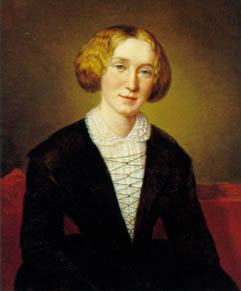 The ending of the story is a bit of a disappointment: like Anne Brontë’s Helen Huntingdon, Janet feels obliged to stand by her man as he pays the final price for his cruel and self-destructive behavior. I think that in both cases this affirmation of ‘proper’ wifely devotion is important to direct our attention to the sins of the husbands. Brontë has a more political point to make, though, about the structural as well as ideological failures of marriage, while Eliot’s story focuses us more on the internal moral life and on the redemptive value of compassion and faith. Janet also does not get the hard-earned Happily Ever After that Helen enjoys, at least, not in this life: as Lodge points out, Eliot “even compromised with her belief in immortality to the extent of allowing her hero and heroine a ‘sacred kiss of promise’ at the end.” Disappointing, as I said, and surprising, from an author who wrote so stringently about the immorality of acting on the basis of future expectations rather than immediate consequences:
The notion that duty looks stern, but all the while has her hand full of sugar-plums, with which she will reward us by and by, is the favourite cant of optimists, who try to make out that this tangled wilderness of life has a plan as easy to trace as that of a Dutch garden; but it really undermines all true moral development by perpetually substituting something extrinsic as a motive to action, instead of the immediate impulse of love or justice, which alone makes an action truly moral.
Was she catering to her as-yet unconverted audience, do you suppose, in setting Janet up as a memorial to “one whose heart beat with true compassion, and whose lips were moved by fervent faith”? Or practicing what she herself preached by inhabiting, as fully as possible, a point of view different from her own?
Originally published January 7, 2015. The writing I was doing on visitations in George Eliot became (more or less) the essay “Middlemarch and the ‘Cry From Soul to Soul,'” published in Berfrois in August 2015. Sadly, Berfrois is no more, but the essay can also be found in my collection Widening the Skirts of Light, available as an e-book from Amazon & Kobo for the lowest price I was allowed to set.
 Another January, another new term! I’ve got two classes this term of two quite different kinds. The first is our second-year survey course British Literature After 1800, so its aim is to cover a broad sweep of territory; the other is a combined Honours and graduate seminar on George Eliot, a rare opportunity to zoom in on a single writer—a privilege rarely accorded, in our program anyway, to anyone besides Shakespeare!
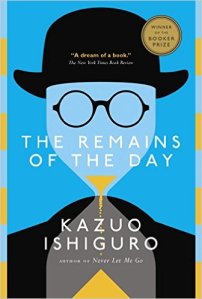 Something that was very much on my mind as I prepared for this particular class meeting was the last time I taught this course, which was the winter term of 2020. In early March of that term, we were all sent home; my notes leading up to what turned out to be our last day in person have a number of references to contingency plans, but none of them (none of us) anticipated the scale of disruption. It came on so quickly, too, as my notes remind me. We were part way through our work on Woolf’s Three Guineas on our final day; quite literally the last thing I wrote on the whiteboard was “burn it all down.” I got quite emotional many times while revising the course materials for this year’s version: that term stands out so vividly in my mind as “the before time,” before COVID, which is also, for me, before Owen died. We were still essentially in lockdown, after all, when he died in 2021; we had only just been able to start coming together as a family again. I don’t usually have a lot of emotional investment in my course materials, but it was unexpectedly difficult revisiting these and thinking of how much has changed. Tearing up over PowerPoint slides: it seemed absurd even as it happened, but it did. That said, because of COVID I ended up cutting The Remains of the Day from the syllabus in 2020, and given that it is in my personal top 10, that I rarely have the opportunity to assign relatively contemporary fiction, and that I am running out of years to assign anything at all, I am stoked about being able to read through it with my class this term. If only it didn’t feel so timely!
 I am also super stoked about getting to spend the whole term reading and talking about George Eliot with a cluster of our best students—not just our brightest but honestly, I know most of these students from other classes and they are some of the nicest and keenest and most engaged and curious people you could hope to work with. I felt so much good will from them today as we did our ice-breaker (nothing too “cringe,” just everyone’s names and anything they wanted to share about their previous experience, or lack of experience, with George Eliot). I hope their positive attitude survives Felix Holt, not to mention Daniel Deronda! Knowing that a number of them had read Adam Bede and/or Middlemarch with me in other recent courses, I left both of these off the reading list for this one. Middlemarch especially feels like a gap, but on the other hand, I don’t think I could have realistically asked them to read both Middlemarch and Daniel Deronda in the same term (unless I didn’t assign anything else), and Daniel Deronda is pretty great. I had quite a debate with myself about Felix Holt vs Romola: just for myself, I would have preferred to reread Romola, but I’ve taught Felix Holt in undergraduate courses before and it is actually pretty accessible. Sure, Felix is so wooden he makes Adam Bede look lively and nuanced, but, speaking of timely, a book about the pitfalls of democracy when the population is not (ahem) maybe sufficiently wise to make good choices seems on point. Along with those two, we will be reading “Janet’s Repentance,” The Mill on the Floss, and Silas Marner. I’m already a bit worried that it’s going to be too much reading . . .
 The last time I taught this class was 2015, and then it was a graduate seminar only. I had stepped back a bit from teaching in our graduate program: we get at most one seminar a year, and my favourite classes to teach have always been our 4th-year or honours seminars, so I made them my priority. OK, that’s not entirely truthful: I had also felt increasingly uncomfortable with graduate teaching, both because of my own loss of faith in aspects of academic research and publication (
 Believe it or not, I’ve been posting here about my teaching
  It was just about a month ago that I last posted in this series.
  Noble aspirations, and already ones I have had a few stumbles living up to, but I have resolved not to spend the twilight years of my career in the classroom assuming the worst and chasing demons. After all, the highest incident of (discovered) plagiarism I have ever had was the dismal year that 1 in 5 of my intro students ended up in a hearing (with a near 100% finding that they had committed an offence)—and this was all cut-and-paste plagiarism of the most discouraging kind (much of it on pass-fail exercises, including supposedly personal writing like reading journals! I still can’t get over that!). Yes, AI is a game-changer, but I refuse to play, and I especially refuse to dedicate a single minute of precious class time to “training” students how to use it “responsibly” (as if there is such a way) instead of using our time on what they and I are actually there for.
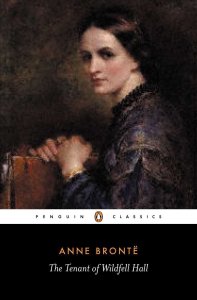 I have taught the Austen to Dickens class since then, but I assigned Jane Eyre. Much as I love Jane Eyre, I think I enjoy teaching Tenant more: its structure is so smart and complex, and the problems it tackles are, sadly, still so timely. I also appreciate that Anne Brontë’s attention is more clearly on social and systemic problems and solutions, while Jane Eyre is relentlessly personal—which is not to say, of course, that Jane’s story isn’t embedded in wider contexts, but her first-person narration focuses our attention constantly on what it is all like to her, on her individual feelings and values and decisions.
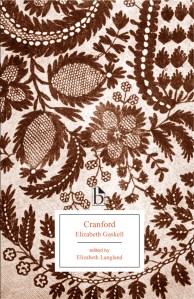 One of the biggest tasks I have underway at the moment as Undergraduate Coordinator is drafting a first attempt at what next year’s slate of classes will look like. As I pencil in my own courses (or whatever the Excel equivalent is of that!), I find myself reflecting that I won’t be on the timetable for that many more years. When I’m tired and grumpy, I feel some relief about this, but when I have just been in class and riding that adrenaline rush, I feel wistful, even bereft. What will make up for the loss of that energy, of that sense of purpose, of being on the front lines of something that matters, of being pretty good at something? I know there are other things that matter and I am trying to figure out what else I might be good at. Still, this is something that actually causes me more work-related stress than AI. I will try not to make these posts a dreary refrain about either of these topics! And on that note, we have two more weeks to spend on Tenant and then we are on to David Copperfield, and then, thanks to the added week in December, there will still be time for Cranford: hooray!
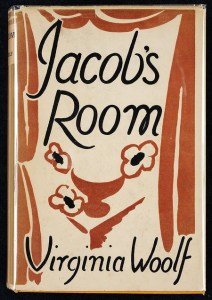 I have also been continuing my read-through of Woolf’s diaries. I am into 1923 now. 1922 seemed like a slow year and then she published Jacob’s Room and read Ulysses, both of which events generated a lot of interesting material. I am fascinated by her self-doubt: we meet great writers of the past when that greatness is assured, and also when their writer’s identity is established, but Woolf is not so sure on either count, and is hypersensitive—as George Eliot was—to criticism, especially when she felt her work was misunderstood, not just unappreciated. Jacob’s Room is significant because it is the first novel that, to her, really feels like her own voice: “There’s no doubt in my mind,” she says, “that I have found out how to begin (at 40) to say something in my own voice; & that interests me so that I feel I can go ahead without praise.” I am always fascinated and inspired by accounts of artists of any kind who find their métier and know it; I still think often of
 Look, I don’t want to pretend everything is fine, in general or in my classes. Last week I was grading take-home midterms for Mystery & Detective Fiction and feeling to my core the truth of what is now a commonplace: AI is pervasive, and not “for better or for worse”—just, unequivocally, for worse. The one consolation I had (and it is, truly, not particularly consoling) is that the results, for the students, are not usually good. This means it doesn’t matter whether I can
 These are long, complex, demanding books! So when the author of that essay declares that “our average graduate literally could not read a serious adult novel cover-to-cover and understand what they read,” that students “are impatient to get through whatever burden of reading they have to, and move their eyes over the words just to get it done,” I have to wonder: are my students really so exceptional? I mean, I do think they are lovely and wonderful; I genuinely look forward to every class. It’s true they are English students, and mostly Honours English students at that, with some graduate students as well, so definitely, when it comes to reading, both an elite and a self-selecting group. Still, when we tell stories about higher ed today, shouldn’t we talk about them too?
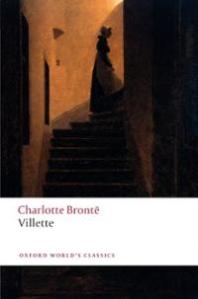 It’s not that the topic of my classes this week is uncertainty, exactly, or that there is anything particularly uncertain about this week—although I suppose that depends on where you’re looking, as nationally and globally there is plenty of unease to go around, while on campus, as the university shapes and shares its plans for coping with a massive budget shortfall (created in large part by heavy-handed federal decisions about international students, on whom universities have unfortunately come to depend because of decades of inadequate provincial funding) we are all wondering just how bad it will get. These are the external contexts for my classes, but by and large I try not to focus on them when I’m actually in the classroom, where persisting with what we find interesting and worthwhile to talk about seems like one way to make sure we uphold our values in the face of all of this.
 The main thing I’m thinking about, however, is not so much “what is the meaning of Villette?” (though if you have a favorite essay or theory about it, I’d love to know!) as “what is the role of uncertainty in pedagogy?” I don’t think of myself as a particularly authoritarian teacher, but in general I think it makes sense to acknowledge that I am a teacher because of my expertise; shouldn’t I act and talk as if I know what I am talking about? On the other hand, I don’t think any interpretation is definitive; if it were, our whole discipline would operate completely differently! I’m always so amused by Thurber’s story “The Macbeth Murder Mystery,” which concludes, tongue in cheek, with its wry narrator promising to “solve” Hamlet. Literature can’t be “solved”! Books worth paying attention to are layered or multifaceted; they look different or mean differently depending on how we approach them. I often explain literary interpretation to my first-year students with an analogy to the transparencies used to teach anatomy: each question or approach draws our attention to specific features. Just as all the parts and systems of the body cohere, interpretations have to be compatible to the extent that they can’t ignore or contradict facts about the text, but they do not replace each other or rule each other out. This means, of course, that it is fine that the articles I’ve mentioned illuminate issues in Villette without satisfying every question I have about the novel.
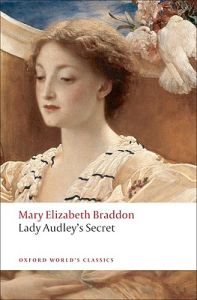 Villette, on the other hand, feels uncertain by design. It is destabilizing. Our confusion feels like part of the point. Maybe that is the underlying unity of the novel! Maybe there is no ‘right’ way for Lucy to be, to act, to love, to live, and so the novel, by immersing ourselves in her struggles, is just replicating them formally. “Who are you, Miss Snowe?” demands Ginevra Fanshawe at one point, with exasperation: aren’t we asking the same question, right to the very end? Why should unity be the end point, even for a novel that seems to be some kind of a Bildungsroman? I do wonder, though, why I am willing to give Brontë so much more credit than Braddon for the artfulness of her uncertainty. One factor is probably that there is so much evidence of design in Villette, if if I’m not sure what the patterns mean: all the buried (or not!) nuns, for example, and their tendency to show up when Lucy is most emotional; the recurrent imagery of storms and shipwrecks; the emphasis on surveillance, discipline, and self-control; the proliferation, almost to excess, of foil characters for Lucy, from little Polly to Vashti. At every moment of the novel I feel sure there is something meaningful going on.
 It has been a long time since I worked through Elizabeth Gaskell’s Life of Charlotte Brontë with a class. In fact, the last time I did so was the first year I began this blog series, in the
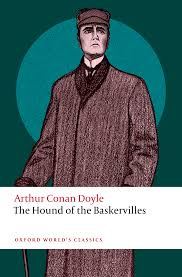 We started with Sherlock Holmes in Mystery & Detective Fiction this week. I’m not the world’s biggest Holmes enthusiast, but as I have documented here often enough over the years, I greatly appreciate The Hound of the Baskervilles, which we will get to on Wednesday. Today was “The Adventure of the Blue Carbuncle,” with its famous “interpret everything about a man from his hat” set piece, and “A Scandal in Bohemia,” with Irene Adler (“To Sherlock Holmes, she was always the woman”). These are good ones: I enjoy them. I think the class is going fine so far: it ought to be, considering how often I’ve taught it now! One thing I’m noticing is spotty attendance. It isn’t making me rethink my long-ago decision not to give grades for attendance, but it gives me food for thought in other ways, as this seems to be a trend in this class in recent years. Perhaps it’s because the course is an elective for pretty much everyone taking it, so they give it lower priority than their other obligations? Is it that students who don’t take a lot of English classes assume the pertinent course content is exclusively in the “textbooks” (what we call the “readings”!) and don’t expect our class time to offer much “value added”? I know that in some subjects lectures often do simply reiterate content in that way, but of course I’m not standing there rehearsing the plot of The Moonstone. Anyway, I try not to take it personally but it rather baffles me: what is the point in signing up to “take” a class but then not really “taking” it? Sure, you can read on your own (or, sigh, just search online summaries and call that “keeping up”), but unless all you are after is the course credit, aren’t you skipping the good part, not to mention the part you are actually paying for?
 In my Victorian Women Writers seminar, we are discussing Margaret Oliphant’s Autobiography. When I was drawing up the syllabus for this version of the course, I included this book without much reflection, as it has always been a staple of the reading list. Preparing for class over the past few days has been a bit rough, though, as the last time I had actually read it was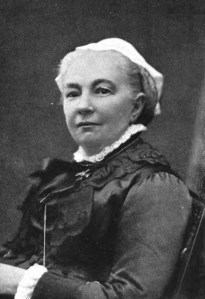
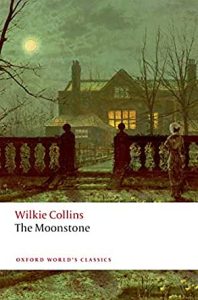 In Mystery & Detective Fiction, we have begun our work on The Moonstone. I usually really enjoy teaching this novel as I know it well enough now and am confident enough in my own ideas about it that, while I do always reread it and update my notes, I can lead a fairly fluid discussion without worrying that we won’t get where I want us to go. Tomorrow is mostly “talk about Betteredge” day: I’ll start by just gathering up observations about what kind of fellow he is, considering both the things he explicitly says and how he says them—which is at least as important, given the novel’s emphasis on first-person testimony and the way eye-witnesses see according to their assumptions and prejudices. We can build out from there into a sense of the novel’s setting: what kind of world does Betteredge serve, what are the threats to or problems with that world, who in the novel begins to counter his point of view, and so on, which should lead us into Sergeant Cuff and what he brings to the investigation—and then the sources of his failures to solve the crime.
 Before this term picks up much steam (today was the first day of classes, so we are still in the warming-up phase, with its illusions of ease), I thought I’d catch up a bit on last term. I had good intentions to post at least more regularly, if not weekly, as I once did. Maybe it’s boldly declaring such intentions that fatally undermines them! Just in case, I won’t make that mistake here.
 How much of a shadow did AI cast over my term? It’s actually a bit hard to say. I tried not to be preoccupied with it. I had just two cases of clear use, both evident from their hallucinations. There were many other submissions that made me wonder. I hated that. I don’t want to be suspicious about my students; I certainly don’t want fluency to become grounds for accusations. I’ve seen a lot of professors confidently declaring that they can spot AI usage. Maybe I’m naïve, or maybe I don’t assign tricky enough questions, or maybe my general expectations are too low, but I’m not nearly so confident. I know what they mean when they talk about the vacuity of AI responses and the other (likely) “tells”—previously rare (for students) words like “delve,” everything coming in threes, too-rapid turns to universalizing proclamations. I caught what I considered a whiff of AI from a lot of students’ assignments. But many of these things used to show up before there was Chat GPT, sometimes because of high school teachers who taught them that’s what good writing or literary analysis should look like, or because some students are authentically fluent, even glib, and nobody has pulled them up short before and demanded they say things that have substance, not just style. I honestly don’t really know how to proceed, pedagogically, beyond continuing to make the best case I can for the reasons to do your own reading, writing and thinking. I do know that I wish we could slow the infiltration of AI into all of the tools we and our students routinely use. I also believe that there are many students still conscientiously doing their own work, and they deserve to have teachers who trust them. I try hard to be that teacher unless evidence to the contrary really stares me in the face.
 My other class was The 19th-Century British Novel from Dickens to Hardy. I enjoyed it so much! The reading list was one I haven’t done since 2017: Bleak House, Adam Bede, Lady Audley’s Secret, and Tess of the d’Urbervilles. It was particularly lovely to hear so many students say they had no fears about Bleak House because they had enjoyed David Copperfield so much last year in the Austen to Dickens course. I think I have mentioned before in these posts that in recent years I have been making a conscious effort to wean myself from my teaching notes. I still prepare and bring quite a lot of notes, but I try to let that preparation sit in the background and set up topics and examples for discussion that then proceeds in a looser way. The notes are always there if I think we are losing focus or running out of steam, but I don’t worry about whether I’m following the plan I came with. It was interesting, then, to dip into my notes from that 2017 version, because I realized how much my approach has in fact changed since then. I was very glad to have them to draw on and adapt, but although if you’d asked me in 2017 whether I did much “formal” lecturing I would have said I did not, in fact they show that I did run much more scripted classes than I do now. The things I want to talk about have not changed that much, although of course I do browse recent criticism and introduce new angles or approaches that interest me. Basically, though, I guess my attitude to this class (and the Austen to Dickens one) is “if it ain’t broke, don’t fix it”: I believe them to be rigorous, stimulating, and fun, and students seem to agree. Unlike the first-year course, then, these ones are likely to stay more or less the same until I retire. More or less, not exactly! They have evolved a lot already, in more ways than my own teaching style, and I will not let them go stale. I wouldn’t want that for my own sake, never mind for my students’.
 Novel Readings