“What an Astonishing Hat”: The Relatable VW

How I hate the word “relatable,” which is so often a shorthand for “like me and thus likeable,” which in turn is both a shallow standard for merit and a lazy way to react to a character. And yet sometimes it’s irresistible as a way to capture the surprise of finding out that someone who otherwise seems so different, elusive, iconic, really can be in some small way just like me—a writer of genius, for example, who reacts to invitations by worrying that she has nothing nice to wear and doesn’t look very good in what she does have. Yes, the period of Woolf’s diary I am reading is one of great intellectual and artistic flourishing, and this makes it all the more touching as well as oddly endearing that she frets so much about “powder & paint, shoes & stockings.” “My own lack of beauty depresses me today,” she writes on March 3, 1926;
But how far does the old convention about ‘beauty’ bear looking into? I think of the people I have known. Are they beautiful? This problem I leave unsolved.

On March 20 she remarks “a slight melancholia,”

which comes upon me sometimes now, & makes me think I am old: I am ugly. I am repeating things. Yet, as far as I know, as a writer I am only now writing out my mind.

She loves socializing, thrives on conversation, but dreads dressing up for it: “When I am asked out,” she notes in May, “my first thought is, but I have no clothes to go in.” She undertakes to go to “a dressmaker recommended by Todd [the editor of Vogue]”: “I tremble & shiver all over at the appalling magnitude of the task I have undertaken.” Happily, it goes well:

I went to my dressmaker, Miss Brooke, & found it the most quiet & friendly and even enjoyable of proceedings. I have a great lust for lovely stuffs, & shapes . . . A bold move, this, but now I’m free of the fret of clothes, which is worth paying for, & need not parade Oxford Street.

No sooner is she feeling more at ease, even easy, about how she looks, then stupid Clive Bell has to go and ruin everything:
This is the last day of June [1926] & finds me in black despair because Clive laughed at my new hat, Vita pitied me, & I sank to the depths of gloom. This happened at Clive’s last night after going to the Sitwell’s with Vita. Oh dear I was wearing the hat without thinking whether it was good or bad; & it was all very flashing and easy . . . Come on all of us to Clive’s, I said; & they agreed. Well, it was after they had come & we were all sitting round talking that Clive suddenly said, or bawled rather, what an astonishing hat you’re wearing! Then he asked where I got it. I pretended a mystery, tried to change the talk, was not allowed, & they pulled me down between them like a hare; I never felt more humiliated. Clive said did Mary choose it? No. Todd said Vita. And the dress?  Todd of course. After that I was forced to go on as if nothing terrible had happened; but it was very forced & queer & humiliating. So I talked & laughed too much, Duncan prim & acid as ever told me it was utterly impossible to do anything with a hat like that. And I joked about the Squires’ party & Leonard got silent, & I came away deeply chagrined, as unhappy as I have been these ten years; & revolved it in sleep & dreams all night; & today has been ruined.

Thanks a lot, Clive! And you too, Duncan: I bet your hats were all plenty stupid-looking! But seriously, although at the time Woolf really was not “old” (and it is hard for me to think of her as anything but strikingly beautiful), isn’t it hard enough going out in public in this sexist and judgmental world as an aging woman who knows her strengths lie somewhere other than in her looks, without our dearest friends making us wish we’d stayed home?

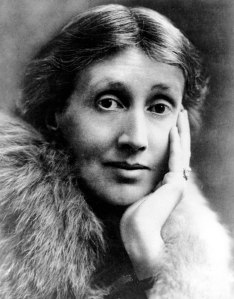
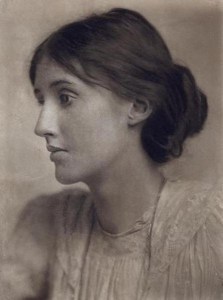
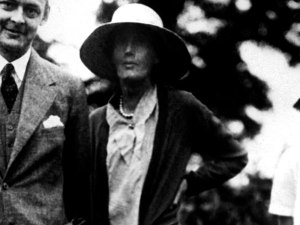
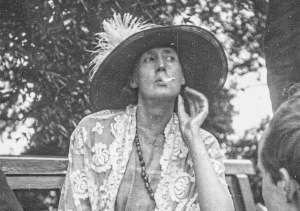
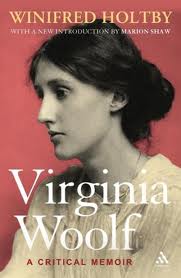
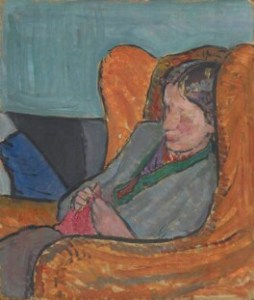
(I don’t think either of the hats in the photos here is the hat! They are both great hats, but neither of them, surely, is astonishing.)

Faded, Fatalistic & Aged

But this slight depression—what is it? I think I could cure it by crossing the channel, & writing nothing for a week . . . But oh the delicacy & complexity of the soul—for, haven’t I begun to tap her & listen to her breathing after all? A change of house makes me oscillate for days. And thats [sic] life; thats wholesome. Never to quiver is the lot of Mr. Allinson, Mrs. Hawkesford, & Jack Squire. In two or three days, acclimatised, started, reading & writing, no more of this will exist. And if we didn’t live venturously, plucking the wild goat by the beard, & trembling over precipices, we should never be depressed, I’ve no doubt, but already should be faded, fatalistic & aged.
You thought it was me who felt that way, right? But instead it is Woolf, feeling and thinking and, especially, thinking about feeling.

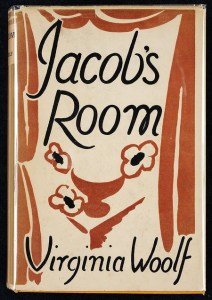
The parts I am most likely to bookmark as I am reading through the diaries are the ones about writing, the ones probably mostly already included in the Writer’s Diary Leonard compiled (I have it and have mostly read it, in the past, but am not cross-checking.)  I do find Woolf the writer endlessly fascinating, especially now that she has / I have reached a point where she knows she is finally writing as herself, in her own way. “If this book [Jacob’s Room] proves anything,” she reflects,

it proves that I can only write along those lines, & shall never desert them, but explore further & further, & shall, heaven be praised, never bore myself an instant.

Imagine that: I bore myself constantly, especially when I’m writing in my own journal! By the end of Volume II of the published diary she is well along in Mrs. Dalloway (“in this book I have almost too many ideas,” she says, but excitedly, not with anxiety), and she is feeling it, not growing into her voice but now at last (her sense of it) finally using it, with a consciousness of freedom (“I’m less coerced than I’ve yet been,” she says about the writing process).

But at the risk of creating a dichotomy where there shouldn’t be one, Woolf the person is at least as interesting, partly because she is not so sure. She is thin-skinned, sensitive, doubting. She waits on tenterhooks for reviews, especially in the “Lit Sup,” where, she complains, “I never get an enthusiastic review . . . and it will be the same for Dalloway.” She is elated by a generous commentary from “Morgan” (E. M. Forster) and irritable about how long it takes for the Common Reader to get any notice at all—although we might wonder at her expectations: “out on Thursday,” she says petulantly, “this is Monday, & so far I have not heard a word about it, private or public.” Shouldn’t a genius be above this kind of fretting? But if courage is not the absence of fear but acting in spite of the fear, perhaps genius is not the absence of self-consciousness or doubt but writing exactly what you want in spite of those feelings, living venturously, trembling over precipices, braving depression—as long as you can bear it, anyway.

“This diary writing has greatly helped my style,” she says in November 1924; “loosened the ligatures.” I wrote before about how she seemed to be seeking or practising looseness through the relative formlessness of her entries. I’m into Volume III now, already done 1925 because that’s a very short year, and while there is still a lot of meeting and visiting and housekeeping, there are also still what seem clearly like practice sessions for her fiction, little set pieces like this one which, while in a way “just” records of something that happened, somehow do more, or go further:

I am under the impression of the moment, which is the complex one of coming back home from the South of France to this wide dim peaceful privacy – London (so it seemed last night) which is shot with the accident I saw this morning & a woman crying Oh oh oh faintly, pinned against the railings with a motor car on top of her. All day I have heard that voice. I did not go to her help; but then every baker & seller did that. A great sense of the brutality & wildness of the world remains with me—there was this woman in brown walking along the pavement—suddenly a red film car turns a somersault, lands on top of her, & one hears this oh, oh oh.

And yet she still continues on “to see Ness’s new house,” which they go through “composedly enough,” as we all do, if it isn’t our particular catastrophe.

I’m looking forward to 1926, when Mrs. Dalloway is published. In her introduction to Volume III, Olivia Laing notes that it covers “perhaps the most fruitful, satisfying years” of Woolf’s life:

[it] opens as Woolf is revising her fourth novel, Mrs. Dalloway, and her first volume of criticism, The Common Reader, and closes as she is editing The Waves. In the intervening years she writes To the LighthouseOrlando, and A Room of One’s Own, plus a formidable battalion of essays and reviews.

Now that’s a streak. Does she shake off those worries about how her work will be received, I wonder? I suspect not, as I know from other research I’ve done that years later she was pretty fretful about both the writing and the reception of The Years. In 1925, she’s daring to imagine, though, that she “might become one of the interesting—I will not say great—but interesting novelists.” As she turns her full attention to To the Lighthouse, she’s also rethinking whether she’s a novelist at all: “I have an idea that I will invent a new name for my books to supplant ‘novel” A new——by Virginia Woolf. But what? Elegy?”

Winifred Holtby’s chapter on this period of Woolf’s life is called “The Adventure Justified”: “she was more sure now,” Holtby writes, “both of herself and of her public. She dared take greater risks with them, confident that they would not let her down.” It’s a wonderful chapter, rising almost to ecstasy about Woolf’s achievement in To the Lighthouse:

Its quality is poetic; its form and subject are perfectly fused, incandescent, disciplined into unity. It is a parable of life, of art, of experience; it is a parable of immortality. It is one of the most beautiful novels written in the English language.

But in November 1925, Woolf is feeling faded and fatalistic: “Reading & writing go on. Not my novel though. And I can only think of all my faults as a novelist & wonder why I do it.”

This Week (Not) In My Classes

It has been very quiet here lately, for reasons that may seem counterintuitive: I have had very little going on, because (long story short) the faculty at Dalhousie has been locked out by the administration since August 20, and while I am not in the union (I’m a member of the joint King’s – Dalhousie faculty) I have been instructed to do no Dal-specific work while the labour dispute continues. You’d think that this would mean I have all kinds of time to read books and write about them here, and yet what has happened instead is that the weird limbo of this situation has prolonged my usual summer doldrums and overwhelmed me with inertia. At this point I can hardly imagine summoning up the energy to stand up in front of keen young people and sustain a lively discussion—and yet at the same time there is nothing I want more to do, especially because if we were in classes this week we would be wrapping up our work on Austen’s Persuasion, my favourite of her novels. The two sides are at the bargaining table again this evening: who knows, maybe by the time I press ‘post’ there will be news of a deal.
Version 1.0.0

I have done some reading since O, the Brave Music, but nothing that really stuck except William Maxwell’s So Long, See You Tomorrow, which is as good as everyone said it was, bleak but somehow not depressing. I have just started Frans G. Bengtsson’s The Long Ships, which I am enjoying even though it is not at all what I expected: for no good reason, I suppose, I thought it would be more like Dorothy Dunnett’s novels, or Hild, but it is not nearly so dense or expository but is rather more like a chronicle, with a faintly antique cadence as if it is being told rather than written / read. Maxell’s novel deserves its own post but is not going to get one—score one for inertia!—but when I finish The Long Ships, I resolve to write it up properly! In between I have been rereading Robert B. Parker and Dick Francis, most recently The Edge, which is one of my favourite of Francis’s novels and also helps to sustain my dream of one day taking a cross-country train trip.

I have also been continuing my read-through of Woolf’s diaries. I am into 1923 now. 1922 seemed like a slow year and then she published Jacob’s Room and read Ulysses, both of which events generated a lot of interesting material. I am fascinated by her self-doubt: we meet great writers of the past when that greatness is assured, and also when their writer’s identity is established, but Woolf is not so sure on either count, and is hypersensitive—as George Eliot was—to criticism, especially when she felt her work was misunderstood, not just unappreciated. Jacob’s Room is significant because it is the first novel that, to her, really feels like her own voice: “There’s no doubt in my mind,” she says, “that I have found out how to begin (at 40) to say something in my own voice; & that interests me so that I feel I can go ahead without praise.” I am always fascinated and inspired by accounts of artists of any kind who find their métier and know it; I still think often of Mary Delany, and when I reread that post I also reflect on the expanding confidence I felt at the time and wonder where it went and how to recover it. Well, as Molly Peacock tells us in her wonderful book, Mary Delany was 72 when she discovered and fulfilled her own artistic purpose, so I will try to think of myself as “only” 58 and take heart, again, from her story.
Another paradox around my lack of posting is that for whatever reason, this is the writing I like doing the most. All summer I have been struggling to get something, anything done on a couple of other projects, and while I did meet a couple of small reviewing deadlines and submit something to a CFP for a special issue of a journal (I won’t know for a while if anything comes of that), my larger plans keep fizzling out because I can’t shake the feeling that they are futile: even if I completed exactly what I imagine they could be, the odds that they would find a publisher or an audience seem so slim. When nobody is asking for something and there’s no extrinsic need or reward for it, you really have to believe in it to actually do it. Perhaps my lack of conviction is a sign that these are not in fact the right projects for me . . . but then what is? These have not been good years for trusting myself, partly because of the legacy of my failed promotion bid. Oh wait, that’s where that surge of optimism and confidence went! and in fact that’s exactly right: I’ve been struggling to rebuild ever since, and I was making some progress when COVID hit and then all the hard personal stuff of the last few years. At some point, of course, explanations shade into excuses—and I have in fact been getting lots of other things done, and would be getting more done if I were back in my classes now, as I should be and hope to be soon. Teaching is almost always restorative for me, and this term—when it finally starts—should be especially so as due to an administrate release I have just one class, 19th-Century Fiction from Austen to Dickens.

Cross your fingers that a fair deal is struck soon, not just so that I can get out of this dreary purposeless limbo but so that I don’t have to cut Cranford from our reading list because we don’t have enough time for it. And whatever happens with the negotiations, I will try to stop malingering.

“The Shadow of Some Kind of Form”: Woolf on her Diary

In my previous post I wondered whether we knew what Woolf’s wishes were for her diary: whether she imagined it as something others would someday read, or thought of it as—and hoped it would remain—a private space. How might these different ideas about what she was writing, or who she was writing for, have affected what she wrote? With these questions still lingering as I read on yesterday, I reached an entry that explicitly addresses what keeping a diary meant to her and what her aspirations were for it, particularly for herself as a writer. It’s a longish passage but I’m going to copy the whole of it here, because I find every bit of it so interesting. It’s part of her entry for Sunday 20 April, 1919.
In the idleness which succeeds any long article, & Defoe is the 2nd leader this month, I got out this diary, & read as one always does read one’s own writing, with a kind of guilty intensity. I confess that the rough & random style of it, often so ungrammatical, & crying for a word altered, afflicted me somewhat. I am trying to tell whichever self it is that reads this hereafter that I can write very much better; & take no time over this; & forbid her to let the eye of man behold it. And now I may add my little compliment to the effect that it has a slapdash & vigour, & sometimes hits an unexpected bulls eye. But what is more to the point is my belief that the habit of writing thus for my own eye only is good practise. It loosens the ligaments. Never mind the misses & the stumbles. Going at such a pace as I do I must make the most direct & instant shots at my object, & thus have to lay hands on words, choose them, & shoot them with no more pause than is needed to put my pen in the ink. I believe that during the past year I can trace some increase of ease in my professional writing which I attribute to my casual half hours after tea. Moreover there looms ahead of me the shadow of some kind of form which a diary might attain to. I might in the course of time learn what it is that one can make of this loose, drifting material of life; finding another use for it than the use I put it to, so much more consciously & scrupulously, in fiction. What sort of diary should I like mine to be? Something loose knit, & yet not slovenly, so elastic that it will embrace any thing, solemn, slight or beautiful that comes into my mind. I should like it to resemble some deep old desk, or capacious hold-all, in which one flings a mass of odds & ends without looking them through. I should like to come back, after a year or two, & find that the collection had sorted itself & refined itself & coalesced, as such deposits so mysteriously do, into a mould transparent enough to reflect the light of our live, & yet steady, tranquil composed with the aloofness of a work of art. The main requisite, I think on re-reading my old volumes, is not to play the part of censor, but to write as the mood comes or of anything whatever; since I was curious to find how I went for things put in haphazard, & found the significance to lie where I never saw it at the time. But looseness quickly becomes slovenly. A little effort is needed to face a character or an incident which needs to be recorded. Nor can one let the pen write without guidance; for fear of becoming slack & untidy like Vernon Lee. Her ligaments are too loose for my taste.

“But to return to live,” she then says, “albeit with something of an effort,” and back she goes to writing the diary instead of reflecting on it.

What a lot of “significance” there is in these ruminations! Of course I noticed the comments about writing just for her own eye, nobody else’s, which seem crucially linked to the insight that for the process to work, she must not censor herself. Probably all writers know she is right that writing often, however seemingly loosely, does lead to an “increase in ease” for the writing we have to do: I have not personally gotten into ‘morning pages,’ but they seem a good example of this theory put into practice—for me, this blog loosens my ligaments, without, I hope, seeming “slovenly”! Her desire to express the “loose, drifting material of life,” to find a kind of transparency in prose that allows form and meaning to emerge unexpectedly, anticipates the ways her fiction would develop over the next twenty years; “steady, tranquil composed with the aloofness of a work of art” is a beautiful description of the somewhat abstract aesthetic of To the Lighthouse, say. It’s clear that she sees the diary form as permissive in a way that even then she would not accept for her fiction, but that the freedom she wanted in writing less “consciously & scrupulously” feels to her like essential preparation for the work to come. As we ourselves read her diaries, invading the privacy she did seem to want, perhaps we can also think of ourselves as opening that “capacious hold-all” and proving through our own fascination that, as she had hoped, the “mass of odds & ends” she threw into it have coalesced and refined into something new and wonderful.

As I keep reading, I will be thinking especially about the challenge she set for herself of being loose and elastic without becoming “slack & untidy,” and also watching for more such self-conscious reflections on the process of keeping the diary. Does the “shadow of some kind of form” become more fixed in her mind or her practice? Or does the looseness she values depend on that form always being somehow elusive, so that the result never becomes routine or formulaic?

“I cant fill up the lost days”: 1918

Woolf misses just five days in her diaries, skipping from 4 July 1918 to 9 July, and feels bad enough about it to mention them apologetically as “lost”: here I am catching up after weeks of not reporting on my reading of her diaries, and not only have a couple of months gone by in my world but I’ve read right through a whole year’s worth of entries and more, into March 1919.

It’s not that she writes up nothing of interest in her 1918 entries. There are the moments that remind you that there’s a whole history unfolding, making dents over and over in the surface of her life: “Rain for the first time for weeks today, & a funeral next door; dead of influenza,” she writes on July 10.  There are the offhand comments that remind us (as if we needed it!) that she was a book lover as well as a book writer: “I spent 7/ on books this afternoon,” she notes on March  11, and follows it with an account of her finds along Charing Cross Road. “I was amused to find that the lust after books revives with the least encouragement,” she wryly observes, but “after all, nothing gives back more for one’s money than a beautiful book.”

In August she is losing track of her days, as who doesn’t, in the languor of high summer in the countryside: “I had to look carefully before I wrote Saturday.” Her idleness does not affect her ability to capture what she sees with a few deft phrase, even as she denies her ability to “get it right”:

 If I weren’t too lazy I think I should try to describe the country; but then I shouldn’t get it right. I shouldn’t bring back to my own eyes the look of all those old beautiful worn carpets which are spread over the lower slopes of the hills; nor should I convey the look of clouded emerald which the downs wear, the semi-transparent look, as the sun & shadows change, & the green becomes now vivid now opaque.

I love that.

Even more, I love her comments on her reading, which during this period includes Christina Rossetti:

Christina has the great distinction of being a born poet, as she seems to have known very well herself. But if I were bringing a case against God she is one of the first witnesses I should call. It is melancholy reading. First she starved herself of love, which meant also life; then of poetry in deference to what she thought her religion demanded.

Rossetti’s Christianity, Woolf suggests, led her to “starve into austere emaciation, a very fine original gift . . . She has the natural singing power. She thinks too. She has fancy.” Like her more polished criticism, these glancing remarks provoke rather than pronounce. She’s also reading and loving Byron, in spite of the “extreme badness” of his his poetry. In September she is reading Paradise Lost, with great admiration and excitement (“how smooth, strong & elaborate it all is! What poetry!”) but not without reservations (“Has any great poem ever let in so little light upon ones own joys & sorrows?”). She has some harsh things to say about Katherine Mansfield: after reading “Bliss,” she comments,

I dont see how much faith in her as woman or writer can survive that sort of story. I shall have to affect the fact, I’m afraid, that her mind is a very thin soil, laid an inch or two deep upon very barren rock. For Bliss is long enough to give her a chance of going deeper. Instead she is content with superficial smartness; & the whole conception is poor, cheap, not the vision, however imperfect, of an interesting mind.

And then the coup de grâce: “She writes badly too.”

I always find it fascinating when one great writer faces off against another—Charlotte Brontë on how dull she found Austen’s too-confined world, for example, or George Eliot critiquing Dickens’s idealization of the poor, or Henry James declaring Middlemarch “a treasure-house of details, but an indifferent whole.” Obviously they are all wrong, as is Woolf, and yet they are right too, in ways that matter, and one of those ways is that they are themselves striving for something different in their own fiction. It has always seemed to me to take both courage and arrogance to do pretty much anything creative, and to be truly original, or just truly yourself as an artist, surely there’s a way in which you have to reject other options, to find them inadequate to what you believe art is for or can do or should be.

Yet Woolf is also a really receptive and perceptive reader of a lot of writers who are not like her at all (as in her centenary essay on George Eliot), so maybe it really was personal with Mansfield—but she wrote this in her diary, for her own eyes only, which is something I’ve been thinking a bit uncomfortably about, not just in this context but in general. I don’t know whether Woolf herself left any wishes or instructions about her diaries: did she expect them to be read, at all or this widely? Does that matter? (The first published version was, I think, the highly selective ‘Writer’s Diary’ that Leonard oversaw.) Is this whole project—not specifically my reading of them but their whole presence as complete texts—an invasion of her privacy? Obviously I recognize the intrinsic interest of getting so close to such a remarkable mind, and of course we take for granted a lot of access to ‘public figures.’ If anyone knows of any discussion of the ethics of publishing diaries in general, or of Woolf’s own expectations or wishes for her diaries in particular, I’d be glad for a suggestion for further reading! Anne Olivier Bell’s introduction does not, as far as I noticed, explicitly address whether Woolf wanted the diaries published.

In the meantime, thinking about this has led me to think about my own (much less erudite, witty, and interesting!) journals. There would never be any reason to publish them, but it is a bit discomfiting to think of anyone else, even close family, reading them. I value them too much as records and references to preemptively destroy them . . . yet. Perhaps I can at least check them for “Mansfield moments” and expurgate them. 😉 

“Almost Motionless”: 1917

Sunday 9 September

An almost motionless day; no blue sky; almost like a winter day, save for the heat. Very quiet. Over to picnic at Firle in the afternoon. Nessa & 5 children came after we had done; sat outside the trees. Walked home over the downs. Red sky over the sea. Woods almost as thin as winter, but very little colour in them.

Woolf’s diaries start up again in August, 1917, after the long recovery from her breakdown in February 1915. “For long time,” the editor notes, “there was no question of her writing at all, and then she was rationed, as it was thought to excite her.” (Readers of “The Yellow Wallpaper” are familiar with this theory—and with its debilitating effects.) This edition includes, as an Appendix, the “Asheham Diary,” briefer daily records covering some of the same period as her ‘real’ diary, where the entries also begin as quite brief, almost perfunctory logs of mostly mundane things: the weather, walks, mushrooming, taking letters to the post. Yet it’s still Woolf writing, with her observer’s eye:

We meant to have a picnic at Firle, but rain started, as we were ready, & so we went to post at Beddingham instead. Left my macintosh in the hedge, so it came down hard, & we were very wet. [I love that “so” there, as if—as we all probably feel sometimes—she had jinxed the weather by going without her raincoat.] It rained hard & steadily the whole evening & was raining violently when we went to bed. This is the first bad day we have had; even so, the morning was fine. The high wind of the last few days has broken leaves off, although only a few of the trees have begun to turn. Swallows flying in great numbers very low & swift in the field. The wind has brought down some walnuts, but they are unripe; the wasps eat holes in the plums, so we shall have to pick them. My watch stopped.

And so it goes until they move back to Richmond in October. At that point, the length and especially the energy of the entries picks up again, along with the Woolfs’ social life. On October 14 she reports “much argument . . . old arguments,” which the footnote explains “concerned VW’s thirst for social life and LW’s anxiety lest she should over-strain or excite herself.” What if the very thing that sustains you also exacts a price?

At first I was thinking that not much was really happening in this section, but then it struck me that of course there is a war on, as we are reminded by several passing references to German prisoners working on the nearby farms: “To picnic near Firle,” she reports on August 11, for example, “with Bells &c. Passed German prisoners, cutting wheat with hooks.” Also during this period Leonard is called up to military service, and their efforts to have him excused on medical grounds are repeatedly mentioned. Once they are back at Richmond, they are constantly on edge about air raids: on December 6, she is “wakened by L. to a most instant sense of guns: as if one’s faculties jumped up fully dressed.” They retreat to the kitchen passage then go back to bed when the danger seems passed, only to be once again roused by “guns apparently at Kew.” The raid, the papers tell her the next day, “was the work of 25 Gothas, attacking in 5 squadrons, and 2 were brought down.”
In the midst of this, the Woolfs are setting up their press and beginning to print. It is amusing to follow their frustrations with the apprentice they take on to “help” them with this work. “Our apprentice weighs rather heavily upon us,” Woolf notes, wondering if the discomfort she induces is because of her youth, or “something highly polished so as to reflect without depth about her.” She is “nice, considerate,” but not good at her job:

Today has been spent by L. in the futile misery of trying to print from one of her pages which wont lock up. As the other page had to be entirely taken down & re-set, her work amounts to nil; less than nil, considering L.’s time wasted.

The Woolfs also acquire and then lose a dog, Tinker, who goes missing the same day Leonard gets his papers stating he is “permanently and totally disabled,” so their relief at his security is “rather dashed by the loss of the spaniel whom we had come to like.”

The intermingling of different kinds of events and preoccupations—war and picnics, air raids and printing presses, soldiers and servants, book reviews and mushrooming—is one of the most interesting features of the diaries so far. In itself it is not, of course, surprising or unusual: we all live that way, after all, in the midst of events much larger than ourselves that affect us both directly and indirectly; whatever else is going on, we still somehow mostly keep up whatever counts for us as ordinary life. Sometimes we rise to the occasion, meeting history as best we can on our own terms, and other times we recede into pettiness. It’s reassuring to see that this is true for geniuses too. “I must again register my complaint that people wont write to me,” Woolf mopes on November 13; ‘I dont write to them, but how can one?” Fair! Especially if “one” is so busily writing one’s diaries. 🙂

“W.C.’s, & Copulation”: Starting Woolf’s Diaries

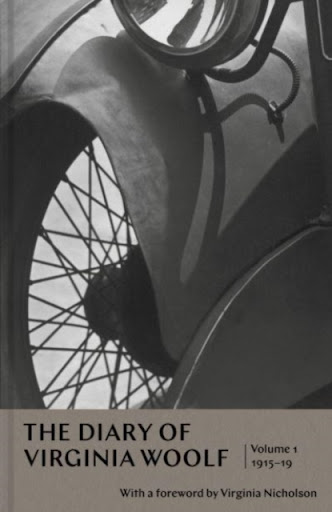
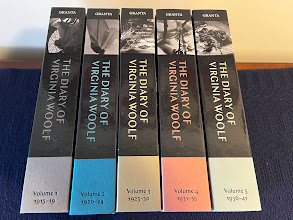
I recently treated myself to the complete Granta editions of Woolf’s diaries. I wanted to mark the finalization of my divorce last month, and this felt right, somehow—more a reflection of the life I am trying to build now, in this room of my own, than, say, jewelry would be. I thought, too, that reading through them would make a good summer project for me, especially if I made writing about reading them a bit of a project as well. I say “a bit of” because I don’t have big ambitions for it. I don’t necessarily want to tie myself to a schedule or make promises, if only to myself, that I then don’t keep but feel bad about! But I do think it will be motivating to have the intention to post updates of some sort. We’ll see what unfolds.

 This morning I started on Volume 1, which covers 1915-19. I read the foreword by Virginia Nicholson; the editor’s preface, by Anne Olivier Bell; the introduction by Quentin Bell; and then, finally, the first section of diary entries, from January 1915. They end abruptly because, as the editor’s note explains, Woolf “plunged into madness” in February; the diary does not pick up again until 1917. It seems inevitable that one key effect across the whole of the diaries will be this kind of dramatic irony: after all, it is impossible not to know, now, how her life ended. At the same time, and I think this is not as obvious as it maybe sounds, it seems important that she did not know this. When someone ends their own life it is hard not to see that as the most significant and meaningful thing, not just about them as people, but about the life they lived up to that decision. I’ve always been very moved by the conclusion of Winifred Holtby’s memoir of Woolf, which was published in 1932—Holtby did not know, and would never know (as she died in 1936), about Woolf’s suicide. “For all her lightness of touch, her moth-wing humour, her capricious irrelevance,” Holtby says,

she writes as one who has looked upon the worst that life can do to man and woman, upon every sensation of loss, bewilderment and humiliation; and yet the corroding acid of disgust has not defiled her. She is in love with life. It is this quality which lifts her beyond the despairs and fashions of her age, which gives to her vision of reality a radiance, a wonder, unshared by any other living writer. . . . It is this which places her work, meagre though its amount may hitherto have been, slight in texture and limited in scope, beside the work of the great masters.

“She is in love with life”: it would be too simple to say that this is exactly what the diary communicates so far, but it is certainly very full of living. A central preoccupation at this point is the search for new London lodgings that ends with the Woolfs leasing Hogarth House, where they also then launched the Hogarth Press. During this period The Voyage Out is moving towards publication, but she mentions it explicitly only once that I noticed; the editor suggests that nonetheless it was very much on her mind and that the stress of its impending release contributed to the collapse of her mental health.

Something that is immediately notable to me is how populated Woolf’s world is. I am torn so far between checking each footnote explaining who somebody is and just taking the cast of characters for granted, as she obviously does. It is interesting to know, but distracting to keep finding out, because Woolf mentions so many different people. My mother, whose interest in Woolf long predates my own,* explained once that part of what drew her to the diaries, in addition of course to Woolf’s voice—about which more in a minute—was being plunged into that community. I already see her point: everybody just seems so interesting, so busy with art and politics and love affairs. There is so much bustle, and while much of it (like the house-hunting) is quotidian and familiar, there is also something extraordinary about the way Woolf and her circle of friends wanted to be in the world, as intellectuals and creators and radicals—which is not to idealize them, or her, or to deny the privilege and snobbery that occasionally show through.

There are two related but separate things, I suppose, that make these diaries worth reading. One is Woolf—who she was as she wrote them and who she became. The other is the diaries themselves—what they are like to read, what they offer us as (if you’ll forgive the word) texts. Lots of people have kept diaries that are primarily of documentary interest; Woolf’s diaries, on their merits, are also of literary interest, or so I think it is generally agreed. It seems odd to say “they are great examples of the form” when that form is something so personal. The goal of keeping a diary is not generally to publish it, after all, and there can hardly be a model for how to write about and for oneself. But  Woolf is a good writer no matter the form or purpose of her writing, or perhaps it is more accurate to say that the kind of good writer Woolf is suits the darting, episodic, idiosyncratic form of a diary. Already the entries are shot through with evidence of her brilliance, from vivid bits of description (“the afternoons now have an elongated pallid look, as if it were neither winter nor spring”) to moments of acid social commentary:

We went to a concert at the Queen’s Hall, in the afternoon. Considering that my ears have been pure of music for some weeks, I think patriotism is a base emotion. By this I mean … that they played a national Anthem & a Hymn, & all I could feel was the utter absence of emotion in myself & everyone else. If the British spoke openly about W.C.’s, & copulation, then they might be stirred by universal emotions. As it is, an appeal to feel together is hopelessly muddled by intervening greatcoats & fur coats. I begin to loathe my kind, principally from looking at their faces in the tube. Really, raw red beef & silver herrings give me more pleasure to look upon.

My favorite bit in this first instalment was this thoughtful observation:

Shall I say “nothing happened today” as we used to do in our diaries, when they were beginning to die? It wouldn’t be true. The day is rather like a leafless tree: there are all sorts of colours in it, if you look closely. But the outline is bare enough.

Looking closely, seeing all the colours in an ordinary day: that sounds like an artist’s job to me, a painter’s but also a novelist’s, and it is something anyone can practice by writing in their diary, though the results are unlikely to be as scintillating as hers.


*Just as my father’s love of Trollope and the other Victorians predates mine—I am so fortunate, as I often now reflect, both in my parents themselves (much love to you both, if you are reading!) and in their literary influences on me. Their bookshelves were always both inspirational and aspirational to me when I was growing up, and important as it was that they read to us, I think it was even more important that we always saw them reading all kinds of books.