Stress!

You know that house I was getting in order, just a little while back? Well, right now it feels pretty wobbly, not for any one big reason but just from the combination of lots of little things that, cumulatively, are making me feel stressed out and distracted. I leave on Monday for my trip to the UK, for instance. In lots of ways I am really looking forward to this: a chance to meet up with friends and colleagues, to see and learn things, to be in London again and in Birmingham for the first time. But much as I enjoy being other places, I’m a terrible traveler when it comes to getting to other places (particularly by air, though I also abhor car travel). In addition to the flying itself, there’s the fun of airport security, in which you have your option of ways to have your privacy invaded, and a great deal of hurrying up in order to wait. I usually distract myself as best I can from thinking about the unpleasantness to come by keeping busy with planning, and in this case there’s plenty of that to do, along with finishing my conference presentation. But that is the source of its own kind of stress, as after all this time working out what I wanted to include and in what order and what degree of detail, I’m feeling dissatisfied with what I’ve got. I also did a practice run of the current version today and ran almost 10 minutes over what I believe to be my allotted time. I wanted to do a more informal talk, but it’s so hard to make sure you stay on point (and hit every specific point you want to) if you don’t script things pretty carefully!

I’ve been developing my Prezi in tandem with working out my speaking notes, and though I remain enthusiastic about Prezi as a concept and a conceptual tool, there too I am feeling dissatisfied: the current version doesn’t really use the special features of Prezi in a very creative way, and I’ve been wondering if I should have just saved a lot of time and done some straightforward PowerPoint slides — which I might end up preparing anyway as a back-up because I am paranoid that something (what? I don’t know!) will go wrong using Prezi (a firewall keeping me from getting to the site? an incompatibility between the design of my presentation and the projector I use? I don’t know! I enjoy technology but I don’t altogether trust it, at least not when I know people will be watching me use it!). It is not entirely calming to reflect that every conference paper I have presented in the past has been quite sparsely attended and has been the focus of far more concern to me than to anyone in the audience. The disproportion between my anxious preparation and the usual underwhelming but friendly reception in a way adds to my stress, because I feel I must be doing something wrong. I particularly recall two papers I sweated bullets over, both of which I thought dealt with quite controversial material in a somewhat provocative way. Oh, the questions I braced myself for! The micro-edits I put on them trying to anticipate and shape responses from hostile, or just better-informed, listeners! And in both cases there were maybe 9 or 10 people there besides the panelists, and no challenging questions at all. A relief? In a way, but also a let-down. One possible (and comforting) interpretation of this past experience is that I prepared such good papers they were (to quote from the cute new ‘Welcome to Dalhousie‘ song) “hater-proof.” But maybe the opposite was true and nobody wanted to be mean to me. I don’t think a paper about blogging and knowledge dissemination will be controversial, but I do want to have thought about the issues I raise well enough that I can answer questions about them, give appropriate references or clarifications, and address any skepticism I encounter…

So there’s that. And there’s the prospect of being on my own in London, which is at once exhilarating and a bit scary — it’s so big, and there’s so much to do and see, and I have so little time, too. I don’t feel so overwhelmed by New York because I’ve been there so many times (one perk of going to graduate school “up-state”), but I’ve been to London only twice and always with others. It will be nice not having to negotiate plans or meals, or just the pace of things, and I reassure myself that if I get lost, well, at least I (more or less) speak the language.

But I get back only a couple of days before my classes begin, and literally the day before my kids start back at school, so there’s a lot to try to be on top of before I leave. I’ve done one round of shopping for school supplies (I swear, I won’t be surprised if pretty soon they ask us to provide toilet paper for our kids) but am still waiting for a reply from the other school about what is needed. Then Dalhousie just announced some changes to their parking system which will make a difficult system a lot worse (unless I’m one of the lucky ones who “wins” a permit for a lot newly designated for reserved spots only — at more than double what I paid for my permit last year). So that’s stressful, as I contemplate scenarios that involve 45-minute walks with the kids through typical Maritime fall or winter weather (pouring cold rain, sideways wind, ice pellets) carrying all the gear we need for our days, and no easy way to get around if there’s some kind of problem that requires picking them up early — not to mention getting to routine after-school activities and appointments. Oh, and a hurricane is threatening to arrive the day I’m supposed to be flying out, which in a best case scenario means it will be a bumpy trip.

Sorry for venting. I’ll calm down eventually. Tomorrow I have some practical things to see to, and then I’ll do another round of tidying-up revisions on my speaking notes, and then on Friday I’ll have one more go at the Prezi, just to be sure that at least it includes all the illustrative bits I want, and to keep improving the transitions to avoid making my audience sea-sick. (My efforts towards this last point account for the increasing linearity of the prezi: big turns and lateral movement seem to be the most disorienting.) And tonight, I’m meeting two of my favourite former students, just for a coffee and a chat — that is definitely something to look forward to. Maybe I’ll even do some serious reading again soon: I’ve been too distracted for much besides yet more early Spensers.

Update: Better now. I really enjoyed chatting with my students (can I still call them this, even though they have both graduated – twice – from Dal?). Interestingly, we all talked at length and with much animation about the books we’ve been reading lately. This is interesting to me because I have noticed that at social functions with my professorial colleagues, we almost always end up talking about which TV shows we are watching. Maybe to English professors, book talk is too much like shop talk? But it’s also my colleagues who always say they have “no time to read.” I’ve taken another look at the prezi and it at least seems usable, though I do still want to tweak it (and cut the talk down). So I feel better about that, if not entirely satisfied. And now a glass of wine and maybe a dose of Our Mutual Friend, and that should keep the other anxieties at bay until tomorrow.
Some Boston Highlights

Why did I not know what a beautiful city Boston is? As I prepared for my trip, I realized that I had no particular mental picture of Boston. Not only had I never been there in person, but I know hardly any books set there, or movies or TV shows set (much less filmed) there : there’s Cheers, of course, but we almost never get any shots of the city, and there’s Robert B. Parker’s Spenser series, and The Bostonians, and Death in a Tenured Position for Harvard…and as far as my own reference points go, that’s about it. Of course, now that I’ve said that you’ll probably all be able to point out other obvious examples, including ones I do know but have forgotten! But compared to New York, Boston was unfamiliar territory for me, so I approached it with a real sense of discovery and enjoyed it thoroughly. This is not the place for a detailed travelogue (and I have no Eat, Pray, Love-style revelations to make!), but here are a few of the highlights.

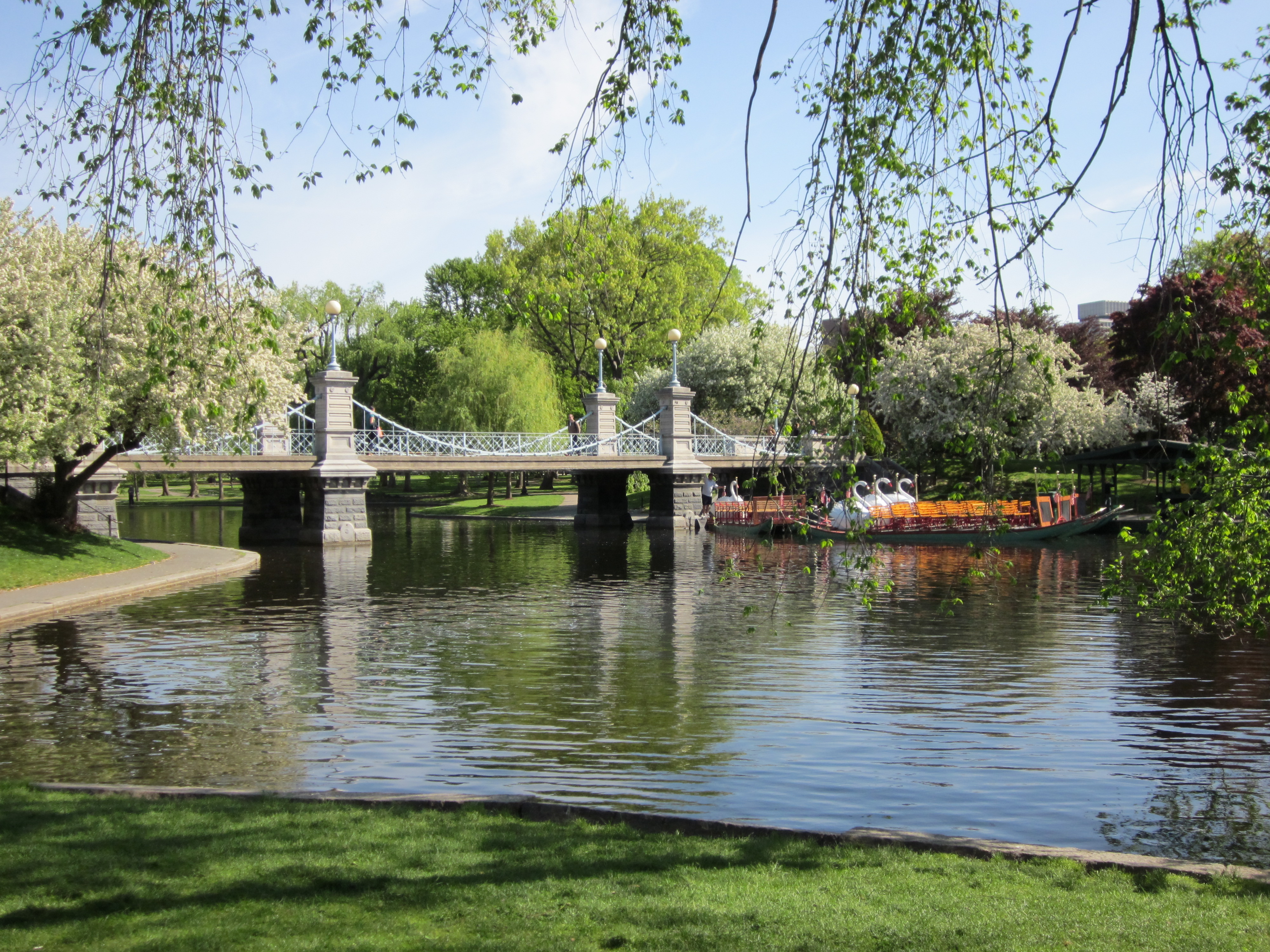
My favorite place was definitely the Public Garden. We have a Public Gardens here in Halifax, which is smaller but also more formal and ornate than Boston’s. Both are lovely oases in the middle of the city bustle. My B&B was just down Commonwealth Avenue from the gates, so I was able to visit the Garden often; if only the weather had been a bit less drizzly, I would have spent even more time roaming around enjoying green thoughts in the green shade. Of course, I had to pay my respects to my oldest Boston literary friends:

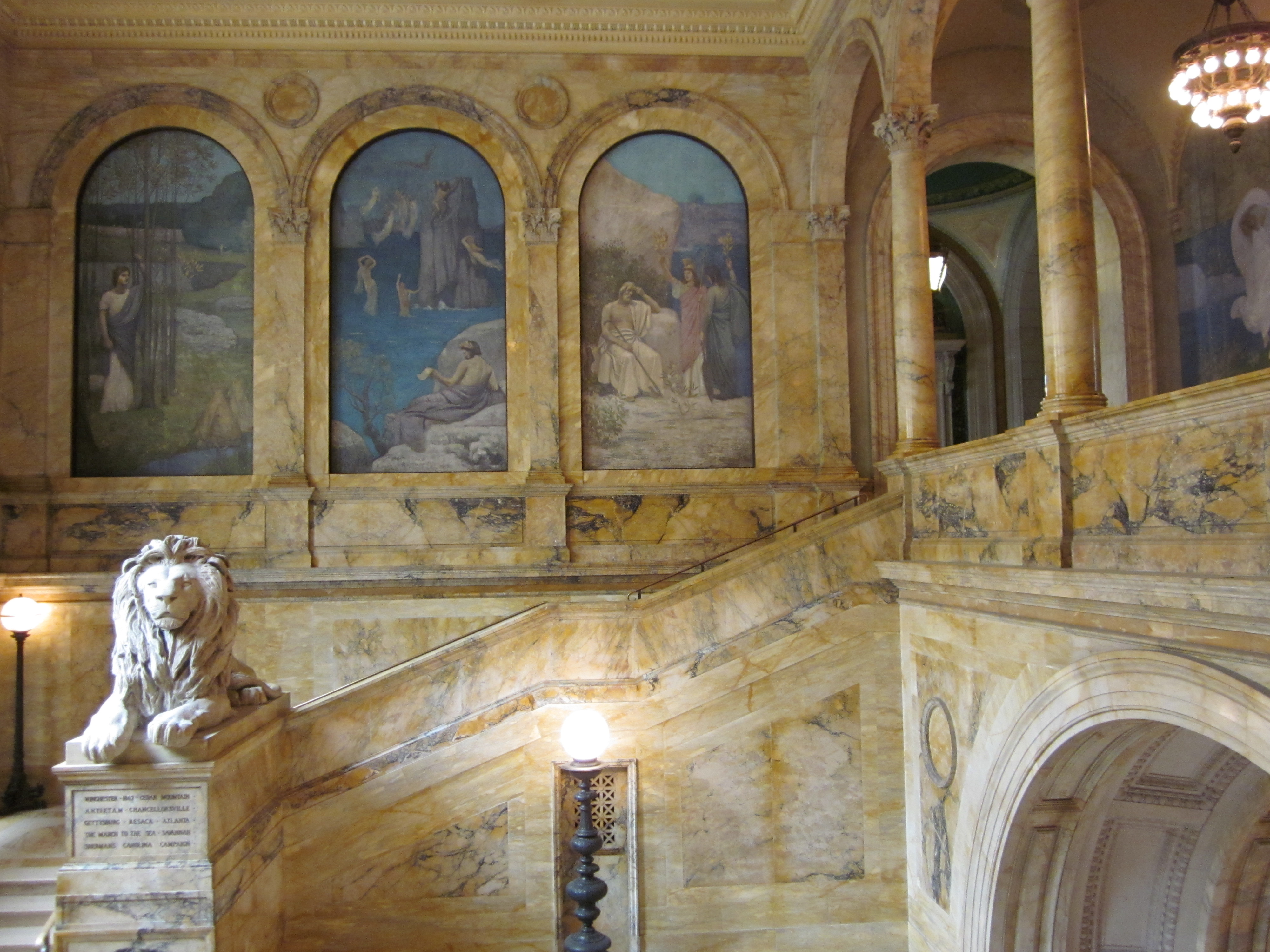
Another thoroughly delightful place, one that I might not have thought to visit if it weren’t for my host, is the Boston Public Library. Completed in 1895, it is a monument (as all public libraries should be) to the value of reading, with an elegant marble vestibule opening into this spectacular entrance hall:

The main staircase is “ivory gray Echaillon marble,” my flyer tells me, and the walls are “richly variegated yellow Siena”:

Here’s the beautiful reading room, Bates Hall:

Shouldn’t being in a library always be this much like being in a temple? The library also has a pretty courtyard with a fountain, a peaceful spot to enjoy your coffee and your book.

Of course, I had to visit Harvard. I kind of wished I had worn my Cornell sweatshirt, as a small gesture of resistance to the overwhelming, well, Harvardness of it. But Harvard Yard was very leafy and pretty in the sun:

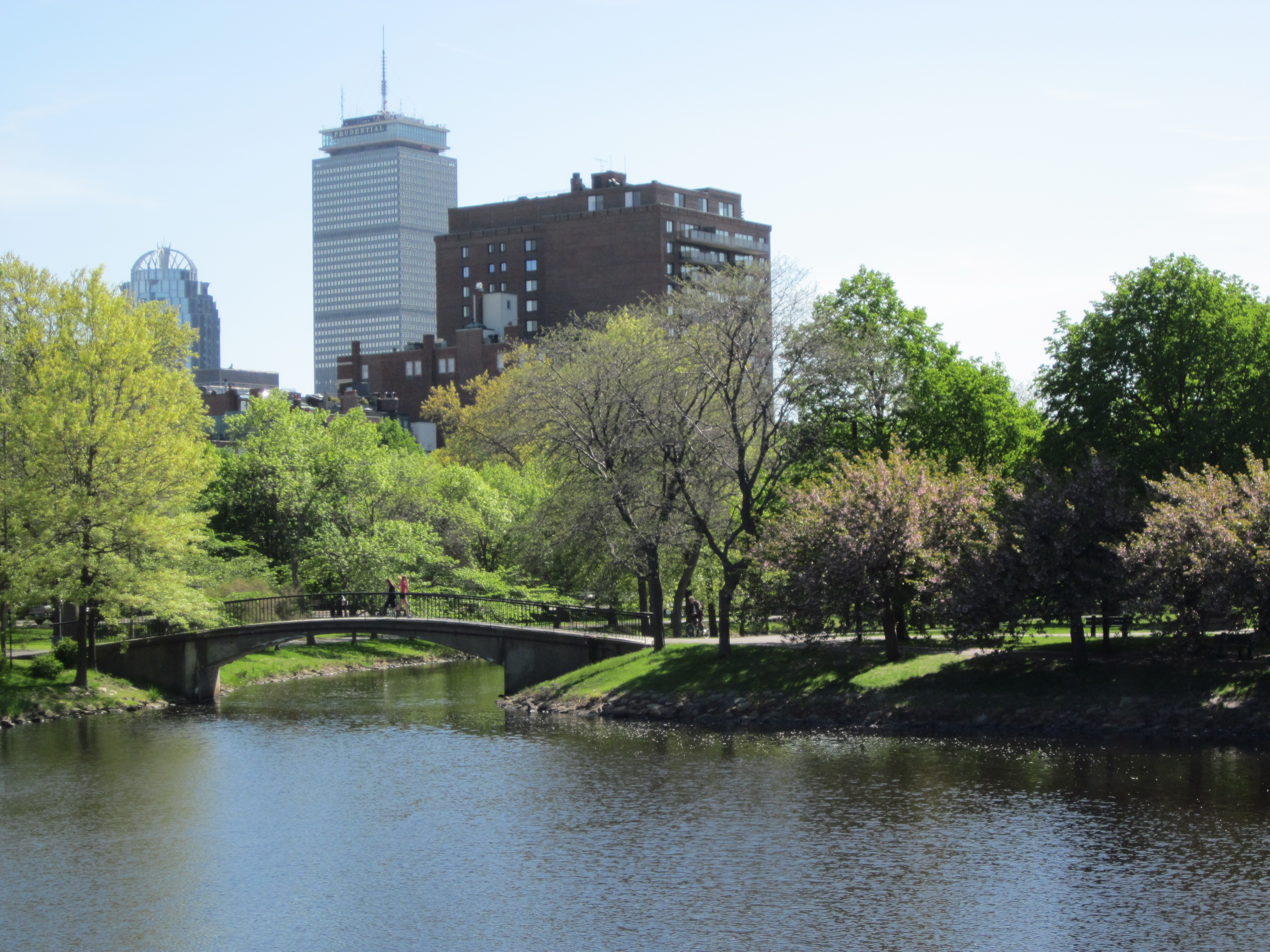
Even prettier, though, was the Esplanade along the Charles River, the perfect place to spend the one really bright sunny afternoon I had on the trip:

Other places I enjoyed (besides the bookstores mentioned in my previous post) included the Isabella Stewart Gardner Museum and the Museum of Fine Arts, two very different museum experiences, the first a glut of beautiful things, the second more orderly and managed but just as full of provocation and beauty. At the Gardner, the building itself is nearly as remarkable as what it houses. At the MFA, I was particularly compelled (and, in part, repelled) by Turner’s Slave Ship, which is grimly spectacular–and also smaller than I somehow imagined it would be. I enjoyed the Mary Cassatt paintings at the MFA but sadly Mrs Duffee Seated on a Striped Sofa, Reading (see blog banner, above), though in the collection, did not seem to be on display. I am always especially interested in any needlework on display; there was a spectacular example of needlepoint, as big as a tapestry, inthe Dutch room at the Gardner, which I would in fact have mistaken for a tapestry if I hadn’t mentioned my fondness for embroidery to one of the attendants, who then pointed it out to me. At the MFA, one of my favorite items was also pointed out to me by a helpful guide, who understandably identified this serene couple as two of his most cherished friends in the collection:

As many people told me before my trip, Boston is a very walkable city, and I had fun puttering around Back Bay and Beacon Hill, as well as taking a soul-soothing stroll through parts of Forest Hill Cemetery. Of course, I stopped at the corner of Boylston and Berkeley where Spenser has his office, and I took a classic tacky photo of the entrance to Cheers. Finally, on my last day, after a deliciously over-indulgent brunch at Amrheins and a quick tour of the North End, I played tourist at Quincy Market.  With all this and the important Open Letters Monthly summit meetings that were the occasion for the trip in the first place, it was a full five days, and though I certainly didn’t see or do everything, now I feel I know at least something about this lovely historic city.

One final trip-advisorish note for anyone who might be headed to Boston themselves any time soon. I stayed at the College Club of Boston, on Commonwealth Avenue. It’s a charming old building and the rooms are decorated to suit (if a little shabbier than they look in the photos–in my little quarters, I felt a bit like a Victorian gentlewoman fallen on hard times but keeping up appearances, like one of the older Madden sisters in The Odd Women). The location is amazing, and the prices are reasonable, especially if you’re willing to share a (nicely renovated) bathroom. However, I have never experienced such creaky floors in all my life, and every door stuck and therefore had to be tugged open and slammed shut. It’s not a good place to come back to if you’ve been out a bit late (say, drinking wine and talking books in Jamaica Plain, just hypothetically)–not, at least, if you’re the type to feel awkward about waking everyone else up. And it’s a terrible place to stay if it’s really important to you to sleep well–for the same reason. That said, I might well stay there next time. After all, sleep is hardly a top priority when travelling, right? And being a stone’s throw from the Public Garden and walking distance to the Brattle Book Shop is awfully nice.

Boston by the Books

I’m back from a wonderful five days in Boston and it seems only fitting to post first (as I did following last year’s jaunt to New York) about the books that came home with me. It was a great bookish trip, thanks to the guidance but also the company of my co-editors at Open Letters Monthly, who were all (but especially Steve Donoghue) attentive and entertaining hosts.

We made two trips to Steve’s beloved Brattle Book Shop. The first day it was drizzly so the carts were not out and our browsing was all inside–which is not a complaint, as you could browse for hours inside and still feel there were tempting treasures you hadn’t found yet. I realized only belatedly, for instance, that most of the shelves are filled two rows deep, which means I explored only one layer. That day I settled on two novels by Ivy Compton-Burnett: A House and Its Head, in the typically elegant NYRB edition, and a Penguin of A Family and a Fortune. I’ve never read any Compton-Burnett before; my interest was piqued because she is the first author chosen by Her Majesty in The Uncommon Reader. At first she’s not a hit, but after Her Majesty becomes a more experienced reader, “the novel she had once found slow now seemed refreshingly brisk, dry still, but astringently so”:

And it occurred to her … that reading was, among other things, a muscle, and one that she had seemingly developed.  She could read the novel with ease and pleasure, laughing at remarks, they were hardly jokes, that she had not even noticed before. And through it all she could hear the voice of Ivy Compton-Burnett, unsentimental, severe and wise.

On our second visit to the Brattle we browsed the dollar carts, which are filled quite miscellaneously so that you never know what might pop out at you and seem too good to resist for the price. I found Barbara Reynold’s biography of Dorothy L. Sayers (not pictured here, as it is following by steve-post). I also picked up John Updike’s collected golf writings for my husband, figuring he likes both Updike and golf so this might well be a winner! And inside again, I found The Godwulf Manuscript, which is the first of Parker’s Spenser series (I also made a pilgrimage to the corner of Boylston and Berkeley, where Spenser’s office is), and Woolf’s The Common Reader, which I owned but lent out many years ago and have never gotten back. I think I was pretty restrained, really: it’s just as well the Brattle is closed Sundays as I was right in the neighborhood and would certainly have found more. My only disappointment was that this seemed the kind of shop likely to have a copy of Testament of a Generation: The Collected Journalism of Vera Brittain and Winifred Holtby–but no luck.

We went en masse to the Harvard Book Store on Thursday night. Time was limited, so all my finds come from the used section downstairs. One I was particularly glad to find was W. Somerset Maugham’s Cakes and Ale, which is the next reading for the Slaves of Golconda book group. I also found Salley Vicker’s The Other Side of You, which some of you recommended after I wrote up Dancing Backwards. And a bit more impulsively I chose Jane Gardam’s The Queen of the Tambourine: I’ve been interested in Old Filth for a while but haven’t come across it anywhere, and this one, which I see won the Whitbread Prize, looked appealingly dark and funny.

I was back in Cambridge on Friday but did all my browsing at the Coop, mostly because I had worn myself out walking all down Newbury Street earlier that day and then all around Harvard Yard (and all over Boston the two days before!). I was trying to pick books that I haven’t been able to find on the shelf up here, and one on my most-wanted list was Laila Lalami’s Secret Son which I was happy to find there. I have followed Lalami’s blog and journalism for some time, and I got Hope and Other Dangerous Pursuits in New York last summer and was impressed and moved by it. I’m really interested to see what she does working on a larger canvas.

Finally, I had a pleasant browse in the big Barnes & Noble in the Prudential Center, which is an important landmark because most of the OLM team has worked there (or in another B&N location) at some time. Though it lacks the deep bookish personality of the Brattle or the Harvard Book Store, it’s still a lovely bright store for exploring. I thought since I’d been collecting so much fiction I would go a different way with my selection there; I came away with Terry Castle’s The Professor. In one of those moments that make you wonder if there isn’t a larger force organizing your “random” reading choices, I discovered that the very first essay includes a long discussion of Testament of Youth. On her first reading, Castle had not liked the book much, finding Brittain “abrasive and conceited.” She quotes Virginia Woolf’s diary entry, which she had “tended to agree with”:

I am reading with extreme greed a book by Vera Brittain. Not that I much like her. A stringy metallic mind, with I suppose, the sort of taste I should dislike in life. But her story, told in detail, without reserve, of the war, and how she lost lover and brother, and dabbled her hands in entrails, and was forever seeing the dead, and eating scraps, and stting five on one WC, runs rapidly, vividly, across my eyes.

As she then explains at some length, Castle found her rereading of Testament of Youth quite a different experience, coming to appreciate how “phobic and self-critical” Brittain is,and especially  how she struggles against her fears (which Castle too was doing, post-9/11). She finds in Brittain a rare model of a woman who fought against the way women are “imprinted” with cowardice:

By coddling and patronizing its female members, society enforced in them a kind of physical timidity; then, with infuriating circularity, defined such timidity as effeminate and despicable. Both practically and philosophically, Brittain rebelled against the linkage. . . . Had I resisted her for so long–cast her off as an important Not-Me–precisely because, deep down, I felt so much like her? I found out now, with a sudden embarrassed poignancy, precisely how much I sympathized, both with her anxiety and with the florid hope that the men she knew might infect her, so to speak, with physical courage. Not very butch of me, I know. Not very feminist. But I had to confess it: I admired and coveted–quite desperately at times–the insane, uncomplaining, relentless bravery of men.

That’s not where I expected her to take the discussion, but it’s interesting and certainly provocative, as I expect the rest of the book to be.

Also pictured above is a handy little book about the MFA collection. This comes from a particularly rich but obscure book source in leafy Jamaica Plain. It was a special privilege to scavenge in the collection there! More about my experience at the MFA itself, as well as other touristy impressions of Boston, when I’ve caught up on some of the work that has been waiting for my return.

‘Baking Has Assumed a Sinister Character’: My Grandmother the Writer

My grandmother (right), c. 1929 (click to see full size)

My grandmother was a remarkable woman–energetic, vivacious, difficult, independent. Above all, she was what she called a “word person”: she loved to read, and nearly half way through her life she discovered that she also loved to write. In 1955, after staying home for years to raise my father (her only child), she launched a new career for herself by offering to do a gardening column for the local paper, the Lions Gate Times. As she tells it, the editor learned she had once trained as an accountant and asked her to help with the books. Eventually she was sent on her first assignment, to cover a municipal council meeting. She had no training as either a writer or a reporter.  She recalls,

I carefully wrote down every word, shaking with insecurity and fright, and filled the front page on press day. The mayor commented, “the best coverage we have ever had.” That was the beginning of my writing career. . . . The writing was easy. My drive came from an insatiable curiosity and an unquenchable urge to tell everyone what I found interesting.

Everyone who knew her would agree that she never lost either that curiosity or that urge to share her enthusiasms, which is one reason her letters were always such fun.

Editor, Lions Gate Times, c. 1965 (click to see full size)

In 1959, she became editor of the paper, which under her management was named “best community service paper” by the Canadian Weekly Newspaper Association,  and her features on local issues won awards–including the MacMillan-Bloedel journalism award in 1966. She also did travel features, including several pieces on a trip to Germany in 1964. This anecdote, sadly, was not in the published version, but she wrote it up for a scrapbook she made for me about her work. It gives a great sense of her indomitable spirit, headlong writing style, and sense of humor:

My first trip to Germany was done in style–six people on Air Canada’s biggest jet; champagne all the way; playing bridge with the crew and ending up with a police escort to our destination in Hamburg.

It was a heady experience. The reporter from Sports Illustrated, NY, Tom (the CBC engineer from Montreal) and myself stayed at the same hotel for the ten days we were there. Near the end, the New Yorker went off to Denmark and I wanted to see West Berlin so Tom crept along. Tom was about my age, very tall with a small moustache. He was not an outgoing person, sort of mentally huddled, but pleasant enough to drag around with. He was drawn to the beer halls and me to the opera. Neither of us could understand the other’s tastes.

We had a small crisis in Berlin. We sought out the efficient hotel advice expert at the airport when we landed to find the city crawling with conventions. Not a hotel room to be found. I cried out in despair. What would we do? More phoning brought up a room in a pension with a double bed.

Tom had been lounging at the door but at this good news he turned linen white and seemed about to faint. However, I had no urge to sleep on a bench in the park all night and briskly took the room, feeling we could cope with the facilities later that night. . . .

Tom was inside our room reading when I got back and I decided on strategy. I had no illusions that my elderly presence and pinched face would set his blood boiling, so I just said, “Tom, you put the paper over your head while I get undressed, then it will be your turn.” He uttered not a sound and promptly obeyed.

I got into bed, he mumbled he was going to read, and I lay, stiff and uncomfortable, on the edge of the mattress. But I had forgotten the toll on a body of an early flight, incessant sightseeing, the Mexican show, and the tension of one bed. The next thing I knew it was 8 a.m. and Tom was snoring merrily beside me. We had a big laugh, launched into the trip to East Berlin and then flew back to Hamburg.

The newspaper stories themselves are wonderful time capsule pieces. “West Berlin is one city in the world where a tourist will never see a ‘Yankee Go Home sign,'” one of them opens,

Why? Because this free city, in an unfree, Russian-occupied East German zone, owes its very life to the benevolent protection of the United States.

It is true that the three western allies are committed to defend Berlin. But a traveller quickly learns it is to strong and democratic America that Berliners have given their hearts.

The flight from Hamburg to Berlin–it only takes an hour–is an eerie one along the 20-mile-wide corridor paced off by the Russians. . . .The Wall, an unbelievable object, runs 30 miles through the heart of this beautiful city. A German businessman told me passionately that it was not a wall but a wound cut across the body of Berlin, with the flesh dying on either side of it.

She loved politics (“I found I was what is called ‘a political animal,'” she says), and in 1968 she took a position as Special Assistant to Jack Davis, the federal minister of Fisheries and Forestry. After her ‘retirement’ in 1974 she continued to do freelance writing and editing projects, the biggest of which was the 1980 West Vancouver Community Plan, a project which reflected her deep love for local history and for the community where she lived.

At my UBC graduation, 1990

I wish I had more of the letters she sent me over the years. We used to have long phone conversations too, but she always loved to rattle off her correspondence on her trusty manual typewriter, full of anecdotes and excerpts from her current reading. An ardent natural history enthusiast, she had a particular fondness for earthworms and often wrote about their contributions to our world (she would have loved George Levine’s podcast on ‘worm excrement,’ I know). In one of the letters I do have still in my box of family papers she has been reading a Carl Sagan book we’d sent her for Christmas–it was 1992, so I think the book may have been Shadows of Our Forgotten Ancestors–and after several paragraphs of excited summary there’s this:

I’ve come to the part where Sagan says, “It seems clear there is only one hereditary line leading to all life now on earth. Every organism is a relative, a distant cousin of every other. This is manifest when we compare how all organisms on earth do business, what genetic language they speak. All life is kin.”

I love that. Rohan, we are brethren of our worms that so fascinated us.

She was always so confident that her fascination would be contagious–and usually it was. She also could not resist making a story out of everything that happened, a trait that could sometimes be tiresome if you happened to be a character in one of them and weren’t sure her version represented your truth, never mind the truth. Here’s one that made me laugh and then cry a little bit, because it brings her back so vividly. It features her very best friend of many years and his long-suffering wife, who patiently tolerated their great closeness.

My news is all wrapped up with Stewart. He and Joan went to Hawaii for 2 weeks and arrived home Monday. It was the day I decided to make muffins. Baking has assumed a sinister character in my life. I hate it now and am glad my feelings parallel Dorothy’s so I know it is endemic with the elderly. Anything to put off even boiling an egg. But I decided to make bran muffins for health’s sake and my doctor’s orders and instead of getting dressed and clearing off the sink and lining up the ingredients like sensible people do I rushed into it in my usual sloppy fashion with my old dressing gown with its floppy sleeves in the act as well. I became depressed when I forgot if I had put 2 cups or 1 of brown sugar into what I was blending then hand beat up the eggs and when the handle got caught in my sleeve and whipped the eggs onto the carpet I was ready to throw everything into the garbage. But I pressed on which turned out to be a bad decision. I floundered along with the huge recipe — it makes 30 muffins — and flour and bran and chopped dates were all over the place as I got sick of the act and dumped everything in one huge bowl instead of folding and delicately coupling wet with dry as the recipe says. I then got the muffin cases in the pans, all 30 of them, and started to ladle out the sticky dough. By now it was over my fingers and I was wiping them on my dressing gown when the phone rang and I rushed to answer it. WHY? Don’t ask. Over the wire came the thrilling, sonorous voice — “greetings from Aloha!” It was Stewart, fresh off the plane and full of joy and good will. My eyes looked at the mess of dough and the 30 little beds awaiting it and decided it was not the time to have one of our long visits so cried that I was muffining and would call him back. He did not understand and waited 5 minutes with phone in hand for the sound of my voice. We finally got connected again and well into the news of Hawaii. . . . By this time my muffins were busy in the oven and a nice fragrance came into the office, followed by a darkening overtone. I searched my soul to cut my friend of 35 years short in his high-spirited saga of lotus land and felt the damn muffins were not worth such a long friendship. . . . We finished our talk on a high note and I drew the muffins out — burned thoroughly at the bottom and around the edges, and so well-cooked they fell apart when I tasted one. I stuffed the 29 in a plastic bag and threw them in the freezer and cleaned up the joint. Well, I had to, as Stewart was on his way, “with a gift,” he says.

Next time I’ll carry on with the story of Stewart and Joan and the silver spoons.

Monday Miscellany: Friday Night Lights, South Riding, Ian McEwan, & a Musical Bonus

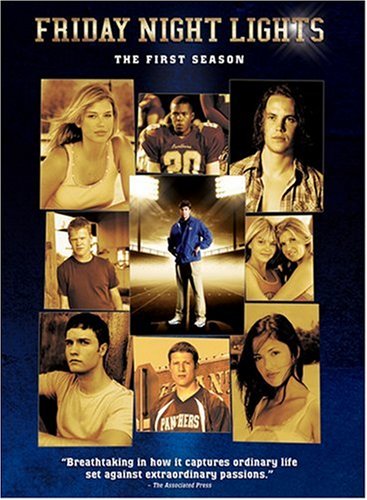
We’re finishing out a four-day weekend here based on a holiday we don’t even celebrate in its hopelessly commercial secular form–Maddie is the only one of us who’d really appreciate Easter Bunny stuff but she’s allergic to both eggs and nuts, so never mind, and just as well too, really. It doesn’t seem like much really went on or got done, but the grown-ups did finish up the first season of Friday Night Lights, which I’d heard buzz about on Twitter from folks including Maud Newton (and Daniel Mendelsohn held it up as a counter-example in his recent smackdown of Mad Men, as well). I was finally motivated to get going on it by Sonya Chung’s post on it at The Millions. We both enjoyed it, which is no small thing considering that I wouldn’t ordinarily ever watch that much football. The characters are engaging and brought to life very convincingly, and there’s plenty of interest in the storylines. But we weren’t swept away by it: it already seems to be falling into the usual TV drama pattern of just one damn plot twist after another–when in doubt, throw in a crisis!–with the additional fairly melodramatic use of the football games to bring things to fever pitch (my husband, who does watch football, was amused that nearly every game was won or lost on the last play, in the final seconds). So far, there’s no sense of a larger project or developing insight of the kind that you get with The Wire or Deadwood, and the premise itself is not as breathtakingly stark and unexpected as In Treatment. I appreciate good storytelling, and I share Chung’s appreciation for the show’s commitment to heartfelt emotion, even to sentimentality.  It’s just that now we know it’s possible to do something more ambitious within the same basic structure. I’ll probably watch at least the second season (though I think my husband won’t), to see if it builds over time into something more, or at least to see if my initial attachment to the characters keeps me hooked, wanting to know what happens next.

In the meantime, I’m about 2/3 throug Winifred Holtby’s South Riding and enjoying it a lot–for some of the same reasons I liked Friday Night Lights, actually, including its straightforward commitment to character development and its interest in the dynamics of a tight knit community under pressure. I particularly like Holtby’s narrative voice, which is smart and analytical without being pedantic. The introduction to my (badly proofread) BBC Books edition promptly and plausibly compares it to Middlemarch. If I were writing one of those annoying “X meets Y” jacket blurbs for it I might call it “a post-war Middlemarch written by a socialist Anthony Trollope,” because while it has the wide range of Middlemarch and the sensitivity to the ways multiple stories can be interconnected, it has none of the formal sophistication of the earlier novel: in fact, it is structured very much like Friday Night Lights or any other conventional multiplot fiction, simply moving from focus to focus while progressing more or less linearly towards its conclusion. Not that there’s anything wrong with that! And in fact it’s a more interesting choice in 1940 than it was in 1860, if only because by then other alternatives had been so abundantly demonstrated, and Holtby’s own awareness of her more immediate literary context is pointed to by conversations within the novel itself about writers including Virginia Woolf. Lauren Elkin has some thought-provoking comments about this at Maitresse, comparing Holtby to Elizabeth Bowen (whom I’ll be reading for one of my book clubs soon, making Lauren’s post doubly relevant!):

It would be a stretch to classify South Riding within the category of modernism.  Although they share thematic concerns, Bowen seems more interested in the possibilities of form, whereas Holtby seems more interested in the possibilities of message. “We are members of one another,” Holtby writes in her prefatory letter to her mother, quoting Paul’s letter to the Romans (Romans 12:3-8). She is not only referring to members of the same community, of course, but to the community of humanity. Bowen’s citydwellers, on the other hand, feel more alienated than ever, and have an awareness of themselves as estranged from anything as conventional as a community. Communities, for Bowen, are in the process of being dissolved, and there is not much that can be done about it. Bowen’s novels and essays constantly interrogate and ironize concepts like “community,” and “humanity.”  Her novels interpret themselves for the reader, her sentences twist in syntax to avoid banality, her young heroines are intensely aware of themselves as young heroines, her novelistic forms double back on themselves. Andrew Bennett and Nicholas Royle call this aspect of Bowen’s work the “dissolution of the modern novel.”

I’m intrigued by the phrase “the possibilities of message,” and I’ll think more about how or whether Holtby’s form is or is not integral to the “message” of her novel as I finish it up–tonight, perhaps!

On a completely different topic–or maybe not, since it’s also about novels and what ideas inform them–I found this discussion with Ian McEwan about books that have influenced his fiction very interesting. Not surprisingly, he emphasizes books about science. An excerpt:

I don’t need to ask what the influence on your novels is here, as science plays a big part in many of them – most noticeably in Solar, but also in Saturday and Enduring Love. What is the nature of your individual relationship, as a writer, with science?

I would like to inhabit a glorious mental space in which books like Slingerland’s would not need to be written. In other words – and this comes back to the notion of mental freedom – your average literary intellectual, just as much as your average research scientist, would take for granted a field of study in which the humanities and sciences were fluid, or lay along a spectrum of enquiry. This is the grand enlightenment dream of unified knowledge. If you think of the novel as an exploration or investigation into human nature, well, science undertakes a parallel pursuit. Of course, much science is concerned with the natural world, but increasingly it has invaded the territory of the novelist. Neuroscience routinely deals with issues not only of consciousness, but of memory, love, sorrow, and the nature of pain. I went to a fascinating lecture on revenge and the reward system by a German neuroscientist a few years ago.

I’m sometimes asked by a literary intellectual in an on-stage discussion – often through the medium of a puzzled frown – why I’m interested in science. As if I was being asked why I had a particular fascination for designs of differential gears in old Volkswagens, or car-parking regulations in Chicago in the 1940s. Science is simply organised human curiosity and we should all take part. It’s a matter of beauty. Just as we treasure beauty in our music and literature, so there’s beauty to be found in the exuberant invention of science.

Finally, once before I posted a sample of one of Owen’s original compositions. If you’re interested, you can follow this link to another, this time the slow movement of the Sonatina for Piano and Violin that was his entry in the composition category at this year’s Kiwanis Festival. It’s an amateur recording of a live performance, so not studio quality, but I think it’s beautiful…

Christmas Books

Music isn’t the only thing that evokes memories and helps us celebrate the holidays. Around this time of year we also get out our stash of holiday books; their beautiful (or, sometimes, comical) illustrations and unfailingly heart-warming stories add some welcome cheer as the days grow shorter and darker and colder. Here are a few of our family favorites.

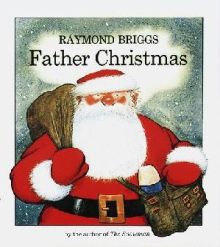
briggsRaymond Briggs, Father Christmas. I just love this charming curmudgeonly Santa. Who doesn’t sympathize with the dreariness of having to plod off to work on a cold day? And whose spirits wouldn’t be restored by a little wine and cookies at mid-shift? Inevitably, at some point in the next little while, one of us is sure to look out the window and exclaim “Bloomin’ snow!” But at the end of the day, it’s all about making merry with the people (or, if you’re Father Christmas, the pets) you love.
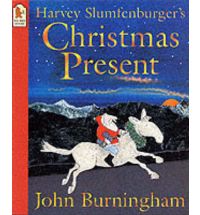
John Burningham, Harvey Slumfenburger’s Christmas Present. This is the story of the little Santa who could. Neither rain nor snow nor sleet nor hail nor transportation mishaps of any type will stop him from delivering that last gift. It’s part of Burningham’s genius to end his long saga of misadventures with just the right question about Harvey’s present: “What do you think it was?”

The Twelve Days of Christmas. Growing up, I loved Jack Kent’s humorous version in which the ardent lover brings the entire growing list every single time. Things get pretty crowded by the end: you can’t blame his beloved for trying to run away as he pursues her with that one last partridge in a pear tree! That version doesn’t seem to be available any more, and the copy I used to read is back in Vancouver with my folks. Happily, we have two versions of our own out here, one Jan Brett’s beautifully illustrated edition, the other a whimsical one with illustrations by John O’Brien that is rather in the Jack Kent spirit (the poor beloved does not find her headache much helped by the drummers around her bed).

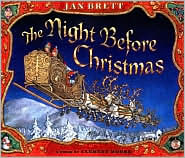
We have a couple of other lovely Jan Brett books for the holidays, one her Christmas Trolls, the other her gorgeous version of Clement Moore’s The Night Before Christmas. In the spirit of never having too much of a good thing, we also have Tasha Tudor’s The Night Before Christmas, which is equally beautiful in a very different way.

Another of my own childhood favorites is also by Tasha Tudor: The Doll’s Christmas, which tells the adventures of the two dolls Sethany Anne and Nicey Melinda as they prepare for and host a very elegant Christmas party in their home, the equally elegant Pumpkin House. Their lucky owners get to come too, with their friends!

A more recent addition to our collection is Jan Fearnley’s charming Little Robin Red Vest, which tells the story of how a selfless little bird gives away all his sweaters to colder, needier friends until he is left huddled on a snowy roof trying to stay warm. Luckily he’s scooped up by someone with a “gruff, jolly” voice whose kindly wife pulls a thread “from a big, bright red coat” and knits him a cozy vest to wear.

keatsAnother beloved Christmas book from my past is Ezra Jack Keats’s gorgeously gold and sepia-tinted edition of The Little Drummer Boy. This one too still lives in Vancouver, but I just discovered that it’s still in print, so may be next year it will be the traditional Advent book for my children. Par-rum-pum-pum-pum!
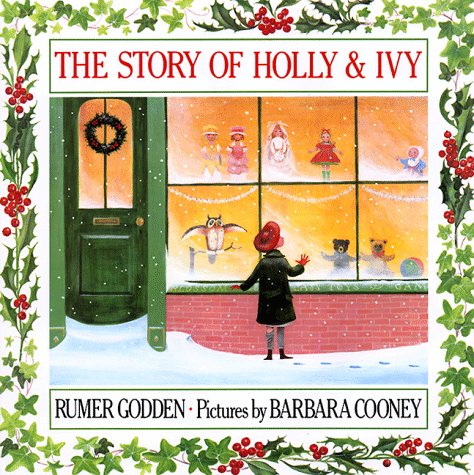
I’m happy with this year’s choice, though, which my daughter was reading to me tonight (since I have no voice!). It’s the wonderful new edition of Rumer Godden’s The Story of Holly and Ivy, with illustrations by Barbara Cooney. Three lonely hearts, three wishes, a girl, a doll, and a home without children–how can it help but end well? What a treat it was, after a couple of hard days, to sit and listen to my lovely girl reading it with such pleasure and feeling, and making sure to show me every affectionately detailed picture. That nice experience inspired this little post–which I hope will inspire you to tell me about your favorite Christmas books.

Christmas Music

From the Novel Readings Archives

For me (as for many people, I’m sure) one of the things I like best about the holiday season is its music. I grew up in a house full of all kinds of music, and for about six years I worked part time (and sometimes full time) in what we then called a ‘record’ store, The Magic Flute, which specialized in classical music. Getting out the Christmas records was part of an elaborate set of holiday rituals and meals in my family, beginning with our ‘Advent’ brunch the first weekend in December (Eggs Benedict) and culminating on New Year’s Eve (Chicken Florentine and Pêches Flambées, followed by charades and then banging pots and pans on the front porch when we heard the ships in the harbour signal midnight). For probably a decade, somewhere in between these dates my parents hosted a big carol singing party and pot-luck dinner: as their friends are all both musical and great cooks, this was always a joyful occasion! Music was either playing or being played (and sung) nearly all the time, so it’s no wonder that hearing carols now brings back a lot of memories–some more specific than others.

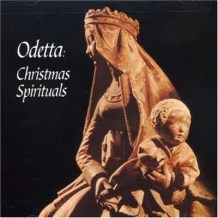
odetta

For instance, we usually sang ‘Children, Go Where I Send Thee’ driving back over the Lions Gate Bridge from my grandmother’s house in West Vancouver after Christmas dinner (we loved Odetta’s Christmas Spirituals). A highlight of the carol sing event was always ‘The Carol of the Bells’ with all its parts. I used to take Joan Baez’s Noel up to my room when I wanted some quiet time. As a die-hard Joan Sutherland fan, of course I had her Christmas album, and though sometimes I admit her operatic flair is too much for the simpler songs, her version of ‘O Divine Redeemer’ still brings tears to my eyes. (I met her once–but that’s a story for another post.) And of course we had many traditional choral albums, and the Canadian Brass, and Bing Crosby, and Burl Ives singing ‘A Holly Jolly Christmas,’ and a great LP with “Mr Pickwick’s Christmas” on one side and “A Christmas Carol” on the other, read by Ronald Coleman and Charles Laughton (and how fabulous to discover that this is still available! I highly recommend it).

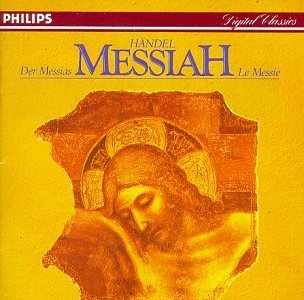
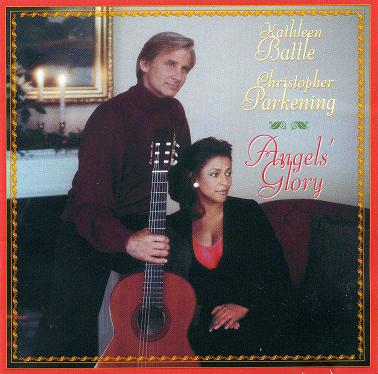
At The Magic Flute, Christmas was a big season, of course. My fellow employees and I used to shudder at the first playing of the Bach Choir Family Carols because we knew we would hear it probably 3000 times before the doors closed on Christmas Eve. The year Kathleen Battle’s A Christmas Celebration came out, it sold like crazy; I recommended it to one woman who came back the next year and sought me out specially to tell me how much she loved it (I love it too, especially its version of ‘Lo, How a Rose E’er Blooming,’ though lately I have been listening more to the Christmas album Battle recorded with Christopher Parkening, Angel’s Glory, which includes what I consider the most beautiful recording of ‘Silent Night’ ever made). One of the biggest issues every year was which recording of Messiah to recommend. Opinions were always divided between ‘original’ and modern instruments; the version with the English Baroque Soloists under John Eliot Gardiner was a big seller. To soothe our nerves during quiet spells, my colleague Mandy and I used to slip on George Winston’s December.

wintersongMusic is still essential to all holiday festivities, as far as I’m concerned. We got out our current stash of Christmas CDs this week. A lot of my old favourites are in the collection, along with ones that evoke holiday memories for my husband (Andy Williams, for instance, and Jo Stafford). We enjoy the Boston Camerata’s Renaissance Christmas and the hyper-traditional O Come All Ye Faithful with the Choir of King’s College, Cambridge; On Yoolis Night by the Anonymous Four will undo any damage wrought by long days at work–or at the mall, which is equally likely this time of year. There are now, too, albums that evoke memories, not of our childhoods, but of our childrens’, such as Loreena McKennit’s To Drive the Cold Winter Away and Sarah McLachlan’s Wintersong. We have rituals of our own, including decorating the tree while listening to Michael Bawtree’s wonderful recording of A Christmas Carol (available only by private sale at this time, as far as I know)–and when we gather in the morning for our own ‘Advent’ brunch, the first thing we will do is to put on some Christmas music.
I do think sometimes about the incongruity of an atheist embracing Christmas. But then I think of all the sacred music–and art, and architecture–that brings so much aesthetic and emotional pleasure the rest of the year, and I feel reassured that there is no hypocrisy in loving the music even though I do not believe in the specific doctrines it sometimes expresses. After all, when the overall worldview for so long was overwhelming theistic, it is inevitable that art and music should have taken religious form; to turn our back on these great achievements because they belong to a different mentalite is to turn our back on the past simply for being the past.

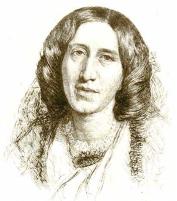
82780-eliotdrawingI think, too, of George Eliot’s attitude, expressed implicitly and explicitly in so much of her fiction–that, as she wrote in a letter in 1874, “the idea of God, so far as it has been a high spiritual influence, is the ideal of a goodness entirely human.” I feel the same about the “Christmas” spirit: it’s really just the human capacity for love, charity, forgiveness, and generosity (not to mention reverence, sacrifice, and inspiration) that’s being celebrated, with nothing supernatural about it. The feelings evoked by carols such as ‘Silent Night,’ ‘It Came Upon a Midnight Clear,’ or ‘I Heard the Bells on Christmas Day’ (to mention just a few of my personal favourites) are really no different from the feelings evoked for me by any beautiful music, and the fundamental ideals of peace on earth and goodwill to men do not in fact require (and may even be hindered by) the specific myths of Christianity. And yet that tradition (as George Eliot acknowledges) for centuries provided a key framework for the development of these ideals (if not their perfect realization–indeed, quite the contrary, as history shows). And so I’m quite comfortable with the secularization of Christmas, which seems to me consistent with the goal of recognizing in ourselves–claiming for ourselves–those qualities most important to making the world a better place. It’s not God who blesses Tiny Tim, after all, it’s Scrooge! Why tie ourselves to the Christian calendar, then? Well, just as Christian traditions were superimposed on pagan and other rituals, so too our modern values and ideas are incorporating old ways and turning them to our own purposes. And the music really is beautiful–so I sing along, rejoicing.
What about you? What holiday albums bring back your fondest memories? Is there a song or a singer you can’t do without at this time of year?

(Originally posted December 6, 2009)

Summer Reading Wrap-Up: Mitchell, Genova, Paretsky, Nordstrom

September 12 is the last day for counting books towards our goals for the public library’s summer reading club. Maddie and I were aiming for 25 each. I’m not sure I’m going to get four more titles in by Sunday, what with classes starting and all. There’s hope: I’m currently reading the latest (and I guess the last, since it’s posthumous) in Robert B. Parker’s Jesse Stone series, and Parker’s books have very few words in them. I’m also about half way through a couple of others, including Reginald Hill’s latest and Isabel Coleman’s Paradise Beneath Her Feet. Actually, I suppose there’s no reason I can’t count More All-of-a-Kind Family, which I reread a couple of days ago–so if I finish all three I have already started, I’ll make my quota!

I haven’t written detailed posts about all the books on my summer tally, so I thought I’d at least put a few thoughts together about some of them, if for no other reason than that I find I remember books much more clearly once I’ve written about them (plus, of course, if my memory dims, I can amble through the archives and perk it up).

One book that I read with interest and, for a while, some real enthusiasm is David Mitchell’s Cloud Atlas. But as I mentioned before, I hit first ‘An Orison of Somni-451’ and then ‘Sloosha’s Crossin’ an’ Ev’rythin’ After,’ and my reading never recovered its momentum. Mitchell is clearly a brilliant and virtuosic writer, but after a while I found I was more aware of  his virtuosity and the ingenuity of the nesting narratives than I was actually engaged in them. The multiple genre trick is a risky one, I think, because after all, not all of us enjoy quite such a range of genres or styles, and this book rather insistently refuses to care about that. That kind of challenge to our reading habits may be good, and in fact for the first third of the book I found it invigorating to be wrenched out of one story into another, to adapt to the new style, and to puzzle over how the parts would ultimately interrelate. I’m fairly sure they do, but by the time I was finishing the book up, I wasn’t excited enough about it to figure out how or why.

I read Lisa Genova’s Still Alice on a friend’s recommendation (you know who you are, you lurker!) and while I can’t really say I enjoyed it, since it was extremely depressing, it was certainly moving and probably important, too. I thought it read a bit too much like a case study, or a novelized reenactment, especially through the first few chapters in which a number of fairly technical issues of symptoms, diagnoses, and medications need to be covered. But as Alice’s disease progresses, the tactic of recounting the story from her point of view became increasingly effective and is handled with wise understatement. After I finished it, I was pretty anxious every time I couldn’t remember something! My excuses, after all, are always the same as Alice’s: I’m busy, I’m distracted, I’m juggling multiple demands and tasks most of the time…and I’m too young to be demented–aren’t I?

I read Sara Paretsky’s next-t0-latest V. I. Warshawski novel, Hardball, with interest (her most recent, Body Work, has just come out). I liked it quite a bit. A while back I wrote a bit pettishly that I wasn’t sure my interest in this series could be sustained any further, mostly because I found it too predictable that the villains are always corporate leaders or businessmen, or corrupt politicians. Though this continues to be the case, within variations, in Hardball, I’m inclined more favorably to Paretsky’s overtly political worldview these days. One factor is just the sheer amount of time I’ve spent on my mystery and detective fiction courses, and in prowling around looking for interesting books to assign for them. I appreciate that Paretsky has a worldview, that she uses her novels quite deliberately to explore it: an awful lot of mystery novels are formulaic but without the compensations of actual ideas. I hadn’t taught Paretsky in my lecture course until this past year, when I substituted Indemnity Only for Sue Grafton’s ‘A’ is for Alibi as an example of feminist revisions of hardboiled conventions. (In my ‘Women and Detective Fiction” seminar, I’ve always done both, which allows from some productive comparative discussions.) Grafton’s book is much wittier, but Indemnity Only seems to me to have aged better in some important ways. For instance, Grafton’s detective, Kinsey Millhone, embodies a certain kind of liberal feminism that Grafton called ‘playing hardball with the boys’ (hey–I just noticed the correlation with Paretsky’s title–but I don’t think there’s any deliberate interplay there). Kinsey is strongly male-identified; she refuses to dress up (her indestructible black dress that she keeps balled up in the back of her car for emergency girlishness is a running gag in the series); she takes pleasure in pumping her own gas; and so on. I like her tomboyish character, her refusal to play nice–and in ‘A’ is for Alibi and many of the other books in the series, I think Grafton does a lot of smart things with Kinsey’s struggles to maintain her autonomy, especially in romantic relationships. But the books are only implicitly political, and then only at the individual level: Kinsey won’t put up with shit, from men or anyone else. Paretsky’s idea of feminism seems to me a more complicated one; she pays a lot of attention to systemic problems, connecting women’s efforts to achieve or use power to social structures that also disadvantage people because of race or class. She puts a lot of emphasis on women’s relationships as potentially empowering allegiances, but she also seems more positive about the potential for equity in romance, though she doesn’t pretend it comes easily. The crimes of her novels are always intricately related to this nexus of issues: in Indemnity Only, for instance, the central mystery turns on fraud and corruption among powerful men, but the climactic confrontation at the end is nearly fatal for Vic and her love interest, Ralph, because he has not been able to take her work seriously. Though Vic is very tough, she is also very feminine in some conventional ways: we had some lively discussions in my class in the winter about her emphasis on what she’s wearing, the overt pleasure she takes in nice clothes and in looking good, and about the relationship of this interest (which Kinsey Millhone vehemently rejects) to different ideas about feminism and femininity. I was a little peeved to learn V. I.’s cup size in Hardball: it figures (so to speak) that she’d be a 36C. So as far as that goes, she still conforms to certain standards of female beauty–but that’s OK, some of my best friends are curvy.

The last book I wanted to say something about is Dear Genius: The Collected Letters of Ursula Nordstrom. But you know what? It was such a great read, and has so many delicious quotable bits, that I think I’ll put that off for its own post (also, I really should be prepping class notes by now…).

Normal Programming will Resume…

I’ve just returned from my trip to New York for the launch of the Open Letters Monthly Anthology. It was a great night for everyone on the Open Letters team, I think, and once we recover from the festivities, we’ll all enter with renewed vigor into getting the September issue ready for its eager public. I also hope to be back to a more regular blogging routine. One important part of that will be getting back into the habit of more frequent but shorter posts. Starting a new teaching term will help with that, as I will suddenly be too busy with the hectic miscellany of lectures and tutorials and assignments and wiki projects to linger over other things. On the other hand, I will also look forward to blogging more once it becomes, again, more of a rarity to have time and attention for things I choose to read.

And speaking of choosing things to read, naturally a great highlight of my trip to New York was my visit to The Strand bookstore (sadly, I didn’t really have any time to browse at Housing Works, where we held our reading, but just knowing that its secret sub-basement exists will be spiritual nourishment for me). I didn’t have enough time to explore all the layers and recesses of The Strand either, but I did find a couple of titles I’ve had on my ‘most wanted’ list for a while, plus a couple of others that were just too enticing to pass up at those prices. Here’s my haul:

Laila Lalami, Hope and Other Dangerous Pursuits. I have followed Laila Lalami’s blog for some time and I’m really looking forward to reading her novel, which I hadn’t been able to find around here.

Lynne Sharon Schwartz, Leaving Brooklyn. I’ve mentioned Schwartz’s Disturbances in the Field as one of the ‘books of my life’; though sometimes when I really love a particular book I don’t necessarily even want to read others by the same author, in this case I’m keen–and I already like the first sentence: “This is the story of an eye, and how it came into its own.”

Penelope Lively, Family Album. Moon Tiger is another of those books I’ve loved for many years, though in this case I have followed up with several others by Lively–who has never disappointed me so far.

Anita Brookner, Strangers. They had a lot of titles by Brookner and I had a hard time choosing one. I’ve only read Hotel du Lac, which I really enjoyed. This is a very recent one. I admit: I chose it from the many options there partly because I liked the cover.

Shirley Hazzard, The Evening of the Holiday. I also picked up The Transit of Venus recently, so I guess I’m about to go on a very small scale Hazzard binge. So far the only one of hers I’ve read is The Great Fire. I loved the writing but didn’t love the book–this is not a common response for me. In fact, I think usually I would deny that the writing can be separated from ‘the book.’

Henry James, English Hours (introduction by Leon Edel). This was out on one of those $1 tables that line the outside of the store. The first sentences are, well, Jamesian: “There is a certain evening that I count as virtually a first impression–the end of a wet, black Sunday, twenty years ago, about the first of March. There had been an earlier vision, but it had turned to gray, like faded ink, and the occasion I speak of was a fresh beginning.” Now really: could you have resisted this book, for $1, if only to find out what the heck he is going on about in such lovely, nuanced, but oblique language?

Just as an aside, on my visit to The Strand, I happened to be wearing one of my favorite (and oldest) scarves: it’s kind of purple/green/black strips, with a bit of shimmery thread running through the weave. On my way in, the greeter (I don’t know his actual job, but he seemed to be saying ‘hello’ to everyone who came in) said “Hello. I like your scarf. It’s very distracting.” Distracting from what, I had to wonder?

These aren’t the only books I brought back with me, either. I have SD to thank for yet another two, The Art Book (which I only regret not having had in hand at MoMA, where as is actually quite predictable, I bumbled around quite a bit wondering where the actual art was hidden–though I did enjoy the Matisse exhibit) and a review copy, stories by Joe Meno. I’ve promised to write up at least one here at Novel Readings, so more about that eventually.

And at the Metropolitan Museum gift shop, there on the sale table, just as if they knew I was coming, I found this beautiful book on ‘Embroiderers, Knitters, Lacemakers, and Weavers in Art.’ I did come to regret its heft as I lugged it along while walking all the way back down through Central Park, but it promises hours of browsing pleasure, and perhaps some encouragement for the little needlework project mentioned in an earlier post–which I have begun.

But before I can finish any needlework, much less any blogging or other actual intellectual task, I have to recover from several days of poor sleep (sirens, car horns, and garbage trucks not being altogether lullabies to my small-town ears) and really early rising (note to me: it’s all very well to prefer early flights because “then you have the whole day ahead of you when you get there,” but you aren’t as young as you once were and it will cost you).

The Stars Look Down is an actual book!

OK, this is admittedly a very trivial discovery, and one I could have made easily enough long ago, if it had ever occurred to me to inquire. No doubt I’m just revealing yet another embarrassing gap in my reading knowledge in pointing to it as a book I’d never heard of. Still, I felt a little amused thrill yesterday as I was browsing  in J. W. Doull’s and happened across a battered copy of a novel called The Stars Look Down. I instantly recognized the title because it is mentioned several times in the opening section of one of my long-time favourite books, Dorothy Sayers’s Busman’s Honeymoon. Peter’s mother is reading it as the drama of Peter and Harriet’s engagement and marriage unfolds: “Was reading The Stars Look Down (Mem. very depressing, and not what I expected from the title–think I must have had a Christmas carol in mind, but remember now it has something to do with the Holy Sepulchre–must ask Peter and make sure) after ea, when Emily announced ‘Miss Vane,'”  reads the Dowager Duchess’s diary for 21 May. Then she loses track of it (“Must remember to ask Franklin what I have done with The Stars Look Down“). It turns up again in October (“Tried The Stars Look Down again, and found it full of most unpleasant people”) and then finally, on October 8, after the wedding (“H. looked very lovely, like a ship coming into harbour with everything shining and flags flying at wherever modern ships do fly flags…”), she puts it aside once more: “Find The Stars Look Down not quite soothing enough for a bed-book–will fall back on Through the Looking-Glass.” I’m pretty sure The Stars Look Down has no thematic relevance to Busman’s Honeymoon: Wikipedia tells me that the novel chronicles injustices in a mining town. I have no particular interest in reading it. It was just such a surprising start of recognition the minute I saw the title. I guess I may have read Busman’s Honeymoon a few too many times. A while back, a colleague gave a paper in the department on Sayers and the automobile, focusing particularly, of course, on Peter’s Daimler, and I was disconcertingly able to provide exact quotations for the examples she brought up in the Q&A session: “Not waking the baby, are we, Bunter?” “The vibration is at present negligible, my lord.” The mystery plot of the novel is absurd; it was always Peter and Harriet I loved, Harriet especially–though I admit, the Peter Wimsey of Gaudy Night and Busman’s Honeymoon is one of a tiny elite group of fictional crushes of mine. (And no, neither Heathcliff nor Mr Rochester is in the group.)

As a completely irrelevant aside, while I was browsing in Doull’s the staff received a phone call from a woman asking for ‘books that would look pretty on her shelves.’ I kid you not. The woman who took the call was remarkably patient (“No, you really would have to come in and take a look to see which books would suit your decor. No, we don’t offer special discounts on books sold “by the foot”; no, we won’t sell our books to you for 25 cents apiece if you buy over a certain quantity; yes, our books are all priced individually based on what they are worth.”) It reminded me of my own days in retail: it’s odd how customers are at once essential and the bane of your existence!