“Move it or lose it”: on stagnation and (im)mobility

DALHOUSIE-UNIVERSITYCraig Monk’s column in the latest University Affairs really struck a chord with me. Energized by the presence of a new colleague, he reflects on the challenge of “elud[ing] stagnation” in academic work. Hiring often happens in cycles, and right now at many places (Dalhousie included — or at least in my faculty at Dalhousie) there’s no new (full-time) hiring going on at all, with the result that there are no infusions of fresh ideas or enthusiasm that aren’t compromised by uncertainty. In addition, as Craig points out, “tenure limits lateral mobility”; while he is a wholehearted supporter of tenure (as am I), he recognizes that even as it protects the core of our work and values as academics, it also makes some kinds of positive change difficult to effect. “It would be nice to work,” he observes, “in a field that eludes stagnation.”

Security and stability in one’s jobs are wonderful – and increasingly rare – things to have. No tenured academic can help but feel both incredibly lucky and incredibly privileged. Like Craig, more than anything I value the autonomy that comes with these advantages: “I have never,” he notes, “felt pressure to teach only certain texts, and I built a research program around satisfying my curiosity.” That same description of why this is such a great job also hints, though, at why it is also a challenging one. A great deal of the work is self-motivated, and to do it well requires not just curiosity but also enthusiasm, creativity, and energy.

I see very little evidence in my daily work that tenured faculty live up to the stereotype summed up in the term “deadwood.” The path to tenure is too hard and uncertain and requires too intense a personal commitment to requirements that you have to really care about to do at all, never mind successfully. In my experience, academics are driven — by passion, by interest, by ego, by a need for constant affirmation … by many things, none of which magically dissipate when tenure is finally won. But that drive needs fuel, and I think Craig is right that stagnation is a risk, especially when economic conditions are difficult, class sizes are rising, resources are scarce, colleagues are not replaced, and students seem more interested in credentials than education. Add to these pragmatic concerns the constant messages humanities faculty get (from outside as well as inside the university) that our work is not valuable and our expertise is dispensable, and it can be difficult to sustain the enthusiasm that generates excitement and new ideas in the classroom or in our writing.

I’m particularly prone to feeling stagnant in spring (or what passes for it here). It’s not just the dreary grey weather, though that’s certainly part of it: after all these years, I still get painfully homesick around the time the cherry blossoms start to come out in Vancouver. For some years after I came to Dalhousie I continued applying to jobs in the hope that I could be closer to my family. Realizing that this was never going to happen was very depressing for me and made me feel quite trapped. One of the cruelties of academic life is that you become less mobile the more experienced you are — until and unless you cross the magical threshold and become a contender for something like a Canada Research Chair, or take a turn into administration, though even then moving to a particular location is hardly something you can make happen. I do try not to brood about this any more, but I’m reminded of my immobility every spring when students start reporting on the results of their various applications: as they move on to new programs and new jobs, very often in different cities or even different countries, I find myself wistfully telling them “send me a postcard – I’ll be here, where I always am!”
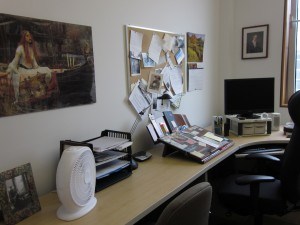
office

Anyway, because literally moving is not something I can any longer work or hope for, I have tried to find ways to avoid stagnation while staying in the same place, and the paradoxical thing is that while tenure is a major impediment to the former, it provides crucial protection for the latter because it gives me the freedom to experiment. I’m not that interested in the particular changes Craig mentions (such as secondments, exchanges, cross-appointments, advising, recruitment, administration). What I have done, sometimes deliberately and sometimes by accident, is reinvent myself as a scholar and professor. Dreaming up new courses is one obvious version of this. I also took a big turn in my research interests in the years just after I got tenure and my monograph came out, away from gender and historiography, where I’d been focusing since graduate school, and towards literature and ethics. This meant a gap in my publication output, but the work was very rewarding and led not only to a couple of articles but also to significant changes in my pedagogy. Then in 2007 I started blogging, not realizing how much of a change this would ultimately lead to in the way I conceptualize both academic work in general and my own professional life more particularly. More than anything else, my work with Open Letters Monthly (though it’s not clear that it will help me advance professionally) has helped me feel that I am not standing still — that while I may sit at the same desk in the same office I’ve had since 2001, I have moved on in some ways that really matter.

Still, a little more literal change might also be refreshing. I recently learned that a colleague in my faculty is leaving for a position somewhere else (yes, a rare example of lateral mobility!). I wonder who’s in line for his office.

“Who shall tell what may be the effect of writing?”: On Audiences and Serendipity

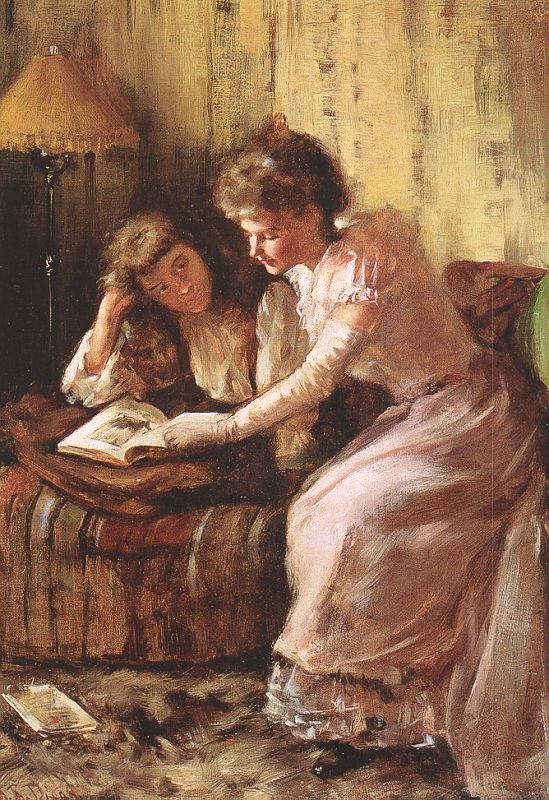
Bonnard The Letter

Who shall tell what may be the effect of writing? (Middlemarch, Ch. XLI)

One of the things I always emphasize to my students is the importance of considering your audience when you are writing. Knowing your intended audience settles a lot of questions about tone as well as style and content: formal or informal, colloquial or specialized, anecdotal or analytical. I usually recommend that they not think of me as their primary audience but aim their writing at another member of the class — a really top-notch, well-informed one who knows the readings and has followed our discussions closely.  You know you don’t have to summarize the plot for this reader. What you can do that such a reader will appreciate is draw attention to a pattern or idea or formal issue that deserves more sustained attention. And so on.

One of the unsettling things about writing a blog is that you can’t be certain who your audience is or will be. Given the competition for readers’ attention, you can’t be sure you even have an audience, much of the time, and most of us will never have a big one. And one of the questions every blogger surely confronts at some point is: how much should I care about this?

I think it’s disingenuous to pretend the question is “do I care?” Of course we care. If we really didn’t care about anyone ever reading what we write, we’d use old-fashioned notebooks — the kind you write in with pens! Writing in public is a symptom of a desire for readers, not because we’re egomaniacs or narcissists (though all writers, no matter their platform, surely need to have a bit of the egomaniac in them, enough to make them believe they have something worth writing down) but because we want to be part of the larger conversation about whatever it is that we are passionate about.

But the fact remains that readers are scarce, and attention (the currency of the internet) is hard to get. If you feel, as you are bound to sometimes, that the big conversation is going on somewhere else, without you, you can start thinking that you should do something, change something, write something, to get attention. You should write deliberately for an audience, and not the audience you actually do have of people who care about you and the writing you’re actually doing, but some imagined audience that would care if only you did something different. And yet, as Kerry  Clare eloquently explains in her recent post “Blogging Like No One Is Reading,” this is a bad idea:

To do the opposite of blogging like no one is reading is terrible advice for a variety of reasons. First, because most of the time, no one is going to be reading, and so there has to be something more than feedback from the outside world to push a novice blogger on. Second, because you’re never going to be able to predict what readers will respond to and what they won’t. It’s the strangest serendipity, and attempts to orchestrate this will absolutely drive you crazy. It will also result in the naked tap-dancing that just looks ridiculous, and never more so than when it doesn’t work and still, no one is reading. And there you are in your feather boa and your silly top hat, when dancing wasn’t even what you planned to be doing in the first place.

You need to write as who you really are, so that you will want to do the writing, and so that you will be pleased about the conversations you do get into, whether with your readers or just with yourself in a follow-up post. As Kerry says, there’s a strange serendipity to it all, and not only would you go crazy trying to orchestrate it, but you can go kind of nuts trying to figure it out when it does happen. Why my most-read post of all time is “How to Read a Victorian Novel” is puzzling to me; that it is my most-read post of all time is, if I think too hard about it, kind of annoying, considering it’s not by any means the best writing I’ve ever done here…but I had a great time writing it, so if it had stayed in peaceful obscurity, I would have had no regrets, and since I believe every word of it, I can only find its popularity cheering.

anthologyI mostly don’t fret too much about the audience for this blog: it’s my space, and I just do my thing, at my own pace. But when I write for Open Letters Monthly, I often struggle more with how to write or who to write for — or just what to write, since there are no limits and no imperatives, thanks to the deliberate breadth of the journal itself and the latitude my colleagues allow their co-editors. Though there have certainly been pieces I have been invited or urged or even pressured to write, I can’t imagine the topic I could propose that they would actively discourage! In puzzling out what project to take on next for Open Letters, I sometimes get caught up in questions about who would want to read what I have to say on a particular book or subject. What audience would I be writing for? Is there an audience I should be deliberately aiming for? Because of my own training and pedagogy, these have always seemed reasonable questions. But to my surprise, the most vehement advice I got from my most ruthless and motivating mentor was: never, ever, think about your audience! That’s the one thing you must put entirely out of your mind!

But how could this be? why is this wrong? I have always wondered. I’m coming to realize that the reason it’s wrong in that case is the same as the reason it’s wrong in blogging: if you’re hoping to second-guess the erratic interests of an amorphous online readership, you’ll end up endlessly second-guessing yourself, and you won’t write well (or, at least, you won’t write your best) or write things you believe in absolutely. Forget the timely hook, the link-bait trend, the ambulance-chasing review. If you have the luxury I have of not having to write anything in particular, then write what you know, write what you care about, write what you’d love to talk about if you got the chance, and write as well as you possibly can. That way if you do get the chance to join in a bigger conversation, it will be one you’re excited to be in. And in the meantime, you’re being your best, and also your unique, writing self — who else would you want to be, and who else, really, would anyone want to read?

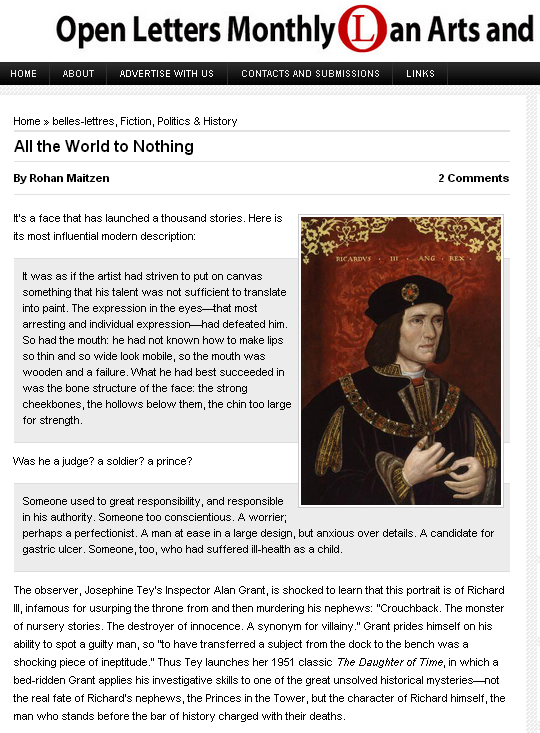
I’m feeling buoyed about this perspective on writing because I’ve been caught up in a bit of that strange serendipity Kerry talks about as a result of the essay about Richard III mentioned in this recent post. It’s an essay that had no extrinsic reason at all to get written. My only justification for writing it was that the topic has been dear to my heart since childhood and then turned out to be intertwined with many intellectual strands from my later life as a scholar. It had its roots in a blog post prompted by one of my very earliest encounters with Open Letters. I began working up notes for an essay on this material in the summer of 2011 and got all excited about it (and wrote about it here and here) and then, as I later explained to Steve, “lost faith in the project: it seemed too esoteric to be of general interest.” Obviously, he talked me back into it, and it was great fun (if also a fair amount of work!) getting it into shape and finally published in May 2012. After all that time I had made something I was proud of from an unlikely but, to me, fascinating combination of elements.  That was that, and that was enough! Nobody commented on it, it didn’t get any external links, I doubt it reached a very wide audience — but there it was.

AlltheworldThen last fall they started digging up the skeleton that turns out almost certainly to be Richard III’s. Suddenly there’s a surge of interest in his story, and when people go looking for something to read about it, one of the pieces they find is mine. It hasn’t gone viral or anything, but it has found a new audience, including the author of this Globe and Mail story, and also a producer for CBC who contacted me to confer about ways I might contribute to a potential documentary about the discovery of his remains. I don’t know yet what, if anything, will come of the proposal, but no matter what, that’s twice in a week I’ve had a chance to talk with curious people about one of my pet subjects, and, through them, to share my enthusiasm and my ideas with others. Once again, I’m immensely cheered by the whole process, even as I’m amused at its unpredictability. Fond as I am of the Richard III essay, I don’t consider it the best writing I’ve done for Open Letters. It is among the more personal pieces I’ve done. If I’d really thought about who might read it, maybe I would not have included the hopelessly nerdy picture of my younger self beside Richard’s statue in Leicester! I’m glad I didn’t worry about that, though. Another piece of advice I often give my students is that your writing represents you. It might as well represent the whole you, warts (or 80’s glasses) and all.

One final thought about audiences. Academic prestige (not to mention professional advancement)  is strongly tied to writing for academic audiences. Sure, there’s rhetoric about outreach and “knowledge dissemination” and so on, but my experience is that most academics don’t take writing and publishing outside conventional academic channels very seriously: it doesn’t really count. Just recently a colleague praised my Open Letters essay on Anne Brontë for its interest and originality, then spoiled the nice moment by adding “You should really publish it sometime.” I was genuinely pleased that a specialist found the essay valuable, but I did already “really” publish it. I just placed it — and wrote it — so that it would be accessible to non-specialists as well. I have persisted with this kind of writing and publishing, despite the likely professional disadvantages, because I believe  in it: I believe that one thing (not the only thing) we should do with our expertise is share it widely and show people why we’re excited about it. The CBC producer was explicit that her interest in contacting me came from her reading of the essay, which she described as “fun academic writing” — not, that is, the kind of academic writing she usually runs into, but nonetheless writing she recognized as expert. As I told her, that was music to my ears! The specific attention to Richard III that drew her to this piece was certainly serendipitous, but the existence of the piece in the first place, and its presence out in the open where she could find it, was not, and it’s not just cheering but gratifying to have the value of writing for a different audience affirmed in this way.

Richard III Redux

richard3

Anybody who has known me for more than, oh, twenty minutes has probably learned about my long-time fascination with Richard III. I wrote all about it for Open Letters last year. Little did I know that if I’d only held back my piece for a few months, I could have ridden the wave of Richard III-mania stimulated by the amazing archaeological project undertaken by the University of Leicester. As everybody knows by now, their work culminated in the announcement, just yesterday, that the skeleton in the car park is almost certainly Richard’s. The University has put together a fascinating, comprehensive site about the whole thing.

I know there are those who find this all distasteful: sensational, pandering to the media (and to the forces pressuring academics into proving their public “impact”), making a circus out of research … or just unfortunate because of the emphasis on a famous figure, as if archaeology and history are less interesting and important if they focus on ordinary people and ordinary lives. I have some sympathy for that last concern: there are many who “rest in unvisited tombs,” and there are lots of reasons to value and tell their stories: in the last century or so there’s been a transformation in historical priorities precisely in this direction, away from a focus on great men (and the occasional great woman).

Still, I can’t see raining on this parade. Aside from the intrinsic excitement of discovery, of adding some certainties to a centuries-old mystery (here’s a piece of the puzzle that has been missing for over five centuries, after all!), isn’t there something exhilarating about seeing a wider public get excited about something like this? Who knows what might be the wider effects–benefits, even–of sparking people’s imaginations in this way. Individual stories bring history into focus: they help us think about it as something that happens to real people. And this truly is a sensational story.

skeletonRiii

There’s something both thrilling and poignant about the spectacle of this broken body. It’s one thing to debate the theoretical value or responsibilities of historical fiction to the past. It’s another thing to see that past resurrected in all its tangible but enduring fragility. Difficult as our access to it may be, and impossible as it may be to reduce it to a single story, there is something that really happened. Now, here in front of our eyes, is, quite literally, the skeleton which has been fleshed out in so many memorable ways. I find it stunning: it gives me goose-bumps.

facial_reconstruction1
From the Richard III Society site, the facial reconstruction based on the discovered skull.


Updated: Thanks to my Open Letters essay on Richard III (linked above), I was contacted by Kate Taylor of the Globe and Mail to chat as part of her research for this piece on the continuing appeal and controversy of his story.

Magical Thinking: Truman Capote, Breakfast at Tiffany’s

tiffanyBreakfast at Tiffany’ s is the January read for my Halifax book group: we’re meeting next Saturday at Pipa to talk it over and celebrate the new year.
I more or less enjoyed reading Breakfast at Tiffany’s: more because the prose is so elegant, less because I found Holly Golightly tedious. She seems to me one of a type, though a particularly fey and charming example of it: it’s a type I think of as the intellectual man’s idea of a temptress, and other examples include Sue in Jude the Obscure and Julia in Brideshead Revisited. I believe I accused these two of representing “pseudo-philosophical eroticized flightiness.” Holly lacks their intellectual pretentiousness and shows no sign of haphazard piety, but she raises the same question for me as the other two: what’s so attractive about her? Is it that she’s so unstable her sexuality is not threatening? Is it that her intelligence is randomly dispersed rather than ambitious? Is it that for all her allure she seems fundamentally vulnerable?

Actually, even as I write I’m thinking of more ways Holly is different from my other examples. She is more endearing (at least to me), because for all her elaborate artifice, she seems warmhearted. Though she uses the men in her life to serve her selfish ends, she also enjoys giving pleasure, and she’s loyal . And she says some wise things, including “Anyone who ever gives you confidence, you owe them a lot.” And — and here’s where I think much of her charm probably does lie, for every reader — she’s a wistful dreamer, someone who, like all of us, is just wishing for a way to live her life that feels safe and happy, and maybe even a little bit dignified:

What I’ve found does the most good is just to get into a taxi and go to Tiffany’s. It calms me down right away, the quietness and the proud look of it; nothing very bad could happen to you there, not with those kind men in their nice suits, and that lovely smell of silver and alligator wallets. If I could find a real-life place that made me feel like Tiffany’s, then I’d buy some furniture and give the cat a name.

Do we all have a place that works its magic on us the way Tiffany’s calms and cheers Holly? I bet in this crowd a lot of us feel that way in a bookstore. I’ve been feeling kind of fretful lately, but this afternoon I treated myself to a browse and a coffee at Chapters, and though it’s not even my favourite bookstore to visit, I sure felt better after an hour or so roaming the shelves. While I was in there, I was wondering about one of the sources of my fretfulness–the surge of writerly confidence I felt after I got back from Boston last year, or rather the way that surge seems to have ebbed away. I spent a lot of my time in Boston in bookstores, and with other people who thrive on reading and writing and talking about books. I’m not looking for excuses to buy more books, really! But it occurred to me today that just spending my time in that way might have affected me at some subterranean level by affirming priorities, and even an identity, somewhat different from my day-to-day reality. My relationship with the wider book world is much more furtive in my ordinary life: I often (if irrationally) feel kind of guilty when I buy books, or when I steal away from work and family to browse them at my leisure; my bookish contacts and conversations are nearly all virtual; I have to fit in my non-academic reading and writing in between my “real” work tasks; my home office where I do my blogging and non-academic writing is even in the basement! I think there’s a way in which being in an actual bookstore summons up a fantasy life for me the way Tiffany’s does for Holly, though the precise things we want to feel and do are hardly the same.

Holiday Concerts

img_1016

Every year we attend at least one school holiday concert, events which are as much a part of our family traditions at this time of year as seasonal music, books, and presents.

School concerts are not my favorite special events. I find noisy, chaotic environments very stressful, I find it frustrating to have performances disrupted by restless toddlers and to see adults blatantly disregarding the principal’s directions to keep the aisles clear and to wait until the end of each piece for pictures (really! what kind of example does that set?), and I struggle with the ‘everyone participates’ ethos for band and choir that means there’s no baseline skill demanded–which, for the school band especially, means the playing is typically dreadful but must be applauded nonetheless. (I’m all for kids participating in band, don’t get me wrong, but not every beginning effort deserves a captive audience.) And then between the need to be inclusive and inoffensive and the difficulty (or so I assume) in acquiring rights, the music itself is hopelessly tedious pablum. Add in the likelihood of icy roads and you have a perfect storm of reasons for me to grumble and whine every time one of these events draws near.

And yet for all my grumbling, I’m always won over by the events themselves–not by any specific performance, but by the spirit they embody, by the ideal they bring so naively to life. There in the shabby school gym, on the uncomfortable plastic chairs lined up in rows that are always too close for comfort, with terrible acoustics and (except for the lucky winners of the ‘front row seat’ lottery) pretty poor visibility too, we are brought together because we love our children. Different as we may be from each other in some respects, this is something we in the gym share. We love them, and we want them to flourish. We cherish their innocence and the wide-eyed delight with which they look out at a familiar space transformed for them by our presence. On these occasions we also get a glimpse of the life they lead without us: we see their trust for their teachers and their friendships with each other. Though they sing for us, they sing with each other, and there is no more beautiful, more hopeful sound.

I was busy with work and put off writing about the concert we went to last week. Then on Friday, like everyone else I was overwhelmed with the news of the shootings in Newtown, Connecticut. Since then it has been very hard to think about how or what to write – not just about the school concerts, but about anything. There’s a sense, of course, in which that terrible event has nothing to do with me. I wouldn’t presume to have anything special or useful or important to say about it. But I don’t know how to not say anything about it at all and just go back to writing about my life and my books and all the rest of it without at least acknowledging it. “Any man’s death diminishes me,” says Donne in his famous Meditation. The deaths of these beautiful, innocent children and the brave, dedicated women who loved and cared for them diminish us all.

Happy Canadian Thanksgiving!

It’s Canadian Thanksgiving today. We cooked and ate our traditional dinner yesterday, which means today we can relax, catch up on some work, and enjoy leftovers for dinner. Despite a threatening forecast, it’s a bright sunny day so far; yesterday was gorgeous too. The foliage isn’t as bright as it sometimes is at this time of year, but it was still lovely on our traditional family walk in Point Pleasant Park yesterday:


And here’s our traditional Thanksgiving dinner: roast pork, mashed sweet potatoes, boiled new potatoes, sauteed carrots and mushrooms, green beans, and homemade cranberry sauce:

Dessert is apple crumble with vanilla ice cream. Delicious!

This Week and Last Week … But (I hope) Not Next Week!

It has been quiet over here, I know. That’s a symptom, as usual, of things not being quiet elsewhere and so my not having enough time and energy to spare for blogging. For the past couple of weeks it seems we haven’t had two straight days in which at least one member of my family hasn’t been home sick. When it’s the kids, that means extra pressure on the usual efforts to juggle schedules (and, of course, time spent giving them all the TLC we can muster). When it’s me, as it was (conveniently?) over the weekend, that means a fair amount of deferred maintenance on everything from class prep to grocery shopping. However, tonight things are looking up–I am mostly better, and my daughter is well (well enough, even, to get to her singing lesson, which we had to cancel two weeks running — ironically, this week her teacher wasn’t well, but she soldiered on so Maddie wouldn’t be three weeks behind). Only my poor son is still feeling pretty lousy, but at least he was sitting up and even eating a bit by the end of the day, so maybe he’s turning a corner, though I know it doesn’t seem that way to him right now because he mostly still can’t breathe.

One of the books I’m prepping for class this week is Gaudy Night–I find myself very sympathetic, on this reading, with poor Mrs. Goodwin who keeps having to leave work to tend to her sickly son. It is reassuring to think (or at least believe) that my own professionalism and suitability for my job isn’t being called into question the way Mrs. Goodwin’s is because I’ve had to cancel some office hours and miss a meeting or two! On the other hand, it hasn’t gotten conspicuously easier, in the intervening century, to find a really happy balance between the demands of work and the demands of family. Although it would be nice, once in a while, to take a real sick day and not actually do (or worry about) any work, I feel very fortunate that in this electronic age much of my work can be done from wherever, and whenever. My husband and I have also, for many years, been able to arrange to teach on alternate days, so that cancelling an actual class meeting is a rarity for both of us. It’s interesting to reflect on the complex triage we’ve developed. Classes trump meetings, meetings trump office hours, specific appointments trump office hours, office hours alone just get rescheduled, class prep gets done one way or another in the interstices, and research and writing … well, you can see how much non-essential writing I’ve been able to do in the past week! It’s notable that for both of us actually making it to class is so clearly the top priority. I have learned that students don’t usually much mind a cancelled class here or there, but we put a lot of thought and planning into our courses and for us, a missed hour can throw off a whole sequence (though I have also learned that it’s easy to overestimate how much that really matters). We are still clearly convinced that there’s real value-added in our physical presence and face-to-face engagement with our students. Just call us “the enforcers.”

Anyway, since I have little of intellectual substance of my own to offer right now, how fortunate that the new issue of Open Letters Monthly is fresh and full of goodies! By the time you’ve read every piece there from top to bottom, surely I’ll actually have finished a book or otherwise come up with something to say. And there’s lots of other good stuff around on teh internets, from proposals to remake the humanities PhD to discussions about the ethics of live-tweeting conferences to posts on Argentinian literary doom. Happy reading–and wish me luck.

Summer Reading Recap

Once again, summer is yielding to fall and Maddie and I have reached the end of our summer reading project. This year, we both reached or exceeded our target of 20 books by the library’s September 8th deadline, and we both read quite a few that we thoroughly enjoyed and admired. Because blog readers are typically fewer over the summer (what, you have better things to do than hang out on the internet?), I thought I would once again review the highlights. The library’s reading program didn’t officially begin until the very end of June, but I’m going to start a bit earlier, as some of the best reading I did was in May and June.

May’s most important reading was certainly Madame Bovary (post 1; post 2). This was a memorable experience, not because I enjoyed the novel, exactly, but because I enjoyed thinking about and debating the novel–which is, obviously, one of the very great novels and also an object lesson for those readers who (much to Howard Jacobson‘s annoyance) think that it’s important to be able to identify with a novel’s characters. The debate in the comments between litlove and Amateur Reader (two of the readers and bloggers I most admire) is as well worth reading (maybe more) than anything I said myself. Sometimes it’s just gratifying to have provided the occasion.

In June I travelled to Boston for some F2F time with my Open Letters colleagues and some quality time with my mother, with whom I spent many happy hours in bookstores in Boston, Cambridge, and Northampton. I came back from my trip feeling full of bookish energy and confidence (where, oh where, has that gone?!). I also brought back a lot of books, of course, and the first one I wrote up was Molly Peacock’s The Paper Garden: An Artist Begins Her Life’s Work at 72. I described this book as ” idiosyncratic, fascinating, beautiful, and occasionally annoying’; writing about it provoked reflections on my own efforts to redefine my life’s work, my experience of aging, and the hope it gave me to read about someone succeeding “by being completely herself”–and doing so when by so many measures she could be seen to have passed her moment. “Some things,” Peacock observes, “take living long enough to do.”

June’s other great reading experience was T. H. White’s The Once and Future King, which (like The Paper Garden) I had no idea would enthrall and move me the way it did. Part fantasy, part adventure story, part romance, part myth, this extraordinarily effervescent novel is also very much a tragedy about our own inability to live up to our own ideals.

In July I read Hilary Mantel’s Bring Up the Bodies, which was every bit as gripping, artful, and profound as Wolf Hall led us to expect. I admit I was just a tiny bit less impressed with it than with its predecessor, only because it is exactly the same kind of book, and the delightful shock of it all (from the oblique point of view to the vivid immediacy of the historical details) simply could not be as great the second time. It read like a straight continuation of the first novel, and presumably the final volume, now in composition, will complete the package. Not that there’s anything wrong with that–of course not. But Mantel’s other books show her to be capable of a virtuosic range of styles and voices–imagine the feat of doing each of these parts of Cromwell’s life in a technically different way! But of course when someone writes a brilliant novel it’s petty to wish, even a little bit, that they’d written a different brilliant novel.

Probably the most fun I had reading anything this summer was Thomas Raddall’s Halifax: Warden of the North. Once again, some of the fun was in the surprise–as I explain in the post, I had always snarkily assumed Canadian history had little drama or glamour– but Raddall’s break-neck pace and lively story-telling carried me right along.

In a sentimental mood, I read the three novels in K. M. Peytons Flambards series: Flambards, The Edge of the Clouds, and Flambards in Summer. I’m still partial to her Pennington series (brooding adolescence! Liszt!) but these books are real treats, not least for their evocative portrayal of a historical moment marked by profound social transformations.

Like Madame Bovary, Edward St. Aubyn’s Patrick Melrose novels were more fun to think and write about than to read: they are difficult, nasty even, claustrophobic, misanthropic–yet at the same time, highly stylized. I would have liked to get some responses to my analysis from the folks on Twitter and elsewhere who praised this series to the skies when I mentioned reading it. I expect the discussion would cover many of the same issues that came up in the comment threads on Madame Bovary, actually. Much as I struggled with the first four, I found myself interested and impressed enough to read the final volume.

David Mitchell’s Black Swan Green was a highlight of my August reading–the young narrator won me over, and I found the novel’s more consistent form and focus more appealing than the elaborate Russian doll structure of Cloud Atlas. Paul Scott’s The Jewel in the Crown was slow, difficult, and utterly engrossing.

Throughout the summer also I read a lot in preparation for my seminar on the ‘Somerville Novelists‘ (now, after much anticipation, getting underway). A lot of the contextual reading was recorded only in my research notes, but Brittain’s Honourable Estate, Woolf’s Three Guineas, and Holtby’s Virginia Woolf were all revelatory in their own ways.

It was a bit of a difficult summer for me in some ways. As I’ve written about before, I don’t flourish without structure in my days, and even when I was able to keep up some kind of regular routine with time in my office, I was usually the only person around, as my friends and colleagues were either out of town for research or conferences, or at their cottages, or working at home. I often feel somewhat marooned out here in Halifax, and summer exacerbates the sense of isolation.  This summer I felt particularly mopish! Not, of course, that it isn’t nice to have a more relaxed schedule, and to be able to spend more time enjoying the company of my family. And the virtual company of my online blog and twitter connections is always a good thing–a social lifeline and a great source of intellectual stimulation. Still, I’m thinking I should try to take steps to avoid falling into the same summer slump again. I’ve inquired about spreading my regular teaching load out into the spring or summer: if this is possible, it would help balance things out better, as fall and winter can be overwhelmingly busy. Also, I clearly need to cultivate more friendships outside of work, so that the evacuation of campus doesn’t affect me so much! Precisely because the academic term is so busy, it’s always hard for me to figure out how and where to do this. Also, I’m not much of a joiner. And soon it will be winter and I won’t want to leave the house unless I have to!  Well, when my resolution flags, I can watch this video and renew my motivation:


From the Archives: My Teachers — An Appreciation

My daughter starts Grade 6 tomorrow, which for her is the beginning of the end of elementary school. Talking to her about that tonight reminded me of my own Grade 6 year, which was a turning point for me both personally and academically. This thought, in turn, reminded me of this earlier post. As I head into another teaching term myself, it’s both humbling and inspiring to reflect on the lasting impact a teacher can have. I’d love to hear in the comments about teachers who have made a difference to you!


From the Novel Readings Archives:

This post is my 200th at Novel Readings, and I’d like to turn it into something of a special occasion.

A month or so ago, finding myself in “a bit of a posting slump” after wrapping up my series on “This Week in My Classes,” I asked for suggestions about things to write about. I recently received this nice suggestion by email from Tom Wood: “How about a post on a teacher/scholar whose work has had a significant influence on you?” I really liked this idea, because I still think with admiration and gratitude of several teachers whose influence, support, and guidance shaped my life in ways exceeded only by the love and direction provided by my parents. So, for this 200th post, I thought I’d take up Tom’s suggestion and celebrate them.* Now that I’m a teacher myself, I reflect often on the potential we have, in this profession, for making a difference in someone’s development. If you had a particularly memorable or influential teacher, I hope you’ll post a comment telling me about them!

It is impossible to overestimate the importance the right teacher at the right time can have on a student, though it may be impossible to foresee what will turn to be “right” ahead of time. In my own case, I think of my sixth grade teacher, Mr. James. I hadn’t wanted to be assigned to his class, as he had a reputation for being brilliant but eccentric and sort of scary–all of which he was, and indeed still is! But he was the right teacher for me after all: he saw something in my moody, bookish 12-year-old self that caught his interest enough for him to lend me extra books and encourage me to be less fearful about the differences between my own strengths and the qualities that earned other students ease and popularity with their peers. I think, too, of the indomitable Joni MacDougall, who browbeat me into being a better writer and let me, as a nerdy tenth grader, visit her History 12 class to give a presentation on Richard III (when I say “nerdy,” I mean that I was the youngest member–at least to my knowledge–of the Richard III Society of Canada). Later, when she had moved to a different school, she invited me to speak to her social studies class on the Industrial Revolution. Both teachers intimidated, bullied, and pressured me; both also, in equal measure, inspired and motivated me. Somehow, they had an idea of what I was capable of that exceeded my own, and by urging me to cultivate my own interest in reading and history, they started me along my career path well before I could have articulated anything like academic ambition for myself.

But probably the most influential moment, and the one I never saw coming, was my enrollment in D. G. Stephens’s first-year English class at UBC. I nearly missed it: I had registered for another section, but after the first class meeting I was told that I had to switch to what they called a “Z” section (I had done well on a placement test, I think). So I showed up in Dr. Stephens’s class for the next meeting (and, I distinctly remember, had to write an in-class essay on the seven deadly sins, about which everyone else had been forewarned). Prior to taking his class I had fully intended to major in history. I was a lifelong avid reader, but a complete skeptic about literary interpretation: when I thought about literary criticism at all, which was almost never, it seemed to me an exercise in second-guessing, or just plain guessing–in seeing what wasn’t there. In retrospect, I think this dismissive attitude was partly the result of growing up in a house full of devoted readers: I took reading for granted and didn’t see why or how it could be complicated.

So what happened to me in Dr. Stephens’s class? Obviously, whatever it was, it changed my mind about a lot of things. But it wasn’t because he was messianic. His teaching style is probably best described as “understated,” in fact.** I particularly remember the way he would make a comment and then scan the room, looking for responses, which were slow and hesitant in coming (his demeanor was, or I remember it as being, a bit intimidating–wryly ironic, a bit cynical). Many of his remarks were actually very funny, and I came to believe he was looking around to see if anyone got the joke. (I do that too, now: it’s a good way to see who’s paying attention.) But I don’t remember that he ever cracked a real smile himself. When he asked the class a question, I often wondered what mysterious answer he had in mind. Whatever I was thinking seemed too obvious to be right, and clearly hardly anybody else would hazard a guess. But it was frustrating not to have more discussion, and one day we had read a poem I really liked (it was Robert Graves’s “The Cool Web“) and I finally put my hand up and ventured some replies to his questions about Graves’s language and how particular words fit the central ideas of the poem. He seemed pleased! My answers were good! I knew what he was talking about! Things started to fall into place. He wasn’t making things up, because I could see them there too, in the poem, and thinking about how the details of form and language built up the whole piece made the poem better, more pleasurable, more exciting to read. It was like something coming into focus, something I (as someone who had always loved to read both fiction and poetry) had always seen, but had never really looked at.

I actually have all of my old undergraduate essays (it’s a good exercise in humility to look them over, especially during marking season). I certainly didn’t get all As in his class. What I did get was a sense of the rewards of interpretation, of lingering over details, of making a specific connection with a text. It probably helped me that Dr. Stephens was not a showy teacher, and it certainly helped me that he was a rigorous one as well as a witty one. I didn’t give up the idea of majoring in history. Instead, I became the first UBC student to do a combined Honours degree in English and History (back in the olden days, interdisciplinarity was not the norm). I had many excellent teachers in both departments, and superb mentors for my Honours thesis in James Winter and Jonathan Wisenthal. But I dedicated my thesis to Dr. Stephens, with gratitude.

*I realize that Tom’s question may have been meant to elicit more about scholarly and critical, rather than personal, influences. I’m still thinking about that dimension of influence. No question, I have learned a lot from many teachers and scholars. But is that the same as having been “influenced” by them? And have any of them actually inspired, moved, or motivated me? (If not, is that a problem or a loss?) [Update: I did eventually write a post about Writing and Life – Influential Critics.]

**My search of the UBC website for pictures or other details about Dr. Stephens to link to revealed that he won a “Master Teacher” award in 1974 and 1977 (fully a decade before I took his class), so clearly I wasn’t the only student he impressed. This raises the further question for me of whether UBC had, at that time, a deliberate policy of putting senior and well-regarded faculty in their first-year classrooms.

Originally posted June 5, 2008

Letters to a Friend

A dear friend has been de-cluttering–a foreign concept to those of us with pack-rat archivist tendencies. She wrote to find out if I’d like back the letters I’ve written her over the years. I didn’t figure they contained much of interest, just everyday meanderings and updates, but they go back a pretty long way and I’m already sorry that I haven’t done well keeping track of letters people have sent me (my grandmother, for instance, was a great letter writer, but I have very few letters of hers, though I don’t remember ever deciding not to keep them)–so I said sure, send them along.

I received them last week and have been poking through them with a mixture of disbelief, amusement, and nostalgia. Was I ever that young? Did I really think those were topics of interest, or books or movies worth commenting on? Wow, I was earnest about school for a while–and I was sure excited when my first article was published–but I had forgotten how early in my time at Cornell I started muttering about whether academia was really right for me. I used a purple pen sometimes? That’s embarrassing! On the other hand, my handwriting was much better back then. I wrote a whole letter while sitting in a seminar? I thought that in the olden days, before smart phones and the internet, students always gave professors their full, undivided, respectful attention!

Then there’s the odd experience of reviewing my own life. The earliest letters are from the summer of 1989, before my final year at UBC. That summer I started work on my Honours essay, wrote my GRE, and started seriously planning my grad school applications (“I’m almost as nervous about getting accepted to grad school as I am about not getting accepted!”). Say Anything was just out (“I don’t like watching perfect romances too much these days ….”). For some reason I had resolved to read more American literature and was finding The Scarlet Letter dull, but I was thrilled by Carlyle’s “Characteristics.” There’s a whole long paragraph about my soon-to-be advisor’s book Shaw’s Sense of History and how excited I was that “it is exactly the sort of thing I had in mind for my own paper.” To my dismay, it had a major printing error in it (“pages 53-84 are MISSING and pages 21-52 are reprinted in their place!”)–but I took heart: “if Oxford UP can make mistakes, why should we be so paranoid about doing things right?” (That’s still a good question!) In general, that was a buoyant time for me. Looking back on it in 1993, I wrote “In my last two years at UBC I felt sure of my direction and I was clearly on the right path.” That’s not a feeling that had lasted: “now … I’m worried both about my performance and about my stamina, not to mention my future prospects.”

The letters tell the story of that shift from certainty to confusion and, sort of, back again, as they carry on with reasonable steadiness through my Ph.D. years and my first couple of years in Halifax. What a lot of changes she and I went through in that period! Her story would be hers to tell, of course. As for me, I endured my emotionally and intellectually traumatic first year at Cornell, struggling not just with the academic work but with being myself, or even figuring out who I was, so far from everyone who knew me. I was lonely and homesick and perpetually intimidated.

By the middle of my second year, I was somewhat more confident academically (though unhappily dependent on external validation), and much more settled personally: I met my husband-to-be in the summer of 1991, and we got engaged in December. In my third year, I was married. I also taught my first independent class, a writing seminar of 17 students: it’s “very writing intensive,” I reported, “and that means a lot of grading … e.g. 16 or 17 [papers] a week.” Ha–those were the days. I enjoyed the teaching right from the start: “I like it better than going to graduate seminars: so much less pretentious!” Perhaps I was thinking of the student who interjected into every discussion, “Oh, but that’s so Godwinian!”

Actually, it’s the continuities that surprise me the most as I leaf through these pages from my past. There I am in 1990 complaining that Blue Velvet immerses us too much in the dark side of life, and here I am today making the same objection to Madame Bovary and the Patrick Melrose novels. There I am, again and again, waiting for someone else to tell me whether my writing is any good. There I am, year after year, wondering if I’m cut out for the academic life but loving enough about it to persist. “If someone offered me a job in publishing right now, I’d probably take it,” I say, but of course nobody did (because nobody does!) and so I stayed on the path I could see most clearly, and through a combination of inertia and luck (and, of course, some pretty hard work) I ended up, well, here.

When I first looked at these letters last week, I kept thinking, “Oh, if only I could somehow have told myself what I know now. The things I would do differently!” But it doesn’t take much hard thought to realize that wishing to apply one’s hindsight in this way is not only futile but also illogical. It’s not as if I could make a different decision at one point and yet keep everything else the same, after all, and life is such a complicated tangle of interconnected things. The possible world in which I leave Cornell to pursue a job in publishing, for instance, is also one in which, among other things, I don’t have my children–not that I wouldn’t have had any children, but I wouldn’t have had the ones I actually do have. And how can I wish them unmade?

I’m not one to believe that everything happens for a reason. I think we just do the best we can, and make the best sense of things we can, as we go along, and time passes, and things change one way or another. Though by and large their details are mundane, my letters are a part of this process, a sorting and filtering of experience. “I have been reading ‘The Prelude,'” I wrote to my friend,

and it seems only fair that if every detail of Wordsworth’s life is considered interesting enough to suffer through in hundreds of lines of understated iambic pentameter, my own humdrum existence deserves at least a few lines of commonplace prose!

Self-reflection doesn’t necessarily lead to self-knowledge, or to anything of wider import, but I’m glad to have had this chance to look back and rediscover what I had to say about my life. And, more than anything, I’m glad to have had such a true and loyal friend to say it all to. Knowing that someone is out there who cares enough to read all the “gory details”–well, that’s about the best thing there is.