Open Letters, November 2013!

olmcover

The November issue is up! Headlining it is Steve Donoghue’s review of Thomas Pynchon’s Bleeding Edge (spoiler: he doesn’t like it!). Other recent fiction reviewed includes Jhumpa Lahiri’s The LowlandChimamanda Ngozi Adichie’s Americanah, and Richard Kadrey’s YA novel Dead Set. Sam Sacks takes a look at a new book on Hamlet that “attempts to illuminate the play’s darker corners, and in the process provides useful glosses on some of the more rebarbative thinkers of the modern era”; Greg Waldmann reviews Collision 2012, another entry in the usually short-lived genre of the campaign book; Ivan Keneally explores what sounds like a wonderful exhibition of Sargent’s watercolors at the MFA; and our new poems for the month, from Katy Bohinc, take the form of letters to Alain Badiou. My contribution this time is a ‘second glance’ at one of my long-time favorites to read and teach, Wilkie Collins’s The Moonstone: I needed a break from disappointing contemporary fiction! Add in Irma Heldman’s regular mystery column and some well-chosen pieces from our archives (especially worth another look is John Cotter’s piece on Sargent’s El Jaleo), and that’s a wrap! Please go on over and check it out, and if you like what you find, help us get the word out.

A New Month, A New Open Letters Monthly!

danziger

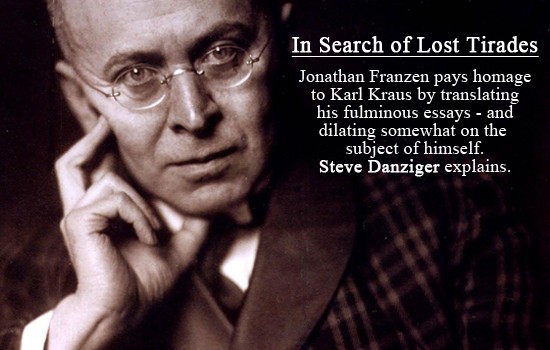
Once again, a new month has brought with it a sparkling new issue of Open Letters Monthly. If you haven’t already, I hope you’ll go check it out. As always, there’s a wide range of coverage and styles. We’re spotlighting Steve Danziger’s review of Jonathan Franzen’s new translation of Karl Kraus (you know, the one in which he tells us ‘what’s wrong with the modern world’). You’ll also find John Cotter’s review of Jeremias Gotthelf’s very creepy sounding The Black Spider, Steve Donoghue on Korak, son of Tarzan, poetry editor Maureen Thorson on the ‘piercing unreason’ of Ange Mlinko’s poetry, my own unimpressed take on Elizabeth Gilbert’s much-hyped The Signature of All Things, Justin Hickey on Abominable Science, Spencer Lenfield on the enduring mystique of Pompeii, and much more. If you like what you find, do help us get the word out.

This month marks exactly four years since my first ever contribution to Open Letters Monthly, which was this little essay on Trollope. It has been quite a four years for me: I can’t imagine how else I would have found the courage to write, never mind a venue in which to publish, the range of reviews and essays that followed. Here’s to our next four years!

Open Letters Monthly: the June 2013 issue!

jeffsphoto

It’s a new month, and once again, a new issue of Open Letters Monthly is live and ready for your reading pleasure!

As usual, the pieces range widely and probe deeply. I have a proprietary interest in a handful of them. Alyssa Mackenzie, a former honors student at Dal (now doing graduate work on Virginia Woolf in NYC) contributed a great review of Sandra Djwa’s new biography of P. K. Page — by the time I’d finished working through it with Alyssa I was convinced I have not read nearly enough of Page’s poetry. Nicole Perrin, better known to some of you as bibliographing, takes a sharp look at Jane Gardam’s latest and (to her disappointment and mine) finds it not as good as her earlier books. My Dal colleague Jerry White has a stem-winder on Fintan O’Toole’s attempts to generate a new vision of republicanism in Ireland. It is genuinely exciting to work with people on books and ideas that they are excited about themselves, and gratifying to see our efforts (well, OK, the effort is mostly theirs, but I helped!) pay off with strong, interesting critical writing.

olivia-manning-a-woman-at-warMy own contribution is a review of Deirdre David’s Olivia Manning: A Woman at War, which I found fascinating for its account of Manning’s life and work and thought-provoking for the questions it raises about being (or refusing to be) a “woman writer.”

The issue also includes John Cotter’s take on Terry Eagleton’s How to Read LiteratureSteve Donoghue keeping up with the Tudors with a new alt-history account of Anne Boleyn, Spencer Lenfield with an impressively detailed and nuanced reading of Richard Ford, and much more. I hope you’ll come on over and read around in it — and if you read something you like, help us get the word out. Sometimes (perhaps unfoundedly) it feels like we are putting out the best online literary magazine nobody has ever heard of! And also, in case this doesn’t go without saying, if you ever have an idea for an essay or review that you’d like to contribute, let me know (rmaitzen at gmail).

New Reviews and “Right” Reviewers

timthumb

Launch day never comes but what I am surprised at what we’ve pulled off, thanks to the talent, perseverance, and generosity of our contributors and the diligence, enthusiasm, and contributions of our editors! Our May issue seems to me to exemplify what we want Open Letters to be. It covers a wide range of material — I think there’s greater variety in the titles we cover than in most other literary magazines, online or otherwise — and in a range of voices. Have you ever looked at our “About” page? Here’s what the wise heads that set up Open Letters in the first place came up with as our “mission statement”:

We’ve all had the experience of reading a review that sparkled—one that combined an informed, accessible examination of its quarry with gamesome, intelligent, and even funny commentary. These are the pieces we tell our friends about and then vigorously debate.

That’s the kind of writing you’ll find in this month’s issue, so hop on over and take a look! Among its goodies you’ll find a thoughtful exploration of Yoko Ogawa’s Revenge by friend-of-Novel-Readings Colleen Shea (a.k.a. the esteemed proprietress of Jam and Idleness); an exuberantly insightful commentary on a new edition of Birds of America by the inimitable Steve Donoghue; a provocative critique of Tea Obreht’s critically-acclaimed The Tiger’s Wife; and much more.

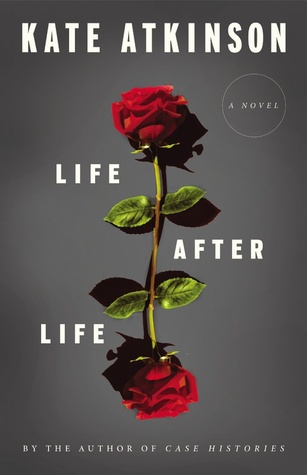
atkinson1My own contribution this month is a review of Kate Atkinson’s Life After Life, which has also been receiving  a fair share of critical acclaim. You’ll have to read my review to find out if I’m joining in the chorus. I will say that the book is extremely readable, and that writing the review was good mental exercise, especially once I decided on how I wanted to structure it.

While I was working on it, a conversation broke out on Twitter about the question of what makes someone a good fit to review a particular book. OK, I started it — well, technically Mark Sarvas started it by noting he thought a particular reviewer was a “terrible choice” for a particular assignment. Happily, I pretty much “assign” my own books to review, but I puzzle over how to make good choices for myself, so I asked what he thought the parameters were. He proposed avoiding cases of “outright conflict,” cases where there’s a specific “axe to grind.” I proposed someone who could be expected to have a good conversation with the book . Gregory Cowles of the NYTBR chimed in (Twitter is fun that way) to suggest “open engagement” as the key.

As I said in that exchange, I seek out books to review that I expect to like, by which I mean books by writers I have some reason to trust, and/or on topics and/or in genres that are within my usual range of interests. This is not to say that my default plan is a good review (in fact, I try not to think in terms of “good” or “bad” reviews). I just figure that way I have the best shot of appreciating what the book does well but also recognizing what, according to my reading experience, it doesn’t do well. To keep going with the conversational metaphor, there’s no point trying to have a lengthy discussion with someone whose language you don’t speak at all. If I were a full-time professional book reviewer, such discrimination would presumably be a luxury. Sometimes when I’m paging through catalogs not finding any “likely candidates” for my next review, I hope I’m not being some kind of prima donna, or  (worse?) that I’m not being intellectually unadventurous. But who would want to read my attempt to review something like Revenge? Or, to go even further outside my normal literary habitat, Richard Hell’s autobiography, reviewed with great panache in this issue by Steve Danziger? Much better to leave these books to readers who get them.

Besides, in a way all contemporary fiction is an adventure for me, since my official expertise is entirely elsewhere. I’ve certainly found plenty to grapple with in the recent books I have reviewed, from The Marriage Plot to Two-Part Inventions. (Whether I’ve acquired expertise, or at least relevant experience, by writing about contemporary fiction on my blog is another question, not entirely unrelated, I suppose!) Mark’s question was timely in part because I was wondering if I was a good choice to review Life After Life. Reviews were coming out all around me as I worked (I managed not to actually read any of them until I had a complete, committed draft of my own!) — Francine Prose’s came out in the New York Times just this past weekend, too. Clearly someone there thought she was a good fit, and I can see why. Every reviewer who acts in “good faith,” though (to call on another of Mark’s Twitter comments) brings something fresh to the conversation. It’s possible, too, especially reading the major literary reviews, to feel as if there’s all too much insider trading (have you heard the joke about the New York Review of Books — that its real name is The New York Review of Each Other’s Books?). I think my review stands up well to Prose’s. (Mind you, she, poor woman, was probably given a word limit.)

What do you think makes someone a good fit for a particular review? Proximity or distance? Expertise or an unexpected angle? Or will you take any of these provided the conversation itself is good enough? These questions are relevant to me not just as a writer but as an editor, after all.

Also, in case you wondered, the next book I’m reviewing is Deirdre David’s biography of Olivia Manning. I think I’m a good fit: I know David’s work as a Victorianist, of course, and I’ve read both trilogies in Manning’s The Fortunes of War, and I know a lot more about early 20th-century women writers than I used to because of my reading in the ‘Somerville’ set. So far it’s entirely fascinating.

2012: My Year in Writing

cassatI began my annual look back at 2012 with my small contribution to the Open Letters year-end feature. I’ll follow up soon with my regular survey of highs and lows from my reading and blogging year. But this year I thought I’d also take a moment to review the writing I’ve done this year for venues besides Novel Readings.

Most of it was for Open Letters Monthly, of course, and I continue to be grateful for the opportunity to write about whatever interests me, as well as for the challenges to write about things I might not otherwise tackle. Also, as I always tell new or prospective contributors, the editing process at OLM is one to cherish: we bring different interests and sensibilities and styles to bear on every piece, but always in the interests of making it the strongest version of itself that we can collectively manage, and I know that my pieces always end up better than they began.

My first OLM piece in 2012 was “The Quiet One: Anne Brontë’s The Tenant of Wildfell Hall.” I think this is a wonderful novel – more artful, in many ways, than Jane Eyre, if without its visceral appeal. I teach it regularly and the more time I spend on it, the more I admire the unity and integrity of Anne Brontë’s accomplishment. It was a treat to write this up: it’s basically a much-elaborated version of the notes I use for lecture and class discussion.

The scariest piece I wrote in 2012 was “Abandonment, Richness, Surprise: The Criticism of Virginia Woolf,” which was my contribution to our special 5th anniversary issue. I was not initially enthusiastic about doing an entire issue on criticism, and I wasn’t at all sure I had what it took to say anything at all about Woolf as an essayist. On the first count, I was completely converted as the pieces came in. Sam Sacks on Frank Kermode, Greg Waldmann on Edmund Wilson, Steve Donoghue on Elizabeth Hardwick, John Cotter on Gore Vidal … the project brought out the best in our writers as they spoke from the heart about the people who showed them what criticism could be. As for my own piece, the faint edge of desperation I brought to the task unexpectedly gave me courage to get more outside my own head than I’m usually able to do and to write with a freedom I rarely feel. This is the 2012 publication I’m most proud of, precisely because it’s a bit riskier in voice and approach than any of the others.

The most fun piece to write, on the other hand, was definitely “All the World to Nothing: Richard III, Gender, and Genre.” As I confess in the essay, I’ve been a “Ricardian” for many years but I hadn’t found a place for that somewhat esoteric interest in my working or writing life before. Yet as I thought about the elements I wanted to include in the essay, I realized that a lot of the work I’ve done as an academic has grown out of my early passion for historical fiction, while a lot of my conceptual thinking about gender and historiography finds apt illustration in the tale of the last Yorkist king and his mostly female advocates. I have a feeling that not a lot of readers followed me down the slightly wandering path I took, but I hope those who did shared in my last gleeful “ha!” They will also understand the great excitement I have felt as this news story unfolds.

I wrote two essays on George Eliot this year, stages in a still somewhat indefinite longer project about her thought and her novels and what they might mean for us today. In the first of them, “Macaroni and Cheese: the Failure of George Eliot’s Romola”, I bypassed the essay I initially thought of writing, in which I made a case (as I did a couple of years ago for Felix Holt, the Radical) that the novel is better than is usually thought, and chose instead to think about the ways in which the novel is every bit as bad as it seems. I know that fear of failure holds me back: I find George Eliot’s failures inspiring because they teach me about reach and ambition and intellectual courage. That said, Romola actually is a fascinating and occasionally thrilling novel, so if you’ve already made your way through the others, don’t be put off by all this talk of failure!

Also for Open Letters, I reviewed The Life of George Eliot, by Nancy Henry (in our ‘annex,’ Open Letters Weekly) and Lynn Sharon Schwartz’s newest novel  Two-Part Inventions. Henry’s biography is smart, thorough, and yet somehow not as exhilarating as a life of George Eliot deserves to be, perhaps because it is that odd hybrid, a ‘critical biography.’ Still, it’s miles and miles better than Brenda Maddox’s abysmal George Eliot in Love. Schwartz is the author of two novels I admire enormously–Disturbances in the Field and Leaving Brooklyn–but I wasn’t inspired by Two-Part Inventions mostly because it seemed to me that Schwartz wasn’t either.

The second of my George Eliot essays this year, “‘Look No More Backward’: George Eliot’s Silas Marner and Atheism,” appeared in the Los Angeles Review of Books (and then, rather to my surprise, in Salon). As the essay was in progress, I had second thoughts about the ‘New Atheist’ hook I’d proposed for it when I pitched it, but that is how I’d pitched it and (understandably) that’s what they wanted me to stick with, so I did. It’s not that I don’t believe what I said, but as I’d feared, that set-up was a distraction for some readers, who seem (at least from the posted comments) not to have persisted as far as my reading of Silas Marner. I have argued before that we could do worse than look to George Eliot for ideas about how to be both godless and good and this was a good experiment in making that argument in more detail and taking it to a wider public, while still doing the kind of close reading that I hope might be seen as my trademark when (if) people think of me as a critic. I have yet to muster enough courage to write a sustained essay on Middlemarch, but when I do, it may well build on this foundation.

Finally, I published one essay in a conventional academic journal this year, though somewhat ironically (given that my non-academic publishing was almost all in my supposed areas of specialization) it’s about blogging: “Scholarship 2.0: Blogging and/as Academic Practice” appeared in the Journal of Victorian Culture. This paper grew out of the conference presentation I gave at the British Association of Victorian Studies conference last summer. It was supposed to be made open access but there seems to be a hitch with the publishers: anyone denied access who wants a copy can just let me know.

So: that’s six essays and two book reviews in 2012, which is not bad for someone who has been told her ‘publication record is spotty‘! And that’s not taking into account any of my writing here on the blog, much less any of the writing I do as a matter of course for work, from lecture notes to handouts to evaluations to memos to letters. Of course, none of the writing in those last five categories really feels like writing, though it’s easy to underestimate how much creativity and ingenuity it calls for. There were some definite highlights in my blogging year, and I’ll be looking back at those in my next post. I love the complete freedom of blogging–freedom from deadlines and other external requirements, and freedom to say what’s on my mind without second-guessing myself too much. However, one of my goals for 2013 is to keep up a good pace of essays and reviews outside Novel Readings, because I still find writing for other people intimidating (and yes, I know, other people read my blog, but it feels very much like my space, so it’s just different, however irrationally). In addition to writing for Open Letters, I might have another go at pitching a piece somewhere else, just to keep pushing my boundaries. But what, and where? (Ideas welcome….) I find I’m still quite clueless about this process, and I hardly know if I’m more nervous about a pitch being turned down or accepted, but that’s just the kind of anxiety I need to get past. Maybe 2013 will be the year I figure out how to just write, without so much agonizing. On the other hand, isn’t agonizing part of what defines writing?

June in Open Letters Monthly

It’s the first of the month, and that means the new issue of Open Letters Monthly has just appeared, all bright and shiny like a new penny! As always, the Table of Contents is as eclectic and inviting as we could make it. Some highlights:

Steve Donoghue marks Queen Elizabeth II’s Diamond Jubilee with a look at three new biographies of the woman who remains, despite all the attention, remarkably opaque to outsiders.

Greg Waldmann reviews Steve Coll’s grimly disturbing look at the reach and power of Exxon Mobil.

John Cotter does a “Peer Review” feature on Toni Morrison’s Home, reviewing first the reviewers then the novel itself.

In our two “Second Glance” features this month, Robert Latona revisits The Adventures and Misadventures of Maqroll by Álvaro Mutis, while Joshua Lustig shows that David Halberstam’s Vietnam War classic The Best and the Brightest is as relevant as ever.

Steve Danziger looks at the “Voltaire of science fiction,” Robert Sheckley.

I explore the failure that is George Eliot’s Romola and wonder whether success isn’t sometimes overrated in our measures of literary greatness.

All this plus Alien, Diablo III, Irma Heldman’s ‘It’s a Mystery’ column, and more–including more from me on George  Eliot (this time, Felix Holt) in our selection of pieces from the OLM archives. Come on over and read for a while!

We did it again! Another issue of Open Letters Monthly goes live!

The May 2012 issue of Open Letters Monthly went live yesterday. As usual, it is about as eclectic and, we fondly believe, substantial as any literary review you’ll find on the internet. Now, if only we could find the magic button to make it one of the most widely read literary reviews on the internet … so please, tell two friends about it, and if they tell two friends, and they tell two friends, and so on and so on, well, that would be nice! And also, if you are interested in writing for us, email us (openlettersmonthly at gmail dot com) with your interests and ideas. I speak from experience when I say that our editorial process is at once rigorous, passionate, and unfailingly constructive.

So! What’s in this latest issue? You should click on over and take a look for yourself at the whole table of contents. Highlights for me this time include a thoughtful and thought-provoking essay on the provocative poetry of Sylvia Plath; an in-depth commentary on Derek Walcott’s Omeros; my fellow-editor Greg Waldmann’s take-down of Rachel Maddow’s Drift; and the one-two punch of my own essay on a life-long infatuation with Richard III and Steve Donoghue’s brilliant review of a new biography of the man who stole his crown, Henry VII. I had fun with the Richard III essay because I got to work in so many different interests of mine, including detective fiction (via Josephine Tey’s The Daughter of Time), historical romance, and historiography, even including a bit of obscure 19th-century material. The essay as a whole is underwritten by ideas arising from my academic research first for my thesis and then for my book: like my Gone with the Wind essay, which put to use the time I’d spent working on ethical criticism, this one is an experiment in loosening up what expertise I have and trying to make it interesting and useful for more people than will ever work their way through Gender, Genre, and Victorian Historical Writing. Unlike the Gone with the Wind essay, however, this new one includes a rare archival photograph of me in full geeky 1980s splendor, complete with big glasses and embarrassing (but very practical) rubber boots–so get on over and check it out before I have second thoughts about that!

Open Letters Monthly: The Criticism Issue

The March issue of Open Letters Monthly went live this morning. It’s the journal’s 5th anniversary, and we’ve celebrated by paying tribute to some of the great critics of the last century–those who inspire, challenge, and provoke us as we try in our own ways to be the best critics we can be. The issue is a treasure trove of thoughtful analysis and personal reflection. Sam Sacks writes on Frank Kermode, the “wisest of secular clerics”; John Cotter covers Gore Vidal’s essays with authority; Steve Donoghue writes with feeling about the great Elizabeth Hardwick; Greg Waldmann recounts the inspirational effect of reading Edmund Wilson;  Jeff Eaton takes us back to Emerson; Maureen Thorson looks at Randall Jarrell’s Poetry and the Age; Nicholas Nardini takes on Lionel Trilling, “godfather of the liberal imagination”; Dan Green offers a reconsideration of Richard Poirier’s A World Elsewhere; Stephen Akey appreciates Anthony Lane’s Nobody’s Perfect; and I face my fear and write for the first time about Virginia Woolf, in an essay on her Common Reader volumes. Also in the issue is our monthly poem and our regular mystery column, this time a retrospective on the life and work of Dame Agatha Christie. Every month we put out the very best critical writing we can, but this month’s focus on the critics we admire most seems to have motivated us to work even harder than usual. We’re very excited about the issue, and proud of all the work we’ve done–for five years now. I’ve only been on the masthead for a couple of those years, but I couldn’t be happier and prouder today to be a part of Open Letters.

This Week: More Classes, a New Open Letters, a Book Club Fail, and a Happy Ending

The past two weeks have been crazy busy: I received and returned 65 midterms, 40 papers, and about 30 paper proposals–and, of course, I kept prepping for and going to class. It was such a blur I can’t even think of anything reflective to say about all that!

While all this was going on, we were working on the December issue of Open Letters Monthly, which went live on Thursday and not only looks great as usual but is (also as usual!) full of diverse and interesting content. I don’t have a full-sized piece in this month’s issue, but many of the editorial team pitched in on our Year in Reading feature, which includes John Cotter on Jonathan Swift (and others), Steve Donoghue on some outstanding reissues of classics including the annotated Persuasion, Sam Sacks on various collections of literary criticism and essays, and much more. Another highlight for me in this issue is Rosemary Mitchell’s essay on Hilda Prescott’s A Man on a Donkey, a book I have owned for many years but never read–clearly it’s time! And there’s a lovely piece on Horace’s Odes that brings home to me, as so many things have done this year, how woefully backward my education in the classics has been. Do go over and check these out, along with the rest of the issue, and if you enjoy it, help us spread the word.

While I was working on all these things, I was also supposed to be finishing Molly Gloss’s Wild Life for the Slaves of Golconda book club. Fail! I had time to do it–I know that, because I did read a bit of other ‘just for fun’ stuff. But I came to dread picking it up because I really wasn’t enjoying it. I don’t really see that as a good excuse: the point of being in a book club is to get out of your comfort zone sometimes, and besides, a commitment is a commitment! The comments from other readers in the group have been helpful in bringing out strengths and weaknesses of the novel as they experienced them, and I do plan to push on to the end this week. One thing about the novel that was working for me was its evocation of the “Pacific Northwest,” which of course is more or less the landscape of my youth–not just B.C., but we used to take camping trips into Washington State and Oregon as well. Reading Wild Life I recalled how much I used to love Daphne Marlatt’s Ana Historic, another historical (indeed, meta-historical) novel full of towering trees. Maybe my reward for finishing Wild Life can be a reread of Ana Historic.

And while all the rest of this was going on, I was also reading through the final draft of a Ph.D. thesis by a student I have been co-supervising in our Interdisciplinary Ph.D. program for seven years. It’s a study of four 19th-century women’s travel narratives, two by British women, two by German women, all (primarily) about Italy. It’s a perceptive, wide-ranging study of little-known material that is as interesting for what it says about travel writing as a form of self-discovery and identity formation (personal as well as national) as it says about Italy. I’ve learned a lot from being part of this project, and we worked hard to bring it to fruition. I am proud and happy to report that she defended her thesis successfully, and with authority and also considerable panache–congratulations!

So it has been quite a couple of weeks, and I can hardly express how relieved I feel to have made it through with only the one minor blip. If I had to fail at something, I guess in the circumstances I’m glad it was Wild Life. Next week will not be nearly as crazy, as I’ll have “just” the routine business of class prep, and that only up until Wednesday, which is our last day of the term. Then there’s a small lull until exams and papers pile up–I have to actually make up the exams, but that’s not the kind of thing that usually means working nights and weekends. I should be able to get in a little Christmas shopping, clean up and reorganize my offices (at work and at home), enjoy some guilt-free time with Testament of Experience, get The Paris Wife finished for my other book club, and turn my mind to next term’s classes….

This Week: More Classes, and a New Issue of OLM

Did I mention how busy things have been at work? It’s rare for me to go nearly a week without posting something here, but I just haven’t had the time or energy: what extra I had of either went into this month’s Open Letters, which includes my own review of Jeffrey Eugenides’s The Marriage Plot and a lot of other pieces across an impressive array of books and writers, from Rumi to Robert Musil, from Emma Goldman to Dick Cheney, from Ha Jin to Dickens to Umberto Eco. On the first of every month, all of us involved in editing, writing for, and producing Open Letters sit back and wonder for a little while that we did it again! And then we get right to work on the next issue. I found the Eugenides review quite challenging to write, partly because The Marriage Plot is one of the “it” books, the books of the moment, and comments and reviews are appearing from pretty much every source. I decided to keep my head down until I’d written mine–I didn’t even go over to the Wall Street Journal to see what our own Sam Sacks had said about it until yesterday. As I was putting the final touches on, it occurred to me that I have been pretty critical of every new book I’ve reviewed for Open Letters except Sara Paretsky’s Body Work. I guess I was pretty much OK with Claire Harman’s Jane’s Fame, too.  I do get enthusiastic about things I read! Maybe it’s just that the odds of any particular book being one I’ll be enthusiastic about are dramatically reduced when the field is limited to The Very Latest. What have I been most excited about here recently, for instance? Testament of Youth, for sure, and also The Last Samurai. One every 100 years isn’t bad! (But as those of you who follow me here know, I exaggerate my choosiness. It won’t be long now before my traditional look back at highs and lows of my reading year, and there will be many highs.)

At my day (and sometimes night and weekend) job, things continue to be busy, though I returned a set of papers last Friday and don’t get another in until this Friday, so I don’t feel quite as harried as I did–even though I am doing yet another “new” book in Mystery and Detective Fiction, The Terrorists. This is not new to me, of course, but new to my teaching, so I have no materials filed away for it. Rereading the opening chapters today, though, and drafting up some class notes, I felt really glad I had chosen it. We had good discussions of Ed McBain’s Cop Hater, and a lot of the students seemed to be enjoying it quite a bit, but there’s no getting around a couple of problems with it qua book. First, the writing really is cheesy (with some exceptional passages interspersed). I invited comment on the “literary merit” of the book, and one student said that every time she came to one of his emphatic one-sentence paragraphs she heard the Law & Order “da-DUH” scene-changer in her head–which I completely sympathize with. Those little tag lines seem so cheap and manipulative, as if we won’t feel the suspense with writing that’s any more complex. Then there’s the novel’s severe discomfort with women, who are consistently sexualized and severely limited in their roles, in ways that make Hammett’s portrayal of Brigid O’Shaughnessy seem subtle. Interesting and influential as McBain is in the history of the genre, I’ll be glad to move on to Sjöwahll and Wahlöö, who seem so much more sophisticated in just a few pages. We aren’t totally out of the woods yet with the representation of women, though: while the range of women is much greater and there are strong, independent women characters, there’s still a slightly voyeuristic quality to the way they are presented, including Beck’s love Rhea Nielsen, whose nipples are remarked frequently and whose naked body is described in much more detail than Beck’s ever is. Point of view accounts for some of this, but when Beck stares at his own body in the mirror, he doesn’t tell us anything about his pubic hair; we know the size of her breasts but not of his … anything. Not that I want to know, but it’s conspicuous which way the gaze is directed. (I wonder if I’m more aware of this now that I’ve been reading romance novels, which do direct our attention very specifically to men’s bodies.)

In 19th-Century Fiction, we have our last session on The Tenant of Wildfell Hall tomorrow and then on Friday we begin Hard Times. I have a love-hate relationship with this novel. I love that it’s shorter and thus in some ways an easier sell than most other Dickens novels; I love the clear fabular structure and the surreal tone and the elaborate artifice of the language. It’s more symbolically dense and thematically coherent than some of the bigger novels. But I hate that it is stripped so bare of the Dickensian details that make the big fat ones so delightful; I hate that it is so heavy-handedly moralistic and didactic (ironically so, given its emphasis on fancy); I hate that its fable-like style reduces the characters to quite slight and, again, artificial figures. But (yet again!) for all its oddities and its ironically mechanical feeling, it makes me cry every time I read it, and I think Louisa Gradgrind is one of Dickens’s really great creations. I absolutely thrill to the moment when she tells Tom that she would cut out the piece of her cheek where Bounderby kissed it. Cut it out with a knife! She understands the kind of man Bounderby is. Our final novel for the course is Gaskell’s North and South, and the two novels, published in close proximity, pair wonderfully for comparative discussions of industrialism, class relations, and unions–both contain chapters called “Masters and Men,” for instance, but they take really different approaches to resolving the “condition of England” problem.

In The Victorian ‘Woman Question’ we discussed “Goblin Market” last week and yesterday turned our attention to Gaskell’s short story “Lizzie Leigh.” That more or less concludes our ‘unit’ on fallen women, unless you consider Maggie Tulliver fallen, which of course will be part of our discussion of The Mill on the Floss, which we start talking about tomorrow. I’m really looking forward to that, for some of the same reasons I’m glad to get to Martin Beck in the mystery class: really good, interesting, satisfying novels are the most rewarding to pay sustained attention to, and they also usually generate the best discussions because their complexities need sorting out.

All of this week’s efforts will be fuelled by leftover Hallowe’en candy. Where have all the trick-or-treaters gone? We have maybe a dozen last night, even though the weather was as good as can be hoped for in Halifax at this time of year. (Better than it was on Sunday, when we greeted Ian Rankin with a massive wind and rain storm–he finished up his Canadian tour with a stop here, and yes, I lined up to get his autograph.)