The Moral Continuum: Paul Scott, The Jewel in the Crown

Like The Once and Future KingThe Jewel in the Crown is something I have gotten around to very belatedly. I have known about it for ages and always meant to read it, but hadn’t, until now. I haven’t even seen the old BBC adaptation–at least, not all of it. (I think I saw some episodes when it first aired back in the 80s, at friends’ houses, as my family had no TV when I was growing up.)

Also like The Once and Future KingThe Jewel in the Crown is a book I thought I knew enough about not to be surprised on actually reading it. And in this case too, I was, after all, surprised. I knew the historical setting and, more or less, the plot, but  I wasn’t prepared for the form of the novel, which turns out to be where much of its interest lies and how many of its ideas are expressed. Though the obvious predecessor to compare it to is A Passage to India, The Jewel in the Crown reminded me insistently of both The Moonstone and The Ring and the Book, both multi-voiced crime narratives that show through telling and tell through showing — people expose themselves through speaking as themselves, and the accumulation of their voices gives us a  complexly layered whole that is far more, and far more interesting, than any single part. All of them are also about crime and guilt and innocence, and how tangled and twisted lives and motives and judgments can be. They all focus on what, in The Jewel in the Crown, are called “areas of dangerous fallibility.”

Nobody emerges truly innocent in The Moonstone, and no one character (except, arguably, the implied author) emerges as authoritative, but in both The Ring and the Book and The Jewel in the Crown there’s a certain status attached to the victimized woman whose story is at the center. As the telling and retelling by other characters roils around–as the possibility of ever seeing clearly, or acting on that clarity, eludes us–eventually it becomes clear that we must hear her speak. It’s interesting how they end up carrying so much moral weight. How do they earn it? In Daphne’s case, partly by being a woman and thus in a complicated relationship to British imperial power. This slight dislocation is not enough, though: not all English women in the novel see, much less act, as Daphne does. Once everything else is explained as fully as possible, there still always remains the mystery of human personality, after all. This, ultimately, is what the novel’s form emphasizes.

One question that inevitably arises reading The Jewel and the Crown is how far the trauma of the Bibighar Gardens can or should be read as a metaphor for other kinds of trauma, violence, and violation in the novel. It turns out that Daphne eventually addresses this question quite directly as she reflects on “the danger to [Hari] as a black man carrying [her] through a gateway that opened on to the world of white people”:

I look for similes, for something that explains it more clearly, but find nothing, because there is nothing. It is itself, an Indian carrying an English girl he has made love to and been forced to watch being assaulted — carrying her back to where she would be safe. It is its own simile. It says all that needs to be said, doesn’t it?

That’s true, but only because by the time we see the event as it happened–as it happened, that is, to her and to Hari–we have seen and heard so much that every word and movement of theirs is hopelessly fraught with everything else.

There’s no question but what The Jewel in the Crown is a novel about a very particular time and place, and that its central incidents mean what they do because of that specific context. At the same time, the diversity of voices in the novel means that, though specific, their experience is not narrow, not altogether foreign. “There are the action, the people, and the place,” as Scott says on the novel’s first page, “all of which are interrelated but in their totality incommunicable in isolation from the moral continuum of human affairs.”

The Worth of Our Work (with Some Thoughts on Jonah Lehrer)

Alas, alas!
This hurts most, this . . that, after all, we are paid
The worth of our work, perhaps.

— Elizabeth Barrett Browning, Aurora Leigh

The very smart and funny Adam Roberts has decided to put an end to his blog Punkadiddle. Iif you haven’t already had the pleasure, you should check out the archives – I particularly enjoyed his skewering of Robert Jordan’s Wheel of Time series, especially this one, which starts hilarious and ends profound (that reminds me–time for a tea break!). As a Victorianist, though, I found posts like this one of the greatest value to my own thinking.

It’s understandable that Adam would decide to close up shop in one venue when, as he says, his time and energy are needed elsewhere. Blogging consistently (by which I mean not just posting regularly but staying involved with comments and generally maintaining a site that reflects genuine engagement with its subject and with other readers and writers) does take a lot of time and energy, and people’s interests and priorities change over time. As a result blogs ebb and flow, and come and go. The Valve, where both Adam and I were contributors, ran out of steam a while back, and that was a group effort, which in theory should be easier to keep invigorated. I’ll miss following Adam’s work at Punkadiddle, but I’ll look forward to keeping up with it in other venues.

One part of Adam’s farewell post really made me think:

Once upon a time writers were paid in money, but now writers are paid (in the first instance at any rate) in eyeballs, which may or may not at a later stage, underpants-gnomically, turn into money.  Part of this new logic is that the writer ought to be grateful simply to have the attention of those eyeballs.  I’m as deep into this new economy as anybody, of course; I read many thousands of fresh new words, free, online every day.  But I wonder if it doesn’t have more downsides than ups.  Take the material contained in the archives of this blog.  If the sort of thing I write is worth paying for then I’m a mug to give it away for free; and if it isn’t worth paying for (of course a great deal of online writing isn’t) then I’m wasting everyone’s time, including my own, carrying on.

As a number of comments on his post have noted, it’s tricky to measure the worth of a blog monetarily: for many bloggers, the chief attractions of the form are the intrinsic pleasures of the writing itself and of the conversation that it stimulates. Yet as Rich Puchalsky comments there, “It’s very easy for people to say that the value of an activity is not measured in what it earns… but part of the monetization of attention is that yes, really, it is hard to say whether written work that people don’t pay for is valued.” Certainly as long as work is unpaid it doesn’t make sense to keep it up unless the effort is repaid in some other way, while anyone who’s enjoying the writing and doesn’t need or want money for it can hardly be faulted for continuing to do it. But how much does the willingness of so many people to write criticism for free make it difficult for those who hope to make a living at it?

As Adam says, it’s a strange new economy here on the internet, with attention or “eyeballs” the primary currency. Adam and I are both somewhat insulated from the effects of this because we’re academics. As Tom Lutz wrote about the Los Angeles Review of Books, “Many of us are also supported, as I am, by our universities (however much they, too, are shrinking and under siege), and so we can write and edit “for free” as part of our commitment to the dissemination of knowledge that is integral to that job” (“Future Tense“). There’s a sense in which Adam and I are both already getting paid for whatever we write, depending on how broadly we define our university’s missions and our professional obligations. (I have a few times made the case that academics who write blogs related to their areas of specialization are making valuable contributions — here, for instance, and more recently here.) Blogging for free can be understood as a variety of open access publishing, and I don’t think anyone’s making the argument that academic articles made freely available aren’t valuable–but at the same time, built into arguments about such open access publishing is the assumption that the work is already being paid for. Academics are also hardly used to being paid specifically for their publications. I have never received a dime from any journal that published my work: the currency there is not eyeballs but prestige and professional recognition. (I also wasn’t paid by the LARB for the essay I published there.) I made a few hundred dollars in total from each of my books. Academics are accustomed, that is, to thinking of writing primarily in non-monetary terms. But, as Lutz points out, “many of us are not [academics],” that is, not everyone publishing their writing for free online already has economic support for that effort.

I don’t know how to do the math here, really, especially when models that assume scarcity increases value hardly seem to apply. Criticism is not a pursuit that responds well to supply and demand, any more than literature itself is–not if what you want is some version of “the best that has been thought and said.” The relationship in both cases between popularity and quality is surely a vexed one. It makes sense in some ways to expect the best work from people who will do it no matter what, simply because it means that much to them, but then with professionalism comes a particular kind of experience and expertise, as well as editorial and public scrutiny which, perhaps, leads to better work overall. (Even as I wrote that last bit, though, I wanted to retract it: the quality of criticism that appears in a lot of paid venues is not inspiring, outside a few elite publications. Punkadiddle is–was–many times better than the review section of my local paper, or of either of Canada’s national papers, for that matter. But isn’t that as much a sign of the limitations of the marketplace as of anything else? Presumably, newspapers publish the kinds of reviews [they think] their subscribers want to read. See also this critique at Lemonhound of a recent published review, though I don’t know if it was paid for.)

In any case, as Lutz says, “We don’t know what the future of publishing is, but we know that the future for every writer requires food.” Edward Champion wrote a strongly-worded response to Lutz’s essay. “Financially speaking,” he observes,

The Los Angeles Review of Books is no different from any other group blog or online magazine. As Full Stop‘s Alex Shephard observed, the question of basic survival is crucial to all writers, regardless of where they come from. The Los Angeles Review of Books‘s present interface relies on Tumblr and, even though it has featured close to 100 posts, it is just as dependent on volunteers and donated time as any other online outlet. As such, so long as it does not pay, it assigns zero value to the labor of its contributors, which makes it not altogether different from The Huffington Post.

“Lutz’s essay is unwilling to swallow the bitter pill,” Champion concludes: ” in a world of free, expertise no longer has any value. . . .  those who want the content are so used to getting it for free that they expect writers of all stripes to surrender their labor for nothing.” In the comments, he and Lutz go back and forth a bit about whether his assessment is unduly negative. I’m certainly hoping that the Los Angeles Review of Books succeeds in its aim of finding a sustainable financial model that includes fair pay for its contributors. As Champion points out, Open Letters Monthly is one of several other “quality online outlets” that have been “getting by” with basically no revenue stream. It’s a labor of love, something we keep doing because we believe criticism is intrinsically worth doing as well as possible. Is this, as Champion says, “an unsustainable model in the long run”? As he’s well aware, oddly it isn’t (as long as we’re willing to cover the core costs, like server space and postage, ourselves), because enough people want to write that they’ll do it for free–if they weren’t, it would certainly be impossible for us to keep offering the magazine for free, which is what the new internet economy expects. Would we like to pay our contributors, never mind our editors? Sure! But we can’t, and they (and we) are all willing to do the work anyway. Maybe, as Adam says, we’re all mugs.

That said, there are people who are paid for their writing, and it seems both inevitable and just that at this moment when there is so much great criticism online for free (the problem, of course, is finding it reliably: the challenge is curating and filtering the endless proliferation of material) there is sharp scrutiny of those lucky few. What should our expectations be–what should the standards be–for those who somehow have made writing a paying gig? It would be gratifying if the hierarchy of quality were clear: if only the very best (the smartest, the most engaging, the most eloquent, the most original) writing was writing that made money. (Heck, it would be gratifying if the very best writing was the writing that attracted the most eyeballs! If only.) This is pretty clearly not the case, and I know I’m not the only person writing for free who sometimes puzzles or even fumes over the results (see, for instance, Steve Donoghue’s often excoriating series on ‘the penny press.’). “You have eight pages in The New Yorker!” I have been known to rant … you’d better use them really, really well! Meaning, of course, use them as I would use them, if I ever got the chance! (Though is it really the money that matters, or, still, the eyeballs? Writers want readers above all. Hence the difficulty of figuring out the economics.)

I think this paradoxical context of scarcity amidst abundance is relevant to the recent brouhaha about Jonah Lehrer, whose “self-plagiarism” has cast a shadow over his recent appointment to a pretty plum position: staff writer for The New Yorker. Is ‘repurposing’ your own work the worst sin a writer can commit? Of course not. Writers rework material all the time. Academics, for instance, routinely use material first in a conference paper, then an article, and then in a book. A writer like Lehrer whose main contribution is a particular expertise or insight in a field is bound to repeat it in multiple variations. But there are ways and ways of doing this, and the measures of how best to do so (ethically, creatively, intellectually) surely include not just transparency (acknowledgement, “as I said in this prior piece,” and attribution, “previously published in”) but also development and enrichment (if large chunks of wording need no revision whatsoever over a long period of time, that suggests not so much dishonesty as mental stagnation). Even if it’s not a strictly illegitimate practice, it’s not very impressive for a writer to be so repetitive.

It’s also a kind of double-dipping. Some have disputed the entire idea of “self-plagiarism,” on the logic that you can’t steal from yourself. That’s true in a literal way, but you can try to get credit twice for doing something once–for submitting the same assignment to two different classes, for instance. That’s considered cheating at a university because it means you did not in fact do the amount of original work your credit-based degree requires. It devalues your credential, and it means you looked for a short-cut, too. The best students don’t do that; the best educated students haven’t done that. The best writers, similarly, won’t be the ones doing the same thing over and over and trying to get credit for it every time. You can’t put the same publication more than once on your c.v. as an academic or, I assume, on your resume as a writer. That’s padding, to make your list of publications look longer than it is. In both situations, time pressure is proposed as an excuse (students are stressed and over-committed, Lehrer’s a busy guy). Srsly? Without even sorting out whether Lehrer had the legal right to rerun material he’d already published (and as far as I know, the consensus is that he retained copyright on his material, but I don’t know the specifics of his contracts), again, don’t we expect something more of our best writers? And don’t we expect staff writers at The New Yorker in particular (a job many of those Champion describes as currently having to “debase themselves for scraps” would be overjoyed to get) to be conspicuously the best? Don’t the editors of The New Yorker expect that their writers will set an example of intellectual curiosity, originality, creativity, and rigor?

Yes, there’s an element of Schadenfreude here, but  it’s about something more than just sour grapes. Those of us who write for free online have heard for years about the deficiencies of our amateur efforts (here’s Ron Hogan on the same example)–it’s no wonder that we get riled up when the very publications that supposedly set the bar for us all turn out to be kind of slack, orwhen  those who somehow (“underpants-gnomically,” as Adam so colorfully says) turn their writing into money turn out not to be conspicuously better than those who don’t or even, like Lehrer, kind of worse. I’m not saying Lehrer clearly doesn’t deserve to be a staff writer at The New Yorker. He’s not a book critic, and he’s got special expertise and celebrity of his own, so he brings things to the table that presumably have their own kind of value. (Still, I would have expected that kind of disrespect for the magazine to be disqualifying for keeping his post.) Even so, I think his example does further complicate the discussion about what writing is worth. In some of the ways that really count, Adam’s writing at Punkadiddle is clearly worth more to him (as an exercise of his own intelligence and wit and expertise) than Lehrer’s was worth to him. Lehrer wanted the paying gigs: to sustain them, he had to take shortcuts and, as a result, he shortchanged his readers and his publishers.

How should we really measure and repay the worth of our work or others’? It’s a wonderful thing to do work that you love, but as the economy of the internet shows (or, for an example in a different area, the economy of higher education), love can make exploitation awfully easy–and there’s no guarantee that love is what you’ll buy with your money, as The New Yorker found out.

I have no interest in monetizing Novel Readings. I am fortunate not to need this work, which I enjoy and benefit from in other ways, to be a specific source of income. But I know (as Ed Champion and Tom Lutz know) that the work we do online is not really free, even if we make it freely available, and I worry that Champion is right that we are all contributing to the devaluing of criticism even as, ironically, we all read and write it for free because we do value it. Open Letters Monthly does not have the manpower or resources or infrastructure to do the kind of massive fundraising work going on at the Los Angeles Review of Books. We do, however, have a PayPal account set up for donations. If you’re ever wondering if you can do anything to help sustain the wonderfully rich and generous and perhaps (if Champion is right) ultimately unsustainable world of online book reviewing, one small gesture would be to put a little in the hat there. At the very least, it would help us with the cost of our web hosting, the one thing eyeballs alone can’t buy.

Open Letters Monthly: The Criticism Issue

The March issue of Open Letters Monthly went live this morning. It’s the journal’s 5th anniversary, and we’ve celebrated by paying tribute to some of the great critics of the last century–those who inspire, challenge, and provoke us as we try in our own ways to be the best critics we can be. The issue is a treasure trove of thoughtful analysis and personal reflection. Sam Sacks writes on Frank Kermode, the “wisest of secular clerics”; John Cotter covers Gore Vidal’s essays with authority; Steve Donoghue writes with feeling about the great Elizabeth Hardwick; Greg Waldmann recounts the inspirational effect of reading Edmund Wilson;  Jeff Eaton takes us back to Emerson; Maureen Thorson looks at Randall Jarrell’s Poetry and the Age; Nicholas Nardini takes on Lionel Trilling, “godfather of the liberal imagination”; Dan Green offers a reconsideration of Richard Poirier’s A World Elsewhere; Stephen Akey appreciates Anthony Lane’s Nobody’s Perfect; and I face my fear and write for the first time about Virginia Woolf, in an essay on her Common Reader volumes. Also in the issue is our monthly poem and our regular mystery column, this time a retrospective on the life and work of Dame Agatha Christie. Every month we put out the very best critical writing we can, but this month’s focus on the critics we admire most seems to have motivated us to work even harder than usual. We’re very excited about the issue, and proud of all the work we’ve done–for five years now. I’ve only been on the masthead for a couple of those years, but I couldn’t be happier and prouder today to be a part of Open Letters.

When is Reading Research?

I’ve been thinking more about what we mean when we say “research.” In my post on the ‘duties of professors,’ I quote C. Q. Drummond’s remark,

If research in an Arts Faculty means humane learning, then we all hope our teachers are as much involved in research as they possibly can be. We want them to know better and better what they are talking about, so that they will have, and will continue to have, something intelligent and important to profess to their students. But if research means output or publication, as it so often does today, how do the students profit?

In his turn, Drummond quotes George Whalley, who suggests that the word “research” is altogether misleading or inappropriate when applied to humanistic inquiry: ““The functions of research are specialized and limited; … the word research is not a suitable term for referring to the central initiative and purpose of sustained inquiry in ‘the humanities.'” “Most professors in Arts Faculties,” Drummond proposes, “would be better off reading more and publishing less.” Of course, reading is research for most humanists–that is, it’s the research process. But not all reading is research–or it it?

When we talk about “doing research,” I think we conventionally mean reading in service of a particular research project, that is, reading in pursuit of a foreseen research product, a published essay or book. Does that mean that reading for which we cannot already identify such an outcome is not research, then? Certainly it’s reading for which we can get no particular institutional support. For instance, if I want to get a research grant, it does me no good to justify my budget on the grounds that I am gathering materials on subjects about which I would simply like to know more than I do, or in which I have a developing interest but, as yet, no idea what, if any, payoff there will be in terms of publications. I also can’t get research support to develop new classes. I might be able to get a grant from our Center for Teaching and Learning–although peering at their page, the only grants I see them offering are for “faculty members who are seeking new and innovative ways to incorporate technology into their teaching practice” and “high impact initiatives that address student engagement activities/projects in the first year of their studies.” Too bad if I just want to follow my curiosity, acquire new expertise, and then gather students up to share it through reading and discussion.

My own new class on the ‘Somerville Novelists’ may, in fact, incorporate technology (brace yourselves, students–I’m thinking wikis again!), but it will have been developed from reading I did initially purely out of interest–and of books I bought with my own money. I don’t mind about the money–though it’s sometimes frustrating to realize how much the university relies on our willingness to do things “on our own” without which the institution would be a much poorer place, and by that I don’t mean poorer financially. (I bought the laptop I’m using with my own money too–the university doesn’t provide “home” or portable computers, or at least our faculty doesn’t, but imagine how academic work would grind to a halt if we could not work evenings and weekends, or not without coming in to campus. But that’s another issue…sort of.) I don’t really draw strict lines between what I do for work and what I do for myself, precisely because being a professor is not just having a job but having a certain identity–filling (or aspiring to fill) a certain kind of role in the world. But especially since reading Drummond’s essay I’ve been thinking about the way our particular understanding of “research,” one that yokes together the process and the product, undervalues other kinds of reading. I do mind about that, because I think it artificially narrows both that job and that identity.

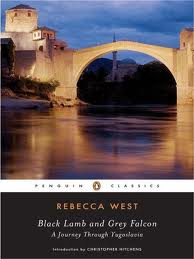
Is there really only one professionally worthwhile kind of reading? I’ve recently bought Rebecca West’s Black Lamb and Grey Falcon. I bought it out of interest: I’ve been exhilarated by learning about other early 20th-century women writers, and West is a major figure. I’m not sure where to place her: she’s not specifically in the Somerville crowd I’ve been looking into, and she’s not really a Modernist (I don’t think). I’m curious to figure out more about her. Reading The Return of the Soldier made me more curious. She is not–and Black Lamb and Grey Falcon is not–obviously continuous with any issues or genres I have an explicit “research” interest in. There are plenty of books in “my field” of Victorian literature that I haven’t read, and there are also plenty of books about Victorian literature that I haven’t read. I have some declared “research” projects that have not reached the official finishing point of publication in an academic journal (much less an academic monograph). Clearly, if I read (when I read) Black Lamb and Grey Falcon I am doing it only for myself: it’s not research. And yet reading it will almost certainly  help me have “something intelligent and important to profess to [my] students,” and that I don’t know exactly what else will come of it isn’t necessarily a bad thing. It isn’t even necessarily a bad thing that nothing concrete (beyond some blog posts) may ever come of it. But by some measures–the only ones that mean much, professionally, these days–it would be more productive for me to read the umpteenth specialized analysis of Middlemarch. Now that would be research.

A New Year, A New Open Letters!

Welcome to 2012! What better way could there be to usher it in than to pore over the lovingly-edited pieces in the brand new issue of Open Letters Monthly?

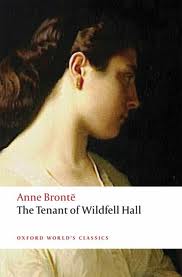
I think we’ve started the year off well, with four members of our core editorial team contributing pieces: John Cotter reviews a risky new novel about Mohamed Atta, one of the hijackers of American Airlines Flight 111; Greg Waldmann takes us on an exhilarating trip not only through Charles Rosen’s book on Music and Sentiment but also through some wonderful examples and analysis of that underappreciated form, classical music; the inimitable (and apparently indefatigable) Steve Donoghue writes a wonderful appreciation of a 5-volume 19th-century biography of Prince Albert (yes, really–you may have to read the piece to believe me, but it’s terrific); and I go back to the Victorians with a ‘Second Glance’ feature on Anne Bronte’s wonderfully smart and provocative The Tenant of Wildfell Hall

Of the other wide-ranging and interesting pieces we are running this month, I’ll highlight two in particular, as I’m pleased to have had a hand in bringing them to Open Letters. Amardeep Singh offers up a knowledgeable perspective on Rabindranath Tagore, about whom I knew little but would now like to know more, and Dorian Stuber reviews Steve Sem-Sandberg’s ambitious novel The Emperor of Lies, taking the opportunity to consider broader issues about the difficulty of representing the Holocaust–not just in fiction, but at all.

There’s also new poetry and new cover art (and an interview with the artist, Bill Amundson); our regular mystery columnist writes up P. D. James’s Death at Pemberly; we introduce our new poetry editor … and that’s not all, so I hope you’ll come over and take a look.

Novel Readings 2011

It’s time again for my ritual look back and the highs and lows of my reading year. Because I was on sabbatical for the few half of 2011, I got quite a lot of reading done–or so it seems, anyway. Since I don’t keep statistics, I can’t be sure if the quantity of books was particularly high in 2011. But the range of my reading was greater because of the greater freedom. Some of the reading I undertook solely out of personal interest turned out to be fruitful in unanticipated ways–indeed, so much so that the next time a colleague asks when I find time to “do all that reading,” I just might answer “my reading is my research.”

Book of the Year:

This one’s a tie, this year, between Helen DeWitt’s The Last Samurai and Vera Brittain’s  Testament of Youth (on which I wrote three different posts). It’s hard to imagine two more different books! But both are outstanding and profoundly affected me. DeWitt noted recently on her blog that The Last Samurai ” is, for the time being, well and truly out of print”–I thought so, as after I finally read my copy and was overwhelmed by its combination of heart and intellectual pyrotechnics I thought I might give some copies as gifts this season and could not find any new copies around. (She recommends buying a used copy and sending a donation via PayPal: if you don’t yet own The Last Samurai and would like a mind-bending read, do as she says!) The impact Brittain’s work has had on me is extensive, as blog readers will know. In addition to the further reading I’ve been doing about Brittain, Holtby, and their contemporaries, I’ve proposed a new seminar (to be offered in the fall!) on the ‘Somerville Novelists.’ Expect significant rereading, and also some energetic research, over the next several months.

Other Books I’m Particularly Glad I Read:

Maj Sjöwall and Per Wahlöö, The Story of Crime. I am so glad I finally took the advice I had received a few times over the past couple of years and looked up this fabulous series of police procedurals. They greatly expanded my understanding and appreciation of crime fiction in general and Scandinavian crime fiction more particularly, and they are also just really great reads.

Shirley Hazzard, The Transit of Venus. This was one of the Slaves of Golconda choices for this year. It’s a dense, intense, moving novel that interested me while I was reading it but got more and more interesting as I thought about it afterwards. It’s a novel I am tempted to assign one day, in part for an excuse to work through it really carefully (including noticing the various subtle clues about its plot and conclusion that I didn’t properly process on my first reading).

Brian Moore, The Lonely Passion of Judith Hearne. This very depressing book was one of the choices of my local book group. Absorbing and moving as it was, I admit I’m glad that after it, we broke the trend of depressing novels about drink and religion.

Elizabeth Bowen, The Heat of the Day and The Last September. The Heat of the Day was another book group selection. It was not particularly successful in that context, but I found it a difficult but mesmerizing read and was prompted to explore Bowen further. I thought The Last September was marvellous, and I’ve got The Death of the Heart in my TBR pile for 2012.

Vera Brittain, Testament of Friendship. I would have found this book compelling even if it weren’t part of my developing interest in these particular women, just for its attention to women’s friendships.

Robert Graves, I, Claudius. This was a tough one. I didn’t love reading it, exactly, and I would have found it even harder if I hadn’t cheated a little by watching the astonishing BBC adaptation first–but how else was I expected to remember who everybody was? But it’s a brilliant book.

J. G. Farrell, Troubles. This one I just thoroughly enjoyed. It’s smart, dark, devious, and intermittently hilarious. It too has added to my 2012 TBR list, as having been introduced to the peculiar genius of J. G. Farrell, now I have to read the other volumes in his Empire Trilogy.

Jennifer Crusie, Anyone But You. It’s not this book in particular that matters so much as its role in overcoming my prejudice against romance fiction. I still feel sheepish browsing the romance section at the library (the covers! must they be so tawdry? and must the books have the tacky heart stickers on them?), but opening myself up to the possibility that I might enjoy books in this genre has paid off as I’ve discovered some others I like even better.

Books I Didn’t Much Like:

Henning Mankell, Faceless Killers. This one could actually go in the “glad I read” list, on the grounds that although I really didn’t like it at all, it was part of the learning curve I was going through about Scandinavian crime fiction, and it was the comment thread on this post that reminded me I should finally try Sjöwall and Wahlöö.

Christina Stead, The Man Who Loved Children. Couldn’t finish it–one of only two deliberately abandoned books this year (the other was Molly Gloss’s Wild Life). But I’m keeping it (them, in fact). Books have their moments, and enough smart people (including Elizabeth Hardwick) think well enough of The Man Who Loved Children that I expect I’ll try again some other time.

Jennifer Egan, A Visit from the Goon Squad. Meh.

Terry Castle, The Professor. Nasty. Self-involved. Funny. An uncomfortable combination.

Colm Toibin, Brooklyn. I understand the suggestion that the narrative mimics Eilis’s own suppressed personality. It’s risky to be flat on purpose: something else needs to leak through, or else you’re just, well, flat. That’s how Brooklyn seemed to me. I have The Master, though, and look forward to reading it. If it’s style is different enough, I’ll believe the “he’s being flat on purpose” argument, though I can’t promise that it will make me like Brooklyn any better.

Jeffrey Eugenides, The Marriage Plot. I already wrote 5000 words on this novel–I think that’s enough!

The Low Point:

Paula McLain, The Paris Wife.

My Year in Writing:

I wrote four pieces for Open Letters Monthly in 2011–well, five, if you count the one that won’t appear until January 1, which I just finished revising this morning. Of these, the essay on Ahdaf Soueif means the most to me, because I seized what felt to me like an important opportunity to consider Soueif’s fiction in relation to the ongoing Egyptian revolution. But I was also pleased with the review of Sara Paretsky’s Body Work, because it gave me a chance to articulate what I’ve learned from teaching about her work in my mystery classes. The other two–reviews of Marjorie Garber’s The Use and Abuse of Literature and Jeffrey Eugenides’ The Marriage Plot–proved very difficult to write, but in the end I was glad I had thought through why both books left me so dissatisfied. I had the most fun with the new piece, probably because it brought me back to Victorian fiction (still, in spite of everything, my home turf!).

I wrote some other blog posts in 2011 that particularly stand out for me as I review my archives:

‘Baking Has Taken On a Sinister Character’: My Grandmother the Writer: This one’s a personal favorite. My grandmother was very dear to me as well as very influential, and there are many things about her and her life that I appreciate more (or at least differently) as I age.

Not Quite Cricket: Dorothy Sayers’s Murder Must Advertise: This post was such a lot of fun to write! I had been wanting to revisit Murder Must Advertise ever since a colleague got my goat by not taking it seriously at all qua novel, as if Sayers, as a “genre” writer, couldn’t possibly be doing anything interesting. (The trend continues.) As I wrote (and wrote and wrote), I found plenty interesting going on–and Murder Must Advertise isn’t even Sayers’s best novel.

SATC2: Just because it’s not a good movie doesn’t mean the appropriate response is to make fun of it, or of the women who went to see it.

Reality Check: My ‘Spotty’ Publication Record: Yes, I was venting, but in the process I think I had some important things to say about the ways standard methods of evaluating academic scholarship box us in.

Cassuto on Blog: ‘I have nothing against them, but I don’t read them either’ (and the follow-up): As I spent a lot of time in the spring and summer preparing a presentation on academic blogging, I had a lot to say about the dismissive attitude towards blogs as a form that doesn’t seem to have improved much in the past 5 years. At the very least, I think people who don’t read blogs should not pronounce on them, any more than people who have never logged on to Twitter and tried following some people who share their interests should pronounce on Twitter.

Books I’m Most Looking Forward to Reading in 2012:

Reviewing my list of books I looked forward to reading in 2011, I’m glad to report that I did in fact read a lot of them! The Last Samurai, for example, was on that list, as was The Power and the Glory, Kristin Lavransdatter, unspecified Virago classics (I read a number of them), and Brooklyn. There are some carry-forwards from that list: War and Peace and Madame Bovary, and the rest of Hermione Lee’s Virginia Woolf, for sure. As always, I have stacks of books around that all look enticing, but I can point to a few that I am particularly keen to get to sooner rather than later:

Robert Graves, Goodbye to All That

Paul Scott, The Raj Quartet

 Angela Thirkell, Wild Strawberries

J. G. Farrell, The Siege of Krishnapur and The Singapore Grip

Elizabeth Bowen, The Death of the Heart

The Iliad

Naguib Mahfouz, Palace of Desire and Sugar Street

Penelope Fitzgerald, The Blue Flower

Rebecca West, The Return of the Soldier, The Fountain Overflows, and Black Lamb, Grey Falcon

Judith Flanders, The Invention of Murder

Ahdaf Soueif, Cairo: My City, Our Revolution (forthcoming)

First up, though (besides the books for my classes, which start up again all too soon) will be Ford Madox Ford’s The Good Soldier, this too for my book group.

Once again I’d like to thank everyone who reads and comments here at Novel Readings. A special thanks to all of you who keep up your own engaging, diverse, and endlessly stimulating book blogs: I feel very fortunate in the community of readers and writers I have found online. Best wishes for 2012!


Mark Bauerlein’s “The Research Bust”

I have mixed but mostly negative feelings about Mark Bauerlein’s recent piece in the Chronicle of Higher Education about literary research. Reporting on a study* he did for the Center for College Affordability and Productivity, Bauerlein argues that (most) literary research and publishing is not worth the investment of time and money that goes into it. His major evidence in support of this argument is that academic books and articles aren’t cited very much. Interestingly, he doesn’t argue that this is because they aren’t any good, that they aren’t worth doing because they contribute nothing to knowledge or understanding, or because they are opaque to the lay reader (popular forms of the attack on academic criticism, both of which are to be found in the long comments thread on his post) . In fact, he opens with the example of an article that is “learned, wide-ranging, and conversant with scholarship on the poet and theoretical currents in literary studies. The argument is dense, the analysis acute, on its face a worthy illustration of academic study deserving broad notice and integration into subsequent research in the field.” What he finds, however, after diligently entering the article’s title into Google Scholar, is only “a handful of sentences of commentary on the original article by other scholars in the 10 years after its publication.” There’s a dramatic imbalance, as he sees it, between the input (“100-plus hours of hard work by a skilled academic, plus the money the university paid the professor to conduct the research”) and the impact (” we can be sure of only a few scholars who incorporated it into their work”).

There’s plenty to be said about Bauerlein’s methodology, and some of the comments on the piece are sharp about the reliability of citations indexes in general and Google Scholar in particular, as well as about his very reductive notion of impact, which doesn’t consider the impact of scholarship that is read but not formally cited, read as teaching preparation, and so on. That we can’t count something doesn’t make it irrelevant, and all practising scholars know from their own first-hand experience, I’m sure, that they read and are influenced in their thinking by a great deal of material that never makes it into their footnotes or bibliographies.

But suppose we grant Bauerlein a modified version of his quantitative point: suppose it’s true that much specialized research does not change the conversation the way its authors probably hope it will. In fact, my own experience to some extent supports this–not only of watching the fate of my own publications, but of burrowing through masses of work by other scholars that really does, as Bauerlein says, “overwhelm[] the capacity of individuals to absorb the annual output.” What puzzles and disturbs me is what Bauerlein believes follows from this ‘finding,’ which is that we ought to stop doing (or at least funding) literary scholarship (he doesn’t actually say this in so many words, and at some points seems to be making the more temperate suggestion that we simply scale back expectations and output). Along the way to this modest proposal he also makes some dubious further claims–or at least claims that would require a great deal more nuance and specificity to be satisfactory.

Further to his point about the overwhelming mountain of publications, for instance, he proposes that we have “reached a saturation point, the cascade of research having exhausted most of the subfields.” But his examples  are Melville and George Eliot, two of the most emphatically canonical authors imaginable. Yes, it’s a near impossibility to read “all of the 80 items of scholarship that are published on George Eliot each year”: I can’t do it–I wouldn’t want to do it. But the realities of specialization are also such that I don’t need to do it: there isn’t one subfield of George Eliot scholarship anymore but a multiplicity of potential angles on George Eliot, and the researcher’s task is to navigate among the available material to find what’s relevant. Yes, that’s difficult, even frustrating at times, but it’s hard to see how a continuing “cascade of research” is a sign of exhaustion: surely it’s a sign that people are still finding questions to ask, and doing their best to answer them? In these cases it may be true that the results will matter only to ” a microscopic audience of interested readers,” but that’s what happens in all highly specialized fields, not just in the humanities. The objection, then, can only be that for some reason literary subjects are not suited to specialization, which seems a suspect argument, one that harks back to a time when literary scholars were comfortably certain they knew what needed to be known and said about the books that really mattered, and those books and that knowledge could be neatly summed up and pronounced upon.

Having said this much, I should acknowledge what readers of this blog (certainly, any who have read it from its early days!) already know about me, which is that I have often complained about the pressure of specialization and the related trend towards metacriticism. I started blogging in part because of my own dissatisfaction with the norms of academic literary criticism. My early complaints about that got me in hot water with a commenter who charged me with “offering nourishment” to those who want “to eliminate literary studies from university curricula altogether.” Though I know more now than I did then about these kinds of criticisms of and attacks on the academic humanities, my view continues to be that what we need is not to end, but to diversify the kinds of research and writing that institutions recognize and support as valuable uses of academic expertise. There needs to be room for ‘knowledge dissemination’ that serves non-specialist purposes and audiences, for instance. Some researchers have less inclination and talent for microspecialization, but excel at synthesis and exposition–I think that is actually where my own strengths lie. But ask any academic whether writing a textbook or a popularization (or a series of reviews and essays in a non-academic, non-peer-reviewed journal) “counts” the same way that 5001st study of Melville will, when it comes time for hiring, tenure, or promotion, or just for earning the respect and support of your institution and administration…

To return to Bauerlein’s argument, the 5001st article on Melville may yet have its value to the small group of Melville specialists, provided it is, like the article he mentions in his opening, a high quality piece of professional scholarship. But it’s true that it can’t maximize its impact if it is not widely read, and the burden of reading 5000 other studies may be too much for most scholars. I think Bauerlein is right to suggest that quantitative measures for tenure and promotion are detrimental to individual scholars as well as to the profession as a whole.  (I interviewed for one position where I was told I would need two books or six articles for tenure. That’s absurd, not least because the fetishization of books creates what I described in an earlier post as “the corrupting pressure to inflate, not only our prose and our manuscripts, but our claims.”) The MLA has been making the argument for decentering the monograph for years now, but as Bauerlein points out, “nobody wants to take the first step in reducing the demand.” Between the crisis in academic publishing and the changing demands and expectations of scholars themselves, perhaps eventually the ‘publish or perish’ model will be reformed.

But let’s consider, again, the article Bauerlein opens with. The problem Bauerlein identifies is not that the author’s time (and the university’s resources) were wasted because the article never needed to be written the first place, but because the article had little measurable impact–it didn’t make a conspicuous difference to the field. Again, Bauerlein’s claims are undermined by their lack of specificity: depending on how specialized the essay’s argument is, perhaps nobody should expect it to transform the overall discussion about that particular canonical poet. The 10-year time frame also does not allow for the glacially slow pace of academic publishing. But let’s, again, grant him a modified version of his premise, this time that the impact of the piece really was inappropriately (or unfortunately) light. Why isn’t that a reason, not to stop producing learned, wide-ranging, acute analysis, but to change the mechanisms for circulating it? What’s wrong with the processes, the apparatus, of our scholarship, if good ideas are not circulating as widely as they should? How can we open up the research and publishing process so that scholars engage each other in more direct, productive conversations? Why aren’t the scholars working in this area actually talking to each other–not face to face, but through Twitter, blogs, listservs, or other kinds of scholarly networks? Is it that there are too many of them, each of them individually overwhelmed by the difficulty of trying to keep up with the output of scholarship from others? Or is it something about their work habits–keeping their heads down, trying to beat the tenure clock, looking only so far and no further? Is the sheer pressure to publish a lot a disincentive to more exhaustive research? What are the logistical impediments, in other words, to improving the circulation of ideas? Also, how can we change the way we work so that the value Bauerlein himself claims to recognize in an essay such as that one can be perceived by readers outside the academy as well? Why is the best response to a (perceived) oversupply of exemplary scholarship to denigrate or even halt the scholarship, rather than to champion it and ask that we and our institutions work to solve the problem of its reception and distribution?

From Bauerlein’s perspective, the answer would appear to be that he thinks literary research has already run its course–that there’s really nothing left of any significance for scholars to find out, at least not on behalf of the rest of us. But here his choice of George Eliot and Melville is misleading, if not disingenuous. I’m prepared to concede that the latest articles on George Eliot are pretty specialized. Indeed, I have nearly lost interest in reading them myself, and I don’t want to be compelled to contribute to them myself. Curiosity-driven research can hardly, in consistency, be made compulsory. But I don’t think that means they have no value (why should my interests and preferences be the arbiter?), and I wouldn’t want to propose (as Bauerlein certainly implies) that “saturation” means “completion”–what would it mean to be finished studying something? how could we ever be sure we have found out everything there is to know? “We can no longer pretend … that studies of Emily Dickinson are as needed today,” Bauerlein proclaims, but how can he know this? There’s some irony in his relying on simple quantity of research to decide there’s nothing of interest or value left to be said. Still, perhaps in these cases scholars are working mostly for each other. Again, this happens in all fields once you reach a certain level of specialization.

Suppose we consider if every subfield is as densely populated as those he cites, however. I’ve been looking up Winifred Holtby: there’s very little scholarship about her novels, compared to the vast output on her Bloomsbury contemporaries. That absence of material is already provocative, to my mind: what has given one literary movement so much more critical value? In learning more about Holtby and Brittain, I feel that I am also learning (again) about the ways our scholarship is shaped by expectations and priorities that are not intrinsic to the literature but may, in fact, interfere with our understanding of its forms and ideas. Much was made at one time about the “end of history”: does Bauerlein believe we have reached the end of literary history? Surely not. The landscape of literary studies is in constant flux, not just in the theoretical apparatus readers bring to primary texts, but in our selection of primary texts to look at in the first place. Imagine if we had concluded, as a profession, that Leavis’s The Great Tradition was the last word on the British novel, or that the list of Oxford World’s Classics as of, say, 1970, was definitive. In my own undergraduate course on the Victorian novel, in 1988, the term “sensation fiction” never came up–and neither did Elizabeth Gaskell. In our discussion of Jane Eyre, at no point did we consider whether British imperialism was a significant context. In my own academic lifetime and my own specialized field, that is, there have been enormous changes in just a couple of decades. It’s easy to take the horizons of our own interests and knowledge as actual limits on what is worth asking or knowing, but surely the last 100 years of literary studies have shown us just how limiting and even dangerous that assumption can be. What a depressingly anti-intellectual proposition, that we have nothing more to learn or say, or that even if we do, it’s not worth finding it out. It’s precisely because we can’t foresee the significance of research that we need to preserve a space to do it open-mindedly, in a spirit of sheer intellectual curiosity. Up close, in the moment, it may be difficult to discern how or where the multitude of individual projects is moving us–but yet, look back and see what a different place we are in now. Who, in 1900, or 1950, or even 1980, could have told us what would turn out to make the most difference?

Ah, but you see, all that research is expensive. As Bauerlein says, “we cannot devote our energies to projects of little consequence”–but note the presumed correlation between measurable impact and “consequence.” And, again, “impact” is a complex issue, one hardly amenable to simple metrics. What will those “undergraduate reading groups” Bauerlein wants us to lead (in lieu of going to conferences or archives) be talking about in 10 or 20 years, if specialized research grinds to a halt? Exactly the same things we would bring to them today, I suppose–but why would we want time to stand still in that way? Or, how will he decide who will carry on the research while the rest of us focus on mentoring undergraduates (not, presumably, to be scholars) and “pushing foreign languages in general-education requirements”? (How that last is the particular responsibility of English professors, I’m not clear.) Bauerlein argues,

 If a professor who makes $75,000 a year spends five years on a book on Charles Dickens (which sold 43 copies to individuals and 250 copies to libraries, the library copies averaging only two checkouts in the six years after its publication), the university paid $125,000 for its production. Certainly that money could have gone toward a more effective appreciation of that professor’s expertise and talent.

But that professor’s “expertise” is surely in part defined (and expanded) precisely by that long-term effort to know more about Dickens. Why is it a “more effective appreciation” of that professor to discourage  (and perhaps even to prevent, by withholding time and resources) the research and publication of the book? (How can you judge the importance of the book’s ideas from the number of times it has been checked out, anyway? Haven’t you ever just sat in the stacks and read stuff?)

Bauerlein is right to challenge the reigning paradigm that values quantity over quality and specialization over synthesis and accessibility. But throughout the piece, there’s an uneasy slippage between making the case for a more rational, deliberative research model and a wholesale dismissal of the entire enterprise. At one point he acknowledges that “research is an intellectual good,” but then he shrugs it off as “ineffectual toil.” He concedes that those who object to his position are not wrong “on principle”–but then rules them out of order on grounds of pragmatism. He agrees that research “makes better teachers and colleagues” but then he characterizes it as the pursuit of an identity that is alluring because it “flatter[s] people that they have cutting-edge brilliance”–as if literary research is no more than egotistical posturing. (Perhaps he has been reading Eugenides?) He concludes by looking forward to the waning of “the research years of literary study.” As many of the comments on his piece show, this kind of thing is music to the ears of those who see no value at all in what we do–his gestures towards moderation and reform are eclipsed by his larger narrative of excess and waste.

That Bauerlein’s column is clearly having a large impact (as measured by external links–including both Arts and Letters Daily and the Book Bench–as well as by the number of comments it has garnered) seems to me pretty good evidence that we need better ways to measure what a piece of writing is really worth.

*I haven’t read the entire study; my response is just to the presentation of its main ideas in the Chronicle article.

This Week in My Classes: Easing Up

I could almost have said “winding down” instead of “easing up” except that with final papers and exams still to go, we are still a couple of weeks away from actually being done. The big difference now, with classes almost over (I have one more class hour to go!), the pressure is much less. The last month or so of term is always such a relentless crush, with every finished task replaced (or so it often seems) with two more unfinished ones; you no sooner leave class feeling it went well (or not) when it occurs to you that you have to be ready to go again in a couple of days; and even as you keep up the reading and routine class preparation and meetings and so forth, assignments come in and you find you are either working constantly or feeling guilty whenever you’re not. With no more lectures or seminars to prepare and no more new assigned reading to do, now the job requirements can more or less be done in business hours–hooray! I have already spent more time (or at least more cheerful time) with my kids in the last couple of days than perhaps in the last few weeks: I try hard not to shunt them aside, but inevitably my stress and the pressures of work obligations get in the way. This weekend Maddie and I went to our happy place, Clay Café, for instance, where we indulged in a little tranquil creativity. I have no particular artistic talent, but we both thoroughly enjoy listening to their collection of vintage LPs and thinking about nothing but colours and patterns for a few hours. I’ve played plenty of Mario Kart with Owen, too, and hung out while he showed me the various projects he’s working on on his computer. Just for myself, I have started watching MI-5 on Netflix: I was put on to the series when I learned Richard Armitage is in the later seasons, but I figured I’d start at the beginning. It’s pretty stressful, but it’s not my stress, and it goes down well with a little wine at the end of the day.

Soon, though, when I feel recovered enough, I’ll be reading more: I’ve started Testament of Experience and I just went to the library yesterday and signed out a few related books including the Oxford History of Oxford and Brittain’s The Women at Oxford. Now that my “Somerville Novelists” course is officially a “go” for next fall, I feel woefully underqualified for it, but happily I am eager to make up the deficit. I can’t tell you how good it felt to be in the library feeling genuinely curious. I also have a stack of miscellaneous unread books I am looking forward to–though of course there’s not that long a break before classes start again in January, and over the same short span I also have to prepare for my winter term classes. Still, for a while at least my nights and weekends are my own, and that is a welcome change.

Also, I have some blogging to do! I have let slide a couple of posts that I thought a lot about writing, one a response to Hook and Eye about approaching your Ph.D. as “your first job,” and one, more recently, some kind of response–I haven’t figured out quite what kind–to Mark Bauerlein’s Chronicle of Higher Education piece about humanities publishing. I just didn’t have the energy to think through the mixed feelings both posts set off, but both are topics of immediate interest to me and ones I have written about at some length here over the years. The Bauerlein piece in particular provokes me–my response is at once “Yes, absolutely!” and “No! Not at all! You are so wrong!” I’ll see if I can sort that out a bit better. If I do, you’ll see the results here!

But first, off I go to my review session for 19th-Century Fiction. I told them on Monday that they could consider it optional but that it was in their interests to be their and that I would be bringing cookies, both of which statements are true! I wonder what attendance will be like. If it’s small, well, more cookies for me.

Update: Attendance was excellent for the review class–I got only 1 cookie!

From the Archives: Moral Tourism, Revisited

There’s a thought-provoking response at Arabic Literature (in English) to Steven Pinker’s The Better Angels of Our Nature (or, more precisely, to an excerpt from this book recently posted at the Guardian). On the general question of how fiction influences us, an interesting site to explore is OnFiction, where you will found a range of posts, articles, and academic papers on research into fiction’s psychological, social, and emotional effects. The post at ALiE raises questions specifically about whether “reading Arabic literature in translation” will make someone a better person. This made me think about my own motives for (and responses to) some of the reading I have done over the past few years, one aspect of which I explored in a 2009 post about Nadeem Aslam’s The Wasted Vigil. It would be nice if it were as simple as knowing that reading was morally improving, but as the post at ALiE makes clear, it’s important not to be complacent about this idea. On the other hand, in the same essay by Anthony Appiah from which I took the phrase “moral tourism” there are also some comments that ring true about the value of reading novels that stretch our attention and our empathy into less familiar territory:

What is necessary to read novels across gaps of space, time, and experience is the capacity to follow a narrative and conjure a world: and that, it turns out, there are people everywhere more than willing to do. . . . For we do learn something about humanity in responding to the worlds people conjure with words in the narrative framework of the novel: we learn about the extraordinary diversity of human responses to our world and the myriad points of intersection of those various responses.


I recently finished reading Nadeem Aslam’s The Wasted Vigil. It is a remarkable novel, equal parts beauty and brutality; as its parts accumulate it does an elegant job of evoking through its literary form some of its central motifs and symbols, such as the images gradually revealed, restored, or repaired from the walls of the house decorated originally to celebrate all the delights of the senses. The fallen Buddha that bleeds gold when assaulted by the Taliban’s bullets, the lingering fragrance from the perfume factory, the books nailed to the ceiling and gradually reclaimed but irreparably scarred, the canoe that becomes an unlikely symbol for a desirable but tragically impossible collaboration–the novel is full of rich but delicate details that can make you catch your breath with their unexpected eloquence about the damage, tangible and intangible, inflicted by the conflicts that generate its plot. It is a novel, too, that hums with nuance and yet somehow refuses to judge those on whom such ambiguities are lost: many of its characters themselves hold to intractable, unforgiving, unforgivable absolutes, but the novel often seems to be asking us how they could have done otherwise, with the result that the tragedy of the novel (and it is extraordinarily, lyrically tragic throughout) feels inevitable, which is the saddest thing of all. Like Bel Canto, though also very differently, The Wasted Vigil holds up against brutality an ideal of aesthetic, rather than political, commitment; in fact, at times it seems as if the greatest evil of the Taliban is less their physical violence (which many other factions in the novel are also shown to be capable of, after all) but their violence towards art and the beautiful. When we see a glimmer of hope, it comes from quiet moments of aesthetic appreciation; violence is, ultimately, vandalism.

I was moved and impressed by this novel. But I also became uneasy about it in ways that I did not feel uneasy about Bel Canto, I think because Aslam’s novel is much more directly intervening in our discourse about particular historical and political events. It is at times an exceptionally, horribly, violent novel, but my unease was not queasiness about the violence as such but rather about the kind of aesthetic experience the novel itself was offering me (including through that violence) and how my pleasure in the novel as a whole thus reflects on me as a reader. What does it mean to enjoy, or at any rate to appreciate aesthetically, a novel in which a captive soldier is literally pulled to pieces as sport, a wife is forced to amputate her husband’s hand, a young man’s eye is burned with a blow torch, a suicide bomb is detonated next to a school?

Puzzling over this question made me think more generally about the purpose of such a book and about my own purposes in seeking it out. The aesthetics-of-suffering issue is not uncommon (Holocaust literature seems the obvious example) and has certainly been analyzed and theorized–I’ve looked into this a little as part of preparation for teaching Elie Wiesel’s Night, for instance. There’s something a bit different about the recent wave of high-profile titles about the Middle East or the Arab or Islamic world, though, including Khaled Hosseini’s The Kite Runner and A Thousand Splendid Suns, Mahbod Seraji’s Rooftops of Tehran, Mohsin Hamid’s The Reluctant Fundamentalist, Yasmina Khadra’s The Swallows of Kabul and The Attack, to name a very few–and that’s not even touching on the many non-fiction titles, from memoirs to histories to political analyses.

It’s possible, of course, that what seems like a trend is actually just the result of my taking note of them as the circle of my own reading interests becomes less parochial, but my sense is that what has happened is that since 9/11, not only is the so-called “clash of civilizations” big news, but there is an interest, an appetite, among western literary audiences for stories that help them see different perspectives on current and historical events in a part of the world which, previously, they might have considered only glancingly, or with the reductive and limited insights available from following headlines and TV reports. The back cover of The Wasted Vigil quotes a reviewer suggesting as much–Peter Parker of The Sunday Times says that the novel “reminds us that fiction can do things that mere reportage can’t.”

One of the purposes of such novels, then, or at any rate one of their uses or effects, is revelation, maybe even instruction or pedagogy. That’s certainly one of the reasons I have been reading them: to the hoped-for satisfaction of a rewarding literary experience I can add the desire to learn more about these worlds that seem so other, to be in my reading life a better-informed citizen of the world and then perhaps, as a result, also to be a better-informed participant in real-world events–though I think there is also the temptation, the risk, to feel as if reading about, say, Afghanistan, is an actual substitute for trying to do anything about Afghanistan (would the money I spent on A Thousand Splendid Suns have been better spent as a donation to Canadian Women for Women in Afghanistan?). But if reading leads to understanding, especially appreciation for nuance and complexity, isn’t reading a kind of doing? Isn’t it a good thing to do? And wouldn’t the world be a better place if more people (former world leaders, even) perhaps read such novels?

And yet at the same time, fiction is not (quite) fact; anecdote, especially imagined anecdote, is not a reliable substitute for aggregate data and rigorous contextualization; impressions, however beautiful, are not analysis; and, finally, contemplation is not action, and actions must sometimes be reductive–nuance and complexity are, perhaps, luxuries permitted to those who need not make decisions. In Saturday, Ian McEwan actually makes a similar point about ambivalence, depicting it (or so I read the novel) as a luxury, even a self-indulgence, when decisive action is required; in the more theoretical realm, Geoffrey Harpham notes that “without action, ethics is condemned to dithering,” and perhaps novels feel ethically more satisfactory sometimes than real life precisely because they need not take a singular position. Ethical critics have often pointed to this “negative capability” as a strength of the novel form, but it is also a crucial aspect of its artifice.

While I was thinking these things I came across an phrase in an essay by K. Anthony Appiah that struck me as suggestive in this context. In the essay, “Cosmopolitan Reading,” Appiah is discussing Tsitsi Dangarembga’s novel Nervous Conditions; he is thinking about the question of the novel’s implied audience, “the ‘you’ addressed in the first paragraph of the novel”:

The usual answer, of course, is that the postcolonial African novel is addressed to a Western reader. Here, that is, according to the usual narrative, is a safari moment: an Africa constructed exactly for the moral tourist.

Appiah goes on to argue against reading Nervous Conditions in this way, but my interest is in the model he outlines of literature as a kind of “safari,” “constructed … for the moral tourist,” which seems at some level an apt characterization of the experience of reading something like A Thousand Splendid Suns or The Wasted Vigil (though the specific experience offered by each is, of course, quite different). I hear Appiah’s tone here as dismissive of that “moral tourist,” the reader seeking only an exotic experience, like a “safari,” rather than … I’m not sure what, actually. Is the alternative to being a “tourist” somehow “going native”? Is that any less problematic? Perhaps it is the author addressing the “Western reader” who is being faulted for offering up marketable, consumable, safe (fenced?) stories to suit the tourist’s taste. In her talk on representations of Arabs in western literature, Ahdaf Soueif points to some versions of this effect in recent novels; I’ve read some commentaries that object to the western fixation on veiling or stories of women’s oppression along similar lines. And yet … shouldn’t the story of women’s suffering be known, even if their victimization is not the whole story? Isn’t there something more substantial than “tourism,” than gawking, involved in seeking to know it? And, to come back to my opening comments on The Wasted Vigil, isn’t the aesthetic experience itself a kind of response, however inadequate, to the denial of their humanity?

[originally posted July 26, 2009]

Recent Reading: Wharton, Dickens, Pym, Heyer

I have a backlog of books I’d hoped to write detailed posts on, but the time I lost to that evil computer virus–and then to reinstalling and reorganizing everything so that I could get back to work–makes that an unrealistic goal. Still, all of them deserve at least some discussion, so here’s a run-down of what I found most interesting, provocative, delightful, or uninspiring about each of them.

Edith Wharton, The Age of Innocence. There’s no denying the elegance and acuity of Wharton’s prose, the fine touch with which she fills in the details of her social drama. My appreciation of this book was undermined, though, by my skepticism about Newland Archer and my uncertainty about how far we were being encouraged to find his thwarted romance with Ellen Olenska poignant rather than pathetic. He’s such a passive wannabe, reading his Swinburne and Pater and fancying himself so different from those around him even as, in all affairs except his own, he is utterly conventional and priggish. His passion for Ellen (and her professed passion for him) seemed based on nothing more than fantasy. It seems that he, too, is the subject (if unwittingly) of Wharton’s satire, but the final chapter suffuses his earlier experiences in a glow that replaces criticism with wistfulness. Is the irony enhanced here (because even at this point he does not recognize the shallow folly of his grand amour?), or are we brought into fellowship with him as he mourns the loss of the man he (thinks he) might have been? The world of the novel also felt very small to me, and while I realize that is consistent with the way Wharton depicts it, as a closed society resistent to change and outsiders, I missed the overt presence in the novel of a wider perspective. To me, it was claustrophobic reading the way Henry James is; I like the “cool draught” that James complained came in through the open door of philosophy in George Eliot’s fiction.

Charles Dickens, Our Mutual Friend. This is a wonderfully dark, funny novel. Reading it, I was struck by Dickens’s mastery of his own form and by the readerly confidence that I felt, knowing he knew what he was doing. The novel is splendidly diffuse and prolix, but it is bound together by Dickens’s brilliant, all-encompassing metaphorical imagination, the unifying motifs appearing and recurring with symphonic assurance. In the end, though, I was dissatisfied with the novel’s morality, which struck me as false in a highly problematic way. Central to the novel is its critique of the corrupting power of wealth, the insinuating bad effects of greed and vanity and social climbing and conspicuous consumption. And central to this critique is the exemplary story of Bella Wilfer’s reeducation from a shallow, selfish, materialistic girl into a “boofer” lady who learns the value of love, honor, and fidelity. But Bella is rewarded for her transformation precisely by being rescued from any threat of poverty and rewarded with wealth and status. There’s all kinds of thematic fitness to this, and of course all the elaborate machinations of the plot are required to bring about this triumphant conclusion, but it’s hard not to find it a dangerous moral that if you abjure riches, riches will be your reward–or, thinking of the other characters, that if you dedicate yourself to the self-interested pursuit of wealth, you will meet your come-uppance. But nobody can make me laugh or cry while I read the way Dickens can, and no other author that I have read gives off from his pages the same sense of ebullient, irrepressible joy in language. Dickens goes on and on, even when there’s no formal or thematic necessity to his elaborations, not because he is “paid by the word” or doesn’t understand novelistic form, but because he is loving it–how can we resist? Why would we want to?

Barbara Pym, Jane and Prudence. Jane and Prudence is a charming read, to be sure, but it doesn’t deserve the effusive comparisons to Jane Austen that litter its blurbs. In its wry social comedy, its limited range of characters and setting, and its precise prose, it resembles Austen’s novels, but I thought this stylistic resemblance was not matched by a similarly rich undercurrent of ideas.

Georgette Heyer, Sylvester. I believe that this is the first Georgette Heyer novel I’ve read, which surprises me a little. But the Regency was never “my” period (the historical fiction I devoured in adolescence was overwhelmingly Tudor, with a sideline in the early Plantagenets, and then of course there was Richard III). I enjoyed Sylvester OK, though I found the writing fairly stilted and the plot predictable–which was fine for most of the book, really, as another way to say “predictable” is that it is true to the conventions of its genre. Towards the end, though, I thought it went off the rails: though it had to happen, the “discovery” that Phoebe and Sylvester are in love was handled clumsily, with Sylvester’s first proposal really coming out of nowhere, and Phoebe’s outraged response seemed forced. I didn’t like Phoebe herself much, actually: she had a good feisty side to her, but I was really disappointed by the way she limped around the novel being embarrassed and apologetic for putting Sylvester in as the villain of her novel. (The heroine of the otherwise ridiculous Lord of Scoundrels, which I read over the summer, was at least more consistent and sure of herself.) I did appreciate this little metafictional moment:

‘But, Phoebe, you don’t suppose he will read your book, do you?’ said Tom.

Phoebe could support with equanimity disparagement of her person, but this slight cast on her first novel made her exclaim indignantly, ‘Pray, why should he not read it? It is going to be published!’

‘Yes, I know, but you can’t suppose that people like Salford will buy it.’

‘Then who will?’ demanded Phoebe, rather flushed.

‘Oh, I don’t know! Girls, I daresay, who like that sort of thing.’