Cold in the earth—and fifteen wild Decembers,
From those brown hills, have melted into spring;
Faithful, indeed, is the spirit that remembers
After such years of change and suffering!
— Emily Brontë
 I expect Karen Powell’s Fifteen Wild Decembers is more interesting the less you already know about the Brontës when you read it, whereas I am pretty sure Colm Toibin’s The Master is a richer experience for devoted Jamesians than it was for me—which is really saying something, because I thought it was extraordinary. Emily Brontë’s life is obviously interesting enough for a novel, but if you’re going to fictionalize a story that is already well served by biography, and if you’re going to presume to speak in a voice best known to us from Wuthering Heights, you need to reach a depth of insight and also heights of emotion that I just didn’t find in Powell’s novel. It does have some nice passages of description, but overall it felt flat, and fell flat; even the descriptive sections felt a bit paint-by-numbers to me, detailed without being vivid.
“It fell flat” is a hard complaint to back up with evidence: I can’t point to passages that are obviously badly written. I can at least try to illustrate the plodding quality of the ‘dramatic’ scenes: the dialogue always seemed stilted to my ear, manufactured, with nothing of the vivacity or intensity of the dialogue in any of the Brontë novels I know well. Here, chosen more or less at random, is a bit of the sisters’ debate about whether to try to publish their poems:
‘You live in your own little world, Emily. Always have done. You never listen to a word anyone tells you!’
‘Because I have a mind of my own, am not some puppet for you to play with.’
‘This has nothing to do with our poems,’ said Anne quietly. ‘I see no reason why we shouldn’t send them out to see if people think we have something worth saying. As Charlotte says, Aunt’s money will only last so long. And we can still advertise for your school, either here or elsewhere.’
‘It’s a ridiculous idea, Anne. You must know that. I don’t see how—look, Branwell has a poem in the paper every five minutes and has never once been paid for them.’
‘But a proper publisher,’ said Charlotte, blinking rapidly. Any moment now she would start crying and blame the onions. ‘I still think Branwell will do something remarkable one day.’
‘We won’t make a penny.’
‘How will we know unless we try?’
‘We’re perfectly happy as we are.’
Maybe that seems fine to you and if so you might enjoy Fifteen Wild Decembers just fine too.
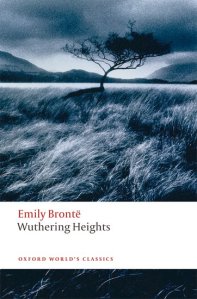 The novel is clearly building towards Wuthering Heights and includes some elements designed to get it, and Emily, and us, there, especially a boy (later a man) Emily sees on the moors who fascinates her with his elusive wildness. (There are hints of Cathy cutting her ghostly wrists on the windows too, among other allusions.) How the narrator of Fifteen Wild Decembers could plausibly generate the emotional frenzy of Wuthering Heights is not convincingly portrayed or explained, though. When Powell’s Emily eventually declares her aspirations for her fiction, they seemed to me unearned, not prepared for by what had come previously:
‘I want characters who’ve grown out of the land; have been formed from heath and rock and icy water.’
‘A love story, though?’ Anne had already decided that her fictional governess would be rewarded by a happy marriage to a curate.
I nodded. The outline of the story had come to me on the walk home and, in flashes, during the night, but the detail was forming only now, as I paced around the room. ‘But so passionate that it destroys the lovers and everyone close to them. A jealous, selfish, unthinking love, wicked even. But it will endure beyond death, like bedrock beneath the flimsiness of existence . . . I want to show what lies beneath the veneer of civility.’
Is it just me, or is that overwritten? At any rate, this is not how the narrating voice has talked, or how Powell’s Emily has thought, up until this point. I just wasn’t buying it.
I could go on but I won’t. I don’t think I’m being unfair to the novel, and I’m also not sure why I expected better. The ‘homage to a great writer’ genre is a hard one: it inevitably invites comparisons that are almost certain not to flatter the follower. I’ve written plenty over the years about my dislike of pretty much every such book I’ve read about George Eliot (see, for example, here). I didn’t hate Lesley Krueger’s Mad Richard, which features Charlotte Brontë as a character. When these attempts falter, though, I’m reminded of Dorothy Mermin’s comment when someone asked her in my hearing about A. S. Byatt’s Possession, which was (paraphrasing, as it was a long time ago!) “Why would I want to read that, when I can read the real thing?” She was speaking particularly about Byatt’s brave efforts to write original “Victorian” poetry, but I think she also meant something more general about neo-Victorian fiction, which I too generally dislike, preferring “the real thing.” I don’t like Wuthering Heights—a recent reread confirmed that I will retire without ever assigning it—but it is completely gripping and also utterly convincing in its grim view of human nature. Probably Fifteen Wild Decembers suffered from my reading it too soon after rereading Wuthering Heights, and also so soon after my rereading of Gaskell’s Life of Charlotte Brontë, which I worked through with my Victorian Women Writers seminar last term. Nothing in Powell’s novel comes close to the power of Gaskell’s writing about this cast of characters. Powell’s rendition of Emily’s death (I wondered how she would deal with that, with Emily as her first-person narrator) to me was tedious and affected, straining towards effects more than delivering them:
All cold. Icy angels edged towards me, lips of blue. Branwell came, hair so red against the whiteness. Ice and fire. I felt a cold hand reaching for me. I could not catch my breath. My lips were moving now. Forgive me, Papa, but I cannot—
Lead us not into temptation
Breath won’t come. Lead on my chest. They must not shut me in a coffin, Anne. Who will bake the bread? Lay me in the peaty earth. A terrible light coming now, a tidal drag pulling me under, quicksand; thunder of wings; reaching hands, pulling, pushing, I do not—eyelids burned to the rim, scourged to the bone. Turn away, resist with every last strength in my—
 And so on for another page and a half. For contrast, this is Gaskell’s account:
In fact, Emily never went out of doors after the Sunday succeeding Branwell’s death. She made no complaint; she would not endure questioning; she rejected sympathy and help. Many a time did Charlotte and Anne drop their sewing, or cease from their writing, to listen with wrung hearts to the failing step, the laboured breathing, the frequent pauses, with which their sister climbed the short staircase; yet they dared not notice what they observed, with pangs of suffering even deeper than hers. They dared not notice it in words, far less by the caressing assistance of a helping arm or hand. They sat, still and silent . . .
Emily was growing rapidly worse. I remember Miss Brontë’s shiver at recalling the pang she felt when, after having searched in the little hollows and sheltered crevices of the moors for a lingering spray of heather—just one spray, however withered—to take in to Emily, she saw that the flower was not recognised by the dim and indifferent eyes. Yet, to the last, Emily adhered tenaciously to her habits of independence. She would suffer no one to assist her. Any effort to do so roused the old stern spirit. One Tuesday morning, in December, she arose and dressed herself as usual, making many a pause, but doing everything for herself, and even endeavouring to take up her employment of sewing: the servants looked on, and knew what the catching, rattling breath, and the glazing of the eye too surely foretold; but she kept at her work; and Charlotte and Anne, though full of unspeakable dread, had still the faintest spark of hope.
On that morning Charlotte wrote thus—probably in the very presence of her dying sister:—
“Tuesday. “I should have written to you before, if I had had one word of hope to say; but I have not. She grows daily weaker. The physician’s opinion was expressed too obscurely to be of use. He sent some medicine, which she would not take. Moments so dark as these I have never known. I pray for God’s support to us all. Hitherto He has granted it.”
The morning drew on to noon. Emily was worse: she could only whisper in gasps. Now, when it was too late, she said to Charlotte, “If you will send for a doctor, I will see him now.” About two o’clock she died.
Which would you rather read?
 “I know he has a bad nature,” said Catherine; “he’s your son. But I’m glad I’ve a better, to forgive it; and I know he loves me and for that reason I love him. Mr. Heathcliff, you have nobody to love you; and, however miserable you make us, we shall still have the revenge of thinking that your cruelty rises from your greater misery! You are miserable, aren’t you? Lonely, like the devil, and envious like him? Nobody loves you–nobody will cry for you, when you die! I wouldn’t be you!”
 Another is that while Emily Brontë may have had no “interest in shaping her story morally,” Wuthering Heights is a very complexly structured novel, with its multiple nested and embedded narratives. The many hours I’ve spent on other novels with multiple or unreliable narrators, such as The Moonstone or The Tenant of Wildfell Hall, have shown me what fun the interpretive work can be as you sort through who is saying what in particular, to whom and why and with what consequences for our reading of their words. I hadn’t paid that much attention to this aspect of Wuthering Heights before, though I knew it was the subject of a lot of the critical discussion. This time I was more attuned to it and felt some genuine enthusiasm at the prospect of working on it with my students, even if most of the voices we’ll be attending to are as unpleasant as young Catherine’s spiteful words to Heathcliff in my epigraph to this post.
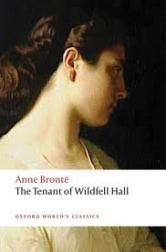 The one reason I’m still hesitating: Perhaps wrongly, I’ve been assuming that the Brontë portion of my reading list is a zero sum game, that if I assign Wuthering Heights I can’t also assign Jane Eyre or The Tenant of Wildfell Hall, and that makes me sad, because those are known pleasures. But the only person making up this rule is me, so maybe I can break it! Would it be so bad if two out of five novels were Brontë novels, especially given how different they are from each other? As I was finishing up Wuthering Heights I kept thinking how great it would be to read Tenant right after: then Heathcliff and Hindley and Hareton could face off against Huntingdon, Hattersley, and Hargrave. What if Wuthering Heights were crowding out Scott or Thackeray instead of Charlotte or Anne? Would that be so bad? (I mean, yes, it would, in a way, because I also love teaching Waverley and Vanity Fair, but you can’t do everything, at least not all at once.)
 I thought it was about time I re-read Wuthering Heights, not least because I am a little tired of teaching Jane Eyre in my 19th-century novels course and wanted to consider the obvious alternative. What a grim, unpleasant novel it is, though. The people in it are almost universally awful, and those that are not, like Edgar Linton, are weak and ineffectual, as if soft feelings just make you vulnerable. I remember at one time finding the passions of Heathcliff and Cathy romantic, but on this reading I found it impossible to associate either of them with any positive or sentimental feelings. The teacher (and critic) in me sees all kinds of stories to tell about the novel’s structure and themes, but I wonder how much enthusiasm I could muster for lecturing on it without something (or somebody) in it to root for. I have often made the argument to my students that the disappointments we are left with in George Eliot’s novels stimulate us to action: we wish for a realistic ending that is more satisfactory, for Maggie Tulliver, say, or Dorothea, and thus turn a critical eye on the real world that let them (and us) down. I can’t see taking this approach to Wuthering Heights, though, because the novel’s characters don’t really seem to deserve better than they get. Still, there’s no denying the raw power of the book, and its gloomy gravestones would certainly provide a contrast to the more conventional ‘marriage plot’ endings.
 Novel Readings