Finding My Voice: Posts on Criticism

I’ve been doing some housekeeping here on Novel Readings, setting up some index pages to make my archive of old posts accessible. I’m organizing them according to the categories you see on the tabs above: Academia, Criticism, Fiction, and Teaching. That’s not everything, but it turns out to be quite a lot! The process has been interesting and invigorating, because as I review and update the links I realize not just how many posts there are but how they reflect the evolution of my thinking about literature and criticism, as well as of my habits and practices as a critic. Most of the posts on criticism show me wrestling with my desire to reconcile the values inculcated over many years of academic training with a strong wish to write in a different way, with a different sense of purpose and for a different audience. In early 2008, for instance, I wrote a post for The Valve on “Literary Criticism in/and the Public Sphere”  that drew on my reading of scholars including Brian McRae, Morris Dickstein, and Ronan McDonald. When I wrote it, I wasn’t sure what criticism that lived up to some of its closing suggestions might look like. Now, however, I can point to my recent essay on Gone with the Wind at Open Letters as an example of the kind of thing I had in mind, what I called a “renewed and theoretically updated Victorianism”: a close reading with an emphasis on ethics but supported by an engagement with form. The Gone with the Wind essay also represents a step towards the goals I expressed in a more recent post about metacriticism and my sense that the conversation in academic blogging was going in circles:  “I just want to get on with it: trying to find a critical voice, and to hone and articulate perceptions that reflect both rigorous reading and a more personal, affective, and engaged vision of criticism.” I know I haven’t finished developing as a critic or a reader, but it is exciting to realize that I have moved forward and begun actually practising criticism differently, including speaking more as myself. Working on the index pages has really brought home to me how important blogging has been to this process.

The old post from The Valve is linked to from the ‘On Criticism’ page, but I thought I’d re-post it here (with updated links) as well in case anyone would like to comment on it (I don’t post at The Valve any more). It’s a bit long so if you want to read the whole thing be sure to click on the ‘read more’ link!

Literary Criticism and/as the Public Sphere

When I heard the learn’d astronomer,
When the proofs, the figures, were ranged in columns before me,
When I was shown the charts and diagrams, to add, divide, and measure them,
When I, sitting, heard the astronomer where he lectured with much applause in the lecture-room,
How soon unaccountable I became tired and sick,
Till rising and gliding out I wander’d off by myself,
In the mystical moist night-air, and from time to time,
Look’d up in perfect silence at the stars. (Walt Whitman)

It is a commonplace of the history of literary criticism that the character of criticism changed when and because criticism entered the academy and became professionalized, somewhere around the turn of the 20th century (and ever after). The nature and consequences of this change have been examined and re-examined often over the years, in books such as John Gross’s The Rise and Fall of the Man of Letters (1969), Morris Dickstein’s Double Agent: The Critic and Society (1992), Geoffrey Hartman’s Minor Prophecies: The Literary Essay in the Culture Wars (1991), Christopher Knight’s Uncommon Readers: Denis Donoghue, Frank Kermode, George Steiner, and the Tradition of the Common Reader (2003), or the essay collection Grub Street and the Ivory Tower: Literary Journalism and Literary Scholarship from Fielding to the Internet (1998)–to name just a few.

Brian McRae’s Addison and Steele Are Dead: The English Department, Its Canon, and the Professionalization of Literary Criticism (1990) is certainly among the more lively and provocative books I’ve read on this topic. As his title suggests, McRae frames his consideration of English departments as professional and institutional spaces with arguments about what features in the work of Addison and Steele “render it useless to critics housed in English departments”–not, as he is quick to add, that “their works are without value, but rather, that they are not amenable to certain procedures that English professors must perform” (11). The short version of his story is that professional critics require difficult, complex, ambiguous texts to do their jobs (e.g. 146); the “techniques of simplicity” that characterize Addison and Steele propel them, as a result, out of the canon. As he develops his argument, McRae offers an interesting overview of the 19th-century and then 20th-century critical reception of Addison and Steele. He explains the Victorians’ admiration for these 18th-century predecessors largely in terms of the different understanding that prevailed about the relationship of literature, and thus of the literary critic, to life. Rightly, I’d say (based on my own work on 19th-century literary criticism), he sees as a central Victorian critical premise that literature and criticism are public activities, that their worth is to be discussed in terms of their effects on readers; hence the significance attached, he argues, to sincerity as well as affect. Especially key to McRae’s larger argument is his observation that the 19th-century writers were not “academicians” or “specialists in a field” (89):

For Thackeray and his contemporaries, literature is a public matter, a matter to be lectured upon before large audiences, a matter to be given importance because of its impact upon morals and emotions. For the present-day academic critic, literature no longer is a public matter but rather is a professional matter, even more narrowly, a departmental matter. The study of literature has become a special and separate discipline–housed in colleges of arts and sciences along with other special and separate disciplines. The public has narrowed to a group of frequently recalcitrant students whose need for instruction in English composition–not in English literature–justifies the existence of the English department. (92)

As McRae tells the story (which in its basic outlines is pretty similar to that told in other histories of criticism), this decline in the critic’s public role has had both significant costs (among them, the critical ‘death’ of Addison and Steele) and significant benefits. At times the book has a nostalgic, even elegaic sound:

People who want to become English professors do so because, at one point in their lives, they found reading a story, poem, or play to be an emotionally rewarding experience. They somehow, someway were touched by what they read. Yet it is precisely this emotional response that the would-be professor must give up. Of course, the professor can and should have those feelings in private, but publicly, as a teacher or publisher, the professor must talk about the text in nonemotional, largely technical terms. No one ever won a National Endowment for the Humanities grant by weeping copiously for Little Nell, and no one will get tenure in a major department by sharing his powerful feelings about Housman’s Shropshire Lad with the full professors. (147)

Not that McRae thinks they should–and indeed we can all share a shudder at the very idea. But to me one strength of McRae’s discussion is his admission that marginalizing affect, pleasure, and aesthetic response is, in a way, to be untrue to literature, and that the professional insistence on doing so also, as a result, marginalizes our conversation, alienating us, as McRae says, “from our students, our counterparts in other academic departments, our families [unless, he allows, they include other professional critics–otherwise, as he points out, even they are unlikely to actually read our books and articles], and, ultimately, any larger public” (164-5). In Democracy’s Children: Intellectuals and the Rise of Cultural Politics (2002), John McGowan makes a similar point: “There remains a tension between the experience of reading literature and the paths followed in studying. . . . To give one’s allegiance to the academic forms through which literature is discussed and taught is to withdraw [at least partly] allegiance to literature itself” [65]. In A Mirror in the Roadway: Literature and the Real World (2005), Dickstein too remarks that “Since the modernist period and especially in the last thirty years, a tremendous gap has opened up between how most readers read if they still read at all, and how critics read, or how they theorize about reading” (1).

Continue reading

Help Wanted: “novelists and poets published in the last sixty years”

In a comment on my ‘About’ page, Bruce Cooper makes the following request:

I have no academic qualification and, to a very large extent, have relied on the works of FR Leavis to guide my reading of poetry and fiction. The reliance has not, I believe, been without merit and I am indebted to him for my deep and ongoing enjoyment of English literature. But, sadly, I’ve had no such guidance for novelists and poets published in the last sixty years and my age (65), and the limited time I have to spend on this most cherished pursuit, press upon me to seek from those better informed a literary canon for the period as well as the names of good literary critics who might assist in finding, to some degree at least, what I’m looking for.

I’d be most grateful if you’d be willing to have a shot at this.

Bruce, I don’t consider myself to have deep expertise in recent poetry and fiction: my own primary field for teaching and research is Victorian literature. However, I do read outside that field, of course, and I also have had to get a lot smarter about more contemporary literature in order to teach our survey course in ‘British Literature After 1800.’ In that effort, I have found the Cambridge Companion series extraordinarily rich and helpful. There’s a volume on almost any subject you can think of, including, say, Contemporary Irish Poetry, Literature of World War II, Malcolm X, Modern British Women Playwrights, Twentieth-Century English Poetry, and Postmodernism.

I also spent some time with some general introductions to contemporary fiction, all of which I found clear and lively. One was the Blackwell Companion to The British and Irish Novel 1945-2000, edited by Brian Shaffer. In this volume, a range of experts address both general issues in the history and theory of the novel in this period and more than two dozen particular novelists from George Orwell to A. S. Byatt. Shaffer also has written a guide to Reading the Novel in English 1950-2000, also from Blackwell. And the essay collection Contemporary British Fiction, edited by Richard Lane, Rod Mengham, and Philip Tew, from Polity Press, also contains a lot of very interesting material.

I think it is possible to derive from these works (and from standard teaching texts such as the Norton Anthology) a pretty good sense of the ‘canon’ for this period, though just how long that list would become would depend on what, if any, limits you set. Even if you stick to “literature written in English,” setting aside work in translation, you’d have a lot to cover, taking into account works from many countries. The reading list for our Ph.D. comprehensive exams in modern British literature is several pages long, and we have separate exams for Canadian, American, and postcolonial literature–though to be sure, these lists are aimed at producing specialists, not well-informed general readers.

But let me throw this question open, as I know I have readers who are more knowledgeable than I about contemporary literature. Recommendations, anyone? How should Bruce proceed? What critical guides or voices would you recommend? Where would you look (or, for that matter, not look) for help in compiling a manageable reading list for novelists and poets published in the last sixty years?

P.S. I have thought of making a kind of regular ‘ask the professor’ feature here. I get questions all the time, from students but also from friends, family, and colleagues, from “Why do we call George Eliot ‘George Eliot’ when we don’t call Charlotte Bronte ‘Currer Bell’?” to “What would you recommend for my first attempt at reading Dickens?” or “What’s so great about Finnegan’s Wake if nobody can understand what it says?” I don’t always have a good answer, but I often know someone I can ask. Do you think that would be fun? What would you ask? What has someone asked you that you couldn’t answer? Maybe this could even be a bit of a column in Open Letters (“Open Questions”?), if there’s enough interest. (I should probably ask this general question in a more prominent place eventually, but this seemed a good time to at least air it in a preliminary way!)

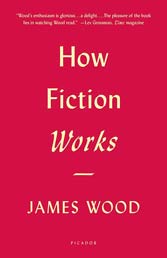
Best of ‘Novel Readings’: James Wood, How Fiction Works

This review first went up in March 2008. My brooding over deep vs. broad reading has had me thinking again about Wood’s criticism, which I wrote admiringly about when I first discovered him in 2007. (This remarkably belated discovery speaks volumes, I think, of the divide between academic and public criticism.) I have also been thinking a lot about Becky Sharp, because in an essay for the July issue of Open Letters Monthly I lay out a more elaborate version of the argument I touch on here for her incidental significance to the novel in which she is so captivating a heroine. Both lines of thought led me back to take another look at this piece. I haven’t kept up with all of Wood’s reviews since, mostly because he and I often choose different books to pay attention to, but when I do (as with his recent piece on David Mitchell) I’m still struck by the elegant erudition of his language and analysis. Still, as this review shows, I have some sympathy with Lauren Elkin’s proposal that Wood is “a fine specimen of a book reviewer” but not exactly a “literary critic.” Not, as they used to say on Seinfeld, that there’s anything wrong with that.

How Fiction Works was also very ably reviewed in 2008 in Open Letters Monthly, by Dan Green of The Reading Experience.


The dust jacket describes How Fiction Works as Wood’s “first full-length book of criticism.” Anyone led by this blurb to expect sustained analysis supported by extensive research and illustration will be disappointed, as in fact How Fiction Works turns out to be essentially a ‘commonplace book,’ a collection of critical observations and insights of varying degrees of originality and sophistication, developed with varying degrees of care and detail. Wood acknowledges having set deliberate limits on his project, likening it in his introduction to Forster’s Aspects of the Novel, proposing to offer practical “writer’s anwers” to “a critic’s questions,” and admitting (though with no tone of apology) that he used only “the books at hand in [his] study.” To some extent I agree with other reviewers who consider it only fair to evaluate the book Wood wrote, rather than regretting he didn’t write another one. Yet even within the parameters Wood sets, I think there are grounds for wishing he, with his exceptional gifts and qualifications as both reader and critic, had not sold himself (or us) short in fulfilling them. Further, beginning with the invocation of Forster but going well beyond it, the book has pretensions to grandeur: for instance, also in his introduction Wood remarks that Barthes and Shklovsky “come to conclusions about the novel that seem to me interesting but wrong-headed, and this book conducts a sustained argument with them” (2). With gestures such as this, Wood claims an elevated stature for his critical contribution that is undermined by its casual construction and over-confident approach to scholarship. Though How Fiction Works provides many further proofs of Wood’s critical gifts and considerable erudition, I think it also proves that even the best practical critic flounders when working only with what he has already to hand or in mind.

Right off the bat I was irritated by the book’s structure. Wood has said that he felt liberated by using the numbered “paragraphs” or sections, but allowing yourself to skip from thought to thought in this way means letting yourself off the hook too often. Frequently in the margins of my students’ work I write “And so? Finish the thought!” One effect of crafting, first paragraphs, and then longer pieces as sustained wholes is that in working out the overall movement of your ideas and building in appropriately specific transitions, you confront both the logic and the further implications of your claims: the form pressures you to think better. Numbered bits, however, relieve that pressure: you can just stop with one topic and start the next, and as long as they are more or less related, you can claim to be producing a unified whole, even if you are only papering over gaps. In How Fiction Works, the breaks often seem unnecessary: a new number sets off what is really just the next sentence in the idea already unfolding. Most of the time, however, they are substitutes for careful transitions. They allow a certain stream-of-consciousness effect to creep in: that last bit reminds me of this exception to a general principle, or of a writer who also does that, or of another favourite excerpt, or of a time I went to a concert with my wife. Well, OK, I guess, and no doubt it would have been much more difficult to do a coherent chapter offering a theory of, say, fictional character, realism, or morality and the novel. And I suppose it’s true that non-academic readers don’t want the kind of detail and complexity such a full account of these topics would require. Even so, the numbered bits felt lazy to me. The footnotes too had an aimlessness about them. Some of them covered ideas or examples that seemed no less important to their chapter than most of the bits allowed their own numbered section (note 53 on p. 150, to give one example) while others appeared entirely unnecessary to the book (note 40 on p. 121, or note 41 on p. 124, for instance).

The TLS reviewer objects to Wood’s “grace notes”: “It is sometimes hard to distinguish a gasp of admiration for another’s skill from the contented sigh when the books in one’s study satisfy one’s own theories.” I shared this reaction, not least because “how fine that is” (139) is an expression of taste, not criticism. But Wood is a compelling reader of details, even passages. It’s when he makes broader assertions that he leaves himself more open to objections. For one thing, he has some governing assumptions about what fiction is for that he treats as universal rather than historically or theoretically specific. In his chapter on “Sympathy and Complexity,” for instance, as a footnote to his remarks on fiction as a means of extending our sympathies (the occasion for one of his shockingly few references to George Eliot!), he adds this:

We don’t read in order to benefit in this way from fiction. We read fiction because it pleases us, moves us, is beautiful, and so on,–because it is alive and we are alive. (129)

Well, maybe, but not everybody, and not all the time: for instance, most of the Victorian critics I have been editing for my Broadview anthology [now that the anthology is actually out, I wonder if Wood would like a copy–maybe I’ll send one along!] would not have recognized this highly aestheticized motive for novel reading. Is it fair, or even sensible, to say that they were simply wrong? Or to ignore how the formal developments of the Victorian novel furthered ends not adequately respected by Wood’s post-Jamesian formulations? His is in many respects a teleological account of the history of the novel. “Progress!” he exclaims after a quotation from Proust: “In Fielding and Defoe, even in the much richer Cervantes, revelation of this altering kind occurs at the level of plot” (125). But were Fielding and Defoe trying to do what Proust did and failing? How much better we might understand them if we allow them what James calls their “donnee.” “It is subtlety that matters,” he declares in his chapter on character; “subtlety of analysis, of inquiry, of concern, of felt pressure”: “I learn more about the consciousness of the soldier in Chekhov’s The Kiss than I do about the consciousness of Becky Sharpe [sic] in Vanity Fair.” But Becky Sharp’s consciousness is surely not the point of Vanity Fair; indeed, I argue in my own lectures [and now, in my essay in July’s Open Letters] that too close a focus on Becky risks diverting us from Thackeray’s grand gesture of holding the mirror up to ourselves, so that the novel becomes an opportunity for us to reflect on our own morality and mortality. “Was she guilty or not?” the narrator asks–and, remarkably, will not tell us, because ultimately she is not the point but the occasion, the device. Thackeray is not a failed Chekhov any more than Dickens is a failed Flaubert. To Wood, “the history of the novel can be told as the development of free indirect style” (58), but that history is partial and often distorting.

About the operations of free indirect discourse and the importance of knowing who ‘owns’ which words, on the other hand, Wood is typically astute. Here’s one place where examples from Middlemarch would have served him well, though at the risk of undermining his generalizations. Consider this passage from Chapter 1, for instance:

And how should Dorothea not marry? — a girl so handsome and with such prospects? Nothing could hinder it but her love of extremes, and her insistence on regulating life according to notions which might cause a wary man to hesitate before he made her an offer, or even might lead her at last to refuse all offers. A young lady of some birth and fortune, who knelt suddenly down on a brick floor by the side of a sick laborer and prayed fervidly as if she thought herself living in the time of the Apostles — who had strange whims of fasting like a Papist, and of sitting up at night to read old theological books! Such a wife might awaken you some fine morning with a new scheme for the application of her income which would interfere with political economy and the keeping of saddle-horses: a man would naturally think twice before he risked himself in such fellowship. Women were expected to have weak opinions; but the great safeguard of society and of domestic life was, that opinions were not acted on. Sane people did what their neighbors did, so that if any lunatics were at large, one might know and avoid them.

Think how much is lost on a reader who improperly identifies the source of that word “naturally”–or the last two sentences altogether!

Wood is good on the telling detail as well as the quality he calls “thisness”: “any detail that draws abstraction towards itself and seems to kill that abstraction with a puff of palpability” (54). But again, when he moves into prescription, he becomes less persuasive, as when he objects to the “layer of gratuitous detail” in 19th-century realist fiction. Again, the challenge is in defining “gratuitous” (as, clearly, Wood himself is well aware), but he can’t propose any principle except, perhaps, his idea that “insignificant” details avoid irrelevance if they are “significantly insignificant” (68). After recounting an incident in which he and his wife had “invented entirely different readings” of a violinist’s frown at a concert, he claims that a “good novelist would have let that frown alone, and would have let our revealing comments alone, too: no need to smother this little scene in explanation” (72). Again, well, maybe. I can imagine at least one “good novelist” who might have done great things with their “different readings” of that little moment, perhaps even using their “revealing comments” as a chance to reveal even more about perception and reality as well as human relationships (“these things are a parable…”). Doesn’t it depend on what your novel is about and on the formal methods you are using to realize those goals?

I’d like to return before I close to the “Sympathy and Complexity” chapter, because this is a topic close to my heart, one on which I have spent a lot of my own critical energy recently, and one I expected Wood to handle particularly well. “Perfunctory” is the best word I can think of to describe it. I’ve mentioned already his dehistoricizing assumption that “we” don’t read in order to receive moral benefits. I doubt this is true in practice, and I also question the separation he implies between moral and aesthetic readings. Here is a case in which even a little research outside “the books at hand in [his] own study” would have immeasurably enriched his discussion: Wayne Booth’s The Company We Keep, for instance, would have helped him complicate exactly that separation. And the conversation about how fiction might do “what [Bernard] Williams wanted moral philosophy to do” (135) has many participants besides Williams: Martha Nussbaum comes promptly to mind. Further, not all novels avoid providing “philosophical answers”; he replicates Nussbam’s error in generalizing about “the novel,” but as a professional novel reader, he should know better.

Here the hybrid character of How Fiction Works proves a genuine weakness, I think. This chapter is not a full, responsible, or authoritative inquiry into its subject. Of course, it does not pretend to be (remember, the book promises only “a writer’s answers” to “a critic’s questions”). But then how should we evaluate it? Doesn’t Wood do even his non-specialist audience a disservice by taking up complicated subjects on which there already exists a rich body of scholarship and offering his own fairly casual observations with the confidence of real expertise? What a much greater contribution it would be to distill that complex material and present it accessibly! To grab what’s at hand and say just what comes to mind bespeaks an enviable but also problematic degree of confidence. And while the non-expert reader is in no position to object, the expert reader is easily deflected with the excuse that she is not the intended audience…

After I read How Fiction Works I re-read some of my collection of Wood’s essays, including his reviews of Never Let Me Go, Saturday, and Brick Lane. This is really wonderful stuff, as I have remarked before; I admire it wholeheartedly for its critical acuity, its literary elegance, and its moral seriousness. But considering How Fiction Works strictly as one among many books about books (and Wood is wrong, or perhaps disingenuous, when he says “there are surprisingly few books” of this kind about fiction [1]), I think there are many better choices available. I continue to recommend David Lodge’s The Art of Fiction, for instance, which takes up many of the same topics as Wood, though under a less grandiose umbrella of prescriptive claims. I think it’s an exciting development that Wood has landed a job in Harvard’s English Department. In taking this now unconventional route from journalism to the academy, he is following in the footsteps of many eminent Victorian critics (David Masson, for instance). But considering how bitterly difficult it is for those following the established professional route to land any academic job at all, it’s frustrating to think that he may not be held to anything like the same standard of rigour as many critics far less lauded and applauded. Here’s hoping that he has more books in him as good as The Broken Estate.

(Original post cross-posted to The Valve.)

Louis Menand, The Marketplace of Ideas

The Marketplace of Ideas is not as interesting as I thought it would be. One reason may be that it is part of a series intended, as series editor Henry Louis Gates Jr. explains, to “invite the reader to reexamine hand-me-down assumptions and to grapple with powerful trends”–that is, the books are not rigorous analyses aimed at specialists but accessible and deliberately provocative commentaries meant to bring a wider public quickly up to speed on debates about (Gates again) “ideas that matter in the new millenium.” At just over 150 small-scale, large-type pages, The Marketplace of Ideas is not anything like a comprehensive examination of the many issues it addresses, whether the rise of the modern university, the vexed history of the “liberal arts” curriculum, the changing aspect of humanities research, or the causes and consequences of the current appalling academic job market. Rather, it offers a briskly coherent account of some historical contexts of particular relevance to certain elite universities (he shows this narrowness of focus throughout, which, as other reviewers have pointed out, eventually undermines a number of his more general claims and complaints). Then he transitions quite abruptly to consider political homogeneity as a feature of the academy, and then, with another awkward transition, to offer some interesting but often idiosyncratic or, worse, facile suggestions about what ails graduate education in the humanities today and how to fix it.

Of the contextual section of Menand’s book, Anthony Grafton at The New Republic writes, fairly, I think,

Menand’s account is consistently even-tempered, and he resists all temptations to succumb to nostalgia or to launch jeremiads, even when both might be appropriate. He does not portray the university in the age of New Criticism as a paradise of Serious Reading, or denounce the new forms of scholarship that have grown up more recently as one great betrayal of truth and high standards. Instead he sings a song of sclerosis. Through all these changes, he writes, the basic system of disciplines and departments remained intact–a hard and confining carapace that proved impossible to break, however humanists squirmed and pushed.

I appreciated his discussion of the mixed blessing that is professionalism, something addressed from a more discipline-specific angle in Brian McRae’s Addison and Steele are Dead (a book I discussed here at some length). I also found his comments on the unsatisfactory realities of “interdisciplinarity” very interesting: “interdisciplinarity” is a buzzword often invoked as if it represents a panacea to whatever ails our individual, disciplinary, or institutional limitations, but Menand suggests, persuasively, that our obsession with it is a symptom of anxiety about “the formalism and methodological fetishism of the disciplines and about the danger of sliding into an aimless subjectivism or eclecticism.”

Overall, though, this “structural explanation,” as Grafton calls it, wasn’t really what I went to the book for; rather, I was hoping for an elaboration on the provocative excerpt published last fall in the Harvard Magazine, focusing on “the PhD problem.” There, he talked about the dramatic rise in the number of doctoral students even as the number of available tenure track positions (relative to the number of candidates) fell off drastically, the long time to degree for doctoral students in the humanities, and some ideas for unclogging the system by, for instance, making an article the standard for the Ph.D. rather than the book-length thesis. It turns out he gave most of the milk away for free here, and my thoughts on reading that material over in the book version were the same as what I said at the time (if he can make his writing do double-duty, I figure I can do the same with mine):

. . . I was struck by Menand’s passing suggestion that “If every graduate student were required to publish a single peer-reviewed article instead of writing a thesis, the net result would probably be a plus for scholarship,” but this seems to me another of those ideas about changing “the system” (not unlike the MLA’s call to “decenter the monograph” as the gold standard for evaluating tenure and promotion files) that can never be addressed on a local level and so may never be addressed at all. Which department wants to be the first to say that they will award a Ph.D. without requiring a thesis? For that matter, which department could make such a change in policy without losing their accreditation or funding? Which department could independently assert its ability to evaluate the work of its members without the sacred stamp of “peer reviewed publications,” or at least giving equal weight to less conventional modes of knowledge dissemination? . . .

I was also struck by Menand’s remark that “Inquiry in the humanities has become quite eclectic without becoming contentious. This makes it a challenge for entering scholars to know where to make their mark.” This certainly echoes my strong feeling for the last several years that English, for one, has become a field so inchoate that it is unable to declare and defend itself in any compelling way that all of its members can agree on–at least, not without resorting to unbelievably bland formulations (all the world’s a text!). How can we sustain a sense of ourselves as a functioning discipline under these circumstances? Though I don’t want to fall into conservative lamentation about the good old days when everybody knew what books were valuable and why (when were those days, exactly, and how long did they last?), anyone who has worked on curriculum reform (and probably everyone working in an English department anywhere has done so at least once) knows that the lack of an identifiable core is a practical as well as an intellectual problem. It’s a problem for us, as we try to define priorities in hiring as well as teaching, and it’s a problem for students, whose programs include so much variety it is possible to meet a 4th-year honours student and be more struck, somehow, by what they don’t know or haven’t read than by what they do and have, and certainly impossible to predict what experience or knowledge they bring to your class . . . . But what, if anything, to do about that? Too often, I think, we resort to a rhetoric of skills (critical thinking!) that (as Menand points out with his remark about the dubious efficiency of studying Joyce to achieve more general ends) rather strips away the point of working through literature to achieve such general, marketable ends.

That last point about skills is something I have returned to recently, as I feel as if the pressure is mounting for humanities graduate programs to retool themselves as all-purpose training grounds for a (rarely specified) set of non-academic jobs. Here’s what Menand actually says on that issue:

The effort to reinvent the PhD as a degree qualifying people for non-academic as well as academic employment, to make the degree more practical, was an initiative of the Woodrow Wilson Foundation when it was headed by Robert Weisbuch. These efforts are a worthy form of humanitarianism; but there is no obvious efficiency in requiring people to devote ten or more years to the mastery of a specialized area of scholarship on the theory that they are developing skills in research, or critical thinking, or communication. . . . The ability to analyze Finnegan’s Wake does not translate into an ability to analyze a stock offering. If a person wanted to analyze stock offerings, he should not waste his time with Joyce. He should go to business school. Or get a job analyzing stock offerings.

As I’ve recently argued in response to just that kind of administrative “humanitarianism” (some might call it “pragmatism,” as well), I think there is indeed something fundamentally misguided about this trend to play up the skills set acquired during Ph.D. training, as if the content of the degree (and its specific constituent requirements, such as specialized comprehensive exams and a thesis) are somehow tangential. This “solution” to “the Ph.D. problem” sounds exactly like something an outside (non-specialist) administrator who doesn’t in fact care much about the content of individual disciplinary programs would propose, and our rapidity to embrace it, well-meaning though we certainly are (we really like our graduate students, in my experience, and want to help them), is in itself a kind of capitulation on the larger issue of the value of the work we specifically do (about which collapse of principle, see more here).

And here’s where Menand really turns out to disappoint, because with his throw-away line about the prospective stock analyst who should not “waste his time with Joyce” he (perhaps strategically) distances himself from one of his key audiences–not the skeptics or outsiders who already think that reading Finnegan’s Wake is at best a harmless (if bizarrely difficult) form of self-indulgence and at worst, yes, just a waste of time (and certainly not something that should be supported by public funding), but his fellow scholars and academics, the ones making decisions about curriculum and program requirement and advising undergraduate students to go on (or not) to Ph.D. programs, or Ph.D. students to complete (or not) their dissertations. How can they look for leadership to someone who doesn’t sound as if he thinks their work is important, whose suggestions for reform effectively trivialize it? He may well be right about Joyce as a means to that particular end, but why does he so blithly pass up the opportunity to explain why that work on Joyce might be vitally important to some other end not currently lauded or rewarded in the public culture he claims, in his closing peroration, must in fact be questioned and resisted by “the culture of the university”? He does spend a little time acknowledging what we have all gained: “the humanities,” he says

helped to make the rest of the academic world alive to issues surrounding objectivity and interpretation, and to the significance of racial and gender difference. Scholars in the humanities were complicating social science models of human motivation and behavior for years before social scientists began doing the same thing via research in cognitive science. That political and economic behavior is often non-rational is not news to literature professors. And humanists can hope that someday more social scientists and psychologists will consider the mediating role of culture in their accounts of belief and behavior. . . [Scholarship in the humanities] is pursuing an ongoing inquiry into the limits of inquiry. And it is not just asking questions about knowledge; it is creating knowledge by asking the questions. Skepticism about the forms of knowledge is itself a form of knowledge.

That’s something, though that’s about all I could find, and it strikes me as pretty tepid and unconvincing, all very abstract and general and vague about how exactly those literary scholars achieved the insight (?) that “political and economic behavior is often non-rational,” and promising nothing more than that humanities scholars will keep on keepin’ on, being skeptical and questioning about, well, everything. What’s Joyce to them, then, exactly, anyway? But I wouldn’t be so annoyed at these moments if it weren’t for this one:

It takes three years to become a lawyer. It takes four years to become a doctor. But it takes from six to nine years, and sometimes longer, to be eligible to teach poetry to college students for a living. . . . students who spend eight or nine years in graduate schools are being seriously overtrained for the jobs that are available.

I won’t get into the problem of his math (see the discussion at Historiann for some trenchant critiques). And I’ll concede that he means (I think) to be descriptive: it’s just true that the majority of jobs that are available for Ph.D.s in English right now are not at research-intensive universities or elite liberal arts colleges, or teaching specialized classes to majors and honours students in their fields. In a painfully literal way, then, he’s just telling the truth (though every time he talked about supply and demand I wondered why he wasn’t acknowledging the work of Marc Bousquet). But he makes it sound as if “teach[ing] poetry to college students for a living” is a pretty trivial occupation, one that really doesn’t depend on a base of specialized knowledge. What he doesn’t say, in this astonishingly dismissive remark, is that the eight or nine years people spend in graduate school are preparing, not just to teach Introduction to Poetry, but to rethink, and perhaps transform, how we teach poetry to undergraduates–not to mention what poetry we teach. I have only to compare the undergraduate training I received with what is standard in the curriculum today to realize what a seismic shift has gone on, in expectations, in contexts, in critical approaches. I had occasion to remark just this week, for instance, that when I studied “The Love Song of J. Alfred Prufrock” in my own first-year English class, the term “Modernism” never came up. Never. We read Joyce but no Woolf, just as in my Victorian novel class we read Trollope but not Gaskell or Braddon, and the term “imperialism” never came up. Now, I suppose you could argue that a small cadre of specially privileged researchers could be off doing the kind of work the effects of which would trickle down to the peons in the classroom, but as Menand himself argues, the fewer people engaged in an activity, the less likely it is that its norms and paradigms will be challenged. And as Grafton argues eloquently in his own response to Menand, “all this takes time,” and “the vocation of scholarship is difficult.” I think there are some difficulties with Grafton’s emphasis on the academic life as a “quest,” but I really wish that, having grabbed people’s attention, Menand would have seized the opportunity, not to lob another petty grenade at his struggling colleagues but to insist that we not concede too much to either the rhetoric or the pressures of the marketplace. Surely an English professor who is also a public intellectual is uniquely positioned to make the case for, not against, the rest of us. I’m not sure that someone who wants to be a stockbroker should finish a PhD either, but I’d rather have a stockbroker who reads Joyce (or Trollope or George Eliot) than one who doesn’t see the point of that stuff.

(cross-posted)

The Impact of the Humanities

At the TLS, Stefan Collini has a trenchant critique of the British government’s “Research Excellence Framework” for research funding in the universities. A key factor will the assessment of “impact”:

approximately 25 per cent of the rating (the exact proportion is yet to be confirmed) will be allocated for “impact”. The premiss is that research must “achieve demonstrable benefits to the wider economy and society”. The guidelines make clear that “impact” does not include “intellectual influence” on the work of other scholars and does not include influence on the “content” of teaching. It has to be impact which is “outside” academia, on other “research users” (and assessment panels will now include, alongside senior academics, “a wider range of users”). Moreover, this impact must be the outcome of a university department’s own “efforts to exploit or apply the research findings”: it cannot claim credit for the ways other people may happen to have made use of those “findings”.

Collini’s main interest is in the “potentially disastrous impact of the ‘impact’ requirement on the humanities”:

the guidelines explicitly exclude the kinds of impact generally considered of most immediate relevance to work in the humanities – namely, influence on the work of other scholars and influence on the content of teaching

Collini points out a number of profound “conceptual flaws” in the proposed process, among them the assumption that all disciplines across the university can and should be assessed in the same way, and the pressure on researchers to devote their time not to the “impact”-free zones of writing and teaching in their areas of specialization (because influence on work in your field, for instance, does not count as “impact”) but on marketing. His concluding peroration:

Instead of letting this drivel become the only vocabulary for public discussion of these matters, it is worth insisting that what we call “the humanities” are a collection of ways of encountering the record of human activity in its greatest richness and diversity. To attempt to deepen our understanding of this or that aspect of that activity is a purposeful expression of human curiosity and is – insofar as the expression makes any sense in this context – an end in itself. Unless these guidelines are modified, scholars in British universities will devote less time and energy to this attempt, and more to becoming door-to-door salesmen for vulgarized versions of their increasingly market-oriented “products”. It may not be too late to try to prevent this outcome.

Though I agree it is essential to make the argument about the intrinsic value of “the humanities,” it seems at least as important to challenge (as he does) the mechanisms for measuring impact, because the “end in itself” argument risks perpetuating popular misconceptions about the insularity of humanities research, when in fact it is quite possible to argue that our impact on the wider world (particularly, but not by any means exclusively, the cultural world) is already substantial, but probably too diffuse to be measured even by the “thirty-seven bullet points” comprising the “menu” of “impact indicators.” Two academic articles I read recently provide some supporting evidence for this claim.

Here’s Cora Kaplan, for instance, in a recent essay in The Journal of Victorian Culture:

Sarah Waters has a PhD in literature . . . ; she has said that her research on lesbian historical fiction suggested to her the potential of an underdeveloped genre. In its citation and imitation of their work, Fingersmith paid generous tribute to Victorian novelists; it also has a considerable indebtedness to feminist, gay, lesbian and queer critics and social and cultural historians of Victorian Britain. It would not be too frivolous to see Fingersmith – together with other examples of fictional Victoriana – in their synthesis of the detail and insights of several decades of new research on the Victorian world and its culture as one measure of the ways in which Victorian Studies has developed over the last half century. (JVC 13:1, 42)

And here are Patricia Badir and Sandra Tomc responding, in English Studies in Canada, to calls to take the humanities “beyond academia.” Offering a polemical summary of “what the humanities in general, fueled by highly esoteric post-structural theory, have accomplished in the way of widespread social and cultural contributions over the last twenty years,” they begin with the premise that poststructuralism began as a “theory propounded by a tiny priesthood of high intellectuals”:

But this priesthood had acolytes–graduate students at first, then, by the mid-1980s as “theory” inevitably made its way into the classrooms of ivy league professors, undergraduates. The undergraduates . . . did not uniformly move into Ph.D. programs, thereby assuring theory’s continued enclosure in a specialized community. They moved into a variety of illustrious professions and industries, including, most significantly, America’s powerful and ubiquitous culture industries. . . . [T]he Hollywood of today is ruled by ivy league degrees, most of them earned in the 1980s or 1990s, and most of them . . . heavily larded with humanities courses–courses in English, film studies, American studies, gender studies, history. These people were taught by their professors to value certain kinds of aesthetic objects. As they assumed positions of authority in the late 1980s and early 1990s, they began to patronize films and filmmakers that meshed with what they had been taught was cutting-edge culture. The signature films of the early 1990s . . . featured the “politically correct” identity issues and self-referential formal experimentation lauded in the postmodern classroom: Thelma and Louise; Philadelphia; The Crying Game; Priscilla, Queen of the Desert; The Piano; Pulp Fiction; The English Patient. In television, . . . the transformation to postmodern forms has been even more radical: Buffy, the Vampire Slayer; The X-Files; Alias. . .

“One could make the same argument,” they go on, “for the field of journalism,” and they go on to do so, and to the “massive industry” in “‘literary’ objects” including not just books but adaptations. To calls that the humanities address the interests of “civil society,” they reply that “the humanities have, in a large measure, already shaped contemporary civil society”: “the fashions we are being asked to follow are our own.” (ESC 29:1-2, 13-15). I’m sure it’s easy to argue about which are the “signature films” of the 1990s, but the general case that specialist research in the humanities makes its way into the wider world by way of our classrooms seems presumptively strong–but that is just the kind of “impact” apparently discounted by the Research Excellence Framework.

I’m sure more (and perhaps more concrete) examples could be provided by most academics looking at intersections between their own fields of specialization and the world “outside” the academy. A concerted campaign to demonstrate the “impact” of humanities research might do as much good as insisting also that, whatever its “impact,” the work is valuable in itself. And it should probably be carried on not (just), as with my two examples, in the pages of academic journals, but as publicly as possible–in the TLS, but also through blogs, letters to the editor, talking to our neighbours–you name it. Many thousands of our students are out there somewhere, too, who could surely testify to the “impact” of our work, not just on their cinematic tastes, but on their thinking, reading, and voting lives. After all, the REF may be specific to the UK, but the narrow version of utilitarianism it represents is not.*


*Narrower than J. S. Mill’s, certainly: “Next to selfishness, the principal cause which makes life unsatisfactory is want of mental cultivation. A cultivated mind – I do not mean that of a philosopher, but any mind to which the fountains of knowledge have been opened, and which has been taught, in any tolerable degree, to exercise its faculties- finds sources of inexhaustible interest in all that surrounds it; in the objects of nature, the achievements of art, the imaginations of poetry, the incidents of history, the ways of mankind, past and present, and their prospects in the future. It is possible, indeed, to become indifferent to all this, and that too without having exhausted a thousandth part of it; but only when one has had from the beginning no moral or human interest in these things, and has sought in them only the gratification of curiosity.”

Workday Miscellany: Ph.D. Problems, Institutional Inertia, Graduate Teaching, and the Yoke of Marriage

I’m feeling a bit scattered this week. Here are some of the things buzzing around in my head.

1. It’s hard not to want to say something about Louis Menand’s much-linked-to post on “the PhD problem,” but what? Readers of this blog will not be surprised that I nodded emphatically at this statement:

The non-academic world would be enriched if more people in it had exposure to academic modes of thought, and had thereby acquired a little understanding of the issues that scare terms like “deconstruction” and “postmodernism” are attempts to deal with. And the academic world would be livelier if it conceived of its purpose as something larger and more various than professional reproduction—and also if it had to deal with students who were not so neurotically invested in the academic intellectual status quo.

But I don’t really know how to assess some of his larger claims, especially the more sociological or statistical ones; I can’t even compare them to my own experience, really, because the information is exclusively about American institutions and I don’t know how closely the patterns he describes are repeated here in Canada–despite having spent two years as coordinator of our graduate program. One of the reasons is that the concerns of that position were, of practical necessity, extremely local: it’s a two-year stint by departmental policy, with an incessant stream of relatively small bureaucratic and advising tasks and intervals of intense labour around major fellowship deadlines and, of course, admissions. In the first year of the position the learning curve was steep and my dependence on our (exemplary!) office staff nearly total; the second year was slightly better but the end was already in sight. New initiatives? Policy development? Research into large-scale professional questions and how they might impact or play out in our tiny program? Not a chance: there was just no time, and frankly no incentive, to explore broader issues.

2. In a related vein, I was struck by Menand’s passing suggestion that “If every graduate student were required to publish a single peer-reviewed article instead of writing a thesis, the net result would probably be a plus for scholarship,” but this seems to me another of those ideas about changing “the system” (not unlike the MLA’s call to “decenter the monograph” as the gold standard for evaluating tenure and promotion files) that can never be addressed on a local level and so may never be addressed at all. Which department wants to be the first to say that they will award a Ph.D. without requiring a thesis? For that matter, which department could make such a change in policy without losing their accreditation or funding? Which department could independently assert its ability to evaluate the work of its members without the sacred stamp of “peer reviewed publications,” or at least giving equal weight to less conventional modes of knowledge dissemination? (How far, as the MLA report suggested, has “peer review” become an excuse for farming out the job of scholarly evaluation to editors?) Anecdotally, conversationally, there’s plenty of dissatisfaction with the professional status quo and interest in making various features of it more flexible and more responsive to changing conditions in, say, publishing or employment. But this week, in a couple of different contexts, I was reminded again of how rigidly current practices are enforced by administrative structures that assume certain models for estimating academic productivity and value (for instance, fellowship competitions in which quantity of publications is taken as the only ‘objective’ measure of excellence, or research models that promote applications for large grants as if more expensive projects are both necessary and desirable). People grumbled about the implicit principles but the atittude appears to be “that’s the way things are now, and we’d better stay in the game.”

3. I was also struck by Menand’s remark that “Inquiry in the humanities has become quite eclectic without becoming contentious. This makes it a challenge for entering scholars to know where to make their mark.” This certainly echoes my strong feeling for the last several years that English, for one, has become a field so inchoate that it is unable to declare and defend itself in any compelling way that all of its members can agree on–at least, not without resorting to unbelievably bland formulations (all the world’s a text!). How can we sustain a sense of ourselves as a functioning discipline under these circumstances? Though I don’t want to fall into conservative lamentation about the good old days when everybody knew what books were valuable and why (when were those days, exactly, and how long did they last?), anyone who has worked on curriculum reform (and probably everyone working in an English department anywhere has done so at least once) knows that the lack of an identifiable core is a practical as well as an intellectual problem. It’s a problem for us, as we try to define priorities in hiring as well as teaching, and it’s a problem for students, whose programs include so much variety it is possible to meet a 4th-year honours student and be more struck, somehow, by what they don’t know or haven’t read than by what they do and have, and certainly impossible to predict what experience or knowledge they bring to your class (in my 4th-year seminar on Victorian sensation fiction, I have students who have never studied 19th-century novels before–they have a lot of catching up to do, to participate effectively in some aspects of our discussions). But what, if anything, to do about that? Too often, I think, we resort to a rhetoric of skills (critical thinking!) that (as Menant points out with his remark about the dubious efficiency of studying Joyce to achieve more general ends) rather strips away the point of working through literature to achieve such general, marketable ends.

4. All of this mental muddle is particularly distracting because one of the things I’m trying to get done is course planning for next term, and particularly the plans for my upcoming graduate seminar on George Eliot. When I first taught such a class (in 1997-98), I thought it was pretty obvious what I should do: graduate courses are training for professional work in the field of literary criticism, right? That shouldn’t have seemed so obvious to me then (I didn’t take into account, for instance, that Dalhousie’s program includes a ‘terminal’ M.A. and thus serves a student population that is not necessarily headed down an academic path), and it certainly does not seem so obvious to me now. But what difference does, or should, it make that there seem to me to be a number of uncertainties about the purpose of their degrees more generally, our seminar in particular, and even literary criticism itself? Is a (real or mock) conference paper a reasonable goal, or a paper suitable to be revised and submitted to a peer-reviewed journal? Should I diversify the requirements to suit a wider range of possible applications of scholarly expertise–say, a resource-rich website, an experimental hyper-text edition of a chapter, a paper aimed at a general audience, a portfolio of book reviews, a class wiki? Is it possible to accommodate such a range and still to ensure equal workloads and fair evaluation? I’ve been reading and rereading a swathe of critical articles in preparation for the usual “secondary readings” requirements but if I can’t even be sure myself what we need to accomplish in the class, how can I choose what they should read? Probably I’ll just do what I usually do, which is pick some articles that seem particularly useful or interesting, or that stand for some reason as key or classic pieces; require a couple of short response papers, a seminar presentation, and a term paper (of the usual academic variety). It’s tempting to reinvent the course–but it’s part of a whole system of requirements and expectations, and so there I am again, reluctant to deviate from local norms, to point out that most of them will never need to do academic criticism (or get a permanent job in which it is required of them for tenure) and so we should really find something else to do about what we read.

In the meantime, my classes seem to be going fine. I was particularly pleased with the lively discussion in the Sensation Fiction seminar the last couple of meetings; I think we have some real momentum now, having bulldozed through four major novels in preparation for the next phase of the course, which involves a series of workshops and then a series of student presentations. In the other class, assignments just went back and besides the inevitable angst and resentment that generates, I think most of them are behind on their Middlemarch readings. But I’m doing my best to keep the energy up and to give them ideas about how to make the most of the reading as they work their way along. We talked about Lydgate and Rosamond, and the “ideal not the real yoke of marriage” (a phrase actually used about Dorothea and Casaubon, but widely applicable in this novel). For a happily “married” woman, George Eliot could sure put her finger on just how and why marital relations can turn from bliss to pain. To my knowledge there are only two married people in the class; they seem to be the ones doing most of the nodding as I explain the process of disillusionment and then adaptation to reality the novel describes.

“Yale Called Me On the Phone”

Dan Green pointed me to William Chace’s recent article on “The Decline of the English Department” (on which more eventually), which in turn led me to look up Chace’s memoir, 100 Semesters, which turns out to be quite interesting reading, not least for its matter-of-fact portrayal of what must seem, to anyone who graduated with a Ph.D. in the last 20 years, like a complete fantasy of the academic job search. Here’s Chace’s experience as an ‘ABD’ at Berkeley in 1968:

But before I did [finish my dissertation], I knew that I had to find a job teaching English at a college or university. In those halcyon days, a few years before the iron gates clanged shut and the job market for the humanities became the hugely depressing spectacle it is today, many departments were looking to enlarge their rosters of assistant professors. Colleges and universities had money, and the arts and humanities still enjoyed the considerable prestige that today they have seen ebb away. The reasons for this good news had to do with large national patterns. In the 1960s alone college and university enrollments more than doubled, from more than three million to eight million. Those getting Ph.D.s each year tripled; and more faculty were appointed than had been appointed in the earlier three centuries of American higher education. Places like the State University of New York at Buffalo, Indiana University, and even exclusive and insular Yale, were hiring. I wrote to them all and was happy to receive the warm encouragement of the professors— Tom Flanagan, Ralph Rader, Alex Zwerdling, and John Traugott—who had taught me. They wrote recommendations for me and thought my prospects good. Owing to such support and to the fact that many jobs seemed available in those days, my return mail brought happy tidings. One institution—the University of Virginia—used a string of Edgar Allan Poe stamps on the envelope mailed to me, hoping that I would make the connection between his one-time presence there and the university’s devotion to poetry. Yale, in the person of the illustrious scholar and Sterling Professor Maynard Mack, called me on the phone. Few people at the time had a greater reputation in English literary scholarship than Mack. He was an expert on Shakespeare, and had overseen the Twickenham edition of the poems of Alexander Pope. From New Haven, he announced that a job awaited me at Yale. This appeared to be great news indeed, but I was bold enough to ask, given what I already knew of Yale’s pattern of only rarely giving tenure to assistant professors, what my chances of a permanent position there would be. With practiced disingenuousness, he quickly replied: “Oh, Bill, we will always have a place for you.” I thanked him but knew better than to believe him. Many years later, Yale would approach me with another kind of job in mind.

Two institutions with offers for me—MIT and Stanford—seemed more attractive than the others. The first had the advantage of being in Cambridge, Massachusetts, had established a wide-ranging department of the “Humanities” rather than just an English department, and had powerful intellectuals like Noam Chomsky on the faculty. The second had a singularly attractive attribute in its favor: it was in the Bay Area, where JoAn and I wanted to remain. But I knew little about the place and, almost to a person, my Berkeley teachers spoke of it with enormous condescension. It was, they said, “the Farm,” a school for rich and lazy Californians, a place where nothing political ever happened, an “unreal” university. But I turned aside all this advice and chose Stanford. The person who interviewed me there, Ian Watt, the distinguished scholar of the novel, the eighteenth century, and Joseph Conrad, had earlier taught at Berkeley. JoAn had been one of his students, and he thought highly of her. He told us that we would be happy at Stanford. He was right. Stanford turned out, over the years, to be good to me and to JoAn. It had no nepotism rule, and she also was given a position as a lecturer in the English department.

I think we all have heard stories about “those halcyon days,” but it’s still astonishing to contemplate someone who has not yet even finished writing his dissertation fielding calls from Yale, Stanford, and MIT.

Blogging Talk Follow-Up

There was a great turn-out and a lot of lively discussion at my talk on Friday about blogging. Several people suggested that they would like links to the material I highlighted, so I’m providing them below, grouped by where I used them in my presentation. First, though, here are some of the things I’ve taken away with me to think about more.

Because I framed my discussion of blogging with some material on academic publishing, one topic that got a fair amount of attention in the questions after was peer-review; this was no surprise, and also it’s something that is addressed a lot among academics who blog. One colleague made the interesting observation that debates about academic blogging seem always (including in my talk) to be set up in terms of its potential contributions to or value as research; much less consideration is given to how it might relate to our teaching. I know there are people using blogging as a pedagogical tool, as a way for students to communicate with each other about course material, for instance, or as a version of reading responses (Miriam Jones does course blogs, for instance). But I think this comment was not so much about how we might add student blogging to our array of assignment options (though others picked up on this possibility as appealing) as about how writing as an academic blogger might put a kind of public face on our own pedagogical activities and ideas (along the lines of what I have been doing with my posts on ‘This Week in My Classes,’ perhaps). The ‘routine’ or everyday character of blogging also matches the rhythm of teaching, in which you are incessantly rethinking your material and looking for ways to bring it to life (intellectually and affectively) in your classes. Writing up this work requires conceptualizing it in ways that perhaps we don’t always do otherwise–and also, I’ve found, brings out connections I might not have seen otherwise. I’ve seen some suggestions that, of the categories used to measure academics’ professional contributions, blogging should be considered ‘service’; I guess I think that’s just a way out of trying to evaluate the substance of the writing.

Another suggestion, from the same colleague, was that academic scholarship has a wider audience outside the academy than is often supposed. I’m not sure how we would go about testing this hypothesis, but it would be interesting to know. And another colleague observed, also in discussion about our relationship to the wider public, that teaching is too often overlooked (in my dozen years of teaching, how many students have passed through my classes? it’s tricky to measure, especially as many students take two or more classes with me–I’ve had some take five or six!–but certainly the number would be somewhere around 2000). As others pointed out in response, even so, that’s only a fraction of the reading public, and only for a limited part of their lives (and when they are under compulsion to pay attention!). But when measuring our impact on literary culture, it’s true that we ought to take teaching into account. (That said, one of the reasons I’ve been thinking again about my own research projects is that they tended not to resemble very much the work I do for my teaching. This is where the trouble starts, for me.)

Finally, another colleague proposed that, overall, the internet is great for connections, comments, and other ‘lighter’ forms of scholarly interaction (I’m paraphrasing) but not suited for sustained analysis. I think this is true in a way, but more because of how we use the internet than because of any necessary limits on its forms. Among the disincentives to long, thoughtful posts is that they don’t ‘matter’ or ‘count’ professionally, for example. But if we re-imagine scholarly discourse to accommodate or value some kinds of on-line exchanges as professional contributions (CV-worthy, in other words), I don’t see why they should be taken any less seriously by writers or readers than, say, ‘responses’ to articles that sometimes appear in journals by invitation–which are not, strictly speaking, peer-reviewed in the same way as anonymous submissions. Participation in book events is a form of on-line academic discourse that seems basically equivalent to publishing a book review, with the extra burden of having to respond to other scholars’ queries or dissenting views. (Update: See Dan Green’s thoughts on these issues at The Reading Experience.)

Overall, then, much to continue thinking about. As the point of my presentation was to get just this kind of conversation going, I consider it a success. Thanks to everyone who showed up!

Links:

First, I compiled a number of links about academic blogging previously; see here. Also, if I referred in my talk to a source I haven’t included here and you’d like to follow it up, let me know; it wasn’t feasible to put in every single cited source.

I. Questions About Academic Publishing

MLA Task Force Report
FitzPatrick, “On the Future of Academic Publishing, Peer Review, and Tenure Requirements
Krause, “Considering the Value of Self-Published Websites”

II. Questions About Audiences: Ourselves, Other Academics, Other Readers

Erin O’Connor, “Relatively Sincere”Lisa Ruddick, “The Near Enemy of the Humanities is Professionalism”

III. Blogging in Particular

Tedra Osell (BitchPhD), Academic Blogging and the Public Sphere
John Holbo, “Form Follows the Function of the Little Magazine”
Miriam Jones, “What I Told the Tenure Committee”

IV. Varieties of Literary and Academic Blogs (samples)

Bookish
DoveGreyReader
Conversational Reading
The Elegant Variation
The Reading Experience
PaperCuts

Academic (Administrative, Literary, and Other)
Confessions of a Community College Dean
Deans’ Weblog
BitchPhD
The Little Professor
Michael Berube
The Long Eighteenth
Blogging the Renaissance
Crooked Timber
The Valve

V. Long-time Bloggers Reflect

An Enthusiast’s View of Academic Blogging
A Skeptic’s Take on Academic Blogging
Academic Blogging Revisited