 It’s odd how it sometimes seems I need to break the ice on my own blog — but as I’m sure other bloggers can attest, leave a blog alone for long enough (which in my experience needn’t even be very long) and it starts to loom imposingly and inhospitably across the horizon of one’s other activities. How can this be — why should this be — when blogging is something I do wholly voluntarily? It’s possible, actually, that its gratuitousness adds to the difficulty: there’s no obligation, no accountability — and so when you fall into a slump, there’s no external pressure to get on with it. There’s just, at least in my case, an uncomfortable feeling of disappointment in myself that, as the days go by, becomes a self-defeating conviction that when — if — I ever post something again, it had better be good!
In my defense, it has’t really been that long. Also, it is our February break from classes, and so I’ve been doing other writing, which often leaves me mentally lazy by the end of the day. It hasn’t helped that I’m struggling much more than expected with what I thought would be a fairly straightforward writing project, so when I stop working I feel little sense of accomplishment, only bemused frustration. I’ve also (and I know from Twitter that I’m not alone!) been rather in the doldrums. It’s partly because of this dreary winter, which just makes everything harder to do; it’s partly because I’ve fallen prey to a bad case of what I think of as ‘Salieri Syndrome’ (I’m guessing the symptoms are familiar to all aspiring writers but perhaps especially those who spend a lot of time online); it’s partly that I worked for several days preparing a public talk that apparently wasn’t of much public interest, which was both anticlimactic and a bit demoralizing; and it’s partly that — probably because for a few years now my center of intellectual gravity has been tilted away from my academic colleagues and department — I’ve been feeling somewhat adrift and even unmotivated at work. I’ve actually started dreaming about retirement, which isn’t necessarily a good thing as it will be many years (18, but who’s counting?) before I reach retirement age and even then it isn’t clear I will be able to realize my dream of finally moving back to Vancouver. (And as far as that goes, I seem to have regressed significantly since the progress I had made towards reconciling myself to Halifax.)
I don’t need anyone to tell me how lucky I actually am and that this is all hardly the stuff of great tragedy. I know! But it’s been enough to make me feel kind of blah, and during this break I’ve chosen to hunker down and read or watch TV and just try to be cozy while I have the chance. Classes start up again Monday and from that point on we will hurtle unrelentingly towards the end of term. There won’t be time for moping!
And actually I’ve about had enough with moping in any case, while as far as this blog goes, I’ve decided to forget about good and settle for posted. Then perhaps I’ll get my momentum back. So here’s my own version of the much-loathed (including by me) “listicle” — a “posticle” of things I have almost but (obviously) not actually posted about in the past week or so.
- Attendance. This was going to be the next entry in my “This Week In My Classes” series but every time I turned to it, it turned into a rant and I didn’t really want to stir up that kind of negative energy. Seriously, though, what’s up with students not coming to class, and especially with the accelerating trend of students leaving early for and returning late from scheduled breaks? I believe very strongly that you learn to be a critic by trading ideas with other readers (coduction!) and that in English classes we both exchange and analyze information and practice vital skills. So I take attendance seriously — and I also take it literally, every class meeting. Over the years I have used various policies to encourage students to attend regularly, from strict “every [unexcused] absence counts against your mark” versions to “there’s no explicit penalty for missing class but there are also no make-ups for graded in-class work.” I have tried being authoritarian, paternalistic, encouraging, or simply detached (“come or don’t come, it’s your choice — just don’t make it my problem”); I have even cited research (it is out there!) showing that good attendance is strongly correlated with success in a class. I try not to take it personally when, as last week in my Intro class, a whole mess of people just don’t show up … and yet, inevitably, I do take it personally, because I not only show up but work hard preparing for every precious hour we have together…oops. This is getting rant-like! Fellow teachers, what do you do about attendance?
- Books we “should” read. I spent a fair amount of my scarce mental energy this week imagining a response to the recent piece at The Millions urging us (tongue in cheek? surely!) to choose our next book to read for some pretty random reasons. Even assuming the author didn’t actually mean her suggestions, or at least not the silliest ones (“read the book that you find left behind in the airplane seat pocket”? “read the book whose main character has your first name”?) I wonder if there isn’t a better conversation to be had about whether there are any books we “should” read, or about how we pick and choose among the many books we could read, given just how many more books there are than we’ll ever have time to read (well, unless we’re Steve!). I wouldn’t want to rule out serendipity altogether, of course, but it seems pretty risky and, indeed, wasteful to follow around behind random strangers, see what makes them cry, and assume that is the best next option for me. They might be idiots! But I don’t find it much better to line up behind (most) reviewers either. When I’m not reading deliberately (for work or research or reviewing myself, that is) I tend to listen to other readers I trust, whose take on books I find sharp and interesting, whose taste I think I understand something about. Where there’s a good conversation, I usually expect to find good reading, or at least reading I won’t regret. I do also think, though, that depending on the relationship you want to have to literature, or the conversation you want to be part of, there probably are some books you should read. How do you choose your next book? Do you think there should be no “shoulds” in reading?
- Middlemarch on Toast. Actually, I think I do need to write this post, but it’s going to take me a while to do the reading and thinking for it. Ever since The Toast ran its My Life in Middlemarch book club I’ve been
broodingpuzzlingthinking about why I felt so incapacitated by it. When I first heard about it, I thought it might create some synergy with my Middlemarch for Book Clubs site. It totally didn’t, and once it was underway I could see why not: by and large, the kinds of things I built into my site, including into its discussion questions, were not the things people were talking about at The Toast. There were plenty of sharp comments, and there was also plenty of enthusiasm, but somehow the conversation was in a different register, and it was mostly (eventually I’m going to do some statistical analysis!) about characters and motives, not about literary form, narration, history, philosophy… which is fine, of course: people should (there’s that word again) talk about what interests them in a book (“to start with,” says the irrepressible teacher in me). I wasn’t very familiar with The Toast before they did this, and what I’ve seen of it since suggests that it aims for a certain hip insouciance. So I should not necessarily take away any lessons from this about how to revise my own materials. Or should I? The number of people who want to chat at The Toast (like, apparently, the number of people who like the idea of choosing their next book from their neighbor’s trash can or something) is apparently much higher than the number of people who want … oh dear, here comes Salieri again. - Rules of Civility. I enjoyed reading this novel a lot. And yet, this is as much as I felt like writing about it. (But here’s an excellent review of it by Lisa Peet at Like Fire.)
- Farthing. I also mostly enjoyed reading this novel, and yet. (Jo Walton is a good example of a writer I picked up because so many other readers I’m interested in have mentioned her.)
OK, that’s the dam broken. It’s actually a relief to clear those topics out of the way, even though I still feel annoyed with myself for not having addressed each of them properly in turn in its own post. Now I’m reading We Wish to Inform You That Tomorrow We Will Be Killed With Our Families, which I mentioned as a pending interest in my post on Sonali Deraniyagala’s devastating memoir Wave. Then I’ve got Elena Ferrante’s The Story of a New Name lined up; it’s the sequel to My Brilliant Friend. In class Monday we’re picking up with Night in Intro and An Unsuitable Job for a Woman in Women & Detective Fiction (Dorian’s probing post has helped rekindle my interest in it). My book club, which met last week to discuss This Rough Magic, is following Amateur Reader’s advice and reading The Murderess for next month. It seems impossible that with so much interesting material around, I won’t be blogging up a storm. We’ll see, anyway.
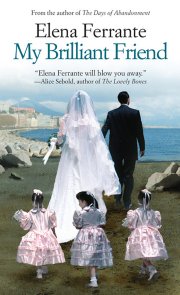 Elena Ferrante’s My Brilliant Friend, the first in her trilogy of ‘Neapolitan novels,’ tells of the childhood and adolescence of two friends, Elena and Lila, living in a rough edge of Naples in the 1950s. This is not the familiar Brit. Lit. Italy of balmy escapism or emotional liberation. “I feel no nostalgia for our childhood,” Elena reports:

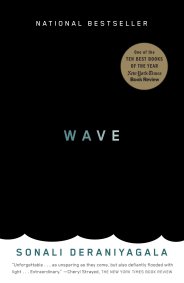 Wave is at once an easy and a very difficult book to read. It moves at first as relentlessly as the tsunami that sweeps away Sonali Deraniyagala’s family – her husband Steve, her two sons, Vik and Malli, and her parents. “I thought nothing of it at first,” she says, in the flat monotone that persists, unnervingly, through every emotionally harrowing page. “The ocean looked a little closer to our hotel than usual. That was all.” Because we already know what’s happening, there’s no suspense, only a brief interval of dramatic irony as she and her companions watch and wonder—and then helpless vicarious panic and horror as they turn from the window and try to outrun the water. The next time we see the hotel, it’s “flattened”:
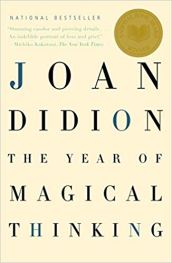 I was propelled swiftly through the book by the directness of Deraniyagala’s voice, and by her sharp, often startlingly poetic images. Yet I was also uneasy about the uncomfortable voyeurism invited by this aestheticized mourning. I had a similar response to Joan Didion’s

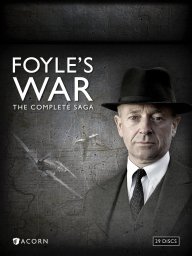 It has been very quiet around here, I know. It’s a combination of re-adjusting to the start of term and having been hard at work on my review of Rebecca Mead’s My Life in Middlemarch for the next issue of Open Letters Monthly, which has taken up the couple of hours each day when I have both time and energy for writing. I’ve been getting up pretty early (for me, anyway) a few days a week to get in some regular exercise, and that has meant I fade sooner at night, too.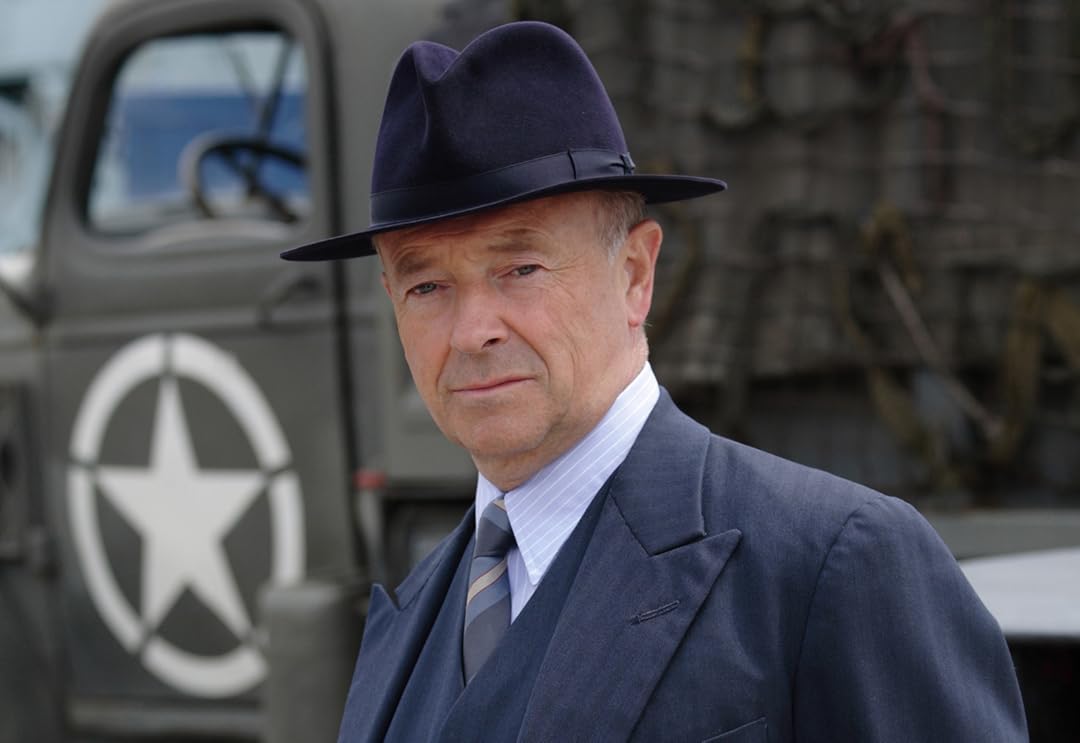
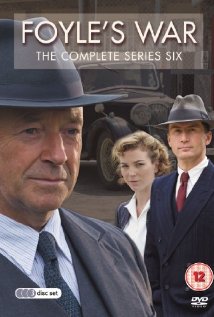 I started S6 Episode 1 this morning so I’ve just entered the post-war world, though as the characters and stories emphasize, VE Day has not magically restored the world to idyllic happiness. The war Foyle was fighting continues unabated, returning soldiers struggle with how both they and their old lives have been transformed, and the realignment of the wider political world is creating new enmities. Also, Milner’s become a bit of a jerk. Wondering how this will go will be a good motivation to face another early morning session on the treadmill tomorrow!


 I’m no connoisseur of romantic suspense, but it’s hard to imagine it being done better than Jamaica Inn. Really, this book has it all: a grim, windswept, yet beautiful landscape; a grim, brooding, yet charismatic villain; a grim, twisted, yet convincing plot; Jamaica Inn itself, “a house that reeked of evil . . . a solitary landmark defying man and storm”; and, in Mary Yellan, a heroine bold and determined enough to survive them all. There’s also a deceptively colorless vicar, a dubiously trustworthy horse thief, and a whole supporting cast of rogues; there’s treachery, murder, and, of course, true love. If it sounds like the stuff of clichés, it is — and yet, amazingly, it really isn’t, because du Maurier is just that good.
 Novel Readings