
“Maybe the universities are inefficient, in some ways. Maybe we do waste a lot of time arguing on committees because nobody has absolute power. But that’s preferable to a system in which everybody is afraid of the person on the next rung of the ladder above them, where everybody is out for themselves, and fiddling their expenses or vandalizing the lavatories, because they know if it suited the company they could be made redundant tomorrow and nobody would give a damn. Give me the university, with all its faults, any day.”
“Well,” said Vic, “it’s nice work if you can get it.”
Thinking about Elizabeth Gaskell this past week reminded me of David Lodge’s 1988 re-telling of North and South, Nice Work, which I hadn’t reread in many years. Rereading it this time, it lived up to my recollection that it is (as you’d expect from Lodge) a smart and often very funny book. Like North and South, it is also very much a product of and a commentary on its times: it is a ‘condition of England’ novel about Thatcher’s England, and also a ‘condition of the academy’ novel — about the state of universities in general but more particularly about the state of English departments and literary theory in the 1980s.
Lodge’s protagonists are Vic Wilcox, the managing director of Pringle & Sons Casting and General Engineering, and Robyn Penrose, Lecturer in English Literature at Rummidge University, where she specializes (for maximum metafictional effect) in the industrial novel. Lodge has fun setting Robyn up as exemplary of the convictions and contradictions of her academic moment:
According to Robyn (or, more precisely, according to the writers who have influenced her thinking on these matters), there is no such thing as the ‘self’ on which capitalism and the classic novel are founded — that is to say, a finite, unique soul or essence that constitutes a person’s identity; there is only a subject position in an infinite web of discourses — the discourses of power, sex, family, science, religion, poetry, etc. And by the same token, there is no such thing as an author, that is to say, one who originates a work of fiction ab nihilo. Every text is a product of intertextuality, a tissue of allusions to and citations of other texts; and in the famous words of Jacques Derrida (famous to people like Roby, anyway), “il ny’a pas de hors-texte“, there is nothing outside the text. . . . But in practice this doesn’t seem to affect her behaviour very noticeably — she seems to have ordinary human feelings, ambitions, desires, to suffer anxieties, frustrations, fears, like anyone else in this imperfect world, and to have a natural inclination to try and make it a better place. I shall therefore take the liberty of treating her as a character, not utterly different in kind, though of course belonging to a very different social species, from Vic Wilcox.
 As that excerpt shows, Lodge enjoys the opportunity to have his post-structuralist cake and eat it too. And his novel overall is built around the difference between theory and practice as embodied in the inconsistency between Robyn’s theoretical beliefs and her insistent engagement with the world as if it is made up of individuals acting out of their own agency — something Vic Wilcox eventually points out to her: “If you don’t believe in lofve, why do you take such care over your students? . . . You care about them because they’re individuals.”
Lodge’s device for bringing Vic and Robyn together from their different worlds is the “Industry Year Shadow Scheme,” a plan cooked up by administrators hoping to cultivate better understanding between the university and local business. At first, it goes about as well as you’d expect: Robyn is horrified at conditions at Pringle’s, from the pin-up girls on the walls to the physical demands and numbing repetitiveness of the working conditions in the foundry, while to Vic Robyn’s work has neither meaning nor value, a discovery that disturbs her own complacent belief that it’s the most important work there is. “You know,” she muses to her sort-of boyfriend,
“there are millions of people out there who haven’t the slightest interest in what we do. . . . even if one tried to explain it to them they wouldn’t understand, and even if they understood what we were doing they wouldn’t understand why we were doing it, or why anybody should pay us to do it.”
“So much the worse for them,” said Charles.
“But doesn’t it bother you at all?” Robyn said. “That the things we care so passionately about — for instance, whether Derrida’s critique of metaphysics lets idealism in by the back door, or whether Lacan’s psychoanalytic theory is phallogocentric, or whether Foucault’s theory of the episteme is reconcilable with dialectical materialism — things like that, which we argue about and read about and write about endlessly — doesn’t it worry you that ninety-nine point nine per cent of the population couldn’t give a monkey’s?”
(Derrida, Foucault, Lacan — did I mention Nice Work is from the late 80s? That little speech gives me unpleasant flashbacks to my graduate course work, reminding me both why I found it so excruciating and why I enjoyed this novel so much when I first read it, probably around 1991.) True to its own intertextual influences, Nice Work follows them both through a process of mutual re-education: Robyn gains some appreciation for the challenges of business — which often reveal her own self-righteous criticism to be shallow or unrealistic — while Vic picks up both some habits of social critique and some appreciation for Victorian literature.
 It’s an entertaining story, and like Gaskell Lodge does a good job exposing both the pride and the prejudices of his main characters without condemning them: both have simply taken their own insular worlds for granted, and both benefit from having someone challenge their starting premises as well as their daily practices. Unlike Austen or Gaskell, however, Lodge does not carry them (or us) forward to a happy resolution of the conflicts that initially divide them: the allusive thread he lets go of is the romance plot (Vic and Robyn do have sex, but that, as Robyn vehemently insists, is not at all the same thing as love). I think this is not just consistent with the cynical tone of Nice Work (which, like all of Lodge’s academic novels, is primarily satirical) but also a sign of a broader rejection of the hope that personal transformation makes much difference in a world riven by systemic injustices. That’s one way, then, in which Nice Work moves on, or away, from North and South. More generally — and this is only partly a function of the novel’s genre, I’d say — Lodge has little of Gaskell’s compassion for his characters, which means his fiction also does not radiate any warmth outwards towards his readers. His is too modern a sensibility for that, which you might think means Nice Work has more to say to us than North and South. For me, though, the effect is the opposite: Lodge’s lack of faith in any transcendent values or virtues made Nice Work actually seem more dated to me than North and South ever does. To put it another way, North and South can be updated precisely because there’s something lasting about its central commitments (to learning, to changing, to caring), whereas Nice Work itself, while clever and amusing, is a literary dead end.
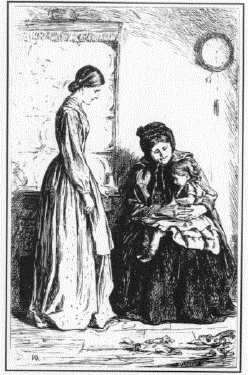 Our reading for today in The Victorian ‘Woman Question’ was Elizabeth Gaskell’s 1850 short story “
 Gaskell’s most obvious literary device in the story is pathos.
 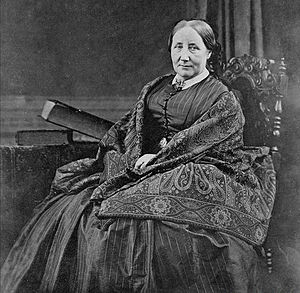 Gaskell was a minister’s wife and “Lizzie Leigh” casts its story of forgiveness in explicitly Christian terms. Susan “is not one to judge and scorn the sinner,” Anne insists to her son Will, for instance (soothing his horror that she has shared Lizzie’s story with one he sees as “downright holy”); “She’s too deep read in her New Testament for that.” What I think is so powerful about the story is the way Gaskell pits Anne’s (and Susan’s) definition of Christian virtue against the “hard, stern, and inflexible” judgments, first of Anne’s husband James (who had forbidden her to seek out “her poor, sinning child”) and then of Will, who has inherited his father’s patriarchal role and with it his rigid righteousness. Anne grows into her own authority as the story progresses, eventually confronting Will directly:
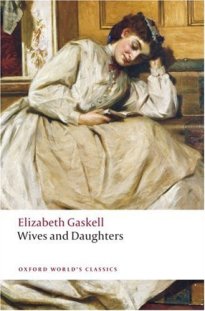 There are definitely things about “Lizzie Leigh” that are hard to take, including the fate of “the little, unconscious sacrifice, whose early calling-home had reclaimed her poor, wandering mother” as well as the extreme seclusion that is Lizzie’s fate after her reclamation. She’s not (like Hetty, or Little Emily) sent entirely out of her world, but Gaskell can’t quite imagine a place for her fully in it either. What I love about “Lizzie Leigh,” though, is the same thing I love about Mary Barton, North and South, and
  From the Novel Readings Archives: I still find myself thinking a lot about the questions raised by Brian McCrea’s book Addison and Steele Are Dead, which I wrote about during my first year of blogging. Apparently I’m in something of a minority, or presumably I’d be able to find the actual cover image online somewhere! But rereading this post nearly a decade later, McCrea’s theory about the relationship between literature, professionalism, and teaching still seems well worth considering.
 As he develops his argument, McCrea offers an interesting overview of the 19th-century and then 20th-century critical reception of Addison and Steele. He explains the Victorians’ admiration for these 18th-century predecessors largely in terms of the different understanding that prevailed about the relationship of literature, and thus of the literary critic, to life. Rightly, I’d say (based on my own work on 19th-century literary criticism), he sees as a central Victorian critical premise that literature and criticism are public activities, that their worth is to be discussed in terms of effects on readers; hence the significance attached, he argues, to sincerity as well as affect. Especially key to McCrea’s larger argument is his observation that the 19th-century writers were not “academicians” or “specialists in a field”:
 While we can all share a shudder at the very idea, to me one strength of McCrea’s discussion is his admission that marginalizing affect, pleasure, and aesthetic response is, in a way, to be untrue to literature, and that the professional insistence on doing so also, as a result, marginalizes our conversation, alienating us, as McCrea says, “from our students, our counterparts in other academic departments, our families [unless, he allows, they include other professional critics–otherwise, as he points out, even they are unlikely to actually read our books and articles], and, ultimately, any larger public.” (In Democracy’s Children, John McGowan makes a similar point: “There remains a tension between the experience of reading literature and the paths followed in studying. . . . To give one’s allegiance to the academic forms through which literature is discussed and taught is to withdraw [at least partly] allegiance to literature itself”).
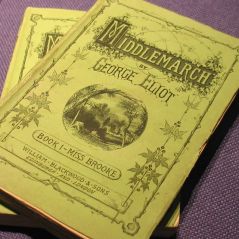 I’ve been feeling a bit downcast since Friday, because attendance absolutely plummeted in the tutorials for my Close Reading class and I can’t stop worrying about why — and wondering what to do about it.
 But that is a general pet peeve that’s probably never going to get resolved, while Friday’s collapse is a specific instance that I’d actually like to get to the bottom of. Is it because we’re spending so many weeks on Middlemarch that this first tutorial seemed expendable? (But why would anyone think that, given how much material we clearly have to work through? It isn’t as if we’re going to spend all those weeks on Book I.) Are a lot of students finding the novel difficult to engage with? (But wouldn’t that be an incentive to come to class and learn and talk more about it, rather than opt out — to increase the odds that you’ll enjoy the next 4 weeks?) Do some of them figure they’ve got this covered and don’t need to do the tutorial exercises? (But in that case, they could still come and help out their classmates with their insights, raising the quality of the experience for everyone — and maybe even learning a little something new themselves.) Is the pay-off from our tutorial work in general not clear enough, or actually less than I fondly imagine? On Friday we worked on tracking the movement of point of view in particular passages — but we also just talked about the themes and characters set up in the first section of the novel: both activities seemed pretty valuable to me, at least.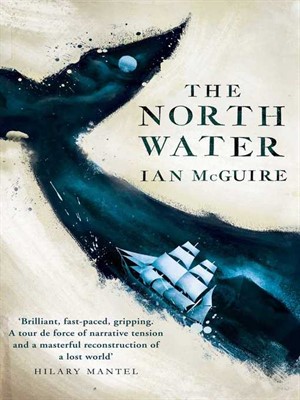
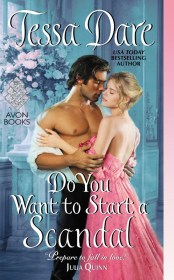 There’s realism, and then there’s utterly, relentlessly, graphic and gruesome realism, which is very much the aesthetic principle of The North Water — McGuire offers not just a vision of the world warts and all, but of the world as warts only. I’ve also been reading Tessa Dare’s Do You Want to Start a Scandal? and the juxtaposition of the novels got me wondering about whether we have a label for McGuire’s style that would be the grim equivalent to the kind of (usually pejorative) terms used for romance writing — “flowery language,” “purple prose.” The implication of such labels is typically that the writing is excessive rather than expressive, that it’s artlessly out of control, rather than artfully serving its own purposes. (I still struggle with this reaction to some of it, but
 The absence of meaning can, of course, itself be meaningful, but The North Water didn’t read to me like an investigation or revelation of existential vacancy, and certainly not like a purposeful response to the possibility that “there is no why.” Compare
 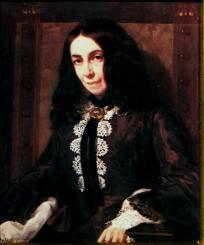 First of all, where did this past week even go? It feels like just yesterday I was writing my previous post, in a flush of enthusiasm about
  In Close Reading, we’ve just started Middlemarch — always a happy occasion for me, of course! Here’s hoping I can make it a good experience for the students as well. In a break from the usual rhythm of this course, I open with a fairly formal lecture to establish some biographical and philosophical context: as I explained to the class, with short texts it’s reasonable to expect them to be able to put specific details into the context of the whole right away, but with a text this long we can’t do meaningful close reading exercises without my providing some preliminary interpretive frameworks. I’ll do a bit more of that tomorrow, and then they’ll have some general concepts to guide their reading and analysis as we keep going. We’re only reading Book I this week: it’s always nice to move through it relatively slowly (we’ll take about two more weeks on it in Close Reading than I usually allow for it in my 19th-century fiction class).
 In my seminar on the Victorian ‘Woman Question,’ we started work last week on Elizabeth Barrett Browning’s 1856 verse-novel Aurora Leigh. It’s usually kind of hard going for the students: although it does have many of the familiar features of a Victorian marriage plot novel, it also includes (among quite a bit of more miscellaneous material) long meditations on, and also arguments about, the nature and purpose of poetry in the modern world — and its 9 books of blank verse add up to a total of approximately 15,000 lines of iambic pentameter, which, let’s face it, is not the easiest reading even when the verse itself is thrilling … which, frankly, for long stretches Aurora Leigh is not.

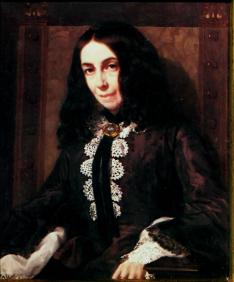 That Aurora Leigh has not lost its radicalism — that we are still fighting on some of the same fronts — was made unexpectedly clear to me this past weekend, as with so many others I watched the story of Donald Trump’s now-infamous bus tape break, and then one pontificating man after another denounce it in the name of his daughters (or his wife or his great aunt or whatever). For some men — too many men — women are still seen primarily as complementary, their value uncomfortably entangled with ownership (all those possessive pronouns!), their right to respect and dignity somehow contingent on their belonging to someone else (someone else male, of course). My
 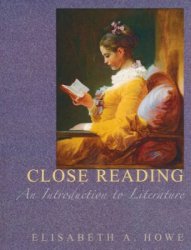 Over the past few weeks in Close Reading we have been working on disentangling specific elements of poetry and fiction in order to improve the precision of our analysis. We’ve focused, for instance, on tone and diction, on figurative language, on imagery, on symbolism, on rhythm, on point of view, on narrative voice, on characterization, and on setting. Often separating these elements is quite an artificial exercise, but there’s value in it nonetheless, as it helps us moves from impressionistic responses to focused observations that can be the foundation of critical conversation and analysis.
 The other day while idly browsing the ever-changing array of titles on ‘special’ at Kobo, I happened across Laura Kinsale’s Flowers from the Storm for only $1.99. Not long ago, the same thing happened with Loretta Chase’s Lord of Scoundrels. What serendipity — two of my favorite romances! The alacrity with which I snapped up both titles (hooray – no more waiting for library copies) was a reminder of how much has changed for me since my first forays into reading romance.
 I have read some things badly that I know I could learn to read better — Ford Madox Ford’s
  For me, romance is an interesting in-between case. I had no external obligation to get anywhere with it. But my curiosity was roused by following discussions about it among other readers who clearly enjoyed it and found interesting things to say about it. I think what stood out the most is how often they talked about reading romance in terms of pleasure — which is not to say the conversations didn’t get critical, or didn’t address complicated topics. But it seemed like for a lot of people reading romance (and talking about it together) was really fun, and that was enticing. Given that my early experiments in the genre were not very successful, I might not have tried again, FOMO notwithstanding, if it weren’t for those other readers both challenging and encouraging me — and finding, before I’d soured on the project, some romances that were easy for me to like. That line crossed, I pretty rapidly got better at reading in the genre. This is not to say I have any special insights about it: just that I have acquired a reasonable working awareness of important conventions and styles. Because I’ve also now done some reading about romance, and have followed and even contributed to a lot of informal and formal discussions about it, I also have a decent, if still somewhat superficial, understanding of the history of and cross-currents within the genre. I don’t like every romance novel I try any more than I like every mystery novel I pick up, but in both cases I feel equipped to read them, if that makes sense.
 Getting back to Lord of Scoundrels, the problem I had with it at first is that I thought it was ridiculous: melodramatic, overwritten, heavy-handed. I still think it is some of these things, some of the time — but I experience them quite differently: as playful, as tongue-in-cheek, as intertextual, as sexy. Now I enjoy the novel’s wit in a way I couldn’t before, because then I was too distracted by my initial negative reactions; now I appreciate its strong-minded heroine, not just on her own merits but because I have met more of her literary sisters. I can’t remember exactly the sequence that brought me back to Lord of Scoundrels in a more receptive frame of mind: my 2012 progress report notes that “I have yet to read a ‘historical’ that I really like” and mentions Heyer’s Sylvester in particular as a failure — and Sylvester, too, is now a favorite, though not nearly as much as Venetia or Devil’s Cub. (Jessica and Mary Challoner would get along just fine: they could compare notes on the beneficial effects of shooting alpha males in the shoulder — a link between the novels that I’m sure Chase makes quite deliberately.)
 Phonse Jessome’s grim, violent crime novel
  For readers who don’t know Halifax at all, Jessome provides not just vivid description but a lot of context about the city’s history. That it never feels like info-dumping is because much of it is provided by his protagonist, Detective Constable Cam Neville, a former army sniper and escaped POW, who in his new role as a cop struggles to overcome both PTSD and his past as a member of the biker’s club Satan’s Stallions. Cam views his home town with merciless clarity and an unhealthy dose of cynicism. “Halifax is a navy town,” he explains;
 We learn almost as much about Cam from these accounts as about Halifax, and, again like Rankin, Jessome also uses this contextual material to emphasize the relationship between social and historical conditions and the city’s distinctive patterns of crime and violence.
 Novel Readings