I began writing up my quick ‘notes on current reading’ about a year ago , partly for fun, partly as a way to answer questions from friends and family about what I’d been reading lately and what I’d thought about it, partly as an exercise in non-academic writing about books. I didn’t (couldn’t) take a lot of time over my comments, and indeed I decided not to allow myself to rethink and revise, to free myself from the many forms of self-consciousness endemic in professional criticism. For some years, though, in my professional capacity, I have also been brooding about the nature and purpose of that professional criticism. I wanted to increase the value and relevance of the research I was doing, and to bring to my scholarship the kind of excitement and motivation I feel about my teaching. On my sabbatical this term, I have been continuing to think about this issue, and trying to imagine an alternative form of literary writing that might be of interest and use to a wider audience than the narrow readership of a typical academic article or monograph. As my previous posts here indicate, one way I have been pursuing this question is through reading books about books aimed at general audiences. I have also begun exploring web resources, including online magazines and literary blogs. Of course, there are hundreds, probably thousands, of such sites now; every one I arrive at points me towards more and more.
On one hand I have been finding all of this very stimulating. It’s wonderful to see how lively and widespread the virtual conversation about books is, as well as to see that there is a big market for intelligent books about reading. It is also a salutary reminder, as if I needed one, of how small the academic literary world is, or can be, and how specialization works against the kind of general knowledge and broad cultural awareness that characterize the best of the sites and books I’ve looked at so far. It’s even a bit shaming to realize how oblivious I was to all this activity.
On the other hand, I am starting to get something of the same sense of futility here as I did with academic criticism, though for different reasons. If academic criticism fails to engage a wide audience because it is too specialized, too professionalized, too removed from the interests of ‘common’ readers, all this other material seems unlikely to engage a wide audience because there’s just too much of it. How can someone filter through it all, especially when much of it is updated daily? While the academic peer review system serves very different purposes than those embraced by reviews and blogs, out in cyberspace it’s an intellectual free-for-all, and the ease of setting up a place to comment (even I could do it!) makes it possible for anyone to put forward an opinion as if it should be considered on an equal footing with anyone else’s. Further, even supposing someone has the smarts and the training to offer insightful commentaries, how likely is it that blogging is the best way to express them, given the apparent pressure to say something pretty much every day? What really are the expectations here? What is the purpose of all this chatter?
I’m not about to retreat to my Ivory Tower, but I do feel a certain queasiness setting in. I’ve found a number of sites that strike me as worth keeping an eye on, but it’s hard for me right now to imagine making a great effort on, say, my own blog–because it’s hard to imagine it standing out, whatever approach I took, among all the others.
One other note here: In my reading around, I have noticed that my own impatience with literary criticism is echoed emphatically by a lot of writers out there, many of whom are not just impatient but positively vitriolic about English professors. Daniel Green of the blog The Reading Experience, for instance, writes about “academic schoolmasters, who now only serve to inflict the miseries behind the thick walls of their suffocating scholastic prisons” (see his article “Critical Conditions” at the Center for Book Culture). Ouch. While I find a lot of lit crit dreary to read, I do think there’s something to be said for expertise. Green talks about seeking a middle ground for “sustained and careful, but also lively and accessible criticism,” to which I say “hear hear” and let’s not underestimate the training and education it takes to be truly “careful.”
This post actually represents a break from another resolution I had made, which was to keep my blog about books, not about me. I’m curious though, in case anyone does read these pages: what does a widely read, intellectually serious lover of literature want from literary criticism? What makes a review, or a blog, or any commentary interesting and useful to you?
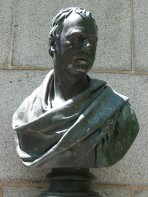 This novel, like Wuthering Heights, is on my list of “alternates” to consider for my 19th-century fiction course–it would replace Waverley, which I have persisted in teaching for over a decade, despite its inevitable status as least-popular-book-on-the-reading-list. I thought I’d review Bride in particular because not only is it relatively short (OK, by 19thC standards) but its tragic plot and gloomy drama seem likely to have more crowd appeal. I did, mostly, enjoy reading through it this time: it’s relatively fast moving (again, by 19thC standards) and there’s plenty of thematically interesting material to work with, especially about fate vs. individual choice or agency, women and power, aesthetics, and also some of the same historical and historiographical problems explored by Waverley. But–though this may be because I have not worked with Bride carefully at this point–Waverley just seems much more useful for demonstrating what Scott means to the history of the novel…plus (though I usually have trouble convincing all but a few students of this) Waverley is a very funny novel, and except for the tedious Caleb, Bride is pretty slim on humour.
 I thought it was about time I re-read Wuthering Heights, not least because I am a little tired of teaching Jane Eyre in my 19th-century novels course and wanted to consider the obvious alternative. What a grim, unpleasant novel it is, though. The people in it are almost universally awful, and those that are not, like Edgar Linton, are weak and ineffectual, as if soft feelings just make you vulnerable. I remember at one time finding the passions of Heathcliff and Cathy romantic, but on this reading I found it impossible to associate either of them with any positive or sentimental feelings. The teacher (and critic) in me sees all kinds of stories to tell about the novel’s structure and themes, but I wonder how much enthusiasm I could muster for lecturing on it without something (or somebody) in it to root for. I have often made the argument to my students that the disappointments we are left with in George Eliot’s novels stimulate us to action: we wish for a realistic ending that is more satisfactory, for Maggie Tulliver, say, or Dorothea, and thus turn a critical eye on the real world that let them (and us) down. I can’t see taking this approach to Wuthering Heights, though, because the novel’s characters don’t really seem to deserve better than they get. Still, there’s no denying the raw power of the book, and its gloomy gravestones would certainly provide a contrast to the more conventional ‘marriage plot’ endings.
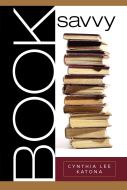 According to its jacket blurb, Book Savvy is “an effective guide for the burgeoning book-club community as well as a tool for literature teachers struggling to spark the interest of their students.” I certainly hope book clubs and teachers will choose better guides than this volume. For one thing, it is superficial, even shallow, in its approach to literature and to readers: do people literate enough to join book clubs really need icons indicating whether a book is one to be read “for information,” “for suspense,” or “to know oneself”? The author also rates each book for its “level of challenge”–at 5 we find “challenging masterworks of literature” (Madame Bovary or Hamlet, for instance, at 4 “works of literature with enduring qualities” (The Merchant of Venice, for example, or … The Robber Bride?), at 3 books that, while “thought provoking,” can be “read by almost anyone” (Sister Carrie or Bleak House…??), etc. Well, OK, the categories are idiosyncratic and the application of her standards sometimes suggests the author has not herself read the books in question very carefully, but I suppose for really insecure readers, it is helpful to be guided so as not to set your sights too high. And maybe, just maybe, it is odd but not unthinkable that The Picture of Dorian Grey should be brought up as an “example of a book to read primarily for thinking, writing, and conversational skills”; after all, as she goes on to say, Wilde “was a well-known wit and man-about-town” (p. 33), and wouldn’t we all like to be so quotable? Never mind what the novel is actually about! But when I came across this bit, I lost patience with amateur hour in the reading room: “One of the great innovations of twentieth-century literature was a movement away from telling the stories of kings and queens and other quite extraordinary people to the telling of stories of average people…” (p. 49). Innovations of twentieth-century literature? You see why I’m not sure she has read Bleak House, never mind, say, Moll Flanders? If Book Savvy
 does spark a student’s interest, then that’s all to the good, but it won’t take most savvy readers long to figure out that they need to look elsewhere for real insight and reliable information.
 .
.
