Far From Myself: Marlen Haushofer, The Wall

Now that I had barely anything left, I could sit in peace on the bench and watch the stars dancing against the black firmament. I had got as far from myself as it is possible for a human being to get, and I realized that this state couldn’t last if I wanted to stay alive. I sometimes thought I would never fully understand what had come over me in the Alm. But I realized that everything I had thought and done until then, or almost everything, had been nothing but a poor imitation. I had copied the thoughts and actions of other people . . . There was nothing, after all, to distract me and occupy my mind, no books, no conversation, no music, nothing. Since my childhood I had forgotten how to see things with my own eyes, and I had forgotten that the world had once been young, untouched, and very beautiful and terrible. I couldn’t find my way back there, since I was no longer a child and no longer capable of experiencing things as a child, but loneliness led me, in moments free of memory and consciousness, to see the great brilliance of life again.

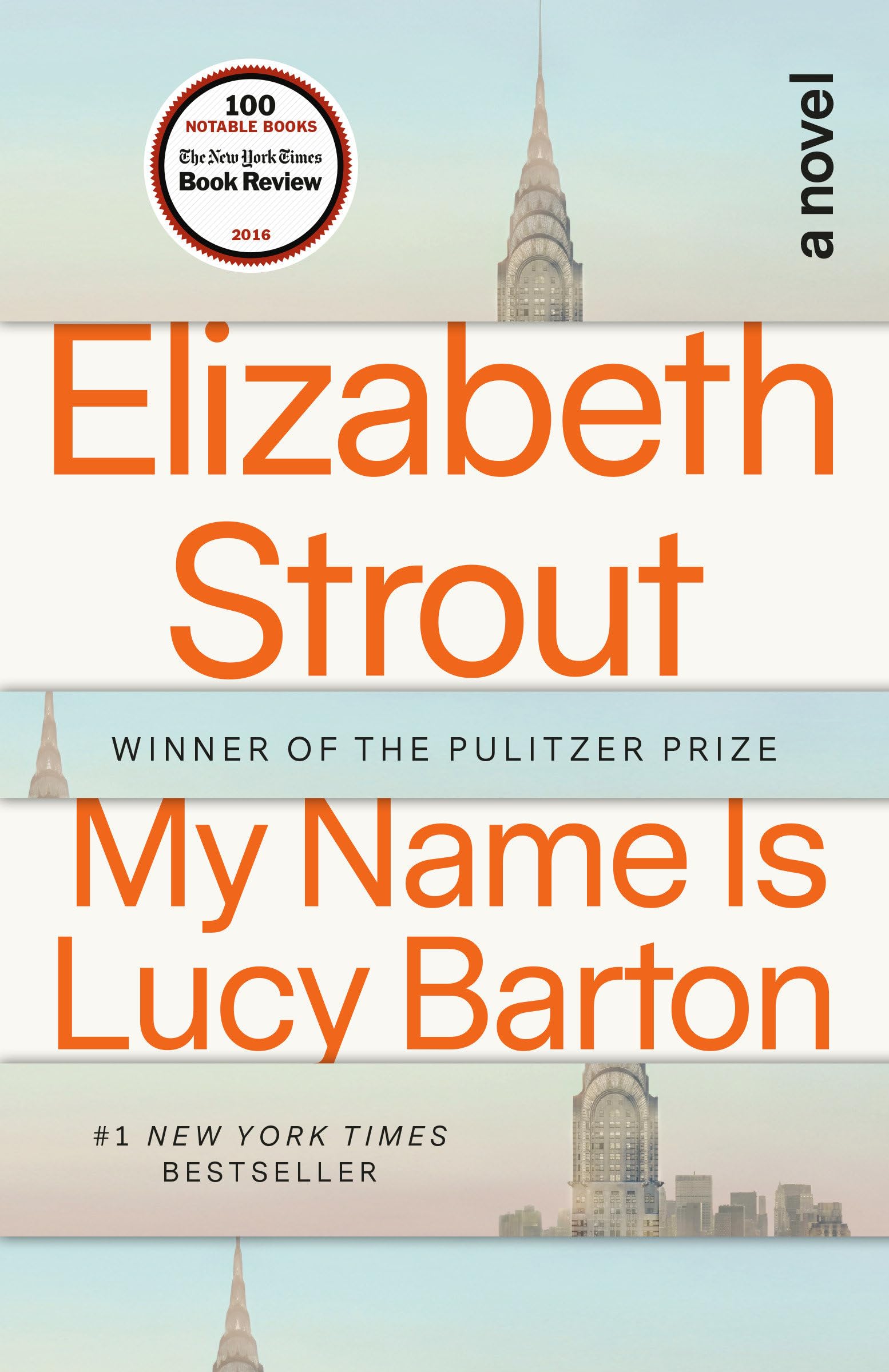
Marlen Haushofer’s strange, haunting novel The Wall is without a doubt one of the best books I’ve read in a long time. It is such an unlikely book to be so good: I think that’s part of its power, that its premise doesn’t seem very promising, that it is such an odd mixture of elements. It’s May Sarton’s Plant Dreaming Deep if that reflective meditation on solitude were also speculative fiction, existential meditation, and wilderness adventure. It should never work! And yet I found it completely gripping, consistently thought-provoking, and deeply moving.

It is most gripping when you take it most literally: what if one day there was an invisible wall separating you from everything and everybody else, and as far as you can tell, nobody else has survived whatever the wall is a manifestation of? For the narrator, the inexplicability of the situation quickly becomes less important than what to do about it, how to survive, how to take care of the small family of animals that will be her only companions. Her sense of responsibility for them is what really motivates her to keep struggling along, and the love she feels for them—the cow Bella, the dog Lynx, the cat and her kittens—is beautiful and also terrible, as it makes any losses incredibly painful.

The reason The Wall will stay with me, though, is not because Haushofer does such a good job chronicling the gruelling practicalities of growing potatoes and scything grass and killing deer and cleaning floors but because the narrator’s plight so insistently raises, for her and for us, questions about why she should do any of this and not just give up, not just burrow under the wall to what she is sure will be an immediate end—questions that extend to why any of us persist in living at all. The narrator’s extraordinary loneliness is not, perhaps, really that extraordinary: we are all fundamentally alone, isolated, cut off in invisible ways from even those closest to us. Sure, we form relationships and surround ourselves with distractions, but Matthew Arnold wasn’t wrong when he described us as being “in the sea of life enisled.” What is all this effort for, then? What, if anything, makes it worthwhile?

In her extreme solitude, with no prospect of ever reconnecting with another human being, the narrator faces the world with no insulation between herself and everything else, from the vastness of the landscape to the equal vastness of these existential questions. Sometimes, of course, she is too worn out from the digging and scything and hiking and chopping and hunting to think about them, or about much of anything, but at other times she thinks back on her life before (or is it outside?) the wall, on “the woman I once was” and on the people she once knew:

I now knew what had been wrong, and how I could have done it better. I was very wise, but my wisdom had come too late, and even if I’d been born wise I couldn’t have done anything in a world that was foolish. I thought about the dead, and I was very sorry for them, not because they were dead, but because they had all found so little joy in life. I thought about all the people I had known, and I enjoyed thinking about them; they would be mine until the day I died. I would have to clear a safe place for them in my new life if I was to live in peace.

She is awed and moved by the beauty of nature, including the night sky that used to frighten her:

If I narrowed my eyes to slits I could see the infinite abysses opening up between the constellations. Huge black hollows behind dense star clusters . . . I had never really known it before, locked in stone houses behind blinds and curtains. The night wasn’t dark at all. It was beautiful, and I started to love it. Even when it rained and a layer of clouds covered the sky, I knew that the stars were there, red, green, yellow and blue.

Similarly, she realizes that in her old life she never really saw the other living things around her because she was moving too fast:

A running person can’t look around. In my previous life, my journey took me past a place where an old lady used to feed pigeons. I’ve always liked animals, and all my goodwill went out to those pigeons, now long petrified, and yet I can’t describe a single one of them. I don’t even know what color their eyes and their beaks were. I simply don’t know, and I think that says enough about how I used to move through the city.

It’s no paradise she is living in now, and all this time to think is a curse as well as a blessing, bringing bitter grief as well as epiphanies. Who even is she, anyway, with nobody else to be present for? In one particularly striking scene she sees her own reflection and wonders what her face is for now, if she even needs it any more. Her narrative, which she calls a “report,” is her one act of resistance against her own erasure: perhaps, when she is gone, it at least will persist.

Near the end of the novel, there is an episode of such grim and gratuitous brutality that it makes the eerie death zone outside the wall seem peaceful by comparison. I think I’m glad Haushofer does not explain this part to us anymore than she explains the wall; the novel would lose something if it relied more on plot. (I’m also glad there’s no clever framing device to cheapen it: we don’t know how we come to be able to read this report.) To look for meaning its violence might also be to make the mistake the narrator notes is typical of humans, in their “megalomania,” assuming significance where there is just accident: “things happen.” At the same time, she sees humans’ capacity to think and to choose as itself significant. “Maybe,” she considers,

people are more deserving of pity because they have just enough intelligence to resist the natural course of things. It has made them wicked and desperate, and not very lovable. All the same, life could have been lived differently. There is no impulse more rational than love. It makes life more bearable for the lover and the loved one. We should have recognized in time that this was our only chance, our only hope for a better life. For an endless army of the dead, mankind’s only chance has vanished forever. I keep thinking about that. I can’t understand why we had to take the wrong path. I only know it’s too late.

Is it too late, for her, or for us? We don’t know the end of her story, which does not conclude but simply stops, when she runs out of paper. Our story isn’t over yet. It’s not looking too good for us—but if Ian McEwan can find grounds for optimism, I’m not giving up hope for us yet.

A Vigorous Life: Ian McEwan, What We Can Know

It is a wonder that a poem, let alone an unread poem, could have such a vigorous life in the culture–and its story still had decades to run before the present day. In the late twenty-first century, even as wars broke out in the Pacific (China against South Korea, Malaysia, the Philippines and others), vanished poem and vanished opportunities coalesced into a numinous passion for what could not be had, a sweet nostalgia that did not need a resolution . . . The Corona was more beautiful for not being known. Like the play of light and shadow on the walls of Plato’s cave, it presented to posterity the pure form, the ideal of all poetry.

I really liked the first half of What We Can Know. McEwan is always a meticulous stylist, and the persona he sets up to narrate this part is easy to follow and, as an academic, a good proxy for McEwan’s own analytical mind. But what I liked most about it was the concept—for better and for worse, McEwan’s fiction is always highly conceptual, and so I think (and a chat about the novel with a friend today confirmed) our experience of reading him is always going to be strongly affected by whether we buy the concept or not, whether for whatever combination of readerly reasons it strikes us as engaging and convincing, or as a gimmick.  In this case the scenario is an oddly optimistic post-apocalyptic one:  its narrator, Tom Metcalfe, is an English professor, about 100 years in the future, living on a planet that has built its way back after significant but not utter destruction. McEwan uses this premise to turn our present into a past that can be contemplated historically. How might we think about our situation if we weren’t actually in it? is the thought experiment, and it leads to some thought-provoking and, for me at least, surprisingly stirring reflections from Tom about the period he has chosen to specialize in:

What brilliant invention and bone-headed greed. What music, what tasteless art, what wild breaks and sense of humour; people flying 2,000 miles for a one-week holiday; buildings that touched the cloud base; razing ancient forests to make paper to wipe their backsides. But they also spelled out the human genome, invented the internet, made a start on AI and placed a beautiful golden telescope a million miles out in space.

Then came what the future calls “the Derangement,” which led to wars and climate catastrophes; large sections of the earth’s landmasses have been submerged, leaving islands connected by variously perilous seas.

McEwan has rigged the game in favour of a cautious optimism, based on what he notes in this interview has historically been the case: societies, like nature, have the capacity to recover, to regenerate, to fill in, to accommodate and adapt. What I mean by “rigged the game” is that he protected us, and Earth, from complete devastation. The losses are vast, staggering, but there’s enough left–including, especially, enough information–that rebuilding is possible. Even of universities! Which in 2119 occupy literally (if perhaps not metaphorically) the highest ground. They even still have English departments, something that doesn’t always feel likely about the very near future, so it was nice to be imagining that in 2119 people still have jobs reading and teaching about poems and novels.

The poem that preoccupies Tom is one that was read aloud at a party in 2014 and then lost forever. The content and context of the poem make up a lot of What We Can Know, which in a way is like a futuristic version of A.S. Byatt’s Possession, dramatizing the romance of research–a quest for a lost truth, a heroic rescue mission carried out in archives that, in this case, can sometimes be accessed only by arduous and risky sea voyages–while also highlighting the inevitable futility of the effort to find out ‘what really happened.’ Archives are incomplete; evidence is missing or misleading; interpretation is fallible. Even the quantitatively overwhelming material left by inhabitants of the digital age is not enough to lead the most diligent researcher to the truth–as Tom eventually finds out.

The first half of the novel follows Tom’s effort to reconstruct the night of the poetry reading and then to find, if he possibly can, the long-lost poem itself, which has had an extraordinary afterlife in spite of, or perhaps because of, the absence of the poem itself. By its non-existence, it has become “a repository of dreams, of tortured nostalgia, futile retrospective anger and a focus of unhinged reverence.” “The imagined lords it over the actual,” Tom reflects; perhaps once found the poem would lose, rather than gain, significance. Wisely, no doubt, McEwan does not include even fragments of it: he says it was because early readers found his poetic attempts inadequate, but it seems fitting in any case that it remains always out of our reach. Does Tom ever find it, though? Well, that would a spoiler, wouldn’t it?

The second half of the novel offers a first-hand account of the poem’s origins, including backstory on all the figures in the poet’s life that Tom has obsessed over throughout his career. It is more conventional, high concept only in its relationship to the futuristic framing. It’s well done, though predictable and occasionally (I thought) a bit too contrived in some of its details. When I reached its rather pat ending, I found myself wondering if I had missed something that would be apparent on a re-reading of the whole novel: I think of how the early parts of Atonement, for example, vibrate with new meaning once you have read to the end, including not just the metafictional twist but also the way Briony’s fictionalization turns out to have incorporated advice you later learn she got from readers and editors. Tom’s version of the story is, I think it’s fair to say, an idealization, a kind of wishful thinking, a story that fits the evidence he has together to suit his vision of the people and events. It is inaccurate, not just because his information is copious but incomplete, but because what he wants to do (as Dorothea Brooke would put it, to reconstruct a past world, with a view to the highest purposes of truth!) is always already impossible. OK, I get it! I got that before I read the ‘real’ version—which is also, of course, inevitably partial, perhaps dubiously reliable. But do we learn something more specific about Tom’s version, are there specific things he gets wrong, or (to consider another possibility) is there evidence he mentions that undermines the version that makes up the novel’s second half? I didn’t notice any such clever moments, but there’s a lot I didn’t notice about Atonement on my first reading.

My friend liked the second part of the novel better than the first, and I can see why. There are certainly parts of Tom’s narrative that aren’t completely convincing, and there’s a somewhat stiff or chilly quality to his voice that we (both academics) somewhat ruefully agreed might be a deliberate part of his characterization as an academic. I did think, though, that there was something passionate about him, something sympathetically melancholy about his preoccupation with the past, wrapped though it is in the language of professional obligation and advancement.  “I’ve spent a lifetime,” he says,

getting on intimate terms with people I can never meet, people who really existed and are therefore far more alive to me than characters in a novel. I have tried to embrace what is ‘beyond my reach in time.'”

He knows the past is inaccessible, but in retracing these lives, he feels a “fervent longing and melancholy” that is “my true sad sign of a last world that I have come to know too well.” All of us who study the past have got to recognize a bit of ourselves in that; what’s fresh in McEwan’s approach is that Tom’s past is our present, so even as we might resist his characterization of it, he also defamiliarizes it for us, giving us a chance to ask ourselves: is it really like that? What if we actually have it pretty good? “The Blundys and their guests” Tom observes,

lived in what we would regard as a paradise. There were more flowers, trees, insects, birds and mammals in the wild, though all were beginning to vanish. The wines the Blundys’ visitors drank were superior to ours, their food was certainly more delicious and varied and came from all over the world. The air they breathed was purer and less radioactive. Their medical services, though a cause of constant complaint, were better resourced and organized. They could have travelled from the Barn in any direction for hours on dry land.

OK, it looks good only by comparison with a world reshaped by global disasters, so while I have described the novel as shaped by optimism, I think it’s also fair to see that it also stands as a bracing kind of cautionary tale, a useful reminder that what we have is fragile, imperilled—that if it’s worth remembering nostalgically, it is also surely worth trying to preserve.

“On We Go”: Emma Donoghue, The Paris Express

Engine 721 doesn’t take it personally. She is made of wood and metal, and her temperament is stoic. Besides, she recognizes something kindred in Mado Pelletier’s iron conviction and unstoppable momentum. The bomber believes the world men have made is terrible, and so it is. Nor can the train deny that there is a certain beauty in the idea of burning, since she runs on flame herself. That lunch bucket is an explosion waiting to happen. Its unstable elements sing out their longing so loudly, the train can hear them like a battle cry. All the force of combustion that makes the express the fastest vehicle on earth, this device has harnessed for instant havoc. It can take every part of an object, and every cell in the human body, and fire them in different directions. So, for now, on we go.
WARNING: GREAT BIG SPOILERS Since the railway disaster Emma Donoghue recreates in The Paris Express is a documented historical event, I think a spoiler alert is not really called for. That said, I did not already know what actually happened, and I suspect Donoghue is counting on our not knowing, which is what kind of spoiled the novel for me. If you knew that THE BOMB DOES NOT GO OFF and NOBODY ON THE TRAIN DIES, the sense of impending doom that she does such a good job of building up would reveal itself immediately as shameless manipulation, which it turns out it is. The Paris Express is not a bad novel. Donoghue is too adept for that. Given how it ends, though, I don’t really see the point of it. It’s just people on a train. She does a good job imagining them all for us (and if you like this sort of thing, there’s a long note at the end telling you who is real and which bits are made up). I got pretty invested in some of them, especially in the young anarchist who spends the whole trip clutching her homemade bomb, hoping there will be a big enough wig on the train to make detonating it the kind of political statement she aspires to. As the train raced along from stop to stop and the passengers met and mingled and shared quiet moments and lustful interludes and ate lunch and gave birth, there seemed to be a lot of potential ways their interactions could pay off. But even without climactic revelations or epiphanies (maybe assisting in a delivery would change Mado’s mind about blowing everyone up, for instance), there was power in the dramatic irony, this motley assemblage of different people all unknowingly hurtling towards disaster. BUT THEY ALL WALK AWAY FROM IT. Geez. I mean, that’s nice for them (and rough for the one person who does actually die in the accident), but what that leaves us with is a whole bunch of people on a train. A series of character sketches, vignettes. It’s so deflating! Also, she personifies the train. It makes some sense: apparently trains, like ships, are “she” to those who make them go. I like the idea that the train is a symbol: destructive technology, human ingenuity pushing too hard against the natural world, something like that. But the minute you say “You wonder how a train can read her passengers’ minds?” you’ve lost me. Keep it a metaphor, don’t over-literalize it, don’t tell me “she savours their memories and jokes, their doubts and rages, the way a worm tastes the earth.” Let us think for ourselves why a train might be antipathetic to something else that matters; let us experience the passengers’ humanity as something in tension with it. I’ve read quite a few of Donoghue’s novels. I thought The Wonder (which I reviewed for the TLS) was really good, and Haven (which I reviewed for Canadian Notes and Queries) was too. I think she’s a good enough novelist that I wish she would write fewer novels—something I realize I have said before. Obviously, it’s not nothing, to be able to write so many fine-to-good novels! She’s clearly very commercially successful, too. I bought The Paris Express myself, notice, gambling that even if it wasn’t great, it would still be fine, which it is. I don’t get why it has been nominated for the Giller Prize, though. My feeling about prize-winning books is that they should aspire to greatness.

Two Women Writing: Ditlevsen and Toews

I made my way to the end of Tove Ditlevsen’s Copenhagen Trilogy without ever deciding if I was enjoying it or not. Enjoying might be the wrong word in any case: it’s not really a fun or pleasant story, and Ditlevsen herself does not come across as likeable, so what’s to enjoy? The better question is whether I was appreciating or admiring it, or interested in it. I am undecided on these questions as well. And yet her account of her childhood, youth, and “dependency” (meaning addiction) did exert a kind of pull on me, enough that I persisted to the end. One of the rewards, as I mentioned before, is coming across passages that hit hard. Some samples:

I look up at [my mother] and understand many things at once. She is smaller than other adult women, younger than other mothers, and there’s a world outside my street that she fears. And whenever we both fear it together, she will stab me in the back. As we stand there in front of the witch, I also notice that my mother’s hands smell of dish soap. I despise that smell, and as we leave the school again in utter silence, my heart fills with the chaos of anger, sorrow, and compassion that my mother will always awaken in my from that moment on, throughout my life.

Or,

Wherever you turn, you run up against your childhood and hurt yourself because it’s sharp-edged and hard, and stops only when it has torn you completely apart. It seems that everyone has their own and each is totally different. My brother’s childhood is very noisy, for example, while mine is quiet and furtive and watchful. No one likes it and no one has any use for it.

Or this, which is such an uncomfortable kind of yearning, perhaps not completely unfamiliar to anyone who was a precocious girl in a world where that quality was not always welcome:

I desire with all my heart to make contact with a world that seems to consist entirely of sick old men who might keel over at any moment, before I myself have grown old enough to be taken seriously.

Or this, once she has grown into a writer:

I realize more and more that the only thing I’m good for, the only thing that truly captivates me, is forming sentences and word combinations, or writing simple four-line poetry. And in order to do this I have to be able to observe people in a certain way, almost as if I needed to store them in a file somewhere for later use. And to be able to do this I have to be able to read in a certain way too, so I can absorb through all my pores everything I need, if not for now, then for later use. That’s why I can’t interact with too many people . . . and since I’m always forming sentences in my head, I’m often distant and distracted.

As these samples show, there’s a hardness, a flatness, to the narrating voice: as often before, I wondered if that affect was intrinsic to the original or an effect of the translation. There’s also an intensity, and a ruthlessness, towards herself as much as towards others. It is a strong voice, but it does not inspire me to look up any of Ditlevsen’s fiction.

I also finished Miriam Toews’s A Truce That Is Not Peace, which is not really a memoir, I suppose, but I’m not sure what else to call it. It is about her life and about writing and about the death by suicide of her father and her sister—which is to say, it is about the same subjects as most of her other books, which is sort of the point, as it is written in response to a question she cannot clearly answer: “Why do you write?”

I did not like this book much as a book, though I admire and sympathize with Toews’s wrestling with questions about how or whether or why to keep returning to these deaths. It’s odd to think that long before I knew that her main subject would become, in a way, my own, I puzzled over my dissatisfaction with her highly autobiographical novel All My Puny Sorrows. One of my thoughts at that time was that she had stuck so closely to the personal that her novel had not offered something more philosophical, something more meaningful. That’s not an obligation for art or artists, of course, but reading AMPS that’s the dimension I felt was missing. In a way, I feel the same about A Truce That Is Not Peace, even as I understand better now how inappropriate it might be, or feel, to move from the personal to the abstract based on one’s own individual experience of this kind of grief or trauma. Certainly that would have meant writing a very different kind of book, and my sense from Truce is that it is not the kind of book Toews would want to write.

What this book communicated to me is a kind of stuckness, a kind of stasis, in her grieving and her thinking about her grieving. I am not complaining that she hasn’t “gotten over” these deaths: that (as I well understand) is not how this works. As she herself is clearly aware, she keeps writing because she isn’t over them, because they aren’t, in that sense, over themselves. Her loss is ongoing. That is a reason, not an explanation, for her writing—if that makes sense as a distinction. It would be nice if writing led to meaning. Sometimes it does, but not always. “Narrative as something dirty, to be avoided,” she says at one point,

I understand this. I understand narrative as failure. Failure is the story, but the story itself is also failure. On its own it will always fail to do the thing it sets out to do—which is to tell the truth.

I sympathize with her grief and anger and frustration, and also with her wish, which I think is implicit in her bothering to write this book at all, that maybe, possibly, hopefully, she can say something truthful if she just keeps at it. I was outraged on her behalf, too, when I read this part:

Is silence the disciplined alternative to writing?

A student of English literature, whose class I recently visited, has suggested that now is the time for me to stand back and listen. I’ve had a “platform” long enough.

But what then—if I stop writing? I don’t want a platform. I am listening. What an awful word! Platform.

I didn’t much like this particular book. I found it too fragmented, too random; I wanted Toews to actually write the whole book, not to give us what felt (to me) like scraps of it, a draft of it. I understand that its form reflects a refusal to impose order and meaning where she does not find them, but at the same time I am not sure that if anyone but Miriam Toews had written exactly this, it would have found a publisher. But never mind my personal taste, or what I personally go to memoirs about suicide hoping to find (words in the shape of my wound, to paraphrase a poem that still echoes in my mind). We (generally) want to read it because she wrote it and we believe she is worth listening to. Imagine telling the author of Women Talking that she should shut up now.

Here’s something true in it, something that I think Yiyun Li would appreciate for its bluntness, something Denise Riley also talks about. Toews recounts a conversation with a friend whose child died of cancer:

She hated some of the things people said to her afterwards.

I can’t imagine your sorrow. I can’t imagine your pain.

Yeah, you fucking can! You can fucking imagine it. Go ahead and fucking try.

My friend told me she’d never felt more alone and sealed off in her coffin of grief than when people told her, even lovingly, even with tender hugs, that they couldn’t imagine her sadness.

Try! Stay! Stay with me.

“What will happen if I stop writing, I want to ask the student of English literature,” Toews says, right after this anecdote. Maybe the answer to the question that launches this book is here: she writes so that we will stay with her. 

Recent Reading: Slump-Ish

I’ve been meaning to catch up on my recent reading for weeks now: it has been a month since I wrote up Sarah Moss’s Ripeness, and it isn’t as if I haven’t read anything since then! The problem (for posting, anyway) is that I haven’t read anything that made me want to write about it. I didn’t used to use that as an excuse: I just wrote up everything! And in the process I often found I did have things to say. Let’s see if that happens this time as I go through my recent reading.

I had put in some holds on some lighter reading options that all seemed to come in at once. The timing wasn’t bad, as I was too distracted by the rush to get the term underway when the lockout ended to dig in to anything very demanding. Even as diversions, though, none of these were particularly satisfying reads: Katherine Center’s The Love-Haters seemed contrived to me; Beth O’Leary’s Swept Away was (as Miss Bates had already warned me in her review) good until it wasn’t; Linda Holmes’s Back After This wasn’t terrible but it also seemed contrived—a reaction that I realize may be less about the books than about my chafing for some reason at the necessary contrivance of romance plots. But I’m rereading Holmes’s Evvie Drake Starts Over now and liking it as much as I did before, so maybe it is at least partly the books’ fault that they seemed so formulaic.

I read Patrick Modiano’s So You Don’t Get Lost in the Neighbourhood for my book club, which met to discuss it on Wednesday. It was the first Modiano any of us had read, and we chose it because we wanted to follow up Smilla’s Sense of Snow with something that offered a more literary twist on the mystery genre. So You Don’t Get Lost certainly does that—maybe, we thought, it goes (for our tastes) too far in the other direction: it is so far away from being plot-driven that, as any reader of the novel will know, following the plot is like pushing on a cloud. I think I would have found it annoying if the novel had been longer, but it’s novella-length, and once I realized all the noir premises and promises of the opening were going to remain unfulfilled, I enjoyed just going where it took me. It is wonderfully atmospheric, and Modiano managed to keep me wondering about what had happened while also frustrating my curiosity at almost every turn. “In the end,” his narrator says, “we forget the details of our lives that embarrass us or are too painful. We just lie back and allow ourselves to float along calmly over the deep waters, with our eyes closed”—which is not a bad description of how I decided to read the book. I don’t think I want to read anything else by Modiano, though. For a better-informed commentary, read Tony’s post.

I read Kate Cayley’s Property, which I thought was well written and artfully constructed but (again, for my taste) too much so, too deliberate, never gripping until its final sequence, which then annoyed me by being manipulative and melodramatic. Kerry liked it better than I did. I didn’t dislike it; I just never really wanted to pick it up again when I’d put it down, and I also kept forgetting which character was which, which in a fairly short book with a tight cast of characters seems like it might not be all my fault.

I read Lily King’s Heart the Lover because I’m reviewing it for the TLS, so you’ll have to wait to find out what I think about it! (I’m still figuring that out as I reread it, anyway: I can say that it is a book that has so far elicited a lot of equivocation from me!)

I am currently reading Tove Ditlevsen’s Copenhagen Trilogy. This too I am not eager to pick up again after I put it down, but when I do pick it up, I keep coming across hard-hitting gems of sentences (is that a mixed metaphor?) “Wherever you turn,” says narrator Tove, “you run up against your childhood and hurt yourself because it’s sharp-edged and hard, and stops only when it has torn you completely apart.” On the brink of youth,

Now the last remnants [of childhood] fall away from me like flakes of sun-scorched skin, and beneath looms an awkward, an impossible adult. I read in my poetry album while the night wanders past the window—and, unawares, my childhood falls silently to the bottom of my memory, that library of the soul from which I will draw knowledge and experience for the rest of my life.

It seems unfair to characterize as a “reading slump” a period that includes both this and (in its very different register) the Modiano, and yet that is how the past few weeks have felt. Good thing that today in class we began what will be nearly a month of work on David Copperfield! Dickens has rescued me before and already, six chapters in, I can tell that whether or not I read any other books in the next little while that excite me, he’s going to show me all over again what a great reading experience is like.

“What an Astonishing Hat”: The Relatable VW

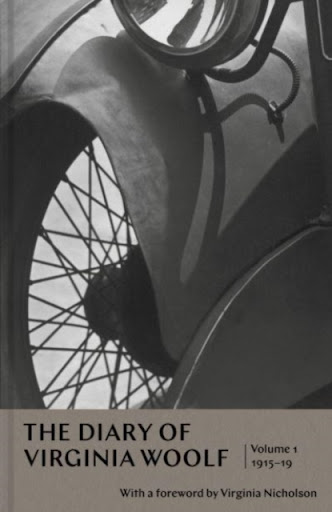
How I hate the word “relatable,” which is so often a shorthand for “like me and thus likeable,” which in turn is both a shallow standard for merit and a lazy way to react to a character. And yet sometimes it’s irresistible as a way to capture the surprise of finding out that someone who otherwise seems so different, elusive, iconic, really can be in some small way just like me—a writer of genius, for example, who reacts to invitations by worrying that she has nothing nice to wear and doesn’t look very good in what she does have. Yes, the period of Woolf’s diary I am reading is one of great intellectual and artistic flourishing, and this makes it all the more touching as well as oddly endearing that she frets so much about “powder & paint, shoes & stockings.” “My own lack of beauty depresses me today,” she writes on March 3, 1926;

But how far does the old convention about ‘beauty’ bear looking into? I think of the people I have known. Are they beautiful? This problem I leave unsolved.

On March 20 she remarks “a slight melancholia,”

which comes upon me sometimes now, & makes me think I am old: I am ugly. I am repeating things. Yet, as far as I know, as a writer I am only now writing out my mind.

She loves socializing, thrives on conversation, but dreads dressing up for it: “When I am asked out,” she notes in May, “my first thought is, but I have no clothes to go in.” She undertakes to go to “a dressmaker recommended by Todd [the editor of Vogue]”: “I tremble & shiver all over at the appalling magnitude of the task I have undertaken.” Happily, it goes well:

I went to my dressmaker, Miss Brooke, & found it the most quiet & friendly and even enjoyable of proceedings. I have a great lust for lovely stuffs, & shapes . . . A bold move, this, but now I’m free of the fret of clothes, which is worth paying for, & need not parade Oxford Street.

No sooner is she feeling more at ease, even easy, about how she looks, then stupid Clive Bell has to go and ruin everything:

This is the last day of June [1926] & finds me in black despair because Clive laughed at my new hat, Vita pitied me, & I sank to the depths of gloom. This happened at Clive’s last night after going to the Sitwell’s with Vita. Oh dear I was wearing the hat without thinking whether it was good or bad; & it was all very flashing and easy . . . Come on all of us to Clive’s, I said; & they agreed. Well, it was after they had come & we were all sitting round talking that Clive suddenly said, or bawled rather, what an astonishing hat you’re wearing! Then he asked where I got it. I pretended a mystery, tried to change the talk, was not allowed, & they pulled me down between them like a hare; I never felt more humiliated. Clive said did Mary choose it? No. Todd said Vita. And the dress?  Todd of course. After that I was forced to go on as if nothing terrible had happened; but it was very forced & queer & humiliating. So I talked & laughed too much, Duncan prim & acid as ever told me it was utterly impossible to do anything with a hat like that. And I joked about the Squires’ party & Leonard got silent, & I came away deeply chagrined, as unhappy as I have been these ten years; & revolved it in sleep & dreams all night; & today has been ruined.

Thanks a lot, Clive! And you too, Duncan: I bet your hats were all plenty stupid-looking! But seriously, although at the time Woolf really was not “old” (and it is hard for me to think of her as anything but strikingly beautiful), isn’t it hard enough going out in public in this sexist and judgmental world as an aging woman who knows her strengths lie somewhere other than in her looks, without our dearest friends making us wish we’d stayed home?

(I don’t think either of the hats in the photos here is the hat! They are both great hats, but neither of them, surely, is astonishing.)

This Week, Back In My Classes

It was just about a month ago that I last posted in this series. At the time, Dal faculty were locked out but we were hoping that a resolution to the labour dispute was close, which, thankfully, it did turn out to be. Still, because the back-to-work protocol rightly included some preparation time, we were ultimately three weeks late starting classes. Another part of the deal was adding a week to the December end of the term, so technically we have lost “just” two weeks of class time, but it has still meant a lot of reorganizing and everything has felt rushed. Some administrative deadlines have been pushed back, but not everything, so all in all, it has been a hectic time.

That said, it has felt really good to get back to class. I have noticed other professors commenting on social media that students seem very engaged this term, and I have the same feeling, that in spite of —or perhaps because of —the forces arrayed against us as we all try to carry on being curious, rigorous, and enthusiastic about literature, they are bringing their best selves to the room. Students IRL are always such a different thing than the abstractions or generalizations that often circulate about them. I mean, of course there are exceptions, but especially in upper-level classes that not one of them has to take, they are there for good reasons and working in good faith. While I am sure some of them can feel the temptation of AI’s false promises, I am even more sure that what they really want is authenticity; if anyone wavers or wobbles, it will be (as has always been the case for ‘shortcuts’) because of time, pressure, or anxiety. What I need to do is not police or surveil them more intensively but work explicitly on process, as I have always tried to do, and then do my best to model for them the kind of reading, discussion, and analysis that I believe is intrinsically valuable, not to mention enjoyable!

Noble aspirations, and already ones I have had a few stumbles living up to, but I have resolved not to spend the twilight years of my career in the classroom assuming the worst and chasing demons. After all, the highest incident of (discovered) plagiarism I have ever had was the dismal year that 1 in 5 of my intro students ended up in a hearing (with a near 100% finding that they had committed an offence)—and this was all cut-and-paste plagiarism of the most discouraging kind (much of it on pass-fail exercises, including supposedly personal writing like reading journals! I still can’t get over that!). Yes, AI is a game-changer, but I refuse to play, and I especially refuse to dedicate a single minute of precious class time to “training” students how to use it “responsibly” (as if there is such a way) instead of using our time on what they and I are actually there for.

Ok, enough of that, but clearly it is on my mind, as it is on everybody’s.

So what have we been talking about? I am on a reduced teaching load this term because I am our ‘Undergraduate Coordinator,’ meaning I chair the committee that oversees our undergraduate programs and also serve as Honours advisor. This means my only class this term is 19th-Century Fiction from Austen to Dickens. We started with Persuasion and are now getting well into The Tenant of Wildfell Hall, which I have not lectured on since the winter term of 2020, the term in which we were all sent home. I actually have found going through my lecture notes for courses from that term quite emotional—next term I am teaching the Brit Lit survey course that I was also teaching that term, and my ‘announcements’ notes for mid-March bring up a lot of difficult memories about the “before” times, before the pandemic began and also before Owen’s death, two long-running catastrophes that tend to bleed together when I cast my mind back.

have taught the Austen to Dickens class since then, but I assigned Jane Eyre. Much as I love Jane Eyre, I think I enjoy teaching Tenant more: its structure is so smart and complex, and the problems it tackles are, sadly, still so timely. I also appreciate that Anne Brontë’s attention is more clearly on social and systemic problems and solutions, while Jane Eyre is relentlessly personal—which is not to say, of course, that Jane’s story isn’t embedded in wider contexts, but her first-person narration focuses our attention constantly on what it is all like to her, on her individual feelings and values and decisions.

Because it has been so long since I taught Tenant in a “lecture” class (I have assigned it in seminars more recently), my old notes still reflect the more controlled (or controlling) approach I have lately been working self-consciously to change, weaning myself off more scripted lectures and trying instead to steer class discussion at once loosely and effectively enough to still hit all the things I think are important. I did always aim to have discussion, of course! It’s about shifting the balance. This term I am also incorporating some very low-key, low-stakes in-class exercises to make tangible the ways I have always wanted students to be engaging with our topics. For example, yesterday I gave them a handout with two columns, one for 1827 and one for 1821, and I asked them to generate some notes about Helen in both timelines so that we could talk about what we are learning, as we go back in time to her diary, about how she became the isolated, prickly, but still passionate woman we (and our ‘hero’ Gilbert) meet in his framing narrative. They then have the option to do a follow-up response that focuses on a specific topic or example. My impression so far is that this is proving a good way to warm up for discussion as well as a useful way to plant the seeds for future work. And of course it has the non-incidental effect of encouraging attendance. 🙂

One of the biggest tasks I have underway at the moment as Undergraduate Coordinator is drafting a first attempt at what next year’s slate of classes will look like. As I pencil in my own courses (or whatever the Excel equivalent is of that!), I find myself reflecting that I won’t be on the timetable for that many more years. When I’m tired and grumpy, I feel some relief about this, but when I have just been in class and riding that adrenaline rush, I feel wistful, even bereft. What will make up for the loss of that energy, of that sense of purpose, of being on the front lines of something that matters, of being pretty good at something? I know there are other things that matter and I am trying to figure out what else I might be good at. Still, this is something that actually causes me more work-related stress than AI. I will try not to make these posts a dreary refrain about either of these topics! And on that note, we have two more weeks to spend on Tenant and then we are on to David Copperfield, and then, thanks to the added week in December, there will still be time for Cranford: hooray!

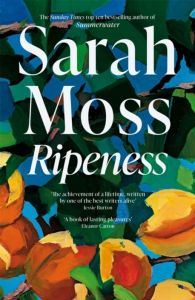
Ripeness is All: Sarah Moss, Ripeness

You must have a plum. Or three. Only they’re so ripe some of them burst when you pick them. Ripeness is all, I said. Men must endure their going hence even as their coming hither. I’d managed to get it into my Oxford entrance exam, my idea that Lear is a darker play than Hamlet. Readiness is all, Hamlet says, and readiness is voluntary, an act of will, where Lear’s ripeness happens to us as to plums and pears, regardless of agency or volition.

I had hoped to do a “proper” review of Ripeness but it didn’t work out. (Honestly, you’d think some editor might have thought of me for it, instead of my having to scout for a venue, given that I have not just read all of but also reviewed several of her books, including Ghost Wall for the TLS – which, sort of ironically, is why there was no chance I’d be reviewing Ripeness for them, as they have a policy that you can’t return to an author you’ve already reviewed, which means no more Sarah Perry or Emma Donoghue or Jo Baker for me there either, sadly.) Of course, I wanted to read it anyway, as Moss is one of my favourite contemporary writers. And I admit: alongside my peevishness about the non-review I now feel a bit of relief, because I think it would have been challenging to think through what to say about it in the kind of tight, unified way a “proper” review requires.

I don’t mean it would have been hard to express an opinion about its merits. I would not say I loved the novel, but I have never read anything by Moss that isn’t both meticulously crafted and convincingly intelligent. Every book of hers has left me appreciating the undercurrent of ideas in it, the sense throughout that something interesting is at stake. The same is true with Ripeness, on both counts, and in addition I think there is more lushness in her prose this time than in either Ghost Wall or Summerwater, both of which left me wishing she would return to the more expansive scope of her 19th-century series.

This is at least in part because half of Ripeness takes place in a villa in the Italian countryside, which for Edith, narrating her youthful experience there, offers many contrasts with her staid, bookish life back home. A sample:

Lucia set me on the path leading across her meadow. It was full of flowers I couldn’t name and grazed by small pale cows with dramatic eyelashes who watched me with mild curiosity. The day was warmer now, but still I caught the seasons turn on the air like Maman’s perfume after she had left a room. As the path rose, I looked straight over the lake to the more serious peaks on the other side, where patches of snow lay between rocks and clouds tangled around cliffs. I had never in my life been so high up, never seen water from so far away. I stopped to listen: wind, birds, faint goat bells. I could tell where there were boats on the lake from the lines their wakes and the folding of the water, traces, trails, passage.

On, up, until there was nothing behind the hill rising in front of me, until I came out on the top and could see in every direction, across a sea of summits, over the other lake into Switzerland, hill calling to hill, a new country at altitude. I turned slowly, delighted to be me, delighted to be there in that hour. I found a rock and sat on it, turned to the call of a bird and saw some great hawk, something that could have been an eagle, turning and passing below me. To see from above a bird in flight, to see the sunlight on its dappled back, to see the spread of its wings above the earth!

Is it just me, or is there a clear echo there of Hopkins, both the “dappled things” of “Pied Beauty” and the sigh of “ah, bright wings!” that so movingly concludes “God’s Grandeur”? There are several more explicit allusions to Victorian texts in Ripeness (including to Middlemarch), so this doesn’t seem like a stretch.

Edith is in Italy to help out her sister Lydia, who is in a kind of moral as well as literal exile because she is unmarried and pregnant and it’s the 1960s. Their mother has made “arrangements”: when the child is born, the nuns will spirit it away and pass it on to its new family. Lydia is fine with this: the pregnancy is not just unwanted and awkward but the result of an assault, and all she wants is to be done with it and return to her life as a ballerina. She and Edith are not close and are not drawn closer by this interlude. When it is done, she returns to her dancing; it is Edith who is haunted by the baby she cared for when Lydia would not, and who writes her account of those strange months “for Lydia’s son to find if he comes looking.”

That (though we don’t know it at first) is the premise of the chapters of the novel that are narrated in first-person by Edith, in retrospect. These chapters alternate with chapters in close third-person, following Edith decades later, divorced, retired, living in Ireland now, enjoying her lover Gunter and her friendships. One thread in this section is an uncomfortable encounter she has with her good friend Méabh, who she happens upon protesting outside a hotel that has been designated as housing for African immigrants—”it’s not right,” she explains to Edith, “there’s been no consultation,” it’s not like the Ukrainians, “we all understood that,” and though “Edith knows her lines” and says what she can to counter Méabh’s bad faith justifications for this public display of bigotry, she’s left “shaky, nauseous.” “Can she still be friends,” she wonders, “with someone who thinks the problem is refugees?”

The answer, it turns out, is yes, and other main plot element in this later timeline also turns on Méabh, who is contacted unexpectedly by a man who has discovered by way of DNA testing that he is her brother, given away by her mother for adoption long before she became Méabh’s mother. He wants to come to Ireland, to meet her and see the place he is from, to reclaim his Irish identity, though what right he has to it is the subject of some pithy comments.

If I were properly reviewing, I would reread the novel until I could explain better how the parts hang together. Big words like “belonging” or “identity” feel relevant but also too general. Lydia and Edith’s mother was herself a refugee, sent away from France just in time to save her from the fate the rest of her Jewish family met. She thought often of her own mother and sister, who were put on trains and then put to death. Whose claims to refuge are met with kindness and whose with protest? Who has the right to say that they are “from” anywhere? What does it mean to be separated from your family, by violence or by the kind of cold pragmatism that removes tiny Gabriel (named by Edith, as Lydia refuses to care, or at any rate to acknowledge her care, for him) and sends him off to strangers? But then, as Méabh’s new-found brother’s story highlights, how much does it matter where you were born, or to whom, if that has never been your home and they have never been your family?

Edith herself does not idealize or romanticize family or motherhood. If anything, what she witnesses of Lydia’s childbearing and birthing alienates her from the whole process. Looking through the book that has been her only guide to what to expect and do, she is put off by its critical tone towards women who “might take childbirth as an excuse to rest and slack off the housework”:

It was the first time I thought that I would not have children, that I would rather go to my grave without the blood-wrestling of birth and the appalling responsibility of infant care . . . [and] I’m not sure I was wrong. I have not been good at motherhood, certainly not in the Irish fashion. I was not a good wife. I did the correct things, mostly, but I did not give myself. I did not merge myself with my son, there was no abnegation.

“I remained,” she reflects, “more of a narrator than a participant. Self-centred to the end, you might be thinking. I am. I narrate.”

I would say, though, that Edith’s narration does not show her as self-centred, even if she is “the main character,” even if, as she proposes, “the scratches in the mirror centre around the candle of my version” (see, Middlemarch!). Maybe the Edith who leaves her account for Gabriel (“To be opened after my death“) is a construct—all narrators are, but also, all of us are, in some sense, right?—but the tenderness she shows to her sister’s unwanted baby hums through that account, which conveys with both delicacy and poignancy the astonishing fact of a new person coming into being, having needs, having hungers, having them met or not. The older Edith of the other chapters is not particularly warm, but she’s always thinking things through. She has that in common with her author, and that makes her good fictional company.

The title is obviously a clue to how to read Ripeness, to how to make sense of it as a whole (how many times have I said that to my students, that novels teach us how to read them, an enterprise that begins with their titles?). I found Edith’s comparison between ripeness and readiness thought-provoking, but I can’t quite figure out how it organizes the novel’s different elements. Lydia was ripe but not ready, I suppose, but it’s Edith’s novel, isn’t it?  I don’t mind that I’m left with questions, with things to think about myself.

Faded, Fatalistic & Aged

But this slight depression—what is it? I think I could cure it by crossing the channel, & writing nothing for a week . . . But oh the delicacy & complexity of the soul—for, haven’t I begun to tap her & listen to her breathing after all? A change of house makes me oscillate for days. And thats [sic] life; thats wholesome. Never to quiver is the lot of Mr. Allinson, Mrs. Hawkesford, & Jack Squire. In two or three days, acclimatised, started, reading & writing, no more of this will exist. And if we didn’t live venturously, plucking the wild goat by the beard, & trembling over precipices, we should never be depressed, I’ve no doubt, but already should be faded, fatalistic & aged.

You thought it was me who felt that way, right? But instead it is Woolf, feeling and thinking and, especially, thinking about feeling.

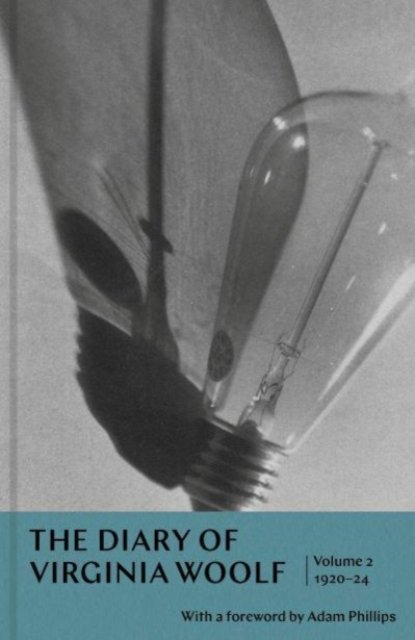
The parts I am most likely to bookmark as I am reading through the diaries are the ones about writing, the ones probably mostly already included in the Writer’s Diary Leonard compiled (I have it and have mostly read it, in the past, but am not cross-checking.)  I do find Woolf the writer endlessly fascinating, especially now that she has / I have reached a point where she knows she is finally writing as herself, in her own way. “If this book [Jacob’s Room] proves anything,” she reflects,

it proves that I can only write along those lines, & shall never desert them, but explore further & further, & shall, heaven be praised, never bore myself an instant.

Imagine that: I bore myself constantly, especially when I’m writing in my own journal! By the end of Volume II of the published diary she is well along in Mrs. Dalloway (“in this book I have almost too many ideas,” she says, but excitedly, not with anxiety), and she is feeling it, not growing into her voice but now at last (her sense of it) finally using it, with a consciousness of freedom (“I’m less coerced than I’ve yet been,” she says about the writing process).

But at the risk of creating a dichotomy where there shouldn’t be one, Woolf the person is at least as interesting, partly because she is not so sure. She is thin-skinned, sensitive, doubting. She waits on tenterhooks for reviews, especially in the “Lit Sup,” where, she complains, “I never get an enthusiastic review . . . and it will be the same for Dalloway.” She is elated by a generous commentary from “Morgan” (E. M. Forster) and irritable about how long it takes for the Common Reader to get any notice at all—although we might wonder at her expectations: “out on Thursday,” she says petulantly, “this is Monday, & so far I have not heard a word about it, private or public.” Shouldn’t a genius be above this kind of fretting? But if courage is not the absence of fear but acting in spite of the fear, perhaps genius is not the absence of self-consciousness or doubt but writing exactly what you want in spite of those feelings, living venturously, trembling over precipices, braving depression—as long as you can bear it, anyway.

“This diary writing has greatly helped my style,” she says in November 1924; “loosened the ligatures.” I wrote before about how she seemed to be seeking or practising looseness through the relative formlessness of her entries. I’m into Volume III now, already done 1925 because that’s a very short year, and while there is still a lot of meeting and visiting and housekeeping, there are also still what seem clearly like practice sessions for her fiction, little set pieces like this one which, while in a way “just” records of something that happened, somehow do more, or go further:

I am under the impression of the moment, which is the complex one of coming back home from the South of France to this wide dim peaceful privacy – London (so it seemed last night) which is shot with the accident I saw this morning & a woman crying Oh oh oh faintly, pinned against the railings with a motor car on top of her. All day I have heard that voice. I did not go to her help; but then every baker & seller did that. A great sense of the brutality & wildness of the world remains with me—there was this woman in brown walking along the pavement—suddenly a red film car turns a somersault, lands on top of her, & one hears this oh, oh oh.

And yet she still continues on “to see Ness’s new house,” which they go through “composedly enough,” as we all do, if it isn’t our particular catastrophe.

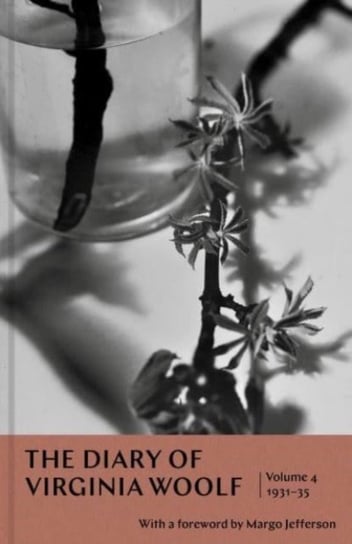
I’m looking forward to 1926, when Mrs. Dalloway is published. In her introduction to Volume III, Olivia Laing notes that it covers “perhaps the most fruitful, satisfying years” of Woolf’s life:

[it] opens as Woolf is revising her fourth novel, Mrs. Dalloway, and her first volume of criticism, The Common Reader, and closes as she is editing The Waves. In the intervening years she writes To the LighthouseOrlando, and A Room of One’s Own, plus a formidable battalion of essays and reviews.

Now that’s a streak. Does she shake off those worries about how her work will be received, I wonder? I suspect not, as I know from other research I’ve done that years later she was pretty fretful about both the writing and the reception of The Years. In 1925, she’s daring to imagine, though, that she “might become one of the interesting—I will not say great—but interesting novelists.” As she turns her full attention to To the Lighthouse, she’s also rethinking whether she’s a novelist at all: “I have an idea that I will invent a new name for my books to supplant ‘novel” A new——by Virginia Woolf. But what? Elegy?”

Winifred Holtby’s chapter on this period of Woolf’s life is called “The Adventure Justified”: “she was more sure now,” Holtby writes, “both of herself and of her public. She dared take greater risks with them, confident that they would not let her down.” It’s a wonderful chapter, rising almost to ecstasy about Woolf’s achievement in To the Lighthouse:

Its quality is poetic; its form and subject are perfectly fused, incandescent, disciplined into unity. It is a parable of life, of art, of experience; it is a parable of immortality. It is one of the most beautiful novels written in the English language.

But in November 1925, Woolf is feeling faded and fatalistic: “Reading & writing go on. Not my novel though. And I can only think of all my faults as a novelist & wonder why I do it.”

This Week (Not) In My Classes

It has been very quiet here lately, for reasons that may seem counterintuitive: I have had very little going on, because (long story short) the faculty at Dalhousie has been locked out by the administration since August 20, and while I am not in the union (I’m a member of the joint King’s – Dalhousie faculty) I have been instructed to do no Dal-specific work while the labour dispute continues. You’d think that this would mean I have all kinds of time to read books and write about them here, and yet what has happened instead is that the weird limbo of this situation has prolonged my usual summer doldrums and overwhelmed me with inertia. At this point I can hardly imagine summoning up the energy to stand up in front of keen young people and sustain a lively discussion—and yet at the same time there is nothing I want more to do, especially because if we were in classes this week we would be wrapping up our work on Austen’s Persuasion, my favourite of her novels. The two sides are at the bargaining table again this evening: who knows, maybe by the time I press ‘post’ there will be news of a deal.

Version 1.0.0

I have done some reading since O, the Brave Music, but nothing that really stuck except William Maxwell’s So Long, See You Tomorrow, which is as good as everyone said it was, bleak but somehow not depressing. I have just started Frans G. Bengtsson’s The Long Ships, which I am enjoying even though it is not at all what I expected: for no good reason, I suppose, I thought it would be more like Dorothy Dunnett’s novels, or Hild, but it is not nearly so dense or expository but is rather more like a chronicle, with a faintly antique cadence as if it is being told rather than written / read. Maxell’s novel deserves its own post but is not going to get one—score one for inertia!—but when I finish The Long Ships, I resolve to write it up properly! In between I have been rereading Robert B. Parker and Dick Francis, most recently The Edge, which is one of my favourite of Francis’s novels and also helps to sustain my dream of one day taking a cross-country train trip.

I have also been continuing my read-through of Woolf’s diaries. I am into 1923 now. 1922 seemed like a slow year and then she published Jacob’s Room and read Ulysses, both of which events generated a lot of interesting material. I am fascinated by her self-doubt: we meet great writers of the past when that greatness is assured, and also when their writer’s identity is established, but Woolf is not so sure on either count, and is hypersensitive—as George Eliot was—to criticism, especially when she felt her work was misunderstood, not just unappreciated. Jacob’s Room is significant because it is the first novel that, to her, really feels like her own voice: “There’s no doubt in my mind,” she says, “that I have found out how to begin (at 40) to say something in my own voice; & that interests me so that I feel I can go ahead without praise.” I am always fascinated and inspired by accounts of artists of any kind who find their métier and know it; I still think often of Mary Delany, and when I reread that post I also reflect on the expanding confidence I felt at the time and wonder where it went and how to recover it. Well, as Molly Peacock tells us in her wonderful book, Mary Delany was 72 when she discovered and fulfilled her own artistic purpose, so I will try to think of myself as “only” 58 and take heart, again, from her story.

Another paradox around my lack of posting is that for whatever reason, this is the writing I like doing the most. All summer I have been struggling to get something, anything done on a couple of other projects, and while I did meet a couple of small reviewing deadlines and submit something to a CFP for a special issue of a journal (I won’t know for a while if anything comes of that), my larger plans keep fizzling out because I can’t shake the feeling that they are futile: even if I completed exactly what I imagine they could be, the odds that they would find a publisher or an audience seem so slim. When nobody is asking for something and there’s no extrinsic need or reward for it, you really have to believe in it to actually do it. Perhaps my lack of conviction is a sign that these are not in fact the right projects for me . . . but then what is? These have not been good years for trusting myself, partly because of the legacy of my failed promotion bid. Oh wait, that’s where that surge of optimism and confidence went! and in fact that’s exactly right: I’ve been struggling to rebuild ever since, and I was making some progress when COVID hit and then all the hard personal stuff of the last few years. At some point, of course, explanations shade into excuses—and I have in fact been getting lots of other things done, and would be getting more done if I were back in my classes now, as I should be and hope to be soon. Teaching is almost always restorative for me, and this term—when it finally starts—should be especially so as due to an administrate release I have just one class, 19th-Century Fiction from Austen to Dickens.

Cross your fingers that a fair deal is struck soon, not just so that I can get out of this dreary purposeless limbo but so that I don’t have to cut Cranford from our reading list because we don’t have enough time for it. And whatever happens with the negotiations, I will try to stop malingering.