 Another January, another new term! I’ve got two classes this term of two quite different kinds. The first is our second-year survey course British Literature After 1800, so its aim is to cover a broad sweep of territory; the other is a combined Honours and graduate seminar on George Eliot, a rare opportunity to zoom in on a single writer—a privilege rarely accorded, in our program anyway, to anyone besides Shakespeare!
I led off the survey class today with what I called “explanations and excuses”: I talked in general terms about the traditional model of the historical survey in literature programs; I gave a potted overview of what the standard story of “British Literature After 1800” would have been, moving from the Romantics through the Victorians to the Modernists and beyond; then I raised some questions about oversimplification, inclusion, periodization, and ‘the canon’; and then I made some arguments in favour of nonetheless looking at things in chronological order, at least some of the time. (Showing my age, I used the example provided by David Lodge in Small World of the student who claims he is doing his thesis on the influence of T. S. Eliot on Shakespeare, much to the delight of the hip deconstructionists around him.) Because, if only for my own sake, I like to have some sense of unifying themes beyond chronology, I explained that one thing we would be talking about across the course was what our various authors thought literature was for or should or could do, and I quoted some statements they had made about this, from Shelley’s “poets are the unacknowledged legislators of the world” to Ishiguro saying “I like to highlight some aspect of being human. I’m not really trying to say, so don’t do this, or do that. I’m saying, this is how it feels to me.” And that, besides a bit of logistical stuff about requirements and schedules and getting the books, was that! Friday we get going more specifically with Wordsworth.
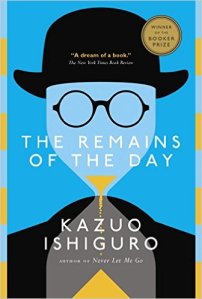 Something that was very much on my mind as I prepared for this particular class meeting was the last time I taught this course, which was the winter term of 2020. In early March of that term, we were all sent home; my notes leading up to what turned out to be our last day in person have a number of references to contingency plans, but none of them (none of us) anticipated the scale of disruption. It came on so quickly, too, as my notes remind me. We were part way through our work on Woolf’s Three Guineas on our final day; quite literally the last thing I wrote on the whiteboard was “burn it all down.” I got quite emotional many times while revising the course materials for this year’s version: that term stands out so vividly in my mind as “the before time,” before COVID, which is also, for me, before Owen died. We were still essentially in lockdown, after all, when he died in 2021; we had only just been able to start coming together as a family again. I don’t usually have a lot of emotional investment in my course materials, but it was unexpectedly difficult revisiting these and thinking of how much has changed. Tearing up over PowerPoint slides: it seemed absurd even as it happened, but it did. That said, because of COVID I ended up cutting The Remains of the Day from the syllabus in 2020, and given that it is in my personal top 10, that I rarely have the opportunity to assign relatively contemporary fiction, and that I am running out of years to assign anything at all, I am stoked about being able to read through it with my class this term. If only it didn’t feel so timely!
 I am also super stoked about getting to spend the whole term reading and talking about George Eliot with a cluster of our best students—not just our brightest but honestly, I know most of these students from other classes and they are some of the nicest and keenest and most engaged and curious people you could hope to work with. I felt so much good will from them today as we did our ice-breaker (nothing too “cringe,” just everyone’s names and anything they wanted to share about their previous experience, or lack of experience, with George Eliot). I hope their positive attitude survives Felix Holt, not to mention Daniel Deronda! Knowing that a number of them had read Adam Bede and/or Middlemarch with me in other recent courses, I left both of these off the reading list for this one. Middlemarch especially feels like a gap, but on the other hand, I don’t think I could have realistically asked them to read both Middlemarch and Daniel Deronda in the same term (unless I didn’t assign anything else), and Daniel Deronda is pretty great. I had quite a debate with myself about Felix Holt vs Romola: just for myself, I would have preferred to reread Romola, but I’ve taught Felix Holt in undergraduate courses before and it is actually pretty accessible. Sure, Felix is so wooden he makes Adam Bede look lively and nuanced, but, speaking of timely, a book about the pitfalls of democracy when the population is not (ahem) maybe sufficiently wise to make good choices seems on point. Along with those two, we will be reading “Janet’s Repentance,” The Mill on the Floss, and Silas Marner. I’m already a bit worried that it’s going to be too much reading . . .
 The last time I taught this class was 2015, and then it was a graduate seminar only. I had stepped back a bit from teaching in our graduate program: we get at most one seminar a year, and my favourite classes to teach have always been our 4th-year or honours seminars, so I made them my priority. OK, that’s not entirely truthful: I had also felt increasingly uncomfortable with graduate teaching, both because of my own loss of faith in aspects of academic research and publication (amply documented here over the years) and because it seemed so clear that an academic path was not a viable option for our graduate students and I wasn’t sure what else we were really doing. These reservations made me much happier focusing on undergraduate teaching, though I missed graduate students themselves: we get such lovely ones! Now we mingle undergraduate and graduate students in some of our seminars, which was the model for last year’s Victorian Women Writers seminar—which I thought went really well. (There was at least one student who disagreed, judging from the evaluations, but you can’t please everyone!) I have high hopes for this seminar as a result, which includes a number of the same students, at both levels.
It is a crazy time in the world and has been a pretty difficult time at work as well, with budget cuts and government interference and all kinds of discouraging internal administrative moves. I have never felt so strongly that I might actually be getting tired of the whole thing, that retirement, scary as it is to me for other reasons, might be welcome just so I don’t have to deal with all this nonsense—the persistent devaluing of the work we do, and the degradation of the conditions in which we nonetheless strive to do it well. I have to say, though, that one day back in the classroom with students has made a difference: I don’t exactly like “the job” at the moment, but I really like the work, the part I think of as the real work. The question will be whether the changes and complications and cuts make it impossible for me to do that work, or to do it well, or just start to outweigh the value I find in it.
 Believe it or not, I’ve been posting here about my teaching since 2007. At that point I had already been at Dalhousie for 12 years. These posts are a record, then, of almost two decades in a 30-year teaching career (more if you count the teaching I did as a graduate student). In their own idiosyncratic way, they tell quite a history themselves, including the rise and decline of academic blogging, the (thankfully burst) MOOC bubble, the Great Online Pivot of the COVID years, the encroachment of generative AI (may that bubble burst soon). Through it all, my colleagues and I have just kept on showing up to class. It is common, even among academic administrators, to champion “innovation” as a good in itself and to chastise people or systems that continue to work in more or less the same way. The substance of what we do as English professors changes constantly: we are not asking the same questions or bringing the same methods to bear on the texts we study and teach as professors were 20 or 30 or 40 years ago. But it is not a bad thing that our pedagogy stays true to some essential practices and values. I wish more people with decision-making powers would acknowledge that sometimes things stay the same because they work. Today I sat with students around a table and talked. I have tried all kinds of things over the years (again, as amply documented here!) from class wikis to Pecha kucha presentations; I have used PowerPoint and recorded videos and done letter exchanges instead of essays and on and on. After all this time I am convinced that there is no better pedagogy for the kind of learning I believe in for my students than sitting around a table and talking. Second best (still pretty good!) is leading a robust discussion from the front of the room. That kind of teaching can’t be monetized, surveilled, or sold to tech moguls, though, so nobody gets excited about it—except those of us in the room. We are fighting to be able to keep on doing it. If you care about it yourself, vote for politicians who don’t dismiss it because it doesn’t clearly serve “government priorities.”
 Novel Readings
Iâm rereading The Remains of the Day, which was recommended to me years ago by one of my undergraduate professors who has become my writing mentor; I was reminded recently of a line in it I found on first reading almost unbearably moving. The Ishiguro Iâve taught most often is Never Let Me Go (partly because it works so well in my SF course). I know the term is overused now, but I do find his writing genuinely immersive.
>
LikeLike
Discovered you blog and fantastic reviews recently (while looking for reviews of Andrew Miller’s The Land in Winter, which I loved. Happy to now be subscribed. One question I have already – when you do a survey course of British Lit after 1800, how do the Irish fit in? Are the Irish included (obviously Wilde etc) before Irish independence, but what about the Irish after some of the island becomes independent, therefore no longer British. How about authors like Joyce and Yeats, who are British at the start of their careers but non-British at a later point. Curious how you handle this. Good luck this semester.
LikeLike
I do include Joyce in this class (we are reading “The Dead”) and usually take that as an opportunity to talk a bit about Ireland, exactly along those “how do the Irish fit in?” lines – but we have other whole courses on Irish literature as well.
LikeLiked by 1 person
Both those courses sound wonderful, although if I were a student who had to do the assignments rather than just the reading, I might think differently! As for job v work, and the pressure on us from management to innovate, I heartily agree. Of course it’s important to keep an eye on what’s going on and not get stuck in outdated practices, but sometimes it feels that it’s PD for PD’s sake, and actually gets in the way of, you know, teaching 😉
LikeLike
“I have tried all kinds of things over the years (again, as amply documented here!) from class wikis to Pecha kucha presentations; I have used PowerPoint and recorded videos and done letter exchanges instead of essays and on and on. After all this time I am convinced that there is no better pedagogy for the kind of learning I believe in for my students than sitting around a table and talking. Second best (still pretty good!) is leading a robust discussion from the front of the room.” —I love this! It rings true to my experience of teaching both literary studies and creative writing. When I retired last May I looked back through page after page of my earnest notes on so many teaching methods and strategies, not to mention tech how-to lists from the Great Covid Pivot as well as (shudder) the Terrible Hybrid Period when we had to hold class simultaneously with in-person, masked, distanced students and students remotely beamed in. It was a joy to trash those notes. The times I cherish and miss the most from my years of teaching are as you describe: poring over a text together and talking about it.
Your upper-level seminar reminds me of one of my favorite college classes as a Harvard undergrad: Robert Kiely’s seminar on Eliot and Lawrence. I had already studied Middlemarch in a couple of earlier classes, but that was when I read Daniel Deronda, and I remember thinking it was great. Admittedly I haven’t gone back to it over the years, as I have Middlemarch, but now you’re inspiring me to reread it. Thank you for your insights and updates, and have a great semester!
LikeLike
We all have tried so hard, right? My notes are painfully earnest as well, and I always did think that I was trying things that were worth the experiment. I think Pecha kuchas for instance really had potential – but they were pretty challenging for everyone concerned.
An Eliot and Lawrence seminar sounds amazing. I have read shockingly little Lawrence and keep meaning to fix that.
LikeLike