 For the first time ever, I have assigned Scenes of Clerical Life in one of my classes—more accurately, a scene of clerical life, “Janet’s Repentance.” My re-reading of it some years ago had lodged the possibility of assigning the story (novella?) in my mind, but I hadn’t found what felt like the right opportunity until this term’s all-George Eliot, all the time seminar. We are discussing “Janet’s Repentance” in the seminar this week, so I thought that was a good enough reason to lift this post out of the archives.
I’m not sure when I last read George Eliot’s first published fiction, Scenes of Clerical Life. It might have been as much as 15 or 20 years ago that I read any of the stories right through, though I have certainly dipped into “Amos Barton” once or twice when thinking or writing about her realism and her intrusive narrator. I picked the book off my shelf again this week because I have been thinking (and will be writing) about scenes of visiting in Eliot’s novels. So many of her climactic moments are set up that way, with a sympathetic visitor bringing comfort or guidance to someone in crisis: Dinah visiting Hetty in prison in Adam Bede, for instance; Lucy visiting Maggie near the end of The Mill on the Floss; perhaps most notably, Dorothea visiting Rosamond in Chapter 81 of Middlemarch. The key thing, of course, is that these are human, rather than divine, “visitations” and thus neatly encapsulate her ongoing translation of religious beliefs into secular practices. As I was collecting examples, I had a vague memory of Edgar Tryan visiting Janet in “Janet’s Repentance,” so I thought I’d go back to the story and see what it adds to the pattern I’m exploring.
“Janet’s Repentance” is interesting for lots of reasons, including its grim account of Janet’s abusive marriage, which has driven her, in her misery and shame, to drink:
‘I’ll teach you to keep me waiting in the dark, you pale, staring fool!’ he said, advancing with his slow, drunken step. ‘What, you’ve been drinking again, have you? I’ll beat you into your senses.’
He laid his hand with a firm grip on her shoulder, turned, her round, and pushed her slowly before him along the passage and through the dining-room door, which stood open on their left hand.
There was a portrait of Janet’s mother, a grey-haired, dark-eyed old woman, in a neatly fluted cap, hanging over the mantelpiece. Surely the aged eyes take on a look of anguish as they see Janet — not trembling, no! it would be better if she trembled — standing stupidly unmoved in her great beauty while the heavy arm is lifted to strike her. The blow falls — another — and another. Surely the mother hears that cry — ‘O Robert! pity! pity!’
 “Do you wonder,” asks our narrator, as the sordid tale unfolds, “how it was that things had come to this pass — what offence Janet had committed in the early years of marriage to rouse the brutal hatred of this man? . . . But do not believe,” she goes on,
that it was anything either present or wanting in poor Janet that formed the motive of her husband’s cruelty. Cruelty, like every other vice, requires no motive outside itself — it only requires opportunity. . . . And an unloving, tyrannous, brutal man needs no motive to prompt his cruelty; he needs only the perpetual presence of a woman he can call his own.
“A woman he can call his own”: that remark is strongly reminiscent of Frances Power Cobbe’s powerful 1878 essay “Wife-Torture in England,” in which Cobbe emphasizes the corrupting effect of presumed “ownership”:
The general depreciation of women as a sex is bad enough, but in the matter we are considering [spousal abuse], the special depreciation of wives is more directly responsible for the outrages they endure. The notion that a man’s wife is his PROPERTY, in the sense in which a horse is his property . . . is the fatal root of incalculable evil and misery. Every brutal-minded man, and many a man who in other relations of his life is not brutal, entertains more or less vaguely the notion that his wife is his thing, and is ready to ask with indignation (as we read again and again in the police reports), of any one who interferes with his treatment of her, “May I not do what I will with my own?”
(If you’re interested in reading more on this aspect of Victorian marriage and its treatment in Victorian fiction — try Lisa Surridge’s Bleak Houses and Kate Lawson’s The Marked Body, both of which discuss “Janet’s Repentance.”)
 It’s also interesting how recognizable George Eliot is here. Many of the things she does better (or at least more fully, or with greater finesse) in her later novels are here already, such as the patient unfolding of social context — the “thick description” within which her plots acquire so much more meaning than their simple actions might indicate — and the pulsation between individual moments and philosophical ideas, facilitated by the narrator’s commentary on the action. Just as, despite her protective camouflage, Eliot’s friends “IRL” knew her when they read her earliest fiction, any readers of The Mill on the Floss know they are in familiar company when they see this anticipation of the famous “men of maxims” passage:
Yet surely, surely the only true knowledge of our fellow-man is that which enables us to feel with him – which gives us a fine ear for the heart-pulses that are beating under the mere clothes of circumstance and opinion. Our subtlest analysis of schools and sects must miss the essential truth, unless it be lit up by the love that sees in all forms of human thought and work, the life and death struggles of separate human beings.
And Janet’s appeal to Mr. Tryan — “It is very difficult to know what to do: what ought I to do?” — is one that has echoes across Eliot’s oeuvre, including in a passage in Middlemarch that has long been central to my thinking about the broader question of religion in Eliot’s fiction: “Help me, pray,” says an overwrought Dorothea to Dr. Lydgate; “Tell me what I can do.”
The big difference, though, is that in Middlemarch the appeal may have the same impulse as a prayer (“an impulse which if she had been alone would have turned into a prayer”) but it is directed at a doctor, and it’s not even really his medical advice she wants but something more fundamentally human, some guidance about how to be in the circumstances. The transformation from sacred to secular is even more distinct in the climactic encounter between Dorothea and Rosamond much later in the novel. But in “Janet’s Repentance” not only is Janet asking a clergyman (and an Evangelical one, at that) for help, but his advice is religious advice — and it is not undercut, or translated into humanistic terms, by the narrator. David Lodge notes in his introduction to my Penguin edition that “Janet’s Repentance” is “a completely non-ironical account of a conversion from sinfulness to righteousness through the selfless endeavours of an Evangelical clergyman.” He goes on to suggest that Eliot’s “religion of Humanity” is just below the surface, but it’s certainly not visible the way it is in her later works. It’s true that Tryan’s kindly fellowship is essential to his success as a religious ambassador: “Blessed influence of one true loving human soul on another!” says the narrator. But it’s trust in God that Tryan recommends, and that brings Janet peace.
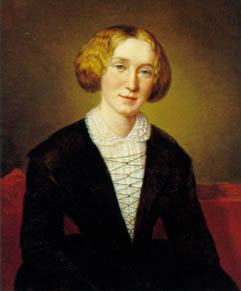 The ending of the story is a bit of a disappointment: like Anne Brontë’s Helen Huntingdon, Janet feels obliged to stand by her man as he pays the final price for his cruel and self-destructive behavior. I think that in both cases this affirmation of ‘proper’ wifely devotion is important to direct our attention to the sins of the husbands. Brontë has a more political point to make, though, about the structural as well as ideological failures of marriage, while Eliot’s story focuses us more on the internal moral life and on the redemptive value of compassion and faith. Janet also does not get the hard-earned Happily Ever After that Helen enjoys, at least, not in this life: as Lodge points out, Eliot “even compromised with her belief in immortality to the extent of allowing her hero and heroine a ‘sacred kiss of promise’ at the end.” Disappointing, as I said, and surprising, from an author who wrote so stringently about the immorality of acting on the basis of future expectations rather than immediate consequences:
The notion that duty looks stern, but all the while has her hand full of sugar-plums, with which she will reward us by and by, is the favourite cant of optimists, who try to make out that this tangled wilderness of life has a plan as easy to trace as that of a Dutch garden; but it really undermines all true moral development by perpetually substituting something extrinsic as a motive to action, instead of the immediate impulse of love or justice, which alone makes an action truly moral.
Was she catering to her as-yet unconverted audience, do you suppose, in setting Janet up as a memorial to “one whose heart beat with true compassion, and whose lips were moved by fervent faith”? Or practicing what she herself preached by inhabiting, as fully as possible, a point of view different from her own?
Originally published January 7, 2015. The writing I was doing on visitations in George Eliot became (more or less) the essay “Middlemarch and the ‘Cry From Soul to Soul,'” published in Berfrois in August 2015. Sadly, Berfrois is no more, but the essay can also be found in my collection Widening the Skirts of Light, available as an e-book from Amazon & Kobo for the lowest price I was allowed to set.
 Another January, another new term! I’ve got two classes this term of two quite different kinds. The first is our second-year survey course British Literature After 1800, so its aim is to cover a broad sweep of territory; the other is a combined Honours and graduate seminar on George Eliot, a rare opportunity to zoom in on a single writer—a privilege rarely accorded, in our program anyway, to anyone besides Shakespeare!
 Something that was very much on my mind as I prepared for this particular class meeting was the last time I taught this course, which was the winter term of 2020. In early March of that term, we were all sent home; my notes leading up to what turned out to be our last day in person have a number of references to contingency plans, but none of them (none of us) anticipated the scale of disruption. It came on so quickly, too, as my notes remind me. We were part way through our work on Woolf’s Three Guineas on our final day; quite literally the last thing I wrote on the whiteboard was “burn it all down.” I got quite emotional many times while revising the course materials for this year’s version: that term stands out so vividly in my mind as “the before time,” before COVID, which is also, for me, before Owen died. We were still essentially in lockdown, after all, when he died in 2021; we had only just been able to start coming together as a family again. I don’t usually have a lot of emotional investment in my course materials, but it was unexpectedly difficult revisiting these and thinking of how much has changed. Tearing up over PowerPoint slides: it seemed absurd even as it happened, but it did. That said, because of COVID I ended up cutting The Remains of the Day from the syllabus in 2020, and given that it is in my personal top 10, that I rarely have the opportunity to assign relatively contemporary fiction, and that I am running out of years to assign anything at all, I am stoked about being able to read through it with my class this term. If only it didn’t feel so timely!
 I am also super stoked about getting to spend the whole term reading and talking about George Eliot with a cluster of our best students—not just our brightest but honestly, I know most of these students from other classes and they are some of the nicest and keenest and most engaged and curious people you could hope to work with. I felt so much good will from them today as we did our ice-breaker (nothing too “cringe,” just everyone’s names and anything they wanted to share about their previous experience, or lack of experience, with George Eliot). I hope their positive attitude survives Felix Holt, not to mention Daniel Deronda! Knowing that a number of them had read Adam Bede and/or Middlemarch with me in other recent courses, I left both of these off the reading list for this one. Middlemarch especially feels like a gap, but on the other hand, I don’t think I could have realistically asked them to read both Middlemarch and Daniel Deronda in the same term (unless I didn’t assign anything else), and Daniel Deronda is pretty great. I had quite a debate with myself about Felix Holt vs Romola: just for myself, I would have preferred to reread Romola, but I’ve taught Felix Holt in undergraduate courses before and it is actually pretty accessible. Sure, Felix is so wooden he makes Adam Bede look lively and nuanced, but, speaking of timely, a book about the pitfalls of democracy when the population is not (ahem) maybe sufficiently wise to make good choices seems on point. Along with those two, we will be reading “Janet’s Repentance,” The Mill on the Floss, and Silas Marner. I’m already a bit worried that it’s going to be too much reading . . .
 The last time I taught this class was 2015, and then it was a graduate seminar only. I had stepped back a bit from teaching in our graduate program: we get at most one seminar a year, and my favourite classes to teach have always been our 4th-year or honours seminars, so I made them my priority. OK, that’s not entirely truthful: I had also felt increasingly uncomfortable with graduate teaching, both because of my own loss of faith in aspects of academic research and publication (
 Believe it or not, I’ve been posting here about my teaching
  2025 was a less chaotic year for me—literally and psychologically—than 2024. I wish I could say that this meant I read more and better, but instead both my memory and my records show that it was a pretty uneven reading year, with a lot of slumps. The summer especially, which used to be a rich reading season for me, had almost no highlights: the best books I read in 2025 were at the very beginning and the very end of the year.
 Connie Willis’s
  The best non-fiction I read was Claire Cameron’s memoir
 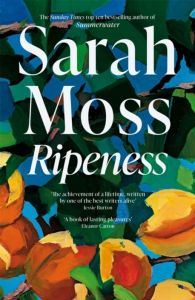 A near miss:
  And on that faintly elegiac note I will add that I reread
  Novel Readings