 It was just about a month ago that I last posted in this series. At the time, Dal faculty were locked out but we were hoping that a resolution to the labour dispute was close, which, thankfully, it did turn out to be. Still, because the back-to-work protocol rightly included some preparation time, we were ultimately three weeks late starting classes. Another part of the deal was adding a week to the December end of the term, so technically we have lost “just” two weeks of class time, but it has still meant a lot of reorganizing and everything has felt rushed. Some administrative deadlines have been pushed back, but not everything, so all in all, it has been a hectic time.
That said, it has felt really good to get back to class. I have noticed other professors commenting on social media that students seem very engaged this term, and I have the same feeling, that in spite of —or perhaps because of —the forces arrayed against us as we all try to carry on being curious, rigorous, and enthusiastic about literature, they are bringing their best selves to the room. Students IRL are always such a different thing than the abstractions or generalizations that often circulate about them. I mean, of course there are exceptions, but especially in upper-level classes that not one of them has to take, they are there for good reasons and working in good faith. While I am sure some of them can feel the temptation of AI’s false promises, I am even more sure that what they really want is authenticity; if anyone wavers or wobbles, it will be (as has always been the case for ‘shortcuts’) because of time, pressure, or anxiety. What I need to do is not police or surveil them more intensively but work explicitly on process, as I have always tried to do, and then do my best to model for them the kind of reading, discussion, and analysis that I believe is intrinsically valuable, not to mention enjoyable!
 Noble aspirations, and already ones I have had a few stumbles living up to, but I have resolved not to spend the twilight years of my career in the classroom assuming the worst and chasing demons. After all, the highest incident of (discovered) plagiarism I have ever had was the dismal year that 1 in 5 of my intro students ended up in a hearing (with a near 100% finding that they had committed an offence)—and this was all cut-and-paste plagiarism of the most discouraging kind (much of it on pass-fail exercises, including supposedly personal writing like reading journals! I still can’t get over that!). Yes, AI is a game-changer, but I refuse to play, and I especially refuse to dedicate a single minute of precious class time to “training” students how to use it “responsibly” (as if there is such a way) instead of using our time on what they and I are actually there for.
Ok, enough of that, but clearly it is on my mind, as it is on everybody’s.
So what have we been talking about? I am on a reduced teaching load this term because I am our ‘Undergraduate Coordinator,’ meaning I chair the committee that oversees our undergraduate programs and also serve as Honours advisor. This means my only class this term is 19th-Century Fiction from Austen to Dickens. We started with Persuasion and are now getting well into The Tenant of Wildfell Hall, which I have not lectured on since the winter term of 2020, the term in which we were all sent home. I actually have found going through my lecture notes for courses from that term quite emotional—next term I am teaching the Brit Lit survey course that I was also teaching that term, and my ‘announcements’ notes for mid-March bring up a lot of difficult memories about the “before” times, before the pandemic began and also before Owen’s death, two long-running catastrophes that tend to bleed together when I cast my mind back.
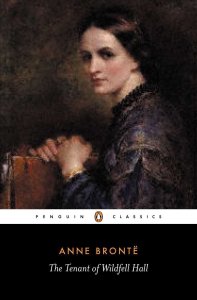 I have taught the Austen to Dickens class since then, but I assigned Jane Eyre. Much as I love Jane Eyre, I think I enjoy teaching Tenant more: its structure is so smart and complex, and the problems it tackles are, sadly, still so timely. I also appreciate that Anne Brontë’s attention is more clearly on social and systemic problems and solutions, while Jane Eyre is relentlessly personal—which is not to say, of course, that Jane’s story isn’t embedded in wider contexts, but her first-person narration focuses our attention constantly on what it is all like to her, on her individual feelings and values and decisions.
Because it has been so long since I taught Tenant in a “lecture” class (I have assigned it in seminars more recently), my old notes still reflect the more controlled (or controlling) approach I have lately been working self-consciously to change, weaning myself off more scripted lectures and trying instead to steer class discussion at once loosely and effectively enough to still hit all the things I think are important. I did always aim to have discussion, of course! It’s about shifting the balance. This term I am also incorporating some very low-key, low-stakes in-class exercises to make tangible the ways I have always wanted students to be engaging with our topics. For example, yesterday I gave them a handout with two columns, one for 1827 and one for 1821, and I asked them to generate some notes about Helen in both timelines so that we could talk about what we are learning, as we go back in time to her diary, about how she became the isolated, prickly, but still passionate woman we (and our ‘hero’ Gilbert) meet in his framing narrative. They then have the option to do a follow-up response that focuses on a specific topic or example. My impression so far is that this is proving a good way to warm up for discussion as well as a useful way to plant the seeds for future work. And of course it has the non-incidental effect of encouraging attendance. 🙂
 One of the biggest tasks I have underway at the moment as Undergraduate Coordinator is drafting a first attempt at what next year’s slate of classes will look like. As I pencil in my own courses (or whatever the Excel equivalent is of that!), I find myself reflecting that I won’t be on the timetable for that many more years. When I’m tired and grumpy, I feel some relief about this, but when I have just been in class and riding that adrenaline rush, I feel wistful, even bereft. What will make up for the loss of that energy, of that sense of purpose, of being on the front lines of something that matters, of being pretty good at something? I know there are other things that matter and I am trying to figure out what else I might be good at. Still, this is something that actually causes me more work-related stress than AI. I will try not to make these posts a dreary refrain about either of these topics! And on that note, we have two more weeks to spend on Tenant and then we are on to David Copperfield, and then, thanks to the added week in December, there will still be time for Cranford: hooray!
 Novel Readings
I hear you! I am in the same nebulous “what next?” time. I’m two and a half school years away from retirement and still enjoying the classroom (can do without recess duty, meetings, running my department, and “promoting” the school during open houses) and looking forward to it, though not the commute or making my way, especially in winter. I’m ready to go in the next few years, and not quite ready, and wondering, exactly as you said, what purpose I can find in my late years. I’ve been in school my whole life, as a student through grad school and, as a teacher, for 35. The questions are open, the answers not formulated. Like you, though, there’s still time for my rom fic course and the new novels I’ve added to my grade 9 class, including Lawson’s Crow Lake, time to read Canadian!, and Keegan’s “Foster”. Our theme is childhood and we’ve just finished that standard, Lord of the Flies. (I tossed out Animal Farm, not a text I’ve ever enjoyed teaching.)
LikeLike
We can keep each other virtual company as we lurch towards whatever is next. 😆 Yes, it’s the tedious stuff that I won’t miss either, and yet I guess we both know it has to be done to make the good stuff possible. One thing I feel increasingly aware of is that the institution will churn on fine without me – sad to me in a way, but also realistic and a bit liberating after years of deeply internalized feelings of guilt and obligation towards my work.
LikeLike
I feel the same way…I can see how well our school, and especially my department, will do without me. Not because I’m not contributing, but because they’re ready to take the reins. It’s taken me several years to neutralize the dross and now I have a dream team, with a fabulous new teacher hired this year.
Our school was founded in 1909 (a baby in Dalhousie years; one of my dept. members did theatre there!) and it’s also good to think about faculty spending their lives at the school and then, retiring. There aren’t many vocations where you can spend a life-time in the same place (maybe that’s not to everyone’s taste, but this introvert loves it). It would be an honour to keep you virtual company! 🙂
LikeLike
Oh, *cheeky grin* I know what I’d like you to do in retirement!
So often, I’ve wished I were in one of your classes. I’d love it if you were to contribute a MOOC on one of your topics or on a broad overview.
During the pandemic, there were heaps of free courses to choose from… for instance, I did one on The English Country House in the novel. I also did a couple of history ones, e.g. one about the Scottish clans through the University of Glasgow and another about the Book of Kells. (The best one I ever did was nothing to do with my interest in Lit and History, it was Understanding Dementia at the Wicking Institute, and it was invaluable for helping me to navigate my father’s last years.)
Now (though they’re not very expensive) most online courses involve fees but FutureLearn still offers some free ones. Just browsing them now, I can see some that interest me…
The thing about MOOCs is they offer education to people (especially women) who’ve been denied it for one reason and another. They also cater for people like my husband, who did a BSc at uni and made his career with that, but was always interested in history and philosophy. In the event, he could afford to go back to university and get a BA, but many people can’t do that. Not always because of money, sometimes it’s disability or being too frail to travel to classes, and sometimes it’s because they’re working and need to tailor when they participate to the times when they don’t have other commitments.
Of course I realise that developing such a course is a lot of work and a big commitment, and you might well be planning to travel or take up painting!
LikeLike
I love the vote of confidence, Lisa! And honestly I have been pondering options sort of along those lines, though perhaps more like YouTube videos or a podcast as an extension of what I’ve done here all these years. What I can’t quite figure out is how to make whatever happens interactive, since it is the conversations with students and colleagues I get the most energy from and will miss the most – people to talk TO, not just AT. I don’t think a MOOC does that? But it’s a good nudge to keep looking at what the possibilities are. And I so appreciate your saying you have wanted to be in my classes!
LikeLike
I’m not very tech-savvy about interactiveness… the conversations about books are what I value about my blog but I have never ventured into podcasts or videos. I know that some YouTube videos are interactive (Oxford’s Lunchtime series? I can’t remember) but it’s a clunky way to interact and there is also the vexed issue of moderating when it’s YouTube that controls it. A ‘closed’ audience is a nicer environment because people aren’t anonymous.
From my experience, which is two years out-of-date by now, the FutureLearn MOOCs are interactive. The first week is an introductory week, so the moderator (i.e. the academic running the course) asks the kind of questions that encourage people to introduce themselves, to explain why they were interested in the course, and what they expect to get out of it. More people sign up for these things than ever finish them, so there is a great response to this, more than I have time to read, but one way or another we find like-minded souls, and (alerted by a notification bell) begin a chat with whoever has ‘liked’ or commented on whatever has been written. So yes, not only can the moderator interact, but the participants can interact with each other too.
There is, of course, a wide range of abilities on show, even at this stage, from retired teachers of Lit to keen young people who’ve never read the classics or much of anything else.
Once the actual business of *reading* begins, the numbers drop off (and keep declining when participants (for whatever reason) don’t do the readings), and conversations become more focussed on the course content. This is when (as in real life at university) the course gets better because the people who are still doing it are doing the readings and thinking about the course content. The numbers are more manageable, we (including the moderator) have time to read, enjoy and respond to participant contributions. This is when I have had interactions with the moderator about some issue I’ve raised, some other book that’s relevant, or something I’ve misunderstood.
One thing you might find frustrating is that (though there is one course I’ve seen that’s about just reading James Joyce’s Ulysses) the courses I’ve done only required us to read excerpts from different novels, not the whole book e.g. just the bits that were about country houses.
One thing that I found frustrating was that the course would drift into discussing film (e.g. Austen’s country houses on page and screen), presumably to attract less diligent readers (i.e. people who “love” Austen but have never read her. They’ve only seen the films). I don’t know if that’s a constraint required by whoever does the course approvals. I don’t know anything about how these MOOCs get set up. Maybe your university already has some, or maybe it would like an initiative to start one. (From what I can see, the lure of offering these MOOCs for the university is that they entice students to enrol in certificate courses.)
LikeLike
I love your questions: “What will make up for the loss of that energy, of that sense of purpose, of being on the front lines of something that matters, of being pretty good at something?” I found answers to all but the last in volunteering, and now in taking care of my grandson while his parents work.
As far as being good at something, my answer is writing more. My volume about my time at Kenyon, entitled After Kenyon, is out, and it’s about some of the feelings you’re exploring in this post. Maybe you could explore getting more of your writing out into the world?
LikeLiked by 1 person
I have been doing some volunteering already, including offering a short story reading group for newcomers / English language learners with a partner, and it has definitely been a good way to find some sense of value outside my work. I think about writing a lot but am struggling to figure out *what* to write: a project! I admire your focus as a poet.
LikeLiked by 1 person
I really enjoyed reading this, partly as your class sounds wonderful (great choice of texts and itâs so interesting how what a person teaches evolves: I love having that flexibility without feeling constrained by âmustsâ of a curriculum). And of course I do find myself contemplating what I will do when work ends, not least as Iâve been teaching virtually nonstop since I finished my doctorate in 1990 (I couldnât teach during my postdoc term in England because my visa didnât permit it). I donât really have hobbies, I wonât have a huge amount of money, I do want to stay in Vancouver (which after 28 years feels like home). I suspect the end will come within the next couple of years at the very most, so I will still be in my late 60s. Itâs a huge and somewhat alarming prospect, but there is that little voice that says, yes but change can be very good too.
>
LikeLike