 It has been very quiet here lately, for reasons that may seem counterintuitive: I have had very little going on, because (long story short) the faculty at Dalhousie has been locked out by the administration since August 20, and while I am not in the union (I’m a member of the joint King’s – Dalhousie faculty) I have been instructed to do no Dal-specific work while the labour dispute continues. You’d think that this would mean I have all kinds of time to read books and write about them here, and yet what has happened instead is that the weird limbo of this situation has prolonged my usual summer doldrums and overwhelmed me with inertia. At this point I can hardly imagine summoning up the energy to stand up in front of keen young people and sustain a lively discussion—and yet at the same time there is nothing I want more to do, especially because if we were in classes this week we would be wrapping up our work on Austen’s Persuasion, my favourite of her novels. The two sides are at the bargaining table again this evening: who knows, maybe by the time I press ‘post’ there will be news of a deal.
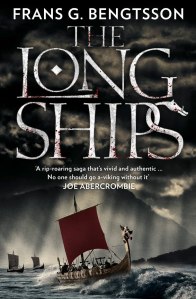
I have done some reading since O, the Brave Music, but nothing that really stuck except William Maxwell’s So Long, See You Tomorrow, which is as good as everyone said it was, bleak but somehow not depressing. I have just started Frans G. Bengtsson’s The Long Ships, which I am enjoying even though it is not at all what I expected: for no good reason, I suppose, I thought it would be more like Dorothy Dunnett’s novels, or Hild, but it is not nearly so dense or expository but is rather more like a chronicle, with a faintly antique cadence as if it is being told rather than written / read. Maxell’s novel deserves its own post but is not going to get one—score one for inertia!—but when I finish The Long Ships, I resolve to write it up properly! In between I have been rereading Robert B. Parker and Dick Francis, most recently The Edge, which is one of my favourite of Francis’s novels and also helps to sustain my dream of one day taking a cross-country train trip.
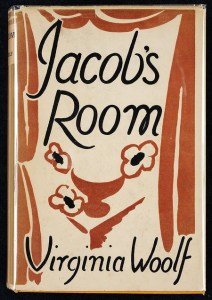 I have also been continuing my read-through of Woolf’s diaries. I am into 1923 now. 1922 seemed like a slow year and then she published Jacob’s Room and read Ulysses, both of which events generated a lot of interesting material. I am fascinated by her self-doubt: we meet great writers of the past when that greatness is assured, and also when their writer’s identity is established, but Woolf is not so sure on either count, and is hypersensitive—as George Eliot was—to criticism, especially when she felt her work was misunderstood, not just unappreciated. Jacob’s Room is significant because it is the first novel that, to her, really feels like her own voice: “There’s no doubt in my mind,” she says, “that I have found out how to begin (at 40) to say something in my own voice; & that interests me so that I feel I can go ahead without praise.” I am always fascinated and inspired by accounts of artists of any kind who find their métier and know it; I still think often of Mary Delany, and when I reread that post I also reflect on the expanding confidence I felt at the time and wonder where it went and how to recover it. Well, as Molly Peacock tells us in her wonderful book, Mary Delany was 72 when she discovered and fulfilled her own artistic purpose, so I will try to think of myself as “only” 58 and take heart, again, from her story.
 Another paradox around my lack of posting is that for whatever reason, this is the writing I like doing the most. All summer I have been struggling to get something, anything done on a couple of other projects, and while I did meet a couple of small reviewing deadlines and submit something to a CFP for a special issue of a journal (I won’t know for a while if anything comes of that), my larger plans keep fizzling out because I can’t shake the feeling that they are futile: even if I completed exactly what I imagine they could be, the odds that they would find a publisher or an audience seem so slim. When nobody is asking for something and there’s no extrinsic need or reward for it, you really have to believe in it to actually do it. Perhaps my lack of conviction is a sign that these are not in fact the right projects for me . . . but then what is? These have not been good years for trusting myself, partly because of the legacy of my failed promotion bid. Oh wait, that’s where that surge of optimism and confidence went! and in fact that’s exactly right: I’ve been struggling to rebuild ever since, and I was making some progress when COVID hit and then all the hard personal stuff of the last few years. At some point, of course, explanations shade into excuses—and I have in fact been getting lots of other things done, and would be getting more done if I were back in my classes now, as I should be and hope to be soon. Teaching is almost always restorative for me, and this term—when it finally starts—should be especially so as due to an administrate release I have just one class, 19th-Century Fiction from Austen to Dickens.
Cross your fingers that a fair deal is struck soon, not just so that I can get out of this dreary purposeless limbo but so that I don’t have to cut Cranford from our reading list because we don’t have enough time for it. And whatever happens with the negotiations, I will try to stop malingering.
 Novel Readings
Well, I can’t ‘like’ this, it sounds too awful for that.
Work, paid or not (as with my current labour of love at the blog) has often been salvation for me. Even when (paid) work was horrible, the time with my classes was what I needed to feel good about myself and feel that I had something to offer. So maybe I understand a little of what you feel.
I’m sure you know this: stress and its partner the doldrums happens when we are not in control of things that are important to us. if all the things you are working on depend on someone/something else (promotion, publication, a union agreement) then maybe a project that doesn’t depend on anybody else might ease things?
Not to pressure you, but to let you know that you are valued by someone not even a student far away in Australia: I know that I miss you when you’re ‘away’. You write so well, about the things I am interested in, that each post that lands in my inbox is a pleasure to read.
Look after yourself, take care, Lisa.
LikeLiked by 1 person
Crossing my fingers it’s resolved soon.
I so get what you mean about motivating yourself to write when your confidence has been shaken. I’m in an optimistic place right now because my volume of poetry about Kenyon, entitled After Kenyon, is being published (by Broadstone Books) on Oct. 15 and it has a poem I wrote after James Wright’s “Lying in a Hammock at William Duffy’s Farm in Pine Island Minnesota” that ends with his words–which I always read ironically–“I have wasted my life.” It’s a bit of cheek to even try to imitate such a poem. And yet.
LikeLike
I left a comment and it disappeared. To sum up, I feel lots of sympathy about writing when nobody is asking for it. I had the cheek to write a poem “after” Wright’s Lying in a Hammock at William Duffy’s Farm in Pine Island Minnesota” and it ends with his line “I have wasted my life” which I read ironically but which you have to by God earn. The poem will be in my volume After Kenyon, published on Oct. 15 by Broadstone Books.
Fingers crossed about the lockout ending.
LikeLike
Yes, frustrating to be kept out of the classroom (even if there are times when you’re in it when you’d rather be anywhere else!).
LikeLike