 I read a lot less in September than I did in August—which makes sense, of course, given the return to the many immediate demands of the teaching term. That said, it seems fair to say that in addition to the books I’ll mention here, I also read all of Bleak House for class and most of Paul Murray’s The Bee Sting (though I didn’t actually finish it until October).
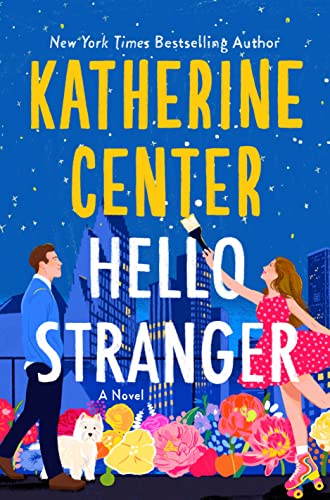
Because I was busy and distracted, most of my personal reading was on the lighter side. I read another of Katherine Center’s novels, Hello Stranger: I liked this one quite a bit, even if the Big Surprise was painfully obvious all along (if you’ve read it, you know what I mean). I don’t think that’s a flaw in the novel, really; it creates a cute bit of suspense and dramatic irony as we wait for the penny to drop for our heroine.
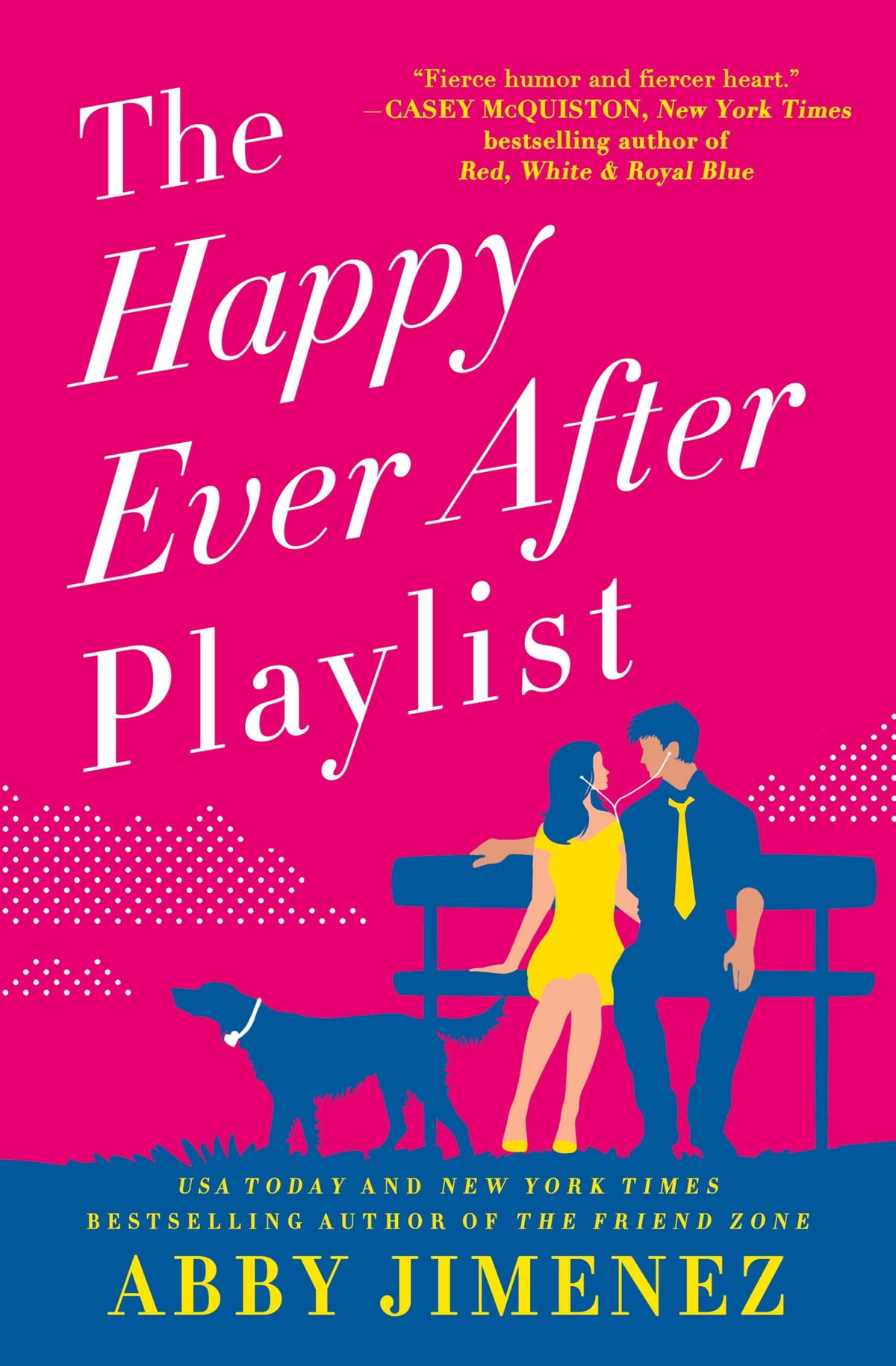 I also read two novels by Abby Jimenez: The Friend Zone and The Happy Ever After Playlist. I enjoyed both of these as well, maybe The Friend Zone a bit more, though (and this is definitely just a matter of personal preference) I wish Jimenez would keep her hero and heroine apart longer. The trend in contemporary romances seems be to heat things up really quickly and then draw us along to the HEA not through sexual tension and the push-pull of figuring out if this is the right person but through some kind of crisis that breaks the central pair up (often in a very emotionally fraught way) and eventually gets resolved. I am generalizing from a pretty small sample, as I don’t read tons of romance (contemporary or other) these days. But the pacing of a lot of the ones I do read just feels a bit off to me, because the hot sex happens too soon and then there has to be some other kind of tension to provide the momentum. Imagine Heyer’s Devil’s Cub if Mary and Vidal actually got together a single moment sooner than they actually do in the novel! The delight is knowing they will get there eventually but not until everything else has been properly sorted. Does anyone else feel this way with current romances, or is my reaction idiosyncratic, or (another reasonable possibility) am I just reading the wrong ones (not in general, just for me)? Finally, another lighter read, also basically a romance but packaged a bit more as comic fiction, was Eleanor Lipmann’s Ms Demeanor. This looked fun but in the end I didn’t really find it so: it was OK, but did not particularly interest or entertain me.
 The other three novels I finished in September were more “literary” or serious, and none of them really excited me either. Jane Smiley’s A Dangerous Business looked like exactly my kind of thing, and I have quite enjoyed some of her other novels (especially Private Life), but I have already forgotten almost everything about it except its premise. It’s a Western, with a protagonist who works in a brothel and begins trying to detect some mysterious disappearances inspired by her reading of Poe—you can see why I expected to enjoy it more than I did! In contrast, I picked up Anne Michaels’s Held in spite of suspecting it was not for me, because a lot of smart readers have raved about it (including Sam Sacks, one of my most-trusted critics!) and I thought it was worth a try. I suppose it was, but it has that “unfinished” approach to fiction that usually leaves me wishing the writer would actually do their job and write the book, not scatter fragments artfully around gaps. Kent Haruf’s Where You Once Belonged held my attention raptly until the very last page—and then I felt let down by its just ending and not really concluding. It’s not nearly as tender a novel as the ones of his I have liked the best (Plainsong and especially Our Souls At Night); I think if it had been the first of his I read, I would probably not have sought out more.
 The Bee Sting was by far my favorite September reading (besides Bleak House of course), but by the time I finally finished it a few days ago, I was honestly a bit tired of it and just really wanted to get to whatever catastrophe was clearly going to happen at the end. (It’s clear from the outset and also from the jacket blurb that it will end in catastrophe, so the suspense is from wondering exactly what that will look like and how bad it will actually be—which is, it turns out, pretty bad.)
While I was reading The Bee Sting and mostly enjoying it, I was also thinking about Murray’s earlier hit novel Skippy Dies, which sticks in my memory less because of the novel itself and more because I so distinctly remember ordering it online late one night in 2010 because I was hearing so much about it and feeling so eager to be part of the wider book conversations I was just starting to participate in. At that time I didn’t buy a lot of books, as (given our overall financial situation and immediate priorities) they still seemed like relatively expensive luxuries, especially with good libraries close at hand. Of course I did always buy books, for myself and as gifts, but I was careful about it, not casual, and clicking a few buttons on my computer and having a book turn up in my mailbox a few days later was both a rarity and a novelty—and a sign that the balance of my world was shifting a bit in some new direction. As I recall, I ordered Skippy Dies from the Book Depository, which was still independent in those days, but I’m so old I can also remember when Amazon was a brand new and thrilling phenomenon—a giant online bookstore that seemed to have everything!—rather than an evil empire.
I realize this is not a particularly momentous memory, and I’m surprised how vivid it is. Clearly that small action felt significant at the time, though, and recalling it now adds to my current rather vertiginous sense of time passing and of the pieces of my life shifting around yet again.
 Novel Readings
I’ve never read anything by Center so put Hello Stranger on my list. I remember Skippy Dies and also the thrill of ordering a book and getting it in the mail days later–that happened after I’d moved to a rural area, so it’s still a thrill.
LikeLike
I still love book mail too. But it was different then, right? The world felt smaller suddenly.
LikeLike
Yes, it did.
LikeLike
I enjoyed Hello Stranger. As you say, the dramatic irony was enjoyable; I knew she’d get some kind of happy ending, even if it didn’t look like what she initially expected.
LikeLike
Nothing wrong with a bit of predictability in these uncertain times, too, right? 🙂
LikeLike
I find your comments on ‘current books’/ modern fiction fascinating, as I am mostly locked into older fiction…I shall have to tackle a few of your preferred ‘reads’, I suppose, to see whether any of it resonates?
LikeLike
There’s a lot of wonderful recent fiction! Some of my favorite contemporary authors: Sarah Moss, Sarah Waters, Jo Baker, Ali Smith. Of course much depends on what you want from your reading.
LikeLike
As an Australian subject to the tyranny of horrendous postage fees, I mourn the passing of the Book Depository deeply…
LikeLike
Here in Canada, same. Every time NYRB classics has one of their sales too – it’s just not reasonable! Blackwells in Oxford has free shipping so I have ordered from them a couple of times for UK titles I don’t want to wait for.
LikeLiked by 1 person
Yep, I’ve considered subscribing to a couple of UK presses and chickened out once the postage was added, more than doubling the cost of the actual books!
LikeLike
I’ve started reading Michael’s Held and am enjoying it so far. The fragment novel is fairly new to me – the second one I’ve ventured on, after CS Richardson’s All the Colour in the World. I’ve decided the point of the form is to approach poetry, without committing to the extreme discipline of poetry, in that it involves the condensing of a response to life, and that maybe it aspires to be read as prose poetry in chapters. I do like the little nuggets, with time laid out on the page, on either side of them, inviting you to stay with the thought for a little longer. Despite which, I sent your remark about scattering fragments artfully around the gaps, and the author not doing his or her job, to a friend last night. He’d mentioned books written in two line or paragraph long chapters, and we agreed they somehow left one unsatisfied. As if the novelist had slipped out of honouring his contract, through a loophole. I’ll have to wait till I finish Held before I pretend to make up my mind.
But I would have bought anything by Anne Michael’s. Fugitive Pieces sticks with me, after a lot of years, as does some of her poetry.
LikeLike
I’m still ploughing through The Last Samurai. Meanwhile I’d like to recommend The Safekeep. Surprising, unique and beautiful book by Yael van der Wouden.
LikeLike
I’m returning to this post just to say I enjoyed your review of Pearly Everlasting, by Tammy Armstrong, in this month’s Literary Review of Canada. There are so many wonderful stories about girls and bears out there, from the more fraught Norwegian fairy tale White Bear King Valemon, and Snow White and Rose Red, collected by the Grimm brothers, which I loved as a child, to Jan Ormerond’s ‘Maudie and the Bear,’ which my grandson loved when he was two or three, and also in love with a television series of Russian origin called Masha and the Bear, both about little girls living with or in close contact with a bear. All of them archetypal Beauty and the Beast meetings of the human and the wild. We need such stories. As you say, the bears in these works serve as literary devices to challenge our assumptions about kinship, loyalty, our relationship with nature, and what we’re afraid of and why. A matter, of seeing the world through other eyes.
LikeLike