 I had such good intentions to post regularly again this term about my classes . . . and somehow the first month has gone by and I’m only just getting around to it. The thing is (and I know I’ve said this a few times recently) there was a lot going on in my life besides classes in September, much of it difficult and distracting in one way or another—which is not meant as an excuse but as an explanation. Eventually, someday, maybe, my life won’t have quite so many, or at least quite such large, or quite such fraught, moving pieces. Honestly, I am exhausted by the ongoing instability—about which (as I have also said before) more details later, perhaps—and the constant effort it requires to keep my mental balance.
Anyway! Yes, I’m back in class, and that has actually been a stabilizing influence overall: it turns out I do better when I am busier. I have two courses this term. One is a section of “Literature: How It Works,” one of our suite of first-year offerings that do double-duty as introductions to the study of literature and writing requirement classes. In the nearly 30 years I’ve been teaching at Dalhousie, I’ve offered an intro class pretty much every year, though multiple revisions of our curriculum over that same long period have changed their names, descriptions, formats, and especially sizes. I don’t think it’s just nostalgia that makes me look back wistfully on the version that was standard in my first years here: called “Introduction to Literature,” running all year, capped at 55 with one teaching assistant per section to keep us in line with the 30:1 ratio required by the writing requirement regulations. So many things about that arrangement were preferable to the current half-year version with 90 students . . . but even as demand has stayed robust for these classes, our available resources have shrunk, and so here we are. (Oh, but how much more I could do when I didn’t lose so much time to starting and stopping anew every term—and actually the change to half-year courses was brought about because the university acquired registration software that could not accommodate full-year courses and so we were forced to change our pedagogy to fit it. That still makes me angry!)
 There are still things I like about teaching first-year classes, though, chief among them the element of surprise, for them as well as for me: because students mostly sign up for them to fulfill a requirement, and choose a section based on their timetable, not the reading list, they often have low expectations (or none at all) for my class in particular, meaning if something lights them up, it’s kind of a bonus for them; and for me, it’s a rare opportunity to have a room full of students from across a wide range of the university’s programs who bring a lot of different perspectives and voices to the class. I do my best to keep a positive and personal atmosphere—and some interactive aspects—even in a tiered lecture hall that makes it essential for me to use PowerPoint and wear a microphone; we have weekly smaller tutorials that also give us a chance to know each other better.
I continue to think a lot in my first-year teaching about the issues of products and processes that I have written about here before. This year I am also using specifications grading again, with its emphasis on practice and feedback rather than polish and judgment. I feel good about the basic structure of the course I have worked out over its recent iterations—but it seems possible I will get a break from teaching intro next year, and that would buy me time to give it a refresh, perhaps (who knows) the last one before I retire. This week is the last one of our initial unit on poetry (we will return to some more complex poems at the end of term). We’ve approached it in steps, focusing first on diction, then on point of view and voice, then on figurative language, then subject and theme—all, as I’ve tried to emphasize, artificially separated so that we can be clear about what they are and how to talk about them, but actually happening and mattering all at once. So this week’s lecture is “Poetry: The Whole Package” and the reading is “Dover Beach”—last year it was “The Love Song of J. Alfred Prufrock” but that seemed to be too much for most of them, and no wonder. (Still, it was fun to teach “Prufrock,” which I’m not sure I’d done before.)
 My other class is 19thC Fiction, this time around the Dickens to Hardy version. (Speaking of full-year classes, once upon a time I got to teach a full year honours seminar in the 19th-century British novel and let me tell you we did some real reading in that class! Ah, those were the days.) (Is talking like this a sign that I should be thinking more seriously about retirement?) I went with “troublesome women” as my unifying theme this time: Bleak House, Adam Bede, Lady Audley’s Secret, and Tess of the d’Urbervilles. We have been making our way through Bleak House all month; Wednesday is our final session on it, and I am really looking forward to it. I hope the students are too! But I’m also already getting excited about moving on to Adam Bede, which I have not taught since 2017. It was wonderful to hear a number of students say that they were keen to read Bleak House because, often against their own expectations, they had really loved studying David Copperfield with me last year in the Austen to Dickens course. (You see, this is why we need breadth requirements in our programs: how can you be sure what you are interested in, or might even love, if you aren’t pushed to try a lot of different things? And of course even if you don’t love something you try, at least now you know more about it than whatever you assumed about it before.)
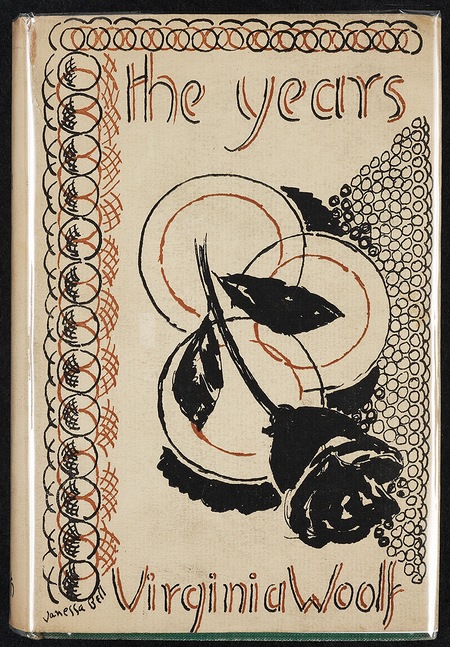 In many ways the first month of term is deceptively simple: things are heating up now, for us and for our students, as assignments begin to come due. After a fairly dreary summer, though, when the days often seemed to drag on and on, I appreciate how much faster the time passes when there’s a lot to do and I’m making myself useful (or so I hope) to other people. I also decided to put my name on the list for our departmental speaker series, to make sure the work I did over the summer didn’t go to waste, so I will wrap up this week by presenting my paper “‘Feeble Twaddle’: Failure, Form, and Purpose in Virginia Woolf’s The Years.” Wish me luck! It has been a long time since I did this exact thing; in fact, I believe the last presentation I made to my colleagues was about academic blogging, more than a decade ago. I have given conference papers and other public presentations since then: I haven’t just been talking to myself—and you—here, I promise! But I haven’t felt that I was doing work that fit very well into this series, which for related reasons I haven’t attended regularly for many years. I made a vow to engage more with my department and my colleagues this year, though, and so I’m going to the talks as well as giving my own. This is one result of my recent reflections on what I want this last stage of my professional life to be like: difficult as it still sometimes is for me to do this, I want to be present for it, if that makes any sense.
And that’s where things are at the moment, after the first month back in my classes. I probably shouldn’t make any promises about returning to the kind of regular updates I used to make to this series, but as always, I have found the exercise of writing this stuff up both fun and helpful—that hasn’t changed since I reflected on my first year of blogging my teaching. It’s a bit like exercise, I guess: if you can just get past the inertia, you feel better for doing it! We’ll see if that’s motivation enough.
 Novel Readings
As one who studied literature as an undergraduate in The Olden Days, I think that much has been lost so I share your nostalgia. I think I was immeasurably enriched by the courses I took, and I know now how lucky I was.
Still it’s good to hear that enrolments are holding up and that you’re enjoying yourself teaching them. Sometimes, when your personal life seems a mess, work can be a balm. I hope it is for you.
LikeLike
I hope your ‘Feeble Twaddle’ paper will be available somewhere outside of your department’s walls. It sounds brave and fascinating.
LikeLike
Thank you! I am certainly nervous about how it will be received by the experts in the room on Modernism. You can get the gist of it from this blog post – older now than seems possible. I have been trying to formalize and elaborate on these ideas off and on since then, but my basic “take” on The Years has not really changed.
https://rohanmaitzen.com/2019/06/04/the-years-woolfs-interesting-failure/
LikeLike