 Book blogging was easier, somehow, when I just wrote up every book I read as soon as I finished it. I was so much busier in other respects when I adopted that habit: looking back, I have now idea how I found the time for it. But one plausible theory is that I saved a lot of time not dithering about blogging! Just do it – good advice for so many things, including writing.
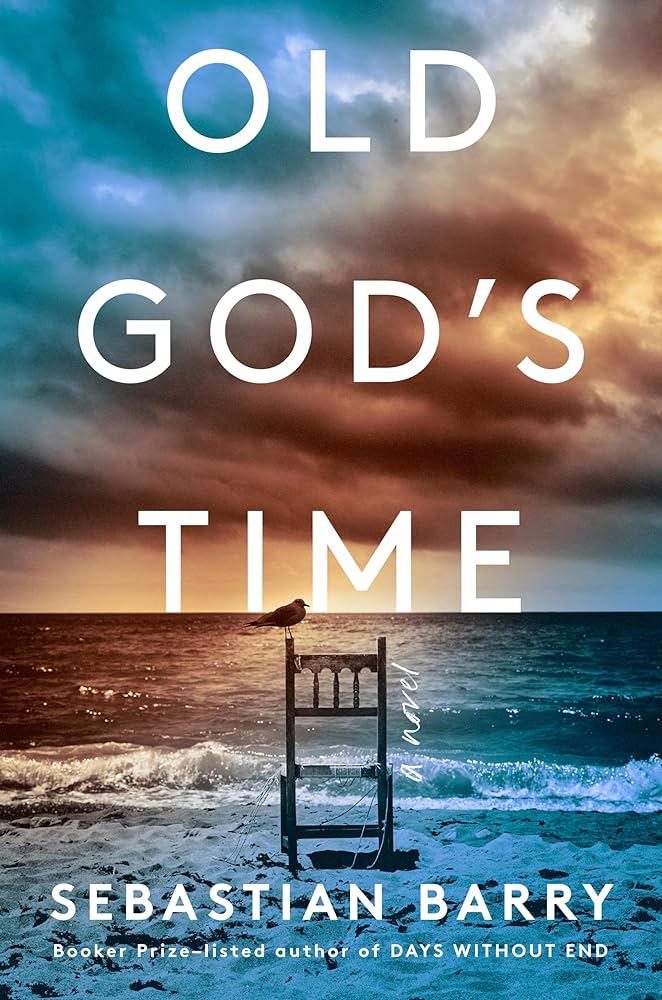
So. I have read five books so far this month. Two of them were really good: Zola’s La Bête Humaine, which is “good” in the sense that it does what it sets out to do really well, and Sebastian Barry’s Old God’s Time, which is grim and sad but also beautiful in that way a lot of Irish novels are.
I kind of hated reading La Bête Humaine, though it was very gripping and once I started I didn’t want to stop. (It goes by quite quickly because so much bad stuff is happening that you are propelled onward by an unpleasant mingling of curiosity and dread.) The only other Zola I’ve read is Germinal and that was a long (long!) time ago. I remember its being pretty rough, but I don’t recall that it was as histrionic, violent, or pessimistic (about everything – humanity, society, the law, men, women, you name it!) as La Bête Humaine, which is like a Dickens novel in which every character is as awful as . . . actually, I can’t really think of a Dickens character, however unpleasant, who would be at home in the world of this particular Zola novel. And when Dickens gives us brutality, he also always gives us tenderness: A Tale of Two Cities may be his most violent novel overall, for instance, and it has one of his most beautiful, redemptive endings. This is definitely not part of Zola’s vision of the world. A good (meaning, not terrible) moment in La Bête Humaine would be one where one of its murderous characters actually manages not to murder someone, as here:
So it had happened – he had possessed Severine and had not taken the hammer to smash her skull. She was his and there had been no struggle, none of that instinctive desire to throw her on her back dead, like some trophy snatched from others . . . It was with loving gratitude and a desire to be lost in her that he took her again into his arms.
Ah, young love, right?
 The novel’s non-stop melodrama is in service of a worldview, or an idea about human desires and instincts. I think possibly this sentence is key: “The door of terror opened over the black chasm of sex, love even unto death, destruction for fuller possession.” I hope the One Bright Pod folks (whose fault it is that I read this) will tell me if there is some kind of link to D. H. Lawrence here: it seems so to me, but I don’t know Lawrence well enough to be sure. I also hope they talk about what trains signify and how they are used in the novel. They are clearly (I think) symbols of modernity, but there is a lot more going on with them, especially the engine personified by one of the characters as a woman (“she” is perhaps his most genuinely caring relationship). Once I’d
 freed myself from finished the novel, I couldn’t bring myself to linger long enough over it to think things through. That’s what smart friends with podcasts are for!
I felt a bit of resistance to Old God’s Time by the end too, though it is so melancholy and the writing is so evocative (and also evasive and unreliable) that I enjoyed it much more. But is there a risk, maybe, in making all sad stories turn out to be about the priests? Every such story is different, sad in its own way, but it’s hard not to find something predictable about the revelations. This was the first of Barry’s novels that I’d read: I don’t know if its subject is a typical one for him.
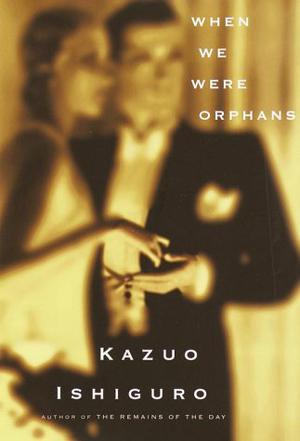 The other three books I’ve finished are Mollie Keane’s Good Behaviour (didn’t much like it, though I could see how skillful it is), Kazuo Ishiguro’s When We Were Orphans (found it boring even though I knew he was doing his withholding / unreliable narrator trick again so I knew that if I only understood what lay beneath the boring layer, it would be much more interesting – this is a risk he takes repeatedly, as I discussed in my post on re-reading Never Let Me Go, but there I think the payoff was much greater, although I did not read When We Were Orphans attentively enough to be certain), and Joan Thomas’s Wild Hope (which recently was nominated for a Canadian crime fiction award, raising my own hope that it might be that elusive thing, a Canadian crime novel I am keen to assign in my detective fiction class – but no, it is too much “fiction” and not enough “crime,” and qua novel it didn’t really excite me).
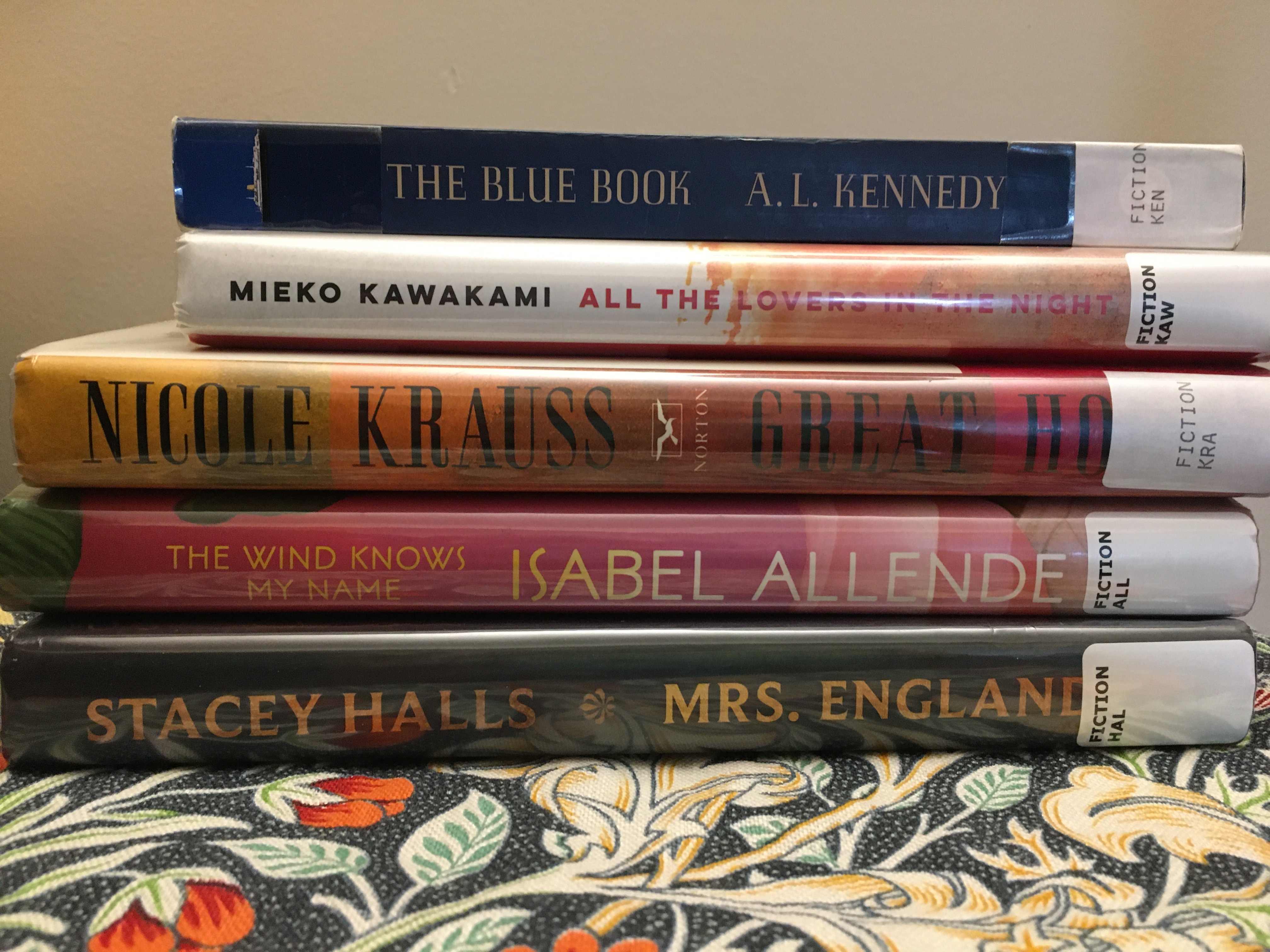 What’s next, you wonder? Maybe Celeste Ng’s Our Missing Hearts, which I picked up recently with a birthday gift card (thank you!), or something from my miscellaneous stack of library books. Living so close to the public library has made me pretty casual about taking things out that I may or may not commit to reading: I like having options! (If there’s anything there you think I should definitely try, let me know.) I also have Cold Comfort Farm to hand, which was my ‘Independent Bookstore Day’ treat – but I’m saving it to read on the plane when I go to Vancouver in a couple of weeks.
 Novel Readings
Oh my goodness, are you about to read Cold Comfort Farm for the first time?? If so, I offer my hearty congratulations!
LikeLike
I was surprised by how much I enjoyed reading Our Missing Hearts.
LikeLike
Your first time with Cold Comfort Farm, truly? Enjoy: now’s there a Lawrencian pastiche for you!
LikeLike
I remember the days (at the start of my blogging career) when I forced myself to write a review of the book I’d just finished before I was allowed to start another one. Cruel, of course, but it certainly focused me on getting the post done!
As for the Ishiguro, well, I was slightly more favourably disposed towards it 😉
https://tonysreadinglist.wordpress.com/2022/06/23/when-we-were-orphans-by-kazuo-ishiguro-review/
LikeLike
Thank you for the link. That’s a very convincing account of the novel. I wish I had been able to read it that intelligently.
LikeLiked by 1 person
I think I wrote that during a period of multiple Ishiguro reads, which made it easier to compare them 🙂
LikeLike