This negligible bit of me—long a minor distraction—had come to exert a disproportionate claim upon my attention. But I was fond of it—protective, even, for were it a person, it would be given to ecstatic leapings from the nearest precipice. Fond? I loved it. It was part of me, yet separate too, like an external little beating heart—nay, like another self; as if within it lay a little mind and soul and history . . .
Of the two neo-Victorian novels I’ve read this month, Zadie Smith’s The Fraud and Ann-Marie MacDonald’s Fayne, I much preferred MacDonald’s: from start to finish, it was just a lot more fun, and though of course it’s possible I underestimate Smith’s novel, Fayne also struck me as being much richer, in ideas and in its expression of them. It’s also a bit messier, aesthetically and maybe also thematically: I relished MacDonald’s scene setting, redolent of the Gothic and sensation fiction that are clearly her inspirations, and she pulls off a lot of the suspense elements as well, but by the end I felt like she was checking off an overly-long list of “things I wanted to include in this novel” and what had been an engrossing reading experience rather fizzled out. But The Fraud at best interested me and at worst bored and puzzled—even annoyed—me, with its fragmentary structure and the absence of unifying significance at its heart. I’d rather read something that errs in MacDonald’s style.
There really is a lot going on in Fayne. Just to sketch out the essentials, it is basically two stories told in counterpoint, that of Charlotte Bell, only daughter of the reclusive Lord Henry Bell, and her mother Marie, who died (or so Charlotte believes) soon after giving birth to Charlotte. Charlotte had a brother, too (or so she believes—it’s that kind of novel!), named Charles, who died when he was only two. Charlotte is precocious and thrives when her father unexpectedly hires a tutor for her; they determine to prepare her for the entrance examination for the University of Edinburgh, but her academic ambitions are derailed when her father suddenly dismisses her tutor and takes her to Edinburgh to be treated for the mysterious “condition” that has justified their isolated lifestyle to that point. Charlotte doesn’t know this, but the real issue is what she fondly calls “Prickle”: she has always taken Prickle for granted as part of her female anatomy, only learning otherwise when a friend, seeing her naked, tells her otherwise.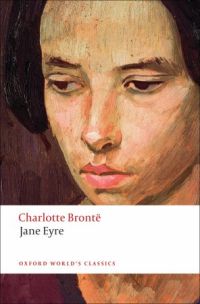
We understand the truth much sooner than Charlotte does, and much more clearly than most of the novel’s characters do—or at any rate, we have better vocabulary now to explain it than they do: Charlotte is an intersex character, born with traits that don’t neatly correspond to a male – female binary. When she is born, she is taken to be a boy, but then discovered to have what the Bells’ doctor calls “a monstrous clitoris,” not a penis, as well as a “feminine genital suite.” Their doctor declares it a case of “pseudo-hermaphroditism”; all the shocked parents understand is that their son is, or should be (according to the doctor) considered and raised as a daughter.
The confusion around Charlotte’s gender identity is the crux of the many plot strands in the novel, which all in various ways revolve around what it meant to “be” a man or a woman in its world—from differences in upbringing and education to issues of marital and property rights, from sexual experiences and romantic relationships to medical treatment and professional opportunities. I think it is not a spoiler to say clearly (because I thought it was pretty obvious from very early in the novel) that Charlotte began her life as Charles. Though it is with the best intentions that Henry Bell undertakes to transform his child unequivocally into Charlotte, even as other characters (with some devastating consequences) prove unable to accept the resulting erasure (as they see it) of Charles, the novel makes it clear that both sides are wrong to insist that these identities are incompatible or mutually exclusive—or that characteristics or personalities can and should conform to narrowly defined notions of masculinity or femininity. To give one specific example from the novel, after Charlotte is “treated” by having Prickle surgically removed, her father is assured that her intellectual aspirations will fade away provided he also does his part to shut them down by constraining her to ladylike activities.
 To anyone familiar with the rigid strictures women faced in the 19th-century, some aspects of Fayne will be predictable, even with the device of an intersex character to subvert the binaries they were based on. Fayne succeeds because MacDonald is a fine storyteller who has more to say than “the times were unfair to women,” or maybe more accurately more she wants to do than just offer this critique (which is not to say it’s not an important critique, or that through the character of Charles / Charlotte she doesn’t extend it significantly). Everything about Fayne suggests that MacDonald wants to have fun as a novelist by writing an unabashedly melodramatic novel with her own variations on the kinds of twists and surprises we get in Gothic or sensation fiction: mistaken or secret identities, false confinements, drugs, sexual secrets, lost heirs, treachery and deceptions of all kinds—but also true-hearted friends and allies pointing the way towards solutions to these mysteries and towards a future in which the people we come to care for will be safe and happy. Overall, it works! It is fun, gripping, surprising, infuriating, and often touching. And, not incidentally, Charlotte herself is a fine addition to the list of 19th-century literary heroines who put up lively resistance to oppressive norms: Jane Eyre, Maggie Tulliver, and Marion Halcombe, for starters. There are many moments in Fayne that are clearly nods to Charlotte’s rebellious predecessors.
About half way into Fayne I did start to worry that the novel was too long: would it be good enough to sustain me through all of its 720 pages? It almost was, especially as more and more actually started to happen. But I found the last 50 or so pages disappointing: they read almost as if the novel had been intended to be another 200 pages long but MacDonald decided (or was told) to wrap it up so she whisked us through the remaining developments, adding to them, also, what struck me anyway as an unnecessary supernatural or preternatural element, and then ending on a didactic, almost prophetic note. Perhaps it was important to MacDonald’s project that she bring her 19th-century story forward to the present day; maybe she felt it needed to seem less like a historical curiosity and more like a contemporary commentary. I think readers can make those kinds of connections themselves: the premise of Fayne alone is enough to make us aware that we are reading an intervention into our historical and literary ideas about the 19th century, one that has special urgency because its questions about why it should matter so much to anyone whether a child identifies as, or is identified as, a boy or a girl—why the possibility that there are other options should spark so much hate and fear—are so politically fraught today.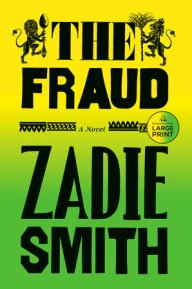
But no lover of actual Victorian novels can be too picky about some excesses or spillage in the writing of a neo-Victorian novel: the irrepressibility of Fayne is what is most truly Victorian about it, and that sense that there’s just something irresistible about the whole exercise to the author herself is what, for me, is missing from The Fraud. I didn’t dislike The Fraud, but I’ll take a novel that’s a headlong rush into a bit of a mess over a novel that’s finely crafted but without heart any day. The very best writers (or, my very favorite writers, anyway) satisfy on both counts, of course!
 Novel Readings
Your perspective is so interesting because I’ve heard Smith’s novel praised to high heaven in so many places. On the whole though, from the sounds of both novels, I’d rather read Jane Eyre, or *gasp* even Dickens. Hope your next read is as entertaining!
LikeLiked by 1 person
Really, I always feel the same about neo-Victorian fiction, with the exception of Sarah Waters: I’d rather read the “real” thing! But this was a very enjoyable book. I have never loved any novel I’ve read by Zadie Smith but The Fraud seemed so promising. It’s not bad; it just left me unmoved, as a reader.
LikeLike
Yes to Sarah Waters, but then, she’s not trying anything, is she? She’s so uniquely herself as a writer. You never get a sense of any creaky plans being worked out, or through. There’s something about these attempts that fail, I think: I mean who can forget the monstrosity of The French Lieutenant’s Woman, or the gargantuan goes-nowhere by the end of The Crimson Petal and the White. I also really disliked Perry’s bizarre and pointless Essex Serpent.
I heard on a podcast recently, maybe the one that loved The Fraud, that Smith’s problem with her fiction is that she’s too good a literary critic, too perceptive, to write good fiction…until The Fraud. I haven’t read her to be able to say, but I thought it an interesting comment.
LikeLike
I remember liking The Crimson Petal and the White but it was soooo long ago! I agree about The Essex Serpent, but I loved Melmoth.
LikeLike
I read on two plane rides to Calgary and back, the Petals that is. I was so nonplussed by Serpent, I didn’t want to even try Melmoth. In any case, she has a new one coming out.
LikeLike