Reading
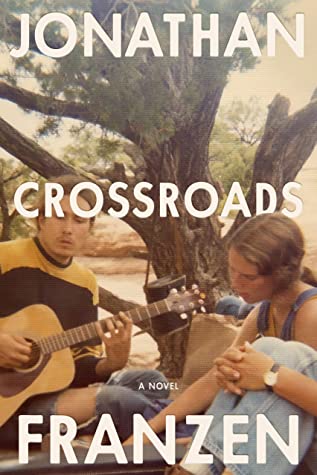
 It took some effort and some strategic skimming, but I made it to the end of Jonathan Franzen’s Crossroads. There’s a lot of it – but that wouldn’t have been a problem if I had felt there was more to it. What was all that accumulated information for, in the end? What comes of it? What are we left thinking about, after wading through so much detail about people who are by and large quite unsympathetic and disappointingly static? I was never exactly bored, but I was also completely unable to get my bearings at anything but the most literal level. But a lot of astute critics loved the novel (that’s one reason I bought it, after not having read anything by Franzen since The Corrections) so as always we are left with the great mystery of reading, the inexplicable idiosyncrasy of it all.
Now I’m reading Graeme Macrae Burnet’s Case Study. I think it first caught my eye because it was on the Booker longlist. Then I read something else about it somewhere – now I can’t remember exactly what or where (typical of me these days, I’m sorry to say) that sharpened my interest enough that I went ahead and procured it. I’m engaged but not engrossed so far; we’ll see how it goes. I reviewed Burnet’s earlier novel His Bloody Project for Open Letters Monthly a few years ago and concluded it was “not wholly satisfying.” It too was a compilation of purported source documents; my main complaint (besides the voices being insufficiently distinct and exciting) was that it lacked a unifying idea about its elements. Maybe this should have discouraged me from trying another novel by the same author in so similar a vein, but Case Study seems tauter so far. I’ll see. If I can just concentrate on it long enough to read to the end, that in itself will be a mark in its favor.
Update: I did read Case Study to the end, and stayed interested in it the whole time. Success, then! I am not sure I read it in a suspicious enough way: I found the ending curiously anticlimactic and it was only on peering at some reviews that I started to think about more layers of unreliability and thus interpretation than had occurred to me on my own. Curiosity, too, rather than emotional engagement, was my main feeling as I read: I wanted to see how the elements were going to come together, and what they were going to mean, but I wasn’t particularly invested in the outcome otherwise. It’s a clever book, maybe too clever for a reader like me whose first instinct, at some level, is to give myself over to the fiction, rather than to mistrust every move.*
 Also on my TBR pile are Ian McEwan’s Lessons, which my book club is doing next and Anthony Doerr’s Cloud Cuckoo Land, which a member of my book club talked about in such an interesting way at our last meeting that it inspired me to pick it up. I’m stalled about a third of the way into Andrew Greig’s Rose Nicolson, and keep looking at but not actually starting Nicola Griffith’s Spear. I feel as if I keep picking the wrong books, as if my reading radar is malfunctioning. For this reason I am suppressing my urge to rush out and buy Barbara Kingsolver’s Demon Copperhead, even though everything I’ve heard about it so far makes it sound very tempting. Or maybe my “bandwidth,” as we like to call it nowadays, is just overwhelmed by the combination of work (which of course includes a lot of reading) and grief.
Reflections
 Today is exactly one year since Owen moved back in with us, for what was meant to be a restorative stop-gap measure while we sorted out his next steps. The onset of fall weather, with its crisp sunshine and bright colours, has intensified the feeling I’ve talked about before of time coming somehow full circle: the intervening months have been so strange, so foggy and disoriented, and the events of this time last year are still so immediate and vivid in my mind, that it is almost easier to believe I am still there, in November 2021, than here, helplessly reaching back to that hopeful reunion across the unfathomable chasm Owen’s death created in my life and my memories. But I’m not there, of course, but here, and soon there will be other, even harder, markers of the relentless way time puts more and more distance between us. I think often of Denise Riley’s comment that “the dead slip away, as we realize that we have unwillingly left them behind in their timelessness.” Current wisdom is that grief is best treated by finding ways to continue our relationships with those we have lost. It is an ongoing struggle, for me, to understand what that means in practice, although I am learning that it includes grief itself, which for now at least is the truest expression of my ongoing love for my son. Its pain is no less fierce now, but it is at least more familiar.
These lines by Philip Larkin capture so well what it feels like to live with sorrow, sometimes sitting quietly with it but sometimes sensing it stir, or stirring it yourself, so that it flares up once more, rending your heart. I know a lot of you live this way too.
If grief could burn out
Like a sunken coal,
The heart would rest quiet,
The unrent soul
Be still as a veil;
But I have watched all night
The fire grow silent,
The grey ash soft:
And I stir the stubborn flint
The flames have left,
And grief stirs, and the deft
Heart lies impotent.
* One of the challenges of a novel like Case Study for me is that, deliberately, we are discouraged from accepting any of it as sincere. And yet in the midst of it, there was a passage – narrated by a character we can’t trust, about someone who by the end of the novel I’m not 100% sure ever actually existed within its fictional space – that hit very hard:
Then something else occurred. One evening, as we sat at supper, I turned to the place Veronica had lately occupied and was about to say something to her, before I checked myself. For the first time, I keenly felt her absence. From that moment, I saw her death in a different light. There was a Veronica-sized void in the world. As well as her physical presence, the contents of her mind were gone. The question I had been about to ask would never be answered. Everything she had learned, the memories she had accumulated, her future thoughts and actions had all been snuffed out. The world was diminished by her non-existence.
In the novel, this moment is either poignant autobiography or strategically affecting fantasy (or, perhaps, sadly troubling delusion). Whichever of these it is meant as, it’s also, in its own way, truthful, as are many of Burnet’s remarks – off-hand though they seem – about suicide and “dark thoughts.”

 I won’t rehearse the details of the novel except to say (for those who haven’t encountered it or anything about it yet) that it follows a cluster of characters widely separated by time and place: in 15th-century Constantinople, a boy and a girl from two different, antagonistic worlds—both in their own way dreamers—cross paths and find fellowship; in 20th-century Idaho, the lives of an angry boy and an old man unexpectedly converge, their two forms of idealism colliding, with unintended consequences; in a remote future, young Konstance lives a surreal existence aboard a hermetically sealed spacecraft. The novel moves each plot forward a step at a time, orchestrating them with delicate precision. The novel overall is organized around fragments of a “lost” ancient text, The Wonders Beyond Thule by Antonius Diogenes, which plays a key role in each plot as well as providing imagery and inspiration for the novel as a whole.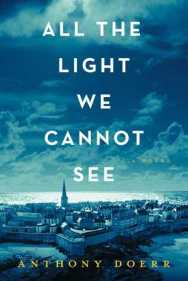

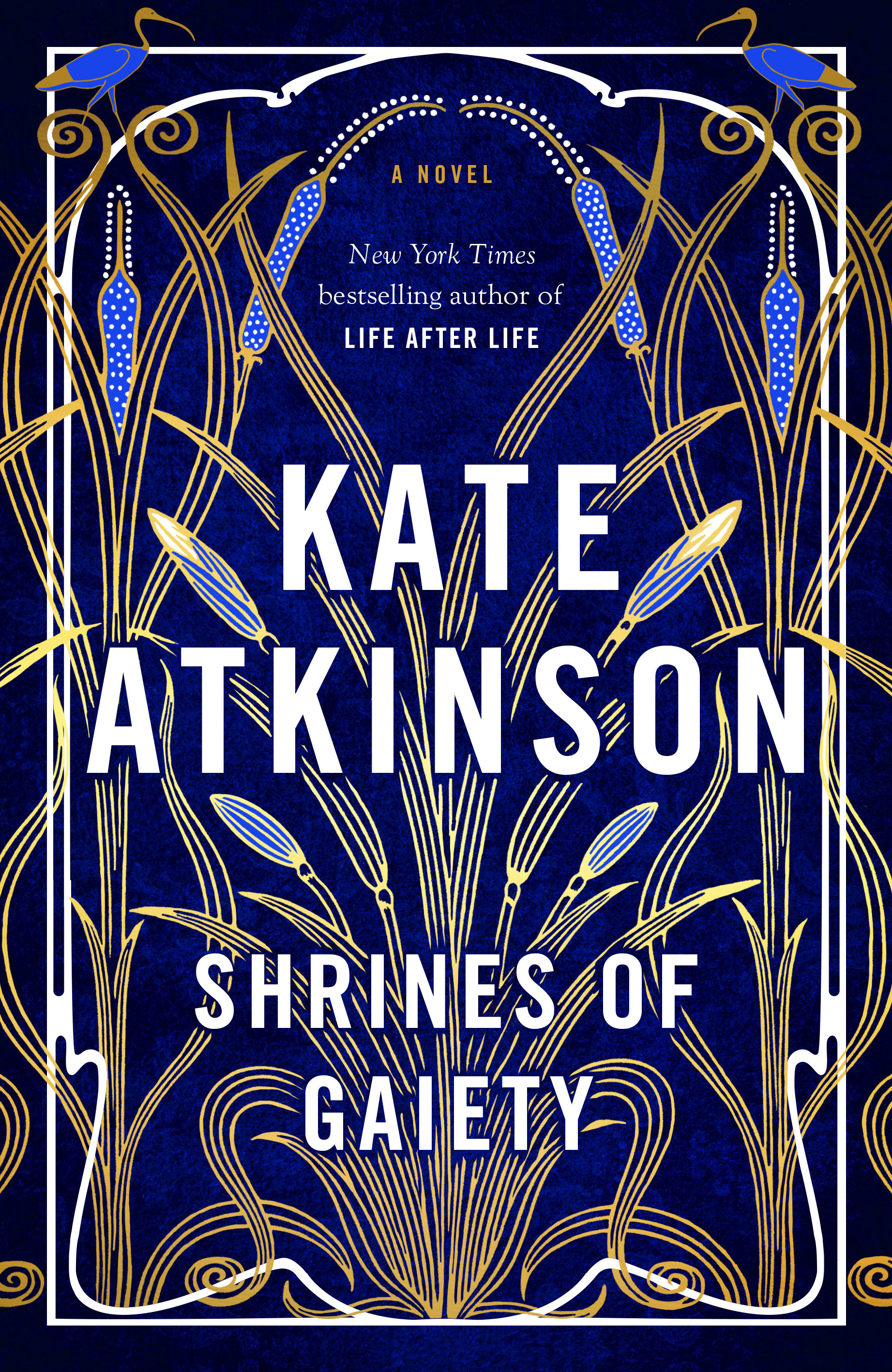 October was a terrible reading month for me. I didn’t even start many books, much less finish them. A last minute push (and, I’ll admit, a bit of fed-up skimming) got me to the end of Kate Atkinson’s Shrines of Gaiety, which I had acquired precisely because I figured that, whatever gripes I have had in the past with her
 In 19th-Century Fiction we have been working on Middlemarch for a couple of weeks. I wish I could say it is going well. I don’t think it’s going badly exactly, but honestly this term I don’t really know. Attendance is just appalling: most days, maybe 60% of the class shows up, which is unprecedented, in my fairly long experience. I don’t know what to make of this. I know it’s not personal, or at least I’m trying not to take it personally, but that doesn’t make it any less disheartening. The students who are present are pretty quiet; I think – I hope – they are engaged, but much of the time it’s hard to tell, and I worry that at this point I am mostly performing enthusiasm, not eliciting it. The ones who do speak up have good things to say, but I’m not used to having to work so hard to get anything out of the class, to get any energy back from them. I’m going to keep trying! The ones who are showing up deserve no less, and I remain hopeful that between us we can and will make the most of this opportunity to read this great novel together.
 Novel Readings