Maybe it had something to do with my footwear, but this time it was fireworks, what A. S. Byatt calls “the kick galvanic.” It reminded me that all of art rests in the gap between that which is aesthetically pleasing and that which truly captivates you. And that the tiniest thing can make the difference.
Optic Nerve is a generic hybrid: part memoir, or perhaps (as it’s subtitled “A Novel”) what we now call “auto-fiction”; part personal essays (or is that aspect intrinsic to the concept of auto-fiction?); part art history; part art criticism (or at any rate part commentary on art).
I had trouble, as a reader, unifying these parts. I found many–though not all–of the personal and family anecdotes interesting and most–though still not all–of the explorations of particular artists and their works engrossing and thought-provoking. I liked the surprises that so many of Gainza’s stories, about herself or about art, delivered; I liked the sense that we were wandering through a kind of gallery of her life that in its turn had doors that opened onto the lives of artists.
What I liked best was the way she showed me paintings. I frequently wished the book included color plates so I could see for myself, so that I could try looking at them through the lens of her writing. Happily, of course, having the internet at my fingertips made it easy to supplement the prose with the visuals, but it didn’t seem ideal to have to take my attention away from the book to do that. I wonder why it wasn’t possible to open each chapter with an illustration: would it have been too expensive – for the publisher and thus the potential purchasers of the book? or is there some way in which the book does not want us to do this?
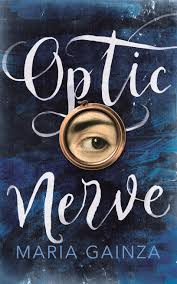 What I didn’t like: Optic Nerve felt really miscellaneous. Its unifying force is Gainza herself, or the narrating version of her, I suppose, but I often found myself puzzled over what else bound together the specific elements she included in each chapter. Sometimes I could see it, or sense it (the chapter about her brother and El Greco, for instance, which turned on ideas about religion, and – I think – on tensions between ascetism and sensuality), but most of the time it seemed random. Was I not reading or thinking hard enough, or was that fragmentation deliberate? Maybe the idea was precisely to scatter our focus, or to reflect the ways our lives are not in fact neatly organized around common themes–or to match her commentary on art, which emphasizes that we should, or always do, feel first and think later. I would have liked a bit of guidance about this from the book itself.
Two chapters – or, really, two painters – made the strongest impression: they are the ones I couldn’t read more about without an image search. In both cases it was because of how Gainza wrote about their paintings. Here she is on Courbet’s The Stormy Sea (Mer orageuse):
A foamy roller breaks against rocks in the foreground; at the horizon, the sea and sky meld into one; and in the top half of the picture the sky is packed with bulging pinkish clouds. This oil on canvas from 1869 is close to one meter high and one meter wide, just right to hang on my chimney breast, if I had one. How lovely it would be to watch a fire burning beneath such a sea! Every time I look at it, something inside me becomes compressed, a sensation between my chest and my throat, like a small bite being taken out of me. I have learned to respect this twinge, to pay attention to it, because my body always works things out before I do. Only afterward does my intellect draw its conclusions.

Here is some of what she says about Rothko:
People say you have to approach a Rothko in the same way you approach a sunrise. The work has a clear beauty, but that beauty can be either sublime or decorative . . . Perhaps there is something spiritual in the experience of looking at a Rothko, but it’s the kind of spiritual that resists description: like seeing a glacier, or crossing a desert. Rarely do the inadequacies of language become so patently obvious. Standing before a Rothko, you might reach for something meaningful to say, only to end up talking nonsense. All you really want to say is “fuck me.”

One more sample, from the section on El Greco:
One winter’s night, an icy wind began to blow through his paintings. The space inside them grew constricted, and his figures, as if to adapt to these new climes, hollowed themselves out and lengthened upward.
Optic Nerve is not the kind of book I usually seek out, and the discomfort I felt with its form (or formlessness) confirmed my typical hesitation. I liked these passages (and others) so much, though, that reading this book also made me think I should overcome those hesitations more often–that I should take more reading risks. It’s true that some of my best reading experiences have been with books that are not at all, at least at first glance, my usual kind of thing (Molly Peacock’s The Paper Garden, for example–I still don’t really understand why I felt such a strong compulsion to buy it!). On the other hand, my irritation when I take a risk and hate the result is immense! That perpetual struggle to weigh risk and reward is one reason the Rothko chapter affected me so much. His is exactly the kind of painting I ordinarily have no time for, but Gainza made me really want to look at it–she made me want to go to MOMA or the Tate and stare at the real thing, wish that I could have gone to the MFA in Boston to try their experiment in “seeking stillness.”
Maybe what I should really read is not more generically miscellaneous writing but more good art criticism–and yet what Optic Nerve proposes, or maybe proves, is that “good art criticism” is a function of the observer, that the optic nerve is part of the whole person. I may find the whole idea of auto-fiction both incoherent and solipsistic, but genre labels aside, in that respect at least Gainza’s book makes perfect sense.
 It’s not that I haven’t been reading. In fact, in the last couple of weeks I reread all three novels in Olivia Manning’s Balkan Trilogy, which is, cumulatively, over 900 pages. This is because I’m going to be writing up something about them for the TLS to mark the nice new reissues by Windmill Books. What exactly I’m going to say is something I’m still working out: the problem is not too few ideas but too many, given what strange and fascinating and provoking books these are. But because I have a formal writing project to do about them, I won’t be adding anything about them here. (I
  soon: the tl;dr version (though it’s actually quite a short review anyway!) is that they are good and have real historical and moral depth behind the genre-fiction surface, especially through the way their stories reach back to Hungary’s fascist and Soviet-dominated past. My mother kindly just shipped me her copy of Porter’s memoir The Storyteller, apparently out of print now, which I am looking forward to reading.
 I’ve done some other reading “just” for myself and it’s really here that I’ve felt that things are not going so smoothly. The books have been fine. Well, two of them have been fine: Jo Baker’s The Body Lies and Kate Clayborn’s Love At First. Baker’s is the next one we’ll be discussing in my book club: because we are all tired, stressed, and distracted, people wanted something plotty, and I took on the job of rounding up some crime fiction options that looked like they would also be “literary” enough for us to have something to talk about. I think we chose reasonably well with The Body Lies: it purports to be a novel about both violence against women and about how that violence is treated in so much crime fiction, meaning it has a metafictional aspect that adds interest beyond the novel’s own story. I finished it quickly, because I found it quite engrossing, so that’s a good sign in a way–but I also finished it unconvinced that it had avoided the trap of reproducing the things it aims to critique. I read it too soon, as we won’t be meeting up for a while, so I’ll have to reread at least part of it before our discussion to refresh my grasp of the particulars: I’ll come to that rereading with this question top of mind.
 I was really excited for the release of Love At First because I am a big fan of Clayborn’s previous novels: they are in the relatively small cluster of romance novels that I have appreciated more the more often I reread them (which in this case has been quite frequently), because she packs a lot into them. That complexity, which can make them seem a bit cluttered at first, turns out (for me at least) to give them more layers and more interest than I often find in recent examples of the genre, which are either too thin and formulaic to sustain my interest or try too obviously to check off too many boxes, making them read like they were designed by focus groups, rather than emerging in any way organically. I really enjoy the intense specificity of her characters and their lives, including their work, which she pays a lot of attention to (yay, neepery). I feel a bit deflated by Love At First, because it seemed – while both very sweet and very competently written and structured – a lot less interesting and a lot less intense than the others. For the first time reading Clayborn, I felt I was reading something almost generic: the story goes through the motions rather than jumping off the page. I’ll reread it eventually: maybe I will find more in it then. I did like it! But I had hoped to really love it, and I didn’t–at least not at first. 🙂
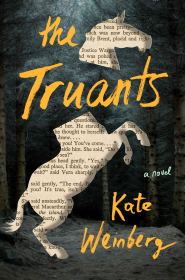 And speaking of books I don’t love, I have stalled half way through Kate Weinberg’s The Truants. It showed up on my radar around the same time I was looking into The Body Lies and they seemed so well paired that I ordered them both at the same time. Now I wonder what got into me: I started, hated, and quickly abandoned Donna Tartt’s The Secret History and everything about The Truants (including many of the blurbs!) signals that it is in the same vein. There’s nothing wrong with it qua book; it seems deft and clever and (like The Body Lies, but in a different way) it is also aiming at something metafictional through its engagement with Agatha Christie and ideas about how crime fiction works. But I can’t stand academic stories that turn on cults of personality around professors, which are creepy and and antithetical to everything I believe about teaching, not to mention about student-teacher relationships (hello, Dead Poets Society, which once upon a time I found enthralling but now consider kind of appalling). Also, while I try not to hold academic settings up to reductive standards of realism — and I’m also aware that I don’t understand the British system being portrayed very well, so I can’t actually be sure if I’m right when my reaction is “but this isn’t what we do!” — it gets distracting when the scenarios seem too far off. I have not so far managed to get genuinely interested in any of the characters, which means I keep not picking the book up to read further, which in turn means I’m also not picking up anything else because I feel as if I should finish it first. That’s a foolish “should,” I know, though I am by habit and on principle someone who does mostly try to finish the books I start, in case they get better or I figure out how to read them, both things that have happened often enough to make me hesitant to toss things aside. I’m not going to toss this one aside, or at any rate I’m not going to put it in my malingering “donate” stack (how I wish the book sale was once again able to accept donations, as this stack is getting kind of large!). Instead, I’m going to put it back on my Mysteries shelf and try it again another time.
 I think I need to read something richer and more challenging to turn things around — and to do that I need to stop making excuses about distractions or poor concentration. Reading, including reading well, is a decision we can make, I honestly think, and it’s not just that I feel disappointed in myself when I’m not doing it; it’s also that my life overall feels worse without it. One of my favorite quotations is from Carol Shields’ wonderful novel Unless: “This is why I read novels: so I can escape my own unrelenting monologue.” My current unrelenting monologue (like most people’s these days, I expect) is not a particularly sustaining one: I need reading to give me other stories to think about. I need blogging for the same reason, I find: it is still the only writing I do that feels genuinely my own. This is not by way of making some kind of bold resolution about either reading or blogging, but it actually helps just putting into words why I hope I will be doing more of both.
 As my ‘Victorian Woman Question’ seminar makes its way through The Mill on the Floss, I am very much missing the opportunity to engage in face to face discussion with everyone. It’s a novel that provokes delight, frustration, sorrow, and thought in so many ways–that raises so many complications for us, thematically and formally: it feels more difficult to choose topics and shape conversations for our online version of the class for The Mill on the Floss than it has felt for some of the other novels I have taught this way in the last few months, including (perhaps surprisingly) Middlemarch. But of course the novel itself is as wonderful as usual, and our readings for this past week included one of my favorite incidents: Mrs. Tulliver’s poignant attempt to hang on to her “chany.” It moved me even more this time: as the one-year anniversary of our COVID-inflicted isolation approaches, the things that connect us to each other and to our histories seem to me to be carrying more and more emotional weight. Here’s a post I wrote about Mrs. Tulliver’s “teraphim” almost a decade ago.
 One of the many things that make reading George Eliot at once so challenging and so satisfying is her resistance to simplicity–especially moral simplicity. It’s difficult to sit in judgment on her characters. For one thing, she’s usually not just one but two or three steps ahead: she’s seen and analyzed their flaws with emphatic clarity, but she’s also put them in context, explaining their histories and causes and effects and pointing out to us that we aren’t really that different ourselves. Often the characters themselves are in conflict over their failings (think Bulstrode), and when they’re not, at least they can be shaken out of them temporarily, swept into the stream of the novel’s moral current (think Rosamond, or in a different way, Hetty). But these are the more grandiose examples, the ones we know we have to struggle to understand and embrace with our moral theories. Her novels also feature pettier and often more comically imperfect characters who are more ineffectual than damaging, or whose flaws turn out, under the right circumstances, to be strengths. In The Mill on the Floss, Mrs Glegg is a good example of someone who comes through in the end, the staunch family pride that makes her annoyingly funny early on ultimately putting her on the right side in the conflict that tears the novel apart.
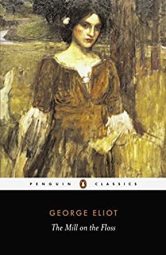 Then there’s her sister Bessy, Mrs Tulliver, who is easy to dismiss as foolish and weak, but to whom I have become increasingly sympathetic over the years. Mrs Tulliver is foolish and weak, but in her own way she cleaves to the same values as the novel overall: family and memory, the “twining” of our affections “round those old inferior things.” In class tomorrow we are moving through Books III and IV, in which the Tulliver family fortunes collapse, along with Mr Tulliver himself, and the relatives gather to see what’s to be done. The way the prosperous sisters patronize poor Bessy is as devastatingly revealing about them as it is crushing to her hopes that they’ll pitch in to keep some of her household goods from being put up to auction:
 Early in these scenes Maggie finds that her mother’s “reproaches against her father…neutralized all her pity for griefs about table-cloths and china”; the aunts and uncles are pitiless in their indifference to Bessy’s misplaced priorities. I used to find her pathetic clinging to these domestic trifles in the face of much graver difficulties just more evidence that she belonged to the “narrow, ugly, grovelling existence, which even calamity does not elevate”–the environment that surrounds Tom and Maggie, but especially Maggie, with “oppressive narrowness,” with eventually catastrophic results. She also seemed a specimen of the kind of shallow-minded, materialistic woman George Eliot’s heroines aspire not to be. But she’s not really materialistic and shallow. She doesn’t want the teapot because it’s silver: she wants it because it’s tangible evidence of her ties to her past, of the choices and commitments and loves and hopes that have made up her life and identity. She’s not really mourning the loss of her “chany” and table linens; she’s mourning her severance from her history.
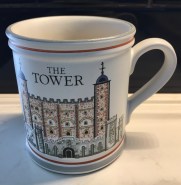 I think I understand her better than I used to, and feel more tolerant of her bewildered grief, because I have “teraphim,” or “household gods,” of my own, things that I would grieve the loss of quite out of proportion to their actual value. They are things that tie me, too, to my history, as well as to memories of people in my life. I have a teapot, for instance, that was my grandmother’s; every time I use it, or the small array of cups and saucers and plates that remain from the same set (my grandmother was hard on her dishes!) I think of her and feel more like my old self. I have a pair of Denby mugs that were gifts from my parents many years ago, tributes to my childhood fascination with English history: one has Hampton Court on it, the other, the Tower–these, too, have become talismanic, having survived multiple moves. If I dropped one, I’d be devastated, and not just because as far as we’ve ever been able to find out, they would be impossible to replace. “Very commonplace, even ugly, that furniture of our early home might look if it were put up to auction,” remarks the narrator with typical prescience, shortly before financial calamity hits the Tullivers, but there’s no special merit in “striving after something better and better” at the expense of “the loves and sanctities of our life,” with their “deep immovable roots in memory.” Sometimes a teapot is not just a teapot.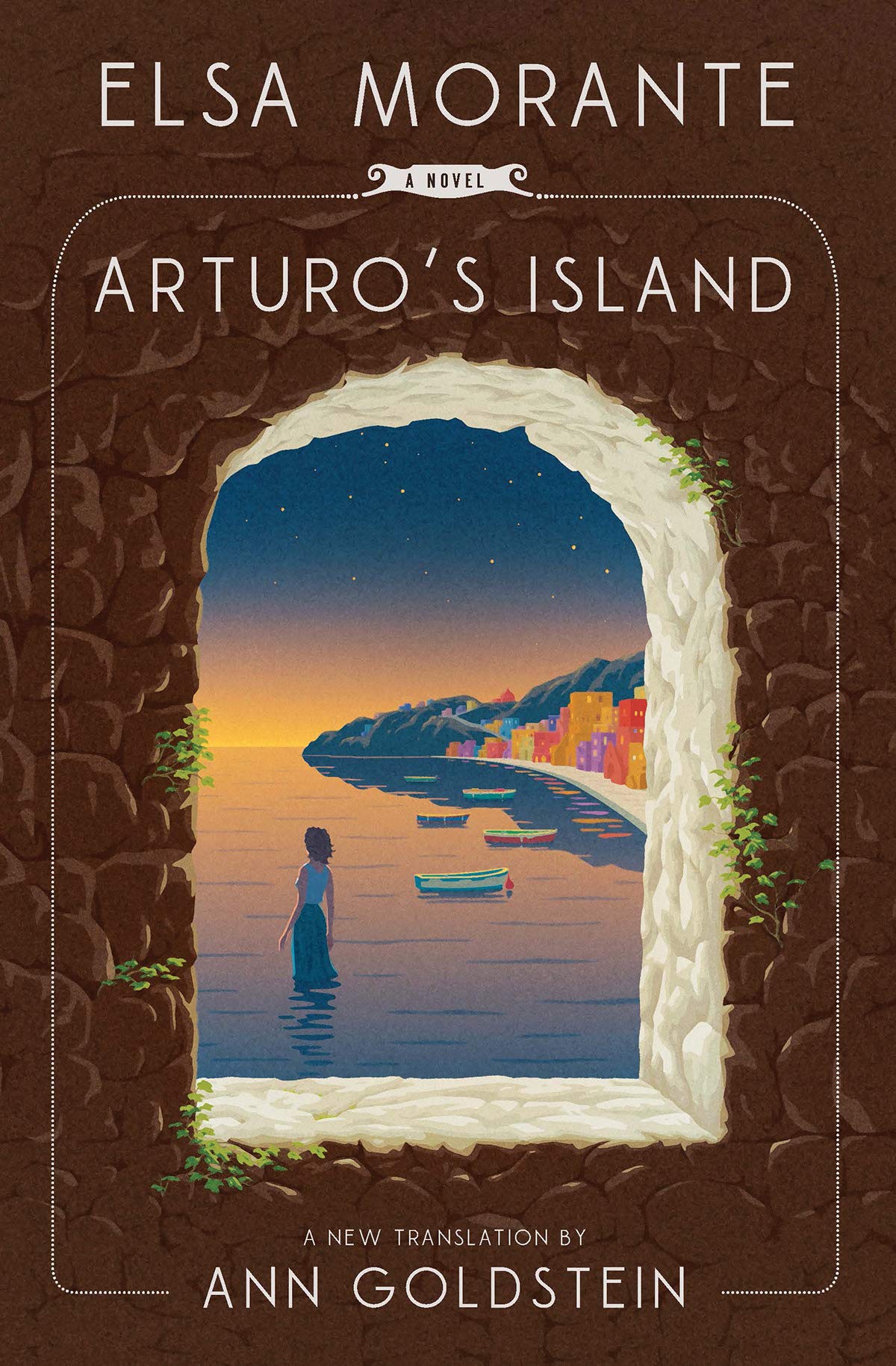
 We thought that absence of solace or redemption had to be deliberate: that Morante had to be setting us up to see how wrong Arturo is, and to infer explanations and justifications (perhaps) for his wrongness, without ever letting us escape from it. Assuming the goal was immersion, emotion, and discomfort (with a significant tincture of pity, because Arturo really has a pretty deprived and distorted life) it’s a novel that is very good by the Lewes Standard (matching means to ends, a measure of greatness I derive from GHL’s assertion that Austen was “the greatest artist that has ever written, using the term to signify the most perfect mastery over the means to her end”). There are some other good things about the novel, too. The descriptions of the island are full of vivid details, and you really get a strong sense of Arturo’s strange life there, running wild and shaping his own strange identity from his father’s books. It’s also (and again, we thought maybe this was purposeful) a powerful antidote to sentimental or picturesque notions of Italy: it makes sense to me that the novel as Elena Ferrante’s endorsement, as her novels too (IMHO etc.) are ugly and unsentimental and driven by raw emotion–and, as Arturo’s Island is (at least implicitly), highly critica of certain strains of macho Italian masculinity. No flowery Tuscan hills here; no operatic gorgeousness; no above all, no love.
 Novel Readings