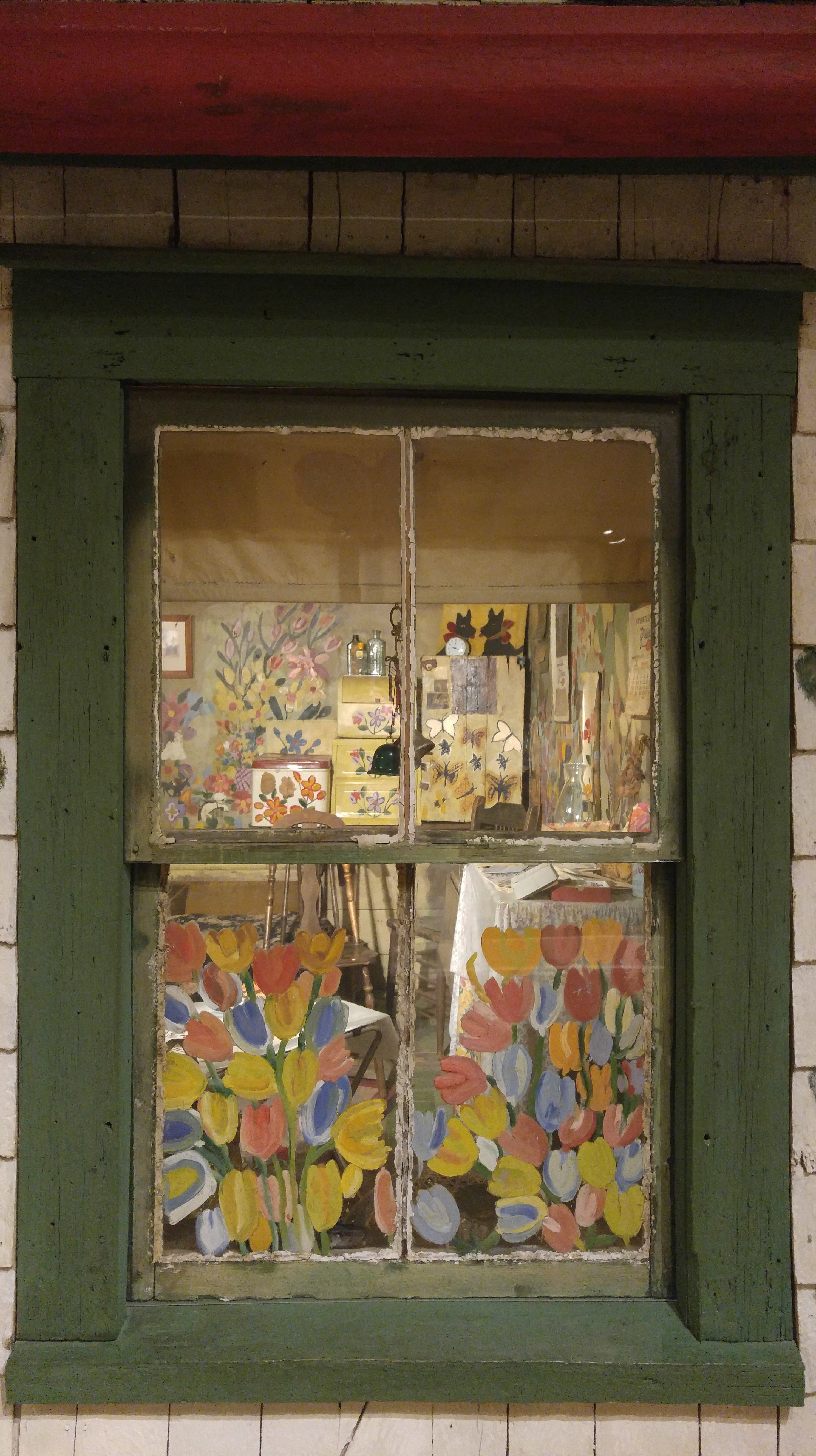
 We are enjoying a nice snow-free interlude in Halifax this weekend so I thought I should make the most of it and actually go do something today (besides the grocery shopping, which is my standard Saturday chore). I settled on a trip to the Art Gallery of Nova Scotia, where I haven’t been in many years.
The AGNS is probably best known (especially since the release of Maudie) for its Maud Lewis collection, which includes her improbably tiny and delightfully colorful house–yes, the entire house:
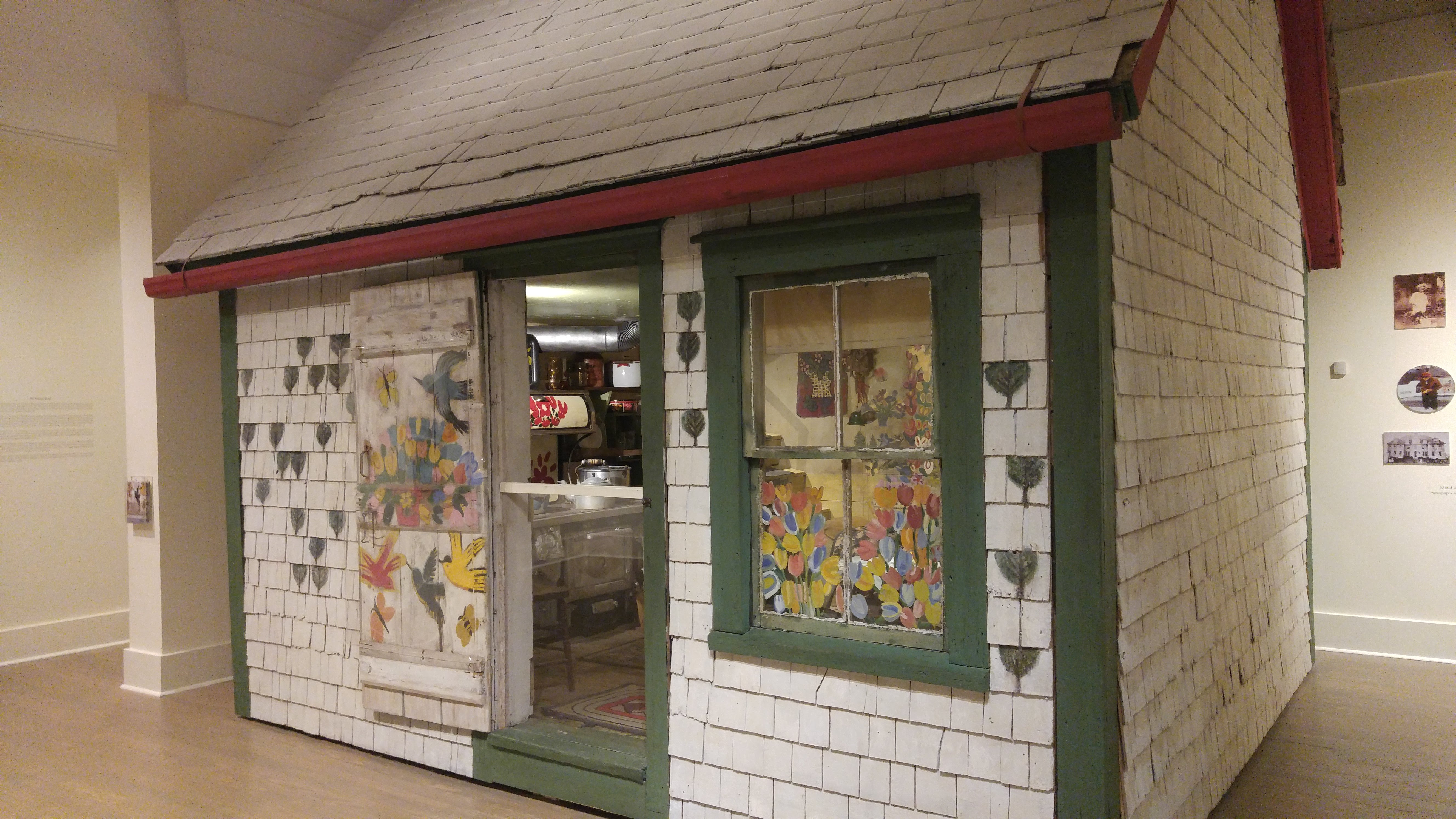
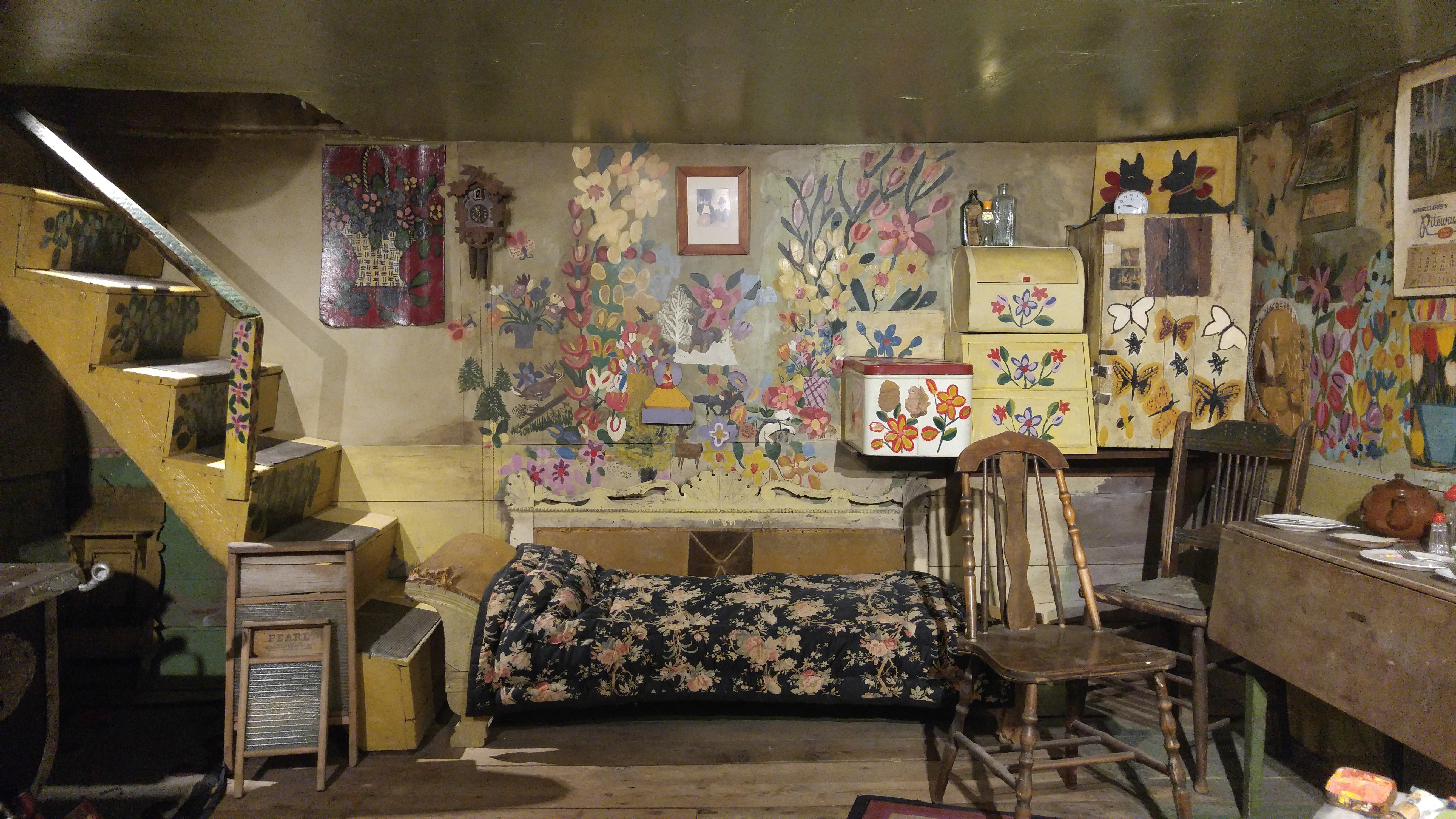
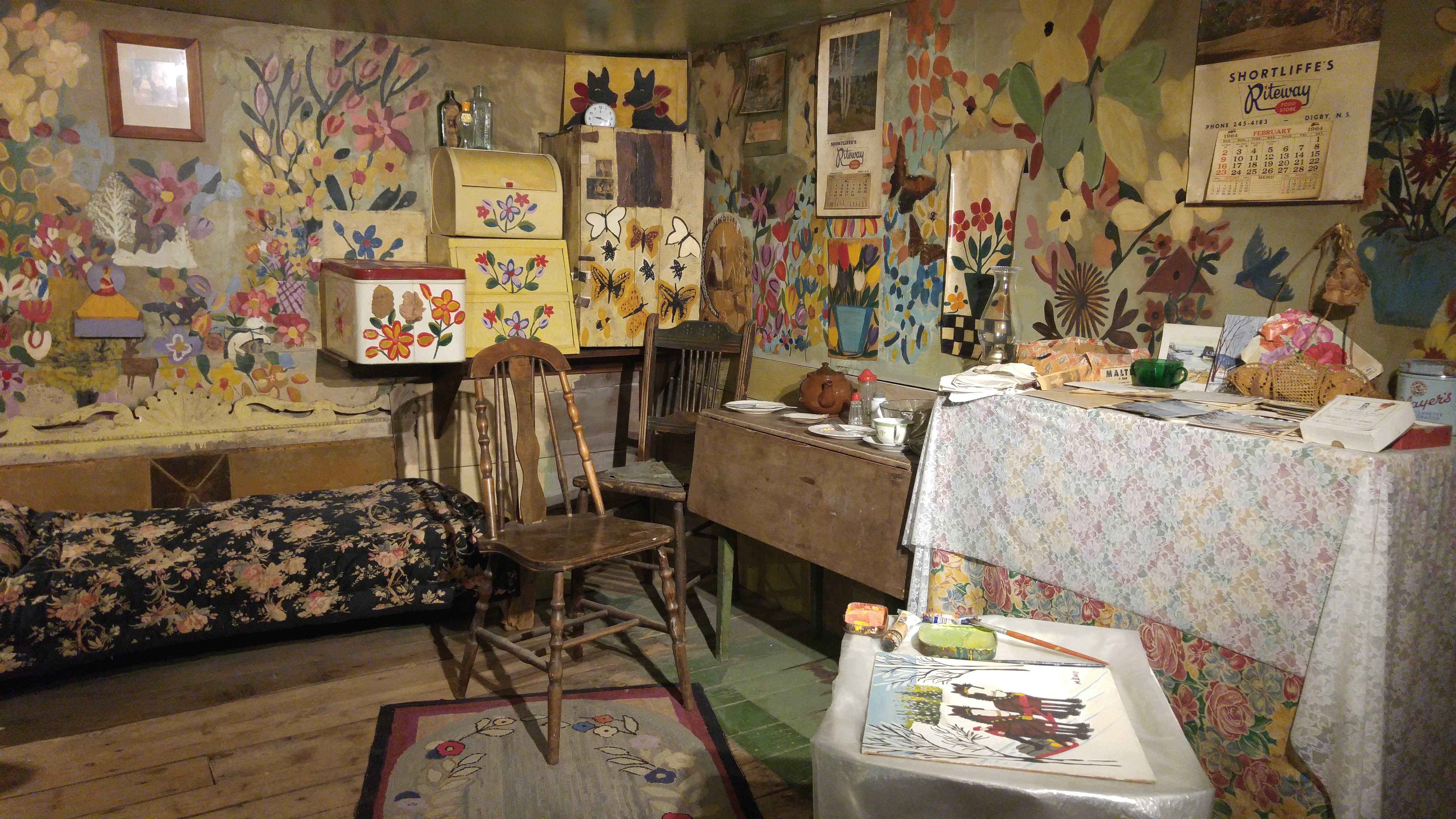
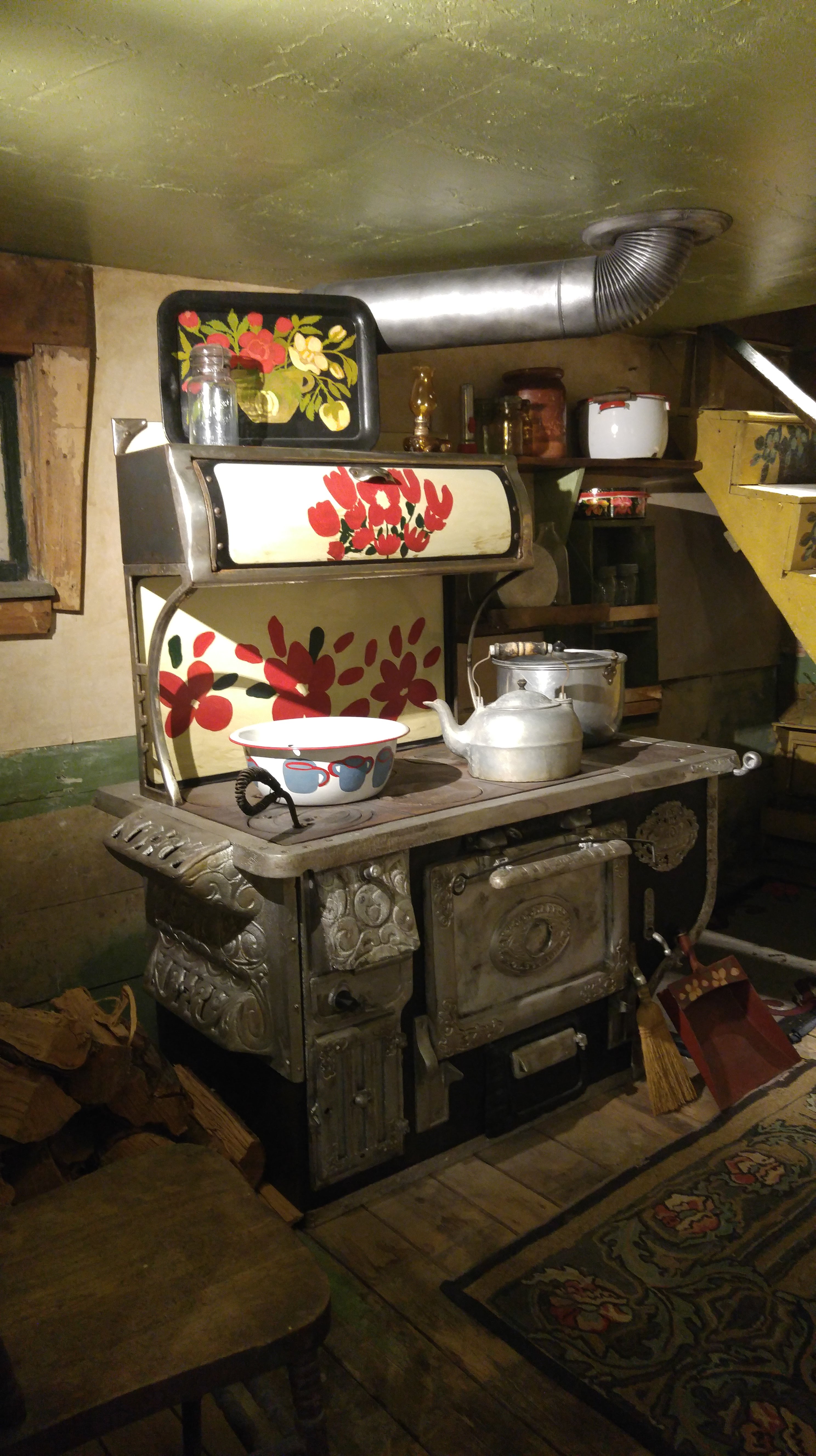
Charming and joyful as the house is, with all its vibrant colours and free-spirited florals, it is hard to imagine two people actually living in it: it looks like a playhouse when you first see it, and at about 12′ x 12′ it is about the size of a single room in most contemporary homes.
Lewis was a folk artist and her work is bright and simple and unsophisticated. I find it cheering but also fairly uninteresting:

It has a childlike quality to it that is particularly endearing, for me anyway, in her cartoon-like animals: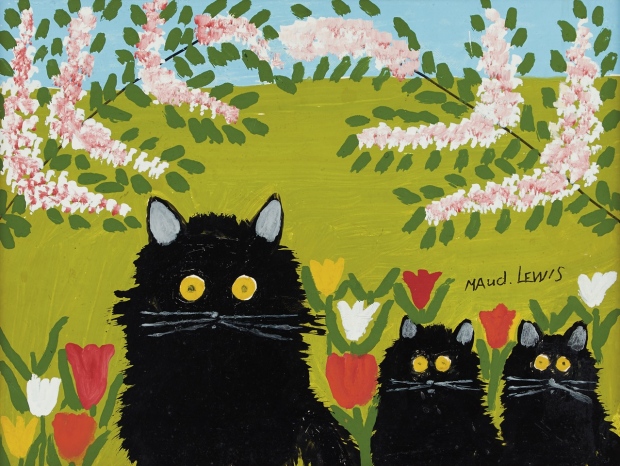

While these creatures amuse me and the landscapes charm me, nothing about Lewis’s work engages me deeply: I have no urge to linger over it. I suppose that’s consistent with its naive or primitive style–it’s not supposed to be layered or sophisticated. Still, just as a matter of personal taste, I prefer art that’s more complex and less cute. The Maud Lewis gallery has a lot of personality, but its interest for me is not really aesthetic.
Also in the AGNS (but only until January 28, so I am very glad I went when I did) is an exhibit called “Centuries of Silence: the Discovery of the Salzinnes Antiphonal.” This is a completely different experience: intellectually and historically fascinating, and aesthetically thrilling.
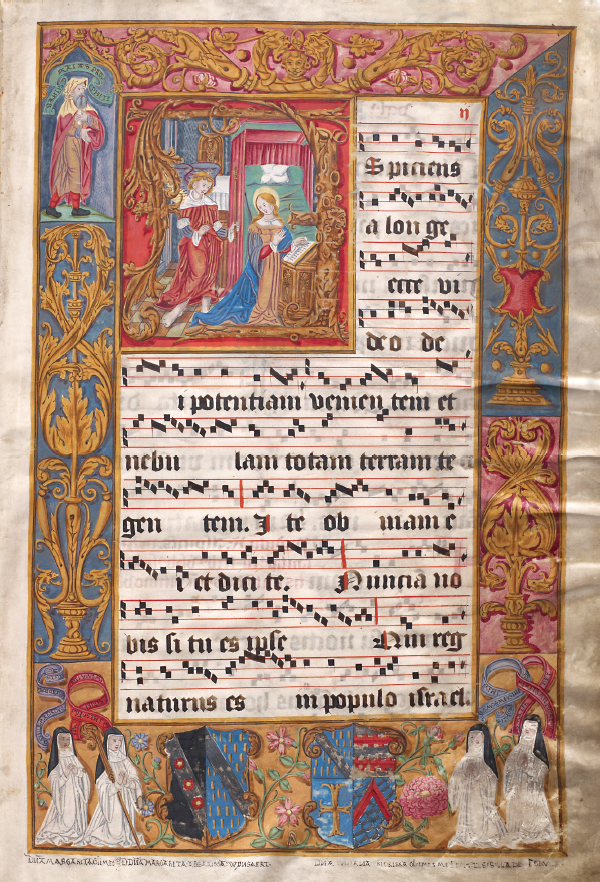
The Salzinnes Antiphonal is a 16th-century manuscript that was discovered in the library of Saint Mary’s University here in Halifax. It has been painstakingly restored and is displayed along with a fine and thoughtful collection of related materials, including portraits of some of the abbesses who presided over the Abbey of Salzinnes in Belgium at the time of its creation:

The volume itself has stunning full-page illustrations:

The music has been recreated in modern notation and recorded; as you explore the exhibit its ethereal, otherworldly beauty surrounds, calms, and inspires you.
The exhibit includes other works of art collected by the Archbishop who was most likely responsible for bringing the Antiphonal to Halifax; paintings of and records from the Abbey that was its source and original home (including three 16th-century papal bulls); a video demonstrating the process of creating an object so beautiful and lasting, from preparing the vellum to layering in the gold leaf; and these hand-sewn recreations of the nuns’ habits, a project by a student in Dalhousie’s Costume Studies program:

I found it all fascinating, as you can probably tell! Though the Antiphonal is in some ways quite an imposing object, and though of course the original volume, though on display, is inaccessible behind its protective glass, still in its own way it felt every bit as intimate as Maud Lewis’s house. The illustrations, reproductions of which are displayed on the walls, have many details that personalize them, reminding us that this work too was done by very human hands.
It was a nice afternoon, especially rounded off with tea and a browse at the Halifax Central Library. I should get out more–and weather permitting, I will!
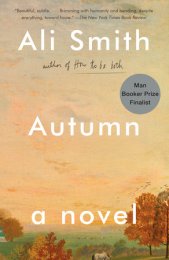
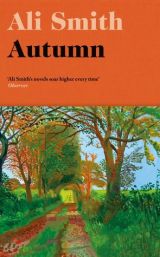 What did “I myself particularly like” in Autumn? I liked the meticulous descriptions of the landscape as it changes with the season:
 I liked all of these parts and more about the novel, and yet while I could find a lot more examples to quote with pleasure or admiration, I don’t know quite how to talk about or conceptualize the novel as a whole, and that leaves me somewhat frustrated with it overall. I trusted Smith’s bricolage more than that of some other more fragmented novels I’ve read in recent years (Jenny Offil’s Department of Speculation, for instance, or Jennifer Egan’s A Visit From the Goon Squad, neither of which I actually enjoyed much at all). I think that’s because there’s a stronger narrative thread running through Autumn, and it gives a deeper grounding in its central characters while still (especially in Daniel’s case) leaving them somewhat opaque or enigmatic. There was enough in Autumn for a reader like me to enjoy in my usual way, though Smith clearly wants to do something more, or something other, than that.

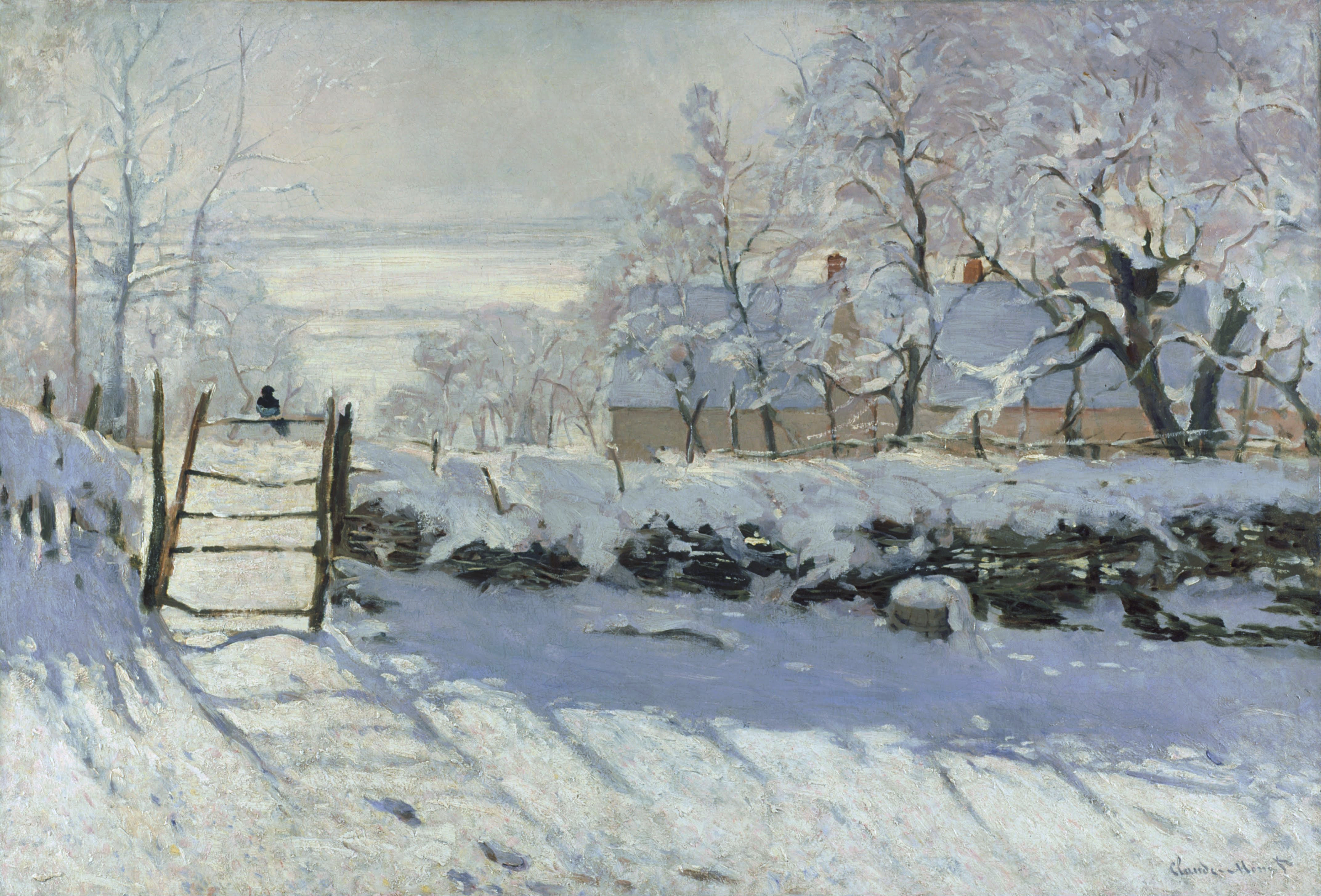


 We’re hunkered down bracing for the big storm that is working its way up the Eastern seaboard. It isn’t clear yet whether Halifax will get much snow or mostly rain and freezing rain, but the biggest threat seems to be strong winds and thus power outages. Happily, the school board cancelled classes preemptively and classes at Dalhousie don’t start until Monday, so none of us has anywhere to go. [January 5 update: Our power went out almost as soon as I pressed ‘publish’ on this post and we just got it back. It got pretty cold in the house but otherwise we got off easy–and there was no measurable snow in Halifax at all, so no shoveling!]
 One specific innovation–a modest but, I hope, a valuable one–is that this year I am going to take some time to talk explicitly about note-taking strategies. Particularly for class meetings that are discussion based, I often get the sense that students do not know what to write down. Many clearly do not record anything at all, while those that think of themselves as conscientious note-takers often seem to be trying to transcribe every word. I’ve been reading up on the Cornell system and I think it’s easily adapted to the kinds of class sessions I typically run, so that’s what I’m going to focus on. Once I’ve gone over it, I will try to make it a common practice to take the last few minutes of a class to have students literally compare notes. (The image here is from the
  The overall structure of the course will be the same, though, as will the readings, which means I can draw on the notes I had to develop more or less from scratch last year. We’re starting with some general discussion about how and why “pulp” and “genre” fiction get differentiated from “literary” fiction. Then we’ll work through our examples of Westerns, mysteries, and romances, with Valdez Is Coming, The Maltese Falcon, and Lord of Scoundrels complemented by a selection of short fiction and, for Westerns, one poem (Sherman Alexie’s “My Heroes Have Never Been Cowboys”). The only one of the readings I really had second thoughts about was The Maltese Falcon, not because it wasn’t perfect for the course but because it is the only one of our three novels easy to cheat about. This year I will take that into account in the paper topics I assign about it. (Sadly, that means nobody gets to write about Brigid O’Shaughnessy as a femme fatale.)
 My other course is a 4th-year seminar on Victorian sensation fiction. I have taught it several times before but not recently–in fact, to my surprise, I realized I haven’t taught it since 2009! I have, of course, assigned a couple of the key texts we’ll be reading in it for other courses: I have often covered both The Woman in White and Lady Audley’s Secret in 19th-Century Fiction. Even The Woman in White hasn’t been on my syllabus since 2012, though. I started rereading it yesterday and I am really looking forward to discussing it with my students. I’ve never taught Ellen Wood’s East Lynne in any other course: it is such a strange novel! In previous versions of this course the fourth sensation novel on the reading list was Braddon’s Aurora Floyd, but I always thought it was less than ideal to have two novels by the same author, however different they are, so this year I have substituted Rhoda Broughton’s
  In many ways, I’m looking forward to the term. There are only two real sources of anxiety (besides the usual anticipatory stage fright). One is just that it’s winter, which always brings complications. The other is that it’s a bargaining year and negotiations between the administration and the faculty association seem to be dead ended. Last time around, they were right up against the strike deadline when a deal was finally reached, and it was very hard on everyone but especially the students. I’m not in the faculty association myself (technically I am appointed to the
  Novel Readings