Later, after my first book was published, I went to a doctor who is the most gracious woman I have ever met. I wrote down on a piece of paper what the student said about the person from New Hampshire named Janie Templeton. I wrote down things that had happened in my childhood home. I wrote down things I’d found out in my marriage. I wrote down things I could not say. She read them all and said, Thank you, Lucy. It will be okay.
I loved My Name Is Lucy Barton at first, and really liked it probably until about half way through — maybe even up to the point when Lucy gets feedback from novelist Sarah Payne at a writing workshop that turns out to be about My Name Is Lucy Barton:
Never ever defend your work. This is a story about love, you know that. This is a story of a man who has been tortured every day of his life for things he did in the war. This is the story of a wife who stayed with him, because most wives did in that generation, and she comes to her daughter’s hospital room and talks compulsively about everyone’s marriage going bad, she doesn’t even know it, doesn’t even know that’s what she’s doing. This is a story about a mother who loves her daughter. Imperfectly. Because we all love imperfectly. But if you find yourself protecting anyone as you write this piece, remember this: You’re not doing it right.
I’m not against metafiction in principle. Some of my favorite books are metafictional — honest! But something about My Name Is Lucy Barton didn’t work for me: by the end, it felt awkwardly self-conscious, as if it were performing, rather than inhabiting, a certain fictional role, as if Strout wanted, rather than needed, to make certain moves to be clever, rather than to fulfill some idea about fiction, or about her fiction. The awkward appearance of a reading of the novel in the midst of its action didn’t create my unease, which had been building already, but it crystallized it: I was uneasy about the novel’s on-again, off-again relationship to its own story, which it sometimes tells with poignant detail and other times almost coyly conceals (“I thought of what I have — to myself — always called the Thing, the most horrifying part of my childhood”).
Payne understands the story Lucy is telling more clearly than Lucy herself, or at any rate she puts it more clearly. But there’s a lot she too doesn’t say, and I think it’s the hand-waving not-saying that ultimately distanced me from My Name Is Lucy Barton. I understand the consistency in withholding what Lucy herself finds too painful to put into words, but novels are words, ultimately, and though “spare” is widely used these days as high praise, My Name Is Lucy Barton ultimately isn’t just spare as in minimalist; it’s downright sparse, and also fragmented. Some of the fragments are individually marvelous, but they never cohered, and it felt less to me as if Strout was presenting perfected miniatures than as if she had used this dispersed form to let herself off the hook, the way some essay writers divide sections with asterisks rather than working out the transitions.
I know that some of this is just my own preference for novels that embrace telling: I was similarly dissatisfied, for instance, with Jenny Offill’s Department of Speculation, which I finished thinking she’d forgotten to actually include the novel. I love novels like Nicola Griffith’s Hild or Byatt’s The Children’s Book: novels that are immersive and luxurious, that don’t leave it up to me to do the work of story-telling, that don’t rely on my assumption that what’s in the gaps is meaningful. That’s not an absolute judgment of what is good, just a statement of what I like: as always, I invoke Henry James’s line that “nothing . . . will ever take the place of the good old fashion of ‘liking’ a work of art or not liking it.”
 But in fact it’s not always true that I don’t like “spare” novels. I read three of Kent Haruf’s novels recently, and the sparest of them all, Our Souls At Night, may have been my favorite. So even as I was articulating my reasons for not, ultimately, finding My Name Is Lucy Barton more satisfactory I was trying to figure out what else might be the problem. Here’s what I came up with: Haruf does tell his stories; he just doesn’t make a big deal about them. Strout, on the other hand, makes a big deal about not telling her story. Haruf does not insist on our emotional response: it arises (or doesn’t) from his people and their actions. Strout, in contrast, openly strives for emotional effect. Sometimes it works:
Always I screamed and screamed. I cried until I could hardly breathe. In this city of New York, I see children crying from tiredness, which is real, and sometimes from just crabbiness, which is real. But once in a while I see a child crying with the deepest of desperation, and I think it is one of the truest sounds a child can make. I feel almost, then, that I can hear within me the sound of my own heart breaking . . .
She strikes some notes that are powerful precisely because they withhold so much: “I thought, Pity us. We don’t mean to be so small. Pity us — it goes through my head a lot — Pity us all.” Too many such moments, though, can end up seeming not effective but affected, which is also too easily true of metafictional gestures. Both draw attention to themselves, which is an impulse that I think contradicts the simplicity and sincerity that initially drew me into My Name Is Lucy Barton.
For some reason it seems to me that Marilynne Robinson is someone who ought to be in this conversation. I’ve never read Housekeeping: maybe it should be next.

 Marilyn’s mother tries to talk her out of marrying James. “Think about your children,” she urges Marilyn; “Where will you live? You won’t fit in anywhere.” James and Marilyn believe they can — even in the small Ohio town where they settle and where their children Nath, Lydia, and Hannah are born and grow up. The children don’t really fit in, however, though they hide the truth, concealing their isolation and trying to placate the parental unease that, in the guise of loving concern, infects every aspect of their life. The burden of her parents’ hopes falls especially hard on Lydia: nothing is ever proffered that isn’t tainted with expectations that “drifted and settled and crushed you with their weight.” It’s because she loves her parents and wants them to be happy that she accepts, over and over, all the things they want for her that she does not want for herself. Only when it’s too late does Marilyn realize what this acceptance has meant to Lydia, who never told her because she never could.
 You never know what twists of fate will bring new relevance to the readings you’ve assigned. Teaching A Room of One’s Own soon after the
 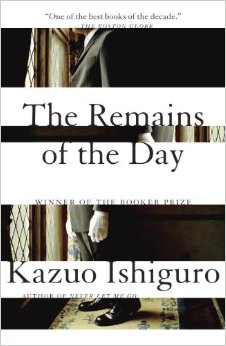 As much as the specific context of nascent fascism, this indirect approach to it through the internal ruminations of someone well-meaning but ultimately morally compromised, perhaps beyond redemption, seems timely to me. Stevens does not refuse Lord Darlington, for example, when instructed to dismiss two Jewish maids to preserve the “safety and well-being” of his guests. Against Miss Kenton’s passionate rebuke — “if you dismiss my girls tomorrow, it will be wrong, a sin as any sin ever was one” — he sets his own professional standards: “our professional duty is not to our own foibles and sentiments, but to the wishes of our employer.” It might seem a relatively modest act of bigotry to be complicit in, but it’s inexcusable nonetheless, intolerable both in itself (as Miss Kenton rightly notes) and as a concession to the creeping encroachment of worse horrors. Resistance may even mean the most on this personal scale, where you can act before events outsize and overtake you — but in any case the most anyone can do is refuse to cooperate with — or to normalize — what they know to be wrong. From inside Stevens’s head, we feel the appeal of compliance, of pretending that this one thing, or the next thing, doesn’t really matter very much. But against that dangerous ease, as we travel with him to a fuller understanding of what his political passivity has enabled, we can set our own rising horror — at the waste of his life, and at the possibility that
  After well over a year, my application for promotion to Professor finally concluded last week, with the disappointing news that my appeal of President Florizone’s negative decision was unsuccessful.*
 It is tempting, of course, to use this opportunity to lay out my whole case, to rehearse the ups and downs as my application went through its nine (nine!) stages of review, and to air my specific grievances as well as parade my allies and advocates. Militating against that self-indulgent impulse, though, is the conviction that even if it were professionally appropriate to expose all the parties involved in that way, nobody really wants to read that 10,000 word screed. Besides, I’ve done a lot of relitigating of details in the past 16 months. It will do me more good to pull back a bit, to get out of the weeds and try instead to articulate what seems to have been the fundamental problem, which I now think can be aptly summed up as (to borrow a phrase from Middlemarch) “a total missing of each other’s mental track.” I won’t name names or quote at length from any submissions, and I’ll try to avoid special pleading — though I can hardly be expected to hide which side I’m on! It will help me to write about it in this way, I hope: it will exorcise some of the frustration and bitterness I still feel. And then I will be done with it — publicly, at least — and I will do my best to gather up all the energy that has been dispersed among these professional and psychological hindrances for so long and rededicate it to the ongoing task of becoming the kind of literary critic and
  From the Novel Readings Archives: Since I started this blog almost ten years ago, one of its most important roles for me has been as

 They aren’t standing in Chartres cathedral unmoved. I’m slamming the door of Chartres cathedral in their face. They might well have been feeling all the excitement I could hope for, or at least those who actually did the reading for the day might have. But it wouldn’t be their fault if they thought the CIBC Auditorium was no place to bring it up. It wouldn’t be Mark’s fault either, or mine. We do show enthusiasm and appreciation for the literature we’re covering, to be sure, but it’s not of the viscerally rapturous variety, or even the aesthetically transcendent variety. It’s a heavily intellectualized variety, and while I don’t think that makes it inauthentic, it isn’t something they are quite ready to emulate, not yet. I want them to feel the readings, and to show that they feel them, but there’s really no appropriate way for them to express that feeling in the ways they would find natural.
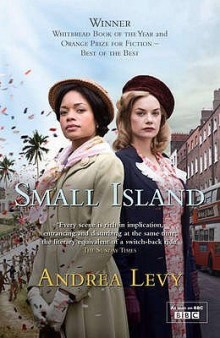 Though it’s only in America (or on American bases) that segregation is an explicit policy, Gilbert learns that his own loyalty to the British Empire is no defense against the equally pervasive racism of “the mother country.” Despite this discouragement, after the war Gilbert finds Jamaica too small for his dreams and yearns to return to England, which with Hortense’s collaboration he eventually does. His war service does nothing to earn him a welcome, however, and he has trouble even finding lodgings until he remembers Queenie’s London address. With Bernard still missing, Queenie has begun taking in lodgers herself to make ends meet, and Gilbert takes up residence in her house. Queenie’s experiences during the Blitz make up another thread of the novel, as does Bernard’s war experience and then his posting to Calcutta during the harrowing violence between Muslims and Hindus in 1946. All of these story lines come together when Bernard finally shows up again in Earl’s Court and our four protagonists end up under the same roof — but hardly, in any way that matters, in the same place.
 Though Small Island is not naively optimistic about progress, there are signs of hope, including faint glimmers of humanity in Bernard. When progress is made, it’s when people are startled out of their “certain ways” of seeing the world into realizations about how other people see and experience it. What Bernard needs most of all is something like Small Island itself: stories about people he struggles to recognize as equally human that make their humanity real to him. Gilbert tries to explain it to him in principle:
 My book club met last night to discuss Jane Smiley’s Some Luck. We didn’t choose it with this in mind, but it ended up feeling like a good choice to talk about the night before the American election, because it is pretty clearly meant not so much as a story about a particular American family as a story about America told through a particular family. You can’t quite tell this at first (though the structure of the novel, a chapter a year, is a hint), but by the time this novel — the first in her ‘Last 100 Years’ trilogy — ends in 1953, it’s the march of time and the sense of a changing nation that predominate, not the details of individual lives.
 I think it is in part because the election was on all of our minds that our discussion turned quite a bit on what kind of story Smiley had chosen to tell about America. One conspicuous feature of Some Luck, for instance, is that it’s very much a story of white rural America: if Smiley intends the trilogy to be something of a national biography or a broader chronicle of the country, that seemed to us like a strategic error, one that replicates a certain vision of America’s “heartland” as the “real” America. That said, as some people argued last night, Smiley’s focus on an Iowa farming family and how it is affected by social changes that often seem to come upon them from elsewhere is itself certainly a very American story, even if it is not the story of America as a whole, and there’s not in principle anything wrong with her choice of a starting point. One reason I’d like to read on is that I’m curious about whether Smiley finds a way to complicate her origin story — to highlight its partiality as a story about America. Clearly, even in Some Luck, she is taking us well beyond Iowa as the family members spiral outwards into places and lives very different from those of our first couple, Walter and Rosanna.
 This week will be our first ever week-long fall break, one of several adjustments to the academic schedule that have come into effect this year. I’m against it in principle, because no matter how long the break, more and more students (in my experience) leave early for it and come back late, which, along with the extra effort it always takes to get back into the rhythm of classes, means more lost time and attention at this point in the term than I’d like. However, I find myself completely in favor of it in practice: for one thing, it means I haven’t spent the weekend prepping for or worrying about my Monday classes, and I’ll have some time this week to do non-course-related reading and writing.
 My other work-related ambition for this reading week is to buckle down and do more preparatory research for the Pulp Fiction class, specifically background reading for teaching
  Novel Readings