“Too Tarsome”: E. F. Benson, Mapp and Lucia

mappandluciaI almost didn’t finish reading Mapp and Lucia. I’m glad now that I did, not because I take any uncompromising stand on whether one should or should not finish every book one starts, but because if I’d put it aside at the point I’d reached as of yesterday, I would never have known that the heroines get swept out to sea on a kitchen table. That was a surprise! And when they come back, thus thoroughly upsetting everyone who has (with oh, such difficulty!) come to terms with their loss, not to mention their homes and possessions and fortunes — OK, I admit it, it’s wonderfully done, with the perfect balance of malice and brio, which also perfectly describes Mapp and Lucia themselves. For people who like that sort of thing, Mapp and Lucia is definitely the kind of thing they’ll like.

I don’t really like it, though, which is why I was tempted to give it up half way through. It’s not just that there’s nobody in the novel who is worth anything. That’s true of Vanity Fair too, after all, and Vanity Fair is a novel I greatly admire. But then Vanity Fair is an impassioned indictment of the greed, selfishness, and hypocrisy of the world its characters have created. Mapp and Lucia is too much fun to be read as social criticism or satire; it takes too much pleasure — or allows us to take too much pleasure — in the machinations and lies, the pretense and double-dealing. Who will play Elizabeth I in the fête? Will Lucia’s complete ignorance of Italian be exposed? Will Mapp get away with the recipe for Lobster à la Riseholme? Will Mapp’s strategems for keeping Georgie and Lucia’s pictures out of the exhibit be successful? These are the pressing questions of the novel, but the answers to them are for our entertainment only. They don’t mean anything. Nothing in the story matters, except as a move in the absurd, competitive, hilarious game of snakes and ladders Mapp and Lucia are playing with each other’s lives.

It’s not that there isn’t amusement to be had. Benson is very clever, and both heroines are memorable. When they might be dead, it’s not just life in the village but the novel itself that deflates. As Georgie reflects,

There was nothing to look forward to, and he realized how completely Lucia and her manoeuvres and her indomitable vitality and her deceptions and her greatnesses had supplied the salt to life. He had never been in the least in love with her, but somehow she had been as absorbing as any wayward and entrancing mistress. ‘It will be too dull for anything,’ thought he, ‘and there won’t be a single day in which I shan’t miss her most dreadfully.’

But when she does come back, it’s just more of the same. It’s smart and witty, but a bit nasty: it’s what Pride and Prejudice would be stripped of everyone but the Bingleys, or Persuasion with only Sir Walter Elliot and Mrs. Clay — or Vanity Fair without the narrator. I seem to prefer my social comedy served up with a hint of conscience, or even of pathos. At first Mapp and Lucia was good for a laugh, or at least a chortle, but after a time I found it (as Georgee would say) “too tarsome.”

This Week In My Classes: Counting Down

todolistActual classroom hours left this term: 6
Essays still to grade this week: 17
In-class tests incoming: 42
Reading Responses incoming: 84
Reading Journals incoming: 60-ish
Final essays and exams looming: 130
Reference letters in the queue: 24
Early morning hours that will be spent in Dalplex in the limbo of exam invigilation: 7
Weeks until I’m officially on sabbatical: 6
Department meetings before then: 1

That Which We Call A Blog By Any Other Name …

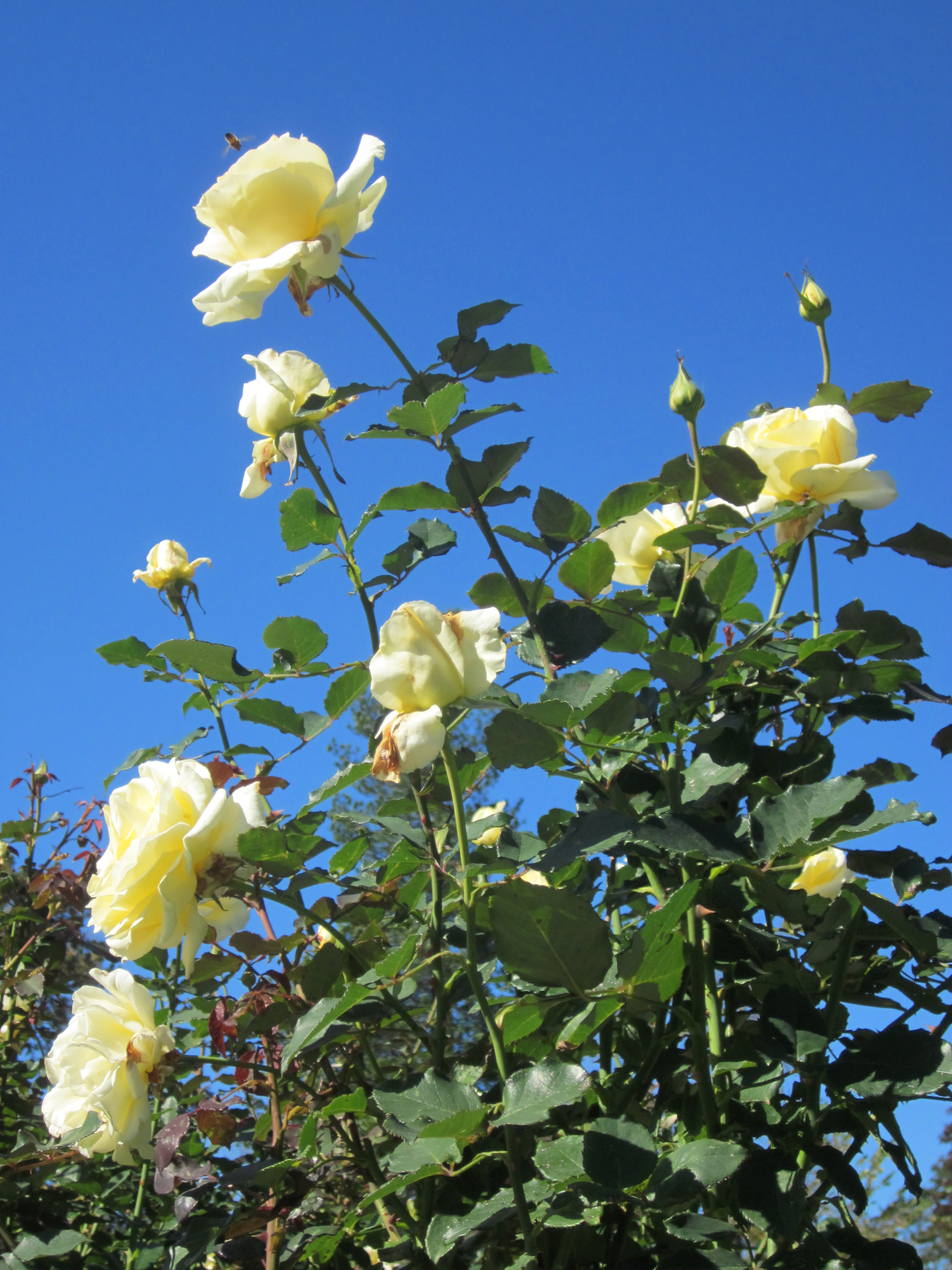
LastRose2013… would be the same thing it always was, which is also the point about the rose in the original line, of course. Names are (more or less) arbitrary labels, sure, no problem. But they have connotations as well as denotations, effects and associations as well as literal referents.  And lately I’ve been wondering: how much does the label “blog” (still) influence people’s assumptions about the substance and value of online writing?

This is not a new question, of course. Remember Princeton professor Jeff Nunokawa, who staunchly refused to call his series of Facebook “essays” a “blog”? As he explained in an interview, this is because

“I hate that particular syllable,” but also, more importantly, because “it doesn’t catch what I’m really trying to do, whether successfully or not. These are essays. When I think of a blog — and maybe I’m being unfair to bloggers because I don’t spend much time in the blogosphere — my sense of blogs is that that they’re written very quickly. This is stuff that I compose and recompose, and then recompose and recompose and recompose. It’s very written.”

There’s much that could be said about this self-consciously ignorant generalization (I said some of it in my JVC essay on blogging, and I’ve said lots more on related topics in numerous other posts here on blogging.) The assumption that somehow by definition blog posts aren’t “very written” is particularly annoying. But for today let’s focus on his comment “I hate that particular syllable.” I don’t much like it either, insofar as it is not particularly euphonious, but disdaining it on those grounds has something of a “Wragg is in custody” feeling about it (“Higginbottom, Stiggins, Bugg!”). A “hideous name” is not, of course, actually a symptom of any particular coarseness — but is it possible that the ugly syllable “blog” has created for many people an Arnoldian disdain, as if it signals “an original short-coming in the more delicate spiritual perceptions” of literary form, such as those of the more mellifluous “essay”?

I have been thinking about this again because I had a good session recently with a colleague who wanted some tips on using WordPress. While we poked around my various sites, he commented that he’d been reading around in my blog archives. “There’s lots of good stuff here!” he said, a generous remark which I sincerely appreciated. I think there is too! But I couldn’t help but notice the faintly astonished tone in which he said it, as if he hadn’t expected to find much “good stuff” but had been pleasantly surprised. That’s all good, of course — better that way around than the other way, for sure! But what had set his expectations low in the first place? Could it be assumptions stemming from “that particular syllable”?

Now, it’s entirely possible that I heard something that wasn’t there, and more than anything I was genuinely happy (almost absurdly so!) to be conferring with someone who was taking an interest in what I’ve been doing and learning online all this time. If I projected my own lingering anxieties on him, though, it’s precisely because  so few of my colleagues have shown any similar interest. Some, in fact, have been openly derisive about the whole concept of blogging. A precious few have been engaged and supportive, but most have simply been indifferent (as far as I’ve ever been able to tell). It’s not that I expect everyone I work with to drop what they’re doing and read everything I write! But I’ve wondered why the perception that blogs are not worth reading persists to the extent that when I asked a couple of colleagues once if they read any at all (never mind mine), they both laughed before they said no. How much of that has to do with the word “blog” itself, do you suppose, and what they take it to signify? If we talked about “essays on our websites” instead of “posts on our blogs,” would that sound different enough that it might bring more people across the threshold who might then stay long enough to discover that, indeed, there is “good stuff” to be found?

Why does “blogging” have such negative connotations, anyway? When Paul started his blog on “The Big C” and couldn’t stop talking about it, I admit I was filled with self-conscious horror at how annoying and narcissistic it seemed: what if I sound that way when I mention my blog? (Which isn’t that often, honest! At least, I don’t think it is…) Even I turned against him! But all shared writing is, in its own way, a demand for attention, a claim that your voice is worth hearing. Blogging is just a form: why, in this case, do a lot of people still assume the form defines the content? Was Nunokawa right, not about blogs themselves, but about avoiding the label if he wanted his short pieces to be read differently — or at all?

I think most of us actual bloggers have made our peace with the admittedly ugly vocabulary associated with the online writing and discussions we have (though I bet most of us would happily vote to ban “blogosphere”). But do you think that a lot of non-bloggers (we need a term for them, the way wizards have “muggles” — maybe “Higginbottoms”?) still hear the word “blog” and think “shallow, hasty, and self-promoting”? I don’t suppose it really matters, not for us, anyway, since we’re doing what we want, whatever it’s called, but the prejudice against it continues to puzzle and sometimes provoke me.

And that, speaking of ugly vocabulary, is quite enough meta-blogging! Next up, I hope, will be a post  essay  review  column  discussion excursus  disquisition  confabulation on an actual book. I’m still reading The Stonehenge Letters; I’ve just started Mapp and Lucia; and I’ve downloaded The Duchess War — we’ll see which one I finish first.

This Week In My Classes: What Makes a “Teachable” Novel?

This week I decided to call my own bluff.

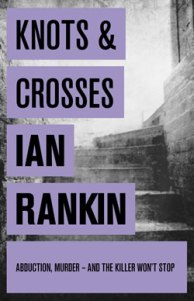
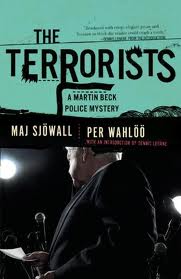
knots_crossesI spend a lot of time fretting about which books I assign in my Mystery and Detective Fiction course — because once you get past the few absolute “must haves” (something by Poe, some Sherlock Holmes, The Moonstone, something to represent the Golden Age, one of the hard-boiled essentials) there are many good reasons but no real imperatives to help me choose from the tens of thousands of possibilities. My guiding principles are coverage (of the major subgenres, such as the police procedural) and diversity (of voice or point of view), but that doesn’t really narrow things down that much. I’ve asked for suggestions quite a few times here, with great results: I have readers like Dorian to thank, for instance, for prodding me to read Sjöwall and Wahlöö, whose The Terrorists is currently a staple of my course reading list.

I tweak that list pretty regularly, and I’m always turning over alternatives in my mind. One of the books I’ve assigned the most is Ian Rankin’s Knots and Crosses, which is his first Rebus novel. As often the case with the first books in a series, it is in some ways his most self-conscious, and it doesn’t assume any prior knowledge of Rebus on our part, which is useful for classroom purposes. It’s also a nifty little book in its own way, neatly constructed, with lots of clever twists; its deliberate invocations of the Scottish gothic tradition make it nicely literary and its inquiry into masculine identity, military “bonding,” and repression usually spark good discussion. It’s not the best Rebus novel, though (I know Rankin doesn’t think so either): the others, especially the more recent ones, have a broader social and political reach and do more as police procedurals, while Knots and Crosses (which was not intended as a “crime novel” to begin with) is really more of a psychological thriller. Every time I teach Knots and Crosses, then, I mutter to myself (and sometimes remark to the class) that to really see what Rankin and Rebus can do, we should read something else. Yet I have never acted on that conviction.

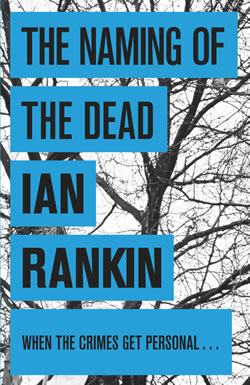
This week, then, I decided I should reread one of the others that has long been in my mind as an alternative: 2006’s The Naming of the Dead. Set in Edinburgh during the 2005 G8 meeting, it balances its murder investigations against political crimes and misdemeanors of all kinds. Siobhan Clarke is on the case too, but involved personally as well as professionally, and Rebus’s old antagonist, “Big Ger” Cafferty, becomes an uneasy ally. My recollection of the book is that it explored lots of themes we’re always interested in in this class, especially gray areas between crime and detection, or tensions between the law and real justice. Rereading it, this impression has been confirmed, as has my sense that its political context gives Rankin the opportunity to do something similar to what Sjöwall and Wahlöö do, that is, extend particular criminal investigations to larger critiques of systems of power. Rankin’s novels have been acknowledged as contemporary versions of the Victorian ‘condition of England’ novel: with Knots and Crosses, you can’t see why, but with The Naming of the Dead, the genealogy works and would, I think, be really interesting to discuss.

namingofthedeadAnd yet … I am not convinced that I should replace Knots and Crosses after all! Much as I’m enjoying rereading it, I’m not sure it would be as teachable as Knots and Crosses, and my hesitation over this has had me wondering: what do I mean by “teachable”? It’s not something I ever really consider about Victorian novels when choosing among them for my 19th-century fiction classes, but when I’m scouting for mystery novels to assign — or contemplating assigning some new (or new to me) novel for an intro course — “How would this work in the classroom?” is always a concern. And for the majority of mystery novels I read, the (usually unarticulated) response to this question is “it wouldn’t”: I put most of them aside without seriously considering them for my syllabus, which strikes me as interesting. Why would that be? Might it (she says a little nervously) have something to do with the “literary” vs. “genre” fiction distinction? Or, to be more precise, with the ways that methods for “teaching” a novel (at least for me) align with qualities that are more likely to occur in “literary” fiction?

What qualities am I looking for in a novel I assign? I suppose the fundamental requirement is that there be something in it for us to talk about — not just for a few minutes, but for enough classroom hours that we can spread our work on the novel across whatever seems like a reasonable amount of time for the students to read the whole thing. The formula for this will vary depending on the level and nature of the class, of course, but anything that will take up a week or more of class time has to be of a certain complexity — and not just of plot, because just rehearsing what happened is not particularly valuable or interesting. It might sound foolish to put it this way, but to teach a book there also has to be something about it that needs explaining, as well as something that rewards discussion. Not all of this has to be generated by the intrinsic qualities of the book: a book might get some of its interest from external contexts — (literary) historical, for instance, or theoretical. But you don’t (well, I don’t) want to spend a lot of time on stuff around the book and only point to the book itself in passing: you want to dig in and really get to know it!

One way of labeling the process I’m most used to, pedagogically, would be “deep reading,” or “close reading.” Not all books reward that particular kind of reading equally. An alternative is “horizontal reading,” where the individual text is seen as part of a broad array of related and perhaps even quite similar material. Its interest arises at least in part, in that case, by comparison: among things of this kind, how is this particular one different or interesting? In Mystery and Detective Fiction we actually do a combination of the two. I spend a fair amount of time describing a broad horizon of comparison (because we don’t have time to read lots and lots of examples to establish it on our own) and then we consider how our specific example fits into or revises common conventions and tropes. Mystery fiction really is strongly governed by recognizable patterns which in their least interesting versions seem simply formulaic — which is not to say that there aren’t tropes and conventions and formulas in “literary” fiction too, and one reason I’m using scare-quotes is that I am very aware that the distinction I’m invoking is a vexed and imperfect one. But it seems silly to pretend there aren’t books that are very clearly of a kind, perhaps even repetitively or predictably so, and that whatever the pleasures they afford many readers, they don’t individually hold up under the kind of scrutiny I am inclined to give them in class. Or, in another variation on the problem, they don’t do something new and thought-provoking enough to those tropes and conventions that they jump out as examples we need to consider. I’m not judging these books in any absolute way, of course. I’m just measuring them by what I perceive as my pedagogical goals.

moonstone-oupThen there are other constraints on teachability: more pragmatic ones. Again, with Victorian novels I mostly don’t worry too much about these, though I am wise, or cautious, or jaded, enough never to assign two genuine door-stoppers in the same term  (say, Bleak House and Middlemarch). Students who sign up for “The 19th-Century Novel from Dickens to Hardy” have to know what they are getting into! But the mystery class is a lower-level course that is purely an elective for everybody in it. I can barely get them all through The Moonstone (and in fact I am confident there are always some who never make it to the end) — and that’s a book that’s so interesting I can barely stop talking about it myself! It earns its two weeks of class time by being not just important but really complex and (for the class) quite challenging. This is actually where I fear The Naming of the Dead  falls apart as an option (though I’m not 100% sure yet). Its nearly 500 pages are not nearly as dense as The Moonstone‘s, but in a way that’s just the problem: it goes on for almost as long a time without actually being as complex. It is broad, I might say, and it’s smart, but it’s not particularly deep. I’m not sure about this, because I haven’t tried to map out any lecture topics, but it would be a bad idea to assign 500 pages and then end up feeling like we were spinning our wheels in class.

It’s true that you can find something to say about almost anything, and that there is no one uniform approach that works for teaching all novels. The Naming of the Dead seems to me an in-between case: I’m ruling it out (I think) because it requires too big an investment for the likely payoff in this particular course. It also matters to me that Knots and Crosses — which is both short and suspenseful — is always very popular with students: it is often singled out in course evaluations as a favorite, for instance, and class discussions about it tend to be pretty lively. (This year The Terrorists has been our most-discussed book so far, though.) Maybe it will inspire students to go on and read more of Rankin’s (better) novels on their own; I’m guessing that the number who are inspired to read more Wilkie Collins is very small! I suppose I could swap it out for a different example of the police procedural. I’ve tried that before, actually: one year we read Ed McBain’s Cop Hater, which earned its spot on the list because the 87th Precinct series was ground-breaking of its kind. But for all that is interesting about it, Cop Hater is a really badly written novel, or so we ended up thinking by the time we’d talked it through. In that case, being teachable turned out not to be enough to teach it again!

If you’re curious about which books I’ve chosen over the years, in Mystery and Detective Fiction or in my other classes, you can get a good sense of the range by scanning the On Teaching page of this blog.

“After all, war is war”: All Quiet on the Western Front

remarqueAll Quiet on the Western Front is as bleak and compelling a version of the “lost generation” narrative of World War I as I’ve read. In fact, Paul Bäumer, the novel’s narrator, comments explicitly, repeatedly, and bitterly on the chasm between the generation fighting in the trenches and the older generation far away from the front lines. “We agree that it’s the same for everyone,” Paul and his comrades conclude;

not only for us here, but everywhere, for everyone who is of our age; to some more, and to others less. It is the common fate of our generation.

Albert expresses it: “The war has ruined us for everything.”

Though the novel is replete with vivid vignettes, from the tedium of training to the camaraderie of trench life and the horrific chaos of bombardments, the most poignant moments arise when the young men (and they are so very young, most of them, just the age of so many of the first-year students I’m about to meet) reflect on the war’s catastrophic effect on normalcy:

To-day we would pass through the scenes of our youth like travellers. We are burnt up by hard facts; like tradesmen we understand distinctions, and like butchers, necessities. We are no longer untroubled–we are indifferent. We might exist there; but should we really live there?

We are forlorn like children, and experienced like old men, we are crude and sorrowful and superficial–I believe we are lost.

They can’t even imagine what they will do when it ends: even if they are lucky enough to survive at all, much less intact, what’s the value of a life from which all meaning has been stripped? The physical violence ultimately comes across as peripheral–collateral, even–to the other damage they endure:

The first bomb, the first explosion, burst in our hearts. We are cut off from activity, from striving, from progress. We believe in such things no longer. We believe in the war.

Battle is terrible, but it allows no time for reflection; Paul (and the reader) hurtles along, transformed from a thinking being to a “wild beast”:

We do not fight, we defend ourselves against annihilation. It is not against men that we fling our bombs, what do we know of men in this moment when Death is hunting us down–now, for the first time in three days we can see his face, now for the first time in three days we can oppose him; we feel a mad anger. No longer do we lie helpless, waiting on the scaffold, we can destroy and kill, to save ourselves, to save ourselves and to be revenged. . . . [C]rouching like cats we run on, overwhelmed by this wave that bears us along, that fills us with ferocity, turns us into thugs, into murderers, into God knows what devils; this wave that multiplies our strength with fear and madness and greed of life, seeking and fighting for nothing but our deliverance. If your own father came over with them you would not hesitate to fling a bomb at him.

 It’s when you stop to think that the true madness of war overwhelms you, because of course it is against men that you fling your bombs, and only the decisions of other men far removed from the consequences have turned ordinary people into enemies. “Just you consider,” observes Paul’s mate Katczinsky,

“almost all of us are simple folk. And in France, too, the majority of men are just labourers, workmen, or poor clerks. Now why would a French blacksmith or a French shoemaker want to attack us? No, it is merely the rulers. I had never seen a Frenchman before I came here, and it will be just the same with the majority of Frenchman as regards us. They weren’t asked about it any more than we were.”

“Then what exactly is the war for?” asks Tjaden.

Kat shrugs his shoulders. “There must be some people to whom the war is useful.”

“Well, I’m not one of them,” grins Tjaden.

“Not you, nor anybody else here.”

But it is dangerous to think this way, or to think at all, as Paul discovers during a turn guarding a group of Russian prisoners. In the trenches, the enemy is abstract until he is upon you, and then your common humanity becomes irrelevant in the desperate struggle to survive. But face to face, what you perceive is “the suffering of the creature, the awful melancholy of life and the pitilessness of men”:

A word of command has made these silent figures our enemies; a word of command might transform them into our friends. At some table a document is signed by some persons whom non of us knows, and then for years together that very crime on which formerly the world’s condemnation and severest penalty fall, becomes our highest aim. But who can draw such a distinction when he looks at these quiet men with their childlike faces and apostles’ beards. Any non-commissioned officer is more of an enemy to a recruit, any schoolmaster to a pupil, than they are to us. And yet we would shoot at them again and they at us if they were free.

Paul pulls himself up short here: “I am frightened: I dare think this way no more. This way lies the abyss.” Yet he realizes, too, that he needs these thoughts: “I will not lose these thoughts, I will keep them, shut them away until the war is ended.” Though it is these thoughts that make the war unbearable, it is also these thoughts–these moments of recognition–that he hopes give him “the possibility of existence after this annihilation of all human feeling.”

Human feeling surfaces again when, hiding in a shell hole during an enemy attack (and how odd and salutary it is, just by the way, to be on the German side for once in my reading), Paul stabs a Frenchman who tumbles in on top of him. He had expected this moment, prepared for it (“If anyone jumps in here I will go for him … at once, stab him clean through the throat so that he cannot call out; that’s the only way”), but he is not, in fact, prepared (how could he be?) for this moment when killing becomes intimate. He strikes without thinking and feels “how the body suddenly convulses, then becomes limp, and collapses.” The man does not die, however–at least, not at once, and Paul is trapped in the shell hole with a man who now seems, not his enemy, but his victim. This way, indeed, lies the abyss:

These hours. . . . The gurgling starts again–but how slowly a man dies! For this I know–he cannot be saved, I have, indeed, tried to tell myself that he will be, but at noon this pretence breaks down and melts before his groans. . . . By noon I am groping on the outer limits of reason. . . . every gasp lays my heart bare. This dying man has time with him, he has an invisible dagger with which he stabs me: Time and my thoughts.

 At last he dies: what a relief! “I breathe freely again. But only for a short time.” At least his dying was a distraction: “My state is getting worse, I can no longer control my thoughts.” Insanely, pathetically, beautifully, he tells his dead companion what he is thinking:

“Comrade, I did not want to kill you. If you jumped in here again, I would not do it, if you would be sensible too. But you were only an idea to me before, an abstraction that lived in my mind and called forth its appropriate response. It was that abstraction I stabbed. But now, for the first time, I see you are a man like me. I thought of your hand grenades, of your bayonet, of your rifle; now I see your wife and your face and our fellowship. Forgive me, comrade. We always see it too late. Why do they not tell us that you are poor devils like us, that your mothers are just as anxious as ours, and that we have the same fear of death, and the same dying and the same agony–Forgive me, comrade; how could you be my enemy? If we threw away these rifles and this uniform you could be my brother just like Kat and Albert. Take twenty years of my life, comrade, and stand up–take more, for I do not know what I can even attempt to do with it now.”

After he finally brings himself to leave the shell hole, Paul is restored to reason (or what passes for it during war) by Kat showing him the snipers gleefully picking off enemies. “What else could you have done?” ask his friends. “That is what you are here for.” “It was only because I had to lie there with him so long,” Paul says; “After all, war is war.”

That simple tautology says everything that is to be said, and at the same time it says nothing, offers no meaning, no consolation. There is nothing to be said, Paul thinks, as, recovering from a wound, he looks at the wreckage of young lives passing in a ceaseless stream through the hospital:

And this is only one hospital, one single station; there are hundreds of thousands in Germany, hundreds of thousands in France, hundreds of thousands in Russia. How senseless is everything that can ever be written, done, or thought, when such things are possible. It must be all lies and of no account when the culture of a thousand years could not prevent this stream of blood being poured out, these torture-chambers in their hundreds of thousands. A hospital alone shows what war is.

 Paul’s testimony–Remarque’s novel–shows that too, with harrowing simplicity. For Paul (for Remarque) war is definitive. It is everything. Beyond it, for those who have experienced it, there is nothing:

And all men of my age, here and over there, throughout the whole world see these things; all my generation is experiencing these things with me. What would our fathers do if we suddenly stood up and came before them and proffered our account? What do they expect of us if a time ever comes when the war is over? Through the years our business has been killing;–it was our first calling in life. Our knowledge of life is limited to death. What will happen afterwards? And what shall come out of us?

I had been interested in reading All Quiet on the Western Front for many years; I finally read it as part of my preparation for my Somerville Novelists seminar. It is an example of what Testament of Youth is not: a soldier’s story, a first-hand (if fictionalized) account of fighting and survival and tactics and rations and brothers in arms. It is the masculine story of the war, and as many of the critics I’ve read point out, that’s the valorized story, the “authentic” one. Brittain knew these aspects of the war only second-hand, through the letters she received from the front and through her experience as a nurse. There are many points of convergence, though. Above all, both tell a story of lost innocence. And both focus almost exclusively on the personal, on individual disillusionment, devastation, and loss–but both lead us towards political conclusions by making it impossible to understand what cause could possibly be worth such a price. Outside their books, we might well feel there’s an argument to be had about that. Reading them, though, it’s hard to do anything but mourn.

poppies

From the Novel Readings archives (lightly updated). First published September 2, 2012.
Photo of field of poppies from Wikimedia Commons.

This Week In My Classes: Falling Back

We set our clocks back an hour on the weekend. Whle I concede that it’ss nice to have it lighter in the morning, I never feel that makes up for how dark it gets in the afternoon, which tends to be my low energy time anyway. In any case, this plus our first flurries of the season makes it impossible for me to keep pretending winter isn’t setting in. I can hardly express what a drag this is on my spirits. Winter increases my stress levels exponentially — mostly because I hate driving in snow and ice. In fact, if I could configure my life so that I never had to get behind the wheel of a car between December and April, I might not mind winter at all. Well, OK, I would still not be a fan of the freezing-rain-sleet-snow mix Halifax specializes in, but it would not fray my nerves or ruin my plans in the same way. On the bright side, I do have a sabbatical next term, which somewhat relieves the pressure, and at this point the worst still lies ahead. In the meantime, we’re not done with the fall term yet.

beckI think things are going reasonably well in both my classes right now. In Mystery and Detective Fiction we’ve just finished working through Sjöwall and Wahlöö’s The Terrorists, which provoked quite a lot of discussion this time around. As always, I’ve been meditating on how to change up the reading list for the course’s next incarnation; I think The Terrorists is a keeper, precisely because it gives us a lot to talk about. It is, arguably, somewhat tendentious — I’ve been wondering if I should hold the authors’ Marxism in reserve next time (rather than emphasizing it in my opening lecture) and let the novel’s politics reveal themselves inductively. I don’t find the novel too doctrinaire to be humanly interesting and dramatic, though: I think Sjöwall and Wahlöö successfully walk the line between the picture and the diagram, with Martin Beck himself especially standing between us and a narrow didacticism. Rhea may have a portrait of Mao on her wall, but Beck remains committed to (if ambivalent about) the flawed system he polices. Today we started Ian Rankin’s Knots and Crosses — time for my annual comment that I’d love to try one of his longer, richer novels, except that this one (like The Terrorists) is always really good for discussion, and always gets singled out in student evaluations as a general favorite.

In 19th-Century Fiction we’ve moved on to Jude the ObscureJude is usually the last novel I cover in the Dickens-to-Hardy class, so it feels odd that it isn’t this time: we’re following it up with The Odd Women. I made room for Gissing by skipping sensation fiction for the first time I can remember in this course. I kind of miss it, because it’s a lot of fun (I usually assign either Lady Audley’s Secret or The Woman in White), but I’m anticipating a good response to The Odd WomenJude seems to have perked people up, too, which might seem perverse, considering how grim it is, but depression has its own agonistic charms, and the novel also moves much more quickly, and is expressed much more bluntly, than Middlemarch (which, to my delight, thrilled a handful of students but also clearly daunted or deterred a fair number of them). One of the things we talked about today was Hardy’s emphasis on buildings and architecture. The novel is so intensely tactile and visual that I thought it might be nice to put some pictures in our minds’ eyes, so I put together a simple slide show, including these photos from my own one and only (so far) visit to Oxford.

pulpit

martyrs

The pulpit at St. Mary’s isn’t, strictly speaking, a Jude landmark, but Newman is one of the ghostly presences Jude communes with on his first night in the city, and I was surprised how moved I was to see where he had preached. The Martyrs’ Cross, of course, is where Sue and Jude first meet — or, more precisely, where Jude first suggests they meet, only to have Sue call out, as they approach it, “I am not going to meet you just there, for the first time in my life!” Jude is definitely not one of my favorite novels, but it is a favorite of mine to teach, because however heavy-handed I find it (and however annoying I find Sue), it is also passionate and occasionally profound, including in the challenge it issues to the more conventional morality of our other readings. Reading it right after Middlemarch also really brings out continuities: they share interests in aspiration and vocation, in hopes crushed, in loves that press against convention, in learning and religion and compassion for flawed, suffering humanity. Middlemarch may seem melancholy in its treatment of these themes, but put Jude up against it and suddenly Eliot’s meliorism seems downright buoyant!

Even though Jude is not our last book, it’s astonishing to realize how close we already are to the end of term: it seems to be rushing past. At the same time, it has felt like a particularly effortful term to me. I can’t remember ever feeling quite so tired after each class meeting: I come back to my office and have to just sit still for a while before I can gather up the energy for my next task. Am I getting old? Well, yes, of course I am … but I hope that the real culprit is the tendinitis that has kept me from my running routine for months now. I am just gradually getting back into a modified exercise program. One reason I have to sit down after class, though, is that standing and pacing (as I inevitably do during lecture and discussion) seems to be about the worst thing for my aches and pains! I’ve been very frustrated that even after diligently following all my physiotherapist’s instructions I am not significantly better and more mobile! I’m cautiously optimistic at this point. I never ran very far or very fast at the best of times, but I would like to get back at least to where I was. I miss the psychological benefits as much as the physical ones. Here’s hoping!

“What is Given, What Is Taken Away”: Jhumpa Lahiri, The Lowland

lowlandUdayan is beside him. They are walking together in Tollygunge, across the lowland, over the hyacinth leaves. They carry a putting iron, some golf balls in their hands.
In Ireland, too, the ground is drenched, uneven. He takes it in a final time, knowing he will never visit this place again. He walks toward another stone and stumbles, reaching out to it, steadying himself. A marker, toward the end of his journey, of what is given, what is taken away.

I finished Jhumpa Lahiri’s The Lowland last night, so I can move at least one book from my “currently reading” to my “recently read” pile. But how much did my response to the book change in the process? Not a lot, actually. Obviously, my understanding of its parts and its story is now fuller, but to the end it was a book that kept me at an emotional distance. It proceeds so quietly the effect is almost monotonous: love, grief, violence, rage are all offered in the same register, with nothing rising above the level of quiet declaration.

Tone isn’t everything, of course, and the understatement of Lahiri’s prose can have memorable effects: quiet touches of description or the affectionate touch of a hand make emotional ripples in the overriding calm; the explosion of gunfire or of anger startles all the more for the lack of exclamation points: “A sound like gushing water or a torrent of wind”; “How dare you set foot in this house.” Is it enough to always hint at depths, though? to suggest effects so delicately that we have to assume them, or read them into, rather than in, the language of the novel? There were times when Lahiri’s control felt excessive, even deceptive: why choose subjects — why tell stories — that invoke extremes, only to muffle them? The novel is governed by an overwhelming reserve: to what end, I found myself wondering? With a first-person narrator (Colm Toibin’s Eilis, for example) we might attribute the narrative caution to the character and find it psychologically illuminating, but here the spare elegance struck me almost as an affectation, a studied determination not to let the emotional force of the novel loose.

I wondered too about the structure of the novel. It spans great distances and stretches of time, but it moves across them like a skipped rock, skimming along the surface: the narrative touches down lightly and we find days, weeks, months, years have passed with only the slightest points of contact and no depth. There are hundreds of potential pages missing that would thicken our understanding of the people whose lives we’re following and the changing times they live in, as well as the points of contrast and comparison between the two worlds we alternate between — but these possibilities too are held in check, the outlines of the family saga shaded in rather than richly tinted. Lahiri’s strategy of interweaving past and present allows for the surprise of revelations about people’s motives and feelings – but why is that preferable to immersing us in those actions and consequences as they unfold, so that we can enter into the emotional lives of the characters? Gauri in particular, I thought, suffered from this strategy of delay: her behavior towards Subhash and Bela makes much more sense, in its cold equivocations, once we know how her love for Udayan was compromised (“she looked at him as she’d never looked before. It was a look of disillusion”). Lahiri holds us at bay, forcing a certain detachment, but why?

Why not? you might quite reasonably respond; clearly that is the kind of novel she wanted to write, one in which love or suffering is no less real for its understatement. And her prose can be lovely — delicate, precise, evocative. That it provoked me to wonder how we decide when “spare” writing crosses over into “superficial” is as much a reflection on me as a reader as on her as a writer.  The Lowland seemed to be putting style first. It’s edited to a nicety, but I don’t read novels primarily to admire the writing as writing: I want to feel that this writing is carrying me somewhere that only this novel can take me. For me, Lahiri’s restraint became a constraint: though I read it with some interest and some pleasure, both were limited by the limits she herself set on how far she would let herself go.

Current Reading: Karlinsky, Stout, Lahiri, with Bonus Sonnets

stonehengeIt would be nice to be able to call this post “Recent Reading,” as that would indicate I’d actually finished some (non-work related) books since The End of the Affair. However! I’m going to count it as a victory that in spite of work and other distractions, I am at least making my way through all of these:

1. Harry Karlinsky, The Stonehenge Letters. This was recommended to me by Steven W. Beattie, in response (if I remember correctly) to some Twitter discussion about recent Canadian fiction. His instinct was excellent: it’s just the right kind of book to suggest to someone with a long-standing interest in overlaps between history and fiction, for one thing, and for all the eccentricity of its premise, its style is decisively lucid, with no postmodern flourishes. It’s so prosaic, in fact, that I blame its very transparency for my difficulty getting through it (I’m about 150 pages in): honestly, if I didn’t know there was no secret codicil to Alfred Nobel’s will promising a prize to the Nobel Laureate who solved the mystery of Stonehenge, I would think I was reading a slick work of popular nonfiction. There are even footnotes! As of my current location in the book, what there isn’t is much of the old-fashioned kind of plot, and so I’ve been having a hard time falling into the novel in the way that keeps me coming back when I have lots of other calls on my time and attention. I will finish it, though, and I won’t be surprised if I end up retracting some of that objection once the people I have met as this eccentric pseudo-history unfolds play out their parts. The other comment I can make at this unfinished stage of my reading is that the book itself — meaning the physical object — is lovely, one of the nicest I’ve held in a long time. It has heft, the paper is smooth and feels rich to the fingers, the whole thing is just handsome in an unassuming way. Nice job, Coach House Press!

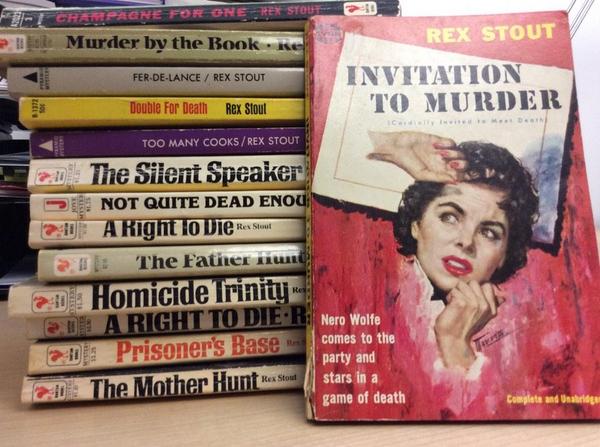
Stout2. Rex Stout, Fer-de-Lance. After my shocking recent confession that I’d never read any Nero Wolfe mysteries, I was delighted to receive a care package in the mail from my supplier. Being a by-the-rules kind of girl, I started at the beginning, with Fer-de-Lance (1934). The perverse charm of the Wolfe-Goodwin duo is obvious from the first page, with their Odd-Couple-like array of complentary strengths and their repartee — which is witty on Wolfe’s side, at least. The case has the absurdity of a Golden Age puzzle mystery (a poisoned dart shot out of a rigged golf club? really?) but the atmosphere of the book, while not hard-boiled, is not really cozy either: I find myself wondering how the series is usually fit into the various categories or subgenres of detective fiction. It doesn’t need a label, of course: maybe its chief virtue is its resistance to pigeon-holing! My appreciation of the main characters hasn’t been quite enough to carry me to the end yet, though, because I’m not really interested in the case they’re on. As I’ve often remarked here, I’m not really an avid reader of detective fiction qua detective fiction, so I need a little better incentive to read on than wondering whodunit. I’m sure my relationship with Archie and his strange beer-drinking orchid-growing boss will continue, though. The vintage copies Steve sent have their own peculiar charms, too. Fer-de-Lance does not have as lurid a cover as Invitation to Murder, but its blurb is pretty irresistible;

He likes his orchids rare, his beer cold, his food gourmet and plentiful. He’s Rex Stout’s brownstone-based, one-seventh-of-a-ton, super-sleuthing genius of detection . . . in Fer-de-Lance, a viper’s nest of deadly dilemmas!

lowland 3. Jhumpa Lahiri, The Lowland. Like The Stonehenge LettersThe Lowland is one of my Vancouver holiday purchases. I have really enjoyed the stories I’ve read from Lahiri’s Interpreter of Maladies, and I’ve read only good reviews of The Lowland (it even made the Stevereads “Best Books of 2013” list!), so I’ve been really looking forward to reading it, and I decided to start it now even though I had other books on the go, partly because I felt like my reading life needed an infusion of energy. It turns out The Lowland is not quite the novel for that: Steve describes its self-control as “almost arctic” in its coldness, and he’s not wrong about that! To say the novel is understated would itself be a profound understatement. But it does have an underlying drive, like a quiet steady beat, and at nearly half way through, I think I can detect a slight quickening of its pace.

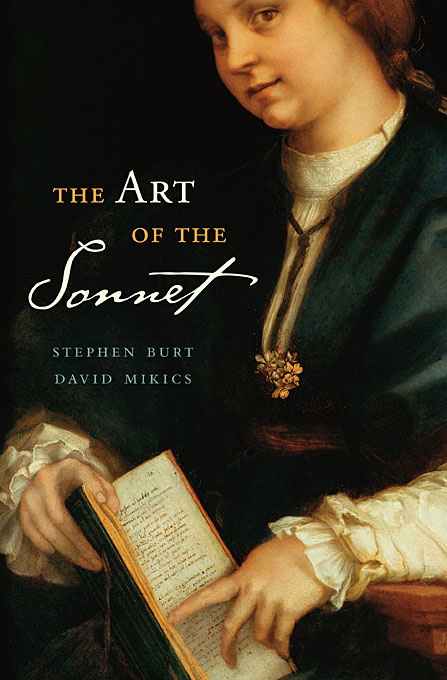
sonnet4. Out of the same impulse to speed up my reading pulse somehow, I picked up The Art of the Sonnet (edited by Stephen Burt and David Mikics). I sometimes feel adrift in seas of prose and long for the greater emotional and verbal density of verse, but I rarely — too rarely! — make time for it in my leisure reading. In the summer I spent a happy interlude reading Philip Larkin thanks to a prompt from Miriam Toews, and I have some other collections to hand that call to me intermittently. I have really liked the idea of The Art of the Sonnet since I heard about it — it’s a collection of sonnets (obviously) each accompanied by detailed commentaries by the editors — and I thought it would be a great dipping and browsing book. And so it is! I opened it at random at first, and found myself at Shelley’s “England in 1819,” and then I flipped around a bit and ended up at Christina Rossetti’s “Later Life 17.” I know the Shelley reasonably well, having assigned it more than once (it’s especially good for scansion practice), but the commentary brought out aspects I hadn’t fully appreciated. I had never read the Rossetti before, though, and it hit home uncannily when I read it on a recent somewhat dreary rainy evening:

Something this foggy day, a something which
Is neither of this fog nor of to-day,
Has set me dreaming of the winds that play
Past certain cliffs, along one certain beach,
And turn the topmost edge of waves to spray:
Ah pleasant pebbly strand so far away,
So out of reach while quite within my reach,
As out of reach as India or Cathay!
I am sick of where I am and where I am not,
I am sick of foresight and of memory,
I am sick of all I have and all I see,
I am sick of self, and there is nothing new;
Oh weary impatient patience of my lot! —
Thus with myself: how fares it, Friends, with you?

And thus it is with my reading: how fares it, friends, with yours?