And that was just the first book I read this weekend …
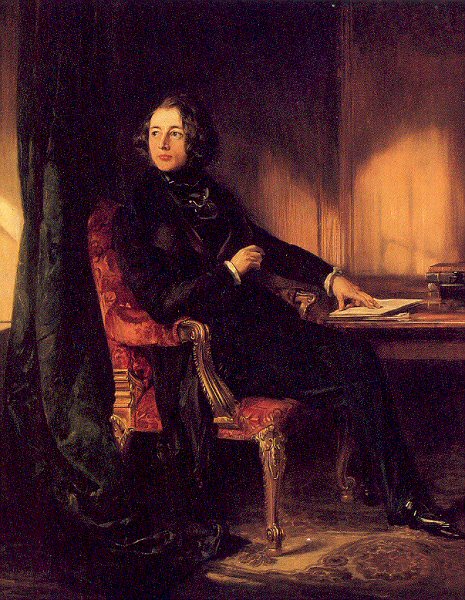 I was right that David Copperfield not only gave me great pleasure while I was reading it but restored my flagging enthusiasm for reading more generally. I finished it over the weekend and loved almost every minute of it.
The big setback for me is always Agnes. Dora is insufferable, but the poor thing is set up as a mistake, not an ideal, which is some compensation — and her final chapter still makes me cry, which is kind of embarrassing, but there we are. Agnes, on the other hand, with that damn finger pointing ever upwards: what kind of an alternative is that? Agnes had me wondering, actually, where the (good) sexy is in Dickens. He’s good at lechery, here exemplified by the horror that is Uriah Heep (and there’s the pedophiliac Bounderby in Hard Times as another example of just how creepy Dickens can make lust). He’s good at treachery, here epitomized by Steerforth’s fatal seduction of Little Emily. And he’s brilliant at childish innocence (Dora) and shining purity (Agnes). But healthy adult sexual desire (you know, the kind both parties are pretty excited about) is harder to spot. It’s pretty broadly hinted at that Agnes is wounded by David’s long insistence on seeing her as a sister, but there’s nothing like Dinah’s blush to make sure we understand the nature of her feelings, while David’s feeling for Agnes never seem other than worshipful admiration. Even though they seem better matched than David and Dora, there’s still something awkward about them as a married couple.
However. Whatever reservations I had about the women in David Copperfield were more or less overwhelmed by the many hilarious and touching and vindictively gratifying parts we are treated to as the novel draws to a close–Mr. Micawber’s denunciation of Uriah Heep, for instance, which (like so much in Dickens) is absolutely best read aloud. And the chapter “Tempest” is just splendid, with no “Dickens being Dickens” apologia required.
Unfortunately, though I was energized by David Copperfield to do a lot more reading this weekend, it was just this book that really excited me. I skimmed through Tina Fey’s Bossypants, which I had picked up at the library because it is supposed to be very funny and at the time I felt I could use a good laugh. Meh. At most I got a couple of chortles out of it. Since I have never liked Saturday Night Live and never been tempted to watch 30 Rock, I guess I should have known better.
 Then I read John Green’s The Fault in Our Stars. It went very quickly and I quite enjoyed it: I was engaged from the beginning by the narrator’s voice and the quick pacing and the blend of humor and pathos. But though I thought it was quite good, it also seemed to me a little too self-consciously smart — not just Hazel and her hyper-articulate friends (after all, such teenagers do exist — around here, most of them end up enrolling in the King’s Foundation Year Program, where they continue to talk pretty much like Hazel and Augustus) but the novel as a whole, including the metatextual interaction with An Imperial Affliction. That layer (along with the wry humor of the characters) kept the book from descending into bathos, but it also kept me at kind of an emotional distance: I was not one of those who wept copiously through the final chapters. In fact, a bit to my surprise it didn’t make me cry at all, and here I’ve just confessed to crying over Dora! After I finished it I reread a lot of the discussion of it in this year’s Tournament of Books. I haven’t read many of the other contestants, but I admit I share the feeling expressed by some commenters there that YA literature, however good of its kind and for its intended audience, shouldn’t really compete in the grown-up leagues. And yet it made it to the finals, so what do I know, right?
Finally, I tried a few more chapters of May Sarton’s The Magnificent Spinster. Though I’ve loved everything else I’ve read by Sarton, it just has not been going very well: I’ve been finding it prosy and portentous. The narrator insists a great deal that Jane, the spinster of the title, is magnificent, but I’ve been getting no authentic sense of that myself. I like the formal conceit, with the attention to Cam’s problems writing Jane’s life story as a novel. And I like the idea of taking us through so many important historical moments from the perspective such an unusual and individual experience. But with my time running out for summer reading, and with the new term looming along with deadlines for reviews and essays and book clubs, I’ve decided to put this one back on the shelf for now. It’s just not ripe yet (or I’m not). I’m certainly not giving up on Sarton, though: I long to get my hands on Journal of a Solitude.
 What a fool I’ve been. It turns out that the solution was right there next to my reading chair all this time: the handsome Oxford World’s Classics edition of David Copperfield I’ve ordered for my fall class on the 19th-century novel. This too is duty reading — or, properly, rereading, as of course I haven’t made it this far without having read it before (including out loud to my husband, years ago when this was the kind of thing we did). But I haven’t read it in a long time, and I’ve also never actually assigned it for a course. My go-to teaching Dickens has been Great Expectations (it’s very good, after all, plus it’s short, for Dickens), with Hard Times a frequent alternate and Bleak House a favorite in terms when I’m not also assigning Middlemarch. Oh, and once or twice, A Tale of Two Cities. But I finally felt kind of tired of Great Expectations, and I did Bleak House last term, and it seemed like a good time to mix things up a little, so I put David Copperfield on the book list for next term and on my summer reading list so I could get started on my class prep. It’s been sitting there looking reproachfully at me for weeks (I mean, look at that cover — it practically screams “you’re not doing your duty!”) and I’ve puttered away at it a little, but only yesterday did I put everything else aside and just read it for a few hours — and I feel all my reading mojo coming back.

 For some reason this phrase has been running through my head to the tune of “The Last Time I Saw Paris.” I don’t know why I would be feeling nostalgic about teaching Bleak House, though it was rather a while ago–it was Fall 2008, to be precise. Because we’ve started work on it in my 19th-century fiction class this week, I’ve been reviewing old notes and also old blog posts, which prove (among other things) to be a valuable archive. Because (so far at least) my ideas about the novel haven’t really changed in the meantime, and because a lot of people who might stop by and read this post almost certainly never read my earlier ones, I thought I’d repost a couple of them, starting with this one about the beginning of the novel and the beginning of my class discussions of it.
 Novel Readings