 What with all the winter around here, and everyone being cooped up and kind of off their routines, I’ve been finding it hard to concentrate on much serious reading, so a couple of days ago I plucked Jennifer Weiner’s In Her Shoes off the shelf for a reread. My copy has the movie tie-in cover, so I must have picked it up around 2005. I own the DVD of the movie and have watched it several times, but I can’t remember the last time I read the original. I knew I liked it enough to hang on to it, though (it has survived numerous purges) and I thought, rightly, that it would be a good choice to pass the time in between bouts of shoveling and attempts to get some writing done.
I enjoyed rereading In Her Shoes for just the reasons I expected: it’s a well-told story with well-drawn characters; it appreciates the emotional complexity of close family relationships, especially between sisters; it is comic but not mean, touching but just the right side of sappy. It’s well-written, too: I’ve complained a few times here about books with awkward exposition or tedious padding, but Weiner moves us along like the pro she is. It doesn’t make a lot of intellectual demands on us as readers, which is why it’s engaging but also relaxing, yet it includes some unexpected elements that give it extra dimension, such as the courage reading poetry gradually gives Maggie about her own insight into the world.
I’m not saying any of this in order to damn In Her Shoes with faint praise. I think it’s a genuinely good novel. If you think there’s a “but” coming, though, you aren’t entirely wrong. As I was reading it this time, I was struck by how close reading it was to watching it, and that got me thinking about what makes the difference for me, not just between books and movies, but between books I consider “good” and those I think of as “great.” Maybe this is already obvious to everyone else, but it occurs to me that every book I think of as great is one that — whatever else goes on in it — does a lot of things in the writing that really can’t be neatly transposed to another medium, and more than any difference in content between what gets labeled “chick lit” and what is considered “literary fiction,” this — let’s call it bookishness, rather than “literariness” — is the element that determines a novel’s overall place in my hierarchy. Ease of adaptation (or, easy congruity between book and film) is a symptom of literary limitation: how’s that for a working hypothesis?
I don’t mean that I’m against adaptations: I’m not such a book snob that I think nothing can also be gained by moving to a different medium: as has often been argued, film adaptations can do really interesting things on their own terms. (That said, the many people who tell me they haven’t read, say, Bleak House but they have watched it usually seem to be ignoring that adaptations are also, immediately and inevitably, interpretations or readings of the novels, not “just” cinematic renditions.) Still, almost always when I watch an adaptation — even one I like a lot, like The Remains of the Day, or A Room With a View, or the version of Persuasion starring Amanda Root — I’m always very conscious of what has been lost in the transition from book to film.
I guess when it comes to adaptations, at heart I’m a reader first and a watcher second, and that affects my reactions and my preferences. What I usually feel about adaptations of books I admire is that they are stuck with being quite literal: what they convey is typically just the plot and characters, and then whatever they can of the themes, as far as these can be made visible (or audible). What is lost is everything else that writing can do, from deft metaphors to sharp irony, from prolepsis to retrospective or intrusive narration. A prime example of this for me is, inevitably, the mostly adequate but in no way outstanding BBC version of Middlemarch, which tells the story (well, most of it) with some fine actors and a lot of sincerity, but which completely abandons Eliot’s experiments with form and language: her play with chronology, her unifying metaphors, her dedication to alternative points of view — and of course, except for one short voice-over at the end, any sense of the narrator and thus all of the wisdom, humor, and philosophy she brings. Adaptations of Jane Eyre can’t do anything to convey Jane’s narrating voice or, more important, the interaction between the older perspective from which she tells her story and her youthful actions. Bleak House becomes just a series of interrelated story lines without the alternating narrators, even though Gillian Anderson makes a splendid Lady Dedlock … and so on. And this isn’t even taking into account details at the level of language itself — the way in which individual words matter.
Anyway, my point here is that I think of the books I’ve mentioned above as great books (or as great books?) not just because of their stories and characters, or even because of the ideas they circulate or the insights they offer, but also because of the ways that they are written: because of the amazing things their authors accomplish with the selection and placement of words on the page. That’s one of the necessary (though not in itself sufficient) measures of greatness for me, and at the same time it’s exactly what makes adaptations of books I love almost always a disappointment.
 In Her Shoes, however, adapts perfectly: the plot is tweaked a bit in the film version, but my feeling on rereading the novel was that the two versions were otherwise remarkably interchangeable. The story and characters as told to us by Weiner are conveyed really effectively on screen; there’s no theme or idea in the book that’s not there also in the film; and, crucially, there’s nothing remarkable — and thus nothing to be missed — about the way Weiner writes, whether her style or the formal structure of the book. It’s all fine, but it’s also very straightforward (which is also true of the movie version). That such a smooth transition from one form to the other is possible seems to me like a sign that there are limits on Weiner’s accomplishment (and thus presumably on her ambition) as a novelist.
Again, maybe this is all terribly obvious! And it isn’t meant as any kind of manifesto for or against one kind of book or the other, or, for that matter, for or against adaptations, whether in principle or in particular cases. As I said, I enjoyed rereading In Her Shoes and I think it is a genuinely good book — much better than any of the covers for it suggest! But I do think that to be truly great, a book has to somehow make us revel in its incorrigible bookishness (a quality that, happily for all of us, comes in many different varieties), and I hadn’t quite put that together with the issue of adaptation. If the more “literary” books in that respect — the ones that make (or even aim to make) the absolute most of their own medium, you might say — are the ones that end up getting most of the critical attention and all of the awards, well, that actually seems reasonable enough. Ironically, though, I’m likely to find the film versions of good books that aren’t so thoroughly and ambitiously bookish much more satisfying.


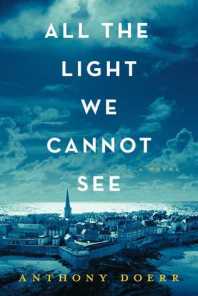 Marie-Laure imagines the electromagnetic waves travelling into and out of Michel’s machine, bending around them, just as Etienne used to describe, except now a thousand times more crisscross the air than when he lived — maybe a million times more. . . . And is it so hard to believe that souls might also travel these paths? That her father and Etienne and Madame Manec and the German boy named Werner Pfennig might harry the sky in flocks, like egrets, like terns, like starlings? That great shuttles of souls might fly about, faded but audible if you listen closely enough? They flow above the chimneys, ride the sidewalks, slip through your jacket and shirt and breastbone and lungs, and pass out through the other side, the air a library and the record of every life lived, every sentence spoken, every word transmitted still reverberating within it.
 Some follow-up comments on academic blogging, prompted by comments on
 And, dedicated as I am to preserving the forest, I do often recoil from individual trees — and the less time I spend reading properly “academic” criticism, the harder it is for me to tolerate it when I dip back in. I recognize, however, that other people genuinely relish both reading and writing it, which is more than fine with me, because that’s how (to stick with the arborial metaphor!) the trees I do appreciate are able to take root and flourish. It continues to mystify me, though, that so many academics seem so content to keep planting trees in those woods knowing that hardly anybody will hear their hard-won knowledge or insight when it falls into its safely peer-reviewed place. Even people who have no professional reason to play it safe any more seem oddly uninterested in, or even resistant to, getting the word out about their research in other ways (I say this because I have proposed it to some of them!) — and I get no sense that this has changed in the past decade. Is it anxiety or snobbery that makes it seem preferable to them to hold out for acceptance by a journal or press that will deposit their work safely where almost nobody will read it, rather than to tell other people about it directly through the magic of WordPress? Surely at some point you have enough credibility just to speak for yourself, and you should do that if your actual goal is to increase the overall sum of understanding in the world. Mind you, then you’d also have to try your hand at self-promotion, something else that,


 Novel Readings