This Week in My Classes: Exams!

Last night I invigilated a three-hour exam for my 19th-Century Fiction class; Saturday is the three-hour exam for my Mystery and Detective Fiction class. Papers for all three classes (from everyone in the seminar, and from those who did the essay option in the other two) came in on Monday. So mostly what I’m doing this week is pacing and marking! I’m making decent but not great progress on the essays–I have about 10 left. I haven’t started the exams yet, but tomorrow I’ll be working on the first set in alternation with the papers, and next week of course I need to get everything wrapped up so that I can submit this term’s grades … and move on to prepping for next term.

In some ways I’m not a big fan of exams. I know that they are not always reliable indicators of what students know or what kind of thinking and writing they are capable of, and I don’t think students retain all that well material they cram into their heads during intense last-minute study sessions. On the other hand, there are always some students who flourish in exam situations–who find themselves released from whatever writer’s block made them fumble on essays, or who (whether out of brilliance or desperation, who knows) become remarkably insightful on the fly. Exams also are one more way to take stock of who has done all the reading and who is good at doing the kind of analysis I’ve been trying to teach them, and this is what they are, after all, earning a course credit for. The real reason I keep holding exams for my courses, though, is really quite cynical: I feel that I need the threat of the exam as a motivator over the term. Students, understandably, set priorities, and my experience has been that, perhaps because exams are (or seem) so concrete and measurable, students often ‘prioritize’ exam preparation over other work. (This tendency often manifests itself in the form of late papers submitted with the shameless “excuse” that the students didn’t meet my deadline because they had to study for their chem or psych or Spanish midterms.)

So holding exams is one way to make sure I’m in the game, competing with their other courses for priority. Also, knowing that there will be an exam that covers all of the course material is a helpful incentive for them to actually  do the reading, come to class, and take notes, and these things make our class time much more productive for all of us. Some students need this incentive more than others, of course, but sadly I find nothing focuses attention in the room more visibly than prefacing an exercise or example with “this is the kind of thing I’m likely to ask about on the exam” or “this is a favorite exam passage of mine.” I try to use this phenomenon to our collective advantage: my goal is to get them interested in the readings, to help them learn how to analyze them, etc. To reach these goals, they need to be paying attention. If they are paying attention in part because they are worried that, if they don’t, they won’t do well on the exam, that’s fine with me. In the past couple of weeks I have had more than one conversation with a student who said that they planned to use some of the time before the exam “to finish reading X book”–and since another of my goals is to have them just do all the reading that the course credit they are getting suggests they have done, that’s good too. I try to make my exams thorough, transparent, and fair: I work on practice questions and passages, which we do together in class, and I relate the skills we are practicing in doing this to the other work we’re doing in the course. I make no effort to catch them out, though I do cover the full range of course material. I give out the essay questions in advance so that they can plan their answers.

I don’t hold exams in all my classes. There are no exams in my honours seminars, for instance, where I assume a higher level of commitment and make different kinds of demands (including more emphasis on class participation) across the whole term. I also won’t have an exam in my Close Reading class next term: not only will be we doing a lot of very challenging writing and editing, but it’s not a class that emphasizes coverage, whether of material or of terminology, or skills that can be quickly demonstrated and assessed. But overall I think exams do more good than harm in my classes. There’s even some real satisfaction in marking the good ones and seeing how much students know. Sometimes, bless their hearts, they even write little ‘thanks for the course’ notes at the end. After three stressful hours of exam-writing, that’s pretty generous of them.

Last night’s exam went by more quickly because I brought along Testament of Experience to read. I was at a terribly exciting section: not only was Vera in London enduring the Blitz, but G. was crossing the Atlantic by boat and was torpedoed! Though in some ways this volume is not as surprising or intellectually satisfying to read as the first two, it’s still a remarkable story told by a woman whose life is itself a testament to ideas and commitment, and her account of the devastation of the war is gripping and occasionally heart-rending. More about that later…maybe I’ll be able to finish it during Saturday’s invigilation.

Mark Bauerlein’s “The Research Bust”

I have mixed but mostly negative feelings about Mark Bauerlein’s recent piece in the Chronicle of Higher Education about literary research. Reporting on a study* he did for the Center for College Affordability and Productivity, Bauerlein argues that (most) literary research and publishing is not worth the investment of time and money that goes into it. His major evidence in support of this argument is that academic books and articles aren’t cited very much. Interestingly, he doesn’t argue that this is because they aren’t any good, that they aren’t worth doing because they contribute nothing to knowledge or understanding, or because they are opaque to the lay reader (popular forms of the attack on academic criticism, both of which are to be found in the long comments thread on his post) . In fact, he opens with the example of an article that is “learned, wide-ranging, and conversant with scholarship on the poet and theoretical currents in literary studies. The argument is dense, the analysis acute, on its face a worthy illustration of academic study deserving broad notice and integration into subsequent research in the field.” What he finds, however, after diligently entering the article’s title into Google Scholar, is only “a handful of sentences of commentary on the original article by other scholars in the 10 years after its publication.” There’s a dramatic imbalance, as he sees it, between the input (“100-plus hours of hard work by a skilled academic, plus the money the university paid the professor to conduct the research”) and the impact (” we can be sure of only a few scholars who incorporated it into their work”).

There’s plenty to be said about Bauerlein’s methodology, and some of the comments on the piece are sharp about the reliability of citations indexes in general and Google Scholar in particular, as well as about his very reductive notion of impact, which doesn’t consider the impact of scholarship that is read but not formally cited, read as teaching preparation, and so on. That we can’t count something doesn’t make it irrelevant, and all practising scholars know from their own first-hand experience, I’m sure, that they read and are influenced in their thinking by a great deal of material that never makes it into their footnotes or bibliographies.

But suppose we grant Bauerlein a modified version of his quantitative point: suppose it’s true that much specialized research does not change the conversation the way its authors probably hope it will. In fact, my own experience to some extent supports this–not only of watching the fate of my own publications, but of burrowing through masses of work by other scholars that really does, as Bauerlein says, “overwhelm[] the capacity of individuals to absorb the annual output.” What puzzles and disturbs me is what Bauerlein believes follows from this ‘finding,’ which is that we ought to stop doing (or at least funding) literary scholarship (he doesn’t actually say this in so many words, and at some points seems to be making the more temperate suggestion that we simply scale back expectations and output). Along the way to this modest proposal he also makes some dubious further claims–or at least claims that would require a great deal more nuance and specificity to be satisfactory.

Further to his point about the overwhelming mountain of publications, for instance, he proposes that we have “reached a saturation point, the cascade of research having exhausted most of the subfields.” But his examples  are Melville and George Eliot, two of the most emphatically canonical authors imaginable. Yes, it’s a near impossibility to read “all of the 80 items of scholarship that are published on George Eliot each year”: I can’t do it–I wouldn’t want to do it. But the realities of specialization are also such that I don’t need to do it: there isn’t one subfield of George Eliot scholarship anymore but a multiplicity of potential angles on George Eliot, and the researcher’s task is to navigate among the available material to find what’s relevant. Yes, that’s difficult, even frustrating at times, but it’s hard to see how a continuing “cascade of research” is a sign of exhaustion: surely it’s a sign that people are still finding questions to ask, and doing their best to answer them? In these cases it may be true that the results will matter only to ” a microscopic audience of interested readers,” but that’s what happens in all highly specialized fields, not just in the humanities. The objection, then, can only be that for some reason literary subjects are not suited to specialization, which seems a suspect argument, one that harks back to a time when literary scholars were comfortably certain they knew what needed to be known and said about the books that really mattered, and those books and that knowledge could be neatly summed up and pronounced upon.

Having said this much, I should acknowledge what readers of this blog (certainly, any who have read it from its early days!) already know about me, which is that I have often complained about the pressure of specialization and the related trend towards metacriticism. I started blogging in part because of my own dissatisfaction with the norms of academic literary criticism. My early complaints about that got me in hot water with a commenter who charged me with “offering nourishment” to those who want “to eliminate literary studies from university curricula altogether.” Though I know more now than I did then about these kinds of criticisms of and attacks on the academic humanities, my view continues to be that what we need is not to end, but to diversify the kinds of research and writing that institutions recognize and support as valuable uses of academic expertise. There needs to be room for ‘knowledge dissemination’ that serves non-specialist purposes and audiences, for instance. Some researchers have less inclination and talent for microspecialization, but excel at synthesis and exposition–I think that is actually where my own strengths lie. But ask any academic whether writing a textbook or a popularization (or a series of reviews and essays in a non-academic, non-peer-reviewed journal) “counts” the same way that 5001st study of Melville will, when it comes time for hiring, tenure, or promotion, or just for earning the respect and support of your institution and administration…

To return to Bauerlein’s argument, the 5001st article on Melville may yet have its value to the small group of Melville specialists, provided it is, like the article he mentions in his opening, a high quality piece of professional scholarship. But it’s true that it can’t maximize its impact if it is not widely read, and the burden of reading 5000 other studies may be too much for most scholars. I think Bauerlein is right to suggest that quantitative measures for tenure and promotion are detrimental to individual scholars as well as to the profession as a whole.  (I interviewed for one position where I was told I would need two books or six articles for tenure. That’s absurd, not least because the fetishization of books creates what I described in an earlier post as “the corrupting pressure to inflate, not only our prose and our manuscripts, but our claims.”) The MLA has been making the argument for decentering the monograph for years now, but as Bauerlein points out, “nobody wants to take the first step in reducing the demand.” Between the crisis in academic publishing and the changing demands and expectations of scholars themselves, perhaps eventually the ‘publish or perish’ model will be reformed.

But let’s consider, again, the article Bauerlein opens with. The problem Bauerlein identifies is not that the author’s time (and the university’s resources) were wasted because the article never needed to be written the first place, but because the article had little measurable impact–it didn’t make a conspicuous difference to the field. Again, Bauerlein’s claims are undermined by their lack of specificity: depending on how specialized the essay’s argument is, perhaps nobody should expect it to transform the overall discussion about that particular canonical poet. The 10-year time frame also does not allow for the glacially slow pace of academic publishing. But let’s, again, grant him a modified version of his premise, this time that the impact of the piece really was inappropriately (or unfortunately) light. Why isn’t that a reason, not to stop producing learned, wide-ranging, acute analysis, but to change the mechanisms for circulating it? What’s wrong with the processes, the apparatus, of our scholarship, if good ideas are not circulating as widely as they should? How can we open up the research and publishing process so that scholars engage each other in more direct, productive conversations? Why aren’t the scholars working in this area actually talking to each other–not face to face, but through Twitter, blogs, listservs, or other kinds of scholarly networks? Is it that there are too many of them, each of them individually overwhelmed by the difficulty of trying to keep up with the output of scholarship from others? Or is it something about their work habits–keeping their heads down, trying to beat the tenure clock, looking only so far and no further? Is the sheer pressure to publish a lot a disincentive to more exhaustive research? What are the logistical impediments, in other words, to improving the circulation of ideas? Also, how can we change the way we work so that the value Bauerlein himself claims to recognize in an essay such as that one can be perceived by readers outside the academy as well? Why is the best response to a (perceived) oversupply of exemplary scholarship to denigrate or even halt the scholarship, rather than to champion it and ask that we and our institutions work to solve the problem of its reception and distribution?

From Bauerlein’s perspective, the answer would appear to be that he thinks literary research has already run its course–that there’s really nothing left of any significance for scholars to find out, at least not on behalf of the rest of us. But here his choice of George Eliot and Melville is misleading, if not disingenuous. I’m prepared to concede that the latest articles on George Eliot are pretty specialized. Indeed, I have nearly lost interest in reading them myself, and I don’t want to be compelled to contribute to them myself. Curiosity-driven research can hardly, in consistency, be made compulsory. But I don’t think that means they have no value (why should my interests and preferences be the arbiter?), and I wouldn’t want to propose (as Bauerlein certainly implies) that “saturation” means “completion”–what would it mean to be finished studying something? how could we ever be sure we have found out everything there is to know? “We can no longer pretend … that studies of Emily Dickinson are as needed today,” Bauerlein proclaims, but how can he know this? There’s some irony in his relying on simple quantity of research to decide there’s nothing of interest or value left to be said. Still, perhaps in these cases scholars are working mostly for each other. Again, this happens in all fields once you reach a certain level of specialization.

Suppose we consider if every subfield is as densely populated as those he cites, however. I’ve been looking up Winifred Holtby: there’s very little scholarship about her novels, compared to the vast output on her Bloomsbury contemporaries. That absence of material is already provocative, to my mind: what has given one literary movement so much more critical value? In learning more about Holtby and Brittain, I feel that I am also learning (again) about the ways our scholarship is shaped by expectations and priorities that are not intrinsic to the literature but may, in fact, interfere with our understanding of its forms and ideas. Much was made at one time about the “end of history”: does Bauerlein believe we have reached the end of literary history? Surely not. The landscape of literary studies is in constant flux, not just in the theoretical apparatus readers bring to primary texts, but in our selection of primary texts to look at in the first place. Imagine if we had concluded, as a profession, that Leavis’s The Great Tradition was the last word on the British novel, or that the list of Oxford World’s Classics as of, say, 1970, was definitive. In my own undergraduate course on the Victorian novel, in 1988, the term “sensation fiction” never came up–and neither did Elizabeth Gaskell. In our discussion of Jane Eyre, at no point did we consider whether British imperialism was a significant context. In my own academic lifetime and my own specialized field, that is, there have been enormous changes in just a couple of decades. It’s easy to take the horizons of our own interests and knowledge as actual limits on what is worth asking or knowing, but surely the last 100 years of literary studies have shown us just how limiting and even dangerous that assumption can be. What a depressingly anti-intellectual proposition, that we have nothing more to learn or say, or that even if we do, it’s not worth finding it out. It’s precisely because we can’t foresee the significance of research that we need to preserve a space to do it open-mindedly, in a spirit of sheer intellectual curiosity. Up close, in the moment, it may be difficult to discern how or where the multitude of individual projects is moving us–but yet, look back and see what a different place we are in now. Who, in 1900, or 1950, or even 1980, could have told us what would turn out to make the most difference?

Ah, but you see, all that research is expensive. As Bauerlein says, “we cannot devote our energies to projects of little consequence”–but note the presumed correlation between measurable impact and “consequence.” And, again, “impact” is a complex issue, one hardly amenable to simple metrics. What will those “undergraduate reading groups” Bauerlein wants us to lead (in lieu of going to conferences or archives) be talking about in 10 or 20 years, if specialized research grinds to a halt? Exactly the same things we would bring to them today, I suppose–but why would we want time to stand still in that way? Or, how will he decide who will carry on the research while the rest of us focus on mentoring undergraduates (not, presumably, to be scholars) and “pushing foreign languages in general-education requirements”? (How that last is the particular responsibility of English professors, I’m not clear.) Bauerlein argues,

 If a professor who makes $75,000 a year spends five years on a book on Charles Dickens (which sold 43 copies to individuals and 250 copies to libraries, the library copies averaging only two checkouts in the six years after its publication), the university paid $125,000 for its production. Certainly that money could have gone toward a more effective appreciation of that professor’s expertise and talent.

But that professor’s “expertise” is surely in part defined (and expanded) precisely by that long-term effort to know more about Dickens. Why is it a “more effective appreciation” of that professor to discourage  (and perhaps even to prevent, by withholding time and resources) the research and publication of the book? (How can you judge the importance of the book’s ideas from the number of times it has been checked out, anyway? Haven’t you ever just sat in the stacks and read stuff?)

Bauerlein is right to challenge the reigning paradigm that values quantity over quality and specialization over synthesis and accessibility. But throughout the piece, there’s an uneasy slippage between making the case for a more rational, deliberative research model and a wholesale dismissal of the entire enterprise. At one point he acknowledges that “research is an intellectual good,” but then he shrugs it off as “ineffectual toil.” He concedes that those who object to his position are not wrong “on principle”–but then rules them out of order on grounds of pragmatism. He agrees that research “makes better teachers and colleagues” but then he characterizes it as the pursuit of an identity that is alluring because it “flatter[s] people that they have cutting-edge brilliance”–as if literary research is no more than egotistical posturing. (Perhaps he has been reading Eugenides?) He concludes by looking forward to the waning of “the research years of literary study.” As many of the comments on his piece show, this kind of thing is music to the ears of those who see no value at all in what we do–his gestures towards moderation and reform are eclipsed by his larger narrative of excess and waste.

That Bauerlein’s column is clearly having a large impact (as measured by external links–including both Arts and Letters Daily and the Book Bench–as well as by the number of comments it has garnered) seems to me pretty good evidence that we need better ways to measure what a piece of writing is really worth.

*I haven’t read the entire study; my response is just to the presentation of its main ideas in the Chronicle article.

Book Club: Paula McLain, The Paris Wife

My local book club met this morning for brunch and our discussion of Paula McLain’s ‘The Paris Wife. The brunch (at Pipa’s) was delicious. The book was …. well, dreadful is probably too strong a word, but generally deprecated as bland, lifeless, and devoid of both art and ideas. Some of the group felt it was wholly insincere as well, a marketing ploy meant to catch readers who (like us) think a personal perspective on the whole 1920s Paris literary scene sounds pretty interesting.

And in fact that whole scene is interesting, and so almost in spite of itself the novel is too, because Pound and Hemingway and Gertrude Stein and Scott and Zelda and Paris and bullfights are all interesting. What we all found so disappointing is how little the author did with this material. There’s no reflection in the novel, no engagement with the literary passion and experimentation these writers represent–there’s certainly no stylistic flair or experimentation on McLain’s part, no sense of an idea behind the book beyond putting in everything the author had found in her sources. Hadley’s voice is so pedestrian that after a while I thought I could understand why any writer would eventually divorce her: who would want to listen to her? There’s so little substance to her character, too (could this have been true of her in real life?)–she has no focus, no ambition, no sense of purpose, and no insight into the strange and intellectually demanding world of the writers around her. But Hemingway too is flattened out so that his overbearing, charismatic personality (for which he is at least as famous as for his writing) has to be taken on faith, as it can’t be discerned from the narration. The only break from Hadley’s “and then, and then, and then” recounting of people and events is the occasional small section from Hemingway’s point of view, but these seem so disconnected from Hadley’s commentary that some of us suspected they were added in belatedly, perhaps at the suggestion of an editor thinking they would add a desirable whiff of literariness.

These judgments sound harsh, and in fairness I should add that everyone agreed a novel from this point of view was a potentially rich concept, that some scenes were effective, or at least believable, and that the author had obviously done a lot of homework. That’s really not much to say on the novel’s behalf, but it’s all we could come up with. Oh, and we thought it would make a pretty good movie, because, again, the milieu and characters have intrinsic interest, the setting could be better conveyed on screen than it was in the novel, and there’s nothing of formal significance to be lost in the translation from one medium to another (unlike, say, Wolf Hall, where capturing the novel’s unique treatment of point of view seems like it would be a genuine challenge for a director and a real loss if it were simply ignored).

In keeping with our plan to follow a link from one book to the next–but also because we are feeling soured on new releases festooned with hype–we have chosen Ford Madox Ford’s The Good Soldier for our next book.

This Week in My Classes: Easing Up

I could almost have said “winding down” instead of “easing up” except that with final papers and exams still to go, we are still a couple of weeks away from actually being done. The big difference now, with classes almost over (I have one more class hour to go!), the pressure is much less. The last month or so of term is always such a relentless crush, with every finished task replaced (or so it often seems) with two more unfinished ones; you no sooner leave class feeling it went well (or not) when it occurs to you that you have to be ready to go again in a couple of days; and even as you keep up the reading and routine class preparation and meetings and so forth, assignments come in and you find you are either working constantly or feeling guilty whenever you’re not. With no more lectures or seminars to prepare and no more new assigned reading to do, now the job requirements can more or less be done in business hours–hooray! I have already spent more time (or at least more cheerful time) with my kids in the last couple of days than perhaps in the last few weeks: I try hard not to shunt them aside, but inevitably my stress and the pressures of work obligations get in the way. This weekend Maddie and I went to our happy place, Clay Café, for instance, where we indulged in a little tranquil creativity. I have no particular artistic talent, but we both thoroughly enjoy listening to their collection of vintage LPs and thinking about nothing but colours and patterns for a few hours. I’ve played plenty of Mario Kart with Owen, too, and hung out while he showed me the various projects he’s working on on his computer. Just for myself, I have started watching MI-5 on Netflix: I was put on to the series when I learned Richard Armitage is in the later seasons, but I figured I’d start at the beginning. It’s pretty stressful, but it’s not my stress, and it goes down well with a little wine at the end of the day.

Soon, though, when I feel recovered enough, I’ll be reading more: I’ve started Testament of Experience and I just went to the library yesterday and signed out a few related books including the Oxford History of Oxford and Brittain’s The Women at Oxford. Now that my “Somerville Novelists” course is officially a “go” for next fall, I feel woefully underqualified for it, but happily I am eager to make up the deficit. I can’t tell you how good it felt to be in the library feeling genuinely curious. I also have a stack of miscellaneous unread books I am looking forward to–though of course there’s not that long a break before classes start again in January, and over the same short span I also have to prepare for my winter term classes. Still, for a while at least my nights and weekends are my own, and that is a welcome change.

Also, I have some blogging to do! I have let slide a couple of posts that I thought a lot about writing, one a response to Hook and Eye about approaching your Ph.D. as “your first job,” and one, more recently, some kind of response–I haven’t figured out quite what kind–to Mark Bauerlein’s Chronicle of Higher Education piece about humanities publishing. I just didn’t have the energy to think through the mixed feelings both posts set off, but both are topics of immediate interest to me and ones I have written about at some length here over the years. The Bauerlein piece in particular provokes me–my response is at once “Yes, absolutely!” and “No! Not at all! You are so wrong!” I’ll see if I can sort that out a bit better. If I do, you’ll see the results here!

But first, off I go to my review session for 19th-Century Fiction. I told them on Monday that they could consider it optional but that it was in their interests to be their and that I would be bringing cookies, both of which statements are true! I wonder what attendance will be like. If it’s small, well, more cookies for me.

Update: Attendance was excellent for the review class–I got only 1 cookie!

This Week: More Classes, a New Open Letters, a Book Club Fail, and a Happy Ending

The past two weeks have been crazy busy: I received and returned 65 midterms, 40 papers, and about 30 paper proposals–and, of course, I kept prepping for and going to class. It was such a blur I can’t even think of anything reflective to say about all that!

While all this was going on, we were working on the December issue of Open Letters Monthly, which went live on Thursday and not only looks great as usual but is (also as usual!) full of diverse and interesting content. I don’t have a full-sized piece in this month’s issue, but many of the editorial team pitched in on our Year in Reading feature, which includes John Cotter on Jonathan Swift (and others), Steve Donoghue on some outstanding reissues of classics including the annotated Persuasion, Sam Sacks on various collections of literary criticism and essays, and much more. Another highlight for me in this issue is Rosemary Mitchell’s essay on Hilda Prescott’s A Man on a Donkey, a book I have owned for many years but never read–clearly it’s time! And there’s a lovely piece on Horace’s Odes that brings home to me, as so many things have done this year, how woefully backward my education in the classics has been. Do go over and check these out, along with the rest of the issue, and if you enjoy it, help us spread the word.

While I was working on all these things, I was also supposed to be finishing Molly Gloss’s Wild Life for the Slaves of Golconda book club. Fail! I had time to do it–I know that, because I did read a bit of other ‘just for fun’ stuff. But I came to dread picking it up because I really wasn’t enjoying it. I don’t really see that as a good excuse: the point of being in a book club is to get out of your comfort zone sometimes, and besides, a commitment is a commitment! The comments from other readers in the group have been helpful in bringing out strengths and weaknesses of the novel as they experienced them, and I do plan to push on to the end this week. One thing about the novel that was working for me was its evocation of the “Pacific Northwest,” which of course is more or less the landscape of my youth–not just B.C., but we used to take camping trips into Washington State and Oregon as well. Reading Wild Life I recalled how much I used to love Daphne Marlatt’s Ana Historic, another historical (indeed, meta-historical) novel full of towering trees. Maybe my reward for finishing Wild Life can be a reread of Ana Historic.

And while all the rest of this was going on, I was also reading through the final draft of a Ph.D. thesis by a student I have been co-supervising in our Interdisciplinary Ph.D. program for seven years. It’s a study of four 19th-century women’s travel narratives, two by British women, two by German women, all (primarily) about Italy. It’s a perceptive, wide-ranging study of little-known material that is as interesting for what it says about travel writing as a form of self-discovery and identity formation (personal as well as national) as it says about Italy. I’ve learned a lot from being part of this project, and we worked hard to bring it to fruition. I am proud and happy to report that she defended her thesis successfully, and with authority and also considerable panache–congratulations!

So it has been quite a couple of weeks, and I can hardly express how relieved I feel to have made it through with only the one minor blip. If I had to fail at something, I guess in the circumstances I’m glad it was Wild Life. Next week will not be nearly as crazy, as I’ll have “just” the routine business of class prep, and that only up until Wednesday, which is our last day of the term. Then there’s a small lull until exams and papers pile up–I have to actually make up the exams, but that’s not the kind of thing that usually means working nights and weekends. I should be able to get in a little Christmas shopping, clean up and reorganize my offices (at work and at home), enjoy some guilt-free time with Testament of Experience, get The Paris Wife finished for my other book club, and turn my mind to next term’s classes….

Vera Brittain Goes to Cornell

I was feeling claustrophobic and disheartened without a book on the go that I really liked (still working on Wild Life, still not enjoying it; finished Mr. Golightly’s Holiday, didn’t much like the turn it took; not looking forward to The Paris Wife after reports from others that it’s “vapid”)…and so in a readerly huff I took Testament of Experience off the shelf this morning. A life with no time for reading you really want to do is not a life worth living!

And already, I’m caught up in it. First, there’s Brittain’s marriage. Marriage is something she talks about a lot in the abstract in Testament of Youth:

In spite of the feminine family tradition and the relentless social pressure which had placed an artificial emphasis on marriage for all women born, like myself, in the eighteen-nineties, I had always held and still believed it to be irrelevant to the main purpose of life. For a woman as for a man, marriage might enormously help or devastatingly hinder the growth of her power to contribute something impersonally valuable to the community in which she lived, but it was not that power, and could not be regarded as an end in itself.

But she herself did get married, to the deliberately opaque “G.” (who apparently asked to be kept  in the background in Testament of Youth, and who is referred to always just by his initial). Testament of Experience opens with the marriage, which is inevitably haunted by Roland Leighton, Brittain’s first love and fiance, who died in the Great War. Touchingly, Brittain gives her wedding bouquet to Roland’s mother–it says something about G.’s generosity and love that he seems unperturbed by this third presence at the ceremony.

I’m looking forward to reading more about this marriage. Within the first year, it had taken an unconventional turn, as Brittain finds herself frustrated and unfulfilled living as a “Faculty Wife” during G.’s appointment to a position at Cornell. Her description of Ithaca brought back a lot of memories of my own time there:

I had thought Buxton remote owing to its four hours’ rail journey from London, but Ithaca, four hundred miles from New York, made escape even more difficult. [“Centrally isolated,” was the joke when I was there.] . . .

In Ithaca, Derbyshire’s pleasant rocky dales become dramatic ravines crossed by swaying suspension bridges over thundering torrents, and the tinkling streamlets of my childhood turned into boisterous cascades. Tuchannock Falls [now Taughannock Falls] were steep and fierce; at Buttermilk Falls the water, resembling delicate lace, dripped slowly from a great height over enormous rocks. Every winter huge icicles hung from the beetling cliffs for several months of sub-zero weather, and desolate winds swept the steel-cold surface of the Finger Lakes into angry waves.

But the biggest contrast came from the colours. In Derbyshire the gentle, continuous spring had taken three months to merge into pale-hued June; Ithaca had no spring at all, but leapt from stultifying winter into noisy summer. After August the noise became a tumult, with vermilion maples, orange oaks and flaming banners of sumac competing in a riotous woodland carnival.

I remember the falls fondly. My first year at Cornell I lived in an apartment complex on Lake Street, not far from Ithaca Falls, and when the stress of graduate school overcame me, or my wistfulness to be back with my family in Vancouver got too distracting, I would take my books down the little path and sit surrounded by those fall colours, soothing my nerves with the steady tumbling of the water over the rocks. I haven’t scanned any of my own photos from that time, but I found one very similar to several of my own:

Such beauty was some solace even for my painful inability to distinguish cultural materialism from new historicism (among other vexations of my coursework years). Brittain is not one for sitting around, though; for her, even scenery is a spur to action:

Much as I love colour, this gorgeous panoply of reds and yellows brought me no comfort: it merely reminded me that until my lengthening but mediocre record included some valuable achievement, I had not earned the right to enjoy it. Like Buxton’s dales and moors in the previous decade, Ithaca’s beauty, in itself, a challenge to get back to constructive work.

By the time of their first anniversary, G. and Brittain found themselves experiencing “in an acute form the much-discussed issue so tritely summarized as ‘marriage versus career'”:

The word ‘career’ is a limited expression, suggesting a neat nine-to-five job of small significance; the real clash lies between the important human relationship of marriage, and every type of fulfilment–spiritual, intellectual, social–which falls outside the range of personal intimacy.

Brittain found herself unable to continue the work she had dedicated herself to after the war, her crusade to spread the ideas she had come to believe “could save mankind from its suicidal follies.” America was not the right venue for this work: “the self-sufficient America of 1926, which so little understood the griefs and struggles of the Old World, deprived me of mental food as completely as any Florence Nightingale in a Victorian drawing-room lamenting her ‘Death from Starvation.’ Vera and G. settled on “semi-detached marriage”: she returned to England to carry on, while he remained at Cornell. As far as I can tell from Brittain’s account, though they both suffered emotionally from this and many other separations, they both also recognized that to compromise their impersonal aims for each other was not an acceptable option.

This Week in My Classes: Work In, Work Out

This is an assignment-intensive week in my classes. On Monday, paper proposals were due in from the students in my Victorian ‘Woman Question’ seminar at 9:30. Then at 11:30 the students in Mystery and Detective Fiction wrote their second mid-term test. Today the students in 19th-Century Fiction turn in the fourth round of their letter exchanges, this batch on Hard Times.

To some extent, the convergence of all of these things represents a failure of planning on my part. I always intend to, but never quite do, collate my schedules for all my classes as I draw up the syllabi. I know it would be better for me (and thus, indirectly, for my students) if I didn’t get overwhelmed with multiple assignments to evaluate all at once. The problem is, things aren’t altogether that flexible, especially at the end of term, but also along the way: you have to cover a certain amount of material, or finish some number books, before you can reasonably ask students to do any substantial work reflecting on what they’ve learned. I do lots of small things along the way, to practice skills, motivate attendance and participation, and so on, but papers and tests require a foundation of reading and thinking before they can mean much. And so, weeks like this one, in which you simply have to power through your share of the work. Because some of the students in Mystery and Detective Fiction are considering an essay alternative to the final exam that depends on their marks on their two midterms, I made marking their tests a top priority: those who want to do the essay have to submit a proposal by next week, so I wanted them to know as soon as possible if this would be an option for them. I’m proud (and a bit astonished) to say that thanks to a combination of discipline and concentration on my side and a relative absence of other interruptions yesterday (a non-teaching day, so prime time for both work and, often, meetings), I was able to post the test scores (all 65 of them!) a mere 25 hours after bringing the midterms back to my office with me. I’m also about half way through commenting on the ‘woman question’ proposals, which I would like to return by tomorrow. And the papers I get in this afternoon should be back no later than Monday–so that I have a clear desk for the further proposals that will be coming in, not to mention the new priorities that will be urging themselves upon me, like making up practice exams, fitting in the last few in-class responses, and (last but definitely not least) rereading a Ph.D. thesis in preparation for the defense next Friday.

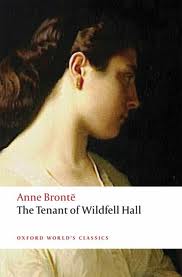
In the meantime, regular class preparation goes on. We start The Odd Women in the ‘woman question’ seminar this morning; I expect lively discussion, as it is both a fast-moving and a provocative novel. It’s Indemnity Only in Mystery and Detective Fiction, so today we’ll talk about the challenges and pleasures of subverting hard-boiled conventions with a female protagonist. And it’s our first day on North and South in 19th-Century Fiction. There’s a major snow storm just starting up as I write this, and that’s my last class of the day–I fear attendance will be sparse, but those who do come will probably be treated to a small clip from the BBC version starring the very intense Richard Armitage as Mr. Thornton. I like to show the scene of his first meeting with Margaret, which in the BBC version turns on his beating up one of the ‘hands’ at his mill–which, of course, never happens, at least not literally, in the novel. Sharp differences between book and adaptation like this often help us focus on what’s at stake in the original (the overt physical and sexual violence in the adaptation of The Tenant of Wildfell Hall, for instance, gives Helen motives for leaving her husband that are more recognizable to contemporary audiences than those she actually declares in Brontë’s text, a shift that I think actually changes the political and thematic emphasis a lot). In the North and South example, it’s more like shorthand, I think: without the time or the technical means to give us the kind of exposition we get from Gaskell, the beating-up scene very quickly lays out differences in values between Margaret and Thornton, still leaving room for us to see (or reconsider) the conflict from their different perspectives.

Recent Reading Update

Blog evidence to the contrary, I have in fact been doing some reading besides that for my classes. Since The Last Samurai, there hasn’t been anything that really excited me, and between that and the usual late-term mental exhaustion, I just haven’t felt that motivated to write anything up in detail. Here’s a quick run-through of what I’ve been reading.

I did enjoy Jane Gardam’s The Queen of the Tambourine, if “enjoy” is the right word for a book that is really quite sad, as well as occasionally disturbing. It’s the story of Eliza Peabody’s journey through a mental breakdown, told all in her letters to a departed neighbor…sort of. The novel thrives on uncertainty about what is real and what are Eliza’s delusional (or compensatory) imaginings. Even as much of the story proves unreliable, Gardam manages effectively and poignantly to make Eliza’s emotions real and vivid, and to balance the pathos of her situation with comedy.

I had high hopes of Laila Lalami’s Secret Son, because I admired Hope and Other Dangerous Pursuits a lot, but I found it a somewhat disappointing read. It’s a thematically and politically interesting and carefully structured book, but the language felt stilted and often even cliched, and as a result I never became very engaged.

I have been urging Maddie to read From the Mixed-Up Files of Mrs. Basil E. Frankweiler for ages, and one night I decided I should leave her alone (she’s busy enough reading her way through the novels of Jacqueline Wilson) and revisit it myself. The story of the brother and sister hiding out in the Metropolitan Museum is still a delightful fantasy to me (the “period” rooms in the museum are my favorite parts and I love the idea of camping out there!), but this time I was less caught up in those specifics than in the sense that the book is really about a different kind of quest-as the author says in her afterword, “the greatest adventure lies not in running away but in looking inside, and the greatest discovery is not in finding out who made a statue but in finding out what makes you.”  I wonder what it means that I often feel closest to finding this out when I am “away,” including when I’m in New York.

I’ve continued my adventures in contemporary romance with some more Jennifer Crusie titles, including Welcome to Temptation and Bet Me. I found Welcome to Temptation a bit too zany, but I quite enjoyed Bet Me. I don’t mean to condescend to the genre when I say that for me, the appeal I can see is that it doesn’t demand to be taken very seriously, and indeed these titles are quite conspicuously light-hearted. Especially when the books I’m reading for work are not that at all, it’s actually nice to have something to pick up in between that makes me laugh.

Now I’m reading Mr. Golightly’s Holiday for those in-between times, along with Mollie Gloss’s Wild Life, which is this month’s selection for the Slaves of Golconda reading group. I felt bad that I didn’t get through last month’s choice, Anabel Lyon’s The Golden Mean: I just wasn’t interested in it, and it’s hard, with so many books around, to make one a priority that isn’t otherwise a priority for me. I admit I’m feeling the same about Wild Life, that it’s not a book I would otherwise be reading–and I also feel that about The Paris Wife, which my local reading group settled on for this month. I have books stacked up that I’m more interested in! But then, one of the points of belonging to a reading group is that it pushes you outside your usual reading habits, which if unchallenged can actual be limits, and may prevent the discovery of new pleasures. So I will finish these, I swear! One thing I do like about Wild Life so far is its West Coast setting: it reminds me of big trees and blue mountains, and a little bit of one of my favorite meta-historical novels, Daphne Marlatt’s Ana Historic…except that Wild Life, as I understand it, is going to take its fantasy in a different direction, one that I fear is going to involve something like Big Foot…

And in the meantime reading for work continues. This week we begin North and South in my 19th-century fiction class, which I’m looking forward to, and in Mystery and Detective Fiction we are moving on to Sara Paretsky’s Indemnity Only and then our last book of the term, Walter Mosley’s Devil in a Blue Dress, while in the Victorian ‘Woman Question’ we have just The Odd Women left. It’s amazing how fast the term goes by! Reading will actually be the least of my problems this week, as I get in 70 midterms and 20 paper proposals on Monday, followed promptly by 40 essays on Wednesday. Egad! I should really do something frivolous today, as it will be my last chance to play for a while.


In Brief: Two Takes on Reforming Graduate Education

I hope to write more about my response to each of these very different calls for reforming graduate education, but since I’m not sure when I’ll be able to, for now I’ll just quote a bit, link to them, and invite comments. I think that my response is something like this: both are right that real structural change would be good, but Nowviskie’s proposal makes me uncomfortable by going so far away from the kind of work I’m familiar with (and that drew me into graduate school and now characterizes my teaching and writing life), while Berman’s leaves me dissatisfied because it avoids issues of intellectual substance in its emphasis on time to degree, a goal to be pursued by “required courses with clear benchmarks and learning goals,” and its overall tone of business-school-like pragmatism. In both cases, I like the emphasis on new forms of knowledge dissemination and alternative forms of publishing, including Berman’s reiteration of the need to rethink the dissertation and the dominance of the monograph (like the weather, this is something people keep talking about, with no perceptible effect). Here are the two links, with excerpts:

Bethany Nowviskie, It Starts on Day One

Here’s a modest proposal for reforming higher education in the humanities and creating a generation of knowledge workers prepared not only to teach, research, and communicate in 21st-century modes, but to govern 21st-century institutions.

First, kill all the grad-level methods courses.

Kill them, that is, to clear room for something more highly evolved — or simply more fruitful — to take their place. Think: asteroids clobbering dinosaurs. Choking weeds ripped from vegetable gardens. The fuzzy little nothings and spindly cultivars in this scenario, squinting cautious eyes or uncurling new leaves into the light, are:

  • those research methodologies and corpora (often but not exclusively gathered under the banner of the “digital humanities”) that address hitherto unanswerable questions about history, the arts, and the human condition;
  • and the new-model scholarly communications platforms we can already recognize as promising replacements to our slow and moribund systems for credentialing and publishing humanities scholarship and archiving the cultural record on which it is based.

Russell Berman, Reforming Doctoral Programs: the Sooner the Better

Departments should design regular course series that expeditiously prepare students for examinations. Such organized curricular design is vital to achieve an accelerated time to degree. It is a common practice in some social sciences for entering students to face an articulated set of required courses with clear benchmarks and learning goals.1 In contrast, in some literature fields, annual course offerings vary in accordance with individual faculty predilections. Instead we should design a curriculum for student learning needs. Graduate students ought to be able to complete course work in two years. This realistic goal depends on effective management of both faculty teaching responsibilities and student course enrollment.

We need to design a wider array of capstones to doctoral programs and to move beyond the traditional dissertation. In literary studies, the nearly exclusive form of completion is the dissertation, which has come to mean, effectively, a draft of a book manuscript. We maintain this expectation, despite the crisis in academic book publishing. Let us be honest: most academic books, especially those derived from dissertations, have little distribution. . . . Technological change and the digital humanities suggest other shorter genres of scholarly writing; moreover, such genres might be able to bridge the gap between scholarship and the public, which has hurt us so badly in the current wave of budget cuts.


This Week in My Classes: The Morals and the Stories

Though everyone is looking a bit peaked around the department these days–students and faculty alike–and I’m certainly feeling the usual pressures as we move into the term’s final phase, I am also finding myself intellectually invigorated by the novels we’re working through in all of my classes. It is just such a pleasure to be spending time reading and thinking about them, even under less than optimal conditions.

In The Victorian ‘Woman Question,’ we are finishing up The Mill on the Floss. Although I love the early volumes of this novel, with their evocative (if also rather vexed) representation of childhood, and their wonderful blend of sly humor and philosophical reflection (not to mention, of course, the brilliant characterizations of Tom and Maggie and their whole mish-mash of a family life), Books VI and VII really get me excited. I know they are disproportionately short, and who wouldn’t love it if Eliot had written out the great conflict between duty and desire more fully–but then, there’s something apt, too, about the headlong rush to the ending. Though we had read only to the kiss on the arm for today, it was clear from our discussion that the students both grasp the complexity of Maggie’s situation and are interested in it: there aren’t easy answers, the way there are in Tenant of Wildfell Hall, for instance. Brontë’s narrative is complex in other ways, but that there is a right way out of Helen’s difficulties is far less difficult to grasp, just as it is easier to see where she went wrong in the first place. Her attraction to Arthur Huntingdon, while understandable, is a sign of her moral immaturity. Maggie’s attraction to Stephen Guest, on the other hand, while equally misguided in its own way, is a symptom of something much deeper and much further from her control. I was struck on this reading with how much Eliot emphasizes that Maggie and Stephen are initially motivated by unconscious forces, feeling as if “in a dream,” unable to recognize or articulate the “laws of attraction” that compel them. Their drifting down the river is hardly a deliberate act, or at least its impelling motives are hardly clear to them–which of course is much of the use Eliot is making of the metaphorical pattern of rivers and water and currents and drifting right to the end of the book. Once Maggie wakes up, though, into full consciousness, then sexual attraction ceases to be an accidental cause and becomes a force to be reckoned with, and that reckoning is the process of morality–the engagement of human reason in “the labor of choice.” Though it’s possible (I reluctantly suppose!) to find something mechanical in Maggie and Stephen’s impassioned debate, I find it very moving precisely because it represents that struggle to think through feeling to right action:

Maggie trembled. She felt that the parting could not be effected suddenly. She must rely on a slower appeal to Stephen’s better self – she must be prepared for a harder task than that of rushing away while resolution was fresh. She sat down. Stephen, watching her with that look of desperation which had come over him like a lurid light, approached slowly from the door, seated himself close beside her and grasped her hand. Her heart beat like the heart of a frightened bird; but this direct opposition helped her – she felt her determination growing stronger.

‘Remember what you felt weeks ago,’ she began, with beseeching earnestness – ‘remember what we both felt – that we owed ourselves to others, and must conquer every inclination which could make us false to that debt. We have failed to keep our resolutions – but the wrong remains the same.’

‘No, it does not remain the same,’ said Stephen. ‘We have proved that it was impossible to keep our resolutions. We have proved that the feeling which draws us towards each other is too strong to be overcome. That natural law surmounts every other, – we can’t help what it clashes with.’

‘It is not so, Stephen – I’m quite sure that is wrong. I have tried to think it again and again – but I see, if we judged in that way, there would be a warrant for all treachery and cruelty – we should justify breaking the most sacred ties that can ever be formed on earth. If the past is not to bind us, where can duty lie? We should have no law but the inclination of the moment.’

‘But there are ties that can’t be kept by mere resolution,’ said Stephen, starting up and walking about again. ‘What is outward faithfulness? Would they have thanked us for anything so hollow as constancy without love?’

Maggie did not answer immediately. She was undergoing an inward as well as an outward contest. At last she said, with a passionate assertion of her conviction as much against herself as against him,

‘That seems right – at first – but when I look further, I’m sure it is not right. Faithfulness and constancy mean something else besides doing what is easiest and pleasantest to ourselves. They mean renouncing whatever is opposed to the reliance others have in us – whatever would cause misery to those whom the course of our lives has made dependent on us. If we – if I had been better, nobler – those claims would have been so strongly present with me, I should have felt them pressing on my heart so continually, just as they do now in the moments when my conscience is awake – that the opposite feeling would never have grown in me, as it has done – it would have been quenched at once – I should have prayed for help so earnestly – I should have rushed away, as we rush from hideous danger. I feel no excuse for myself – none – I should never have failed towards Lucy and Philip as I have done, if I had not been weak and selfish and hard – able to think of their pain without a pain to myself that would have destroyed all temptation. O, what is Lucy feeling now? – She believed in me – she loved me – she was so good to me – think of her….’

One of my students remarked that when she studied The Mill on the Floss in another class, they discussed Maggie and Stephen’s relationship as a great romantic love story–thwarted, I suppose, by “society,” though she didn’t go into detail about their interpretation. I admit, I find that a puzzling take on these two, who seem so ill-suited to each other in character and taste, and also, as we see here, in values. That their passion cuts across these factors is precisely what makes it so surprising and dangerous. If only there were a great romantic option for Maggie in the novel! Instead, she’s torn between three loves (Tom, Philip, and Stephen), each with his own demand on her feelings and loyalties. Where is she to go–what is she to do? Short of leaving them all behind and starting over, there is no way forward for her, and she can’t cut them off because as she tells Philip (become, poor fellow, her “external conscience” rather than her beloved), she “desires no future that will break the ties of the past.” Given that, her final choice is as inevitable as its result.

In 19th-Century Fiction we are nearly finished with Hard Times. I was wondering about my decision to rotate it into the reading list again after a few years of Great Expectations and a special turn for Bleak House, but I’m actually finding it really compelling. The structure is taut (if every so often the sentiment is a bit flabby) and it’s such a very dark novel. We were discussing Louisa today and her descent down Mrs Sparsit’s staircase. I don’t know another novelist who could (or would!) stretch out a conceit like that across not just paragraphs but whole chapters. And throughout the novel there is such a tight integration between Dickens’s prose and his thinking, every thought infused with fancy so that as we read we live the novel’s principles. It’s not his most subtle novel, but subtlety will get you only so far, as Trollope conceded when he wrote about “Mr Popular Sentiment” in The Warden: the artist who paints for the millions must use glaring colours, and might make more difference than all his own fine shades of gray. And what subtle novelist could make me cry the way Dickens does every time I read the chapter called “The Starlight”? Before the week is out I want to bring in some excerpts from Martha Nussbaum’s Poetic Justice: it occurred to me during today’s discussion that we could think in more contemporary terms about the social effects of his literary strategies.

In Mystery and Detective Fiction it’s a Victorian kind of week too, because we’ve moved on to P. D. James’s An Unsuitable Job for a Woman. James has always been explicit about her interest in 19th-century fiction, especially Austen, Eliot, and Trollope, and I think in many ways Unsuitable Job is very much in their tradition. It is a kind of Bildungsroman, or so I will propose in Wednesday’s class, and the central conflict is between a calculating kind of utilitarianism (on the villain’s part, of course!) and Cordelia’s passionate humanitarianism: “what use is it to make the world more beautiful if the people in it can’t love one another?” she exclaims, and in that moment she is close kin to Louisa as she falls on the floor before her father, Mr. Gradgrind, proclaiming “your philosophy and your teaching will not save me.” Both make the case for the wisdom of the heart over the wisdom of the head.