 It’s week 2 of the winter term and things haven’t quite settled into a routine yet. One cause is my pet peeve, the too-long add-drop period: students are still joining my classes (which they can do online without so much as checking in with me first) even though they’ve already met four times each. The ripple effects of this are pretty significant for both instructors and students–but clearly we are never going to persuade the administrative Powers That Be (who are quite as inscrutable as their namesakes in Angel) that this system is pedagogically unsound, so I should probably stop complaining about it.
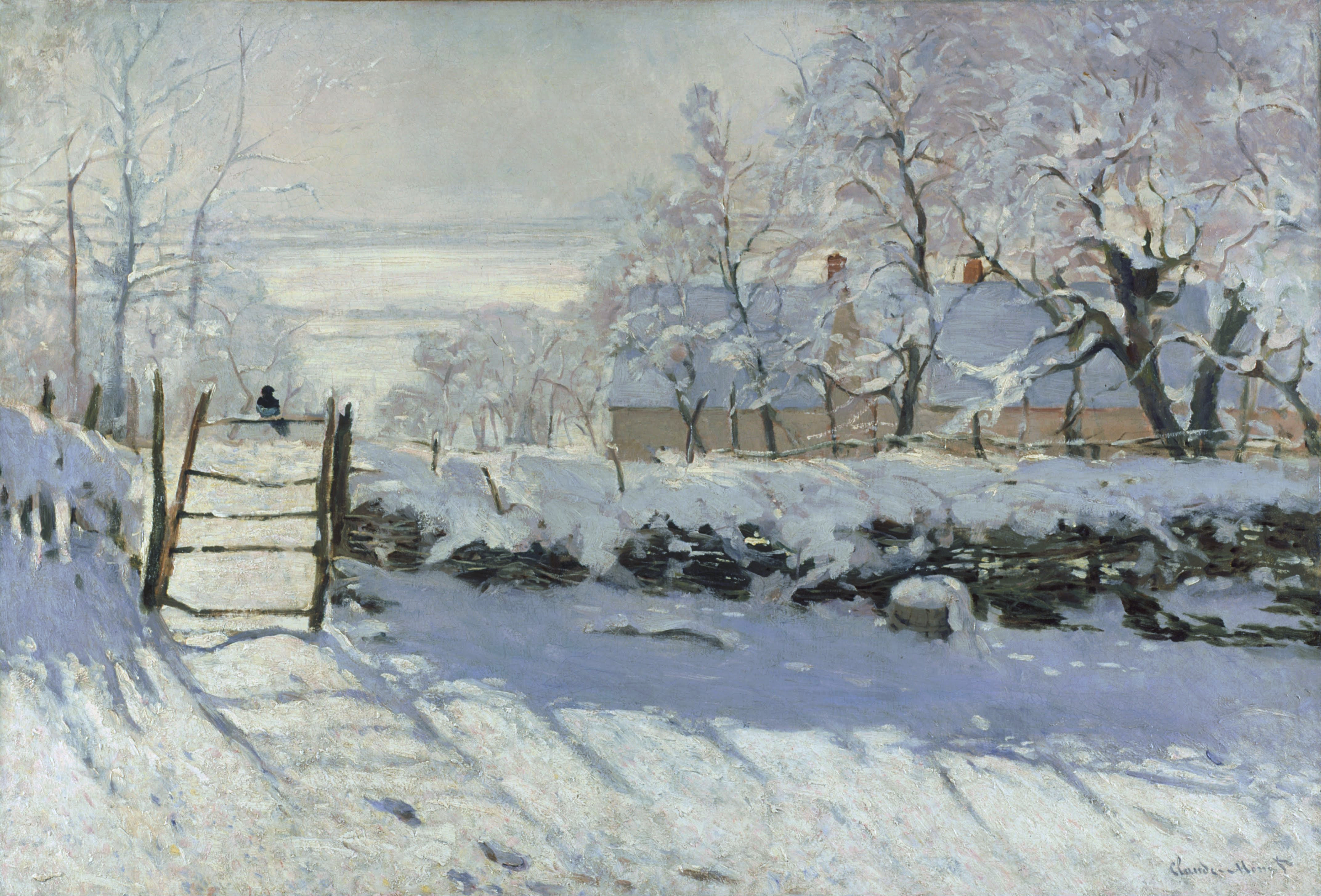
The other unsettling factor is winter, which has taken on its more accustomed form this week: after several spells of either fiercely cold (but dry) days and unseasonably warm (but very rainy) days, last night we had our first real dump of snow, and there’s more in the forecast for tomorrow. I am so happy that next winter term I’ll be on sabbatical! And the winter term after that (amazingly enough) I will no longer be chauffeuring Maddie to high school, so I will have much more flexibility about exactly when I venture out in the morning.
 However! These various sources of stress aside, the business of the term is underway and really, as far as I can tell, it’s actually going pretty smoothly so far. In Pulp Fiction I’m done with warm-up material and we’ve started our unit on Westerns. Yesterday was mostly about context–the history and myth of the American West and the origins and conventions of the Western. The reading I assigned was Sherman Alexie’s “My Heroes Have Never Been Cowboys”: from the discussion we had, and from the reading journals the students submitted, most of them seem to have found his critique and subversion of Western tropes engaging and thought-provoking. It’s also a good text for introducing the importance of point of view, which we’ll want to be self-conscious about throughout the term. Tomorrow we’ll be talking about Dorothy Johnson’s “The Man Who Shot Liberty Valance,” which has many elements of a classic western but takes some unexpected turns. We’ll work through two more short stories before starting our main text, Valdez Is Coming, next week. So far the energy seems good in the classroom: I really hope that persists, as last year I really struggled to get much participation. It’s a lot more fun for everyone when the discussion is lively, and as I’ve been really emphasizing in my own comments so far, English is a discussion-based discipline (yes, I’m going to bring up “coduction” eventually), so talking and listening are also key ways to hone the relevant skills.
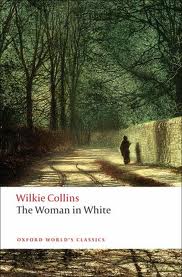 In Victorian Sensations we are also done with our warm-up material, though there was less of it there as it’s a 4th-year class. I set things up for the term with one lecture on “the rise of the novel” and some specific features of sensation fiction. This year there are a lot of students in the seminar who have taken at least one of my 19th-century fiction courses, which means some of this was review for them, but a little reinforcement never hurts, and this brings those without that previous experience in the genre up to speed. With that preliminary work out of the way, we’ve begun our discussions of The Woman in White. What a lot of fun the novel is! I haven’t taught it (and thus haven’t reread it) since 2012, and I am reveling in its twists and turns and excesses and absurdities, from Walter’s pathetic pining after Laura–the perfect and, as students quickly concluded, perfectly dull representative of ideal Victorian womanhood–to her indomitable half-sister Marian–Magnificant Marian, as the effusively charming and sinister Count Fosco calls her. Here too the energy seems good so far, with plenty of people already chiming in: this is not just desirable but essential in a seminar, of course, so I’m glad to see it. I really enjoy the more open-ended style of a seminar class–although I find it takes every bit as much concentration, and is every bit as tiring, as a lecture class precisely because I’m not as much in control of where the discussion goes but I have to be very responsive to it.
So here we are: well launched on another season. There are administrative wheels turning as well, which means meetings and paperwork, and I hope to get some writing done in the interstices, but even more, right now, I hope to get some better reading done–besides the reading I’m doing for class, of course. I’ve just started Dr. Edith Vane and the Hares of Crawley Hall, which looks just about perfect for this time of term.
 We’re hunkered down bracing for the big storm that is working its way up the Eastern seaboard. It isn’t clear yet whether Halifax will get much snow or mostly rain and freezing rain, but the biggest threat seems to be strong winds and thus power outages. Happily, the school board cancelled classes preemptively and classes at Dalhousie don’t start until Monday, so none of us has anywhere to go. [January 5 update: Our power went out almost as soon as I pressed ‘publish’ on this post and we just got it back. It got pretty cold in the house but otherwise we got off easy–and there was no measurable snow in Halifax at all, so no shoveling!]
 One specific innovation–a modest but, I hope, a valuable one–is that this year I am going to take some time to talk explicitly about note-taking strategies. Particularly for class meetings that are discussion based, I often get the sense that students do not know what to write down. Many clearly do not record anything at all, while those that think of themselves as conscientious note-takers often seem to be trying to transcribe every word. I’ve been reading up on the Cornell system and I think it’s easily adapted to the kinds of class sessions I typically run, so that’s what I’m going to focus on. Once I’ve gone over it, I will try to make it a common practice to take the last few minutes of a class to have students literally compare notes. (The image here is from the
  The overall structure of the course will be the same, though, as will the readings, which means I can draw on the notes I had to develop more or less from scratch last year. We’re starting with some general discussion about how and why “pulp” and “genre” fiction get differentiated from “literary” fiction. Then we’ll work through our examples of Westerns, mysteries, and romances, with Valdez Is Coming, The Maltese Falcon, and Lord of Scoundrels complemented by a selection of short fiction and, for Westerns, one poem (Sherman Alexie’s “My Heroes Have Never Been Cowboys”). The only one of the readings I really had second thoughts about was The Maltese Falcon, not because it wasn’t perfect for the course but because it is the only one of our three novels easy to cheat about. This year I will take that into account in the paper topics I assign about it. (Sadly, that means nobody gets to write about Brigid O’Shaughnessy as a femme fatale.)
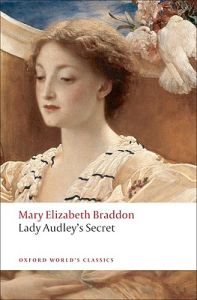
 My other course is a 4th-year seminar on Victorian sensation fiction. I have taught it several times before but not recently–in fact, to my surprise, I realized I haven’t taught it since 2009! I have, of course, assigned a couple of the key texts we’ll be reading in it for other courses: I have often covered both The Woman in White and Lady Audley’s Secret in 19th-Century Fiction. Even The Woman in White hasn’t been on my syllabus since 2012, though. I started rereading it yesterday and I am really looking forward to discussing it with my students. I’ve never taught Ellen Wood’s East Lynne in any other course: it is such a strange novel! In previous versions of this course the fourth sensation novel on the reading list was Braddon’s Aurora Floyd, but I always thought it was less than ideal to have two novels by the same author, however different they are, so this year I have substituted Rhoda Broughton’s
  In many ways, I’m looking forward to the term. There are only two real sources of anxiety (besides the usual anticipatory stage fright). One is just that it’s winter, which always brings complications. The other is that it’s a bargaining year and negotiations between the administration and the faculty association seem to be dead ended. Last time around, they were right up against the strike deadline when a deal was finally reached, and it was very hard on everyone but especially the students. I’m not in the faculty association myself (technically I am appointed to the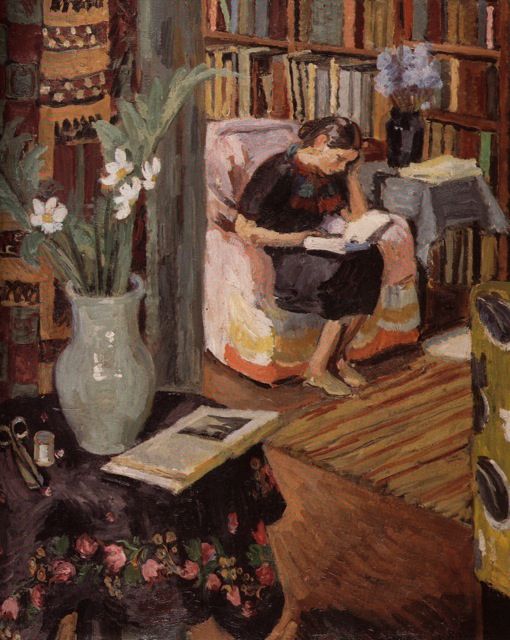
 Today is the last day of fall term classes. I’ve felt a bit confused all day because while it is a Tuesday really, we had Monday classes, thanks to a scheme some committee cooked up to “equalize” the exact number of days every class meets. (Next term the same geniuses have ordered that we have thee “Fridays” in a row, one actually on a Friday, then two more on the following Monday and Tuesday. You tell me how much sense that makes if your Friday meetings are usually tutorials…)

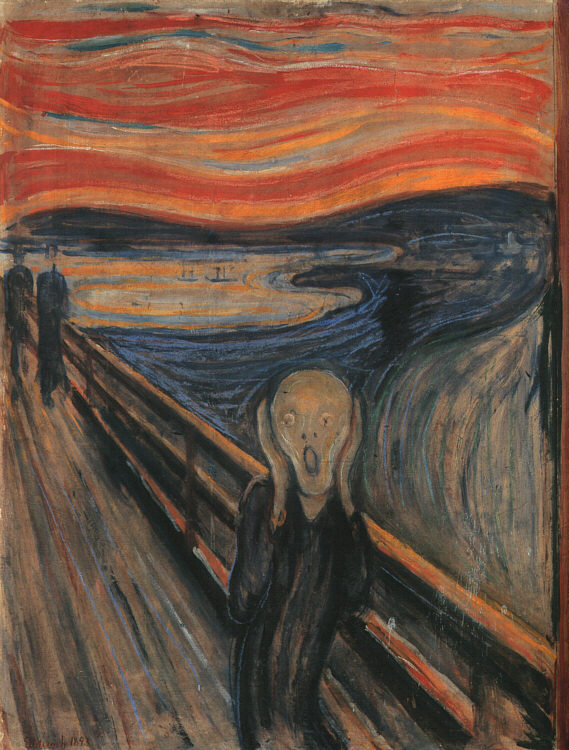
 That’s OK: it happens, especially around this time of term. It is startling to realize how far through the term we are, actually. We had an unusually warm October, and I think all the pleasant, sunny weather contributed to the sense that we were still in the opening phases. But here we are on November 1, and by the time we get back from our protracted study break (all of next week, plus the following Monday ‘in lieu of Remembrance Day’) we will be hurtling towards the end of it.
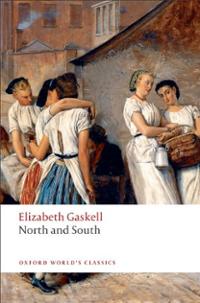
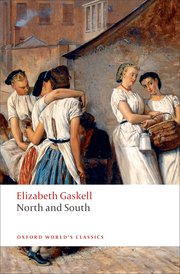 So that class went better than expected, but then my afternoon class went a bit worse: participation was pretty minimal (though everything that was proffered was really useful) and there was a lot of that whole “look down intently at your book every time she asks a question” thing that clearly signals “don’t ask me! don’t even look at me!” Again, that’s fine–up to a point! Everyone’s busy and reading for my class can’t always be everyone’s top priority, even if it is North and South. I was disappointed, though, because usually it’s a class favorite and today’s was a good installment, taking us right through the strike to the remarkable scene on the steps of Marlborough Mill:
 In both of my classes this week we are focusing on young women making mistakes. It’s interesting for me (and I hope also for the students who are in both classes) to compare the very different ways their novels approach their rather different errors.
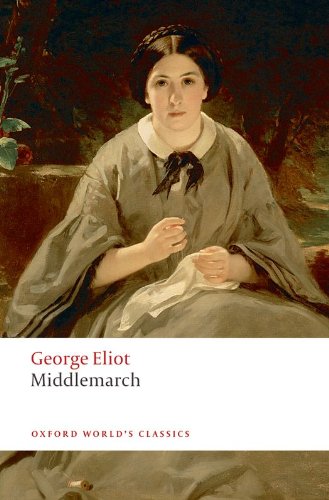
 Dorothea Brooke’s errors are easier to spot, because George Eliot gives us not just Dorothea’s perspective but that of everyone around her and, most important, of the narrator. It mystifies every person in the novel that Dorothea chooses to marry Mr. Casaubon: they all believe that it’s a terrible mistake. We understand why she marries him, though, because we know all about her, meaning not just her desire to lead a spiritually significant life but also her impetuous nature and her tendency to interpret things according to her own desires. Of course, that last bit is at once her greatest failing and the one thing we all have in common with her, as the narrator will take pains to teach us. We are given more information in Middlemarch, but we are also kept at more of an emotional distance–both formal choices that serve the novel’s larger purposes.
 The 2016 U. S. election has given some books I regularly teach new resonance–and not in a good way. In March 2016,
  I’ve been thinking that another novel for our times is
  The first couple of weeks of the new term are always deceptive: you anticipate them with so much anxiety after the slower pace of summer work, but then for a while, though the logistics are a bit hectic and there are more day-to-day deadlines, it doesn’t seem that bad. But then the first significant assignments come in, and you have to keep up the day-to-day stuff on top of marking them, and there are more meetings, and they both take time and generate things to do, and the next thing you know you are barely keeping track of it all. And that’s about where I am now!
 Still, I always like the energy both demanded and generated by the actual classroom time; regular readers will know how often I complain about summer doldrums, too, brought on by too vacant a schedule and too few opportunities for interaction and engagement with other people. As more and more of my colleagues head into retirement, I do sometimes fantasize about what that phase will be like for me, and how soon I might be able to enter into it. (Not that soon, since I’ve just turned 50!) I think when the time does come I will have to be careful that it isn’t like an endless summer, without any structure. For now what I have to do is make sure I can maintain my energy and enthusiasm — by, for instance, trying to bring less work home with me than I once had to, and making time as best I can for the reading and writing that I want to do.
 Novel Readings