 My recent reading has not been particularly exhilarating, but most of it has been just fine: no duds, just no thrills.
Julie Schumacher’s The English Experience was enjoyable but also seemed quaint, in a sad sort of way: what is the point, really, of academic satire given the existential threats to research, education, faculty, and students currently devastating the higher ed landscape in the United States? It’s true that things have been grim for a long time, including in the UK, where every day seems to bring more dire news about program closures, and in Canada, where “do more with less” has been the rule for decades thanks to chronic underfunding for our ostensibly ‘public’ universities. But Schumacher’s Professor Fitger and his students are very much American, and while there is both comedy and pathos in the story of their misadventures, and while the gentle optimism of the ending is a nice reminder that both travel and education can and should give people a chance to become someone a bit different and a bit better, the The English Experience, charming as it was, seemed more nostalgic than pointed.
Liz Moore’s Long Bright River is one of the best crime novels I’ve read in a while—though since I don’t actually read much crime fiction these days, I’m not sure that’s really saying much. I’d heard that it was character-driven, and it is; it is a good novel about families, especially sisters, as well as about the far-reaching personal and social harms of the opioid epidemic. It has a good number of twists and turns and kept me engaged without making me feel overly manipulated, which I appreciated. I’m always scouting for recent options to include in Mystery & Detective Fiction: I don’t think I would assign this, but mostly because it is pretty long and I’m not sure it’s good enough qua 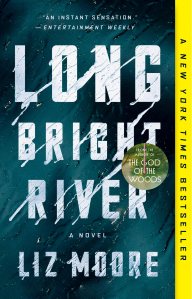 novel to spend the amount of time on it that I’d need to coax the students through its 450+ pages (more than two weeks, most likely). This is the conundrum of the “teachable” (vs. readable) text; this is why so far I have not assigned one of Tana French’s books either.
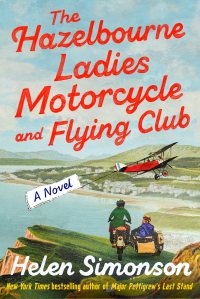
I loved both Helen Simonson’s Major Pettigrew’s Last Stand and The Summer Before the War so I eagerly picked up The Hazelbourne Ladies Motorcycle and Flying Club when I saw the paperback had finally come out. Unfortunately, it disappointed. There is plenty of good material in it. I enjoyed the details about women’s wartime experiences and then their struggles as they were displaced from their jobs as the men came back from the war; I liked the ‘neepery’ about both motorcycles and airplanes. The characters are all promising types, in this context, but as the novel dragged on (and the pacing did seem too slow to me, too much talking without much purpose, too many scenes not contributing all that much) they felt more like cut-outs representing those types than fully realized people. I felt the same about the novel’s plotlines around racism and discrimination: these are good things to represent, of course, but they seemed, if not exactly perfunctory, at least predictable. Reading it I thought again of the conversation I had with Trevor and Paul about historical fiction: this is not a bad novel, but I think it may represent the qualities or aspirations or limits that make some readers think historical fiction is not a really serious or ‘literary’ genre.
 I got Madeleine Thien’s Do Not Say We Have Nothing from the library as soon as I had agreed to review her forthcoming novel The Book of Records, on the theory that it was probably a good idea to know something about the earlier one in case there were connections. It turns out there is one possibly important one, though I’m still figuring out exactly what it means: throughout Do Not Say We Have Nothing the characters are reading and writing and revising a narrative called the Book of Records! I actually owned a copy of Do Not Say We Have Nothing for years and put it in the donate pile eventually because for whatever reason I still hadn’t read it. I assigned a story by Thien in my first-year class this year that I thought was really good, so this had already piqued my interest in looking it up again. I had mixed feelings about it. I found it a bit rough or stilted stylistically and never really fell into it with full absorption, but it is packed with memorable elements and also with ideas. It tells harrowing stories about the Cultural Revolution in China and focuses through its musician characters on how or whether it is possible to hold on to whatever it is exactly that music and art mean in the face of such an onslaught on individuality and creativity. It invites us to think about storytelling as a means of survival, literal but also (in the broadest sense) cultural—this is where its Book of Records comes in, as the notebooks are cherished and preserved, often at great risk. I’m not very far into Thien’s new novel yet but it seems even more a novel of ideas, perhaps (we’ll see) too much so.
My book club meets this weekend to talk about Northanger Abbey, so I also reread this. It has been so long since I read it it didn’t really feel like a reread, actually. It amused me, but that’s about it. After I’d finished it I read Marilyn Butler’s introduction to my Penguin edition and she makes the case that it is much more interesting and sophisticated than it is often given credit for. OK, sure, and I take her point that to really appreciate it we need to be as immersed in the other novels it alludes to as its characters are—but I’m not, and I’m not really interested in them (sorry, Jane!). I think I get the gist of the novel’s playful jousting with gothic conventions as well as other models of ‘women’s fiction’ from the time. I love and greatly admire both Pride and Prejudice and Persuasion, but for sheer pleasure I prefer almost any Georgette Heyer to this and don’t expect to read it again. Still, I am curious about what the other members of my book club have to say!
And that basically catches me up. I have just started Susie Boyt’s Loved and Missed, which so far seems as good as everyone said; I still have Olga Tokarczuk’s The Empusium on my TBR pile; and I’m still stalled out several chapters into Hisham Matar’s My Friends. Stay tuned for the next thrilling updates on my reading! 🙂

 Only very gradually do the new realities of England at war make themselves felt. Food becomes scarcer, and extra preserves seem called for. Belgian refugees arrive, their suffering at first nearly overlooked in the villagers’ excitement at being part of “the great enterprise under way”:
 What interested and impressed me the most about The Summer Before the War as the inevitable catastrophe unleashes itself on our characters is that once the war is fully upon them, and us, it isn’t the contrast with the earlier, more innocent and bucolic, scenes that makes its horrors and losses so painful: rather, it’s the continuity. These are the same people, with the same dreams and values, the same attachments and affections — even the tone of the novel is very nearly the same in the trenches as it is when we’re in a sunny lane or a village shop. The Summer Before the War balances its attention between the battlefields and the home front, where loss leads too often to isolation. “On such a day as this,” thinks Beatrice, contemplating the bright morning of a planned festivity,
 Novel Readings