She seemed to see herself moving about its unknown rooms, small bare white rooms through which the sun fell at an angle. Here she set a plant on a deep sill. There she hung the sampler she had worked for her mother as a child: her own possessions. All her adult life she had lived in houses built of deep accretions of other people’s lives. She had moved among them cautiously. But here, she herself might extend to the very walls and they would reflect back upon her, her plant, her sampler, things that were herself.

Ann Schlee’s Rhine Journey was almost too exactly the kind of novel I like. It is Lolly Willowes with a dash of Villette, or perhaps the other way around. Its protagonist, Charlotte Morrison, is stifled, repressed, mournful, and—somewhere deep inside—angry. She has no agency, or dare not claim any; she has money but doesn’t dare use it to turn herself into the main character in her own life. Her desires, like Lucy Snowe’s, manifest themselves in dreamlike fantasies shot through with both menace and eroticism; also like Lucy Snowe, she (and therefore we) can sometimes find it hard to be certain where the line is between her imaginings, conscious or not, and her reality. And like Lolly Willowes, she does finally break out of the role being assigned to her, though not in quite such a dramatic way.
Rhine Journey is a wonderfully tense and atmospheric book. Very little actually happens, and what does is largely within Charlotte’s mind, as Schlee hews very closely to her point of view—one effect of which is to make the reader chafe againstits restraints and constraints almost as much as Charlotte herself does. A sample, from a point in the novel when Charlotte has rebelled against the constant expectation that she will put others’ needs before her own, not by arguing or protesting but by taking to her bed, and then, when everyone else has finally gone away, by daring to leave it:
It would be hot in the streets. A triangle of hard blue sky came and went as the curtain blew. Idly as she lay a thin film of sweat formed between her skin and the nightdress. There was borne in upon her the luxury of being alone. And with it as the hour of eleven came and went the desire to be more entirely alone. To be out among the intensifying sounds of the city. To walk in streets that formed no pattern for her, taking a turning here or there at random, as recklessly as if at any moment she should walk off the edge of the world. To see no face that could made demand of her. The beautiful blankness of faces of whom one asks nothing not even recognition. This was what she wanted.
In the glen, a little short of Strasserhoff, it was cool. The earth smelt damp and sweet. The rushing stream sounded. Through the trees she heard the crushing of twigs and undergrowth, rapid, impatient footsteps, fleeing ahead? pursuing?
No, she cried to herself. No She must not lie here a moment longer.
It’s deft, isn’t it, the way we slip out of bed with her into that shady glen, with its hint of threat, only to realize we haven’t left yet after all?
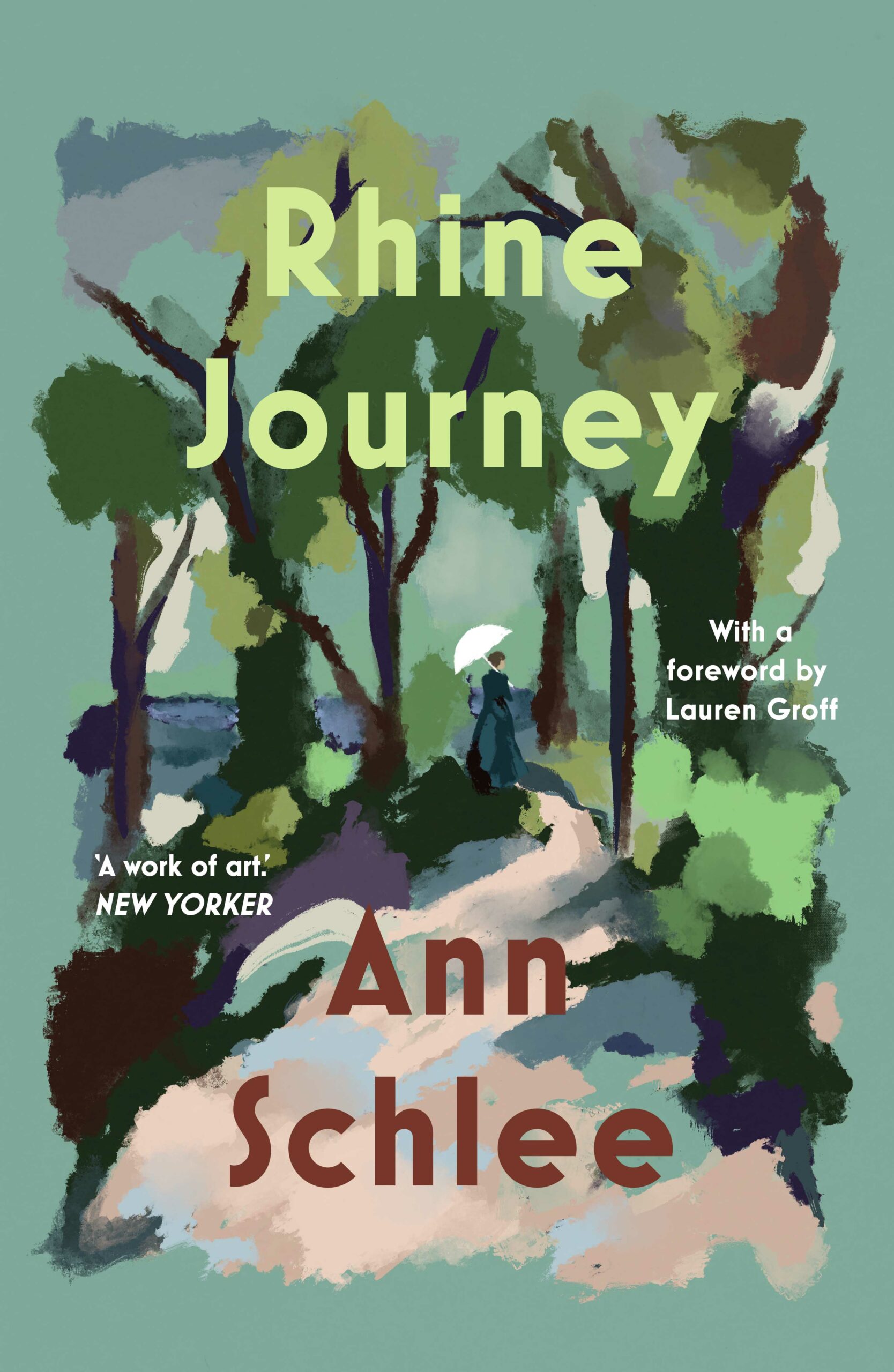 I don’t think the novel’s plot is as important as its mood: it’s that feeling, that yearning, that insistence, so hard to acknowledge, that this cannot be all there is, that it’s not bearable to live life on these terms—this is what drives us, and Charlotte, along to the novel’s crisis, which is in a way a repudiation of Charlotte’s self-absorption. She has misunderstood: she has interpreted something as personal that was political. I found it interesting that this realization is what it takes to liberate her. Contemplating the man who has (by an accident of resemblance) been an erotic fixation for her since the first page of the novel, she suddenly sees him as someone “outside her imagination” and thus “nothing to her.” It is exhilarating: she feels “free of a great burden,” as if suddenly, or finally, she too can step outside her own mind and do something, not selfish but for herself:
She could have run towards the lighted garden so eager was she about some purpose that she had scarcely defined to herself. And all the time—so oddly the mind veers—she pictured to herself those whitened cottage rooms where she might quietly extend herself, and moving from room to room, meet and recognize herself in forms unaltered by the pressures of others upon her.
These are familiar themes and Charlotte’s is in many ways a familiar arc for readers of both 19th and 20th-century fiction, but it is all so meticulously and intensely and intelligently told that it kept me completely engaged.
 Novel Readings