This Month in My Sabbatical: Reading and Writing

Though nothing especially momentous marks this month in my sabbatical, I am pleased that I have continued to move fairly steadily through the various projects I set for myself back in January. Though I appreciate having the time to read, reflect and reconsider, though, I have to say that this month I have felt particularly isolated, because it’s the two aspects of this job that you are relieved of on sabbatical (administration and teaching) that actually bring you into regular contact with other people. Without classes and meetings, much of what we do is strictly solitary, and during a regular term that quiet can be very welcome, precisely because teaching and committee work are hectic, demanding, and often as annoying as they are stimulating. At first, it was just a relief to be free of the incessant demands on my time and attention. But after a while, it’s lonely, even a bit depressing, puttering away by myself. That’s one reason this post on academic blogging (thanks to Jo VanEvery for the link) resonated with me, especially this bit:

a college of one’s own is essential to scholarship. Sometimes we get lucky and our collaborators are able to participate in that world, but more often they need us for narrower purposes: our technique, students, or grants. Who then to bump ideas off of? Who to share our latest little discovery or epiphany? How to communicate the interest of an article or book? Where to find a reader? Who will forgive us our latest and dumbest ideas? How to feel that slight flare of getting the last word in a debate among learned colleagues?

It’s true, as the author continues, that “a blog can provide those things, and more besides,” and I’ve been grateful for the interest and input I receive from so many of you on my posts here. (The post I link to also gives a thoughtful account of changes in the culture of academic life that have made that collegial interaction more difficult to achieve–if anything, I think he underestimates the role played by sheer day to day busy-ness.) I was thinking that it’s no accident I first began blogging on my previous sabbatical: without really knowing much about it, I was looking for more ways to communicate with other people, and it was exhilirating to discover the conversations going on online and then to become part of them myself. I wonder sometimes why I feel this lack, even when I’m not on sabbatical, and (as far as I can tell) most of my colleagues don’t. It’s true I’ve always been a chatty type (if my parents are reading this, they are muttering “no kidding” and recalling their coinage “talkit” … ) so there’s that; some of my colleagues are just more reclusive or scholarly by instinct, happy to burrow away in their research; some, I think, for whatever reason have a better network of peers and collaborators that provide input, support and energy; others might enjoy blogging but haven’t tried it, or think it would be a distraction from their “real” reading and writing. In any case, the solitude of sabbatical work has made me appreciate my online network more than ever. And it has also made me realize how much of the return I get for my investment in this career comes from my students, from the challenge and the fun of getting them involved in our readings, from their curiosity and energy and enthusiasm. I miss students! (Remind me I said this when I’m whining about grading their assignments in the fall, would you?) I miss my colleagues, too, a little bit … but it’s not like we do spend much time on the kinds of conversations evoked above. When we do talk about work-related topics, it’s more often griping conferring about workload, curriculum, or policy issues, about pedagogical problems–or about each other! Well, it’s a workplace, after all. (Those colleagues who are also personal friends are another matter, of course.)

So: what have I done? I’ve read and commented on more thesis material–and another 120+ pages sit in my inbox at this minute. I’ve read, or scrolled through, a large number of the nearly 100 reviews and articles I downloaded, getting “caught up” on–or at least refreshing my sense of–recent work in Victorian studies. That has not been as disheartening as I frankly expected it to be. The sheer quantity of scholarship in this field is potentially overwhelming if the idea really is to internalize all of it. It quickly becomes apparent, though, that most of it is of peripheral signifiance: the accumulation of it, trends and directions, are more revealing than any particular arguments, and even at that level I haven’t seen anything that suggests a paradigm shift on the scale of, say, feminist criticism or post-colonial criticsm: I haven’t seen anything that makes me think I need to fundamentally change what I think about or say about the material I teach. It’s possible to acquire lots of little insights, or to file things away in case they become relevant to some future class or project, but most of what I’ve read has left me unmoved. This result, in turn, has me reflecting on the pleasures of learning new topics. I have one colleague whose list of teaching interests struck me, back when I was first interviewing for my job here, as astonishingly diverse–but there’s an intellectual buzz that comes from discovery, and it’s hard to get that feeling at the level of highly specialized research. On the other hand, it is easy to get it when you don’t already know the central problems and paradigms of a field you are just starting to explore for yourself, so I can see the appeal of turning to new things, like a kind of learning junkie who can’t be satisfied anymore with yet another way to read the economics of Bleak House or the poetics of Goblin Market!

I’ve read more books that I thought might be appropriate for my classes, including Walter Mosley’s Devil in a Blue Dress and more of the Martin Beck mysteries–and in the last week or so I’ve drafted up a schedule for the course that actually includes Devil in a Blue Dress and The Terrorists. Other course-related reading included most of Rhoda Broughton’s Cometh Up as a Flower (which I ultimately decided not to assign),  a text book called Close Reading and the TOCs of numerous anthologies of crime fiction. I haven’t made the call yet about Close Reading but I did finally discover a Dover anthology of crime fiction that includes all the authors I wanted and is economical too–this is one more small testimony to the value of a sabbatical, because it took me ages to find and consider the alternatives here and if I had been in the midst of teaching, I would have given up and stuck with one of the books I’ve used before, even though for various reasons I wasn’t happy with them. (I have now ordered almost all the books for my fall classes and set up preliminary websites for them.)

I’ve also read a lot that wasn’t strictly for teaching or research, but then, as I say so often, in this job you never really know what reading will end up affecting your work, and I’ve been finding Vera Brittain and Winifred Holtby so interesting I am now wondering if at some point I could put together a course on the “Somerville Novelists”–not least because we have no in-house specialist in 20th-century British literature (crazy, I know) so I’d actually be helping round out our curriculum a bit if I did so. Just think: another excuse to assign Gaudy Night! (There’s that lure of the new, again: this would involve a whole process of learning and discovery.) Coming up for my two reading groups I have Somerset Maugham and Elizabeth Bowen–so more 20thC British fiction there too.

As for writing, well, there’s the blogging that goes along with all that reading, and I also decided to review Marjorie Garber’s The Use and Abuse of Literature after all. Following on my meditation about “giving myself permission,” I thought it might help overcome my writer’s block if I worked in a form I am very familiar with, so I did the review as a kind of feedback form. I thought it suited, because the book, though full of interesting and provocative threads, really read to me like something unfinished. I don’t understand why it got published without further revision, to be honest: what editor would be satisfied with something so amorphous? Despite my anxiety that it would seem unforgivably snarky to treat the book as I did, I did find it freeing to write it that way: for better or for worse, that is who I am, after all. And just as I do when responding to student work, I made sure to give credit for strengths as well as weaknesses, and to try to be constructive in my criticisms…
This Month in My Sabbatical: Not a Bad Start

I’m sort of missing the routine of my weekly teaching posts–not just writing them, but the act of taking stock that they represent. So I thought I would have a go at a similar exercise reflecting on my  progress (if that’s what it is!) through my sabbatical term. It may be even more useful, in a way, to make sure I am self-conscious about the passage of time, because my days are much less structured and my goals are in some ways more diffuse! So here goes.

Ongoing Business: Despite what non-academics often think, being on sabbatical does not mean not being at work–it means shifting the focus of your work, particularly by re-allocating the time usually spent in class prep, teaching, marking, and administration to research and writing tasks. Most of that time, that is, because there are always teaching and administrative tasks that still need to get done. For instance, this month we were asked to turn in our course descriptions for next year, which means I have already spent some time thinking about reading lists. Book orders will be due later this spring, so at this point my choices are only tentative, but I did brood about how things went with specific books or courses the last time and make some changes accordingly; I also researched and then wrote away for exam copies of some alternative texts, particularly for the Mystery and Detective Fiction class. I set up and marked a make-up exam for a student who had a family crisis right before our December final. I worked through 100 pages of a draft thesis chapter from one of my Ph.D. students and about 40 pages from another (and I attended a colloquium paper presented by yet another whose committee I am on). I wrote a lot of reference letters (and have three more I plan to finish up today or tomorrow).

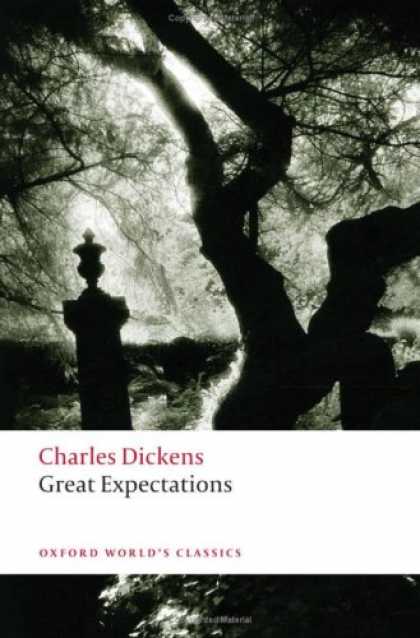
Housekeeping: During teaching terms, though I stay on top of the day-to-day business pretty well, I find there’s not a lot of time to spend thinking about how I organize things, or sorting through old materials to see what needs to stay and what can go. After 15 years in this job (and 10, now, in this particular office) stuff does rather pile up. One of the first things I did in the new year, then, was to begin going through my filing cabinets: so far I have three bags of paper ready for recycling, and much less duplicate or unnecessary material taking up space. I’ve also donated (or at least put out on our “help yourselves” shelf in the department lounge) an array of unwanted books. Equally important now that we do more and more of our work electronically, though, is electronic filing, and here I have begun a big project of reorganizing my files of course materials. Long ago I decided to keep my paper notes and handouts in files by author and text, rather than course, which has worked very well for me: if I’m teaching, say, Great Expectations, I pull out the DICKENS GREAT EXPECTATIONS folder and in it I find old lecture notes, discussion questions, overheads, essay topics, etc. But my computer files have always been by course and then by year. This worked well for a few years, but now I often find myself puzzling over which year it was that I taught The Tenant of Wildfell Hall or where the latest version of the exam questions on Jude the Obscure are filed. Of course, you can simply search for key terms, but inefficiencies still emerge if you’re trying to browse your materials for a particular text or topic–plus there’s redundancy here too, as I end up with many files of lecture notes revised, expanded, or improved on over the years but still stored in multiple versions. So I’m re-sorting all this stuff into the kinds of groupings that I think will help me quickly gather what I need when I’m prepping for class and deleting outdated or duplicate files. Once the teaching ones are better organized, I’d like to do the same for my research materials. Many of these files I might copy into OneNote, which is where I now organize my new notes and draft materials.

Research: My main research project for this sabbatical is getting a version of my essay on Ahdaf Soeuif ready for submission to a peer-reviewed journal–at least, I think that’s what I want to do with it, though I admit, the revolution still unfolding in Egypt has made me feel dissatisfied, somewhat, with what I’ve been doing. More about that later, perhaps. In any case, I have finished taking my fresh set of notes on The Map of Love (on January 25th, as it happens, I was just working through a scene of intense political discussion in the novel, a debate about the future of Egypt and the possibility of change). One of the challenges of academic writing is figuring out, not just what you want to say, but when you’re ready–or allowed–to say it, given the array of contextual and critical material that already exists. When can you stop reading, in other words, and feel entitled to contribute to the discussion? There is no right way to answer this, of course, and it is easy (at least for me) to get so overwhelmed by the vastness of the existing scholarship and the difficulty of drawing lines between what’s relevant and what’s peripheral that I can’t put two words of my own together. I find what helps me most, in this situation, is to go back to my primary text, allowing whatever else I’ve been reading to buzz around in the back of my mind and help me notice things and generate questions as I go. I make detailed notes, going page by page through the novel, and along the way I usually begin to see where the main questions are for me, and how I might begin to answer them. Then I am better able to see what I don’t have to read, and to position myself in the discussion I want to be a part of. In this case, because I am starting from my analysis of In the Eye of the Sun, I wanted to stay in roughly the same territory, thinking about the relationship between Soueif’s work and the English literary tradition she repeatedly invokes. But The Map of Love is a very different book, particularly in its form, and it seems much less confident about the idea of common ground (or ‘mezza terra’) that I argued is central to the earlier novel. Towards the end of last week I started roughing out the new section of the essay.

Other Reading and Writing: I’ve done quite a bit of reading this month. I began looking at some recent books in Victorian studies, in keeping with my goal of refreshing my own expertise for both teaching and criticism in “my” field. One was Patrick Brantlinger’s Victorian Literature and Postcolonial Studies, but it ended up not being of great interest, as it recapitulates texts and debates that I had already become reasonably familiar with. He’s a good writer and it’s a good overview, to be sure. I’ve begin Rachel Ablow’s The Marriage of Minds: Reading, Sympathy, and the Victorian Marriage Plot, and I have James Eli Adams’s A History of Victorian Literature out from the library–another overview, but given how specialized critical work has become, I thought I’d start big and zoom in. But, speaking of specialized, I saw Julie Fromer’s A Necessary Luxury: Tea in Victorian England in the library while I was browsing around and couldn’t resist checking it out as well. Necessary indeed! I’ve documented most of my other reading on this blog already, including the beginnings of my Margaret Kennedy project–I’m two books in and feeling, frankly, underwhelmed, but I will persist! And if the essay that results is along the lines of “Margaret Kennedy: As Well Known as She Deserves, Actually,” well, that will be as interesting in its own way as “Margaret Kennedy: Underappreciated!” Among the other books I’ve read and written up are Graham Greene’s The Power and the Glory and Tove Jansson’s The Summer Book, for the book clubs I now participate in, and I’m now reading Henning Mankell’s Faceless Killers, not really for fun (how could it be? too grim!) but with an eye to my mystery class in the fall.  In addition to the ‘other writing’ that I have done here on Novel Readings (including a long piece on Sex and the City 2), I also wrote a review of Sara Paretsky’s Body Work for Open Letters Monthly–though this is not an academic publication, it certainly draws on the work I’ve done preparing for my courses on detective fiction.

Overall, then, though I’d like to be a bit further along in the rough draft of the Soueif essay, and though I feel I have not, actually, done as much reading as I’d like, or (with the academic reading) as much as I probably should have, I think I have made a reasonable start on accomplishing my goals for this sabbatical. A lot of time I might have spent working on other things, I spent reading and watching coverage of events in Egypt–I’m not inclined, actually, to see that as in any way irresponsible. I’ve also been going fairly regularly to the gym, where I run around the dreary concrete track, and I’ve made good progress on my cross-stitch “Bookshelf” sampler, including changing the pattern to include more of the books and authors I like best! Maybe next weekend I’ll get the binding on the quilt that has been sitting unfinished on my sewing table for months, and then I’ll really feel I’m getting things done…