This Week In My Classes: Uncertainty

It’s not that the topic of my classes this week is uncertainty, exactly, or that there is anything particularly uncertain about this week—although I suppose that depends on where you’re looking, as nationally and globally there is plenty of unease to go around, while on campus, as the university shapes and shares its plans for coping with a massive budget shortfall (created in large part by heavy-handed federal decisions about international students, on whom universities have unfortunately come to depend because of decades of inadequate provincial funding) we are all wondering just how bad it will get. These are the external contexts for my classes, but by and large I try not to focus on them when I’m actually in the classroom, where persisting with what we find interesting and worthwhile to talk about seems like one way to make sure we uphold our values in the face of all of this.

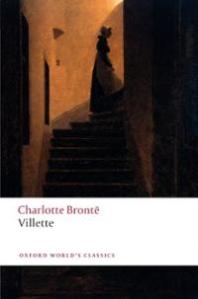
So why bring up uncertainty? Because in Victorian Women Writers this week we are finishing up our work on Villette, and more than once in class I have acknowledged my own uncertainty about what exactly is going on in this strange, brooding, gripping novel. As I said yesterday, I have pretty clear interpretive ideas about most of the novels I assign, which is not to say (I hope) that my teaching is all about coercing students into seeing things my way. What it means is that I have a sense of how things add up, of how form contributes to or reflects content, of how details are parts of wholes. This still leaves plenty to be discussed, but overall we usually arrive at a sense of what the open questions are, or of what some alternative (but still basically unifying) readings are.

With Villette, though, I find that kind of clarity or unity really elusive. Lucy herself is such a slippery narrator, for one thing, but typically with an unreliable narrator we end up with a reasonably clear sense of the two stories they are telling, the one they mean to tell and the other one they reveal as they show us who they are. With Lucy, it is never really clear why she is so coy with us about some things while being almost excessively forthcoming about others. If it’s a novel primarily about the effects of repression, then why does she freely recount all the times when she really lets loose? If it’s a novel about a struggle for female agency, why does she make such a point about being by nature inert, and why does she seem to respond so well to being pushed around, including by her eventual love interest? If it’s a novel about asserting Protestantism or Englishness, then why does Lucy love (if she does) a Catholic and settle abroad? If these oppositions are reconciled over the course of the novel, why does it not have a happy ending? Etc. There are many complex and sophisticated critical analyses of Villette, some of which we are reading for the graduate seminar version of the course, and they say lots of things I find smart and convincing but they rarely leave me thinking “OK, that makes sense of it all.” (The ones we’ve read this term focus on national identity, religion, theatricality, and queerness—one highlighting Lucy’s resistance to ‘compulsory heterosexuality’ and arguing that she is trying to find an alternative relationship between men and women, such as being a “female brother,” another arguing, counterintuitively, for the ending of the novel as a rare instance of “queer joy.”)

The main thing I’m thinking about, however, is not so much “what is the meaning of Villette?” (though if you have a favorite essay or theory about it, I’d love to know!) as “what is the role of uncertainty in pedagogy?” I don’t think of myself as a particularly authoritarian teacher, but in general I think it makes sense to acknowledge that I am a teacher because of my expertise; shouldn’t I act and talk as if I know what I am talking about? On the other hand, I don’t think any interpretation is definitive; if it were, our whole discipline would operate completely differently! I’m always so amused by Thurber’s story “The Macbeth Murder Mystery,” which concludes, tongue in cheek, with its wry narrator promising to “solve” Hamlet. Literature can’t be “solved”! Books worth paying attention to are layered or multifaceted; they look different or mean differently depending on how we approach them. I often explain literary interpretation to my first-year students with an analogy to the transparencies used to teach anatomy: each question or approach draws our attention to specific features. Just as all the parts and systems of the body cohere, interpretations have to be compatible to the extent that they can’t ignore or contradict facts about the text, but they do not replace each other or rule each other out. This means, of course, that it is fine that the articles I’ve mentioned illuminate issues in Villette without satisfying every question I have about the novel.

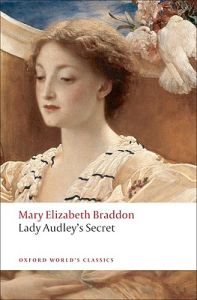
I like the uncertainty I feel about Villette. Some novels feel uncertain to me in a different, less interesting way. Lady Audley’s Secret, for example, I think is genuinely undecided about whether Lady Audley is a villain or a victim. I have come to consider this a genuine weakness in the novel, evidence of inadequate care or thought on Braddon’s part, although another way to put it is she is just not that kind of a novelist, or Lady Audley’s Secret is just not that kind of a novel—it entertains, it provokes, it surprises, but it is not underwritten by a consistent concept or idea. It is incoherent about its themes . . . but maybe that only matters to someone trained and committed, as I am, to interpret fiction with that as a priority.
Villette, on the other hand, feels uncertain by design. It is destabilizing. Our confusion feels like part of the point. Maybe that is the underlying unity of the novel! Maybe there is no ‘right’ way for Lucy to be, to act, to love, to live, and so the novel, by immersing ourselves in her struggles, is just replicating them formally. “Who are you, Miss Snowe?” demands Ginevra Fanshawe at one point, with exasperation: aren’t we asking the same question, right to the very end? Why should unity be the end point, even for a novel that seems to be some kind of a Bildungsroman? I do wonder, though, why I am willing to give Brontë so much more credit than Braddon for the artfulness of her uncertainty. One factor is probably that there is so much evidence of design in Villette, if if I’m not sure what the patterns mean: all the buried (or not!) nuns, for example, and their tendency to show up when Lucy is most emotional; the recurrent imagery of storms and shipwrecks; the emphasis on surveillance, discipline, and self-control; the proliferation, almost to excess, of foil characters for Lucy, from little Polly to Vashti. At every moment of the novel I feel sure there is something meaningful going on.

Anyway, I hope admitting my own uncertainty made my students feel that there was room for their own ideas, not that I was not up to my job! We start North and South next, a novel that includes many thought-provoking elements but which is also patterned in a pretty clear way—and after a couple of weeks on that, we will spend the rest of the course on Middlemarch, about which, for better or for worse, I am much more confident and opinionated, although it is such a complex and capacious novel that there too there is plenty of room for discussion. It is such a good group of students: what a treat for me, and I hope for them too, that we can tune out the madness for a few hours a week and explore what these novels have to offer us.

This Week in My Classes (October 16, 2009): Aurora Floyd

It’s all Mary Elizabeth Braddon all the time, this week. Having just finished discussions of Lady Audley’s Secret in my upper-year seminar on Sensation Fiction, we’ve begun our work on it in my ‘regular’ 19th-century fiction course. In the meantime, in the Sensation Fiction seminar, we’ve moved on to Braddon’s second blockbuster success, Aurora Floyd. Judging from the students questions coming in for their letter assignment in the novels class, LAS is as popular as always: there’s a reason, or two or three, that it was a bestseller in its own day, after all, and perhaps readers haven’t changed that much in the intervening century and a half.

I’ve written before in this series about Lady Audley’s Secret, including as recently as last week, so I’ll focus on Aurora Floyd for this instalment. It’s a novel I don’t know nearly as well myself as LAS, having read it only a couple of times all through and taught it only once before. It’s an odd book, uneven, even somehow ungainly. It seems to want to be something more than it is: where LAS rushes ahead with a sort of gleeful pleasure in its own tawdry excesses, Aurora Floyd manifestly aspires to something more than straight sensation, and even its sensational elements are conceptually more complex and thus more interesting than those in its famous predecessor.

What I mean by that is that while LAS makes the most of the shocking inconsistency between Lucy Audley’s angelic appearance and her fearful capacity for deceit and violence, the most surprising thing about Aurora Floyd is that she is depicted as strong-willed, passionate, even sexual, and yet not villainous. Her youthful error of running off with her father’s handsome groom (“wonderfully and perfectly handsome–the very perfection of physical beauty, faultless in proportion, as if each line in his face and form had been measured by the sculptor’s rule, and carved by the sculptor’s chisel. . . yet it is rather a sensual type of beauty”) does not disqualify her from marriage to an excellent husband (of course, it should have, seeing as how the result is bigamy and all, but my point is that other than that small technical problem–which, to be perfectly fair, is accidental, as Aurora believes her first husband to be dead–Aurora is a good wife for John Mellish). Sure, she loves riding horses, and even betting on them, more than is strictly proper, but again, this aberration from conventional feminine propriety does not signal her incompatibility for the role of “heroine” of the novel. To some extent, she is tamed and chastened by the disasters that follow from her early indiscretion, but she is only “a shade less defiantly bright” at the end. So while in LAS Braddon panders to, or at least takes advantage of, fears of powerful women who pursue their own desires rather than subduing them, in AF she tries, I think, to complicate questions of feminine nature and identity by creating a protagonist who is neither angel nor demon, but something more complexly human.

That said, there are many irritating features of the novel, though I have had a hard time deciding why I don’t tolerate , from this author or in this book, literary strategies I don’t object to in others. For instance, I find Braddon’s narrative intrusions too intrusive in Aurora Floyd; they strike what seem like false notes, creating awkward shifts in register. Is there something inept about them, or is my response conditioned by my expectations for ‘sensation’ novels–e.g. that they should not even try to be realist or philosophical novels? Braddon is not an exceptionally gifted stylist in any case: there’s nothing distinctive about her prose, though as I remarked last week about LAS, it can be very effective in creating certain kinds of moods or pictures. She can’t resist heavy-handed foreshadowing (“That home so soon to be desolate! — with such ruin brooding above it as in his darkest doubts, his wildest fears, he had never shadowed forth!”). Still, it’s a perpetually interesting book, not just at the level of plot (it develops into a murder mystery) but in terms of its manipulations of literary and social conventions and tropes.

This Week in My Classes (October 5, 2009): It’s Sensational!

In 19th-Century British Fiction, we’re wrapping up our discussions of Great Expectations this week. I’ve written before about teaching this novel. Here’s a bit from that post, in which I focus on Pip’s moving speech to Estella after he learns Magwitch is his true benefactor and Estella, though she “cannot choose but remain part of [his] character, part of the little good in [him], part of the evil,” is not destined for him after all:

Contemporary novelists are often described as “Dickensian,” usually for writing long, diffuse novels with lots of plots and characters and a bit more emotional exhibitionism than is the norm in ‘serious’ fiction. I rarely think they deserve the label, because to me it’s moments such as this one, combining dense symbolic allusiveness, rhythmic and evocative language, high sentiment, and urgent moral appeal–all bordering on the excessive, even ridiculous, but, at their best, not collapsing into it–that distinguish Dickens from other novelists. I’m not sure any modern novelist takes such risks.

I’ve been thinking even more this time about the “risks” Dickens takes, his excesses of both language and imagination. They press us so far beyond the realistic, in almost any sense of that elusive term. Take Miss Havisham, for instance. There’s really no excuse for Miss Havisham: to be confronted with her is to be challenged to forget plausibility–to abandon, not just suspend, disbelief. Less a woman than a grotesque embodied symbol of life without love, a kind of moral and emotional zombie, she is also a key agent of the plot, with completely commonplace control over money and property. What kind of undead figure has its own lawyer? So she exists in a strange liminal zone between human and inhuman, until woken to her own tragedy, and the tragedy she has spawned in Estella (“I am what you have made me!”) by witnessing Pip’s suffering:

‘What have I done! What have I done!’ She wrong her hands, and crushed her white hair, and returned to this cry over and over again. ‘What have I done!’

I knew not how to answer, or how to comfort her. That she had done a grievous thing in taking an impressionable child to mould into the form that her wild resentment, spurned affection, and wounded pride, found vengeance in, I knew full well. But that, in shutting out the light of day, she had shut out infinitely more; that, in seclusion, she had secluded herself from a thousand natural and healing influences; that her mind, brooding solitary, had grown diseased, as all minds do and must and will reverse that reverse the appointed order of their Maker; I knew equallywell. And could I look upon her without compassion, seeing her punishment in the ruin she was, in her profound unfitness for this earth on which she was placed, in the vanity of sorrow which had become a master mania, like the vanity of penitence, the vanity of remorse, the vanity of unworthiness, and other monstrous vanities that have been curses in this world?

Miss Havisham cannot survive this ordeal by moral revelation, which, in truly Dickensian fashion, leads to a literal conflagration of the “rottenness” and “ugly things” that made up her perverted identity. Pip’s ability to feel compassion for this creature who has captured and ruined his own best hopes and feelings is one of the signs that he is on his way to being, not the Pip who turned his back on Joe, but the Pip who has the ethical sensibility to narrate Great Expectations.

In Victorian Sensations, we’ve finished with The Woman in White and are nearly done with Lady Audley’s Secret. When I wrote about this novel before (in the context of a different course), I remarked, “It is always a bit discouraging to me how popular this novel is with my students, full as it is of cheap tricks and thoughtless language.” My feelings are a bit more complicated this time. Lady Audley’s Secret is certainly in the category of ‘novels I teach largely for reasons other than their overt literary merit’: even acknowledging the difficulty of defining that quality with any specificity, I do chafe at the excesses of Braddon’s writing–they aren’t the imaginative or linguistic excesses of Dickens but the novelistic equivalent of using a lot of exclamation points or TYPING IN ALL CAPS in an email. “We get it!” I want to say (no doubt, of course, many readers feel the same about Dickens). Here’s a sample, for instance, from a conversation between Our Hero, Robert Audley, and his BFF George Talboys. Robert has recently convinced George to come and visit Audley Court to meet his uncle, Sir Michael Audley, and his pretty, young, golden-haired new wife. George has been feeling melancholy since learning that his pretty golden-haired wife died (hmmmm) just before his return from three years in Australia.

‘I’m not a romantic man, Bob,’ he would say sometimes, ‘and I never read a line of poetry in my life that was any more to me than so many words and so much jingle; but a feeling has come over me since my wife’s death, that I am like a man standing upon a long low shore, with hideous cliffs frowning down upon him from behind, and the rising tide crawling slowly but surely about his feet. It seems to grow nearer and nearer every day, that black, pitiless tide; not rushing upon with with a great noise and a might impetus, but crawling, creeping, stealing, gliding towards me, ready to close in above my head when I am least prepared for the end.’

As Miley Cyrus might say, d’ya think something bad might lie in his future? And is it just me, or is it hard to maintain literary decorum with a hero named ‘Bob,’ as in this immortal line, “‘I trust in your noble heart, Bob'”?!

And yet there are sections of this novel that are as good as most others I’ve read. In particular, this time through, I was struck by how effectively Braddon evokes the psychological restlessness, even instability, of Lady Audley as she waits for what she hopes (or possible, just a little, fears) is the news of Robert’s death. Spoiler alert: she has double-locked his door at the inn and then set the place on fire, and we get this striking image as she leaves the scene of the crime:

Sir Michael’s wife walked towards the house in which her husband slept, with the red blaze lighting up the skies behind her, and with nothing but the blackness of the night before.

It’s a nice touch to identify her by the status she has risked so much to achieve, but also to hint, with the “blackness” ahead of her, that despite the devastation she has now wrought, her future contains nothing “but the blackness of the night.” Then follows a long chapter of waiting, a damp listless day with no outlet for Lady Audley’s energies by “to wander up and down [the] monotonous pathway” in the courtyard of her luxurious home. The day ekes itself out:

Sir Michael’s wife [again, nice] still lingered in the quadrangle; still waited for those tidings which were so long coming.

It was nearly dark. The blue mists of evening had slowly risen from the ground. The flat meadows were filled with a grey vapour, and a stranger might have fancied Audley Court a castle on the margin of a sea. [This image ominously echoes Robert Audley’s earlier dream of Audley Court ‘rooted up . . . standing bare and unprotected . . . threatened by the rapid rising of a boisterous sea, whose waves seemed gathering upward to descend and crush the house he loved.’] Under the archway the shadows of fast-coming night lurked darkly; like traitors waiting for an opportunity to glide stealthily into the quadrangle. [Again, this image harkens back to an earlier one, in which the history of Audley Court is associated with secrets and conspiracies. Traitors to what, we might ask at this point?] Through the archway a patch of cold blue sky glimmered faintly, streaked by one line of lurid crimson, and lighted by the dim glitter of one wintry-looking star. [In Robert’s dream, the only stars are those in the eyes of ‘my lady, transformed into a mermaid, beckoning his uncle to destruction. See how completely this very suspenseful moment builds on images and ideas from earlier in the novel?] Not a creature was stirring in the qudrangle but the restless woman, who paced up and down the straight pathways [ones she has, metaphorically, strayed from quite a bit by this point!], listening for a footstep, whose coming was to strike terror to her soul. She heard it at last!–a footstep in the avenue upon the other side of the archway. But was it the footstep?

To find out whose footstep it was, you’ll have to read the book yourself! My point here is that this seems to me very effective writing–effective, that is, as a means to its end, which is suspense, to be sure (and if we are too easily dismissive of plot when we make up the terms for ‘literary merit,’ what, if any, room do we make for suspense?) but also the elaboration of a range of images, symbols, and ideas–that Lady Audley’s very presence on those “straight pathways,” for instance, represents a catastrophe for the ‘house’ of Audley. This section also effectively complicates the previously two-dimensional morality of the novel: the anxious activity of Lady Audley shows her to be more than “just” a villain, no matter how resolutely Robert seeks to contain her in that role. An actress, an infiltrator, a subversively ambitious woman who will not stop at anything to keep the gains she has made–but still capable of feeling “terror” in her soul as she awaits confirmation of her crime. Shortly, she will also give an account of her life and motives that forces the reader (if not necessarily her audience within ‘story space’) to entertain the possibility that she acts in self defense, or at least, like Becky Sharp (an obvious progenitor), she is simply using the limited means available to her, as a woman in a profoundly patriarchal world, to get–and stay–ahead. It’s provocative stuff, and entertaining, and if it’s inconsistently crafted (and, as I tend to think, inconclusively ‘argued’), it succeeds at what it seems to set out to do. I suppose that’s one definition of ‘well-written.’ Indeed, that’s George Henry Lewes’s definition: he describes Jane Austen as the “greatest artist that has ever written, using the term to signify the most perfect mastery over the means to her end.”

And that idea of “mastery over the means to her end” brings me to something I hope to write more specifically about soon, namely, how fast I think we (should) move, when the question of “literary merit” comes up, from the aesthetic to the ethical. Even supposing we could arrive at some resilient definition of good writing, it would have to (I think) make something like Lewes’s dodge here from the suggestion of universality implied in “mastery” to the issue of writing suited to a particular “means.” That’s why we can call both Dickens and Ian McEwan “good” (accomplished, skilfull, successful) writers. But at some point in that discussion, the question surely arises: how do we judge the ends? As Orwell famously said, “the first thing we demand of a wall is that it shall stand up”:

If it stands up, it is a good wall, and the question of what purpose it serves is separable from that. And yet even the best wall in the world deserves to be pulled down if it surrounds a concentration camp. In the same way it should be possible to say, “This is a good book or a good picture, and it ought to be burned by the public hangman [well, OK, that makes me uncomfortable, though he does go on to suggest this book burning may be a mental, rather than a literal, result]. Unless one can say that, at least in imagination, one is shirking the implications of the fact that an artist is also a citizen and a human being.