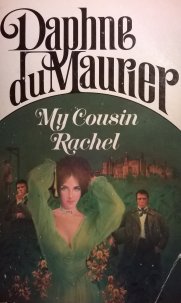
“Haunted still by doubt”: Daphne du Maurier, My Cousin Rachel

CousinRachel

No one will ever guess the burden of blame I carry on my shoulders; nor will they know that every day, haunted still by doubt, I ask myself a question which I cannot answer. Was Rachel innocent or guilty? Maybe I shall learn that, too, in purgatory.

My Cousin Rachel is more understated than Jamaica Inn but, in its own way, it is just as perfect. It’s not just Philip Ashley, our narrator, who will never be able to answer his question about Rachel, but all of us, left by du Maurier suspended in uncertainty and thus in our judgment of Philip himself. Has he heroically resisted and survived one of the women his godfather warns him about, those who “impel disaster”? Or has his own suspicious misogyny made him not a hero, not a victim, but a villain himself? “She was my first, and last,” he tells us, but has his inexperience made him vulnerable to her wiles or liable to fevered obsession and delusions?

Jamaica Inn is romantic suspense: is there a name for this genre of not-knowing? And what other novels besides The Turn of the Screw belong to it? For a long time I felt sure that the verdict would go against Rachel, both because the circumstances of Ambrose’s death certainly seemed suspicious and because the novel seemed tilted against women’s power to disrupt men’s bluff tranquility. Then it dawned on me, rather belatedly, that I was taking Philip too much at his word, or at least taking his point of view too much for granted, something he had, after all, warned me about right at the beginning! It wasn’t until he had his hands around Rachel’s throat, though, that I really saw how du Maurier had suckered me into complacency with the familiar trope of the femme fatale. I just assumed I knew who — or rather what — she really was. But it’s a much more clever game du Maurier’s playing than, say, Braddon’s in Lady Audley’s Secret: there, we figure out quite soon that Lucy is not as she seems, and the suspense comes from seeing who wins the cat-and-mouse game between her and Robert Audley. That’s what I thought would happen here too — that Rachel’s malevolence would become clear and Philip would somehow have to fight and expose it — but how much less fun and original that would have been than what du Maurier does instead. “She may be innocent,” says Philip’s friend and ally Louise; “she may be guilty. You can do nothing.”

And du Maurier really does a lot of things well, provided you don’t mind a little melodrama along with your foreshadowing. I did think (if it’s not heresy to say so about a writer as skillful as du Maurier) that the balance was a little off: it seemed to take a very long time for Philip to emerge from his initial infatuation and thus for things to get really interesting. In the end, I still like Jamaica Inn better, mostly for Mary Yellan but also for its greater plottiness (is that a word?) and its more expansive descriptions, especially of the landscape. But the opening and closing are particularly shivery and splendid here, and frame the story perfectly:

They used to hang men at Four Turnings in the old days.

Not any more, though.

Liking and Disliking: Colum McCann, Let the Great World Spin

mccannLately I can’t seem to stop quoting Henry James’s remark that “nothing, of course, will ever take the place of the good old fashion of ‘liking’ a work of art or not liking it: the more improved criticism will not abolish that primitive, that ultimate, test.” However much we try as readers and critics to bring something resembling rigor to our analysis of a book, there’s always a fundamental (though not immutable) personal response at the heart of it, isn’t there? No two people ever really read the same book, after all. I often think of criticism as an attempt — more or less fully realized — to show someone the book as you see it, very much in the spirit of Kazuo Ishiguro’s remark that being a novelist is an appeal for companionship in experiencing life: “Perhaps you’ve never looked at it this way but now that I’ve put things this way, don’t you recognize this, too?” Agreement may not follow, but better understanding will, perhaps of the book, perhaps of the reader.*

What makes one reader like a book — love it, even — and another not like it, or even despise it? This question was much on my mind as I read Let the Great World Spin because from the moment I plucked it off the shelf at the Brattle two years ago it was the subject of just such a debate: one trusted reader warmly recommended it, while another (OK, it was Steve) told me emphatically not to bother with it. I ignored Steve’s advice, but clearly his disdainful judgment introduced just enough ambivalence for me to defer actually reading the book for a pretty long time!

And now that I’ve finally read the novel for myself, what did I think? Well, it more than passed “that primitive, that ultimate, test” for me: I really liked Let The Great World Spin. Because I had heard it was a “9/11 novel,” and because it is festooned with blurbs praising its “lyricism” and “heart,” I was worried that I might find it overdone, manipulative, portentous — but I didn’t. Each section is from the perspective of a different character: I was drawn rapidly into each story, and as the relationships between their individual parts emerged I appreciated more and more how delicately it was done. There were moments of recognition as each story took its place, but nothing felt forced: every moment, and every voice, had its own history and its own integrity. All of the stories are about love and loss and longing, and they are held together by small acts of grace or moments of connection: there’s no melodrama, no hyperbole. This kind of polyphonic narrative always risks becoming more about artistic showmanship than about the story or characters (for me, this was the effect of David Mitchell’s Cloud Atlas), but I found McCann’s virtuosity at once impressive and understated. Even the high wire act around which the whole novel is arranged remains, for us, just out of view: our attention is (in McCann’s words) on “the ordinary people on the street, the ones who walked a tightrope just one inch off the ground.”

There’s no arguing with my response to Let the Great World Spin. It turned out to be one of those books that make me seek solitude as the end draws near: I wanted to stay quietly within it until it had completed its work. It didn’t affect me as deeply as, say, The Orphan Master’s Son; it’s not as dazzling as The Last Samurai or as darkly brilliant as Wolf Hall or Bring Up the Bodies; it’s not as important as The Lost. But I am really glad I read it: I liked everything about it.

At the same time, there’s no arguing with Steve’s visceral rejection! So that has me thinking — not so much about what accounts for this particular difference of opinion, or experience, or judgment (though maybe he and I will talk it over when I visit Boston again next month!) as about why we hate books, when we do. I’ve been trying to think of books I really hate. I’ve certainly written here about quite a few books that I didn’t like at all. Usually, though, they aren’t books that I think are outright bad but books that are good in ways I don’t enjoy (Flaubert), or good at things I don’t think are very nice (FordSt. Aubyn). I disliked a lot of Terry Castle’s The Professor: that’s the closest I’ve come lately, that I can think of, to actively hating a book. Except for maybe The Paris Wife: that was pretty lame. Oh – and there was The Sixteen Pleasures! But I was more disappointed in it than anything. I thought Lord of Scoundrels was laughable, “a parody of my worst imaginings about romance novels” — but that was only the first time I read it, when I really didn’t get what it was doing, and even then I wouldn’t say I hated it. Hate is such a strong word! (It might not even be the right word for what Steve feels for Let the Great World Spin, though it seems a reasonable inference from his calling it “paper-thin idiotic drivel.”) It suggest an absolute negation, an active hostility, that may be incompatible, for me, with actually reading a book all the way to the end. Steve wants back the time he spent reading Let the Great World Spin: I can’t think of a book I’ve read (at least since I started blogging –sometimes it feels as if my prior reading is all one undifferentiated blur) that I truly regret having read because the experience was so unpleasant. I’ve been bored, unconvinced, puzzled, underwhelmed, repelled, occasionally scornful; I’ve more than once thought a book didn’t live up to its hype. That’s all bad enough, but that’s as bad as I can really say it gets.

I wonder if what keeps me from taking that final stop into hatred is my ever-lurking sense of my own fallibility as a reader. I already mentioned Lord of Scoundrels as an example of a book I came to read differently (better), and there are many other examples of books that I came to like more as I got to know them better, as I found contexts for them and ideas about them that reduced the role of my personal taste in my response to them. Many of these are books I have worked with for teaching, though: I am unlikely ever to reread and research most of the books I write about here in the same way — and even those I review more formally for Open Letters, though they certainly get scrupulously reread and reconsidered, are never the focus of my sustained attention over time, meaning I do not have the opportunity to grow into them, or they do not get further opportunities to educate me about themselves! I am morally certain that many of the books I’ve blogged about don’t really deserve, or would not reward, that investment, but nonetheless I know perfectly well that mine is not the final word on them — nobody’s is! So even my most arrogant pronouncement rigorous disquisition on the merits or demerits of a particular book is underwritten (if only implicitly) with a little humility. And yet I am as sure of my own liking or disliking as anyone else.

Have you ever hated a book? When you do — or when you just dislike a book intensely — do you think there’s a particular quality or feature that you’re responding to? Can you think of a time you really regretted having read something? What do you think when you discover that someone really liked or disliked a book that you had the opposite response to? Also, if you have read Let the Great World Spin, did you like it? 🙂


*One of the things I did over the last two weeks was write about 1000 words laboriously explaining this view of criticism — complete with some discussion of “coduction.” But I then decided it did not fit in the larger piece I was writing so I cut it all out. I’ve saved it in another file, just in case, but in the meantime, I’m glad I got to sneak this nice Ishiguro quotation in somewhere else!

Shhh! It’s (Still) A Library!

sp-coasterOne of my favorite souvenirs from my trip to Oxford a few years ago is a pair of coasters from the Bodleian Library that say “silence please.” I love these because they speak for me: so often I crave silence so that I can concentrate on my book. Reading, for me — at least serious reading, rapt, transcendent, lost-to-the-real-world reading, which is the best kind of all — takes concentration, and I know no greater threat to that concentration than intrusive noise. Especially since I had children, I feel as if it has been a constant struggle to find the kind of quiet conducive to that kind of reading. The polite Bodleian signage reassures me that I’m not anomalous: that others too value the silence that enables us to merge our consciousness with the words on the page.

central_02a

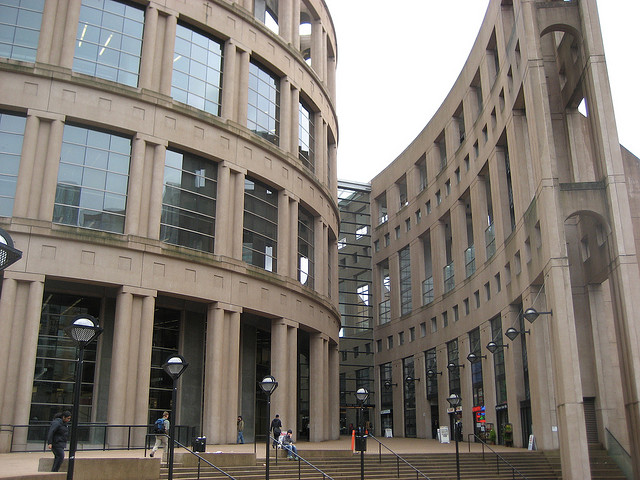
I was thinking about this recently because my husband and I attended a fundraising event for the new Halifax Central Library, currently under construction and expected to open its doors this fall. I am hugely excited about the new library, because I’m a huge believer in libraries as great civic spaces. A public library represents an idea that’s at the heart of democratic society: that the accumulated thinking of centuries is our greatest resource and should be freely available to everyone. A library’s specific commitment to reading as a source of both information and pleasure is a wonderful thing. Like so many families, mine made regular trips to our local library branch while I was growing up; it looks a little different now than it did, but it’s still in the same place, and walking into it on a visit home last summer I vividly recalled the feeling of liberation that came over me whenever I entered its doors as a child — there was a whole world in there, inside the covers of all those books, and my library card was my passport. I had free run of the collection: I don’t recall anyone, either parent or librarian, ever trying to steer me away from anything I was interested in because it was “too hard.” (I have struggled greatly with the emphasis in the schools here on “just right” reading — reading should be aspirational! I was incensed once while volunteering at a school book sale when a mother pulled her crying child away from a book, berating him about wanting something he couldn’t read on his own yet. “But he wants to read!” I wanted to yell at her. “Read it with him until he’s ready!”) I discovered many favorite authors in the stacks; some of my most cherished books today are library discards with the “VPL” stickers still on them. It was built after I’d moved away, but the Vancouver Central Library is a spectacular building that has long inspired me from a distance.

439565434_3f9ebc254c_z
Flickr photo by Dustin Quasar

I’m reading Rebecca Solnit’s The Faraway Nearby right now and while I have some issues with the book overall, I really appreciated what she says about libraries:

Libraries are sanctuaries from the world and command centers onto it: here in quiet rooms are the lives of Crazy Horse and Aung San Suu Kyi, the Hundred Years’ War and the Opium Wars and the Dirty War, the ideas of Simone Weil and Lao-tzu, information on building your sailboat or dissolving your marriage, fictional worlds and books to equip the reader to reenter the real world. They are, ideally, places where nothing happens and where everything that has happened is stored up to be remembered and relived, the place where the world is folded up into boxes of paper. Every book is a door that opens onto another world, which might be the magic that all those children’s books were alluding to, and a library is a Milky Way of worlds. All readers are Wu Daozi; all imaginative, engrossing books are landscapes into which readers vanish.

“Here in quiet rooms”: for her too, quiet is part of reading. The temporary hushing of everything going on around us is what lets us pass through into that other landscape and really see and think about what we find there. So why does it seem to have become such a bad thing to imagine a library governed by a polite request for “silence please”? Over and over at the fundraising presentations, speakers spoke with disdain of the old-fashioned notion of librarians shushing patrons and celebrated the library as a place for what sometimes seemed like every activity besides actually reading to yourself. “It’s not just about books anymore” seemed to be the go-to argument for why we should enthusiastically support the library’s fundraising campaign — even though (interestingly) they also emphasized that they are raising money now “for the collection.”

I should be clear that I think the social and educational functions of libraries — children’s activities, teen hangouts, workshops and meeting groups of all kinds, performances, lecture series — are also wonderful things integral to the library’s mission as a place to nurture and support its community. But after a while I started wondering where, among the atriums and coffee shops and recording studios and play areas, a person is supposed to go who wants the traditional hush of a place suited to actually reading books. I’ve been looking again at the plans and it turns out that the fourth floor does have designated areas for “quiet reading and study.” As far as I can tell, though, they are still very wide open, and I wonder how much ambient noise will travel up from below — and whether anybody will respect or enforce the suggestion that here, at least, shushing might be in order. It’s already such a noisy world everywhere else! I even recently left a local bookstore in a huff because the annoying pop music they were playing distracted me from browsing the shelves: the words to the songs came between me and the words on the page. If I had the kind of money that makes this kind of thing possible, I think that I would have offered to fund a real “reading room” somewhere in the new library building: comfortable chairs, good lighting, no wi-fi, a door that closes (quietly, without slamming!), and a sign on it courtesy of the Bodleian.

silence_please_sign_black

What do you think: am I just a curmudgeon? Do you like quiet when you read? When you use the library, do you resent or appreciate attempts to keep it a place suitable for quiet contemplation and deep concentration? If you’re a librarian, how do you deal with the competing expectations that the library serve both social and silent purposes?

Amateur Hour: Alan Rusbridger, Play It Again

rusbridgerI first learned about Play It Again, Alan Rusbridger’s account of his quest to learn Chopin’s great Ballade No.1, from Robert Winter’s recent review in the New York Review of BooksIt’s a convincingly positive review, which is why it sent me out to get the book, but as I worked through Play It Again I found myself thinking that Winter had oversold it. The book does contain lots to interest, entertain, and inspire anyone who has ever puttered away at a keyboard. (As I’ve written about here before, that  includes me.) But it’s also formally slapdash, with related information — such as the rich analyses of the Ballade gleaned from conversations with a slew of great pianists, including Murray Perahia, Alfred Brendel, Daniel Barenboim, and Emanuel Ax, or meditations on the value and beauty of amateurism, or on the effects of the recording era on classical music, or about the neuroscience of music and memory — scattered across a relentlessly chronological and surprisingly dull (considering Rusbridger’s job) account of his day-to-day activities.  (Rusbridger is the Editor in Chief of The Guardian. To be fair, the non-musical bits might be of greater interest to someone keen to get an insider’s view of things like the phone-hacking scandal.) Winter describes it as “a limp diary format” and rightly notes that “the parts themselves provide little structural mooring.” But later he seems to excuse it, calling it “a conceit, a stream-of-consciousness platform for exploring the challenges of remaining human in a world that moves at the speed of Twitter.” I think that’s putting it kindly, if not grandiosely: to me, the “conceit” felt more like laziness, as if Rusbridger was not willing or able to put in more than 15 minutes a day on his book any more than on the Ballade — though there’s no doubt that the book reflects his genuine passion for music and his remarkable dedication to the Quixotic project of learning a piece Perahia warns him is “one of the hardest pieces in the repertoire.”

Winter also notes that “it is the author’s journey rather than his destination that we remember”: I didn’t think the journey was very compellingly told (again, a real narrative rather than a bit-by-bit accounting would, for me, have been more satisfying), but I also think Winter’s assessment may reflect a marketing trend as much as anything, that is, the apparently widespread preference for the personal angle (see recent related discussions at Wuthering Expectations). I didn’t really mind following Rusbridger’s journey, but one reason the destination is not very memorable is that he doesn’t in fact triumph (his final performance is OK, but not by any means flawless or inspired, by his own report), and a lot of what we hear along the way is kind of dull reiteration of his difficulties with one passage or another (“The section that still falls apart a bit is the big A major / E major section” etc.). The real substance is everything he learns around the project, and I ended Play It Again thinking that there must be other books that do a better job synthesizing and narrating this kind of information and offering more insight. In fact, Rusbridger’s own list of “Further Reading” gives me a few ideas, including Charles Cooke’s Piano for Pleasure. I’m also  reminded that I’d meant to look up Charles Rosen’s Music and Sentiment, brilliantly reviewed by Greg Waldmann in Open Letters Monthly a couple of years ago. And Tom at Wuthering Expectations reminds me that Wayne Booth also wrote about his own efforts as an amateur cellist: I’ve put his book, For the Love of It: Amateuring and Its Rivals, on request at the library.

One effect Play It Again had on me (besides making me wonder if I shouldn’t do a little practising this summer) was to make me pay much more attention to the Ballade: I’ve been listening to it a lot, including while I tried to follow along the annotated score that is my favorite part of Rusbridger’s book (he includes many of the specific comments made about the piece by the pianists he interviews). I’ve always thought it was a spectacular piece, but it’s not until you imagine trying to play it, or watch someone else physically engaged in it, that you appreciate just what a daunting thing it is. There are a lot of recordings of the Ballade on YouTube but not a lot of them are videos, and I love to be able to watch the pianist’s fingers. (After a childhood of always being reminded about this, it is an ingrained habit for me to sit on the left side of any theater, even when no piano is on the program!) Here’s Vladimir Horowitz in a bravura performance.

“What was justice?”: Josephine Tey, Miss Pym Disposes

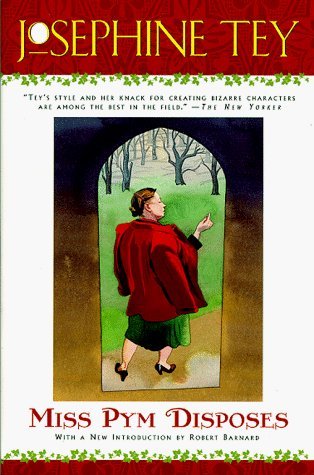
misspymBefore the madness of the new term quite overwhelms me, I wanted to put up a few words about Josephine Tey’s Miss Pym Disposes, which I finished a couple of days ago.

I ended up enjoying Miss Pym Disposes a lot. Not as much as Brat Farrar (so far, still my favourite Tey that’s not The Daughter of Time), and not as much as The Franchise Affair (which touched on deeper, darker problems)– but I still really liked it. I think that my reaction was affected by the very slow unfolding of the novel, so I might end up liking it even more on a reread. The crime itself doesn’t happen until about 180 pages in (and the novel is only 235 pages altogether): well before then, I was starting to get impatient with the book, wondering how Tey was ever going to fit in any kind of investigation if she ever actually got around to what I supposed would be the main business of the book. By the time I’d finished the novel, though, I had realized that the “crime itself” had actually happened much earlier, but was an act of injustice (at least, arguably so) rather than an overt offense against any rules or laws. That act precipitates the actual crime, and must be understood for the crime to be seen — as Miss Pym struggles to see it — in a way that answers the very difficult question of what to do about it. “What was justice” in this case? wonders Miss Pym. “Do the obvious right thing, Miss Pym,” advises another character blithely, “and let God dispose.” But it’s Miss Pym who disposes– and it’s only by thinking through the whole story, and thinking about all the people involved in it, that we can decide if she makes the right decision.

Like the other Tey novels I’ve read, Miss Pym Disposes made me wonder about the lines I draw when selecting readings for my survey class on detective fiction. All four of the novels of hers that I’ve read are really not “detective fiction” in any conventional way. They are hardly even “crime fiction,” though this more nebulous label works better for them. The same thing is true of The Talented Mr. Ripley: it includes a crime, and it’s about guilt and innocence and justice and a lot of the same themes my course turns on — but it doesn’t really have the structure of the classic detective story, organized around a single crime and then its investigation and, usually, its solution. It’s that unity of the novel’s elements around the central crime and investigation that typically distinguishes novels we identify specifically as detective fiction or mysteries from novels with crimes (or detectives) in them. (Thus Bleak House, for instance, is not itself a detective novel despite including a great detective plot.)

Genre definitions are notoriously imperfect, but they are also extremely useful, and at the 2nd-year level, it generally seems good enough to go with that basic “we know it when we see it” definition. From a pedagogical perspective, focusing on detective fiction rather than crime fiction more broadly understood helps (like all rules) to control the fun —  otherwise, the options for book orders proliferate disconcertingly, for instance. I also think some of the coherence of the course depends on sticking pretty close to the formula, which makes it easier to learn the conventions which the great practitioners of the genre both perfect and subvert. It’s not like there’s no variety, as we still go from Poe and Wilkie Collins through Christie and Hammett to Paretsky to Walter Mosley (and sometimes Paul Auster).

Still, Tey (or Highsmith, or du Maurier) would be fun to include. If only I could make it a year-long course! Because after all, book orders are a zero-sum game, more or less. I already assign what strikes many students as a lot of novels in the survey class, and most of them are clearly in the “classics of the genre” category — touchstone texts that trace out the development of the genre over time. The only one I suppose is tangential to that Greatest Hits approach is P. D. James’s An Unsuitable Job for a Woman — which is one of my favorites, but doesn’t really represent a specific subgenre. Maybe I could switch it out for one of these next time around. I suppose if I did, though, it wouldn’t be Miss Pym Disposes, which I think is too understated to be very popular. I bet The Talented Mr. Ripley would be a hit, though.

This Week in My Classes: Term Limits and New Ideas

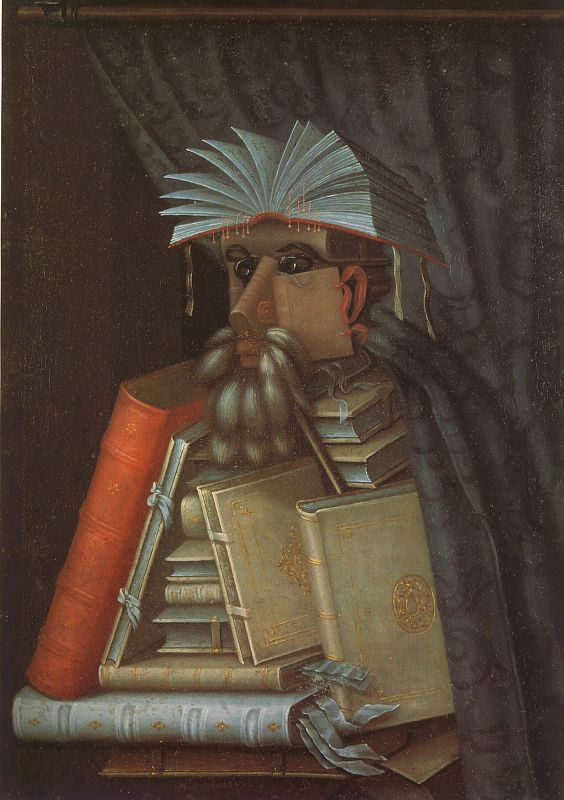
Arcimbolo LibrarianThis was the last week of fall term classes for us, which means concluding remarks and exam review and conferences about term papers — and then, beginning Monday, an influx of papers and exams to be marked, final grades to be calculated, and everything to be filed away and tidied up. I have an exam from 7-10 p.m. on the very last day of the exam period, which means I won’t be all done for quite a while yet.

It’s always bittersweet when the term ends. I put a lot of time and thought into preparing for each class hour, and a lot of energy goes into each actual meeting, which means I spend most of the term in a strange blend of panic and euphoria. When we’re done, I genuinely miss the buzz of meeting my students face to face and seeing what we can do with our material: even when a session doesn’t go particularly well, the challenge of it is definitely stimulating, and this year my mystery class especially was just a whole lot of fun. When a lot of smart students are really engaged and keeping me on my toes, it’s amazing how fast 50 minutes can go by! But I don’t miss the relentless pace of it all. What a relief it is to be home on a Friday night and be relaxing without the haunting awareness that by Sunday at the latest I have to be turning towards work again: the work I have to do for the next couple of weeks really can be managed in something more like regular office-job hours — unless I want to do a little puttering here and there evenings and weekends. I’m hoping that means I’ll be able to get some momentum on some reading and writing projects I’ve been deferring over the term. Ideally, I’ll get enough done that I can keep going on them when the winter term begins. This may mean not writing for the January issue Open Letters: much as I like to contribute, my recent pieces have not been entirely in line with my other writing priorities (especially the book on George Eliot I’m trying to conceptualize).

But as a wise woman once said, every limit is a beginning as well as an ending, and even as this term is winding down, things are heating up for the winter term, which starts exactly one month from today. Inquiries have been coming in about the waiting list for my intro section and about the readings for my 4th-year seminar; I’ve started roughing out my syllabi and I’ve got blank course spaces set up on Blackboard, with the goal of having materials ready for students well before the end of the month (in the spirit of ‘hit the ground running’).

And as if that isn’t enough, we’ve already had to organize our slate of classes for next year, and it won’t be long before we are asked to send in preliminary course descriptions and book lists, for promotional purposes. It usually makes me kind of cranky to be asked about next academic year when this one is still very much a work in progress, but on the other hand, the future is such a hopeful place to be! Drafting and redrafting possible book lists for the next incarnation of the Dickens-t0-Hardy course is pretty fun, and frustrations with this year’s assignments sequences are easier to handle when I think about them as learning experiences for next year’s New and Improved versions. (You can look forward to more posts about how I’m going to do everything different and better, especially the reading journals for the 19thC novels class.)

Looking even further ahead, I’ve been thinking more about the question of whether or what our students read outside of class and the perfectly reasonable point that we assign so dang much reading (ahem) that at least during the term it’s pretty challenging for them to be engaged in the book world more widely, even if that’s something they want. Of course, one reason I started this blog was because I was trying to figure out how to build some kind of relationship between my own academic reading and writing and that wider culture — and it has occurred to me that an obvious way to translate this impulse into pedagogy is to dream up a course that does something of the same thing, perhaps by combining assigned readings with readings students choose ‘from the field’ (books and reviews), and then requiring both standard essay assignments and different kinds of reports and reviews. It could be called “Books in the World” or something. Would this be a good first-year class? Or are the actual demands of any good book writing such that it would be better as a more advanced class, so that students will already have practised their writing skills and acquired some useful literary terminology and history?  In a recent interview, Daniel Mendelsohn proposes that students would be better off “reading Pauline Kael reviews in the New Yorker than Derrida” because when they begin “they literally have no idea, at first, what the point of being critical is.” I would be motivated by a somewhat similar impulse, I think: that they should have a sense of what (and where) the critical conversations are, because (as I do already say frequently in class) literature is not in fact written for the classroom but for the world.

This is still a very new idea for me, but maybe it’s actually a common approach and I’ve just been stuck (as we all so often are) in my own ‘how things are usually done’ rut. I’d be happy to know about any classes that are run along these lines, and also to know what anyone’s first impression is about this possibility.

Weekend Miscellany: Huffing and Puffing and Toasting 19th-Century Novels

Anyone who has been to an academic conference is familiar with the “question” from an audience member the entire subtext of which is “You didn’t present the paper I would have written on this topic.” (Some of us may even have asked such a question — in which cases I’m sure we were all 100% justified, because our papers would have been so much better than the ones we were listening to, right?!) Questions like these are bound to provoke some eye-rolling. For one thing, these aren’t usually the most constructive or welcome questions, and wouldn’t the world be a dull place, anyway, if we all approached our topics in exactly the same way? Yet when it’s a subject close to your heart, it’s still hard to accept that other people are going to do different things with it.

Now, imagine that the internet is a giant conference … and prepare to roll your eyes, because I’ve been feeling particularly curmudgeonly about people who are writing about Victorian novels online and not doing it right! By which, of course, I mean they are not doing it the way I would do it, or the way I think it should be done and can be done.

oxford jane eyreMy first example is an article from the Huffington Post called “Everything I Knew About Dating I Learned from 19th-Century Novels. Big Mistake.”  I know this piece doesn’t claim to be serious, much less pretend to be serious literary criticism. Yes, it’s tongue-in-cheek, and surely (surely!) the author knows perfectly well that the “readings” of the novels trotted out here are precisely as shallow and solipsistic as you’d expect from the teenager she claims to have been when she first “loved” them. (Not all teenagers, mind you, are that incapable of reading with  insight and nuance.) Nonetheless, I hate to see these complex works of art pimped out as link-bait like this. (Their piece on “11 Lessons that Jane Eyre Can Teach Every 21st-Century Woman About How to Live Well” was pretty stupid also.) “But why do you even care what the Huffington Post says about 19th-century novels?” I hear you asking. Good question. Is it just silly that I feel this kind of cheesy crap degrades the whole enterprise of literary journalism? It’s the bookish equivalent of tabloid journalism — and like the tabloids, it clearly “sells,” too, which is certainly frustrating. It’s disappointing, if not surprising, that this kind of thing (and there’s plenty of it online, goodness knows) is so much more successful in getting readers than we’ll ever be at Open Letters. In this case, though, my main aggravation really is that the novels deserve so much better than to be used as part of a parade of faux-intellectual self-display. Think of the social and artistic and intellectual risks their authors took! And this is how you repay them? And then you get paid in page views? Shame on us all if this works … which is why I have not included a link to the piece itself.

Adelle Waldman’s essay in The New Yorker on the enduring interest of the marriage plot is much less offensive but it’s still irksome. You could say that it’s the highbrow equivalent of the HuffPo piece: it too offers little insight into the 19th-century novels it discusses (though at least it addresses them reasonably and seriously) and it makes them relevant primarily by appealing to our needs and interests (but at least to our literary ones, not our dating ones). My real gripe in this case, though, is that the essay is both dull and leaden, which it ought not to be if it’s published by the New Yorker. I’m also puzzled at why Eugenides’s The Marriage Plot needs a response so long post-publication anyway. Wasn’t it put firmly in its place back in 2011? (I think my review actually did a lot of the same work as Waldman’s essay, though I took just one paragraph to explain why 19th-century novels aren’t just about the happy ending and I wasn’t at all concerned with whether other contemporary novelists could or should explore related territory.) Could it be that this essay is (implicitly) more about Waldman’s new novel than about Eugenides or Madame Bovary? Like the New York Review of Books, the New Yorker does sometimes seem to be produced by a rather tight circle of friends.

Life-in-Middlemarch-hires-coverIn possibly more heartening news, The Toast is going to be running a ‘My Life in Middlemarch’  Book Club. Ever since I launched ‘Middlemarch for Book Clubs’ in the summer I’ve been hoping some book club somewhere would actually take on the novel, and it’s hard not to hope that there might be some synergy between their project and mine. It’s true that I was (ahem) not the biggest fan of Rebecca Mead’s earlier New Yorker article, but I’ve been reading her book with much more pleasure (could it be that I just don’t have a New Yorker frame of mind?), and I’ll be reviewing it for Open Letters in the new year, so I’ll be well briefed to participate–if there’s any place for me in the discussion, and if it’s a discussion I’m interested in. I’m not sure what kind of conversation The Toast will encourage or attract. My sense of the site (from reading it and from following some of its key figures on Twitter) is that the tone is snappy and irreverent (“It’s a long-ass book”), which isn’t really my style, but the aims of the book club are noble (“challenging and fun and gripping and life-affirming and a wonderful bonding experience for us all”). The first “deadline” for discussion is December 2: I’m very curious to see how they run it and what it’s like. At the very least I might take some tips away from their book club that will help me revise or expand my own site — though I’m not going to turn away from my own fundamental concept of it. I’d rather offer something valuable to a smaller group of dedicated readers than chase the masses HuffPo style!

This Week in My Classes: My Waverley Intervention

My sincere thanks to everyone who weighed in, here or on Twitter, with advice about handling the classroom slump brought on by Waverley. Here’s an update on what I decided to do.

highlanderFirst of all, I did decide to do something different, rather than just pressing on with my usual strategies. I had to admit to myself — and I admitted this morning to my class — that if year after year a critical mass of students just isn’t getting engaged by the novel, at least to some extent this is a failure on my part — a pedagogical failure. Dropping Waverley from my reading list was also a failure: some students in Waverley-free years have told me how happy they were to have missed it, but missing out on it was not a win for them any more than it was one for me. As I told my class this morning, it’s a novel that deserves its place on our syllabus, one that is well worth reading for our curriculum, whatever anyone’s personal response to it. But the failure isn’t all mine. To use the analogy I suggested to my class, if you’re stumped by a difficult calculus problem, you don’t blame the problem: you work it as hard as you can, get more help if you need it, and try to bring your skills up to the level you need to solve it.

I decided to approach the class, then, as a problem-solving opportunity: we all, collectively, needed to think about what was going on and what our own role could be in addressing it. I said frankly where I thought I had been going wrong: struggle is part of learning new things, and they needed to be free to talk about their difficulties without my getting all judgmental. I told them that I thought I needed to back off a bit, and listen, so that they could trust me to work with them. But so that we didn’t fall into an unproductive gripe session, I suggested they approach Waverley in the spirit of couples therapy: avoid “you” statements in favour of “I” statements, to stimulate not blame but agency. “Waverley is boring” doesn’t help: you can’t change Waverley, after all! “I am finding Waverley boring / frustrating / confusing” is more constructive because there may be something you (or I, as the teacher) can do differently.

All of this preamble took only a  few minutes at the start of class. Then I went to work on getting out of their way. I’d made up a handout with three simple questions:

  1. How is Waverley going for me? What do I like about it? What specific challenges does it pose?
  2. Given the specific ways I’m finding Waverley challenging, here are some ideas for things I could try to make it go better:
  3. Given the specific ways I’m finding Waverley challenging, here are some ideas for what Dr. Maitzen could do to help:

I gave them about 10 minutes to respond honestly to these questions — the handout was explicitly not to be submitted or evaluated. Then on the other side of the handout they each had one of five different passages I’d picked out, and they got into small groups with the other students who had the same passage. They had two tasks in their groups: first, to talk freely about how they’d answered their questions, then to read their passage aloud and discuss it, considering it in light of their general comments about reading Waverley as well as in the context of the issues we’d been working on in our previous classes. I left the room entirely for the first five minutes of the group work, literally getting out of their way so they would be uninhibited in their discussion.

The room erupted into noise behind me as I went out, and the conversation seemed energetic for the whole period. While they talked over their passages, I went around offering my help and inviting comments on the question about what I could do to help with their reading of the novel. I got some very specific requests: the most frequent was to go over the political / historical factions again, clarifying who was on what side. A couple of people thought a handout listing characters and their affiliations (and their various names) would be great, so I think I’ll do some version of that. Another suggestion was for some straightforward plot summary: because a number of them are really struggling through Scott’s prose, they lose track of what’s actually happening. Plot summary is not usually high on my priorities for class time, but I can see how confusion about the novel’s events would inhibit class participation! So I’ll do that too, though I’m going to think about ways to make it interactive.

As for things that they could do, a couple of students said that reading the passages out loud helped their comprehension, so that might be something they’ll try on their own (we talked about the audiobook option, though sadly there doesn’t seem to be a really good one available). I showed them the e-text available through the University of Adelaide, which might help anyone struggling with the small print of our Oxford edition. I think others realized that looking more words up in their dictionary will help, and I continued to urge them all to get started trying to write about the novel. It was clear that not everyone had the same issues, and not everyone even had any problems with it — I hope the students who were already getting along fine don’t feel the class was wasted: I think we will all benefit if our remaining two sessions go better.

However it goes on Wednesday and Friday, I won’t regret having tried to change the dynamic that was developing. Lecturing more is one way to get through a slump like this, but it isn’t the best way, since (as I often remind them) the objective of an English class is for them to be better readers themselves: the process of reading and discussion is not just important, but in some ways it’s the whole point.

Putting the Record Straight: Muriel Spark, Curriculum Vitae

Curriculum Vitae SparkWhen I’d finished puzzling over A Far Cry From Kensington, I decided I’d had enough Muriel Spark for now. There are just so many other books I really want to read, after all. But then I remembered that I’d picked up a copy of her autobiography, Curriculum Vitae, from the public library’s discard sale (it’s shocking, really, what great stuff I’ve found there!), so I used the last of my Spark momentum to give it a try — and I ended up reading it straight through with much enjoyment. The first lines alone are entirely winning:

I am a hoarder of two things: documents and trusted friends. The former outweigh the latter in quantity, but the latter outdo the former in quality.

Predictably, for Spark, there’s a sting lurking there: she’s writing because “so strange and erroneous accounts of parts of my life have been written since I became well known, that I felt it time to put the record straight.” That is, people who are not friends to be trusted have spread misinformation, and she is countering their version with her own, which contains “nothing that cannot be supported by documentary evidence or by eyewitnesses.” The book is, then, a kind of “gotcha!” But it doesn’t seem nasty so much as pointed: be careful what you say about me! And why not, after all? As she says, “Lies are like fleas hopping from here to there, sucking the blood of the intellect.”

The first part of Curriculum Vitae is a series of episodic pieces about Spark’s experiences growing up in Edinburgh in the twenties and thirties. It includes bits on buying bread and making tea, on shopping for “commodities,” and on neighbors, friends, and family. Though in some respects she had a hard childhood, she reflects on it with resolute satisfaction:

Sometimes I compare my early infancy with that of my friends whose very early lives were in the hands of nannies, and who were surrounded by servants and privilege. Those pre-school lives seem nothing like so abundant as mine was, nothing like so crammed with people and amazing information. I was not set aside from adult social life, nor cosied-up in a nursery, and taken for nice regular walks far from the madding crowd. I was witness to the whole passing scene. Perhaps no other life could ever be as rich as that first life, when, five years old, prepared and briefed to my full capacity, I was ready for school.

Her years at school were “the most formative years of my life, and in many ways the most fortunate for a future writer.” It was at Gillespie’s High School for Girls that she met Miss Christina Kay, who “bore within her the seeds of the future Miss Jean Brodie.” “She entered my imagination immediately,” Spark says of Miss Kay, and she offers her own as well as classmates’ recollections of this “exhilarating and impressive” woman.

After school Muriel worked in various secretarial positions, and then in 1937 she married Sydney Oswald Spark: “I was attracted to a man who brought me flowers when I had flu. (From my experience of life I believe my personal motto should be ‘Beware of men bearing flowers’).” They lived in Rhodesia, where he had a teaching job. “It was in Africa,” Spark says, “that I learned to cope with life”:

It was there that I learned to keep in mind — in the front of my mind — the essentials of our human destiny, our responsibilities, and to put in a peripheral place the personal sorrows, frights and horrors that came my way. I knew my troubles to be temporary if I decided so.

They weren’t easy years. She found the colonial apparatus and attitudes in Rhodesia bizarre and isolating. Her marriage fell apart due to her husband’s “severe nervous disorder,” and in 1939 she filed for divorce. In 1944 she moved back to England, where she went to work “in the dark field of Black Propaganda or Psychological Warfare,” helping to create misinformation campaigns to undermine German morale. Many of her experiences from this time ended up, she observes, in some of her later fiction, but it isn’t until after the war that her life comes to be shaped around her literary ambitions.

sparkwritingFirst she worked on a journal called Argentor, “the official quarterly journal of the National Jewellers’ Association.” Then she stepped in as editor of the Poetry Review — and it’s here, in recounting the eccentric personalities, egos, and feuds of the poetry world, that you sense her really settling in to put the record straight. She’s got a particular genius for quoting writers to their own disadvantage, like Robert Armstrong, “a physically and morally twisted, small, dark fellow, a veritable nightmare” who takes umbrage at her decision not to name him on the journal’s front cover. “I had been working hard for the opportunity to put the Society and yourself on the map,” he self-aggrandizingly complains; “I had also put in some groundwork with influential friends so I am puzzled and assume something must have arisen to sidetrack your promise.” “This was a mere taste of things to come,” Spark says, almost gleefully, before quoting her sharp reply and then noting, “I never in future put this man’s name on the front cover.” She was eventually dismissed from her position: “I was delighted to get out of that scene of strife and of that mortal sin of art, pomposity.”

The last part of Curriculum Vitae takes us through Spark’s various jobs and writing projects up to the completion and success of her first novel, The Comforters. Since then, Spark reports,

I have passed the years occupied with ever more work, many travels and adventures. Friends, famous and obscure, abound in my life-story. That will be the subject of another volume.

As far as I can tell, she never wrote that other volume. Too bad, because that I’d like to read! There’s a sense, at the end of Curriculum Vitae, that she’s really just getting started on the good stuff.

The Reader as Writer: Giraldi and His Gratuitous Grumblings

giraldiI don’t teach creative writing classes or attend MFA workshops or writers’ conferences, so I have no first-hand experience of the lamentable species William Giraldi is so annoyed about in his recent essay at the Los Angeles Review of Books: wannabe writers with “no usable knowledge of literary tradition [who] are mostly mere weekend readers of in-vogue books.” For all I know, his generalizations are entirely accurate, and speaking as someone who will almost certainly never write any novels but certainly does love reading them, it does seem wrong to assume (if anyone does assume this) that “writing doesn’t demand special skills” and right to urge (or even demand, if you’re in a position to) that aspiring authors read both widely and deeply.

I’m not quite so sure that I would second Giraldi’s specific prescription, however: “decades [of] training … in canonical literature” and “an unflagging religious immersion in the great books.” As Giraldi’s own examples show, there has always been disagreement about which books are “great” or what literature is or should be “canonical.” He is confident that Henry James underestimated Middlemarch (and I, obviously, concur entirely), and it’s obvious to him that the key to writing “the next great social novel” is to study “Stendhal, James, and Austen’s half-dozen” and that Keats represents “the perfection of craft.”  But these are evaluative claims to be debated, not absolutes to be declared. Moreover, the ideal of the “important writer” as one who “kneels at the altar of literature” has its conservative as well as its elevating aspect. That the many names he drops are so predictable seems to me a symptom of the limits of his own approach: he’s so much a product of his own canonical literary education (as, of course, we all are) that it doesn’t occur to him to mention Scott, Pope, or Elizabeth Barrett Browning, or to mention Elizabeth Gaskell or Winifred Holtby as great social novelists. Which is fine in a way, as of course he can’t mention everybody, but he also should not imply that we all know just what books really deserve our attention.  And this is all before we even get into the discussion about whether someone aspiring to write about contemporary society might not learn something from the novels of Jodi Picoult. Giraldi apparently reads Jeffrey Eugenides without regret (at any rate, he quotes from The Marriage Plot): who is he to turn his nose up at other people’s choices? (And if people want to write like Dan Brown, well, neither Giraldi nor I will buy their books, but not all bestsellers are “lobotomized,” and before we conflate “popular” and “worthless” let’s pause to think about Dickens for a moment.)

Still, I think that discussions about which books we value and why are important ones to have. I feel fortunate to have had some very stimulating conversations about this kind of thing here at Novel Readings, usually to my own edification. Giraldi’s tone strongly suggests he isn’t interested in having a conversation – his piece is a polemic. However, it does quite rightly, if only implicitly, challenge us to think about how far we agree with him, who we might rather, or also, cite, and what we think books are for anyway. That’s all good, then. The bone I really want to pick with him is about something else – something tangential, it seems to me, to his main purpose, and gratuitously insulting to a lot of people who actually share his evident passion for reading and writing about literature.

You see, among his litany of complaints about “troubled twenty-somethings who have been bamboozled by second-raters such as Jack Kerouac and Charles Bukowski and have arrived to molest you with spontaneous prose which ought to remain incarcerated inside their diaries” (see, I told you it was a polemic!) he includes swipes at things I do have first-hand experience of and indeed invest a good deal of my own time and energy on: blogs and “‘literary’ websites” (his ‘scare quotes’). “The abracadabra of the internet,” he explains,

 has transformed us into a society of berserk scribblers; now anyone can have a public voice and spew his middling stories and thoughts at will. Forget that blog is just one letter away from bog, or that the passel of burgeoning “literary” websites is largely a harvest of inanity with only the most tenuous hold on actual literature. Our capacity for untamed, ceaseless communication has convinced us that we have something priceless to say.

Seriously, William: why did you have to go there? The whole ‘bloggers are ruining everything’ trope is so old, for one thing (see, just for instance, here, here, and here). If the best you have to bring to this particular game is “blog is just one letter away from bog,” it’s actually hard to know how to respond – some old line about “what’s in a name” comes to mind. But of course it’s easier to spew hasty generalizations than to explore the literary blogosphere with an open mind and rejoice that so many people care enough about books to write about them (or to write their own). Sure, some book blogs are middling or worse, but I have always found the same to be true of an awful lot of more formally published writing in forms ranging from peer-reviewed academic journals to the pages of mainstream newspapers. For range, originality, and enthusiasm, blogs can’t be beat: if you want to read about something more than “in-vogue books,” you’re much better off exploring some of the sites on my blogroll, for instance, than reading the New York Times Book Review, and if you enjoy hearing from different voices and getting surprised by what you read, well, you’re better off reading a lot of those “literary” websites than New York Review of Books. Further, as an editor at one of those literary websites (and I’ll abandon those condescending scare quotes now!), I feel pretty good about our “hold on actual literature,” and I feel very proud of what we accomplish every month with no resources but our own deep commitment to just what Giraldi claims to be defending — that is, the art of taking literature seriously.

Don’t get me wrong: I’m not countering Giraldi’s sweeping dismissal with a blanket endorsement. The challenge of the internet, as I’ve often said, is filtering. But it’s not an impossible task, and I genuinely believe it is a worthwhile one. I just wish more professional critics would not just follow Daniel Mendelsohn’s lead and acknowledge the presence of “serious longform review-essays by deeply committed lit bloggers” but also curate blogrolls of their own. And since it seems that Giraldi exempts the Los Angeles Review of Books from his indictment of online inanity (else why publish in it?), wouldn’t it do more for the cause of literature to find and encourage and promote other sites (or at least individual pieces) that live up to his standards, instead of ranting about kids these days and their dang computers?

LARBI actually hesitated to write any kind of response to Giraldi. When I mentioned his essay on Twitter, a wise friend counselled me to “skip it, not worth the stress!” And in some ways he was right. Whenever someone goes off on an anti-blogging, anti-internet rant on the internet, you know you’re being trolled, and “don’t feed the trolls” is almost as important an online rule as “don’t read the comments” (though happily that last rule mostly doesn’t apply in my corner of the blogosphere, where the comments make the whole exercise worthwhile!). Giraldi has just enough qualifiers (“largely a harvest of inanity”), too, that he can shield himself from the fall-out (“hey, I didn’t mean you guys! some of my best friends are bloggers / run ‘literary’ websites!”).

But I guess I’m just a slow learner. I don’t see why things have to be this way: I don’t see why slagging off about bloggers has to be part of anybody’s defense of criticism or literature, or why people who should know better insist on conflating form (or platform) with content…except that it’s more work to draw finer distinctions. Giraldi has said this kind of thing before (worse, really):

If you’ve ever attempted to read a review on Amazon or on someone’s personal blog, you know it’s identical to seeking relationship advice on the wall of a public restroom.

The bottom line is that I don’t think he should be able to get away with it. Frankly, I don’t think his editors should let it go by either: though I’m sure they appreciate the link-bait, they might keep in mind that some of their other contributors write “personal blogs” — or, to take it less personally, they might at least insist on some specifics and some qualifying nuances. I happen to agree with Giraldi’s summary of a critic’s ideal credentials: “the assertion of an aesthetic and moral sensibility wedded to a deep erudition.” He just needs to stop belligerently proclaiming that these qualities aren’t to be found “on the Net.” He needn’t become one of the “online coddlers” he so despises, but there’s no special virtue in being sloppily vitriolic either.  He could at least take his own advice and read widely before writing.