Solitude: it’s become my trade. As it requires a certain discipline, it’s a condition I try to perfect. And yet it plagues me, it weighs on me, in spite of my knowing it so well. It’s probably my mother’s influence. She’s always been afraid of being alone and now her life as an old woman torments her, so much that when I call to ask how she’s doing, she just says, I’m very alone.
Almost nothing happens in Jhumpa Lahiri’s Whereabouts. Its unnamed protagonist goes for walks in her neighborhood, visits friends, goes to a gallery or historic site or supermarket or to the seaside. As she meanders, so does her narrative, not in an elaborate internal monologue or an artful stream of consciousness but in a quiet unfolding of seemingly transparent observations and reflections. In her favorite museum, for example, she sits on a bench in a room with “a garden painted onto the walls, teeming with trees, flowers, citrus plants, animals.” As she sits, another woman—”about my age,” “she looks like a foreigner”—sits down, tired and seemingly listless, then “stretches out on the bench”:
That’s how she manages to fully inhabit and possess this room, crossing a certain threshold I’ve always respected.
The narrator is neither annoyed nor impressed by the tourist’s behaviour; she just notices it. The moment brings no epiphany, but it highlights something characteristic about her: even as she moves around, the narrator is closed up, reticent, cautious of boundaries. As she later points out, “when all is said and done the setting doesn’t matter.” We are both always moving and always in some sense at rest, because we are contained within ourselves; as the cliché has it, wherever you go, there you still are.
 I thought Whereabouts really beautifully captured the paradox that isolation is not, or at least not only, about being alone. “If I tell my mother that I’m grateful to be on my own,” says the narrator,
to be in charge of my space and my time—this in spite of the silence, in spite of the lights I never switch off when I leave the house, along with the radio I always keep playing—she’d look at me, unconvinced. She’d say solitude was a lack and nothing more. There’s no point discussing it given that she’s blind to the small pleasures my solitude affords me. In spite of how she’s clung to me over the years my point of view doesn’t interest her, and this gulf between us has taught me what solitude really means.
Lonely people know that company can make you feel worse, not better. The encounters she has throughout the book often bring her happiness in the moment, or in memory, but almost as often they leave her sad or depleted, or just remind her of the fundamental gap even between individuals who love each other. This separation is not presented as tragic, but it creates an undertow of melancholy beneath the novel’s surface, which is so calm you could almost mistake it for placidity if it weren’t for the occasional hint of yearning or eruption of resistance—as when an importunate guest, married to an old friend, pulls a book from her shelf and asks to borrow it. “I can’t lend my book to this man, I just can’t,” she says, and we can tell why even before she realizes his small daughter has “drawn a thin errant line” on her white leather sofa that he has to have noticed and yet “he’d said nothing to the little girl, nothing to me.”
 A lot of emotion is submerged in Whereabouts. I didn’t love Lahiri’s Lowland because I found it too understated; I felt kept at too much of an emotional distance. As I began Whereabouts I wondered if I would feel the same way about it. I’ve been testy recently, too, about novelists whose critically acclaimed “spare” prose reads to me like an outline of a novel, more a conceptual exercise than a fulfilled promise. But I ended up feeling that there was a lovely congruence in Whereabouts between its form and its interests. Its small pieces all have their own quiet unity, like microfictions, and they accumulate to give a strong sense of the narrator’s experience of being herself in the world. We are not led to any big revelation: Lahiri toys with the possibility of self-discovery as her narrator’s trajectory, but in the end I think she sets that aside as too certain, too definitive, a result—not just for fiction but perhaps also for life. We aren’t ultimately going somewhere, the book suggests; we’re just, as the narrator says, “moving through.”
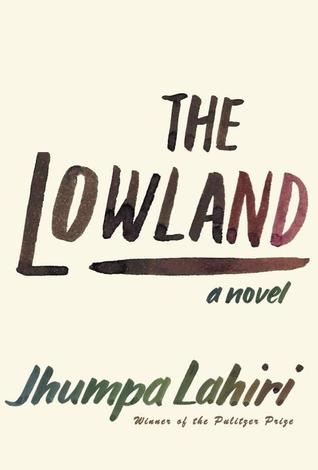 Udayan is beside him. They are walking together in Tollygunge, across the lowland, over the hyacinth leaves. They carry a putting iron, some golf balls in their hands.
 Novel Readings