This Week in My Classes: Close Reading Middlemarch

You can’t really do it, of course, or not and finish the novel in a few short weeks. I’ve been rereading it for years and I know I still haven’t read it closely enough. Still, if you can slow down and really pay attention, I don’t know a book that’s more fun to try reading closely than Middlemarch–which is why I’ve been crazy enough to assign it in my Close Reading class.

We’re just starting up the novel this week, so on Monday I gave an introductory lecture on ‘The Interesting Life of Mary Ann Evans,’ part of my belief that humanizing the author will help give the students courage as they stare down what is one of the longest books they’ll probably be assigned during their degree. In that lecture I also lay out some general principles that are important to George Eliot’s philosophy of fiction in general and to Middlemarch in particular–ideas about realism and sympathy and morality. Though I worry a bit that starting with big abstractions will put students off the novel or make them approach it with something less than their usual enthusiasm for plot and character, I think it’s not a good idea to assume we can work inductively with such a big text. In this class especially, our work is on understanding and appreciating the literary techniques at work and how they support or convey such large-scale ideas. We will be able to talk better about what’s going on at the level of literary devices if I give them some shortcuts to themes and patterns.

On Wednesday, we worked on ways the novel teaches us how to read it. We talked about the title and subtitle, for instance, and how they let us know that we’re in kind of a middling community, marching along rather than wandering according to impulse (certainly not dancing!). We’re reading a “study of provincial life,” not, say, an exposé of the seamy underside of London: that sets up some expectations too, and it begins our education about the narrator, a learned observer, perhaps a scientist or philosopher, someone outside or above the action. That’s a good place to talk about what omniscient and intrusive narrators are good for: with other texts (such as Updike’s “A & P”) we had talked quite a bit about the advantages of first-person narration, but also about what a first-person narrator can’t usually do, such as provide historical background or critical perspective on himself. Exposition (or “telling”) sometimes gets a bad rap in contemporary talk about fiction, so it’s good to spend a little time on its  uses. One of the overall goals I have for the course is precisely this kind of attention to what different choices enable. In Middlemarch, one result of Eliot’s narrative strategies–not just her particular kind of narrator but also her attention to multiple points of view–is a lot of dramatic irony. We know a lot that the characters don’t know, or see things in ways they don’t. In the first chapters, we especially see more than, or differently from, Dorothea: we know that her marriage to Casaubon is a dreadful idea, and knowing that, we watch with shock and horror as she rushes ardently into it. But because we also get a lot of information from, and about, her point of view, we understand why she does it.

Today we had our first tutorial sessions on the novel. One of my goals was to get people started talking more about the novel, just to loosen everyone up. There’s a certain intimidation factor with such a big book, and we need to get past that and just start reading it and discussing it as soon as possible. But this is not a class on 19th-century fiction as such (in that class, we start Middlemarch next week, though, so yay, more!) but a class on close reading, so today I also wanted to help them see how and why to really pay attention. One of the most important stylistic features of the novel is precisely its constant shifting among different points of view, which happens at the level of individual sentences as well as paragraphs, chapters, and entire volumes. Eliot uses a lot of free indirect discourse, so some of the shifts are subtle. It can be fun but is also sometimes crucial to tease them out. If you aren’t paying attention to point of view, you might wrongly attribute observations or conclusions to the narrator, for instance (and thus take them to be the ‘position’ of the novel overall) that properly belong to specific individual characters or groups or communities.

Here’s one of the passages we read through today:

And how should Dorothea not marry? — a girl so handsome and with such prospects? Nothing could hinder it but her love of extremes, and her insistence on regulating life according to notions which might cause a wary man to hesitate before he made her an offer, or even might lead her at last to refuse all offers. A young lady of some birth and fortune, who knelt suddenly down on a brick floor by the side of a sick laborer and prayed fervidly as if she thought herself living in the time of the Apostles — who had strange whims of fasting like a Papist, and of sitting up at night to read old theological books! Such a wife might awaken you some fine morning with a new scheme for the application of her income which would interfere with political economy and the keeping of saddle-horses: a man would naturally think twice before he risked himself in such fellowship. Women were expected to have weak opinions; but the great safeguard of society and of domestic life was, that opinions were not acted on. Sane people did what their neighbors did, so that if any lunatics were at large, one might know and avoid them.

Much of that paragraph reflects the perspective of that “wary man”; it’s certainly not the narrator who thinks it’s “natural” to think twice about marrying unconventional women, or who sees it as the “great safeguard of society” that women not act on their weak opinions–or, if these are the narrator’s views, they are ironically inflected ones, as the rest of the novel might reveal. Unconventional people and ideas are, after all, disruptive.

Here’s another paragraph just a little bit further on:

She was open, ardent, and not in the least self- admiring; indeed, it was pretty to see how her imagination adorned her sister Celia with attractions altogether superior to her own, and if any gentleman appeared to come to the Grange from some other motive than that of seeing Mr. Brooke, she concluded that he must be in love with Celia: Sir James Chettam, for example, whom she constantly considered from Celia’s point of view, inwardly debating whether it would be good for Celia to accept him. That he should be regarded as a suitor to herself would have seemed to her a ridiculous irrelevance. Dorothea, with all her eagerness to know the truths of life, retained very childlike ideas about marriage. She felt sure that she would have accepted the judicious Hooker, if she had been born in time to save him from that wretched mistake he made in matrimony; or John Milton when his blindness had come on; or any of the other great men whose odd habits it would have been glorious piety to endure; but an amiable handsome baronet, who said “Exactly” to her remarks even when she expressed uncertainty, — how could he affect her as a lover? The really delightful marriage must be that where your husband was a sort of father, and could teach you even Hebrew, if you wished it.

Again, we start with the narrator, but if you miss the slide into free indirect discourse at the end, imagine what an odd idea of the narrator’s values you’d have! The more familiar we get with the characters as well as with the narrator, the more assured our attributions become (different characters speak very differently, as we’ll get to have some fun with in class when we do my “Look Who’s Talking in Middlemarch” handout (if you follow the link and do the quiz, let me know!).

The other topic for today’s tutorials was diction–a small word with big implications for Middlemarch. Our textbook introduced the concept of “semantic fields” in the section on poetic vocabulary, and I’ve been encouraging students to work with the same idea here, starting with the vocabulary associated with Dorothea and Mr. Casaubon. I gave them one direct hint (watch for uses of “ardent”) and we’ve already started running into “petty”: those two words define one of the novel’s central thematic conflicts, so if they start paying attention to them–to who uses them or where they apply–they will start to find that the initial impression the novel gives of information overload is offset by an awareness of patterns the information falls into. I hope.

You see, this is why I think Middlemarch is a good choice for a class on close reading: it just gets better the more closely you read it. It’s not a book for rushing through (though I do remember reading along breathlessly to the end on my first time with it!).
This Week in My Classes: The Morals and the Stories

Though everyone is looking a bit peaked around the department these days–students and faculty alike–and I’m certainly feeling the usual pressures as we move into the term’s final phase, I am also finding myself intellectually invigorated by the novels we’re working through in all of my classes. It is just such a pleasure to be spending time reading and thinking about them, even under less than optimal conditions.

In The Victorian ‘Woman Question,’ we are finishing up The Mill on the Floss. Although I love the early volumes of this novel, with their evocative (if also rather vexed) representation of childhood, and their wonderful blend of sly humor and philosophical reflection (not to mention, of course, the brilliant characterizations of Tom and Maggie and their whole mish-mash of a family life), Books VI and VII really get me excited. I know they are disproportionately short, and who wouldn’t love it if Eliot had written out the great conflict between duty and desire more fully–but then, there’s something apt, too, about the headlong rush to the ending. Though we had read only to the kiss on the arm for today, it was clear from our discussion that the students both grasp the complexity of Maggie’s situation and are interested in it: there aren’t easy answers, the way there are in Tenant of Wildfell Hall, for instance. Brontë’s narrative is complex in other ways, but that there is a right way out of Helen’s difficulties is far less difficult to grasp, just as it is easier to see where she went wrong in the first place. Her attraction to Arthur Huntingdon, while understandable, is a sign of her moral immaturity. Maggie’s attraction to Stephen Guest, on the other hand, while equally misguided in its own way, is a symptom of something much deeper and much further from her control. I was struck on this reading with how much Eliot emphasizes that Maggie and Stephen are initially motivated by unconscious forces, feeling as if “in a dream,” unable to recognize or articulate the “laws of attraction” that compel them. Their drifting down the river is hardly a deliberate act, or at least its impelling motives are hardly clear to them–which of course is much of the use Eliot is making of the metaphorical pattern of rivers and water and currents and drifting right to the end of the book. Once Maggie wakes up, though, into full consciousness, then sexual attraction ceases to be an accidental cause and becomes a force to be reckoned with, and that reckoning is the process of morality–the engagement of human reason in “the labor of choice.” Though it’s possible (I reluctantly suppose!) to find something mechanical in Maggie and Stephen’s impassioned debate, I find it very moving precisely because it represents that struggle to think through feeling to right action:

Maggie trembled. She felt that the parting could not be effected suddenly. She must rely on a slower appeal to Stephen’s better self – she must be prepared for a harder task than that of rushing away while resolution was fresh. She sat down. Stephen, watching her with that look of desperation which had come over him like a lurid light, approached slowly from the door, seated himself close beside her and grasped her hand. Her heart beat like the heart of a frightened bird; but this direct opposition helped her – she felt her determination growing stronger.

‘Remember what you felt weeks ago,’ she began, with beseeching earnestness – ‘remember what we both felt – that we owed ourselves to others, and must conquer every inclination which could make us false to that debt. We have failed to keep our resolutions – but the wrong remains the same.’

‘No, it does not remain the same,’ said Stephen. ‘We have proved that it was impossible to keep our resolutions. We have proved that the feeling which draws us towards each other is too strong to be overcome. That natural law surmounts every other, – we can’t help what it clashes with.’

‘It is not so, Stephen – I’m quite sure that is wrong. I have tried to think it again and again – but I see, if we judged in that way, there would be a warrant for all treachery and cruelty – we should justify breaking the most sacred ties that can ever be formed on earth. If the past is not to bind us, where can duty lie? We should have no law but the inclination of the moment.’

‘But there are ties that can’t be kept by mere resolution,’ said Stephen, starting up and walking about again. ‘What is outward faithfulness? Would they have thanked us for anything so hollow as constancy without love?’

Maggie did not answer immediately. She was undergoing an inward as well as an outward contest. At last she said, with a passionate assertion of her conviction as much against herself as against him,

‘That seems right – at first – but when I look further, I’m sure it is not right. Faithfulness and constancy mean something else besides doing what is easiest and pleasantest to ourselves. They mean renouncing whatever is opposed to the reliance others have in us – whatever would cause misery to those whom the course of our lives has made dependent on us. If we – if I had been better, nobler – those claims would have been so strongly present with me, I should have felt them pressing on my heart so continually, just as they do now in the moments when my conscience is awake – that the opposite feeling would never have grown in me, as it has done – it would have been quenched at once – I should have prayed for help so earnestly – I should have rushed away, as we rush from hideous danger. I feel no excuse for myself – none – I should never have failed towards Lucy and Philip as I have done, if I had not been weak and selfish and hard – able to think of their pain without a pain to myself that would have destroyed all temptation. O, what is Lucy feeling now? – She believed in me – she loved me – she was so good to me – think of her….’

One of my students remarked that when she studied The Mill on the Floss in another class, they discussed Maggie and Stephen’s relationship as a great romantic love story–thwarted, I suppose, by “society,” though she didn’t go into detail about their interpretation. I admit, I find that a puzzling take on these two, who seem so ill-suited to each other in character and taste, and also, as we see here, in values. That their passion cuts across these factors is precisely what makes it so surprising and dangerous. If only there were a great romantic option for Maggie in the novel! Instead, she’s torn between three loves (Tom, Philip, and Stephen), each with his own demand on her feelings and loyalties. Where is she to go–what is she to do? Short of leaving them all behind and starting over, there is no way forward for her, and she can’t cut them off because as she tells Philip (become, poor fellow, her “external conscience” rather than her beloved), she “desires no future that will break the ties of the past.” Given that, her final choice is as inevitable as its result.

In 19th-Century Fiction we are nearly finished with Hard Times. I was wondering about my decision to rotate it into the reading list again after a few years of Great Expectations and a special turn for Bleak House, but I’m actually finding it really compelling. The structure is taut (if every so often the sentiment is a bit flabby) and it’s such a very dark novel. We were discussing Louisa today and her descent down Mrs Sparsit’s staircase. I don’t know another novelist who could (or would!) stretch out a conceit like that across not just paragraphs but whole chapters. And throughout the novel there is such a tight integration between Dickens’s prose and his thinking, every thought infused with fancy so that as we read we live the novel’s principles. It’s not his most subtle novel, but subtlety will get you only so far, as Trollope conceded when he wrote about “Mr Popular Sentiment” in The Warden: the artist who paints for the millions must use glaring colours, and might make more difference than all his own fine shades of gray. And what subtle novelist could make me cry the way Dickens does every time I read the chapter called “The Starlight”? Before the week is out I want to bring in some excerpts from Martha Nussbaum’s Poetic Justice: it occurred to me during today’s discussion that we could think in more contemporary terms about the social effects of his literary strategies.

In Mystery and Detective Fiction it’s a Victorian kind of week too, because we’ve moved on to P. D. James’s An Unsuitable Job for a Woman. James has always been explicit about her interest in 19th-century fiction, especially Austen, Eliot, and Trollope, and I think in many ways Unsuitable Job is very much in their tradition. It is a kind of Bildungsroman, or so I will propose in Wednesday’s class, and the central conflict is between a calculating kind of utilitarianism (on the villain’s part, of course!) and Cordelia’s passionate humanitarianism: “what use is it to make the world more beautiful if the people in it can’t love one another?” she exclaims, and in that moment she is close kin to Louisa as she falls on the floor before her father, Mr. Gradgrind, proclaiming “your philosophy and your teaching will not save me.” Both make the case for the wisdom of the heart over the wisdom of the head.

Mrs Tulliver’s Teraphim

One of the many things that make reading George Eliot at once so challenging and so satisfying is her resistance to simplicity–especially moral simplicity. It’s difficult to sit in judgment on her characters. For one thing, she’s usually not just one but two or three steps ahead: she’s seen and analyzed their flaws with emphatic clarity, but she’s also put them in context, explaining their histories and causes and effects and pointing out to us that we aren’t really that different ourselves. Often the characters themselves are in conflict over their failings (think Bulstrode), and when they’re not, at least they can be shaken out of them temporarily, swept into the stream of the novel’s moral current (think Rosamond, or in a different way, Hetty). But these are the more grandiose examples, the ones we know we have to struggle to understand and embrace with our moral theories. Her novels also feature pettier and often more comically imperfect characters who are more ineffectual than damaging, or whose flaws turn out, under the right circumstances, to be strengths. In The Mill on the Floss, Mrs Glegg is a good example of someone who comes through in the end, the staunch family pride that makes her annoyingly funny early on ultimately putting her on the right side in the conflict that tears the novel apart.

Then there’s her sister Bessy, Mrs Tulliver, who is easy to dismiss as foolish and weak, but to whom I have become increasingly sympathetic over the years. Mrs Tulliver is foolish and weak, but in her own way she cleaves to the same values as the novel overall: family and memory, the “twining” of our affections “round those old inferior things.” In class tomorrow we are moving through Books III and IV, in which the Tulliver family fortunes collapse, along with Mr Tulliver himself, and the relatives gather to see what’s to be done. The way the prosperous sisters patronize poor Bessy is as devastatingly revealing about them as it is crushing to her hopes that they’ll pitch in to keep some of her household goods from being put up to auction:

“O dear, O dear,” said Mrs Tulliver, “to think o’ my chany being sold in that way — and I bought it when I was married, just as you did yours, Jane and Sophy. . . . You wouldn’t like your chany to go for an old song and be broke to pieces, though yours has got no colour in it, Jane–it’s all white and fluted, and didn’t cost so much as mine. . . . “

“Well, I’ve no objection to buy some of the best things,” said Mrs Deane, rather loftily; “we can do with extra things in our house.”

“Best things!” exclaimed Mrs Glegg with severity, which had gathered intensity from her long silence. “It drives me past patience to hear you all talking o’ best things, and buying in this, that, and the other, such as silver and chany. You must bring your mind to your circumstances, Bessy, and not be thinking of silver and chany; but whether you shall get so much as a flock bed to lie on, and a blanket to cover you, and a stool to sit on. You must remember, if you get ’em, it’ll be because your friends have bought ’em for you, for you’re dependent upon them for everything; for your husband lies there helpless, and hasn’t got a penny i’ the world to call his own. And it’s for your own good I say this…”

Unable to believe she will be parted from her things, poor Mrs Tulliver brings before them “a small tray, on which she had placed her silver teapot, a specimen teacup and saucer, the castors, and sugar-tongs.” “‘I should be so loath for ’em to buy [the teapot] at the Golden Lion,'” she says, “her heart swelling and the tears coming, ‘my teapot as I bought when I was married…'”

Early in these scenes Maggie finds that her mother’s “reproaches against her father…neutralized all her pity for griefs about table-cloths and china”; the aunts and uncles are pitiless in their indifference to Bessy’s misplaced priorities. I used to find her pathetic clinging to these domestic trifles in the face of much graver difficulties just more evidence that she belonged to the “narrow, ugly, grovelling existence, which even calamity does not elevate”–the environment that surrounds Tom and Maggie, but especially Maggie, with “oppressive narrowness,” with eventually catastrophic results. She also seemed a specimen of the kind of shallow-minded, materialistic woman George Eliot’s heroines aspire not to be. But she’s not really materialistic and shallow. She doesn’t want the teapot because it’s silver: she wants it because it’s tangible evidence of her ties to her past, of the choices and commitments and loves and hopes that have made up her life and identity. She’s not really mourning the loss of her “chany” and table linens; she’s mourning her severance from her history.

I think I understand her better than I used to, and feel more tolerant of her bewildered grief, because I have “teraphim,” or “household gods,” of my own, things that I would grieve the loss of quite out of proportion to their actual value. They are things that tie me, too, to my history, as well as to memories of people in my life.  I have a teapot, for instance, that was my grandmother’s; every time I use it, or the small array of cups and saucers and plates that remain from the same set (my grandmother was hard on her dishes!) I think of her and feel more like my old self. I have a pair of Denby mugs that were gifts from my parents many years ago: one has Hampton Court on it, the other, the Tower–these, too, have become talismanic, having survived multiple moves. If I dropped one, I’d be devastated, and not just because as far as we’ve ever been able to find out, they would be impossible to replace. “Very commonplace, even ugly, that furniture of our early home might look if it were put up to auction,” remarks the narrator with typical prescience, shortly before financial calamity hits the Tullivers, but there’s no special merit in “striving after something better and better” at the expense of “the loves and sanctities of our life,” with their “deep immovable roots in memory.” Sometimes a teapot is not just a teapot.

*headdesk*

As previously mentioned, I have begun a little project of catching up on recent (defined as ‘since I last really paid attention’) work in Victorian studies. In aid of this, I have browsed the TOC from a couple of the major academic journals in the field and downloaded a bunch of essays and book reviews (so far, about 75), which I am reading through to get a feel for what people have been doing, what I should know more about, books I should look up for further reading, and so on. I decided to go back about 5 years: it’s not as if I haven’t looked at any criticism published since 2006, but much of my searching has been quite targetted, whereas now I am just looking, not looking for anything in particular. It’s not a particularly inspiring task. I’ve looked at probably 30 or 40 files so far, and not one of them has given me any sense of urgency–nothing, so far, has made me think that I need to reconsider what I usually do in the classroom, for instance. But I’ve listed a few books already that I’d like to take a look, or another look, at, and I’ve filed some essays away where they will be accessible for more specialized work–research or graduate teaching. I have discovered that my iPad is really a wonderful tool for this kind of work. I’ve got the PDFs all tucked into the GoodReader app, which lets me easily highlight and annotate them, and then as I finish looking at each one I tap it away into the appropriate folder so I can find it again when I want to. Yes, I can do these things on my desktop with Adobe Pro, but how much more comfortable to do this in a more accomodating posture than sitting bolt upright staring straight ahead! And my right wrist is grateful to have a break from mousing around. I’ve still got the files saved into folders on the desktop if I want them, but I’m loving this system. It makes me think I might even get into a habit of reviewing recent criticism! Imagine.

Anyway, the real point of this post is not to rehearse my boring work routines for you but to publicly humiliate myself, in the hope that it will motivate me to do better from now on at actually following up on the notes I take. One of the reviews I read today was really the first one I enjoyed reading just for its own qualities, as well as for its subject, and I happily highlighted several passages in it, including this one:

Negative hermeneutics has never been Hardy’s mode, and her determination to take seriously what Eliot said said, without suspicion and cynicism as a premise of the reading, is one thing that might make this anti-biography suspect to modern critics. But that determination becomes a form of negative capability that is one of the most moving and satisfying aspects of the book. For Hardy, Eliot wrote as if she meant what she said and she said what she meant. In critical circles, this is an astonishingly fresh argument these days. (100)

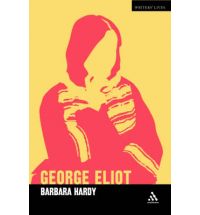
It’s a review by George Levine of Barbara Hardy’s George Eliot: A Critic’s Biography, a book I have but have not sat down and read attentively, though I have long been an admirer of Hardy, as is probably anyone who has studied George Eliot. As I filed the review away in my ‘George Eliot’ folder, I had a dim flash of recollection: didn’t I write something about Barbara Hardy as my critical model right here on Novel  Readings at some point? Sure enough, I did. Here’s the old post, in its entirety. Please note that I wrote it almost three years ago to the day.

April 8, 2008

Being Barbara Hardy

As a proud new member of NAVSA (better late than never!), I have just received a copy of the latest issue of Victorian Studies. Of the many interesting features in this issue (Volume 50 No. 1), I particularly enjoyed George Levine’s review of Barbara Hardy’s George Eliot: A Critic’s Biography, a book I own but haven’t yet read. One of my clearest recollections of my early days as a graduate student is being asked by one of my new faculty mentors to name a critic whose work on George Eliot I admired. “Barbara Hardy,” I promptly replied. The response was a tolerant smile and nod, and a bit of sage advice: “Of course, you can’t be Barbara Hardy any more.” True enough–unless, naturally, you actually are Barbara Hardy. Her steadiness in being herself is at the heart of Levine’s admiration of this new book:

Negative hermeneutics has never been Hardy’s mode, and her determination to take seriously what Eliot said said, without suspicion and cynicism as a premise of the reading, is one thing that might make this anti-biography suspect to modern critics. But that determination becomes a form of negative capability that is one of the most moving and satisfying aspects of the book. For Hardy, Eliot wrote as if she meant what she said and she said what she meant. In critical circles, this is an astonishingly fresh argument these days. (100)

I’ve put it at the top of my “t0 read” pile.

*headdesk*

Here’s a new resolution. I will not only read the book but I will write about it here when I have done so. And not any three years from now, either.

Rebecca Mead, “George Eliot and Me”

If Rebecca Mead’s “George Eliot and Me” * didn’t take up eight pages (eight pages!) in the New Yorker‘s anniversary issue, I would just let it go by without comment. But the New Yorker is prime literary real estate, and eight pages is a lot. It seems a fair assumption that Mead’s essay should be  significant in some way–that it should represent outstanding work of its kind. When, after reading it through three times, I still couldn’t find the payoff–well, that does seem to call for some discussion.

It’s not that “George Eliot and Me” is a terrible piece or anything–Mead is no Brenda Maddox (though she reports attending a talk by Maddox at which–surprise!–Maddox recounts the Curious Incident of the Honeymoon Defenestration). Then again, I notice Mead does think it’s important to tell us how plain Eliot was (however did I manage to write a whole essay on Eliot without feeling any need to bring this up?!) She also shares Maddox’s ageism, describing a female scholar she meets as “a tall woman, no longer young but still striking.” But? (This whole encounter is oddly described, actually: Mead introduces this scholar as a “notable exception” to a “maxim” she has just quoted, from Adam Bede: ‘The way in which I have come to the conclusion that human nature is loveable [sic]–the way I have learned something of its deep pathos, its sublime mysteries–has been by living a great deal among people more or less commonplace and vulgar.” I can’t tell if Mead means that this woman, though commonplace and vulgar, is an exception to the conclusion that human nature is lovable [if so, what a snidely gratuitous dig this is!] or, because she is not commonplace and vulgar, an exception to the idea that you can’t find lovable human nature in more glamorous guise.)

Anyway, as I was saying, it’s not a terrible piece. It’s nice to hear from someone who has loved Middlemarch a long time and feels she has learned from it. I felt a certain kinship with Mead on these grounds, especially at the beginning of the essay: “The first time I read George Eliot’s “Middlemarch” [I guess using quotation marks for novels rather than italics is New Yorker house style?] I was seventeen years old, and was preparing to take the entrance examination for Oxford University.” “Hey, me too!” I thought–except that I was eighteen and backpacking across Europe. So, not quite the same, but still, like Mead, I first read the novel early in my progress towards adulthood. Also, like Mead’s, my identifications and interpretations have changed over the years, not just because my own experience challenged my earlier assumptions and values, but because I learned to read the book better. Mead, too: on her early readings, she says, she “relished the satire” but “missed, more or less completely, the irony in the portrayal of Dorothea.” It’s an easy mistake; I made it too, once upon a time. And Mead and I share admiration for the novel’s moral wisdom, though I don’t think I’ve ever made Mead’s larger, and apparently continuing, mistake that “everything I might need to know about marriage, about love, about life itself, was encompassed in the novel’s eight hundred and fifty pages.” That’s a lot to ask of any novel–and it reduces the novel (as most of Mead’s comments d0) to a fairly literal set of lessons and examples that can be copied out epigrammatically.

Thinking it over, in fact, that attitude that the novel operates primarily at this level–as ‘philosophy teaching by examples,’ rather than as a richly organized aesthetic artefact–is what seems to me the essay’s greatest and most disappointing weakness. Nothing Mead says about Middlemarch is wrong, but none of it is going to surprise or even interest people who have thought much about Eliot or Middlemarch already, and none of it gives any sense of Eliot as an artist or a thinker: all we get, by and large, are one-sentence quotations used to illustrate points of character, theme or moral lesson. In the online “Ask the Author” chat that the New Yorker hosted, Mead mentions Zadie Smith’s essay, so she knows that there are richer ways to talk about Middlemarch.There are certainly richer ways to talk about The Mill on the Floss, which Mead mentions only to imply that it is “verbose,” which she then uses as an excuse to mention the (appalling) phenomenon of “a volume called ‘The Mill on the Floss: in Half the Time,’ an abridgement for those unable to countenance a six-hundred-page book.” I don’t think she means to endorse this absurdity, but juxtaposed against her “verbose” comment, it rather comes across that way. I see she didn’t get past her earlier lack of interest in Romola, either, here simply called Eliot’s “often tedious excursion into Renaissance Florence.” Sure, Romola is hard going and probably not a great novel. But you have eight pages in the New Yorker to talk about George Eliot! There’s so much more to be said about George Eliot’s novels, if you’re willing to work at it a little, to get outside your own head, and to explore not just her “maxims” (remember her cautions about people who live by them, after all–that’s one of the tedious philosophical bits that is probably left out of the truncated version of The Mill on the Floss) but her ideas and her craft. How did Mead figure out the irony at Dorothea’s expense, for instance, if not through the electric combination of Eliot’s intrusive narrator and her shifting point of view?

But perhaps in complaining about the superficiality of the literary discussion in the essay I’m making a category mistake . Maybe the main point of “George Eliot and Me” is not to talk about George Eliot, at least not in depth, but about the effect of her work on Mead’s own life and personal development. “I have gone back to ‘Middlemarch’ every five years or so,” she tells us, and her “emotional response” has evolved each time. She has learned to understand why Will’s “youthful energies and Byronic hairdressing” would have appealed “to his middle-aged creator,” for instance. (Oops, that’s actually another Maddox-like moment: Eliot the acknowledged cradle-snatcher, fantasizing about a sexy youngster!) Mead has also used Middlemarch to test prospective partners: when one tells her he “admired the climactic scene of Will and Dorothea…clutching each other’s hands, at last, as a thunderstorm rages,” she knows “things would never have worked between us.” Poor guy: done in by the pathetic fallacy! Eventually Mead married someone who “prized ‘Middlemarch’ as much as [she] did.” There’s some genuine human interest in these anecdotes, at least for a fellow Middlemarch lover who (true story) began a long tradition of reading aloud to her own husband by bringing Middlemarch along on their honeymoon. (We gave up on this tradition round about the time Frankenstein got thrown across the room for its terrible prose…but that’s another story. Maybe I should pitch it to the New Yorker.) But there’s still not a lot of substance here for someone hoping to find those precious eight pages used to advance public appreciation for one of the greatest novelists in the English tradition. I’d have to be really interested in Mead–rather than George Eliot–to be happy to read so much about her. Or, alternatively, she’d have to use her personal experience of reading Middlemarch to take us to some place more universally revelatory or insightful.

That’s not what happens in “George Eliot and Me,” though. It doesn’t articulate and illustrate the genius of George Eliot, and neither does it use its autobiographical form to build to some personal revelation or to a larger intellectual debate about, say, whether it is a good thing or not to derive one’s moral lessons from literature (now that’s a very Victorian conversation!)–or how one might do so in a rich and complex enough way that the literary texture of the source is not sandpapered out in favor of bland platitudes. (Where is the moral challenge of George Eliot’s “celebration of the unremarkable” in Mead’s commentary? The village dance which concludes the essay oddly summons up the most conservative aspects of Eliot’s rural nostalgia–as if the happy peasants of Raveloe had nothing to answer for in Silas Marner’s long isolation, or Arthur Donnithorne’s birthday dance weren’t undermined by Hetty’s seduction and abandonment.) Instead, we wander off with Mead as she tries to track down the source of a quotation often attributed to George Eliot: “It is never too late to be what you might have been.” It is, indeed, surprising that despite the tenacity of the attribution, this line cannot be traced to any of Eliot’s works. Mead asks a lot of experts about it, including Rosemary Ashton and Rosemarie Bodenheimer (both of whom have written wonderfully about Eliot’s life and writing). Not only do they say they can’t find a source for it, they also, quite rightly, note that it doesn’t seem to fit with Eliot’s explicit moral philosophy, which makes rather a big deal about the way our choices have an indelible effect on our characters and futures. Mead even interviews the author of a self-help book who used the quotation as her title: “I was depressed for a few days, and then I remembered the quote.” Eventually Mead resigns herself: she can’t find a source for the quotation or conclusively prove Eliot never said it. “Like Lydgate,” she says, “I had aspired to make a link in the chain of discovery, and had failed.” Along with some interspersed biographical material, this quest plot takes up nearly three of the eight pages. It might have been worth the space if the investigation was “linked” to something significant. (Lydgate, after all, is hoping to find “the primitive tissue” of life.) I wonder, for instance, why this is quite such a popular quotation, why it seems to satisfy so many people as something George Eliot said. Does it bring her within a safer community of women–reassuring, nurturing–and make her more conventionally feminine than is easily done if we quote from Mead’s least-favorite of her novels, Romola? “Children may be strangled, but deeds never” doesn’t go very well on a greeting card. Or how about this, from Felix Holt: “It is not true that love makes all things easy: it makes us choose what is difficult.” Try selling that on a wall plaque.

It feels churlish, in a way, to be so critical of an essay that speaks so sincerely of its author’s admiration for one of my own favorite books. It’s a good thing to tell more people how great Middlemarch is. Mead and I both think that Austen is more popular because she’s easier on (and for) her readers. As Mead says, Eliot “surpassed her precursor” (but why does she go on to say that the reader “marvels at Jane Austen’s cleverness, but is astonished by George  Eliot’s intelligence”? Why “astonished”? I’m impressed–humbled–challenged–provoked by it, but not at all astonished). But the essay is a disappointment. It’s long (“verbose,” even), cluttered, and solipsistic, as if the greatest interest of George Eliot’s life and work really is that they have played a big part in Rebecca Mead’s life and work. At a time when it’s common to hear online writing decried for its lack of editorial oversight, rigor, and credibility, to see eight pages in one of the most prestigious magazines in the literary world used for something no better than this gives the lie to the claim that these supposed features of Old Media produce the best results. It’s not terrible–parts of it are even pretty good–but it’s certainly not great, and given its very prominent placement, it surely should be.

*The essay is called “George Eliot and Me” on the magazine cover, but “Middlemarch and Me” inside the magazine.

Philosophical Novels

In this week’s New York Times Sunday Book Review, James Ryerson wonders about the relationship between philosophy and literature:

Both disciplines seek to ask big questions, to locate and describe deeper truths, to shape some kind of order from the muddle of the world. But are they competitors — the imaginative intellect pitted against the logical mind — or teammates, tackling the same problems from different angles?

Interesting question! You could write a whole book about it–indeed, it could probably generate enough discussion to sustain an entire scholarly journal! Or, I guess, you could rattle off a few paragraphs in the Times.

Ryerson’s is a pretty typical piece in that it focuses on philosophy as a set of ideas and on literature as an aesthetic practice rather than considering the way form itself might have philosophical implications or be used to carry out or exemplify ideas. He also makes, but then fortunately backs away from, some of the silly broad generalizations that get bandied about when this topic comes up, such as “Philosophy is concerned with the general and abstract; literature with the specific and particular. Philosophy dispels illusions; literature creates them.” When people say things like this, I just want to mutter “Pope!” at them until they stop talking.

Ryerson touches on a number of the usual suspects for a discussion of this topic, including Aristotle, Sartre, Henry James, and Iris Murdoch, along with Rebecca Newberger Goldstein (author of the fairly tedious 36 Arguments for the Existence of God–a novel written by, for, and about philosophers if there ever was one!) but never mentions the one novelist to have been included in a dictionary of philosophers as well as to have been discussed in the eminent philosophy journal Mind–George Eliot. Martha Nussbaum’s indifference to Eliot in Love’s Knowledge prompted my own foray into this territory, “Martha Nussbaum and the Moral Life of Middlemarch.” This essay focused primarily on arguing with Nussbaum about her fixation on Henry James in general and The Golden Bowl in particular:

In this essay, I examine Martha Nussbaum’s fundamental claim about fiction, which I will call her “formal claim”: her argument that the philosophical significance of novels is to be found not in whatever theories or principles they might overtly discuss or dramatize but in their literary form and in their style.  Drawing on my analysis of this formal claim, I critique the Jamesian-Aristotelian model she develops as profoundly anti-philosophical in its commitment to indeterminacy, mystery, and complexity.  I argue that the Jamesian consciousness Nussbaum would have us emulate, far from being, as she believes, egalitarian, humane, and morally responsible, is elitist, exclusionary, and morally inert.[1] I propose, instead, George Eliot’s Middlemarch as exemplary of fiction’s potential as moral philosophy, for its approach and its answer to the question “How should one live?” and for its integration of novelistic perception and philosophic reflection.

[1] As Catherine Gardner describes it, the traditional philosophical approach or “philosophical model” is “the search for cogent and consistent arguments, the evaluation of the correctness of conclusions, and the construction of a systematic theory from these conclusions and arguments.”  Moral Philosophy and the Novels of George Eliot.  Unpublished Ph.D. Dissertation (Philosophy), University of Virginia, 1996, p. 3.  Gardner suggests that George Eliot’s novels are “too ‘philosophical’ (in the traditional sense)” to satisfy Nussbaum’s desire for fiction that, like James’s, emphasizes perception, inquiry, and uncertainty.

Nussbaum’s method, ironically, is philosophical insofar as she considers her textual examples ahistorically, investigating their arguments or theories as a contemporary analytic philosopher approaches Descartes or Aquinas—that is, with little regard for historical or contextual placing or significance.  Alisdair MacIntyre notes “the persistently unhistorical treatment of moral philosophy by contemporary philosophers . . . [who] all too often treat the moral philosophers of the past as contributors to a single debate with a relatively unvarying subject-matter, treating Plato and Hume and Mill as contemporaries both of ourselves and of each other.”  After Virtue: A Study in Moral Theory.  2nd edition.  (U Notre Dame P, 1984), p. 11.

Aren’t you glad I don’t write this way in my blog posts? In retrospect, I am very aware that I was actually trying to write ‘philosophically’ myself. I’m not actually a fan of ‘metadiscourse’–talking about the essay and its argument instead of just, you know, writing the essay and making the argument–but I was suffering a certain boundary-crossing anxiety. I had more fun later on in the essay when I got to turn away from Nussbuam (and The Golden Bowl–whew!) and write about Middlemarch:

Readers of Middlemarch will be well aware of how many passages in the novel insist on this need to replace the “flattering illusion” of our own centrality with the realization that others have an “equivalent centre of self, whence the lights and shadows must always fall with a certain difference” (135).  My own interest here is to point out how the narrative itself, in its form, adheres to this principle and thus becomes, as Nussbaum argues James’s novels become, not just an account of but an example of the moral imperative—the ethical approach—it advocates.  Catherine Gardner notes that most philosophical approaches to literature leave us wondering “why we would want to read [these theories] in a novel rather than a philosophical treatise,” while discussions of Eliot and philosophy leave it “unclear why Eliot would choose to express her ideas in the form of a novel.”[1] . . . Fictional form of the sort Eliot creates is essential to the adequate presentation of this philosophical outlook: while the novel’s morality can be summarized or paraphrased, such a reduced account cannot reproduce the movement from self to other.  George Eliot’s moral philosophy, to put it another way, requires fictional form precisely because its basis is that movement from our own limited perspectives to the point of view of others and an awareness of relationships and connections across a wide range of individual experiences—the intellectual and imaginative movement that is the basis of sympathy.  While Middlemarch often, through its characters and events, tells us the value of this movement, and dramatizes the need for it as well as its difficulties, costs, and rewards, its greatest contribution as philosophical fiction is that it moves its readers in just this way.  Unlike readers of The Golden Bowl, readers of Middlemarch participate while they are reading the novel in an active, engaged ethical program.

. . .

“One morning, some weeks after her arrival at Lowick, Dorothea—but why always Dorothea?  Was her point of view the only possible one with regard to this marriage?” (175).  Over and over . . . Middlemarch challenges the assumption that a single point of view suffices for understanding.  Just as individual characters learn by revisiting, rethinking, what they have seen or done, the novel and its implied author enact the moral obligation to see things from a different angle and disrupt our own desire—egotistical or readerly—to think, as [Geoffrey] Harpham puts it, “only through the ‘I.’”  And, as in the example from Chapter 29 just quoted, the overt artifice, the intrusiveness, of this method induces self-consciousness about it and so reflection on its implications: philosophical deliberation is both modeled and prompted by these novelistic techniques.  Not only does Eliot’s implied author demonstrate an ethos much more congenial to community as well as individual flourishing than James’s, but she also practices a form of fiction that works with her readers towards an answer to the question, not “How should one live?” but “How should we live?”

[1] Moral Philosophy and the Novels of George Eliot, p. 19.  Her chief example of such a conventional approach to philosophy in Eliot’s fiction is George Levine’s discussion of Eliot’s determinism.

OK, it’s not deathless prose, but it made it past the gatekeepers at Philosophy & Literature (home, of course, of the Bad Writing Contest). And I did make my best effort to get in the game Nussbaum proposed, which was to stop looking at literary texts as examples of philosophical problems or considering them philosophically significant only insofar as they overtly parrot or dramatize specific philosophical theorems, and instead to think about how their actual literary qualities get certain kinds of ethical work done. Much of the work I’ve read in this suposedly interdisciplinary zone moves very quickly towards plot summary, but if the important work of a novel is done at that reductive level, what an inefficient process!*

*My essay is behind a paywall, unfortunately, but if you’re actually interested in reading the whole thing and can’t get at it, let me know.

Read Better!

I admit, I have some sympathy with Hillary Kelly’s lament about the whole Oprah Does Dickens thing. I don’t share, or like, Kelly’s condescending assumption that Oprah’s readers are incapable of appreciating the novels, that they will have to “scramble about to decipher Dickens’s obscure dialectical styling and his long-lost euphemisms” or that “with no real guidance: they will only “mimic their high-school selves with calls of, ‘It’s too hard!'” People have been reading Dickens “with no real guidance” for a pretty long time and lots of them have had great fun with his language, his stories, and, yes, his ideas. Of course, I wouldn’t be in the profession I’m in if I didn’t think “real guidance” could enhance people’s reading experience, especially (though not exclusively) for books that don’t yield as easily as others to the kind of self-revelatory or just lazy reading-for-what’s-relatable that Kelly rightly proposes is one of the main purposes of Oprah’s book club. A case in point actually comes from the putatively ‘high culture’ end of the media spectrum, the New Yorker‘s Book Bench, which this week included in their Year in Reading series the following commentary on George Eliot’s Romola:

Absolutely no one reads “Romola” these days, at least not for fun, and I hate to admit that I can see why: it’s desperately wearying. The heroine is a hopeless prig, unredeemed by anything even slightly compromising in her character, and the villain’s villainy isn’t very interesting: he’s uniformly awful to his father, his wife, and his mistress. Eliot was utterly diligent about ensuring the book was historically accurate: her diaries report that, in preparation for writing, she gathered “particulars, first, about Lorenzo de’Medici’s death; secondly, about the possible retardation of Easter; third, about Corpus Christi Day; fourthly, about Savonarola’s preaching in the Quaresima of 1492.” But as one of Eliot’s early critics, Leslie Stephen, put it: “The question will intrude, What would have become of ‘Ivanhoe’ if Scott had bothered himself about the possible retardation of Easter?”

Actually, this complacently closed-minded and anti-intellectual reading is much more annoying to me than Oprah’s Dickens fest because of its pretense of erudition. Dickens was a great populist, after all; he wrote to reach the hearts of the masses, and there’s a certain logic in an alliance between him and the forces of O. The really annoying thing about Oprah’s announcement, to me, was her gleeful admission that she’d never read any Dickens before  and the sheep-like enthusiasm with which her millions of viewers will now rush out and do what the diva says. (But hey, what corner of the book world is free from fads? It seems just a short while ago nearly every bluidy reviewer and blogger and tweeter I follow was talking about the same book … and wait, so was Oprah!)  The hot cocoa stuff is silly, too, as if every Dickens novel is a cozy holiday classic. Oprah ought to put on a better display of informed reading. It’s not hard to do–and she could just staff it out without losing a day of her royal tour of Australia. But with her resources, she may in fact bring in some really interesting people to talk about Dickens. Maybe, just maybe, some of the issues raised in this old debate about Dickens’s racism will even come up, though I sort of doubt it, since it would undermine the feel-good ethos of both the show and the book choice. For me, the bottom line is, Great Expectations and Tale of Two Cities (though, as Kelly and others have rightly noted, oddly mismatched) are books that are worth reading, whether it’s your mom, your grade 10 teacher, me, or Oprah who motivates you to read them. (I did do a double-take when I got my first look at the Penguin cover, though; I was relieved to learn that the back cover reverses the disproportion. Also, I hope Oprah’s web editors will stop putting a random apostrophe after Dickens; I already get endless assignments in about “Dicken’s” and I don’t need any more confusions introduced…)

But, to come back to Romola, if you’re going to set yourself the excellent project of reading through all of George Eliot’s fiction, and learn enough about Romola to know that it was extensively researched, you might also work on the assumption that novels that don’t immediately gratify your taste may be revealing some of your own limits, not just theirs. Sometimes, you’re asking the wrong questions, for instance. Here’s where ‘real guidance’ might come in handy, at least in training you as a reader to stop and think about why the book is as it is, what purposes its aesthetic and formal choices serve, what ideas shape it. You might not like it any better, but you would understand a lot more about it. These comments give the impression of a reader who really didn’t try very hard–in fact, who did just what Kelly worries Oprah’s readers will do. And seriously: any novel with the line in it “children may be strangled, but deeds never” surely deserves our close attention. Some of my ideas about Romola are here, from when we covered it in my recent graduate seminar; these excellent posts from Bookphilia also show how very far from “desperately wearying” the novel can be to a good reader.

This Week in My Classes (March 22, 2010)

This week I have the pleasure, if also the challenge, of starting up work on two tremendously interesting and intelligent novels. In British Literature Since 1800, we are turning to Ian McEwan’s Atonement; in my graduate seminar, it’s time for Daniel Deronda. Reading the first instalments over the past few days, I’m reminded how thrilling it is to know you are in the hands of a skilled writer, someone with not just ideas, but the craft to support them formally. As often happens through this kind of serendipitous juxtapotion, I’m also struck by the unexpected connections between them. In particular, both deal with female protagonists bent on shaping the world to their will–though the more literal willfulness of Gwendolen Harleth, eager to fulfill a destiny worthy of a heroic narrative, becomes, in Atonement, the more characteristically modern preoccupation with the writing process, with Briony desiring control over the story itself.

It’s Gwendolen who is most on my mind tonight, with the seminar meeting tomorrow morning. After reading four other novels by George Eliot in fairly quick succession, it’s hard to escape the feeling that the characters are all close kin to each other–cousins, perhaps. We have been fretting, in our recent class discussions, about the emphasis Eliot places on submission and resignation. “Grant me at least a new servitude!” Jane Eyre cries, but we know, as she does, that her rebellious spirit can never be content with submission. Dinah, Maggie, Romola, and Dorothea, however, have in common a tendency to subordination; when they resist, they are likely to be chastened, as Maggie is (fatally) for even drifting away towards the gratification of her individual desires, as Romola is by Savonarola’s chiding voice calling her back to “her place,” or as Dorothea is by the gradual realization that the same ardent sympathy that elevates her above the common run of men or women inhibits her from claiming too much for herself. Egotism must be beaten back, is the incessant lesson–though Dorothea, at least, is able to seize happiness for herself. Egotists are the villains: Hetty, whose child pays the ultimate price for her inability to look away from the mirror to the window; Tito, whose hatred of anything unpleasant leads him step by compromised step away from the ties to the past that would steady his conscience; and Rosomand, flower of Miss Lemon’s Academy whose steadfast self-love crushes her ardent husband (who will eventually call her his “basil plant”–because basil, he says, flourishes on a dead man’s brains).

But in Daniel Deronda, we lead off with Gwendolen, whose governing principle is to do as she likes, whose sense of entitlement overpowers many of those around her so that, for instance, her mother cannot bear to deny her the horse she considers her right even when money is tight. Gwendolen aspires to mastery, though (unlike Rosamond) not through marriage, which she views, due to her mother’s sad experience, as a “dreary” option:

her thoughts never dwelt on marriage as the fulfilment of her ambition; the dramas in which she imagined herself a heroine were not wrought up to that close. . . . Her observation of matrimony ha dinclined her to think it rather a dreary state, in which a woman could not do what she liked, had more children than were desirable, was consequently dull, and became irrevocably immersed in humdrum.

Yet she is well aware that “marriage was social promotion,” and when the eligible bachelor Mr. Mallinger Grandcourt moves into the neighbourhood, she (and everyone else) can hardly avoid the expectation that a match will soon follow. There’s a nice wry allusion to Pride and Prejudice in the set-up:

Some readers of this history will doubtless regard it as incredible that people should construct matrimonial prospects on the mere report that a bachelor of good fortune and possibilities was coming within reach…

The evil twist that Eliot puts on this familiar story–in addition to making Gwendolen as sassy, but not nearly as honorable or upright as Lizzie Bennet–is in making Grandcourt every bit as determined on mastery as Gwendolen (“ah,” exclaims the narrator as their courtship reaches a climax, “piteous equality in the need to dominate!”). Against Gwendolen’s fierce ambition to rule at least herself, if not all those around her, is pitted the truly chilling will to power of a cold-blooded man (he is described as a “lizard”) whose interest in her increases as (even, because) she resists the lure of his wealth. Even before she has any particular reason, she is wary of commitment, uneasy at the prospect of “subjection to a possible self, a self not to be absolutely predicted.” This is the wariness we wish Dorothea had shown, especially in retrospect when we, and she, experience the soul-numbing effects of the actual self to whom she has, indeed, chosen subjection! And so Gwendolen’s resistance, though it seems to those around her, including Grandcourt, mere “coquettishness,” feels like more, like resistance, perhaps, to the inevitability of the marriage plot. Perhaps here, at last, is someone, however faulty, who is equipped to make a different life for herself. Faced with facts about Grandcourt’s past that make accepting his offer uncomfortable, maybe even immoral, she turns her back on him and heads off to Europe.

But we already know, because Eliot manipulates the chronology of the novel, that she is turned back by the collapse of the family fortunes. And so the long process of chastening begins. Reality will not accommodate her fantasies of control; life does not bend itself to her imperious will. Back in her modest home, soon to relocate to even shabbier quarters, Gwendolen faces humiliation: life as a governess, provided, of course, that she proves satisfactory at the interview (“The idea of presenting herself before Mrs Mompert in the first instance, to be approved or disapproved, came as pressure on an already painful bruise”). She is unable to keep her hopes up despite the model of Jane Eyre:

Some beautiful girls who, like her, had read romances where even plain governesses are centres of attraction and are sought in marriage, might have solaced themselves a little by transporting such plans into their own future . . . [but] her heart was too much oppressed . . .

But she is young, and beautiful, and accustomed to praise for her music, and so it occurs to her to try for a career on the stage:

The inmost fold of her questioning now, was whether she need take a husband at all–whether she could not achieve substantiality for herself and know gratified ambition without bondage.

That’s it! That’s what we have been wanting for these women; that’s what many feminist critics have blamed Eliot for not providing. After all, she achieved her own substantiality; she gratified her ambition! But no, the slapping down continues. The musical genius Herr Klesmer, called in to consult, refuses Gwendolen the easy satisfaction of praise, instead breaking down her shallow, superficial vanity. She has no talent, no discipline, no vocation. Being, as he says, a “beautiful and charming young lady” is not, after all, a qualification for success in the arduous life of an artist. Nothing seems to be left, after all, but resignation: “Things cannot be altered, and who cares?” she says to her mother; “It makes no difference to any one else what we do.”

When Mr Grandcourt re-enters, then, it seems to her  like a great chance to regain control: “she had the white reins in her hands again,” she feels. What follows is one of the most disturbing proposal scenes I know from this period. It only looks conventional: “any one seeing them as a picture would have concluded that they were in some stage of love-making suspense,” but it’s a game of a different kind, thinly disgused as “love-making.” Even the narrator seems uncomfortable at the end: “Was there ever before such a way of accepting the bliss-giving ‘Yes’?” And it’s a relief, not just for Gwendolen, but for all of us, that “she [has] no alarm lest he meant to kiss her.” She still hopes to rule, looking out the window at Grandcourt’s fine horses, for instance, and seeing them as “the symbols of command and luxury.” “Everything is to be as I like,” she reports triumphantly to her mother–but we can hardly believe that, knowing what we know. It’s the beginning of a marriage that will be truly a contest of wills, unlike the two disastrous examples in Middlemarch of a greater person (weak through the capacity for sympathy) being morally compelled into submission to a lesser one (stronger through unreflective egotism). Gwendolen and Grandcourt are like gladiators entering the ring.

And we can root for her, though with reservations, because she is not, in fact, monstrous quite as Tito or Rosamond is monstrous. Her wilfullness has a childish quality to it, a certain artifice or even pretense:

She rejoiced to feel herself exceptional; but her horizon was that of the genteel romance where the heroine’s soul poured out in her journal is full of vague power, originality, and general rebellion, while her life moves strictly in the sphere of fashion; and if she wanders into a swamp, the pathos lies partly, so to speak in her having on her satin shoes.

Ouch! There’s a sting in that last bit reminiscent of Eliot’s barbed analyses of Rosamond. But Rosamond doesn’t get any bits like this:

Solitude in any wide scene impressed her with an undefined feeling of immeasurable existence aloof from her, in the midst of which she was helplessly incapable of asserting herself. The little astronomy taught her at school used sometimes to set her imagination at work in a way that made her tremble; but always when some one joined her she recovered her indifference to the vastness in which she seemed an exile; she found again her usual world in which her will was of some avail. . . .

It seems likely that, in accepting Grandcourt, she is heading into a different kind of vastness, one in which her will may be of little avail. That experience will no doubt be morally salutary–but then, it seems, we’re back in familiar territory, giving up hope of dominating or even deciding our own lot, facing the uncaring blankness of existence with our only hope of grace being submission to our inevitable failure to do just as we like.

I’ll have to leave Briony for another time!

File under “Education, Idealism About”

A snippet from Felix Holt, the Radical, which I have recently been poring over on behalf of a small project for Open Letters:

All life seemed cheapened: as it might seem to a young student who, having believed that to gain a certain degree he must write a thesis in which he would bring his powers to bear with memorable effect, suddenly ascertained that no thesis was expected, but the sum (in English money) of twenty-seven pounds ten shilling and sixpence.

Woolf on the Victorians: “I’m a good deal impressed”

From Virginia Woolf’s letters:

Whatever one may say about the Victorians, there’s no doubt they had twice our – not exactly brains – perhaps hearts. I don’t know quite what it is; but I’m a good deal impressed.

She had just been reading “the entire works of Mr. James Joyce, Wyndham Lewis, Ezra Pound, so as to compare them with the entire works of Dickens & Mrs Gaskell; besides that George Eliot; & finally Hardy.” About the experience of reading “G.E.” she writes to another friend, “I was so much struck by her goodness that I hope it wasn’t my article that you thought hard. She is as easy to read as Tit Bits: and it was a surprise to me; magnificent in many ways.” The “article” to which she refers is her piece on George Eliot for the Times Literary Supplement, originally published exactly 90 years ago today. It is a wonderful essay, at once stringent and sympathetic:

[T]hough we cannot read the story [of GE’s early life] without a strong desire that the stages of her pilgrimage might have been made, if not more easy, at least more beautiful, there is a dogged determination in her advance upon the citadel of culture which raises it above our pity. Her development was very slow and very awkward, but it had the irresistible impetus behind it of a deep-seated and noble ambition. Every obstacle at length was thrust from her path. She knew everyone. She read everything. Her astonishing intellectual vitality had triumphed. Youth was over, but youth had been full of suffering. Then, at the age of thirty-five, at the height of her powers, and in the fulness of her freedom, she made the decision which was of such profound moment to her and still matters even to us, and went to Weimar, alone with George Henry Lewes. . . . By becoming thus marked, first by circumstances and later, inevitably, by her fame, she lost the power to move on equal terms unnoted among her kind; and the loss for a novelist was serious. Still, basking in the light and sunshine of Scenes of Clerical Life, feeling the large mature mind spreading itself with a luxurious sense of freedom in the world of her ‘remotest past’, to speak of loss seems inappropriate. Everything to such a mind was gain. All experience filtered down through layer after layer of perception and reflection, enriching and nourishing.

The books are astonishingly readable and have no trace of pomposity or pretence. But to the reader who holds a large stretch of her early work in view it will become obvious that the mist of recollection gradually withdraws. It is not that her power diminishes, for, to our thinking, it is at its highest in the mature Middlemarch, the magnificent book which with all its imperfections is one of the few English novels written for grown-up people. But the world of fields and farms no longer contents her. In real life she had sought her fortunes elsewhere; and though to look back into the past was calming and consoling, there are, even in the early works, traces of that troubled spirit, that exacting and questioning and baffled presence who was George Eliot herself. . . .

[Her heroines] do not find what they seek, and we cannot wonder. The ancient consciousness of woman, charged with suffering and sensibility, and for so many ages dumb, seems in them to have brimmed and overflowed and uttered a demand for something – they scarcely know what – for something that is perhaps incompatible with the facts of human existence. George Eliot had far too strong an intelligence to tamper with those facts, and too broad a humour to mitigate the truth because it was a stern one. Save for the supreme courage of their endeavour, the struggle ends, for her heroines, in tragedy, or in a compromise that is even more melancholy. But their story is the incomplete version of the story that is George Eliot herself. For her, too, the burden and the complexity of womanhood were not enough; she must reach beyond the sanctuary and pluck for herself the strange bright fruits of art and knowledge. Clasping them as few women have ever clasped them, she would not renounce her own inheritance – the difference of view, the difference of standard – nor accept an inappropriate reward. Thus we behold her, a memorable figure, inordinately praised and shrinking from her fame, despondent, reserved, shuddering back into the arms of love as if there alone were satisfaction and, it might be, justification, at the same time reaching out with ‘a fastidious yet hungry ambition’ for all that life could offer the free and inquiring mind and confronting her feminine aspirations with the real world of men. Triumphant was the issue for her, whatever it may have been for her creations, and as we recollect all that she dared and achieved, how with every obstacle against her – sex and health and convention – she sought more knowledge and more freedom till the body, weighted with its double burden, sank worn out, we must lay upon her grave whatever we have it in our power to bestow of laurel and rose.

(You can read the whole essay here.)