In the clamor, Paula begins to paint, condenses the sum of the stories and the images into a single gesture, a movement sweeping as a lasso and precise as an arrow, since her painting contains at the moment something quite other than itself, gathers up the grazed knees of a five-year-old girl, the danger, an island in the far reaches of the Pacific, the sound of an egg hatching, the vanity of a king, a Portuguese sailor who bites into a rat, the rippling hair of a movie star, a writer gone fishing, the mass of time, and beneath embroidered swaddling clothes, a royal baby asleep, as if in a mythical nest, at the bottom of a shell.

Maylis de Kerangal’s Painting Time focuses on the personal and artistic development of Paula Karst, who when the novel opens is just beginning her studies at the Institut de Peinture in Brussels. She and her classmates are learning a very specific kind of painting: decorative painting or trompe-l’œil, the art of making one surface look like another, usually wood or marble or, as Paula chooses for her graduation piece, tortoiseshell. One of the recurring topics is whether this work is really painting, really art: is copying or recreating really, itself, creative? Or is it just highly skilled trickery? The goal of their painting is for the artistry to be indiscernible: is that all that really distinguishes it from painting that you know is painting? Doesn’t all art at least begin with copying, and isn’t copying also about preserving and sharing imagery that otherwise many people would never see for themselves?
These questions, both theoretical and philosophical, lurk but don’t dominate the novel. After graduation Paula and her friends deploy their training everywhere a deceptive surface is wanted, from hotel lobbies to movie sets. I didn’t feel that the story of Paula’s movement from one job to another had much momentum or interest: I didn’t have a strong sense that she was growing or changing as a person or an artist, though we are sometimes told that she is. The often highly technical descriptions of her work were more interesting, and I wondered if maybe that effect was deliberate on de Kerangal’s part, as the novel also seems quite engaged with ideas about the broad sweep of history as signaled by art history, with the artefacts and images ultimately outlasting their creators.
 From this point of view, Paula is just one more painter, a point that is particularly emphasized by the final section in which she is hired to help complete a reproduction of the caves at Lascaux. To do this work, and indeed any of the painting she undertakes across the novel, Paula has to submerge herself in other times and places, in materials and processes, a kind of subordination of the self. Maybe this is how the novel asks us to think about decorative painting: instead of the insistent idiosyncrasy of works by the ‘great masters,’ which endlessly and beautifully and vexingly foreground their styles and their selves—their individual preoccupations—Paula and the other graduates of the Institut de Peinture disappear into the wood grain, the marbling, the cracks in the faux stucco. This erasure of the self makes an odd underlay for a book that is structured as a Bildungsroman or a Kunstlerroman, implicitly challenging the way those familiar fictional models drive our sense of what gives a life meaning, or what constitutes greatness or success in art.
 An interesting book, then—but not, for me, a very engrossing one. Still, I enjoyed sections like this, which appeal to my longstanding fascination with ‘neepery’:
They’ve learned to glaze, to score, to soften, to stipple, to moiré, to lighten, to create a little iridescence with a polecat-hair round brush or an eyelet in the glaze with the brush handle, to draw short veins, to speckle, to wield the palette knife, the squirrel-hair two-headed marbling brush and the pitch pine brush, the large and the small spalter, the flat brush, the billiard cloth, and the burlap; they’ve learned to recognize Cassel earth and Conté, light cadmium yellow and cadmium orange; they’ve painted these same Renaissance ceiling angles with pudgy little cherubs, these same raspberry crushed silk draperies plunging from the cornices of Regency giltwood beds, these same Carrera columns, these same Roman mosaic friezes, same granite Nefertitis, and this apprenticeship has transformed them together, has shifted their language, marked their bodies, fed their imaginations, stirred their memories.
I also really enjoyed the sections about the discovery of the Lascaux caves: “For three days,” Paula tells us of the boys who first happened upon it, “they explored the cave, three days in which they toiled at extending the known world—extending known space and time—our great work.” Ah, the humanities.
Painting Time is translated from the French by Jessica Moore.
 April hasn’t been a bad month for reading, overall. I’ve already written up Dorothy B. Hughes’s
 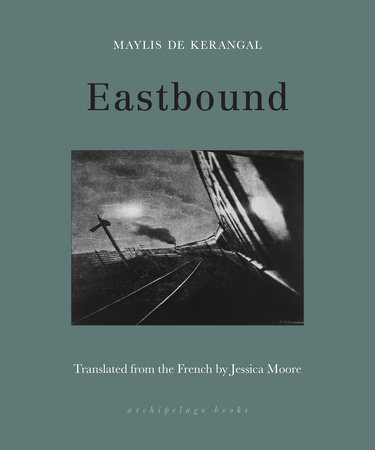 I read Maylis De Kerangal’s Eastbound in one sitting, not just because it’s short but because it’s very suspenseful and I really wanted to find out what happened! I ended up thinking that the novel’s success in this respect worked against the quality of my reading of it, because I didn’t linger over the aspects of the novel that make it more than just a thriller. The story is very simple: a young Russian soldier on a train to Siberia decides to go AWOL and is helped in his attempted escape by another passenger, a young French woman. Will he succeed, or will he be discovered and pay the price? Anxious to know, I paid less attention than I should have to the descriptions of the landscape scrolling past them – though I did appreciate them, I didn’t really think about them, and a reread of the novel would probably show me more metaphorical and historical layers to the characters’ journey. Some other time, maybe, as I had to return my copy to the library! But even my brisk reading showed me why
 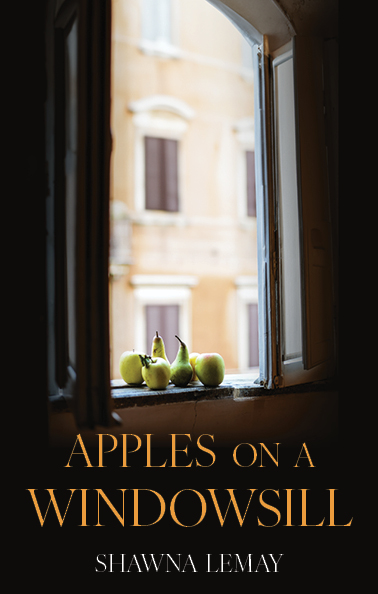 My current reading is Shawna Lemay’s Apples on a Windowsill, which is (more or less) about still lifes as a genre, but which roams across a range of topics in a thoughtful and often beautifully meditative way. A sample: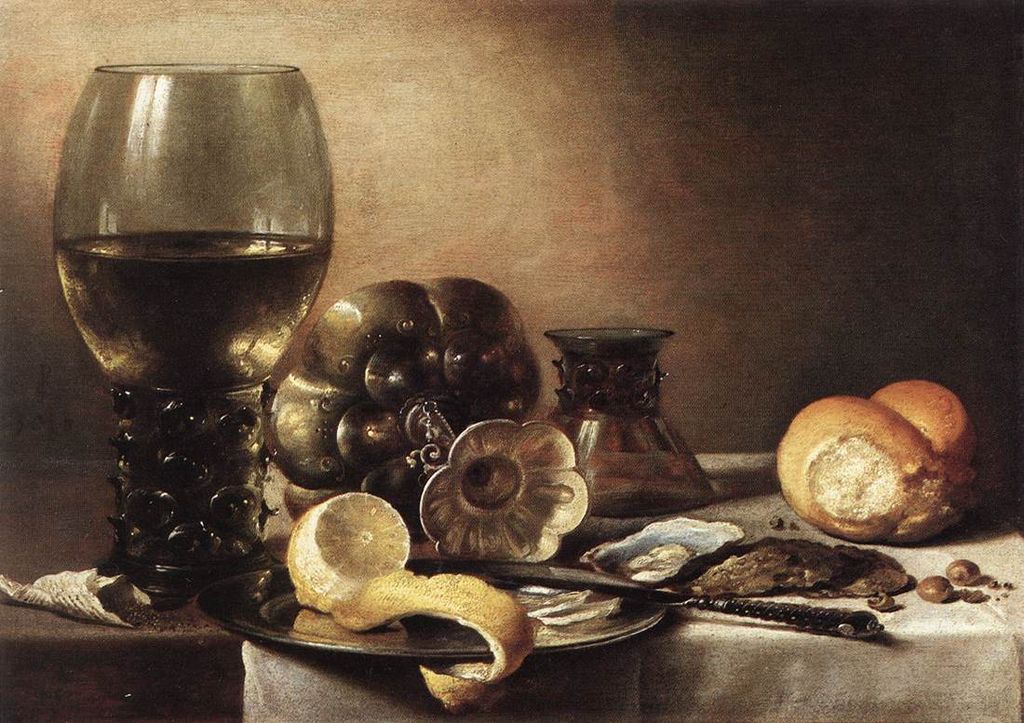
 Novel Readings