Elizabeth Bowen, The Heat of the Day

‘Atmospheric’ and ‘evocative’ seem to be popular adjectives for The Heat of the Day. I agree that the book is both of those things; in my last post I highlighted a passage, for instance, that struck me as especially powerful at summoning up not so much the look as the feeling of wartime London, and cumulatively I think the whole novel brings to us the fraught, anxious, oppressive yet inarticulate sense of a world under siege literally but also morally and psychologically.

It’s that shift from the literal world into something intangible and abstract that finally interested me the most about this novel. Bowen’s style overall is very intrusive, by which I don’t mean that her narrator is intrusive (though occasionally that is true too) but that at really no point in the novel could I lose myself in it. The plot is too minimal and develops too slowly to generate suspense the way you might expect of a war novel centered on an accusation of spying for the enemy. And the emotional elements of the novel, though very intense, were too indirect or intellectualized to prompt laughter or tears (though there was the occasional wry chuckle). Throughout, the syntax is difficult and obtrudes on our awareness, so that we have to know at all times that we are reading, and we have to work pretty hard at it, too.

I often suggest to my students that they look for clues about how to read a novel from what the novel itself is doing or emphasizing or sounding like. Though it was not necessarily pleasurable working my way through Bowen’s sentences (though sometimes it was intensely so–again, see previous post!), they were never truly impenetrable and often yielded to slower reading and closer attention. Working through them came to seem to me like part of the point of the book, which is very much about what people are not able to say, or can’t (or won’t) say directly–those layers of meaning behind seemingly innocuous actions and phrases, for instance, but also the ever-present risk of mistaking glib fluency for honesty and accuracy, surfaces for sufficient truths. At every moment, after all, there are all the things you feel but can’t articulate, and maybe aren’t even conscious of yourself: I was reminded of Woolf’s comments about post-Victorian novelists becoming “aware of something that can’t be said by the character himself.” One effect of the war, too, is that it makes open emotion, as well as open conversation, more difficult, potentially even dangerous; to the general human difficulty of understanding and articulating our experience, then, is added the particular pressure of this historical moment. This is the murky verbal territory which this novel seems to be navigating. Wishing it were clearer and simpler is a bit like wishing both life and feelings were clearer and simpler, or at least that the novelist had undertaken to clarify and simplify it for us. There are novelists who do this, and render complexity with superb lucidity. George Eliot comes to mind (I know, when does she not, for me?!)–but Bowen is obviously not one of these, and for reasons that I’m sure have to do both with her place in literary history and with her individual theory of the novel. (I have been trying to get my hands on her essay “Notes on Writing a Novel”: from the snippets I’ve seen, it is quite illuminating about her aesthetic principles.)

When the narrator is speaking in The Heat of the Day–or, since there isn’t really a particularized narrator, when we get direct exposition–the language tends to clears up, limning in contexts or proposing frameworks for understanding the characters’ situations. I thought this passage, describing Stella and Robert as they sit at their coffee, was particularly suggestive about why the book has the components and structure that it does:

But they were not alone, nor had they been from the start, from the start of love. Their time sat in the third place at their table. They were the creatures of history, whose coming together was of a nature possible in no other day–the day was inherent in the nature. Which must have been always true of lovers, if it had taken till now to be seen. The relation of people to one another is subject to the relation of each to time, to what is happening. If this has not been always felt–and as to that who is to know?–it has begun to be felt, irrevocably. On from now, every moment, with more and more of what had been ‘now’ behind it, would be going on adding itself to the larger story. Could these two have loved each other better at a better time? At no other would they have been themselves. . . .

Not just the choices Robert and Stella face are meaningless outside of time, but also their very identities: there is no timeless, universal ‘Stella’ who has to figure out what to do about her suspicion that her lover is a spy, but only Stella in 1940, or 1942, or 1944, her thoughts and feelings and experiences interwoven with, generated by, “what is happening.” In order to appreciate Stella’s actions, we have to accumulate as much as possible about her thoughts and feelings but also about the environment in which they are moving, or by which they are being shaped. There’s a literal sense here, again: the whole issue of leaking secrets to the enemy can arise only during a conflict. But there are more diffuse issues here too, I think: the relationship between our personal and political loyalties, the nature of our identification with our country, our expectations of family, are all things we take for granted but could (probably should) historicize. Victorian novels are sometimes described as historical novels about their present. I think Bowen is doing something similar except that she has zoomed in so that both the history and the present with which she is concerned are tiny moments magnified–and not, again, explained with the magisterial authority of her 19th-century predecessors. George Eliot’s characters are often confused, her readers rarely. Here, I think we too are stymied about just what it is, exactly, that Stella should do once Robert admits his guilt. Interestingly, her action is inaction: she does not try to stop him from heading out by the roof, even though she clearly understands his intentions.

I was intrigued by the abstract way in which Robert’s treason is represented. Again, I am trying to take my cues from the novel to find the significance of Bowen’s choices. It would, surely, have been easy enough for her to spell out his motives much more clearly, specifically, and politically. As it is, I think the words ‘German’ or ‘Nazi’ are never used–only ‘the enemy’ or ‘them’ (or ‘us,’ depending on who’s speaking). He makes a vague, almost Carlylean argument about people’s inability to handle their freedom (arguably, the portrayal of English society in the novel does little to defend democracy against his careless dismissal):

Tell a man he’s free and what does that do to him but send him trying to dive back into the womb? Look at it happening: look at your mass of ‘free’ suckers, your democracy–kidded along from the cradle to the grave. . . . Do you suppose there’s a single man of mind who doesn’t realize he only begins where his freedom stops? One in a thousand may have what to be free takes–if so, he has what it takes to be something better, and he knows it: who could want to be free when he could be strong? Freedom–what a slaves’ yammer!

He associates his disaffection with the retreat from Dunkirk: “It was enough to have been in action once on the wrong side. Step after step to Dunkirk. . . That was the end of that war–army of freedom queuing up to be taken off by pleasure boats.” But his complaints never distill into specific political statements, and they are never attached, either, to political or historical contexts the way, say, Lord Darlington’s fascist sympathies are in The Remains of the Day. So, I conclude, taking my cue as much from what Bowen does not include as from what she does, the spy plot is something of a thematic feint (though on this I would be happy to hear other views): it’s not betraying Allied secrets to the Nazis that’s the issue but a more general problem of betrayal or loyalty, a question of how or why we form the loyalties we do (in Robert’s case, it seems to be something more visceral or temperamental than political, though I thought he remained too enigmatic as a character for us, or Stella, to really understand his motives).

I have a lot of questions remaining about the book, about aspects that interested me and seemed significant but that on this one reading did not settle into patterns. There’s the side plot, for instance, about Louie and Connie: why is it there? I ended the book thinking Louie was there partly as a witness to the other story, but the letter Connie writes about her pregnancy also creates a thematic resonance, about lives thrown off kilter by the war and people affected in unexpected, maybe inexplicable, ways: “It is no use,” she writes, “for you or me to judge, you simply have to allow for how anything is going to take a person, as to which there is no saying till you see.” That certainly describes the other characters, so maybe there are further parallels, or maybe the juxtaposition illuminates the central issues of love and loyalty in ways I didn’t pick up on. What does Mount Morris bring, to Roderick, who to Stella’s surprise takes so seriously his role as master of the house? Is it the continuity that matters, given the great uncertainty stalking the rest of his life and indeed much of the wider world? Is it nostalgia for identities that are rooted in one place? Harrison, for instance, is unsettling in part because nobody knows where he actually lives. What about Harrison? There’s something so morally unpleasant about the way he tries to blackmail Stella into intimacy, but in the end he seems steadier, more admirable, if just as enigmatic, as Robert–whose name (in a nice little doppelganger-ish twist) it turns out he shares. What about Stella herself, living under the shadow of a scandal we learn was always founded in error, ending up in scandal again after Robert takes the roof exit from her “luxury” flat? Why does the knowledge (again, imperfect) that Stella is “not virtuous” prove so inspirational to Louie? Finally, for now, what about the war itself? On another reading, I would want to track more carefully the convergence of major events in the war with the more minor cataclysms on the home front. At the every end of the book we get an unusually specific review of military events, from the German capitulation at Stalingrad to “the Russian opening of their great leafy Orel summer drive,” on into 1944, “The Year of Destiny,” and the D-Day landings. We sit in Stella’s new apartment during the “Little Blitz,” and the guns, instead of being threatening, buy her time in the conversation–her relationship to the war itself seems to have changed. And yet it’s Louie who actually ends the novel, watching not the bombers, which “invisibly high up, had droned over” a little before, but swans, “disappearing in the direction of the west.” Is that a hint that the unnatural condition of war is coming to an end, or just another reminder of the omnipresence of time?

This was my first experience reading Elizabeth Bowen. It wasn’t easy, and I was glad for the external motivation of my book group meeting, which helped me make concentrating on the novel a priority. (Unfortunately, I was the only one at the meeting who had finished the novel, which is one reason I still have so many questions lingering! Please, Bowen readers out there, help me out!) The Heat of the Day does not seem to be considered Bowen’s greatest novel: from what I’ve read, just poking around the internet, people seem to identify that as The Death of the Heart. I’m interested enough that I think I’ll look around for a copy of that. In the meantime, it’s back to Testament of Friendship, which has been on hold for too long.
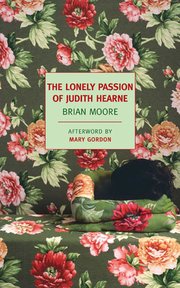
Book Club: Brian Moore, The Lonely Passion of Judith Hearne

The Lonely Passion of Judith Hearne is the third book chosen by the book club I recently joined: we began with Morley Callaghan’s Such is My Beloved, and in January we discussed Graham Greene’s The Power and the Glory. Our idea (a good one, I think) is to choose books with at least some connection to each other. So we began with an idealistic but ultimately disillusioned priest and moved on to another priest who is neither idealistic nor any kind of ideal–except, perhaps, in his inability to abandon his vocation in the face of every imaginable discouragement. We looked to Brian Moore next on the understanding that he was one of Greene’s favourite novelists, and when we saw that Judith Hearne is a drunk who endures a crisis of faith, well, it seemed the perfect choice, providing continuity but, with its female protagonist, a nice dose of difference as well.

Of these three books, I think The Lonely Passion of Judith Hearne is my favourite so far, just as a reading experience. I wonder if that’s because Judith herself is quite familiar: she’s a close cousin to Alice and Virginia Madden in Gissing’s The Odd Women, for instance, an unmarried woman in a world where women’s worth (and, sadder, their self-worth) is defined exclusively by their success in attracting a husband. Further, like the Madden sisters, she clings to a veneer of gentility despite her poverty: keeping up appearances is everything. Her situation is profoundly pathetic, her suppressed desperation poignant and sometimes even chilling. Moore writes wonderfully about her growing reliance on a little whiskey, “medicinally, of course, to help [her] feel better”:

For as the years wore on, there was not much to be cheerful about, old friends dying off, young men a thing of the past. . . . And all the things Miss Hearne used to dream about in those lonely years with her poor dear aunt: Mr Right, a Paris honeymoon, things better not thought of now, all these things were slipping farther away each year a girl was single. So she cheered herself up as best she could and if she overdid it, it was a private matter between herself and her confessor, old Father Farrelly, and he was understanding, he liked a drink himself, right up to the end . . .

The rooming house where Miss Hearne (temporarily sober) takes up residence at the novel’s beginning is vividly recreated, from its dreary clutter (“little lace doilies on the tables and lamps with pretty pastel shades . . . a big enamel china dog on the mantelpiece and a set of crossed flags on the wall”) to its odd and somewhat creepy inhabitants, including the landlady’s truly creepy son Bernard (“all bristly blond jowls, tiny puffy hands and long blond curly hair, like some monstrous baby swelled to man size”) and the landlady’s brother, James Madden, recently returned from America. Madden is a man on the make, eager to promote himself with inflated stories of New York and his own success “in the hotel business” there (in fact, he was a doorman who got a little money in a settlement after being by a bus).

Madden and Miss Hearne begin an awkward relationship–not exactly a courtship, but something like it, as she hopes against all hope that here, finally, is that Mr Right she’d given up on, and he believes that her appearance as a “lady” means she has enough money to make her worth pursuing despite her age and ugliness. All ends badly, largely thanks to Bernie’s machinations. We puzzled over Bernie’s role here. He fancies himself a great artist and is working on an epic poem; he meddles with Miss Hearne and Madden because he wants them out of the house, where his mother’s doting fondness frees him from responsibility, so that he can write as well as help himself furtively to the pretty young maid. One of the oddest scenes in the novel involves Mrs Rice washing Bernie’s hair in the middle of her living room:

Night gave a special flavour to Mrs Henry Rice’s nest. The coloured lampshades glowed orange, blue and green and flames yawned noisily up the chimney. already a state of nightly undress was evident. A pillow had been laid on a sofa and a blanket was folded beside it. In the centre of the room, kneeling on a rug, was Bernard, stripped to his bulging middle, his head immersed in a towel. A big enamel basin of soapy water stood beside him on the floor.

Poor Miss Hearne hardly knows where to look–and neither did we. His hulking, dripping, bulging presence seems ominously significant, but we couldn’t settle on the nature of that significance: why should he be the one who brings on the novel’s crisis? Given the novel’s emphasis on women’s economic and sexual powerlessness, it seemed plausible that he embodies men’s advantages, in which case it is interesting that his cruel and selfish behaviour is enabled by his mother.

As things fall apart for Miss Hearne, she starts drinking again, first turning her picture of the Sacred Heart to the wall. It’s a compelling scene of need, degradation, and escape:

Then she scrambled off the bed, shaking, took a glass from the trunk and scrabbled with her long fingers at the seal, breaking a fingernail, pulling nervously until the seal crumbled on the floor and the cork lay upended on top of the bedside table. She took off her clothes quickly, wise in the habits of it, because sometimes you forgot, later. She pulled on her nightdress and dressing-gown, sat quietly by the fire, shaking a little still, but with the rage, the desire of it. Then, while the bottle of cheap whiskey beat a clattering dribbling tattoo on the edge of the tumbler, she poured two long fingers and leaned back. The yellow liquid rolled in the glass, opulent, oily, the key to contentment. She swallowed it, feeling it warm the pit of her stomach, slowly spreading through her body, steadying her hands, filling her with its secret power. Warmed, relaxed, her own and only mistress, she reached for and poured a tumbler full of drink.

Moore handles her binge brilliantly: we don’t realize until she drags herself downstairs much later that she has been, as Mrs Rice slyly remarks, “singing and talking away to [herself[ as happy as a lark. . . . louder than the wireless.” It’s just a tiny bit funny to realize how she has given herself away, but it’s painful to watch her cling to her dignity when we know it is too late.

As things deteriorate, she seeks comfort in church, but Moore allows her no consolation there: the church in this novel is an institution stripped of its authenticity, a space for hollow rituals. Miss Hearne is terrified when she sees the sacristan closing up shop in a business-like manner:

It was as though the old sacristan, keeper of secrets, knew he had no need to genuflect again. The lights were out, the people had gone home, the church was closing. In the tabernacle there was no God. Only round wafers of unleavened bread. She had prayed to bread. The great ceremonial of the Mass, the singing, the incsense, the benedictions, what it if was show, all useless show? What if it meant nothing?

Miss Hearne is horrified at her doubt, but it worsens as the novel goes on, as she demands answers for her suffering and abandonment and meets only indifference from Father Quigley at her despairing confession:

She had seen his face. A weary face, his cheek resting in the palm of his hand, his eyes shut. He’s not listening, her mind cried. Not listening! . . . (O, he doesn’t understand, he doesn’t.)

Like the sacristan, Father Quigley leaves the church without reverence (he has a golf game to get to), adding to her fear that “they both knew there was no need to bow, as though the tabernacle was empty”: “Was it? Was there nothing to pray to?” And so Miss Hearne, in a moment of defiance, approaches the altar and issues a challenge: “Show me a sign.” The rest of the novel follows her as she tests God–withdrawing her savings, moving into a ritzy hotel, and drinking herself into some rare moments of honesty. Eventually, deposited back at the church, she not only approaches the altar but attacks it in a drunken rage, tearing at the door until her fingers bleed.

We debated whether there’s something heroic, or at least courageous, about Miss Hearne. It’s not an easy question. Her challenge is not a principled one: she rebels, not against the social rules and taboos that have reduced her to her pitiable state, but against her own unhappiness (she remains just as class-conscious as ever, for instance). And yet there’s something astonishing about the spectacle of her confrontation with a God she can neither believe in nor abandon; her tearing at the tabernacle door might be seen as her scrabbling also at all the shams and pretenses of her society and her life, trying to see what substance they really have.

In the end, though, she finds only the courage to persist in a life in which now, fairly explicitly, there is no substance, only surface. At the end of the novel she is, once again, setting up home, this time in a private hospital where charitable friends have arranged “convalescent care” for her after her breakdown. Once more she puts up her picture of the Sacred Heart, but this is more a gesture of resignation than a restoration of faith: she can’t give it up because without at least the overt sign of belief, she has nothing left to give any order or meaning to her life:

If you do not believe, you are alone. But I was of Ireland, among my people, a member of my faith. Now I have no — and if no faith, then no people. No, no, I have not given up. I cannot. For if I give up this, then I must give up all the rest.

That missing word (“Now I have no –“) is crucial, I think: even to herself, she cannot claim her own loss of faith. Instead, she choose, not belief itself, but the appearance of belief and the limited comfort of belonging, rather than the martyrdom of honesty, in which there might have been some moral heroism to offset the otherwise unrelenting bleakness of her story.

Next up for our group: Elizabeth Bowen’s The Heat of the Day. We decided to stay in that mid-century period, and Bowen is “Anglo-Irish,” so that’s another continuity. I think we all hope there’s no religious despair in this one.

Book Club: Graham Greene, The Power and the Glory

Last night was the second meeting of the book club that first met in November to discuss Morley Callaghan’s Such Is My Beloved. In keeping with our plan of following some kind of thread from one book to the next, we moved from that sad story of failed religious idealism to a still sadder–but, perhaps, ultimately more uplifting–one, The Power and the Glory. For all of us, it was our first reading of the novel, and for some of us, our first serious encounter with Graham Greene. I include myself in this last group: I had read The Comedians years ago for an undergraduate class, and my copy of The Power and the Glory has my [unmarried] name and then “88” inscribed in it, as if it too was part of my course readings, but I have no recollection of ever actually having worked through it. That’s it, for me and Graham Greene!  (I’ve also seen the movie adaptation of The End of the Affair, but I’d be the first one to insist that doesn’t really count!)  It’s hard to imagine that I could have read it and not remembered it: it certainly seems to me now a highly memorable book, the kind of book that leaves deep and not altogether welcome tracks in one’s literary and moral imagination.

As before, our group discussion was wide-ranging and open-ended rather than conclusive, but also as before, the process of hearing a range of ideas and trying out my own helped me sort my preliminary impressions. I am left with a number of uncertainties about the novel, some quite literal (what happened to the girl Coral, for instance? I thought she had died, perhaps from whatever caused her sharp stomach pains, but it turned out other people had not inferred that, and we couldn’t find any specific information), some more abstract (what is the place of women in the moral and religious universe of this novel, for one? except for Coral, they seem mostly very limited in their roles and their agency and are generally peripheral to the novel’s central dramatic conflict–is it a misimpression that in the priest’s struggle between material and spiritual needs, women are sidelined because they belong to the world of the flesh?). But I am also left feeling I appreciate at least some aspects of it, particularly about how its very dreariness–its immersion in corruption, failure, sin, inadequacy, disappointment, dirt, and death–helps us make the same journey the whiskey priest makes towards a particular idea of God and salvation. Listening at one point to the confession of the mestizo who ultimately will betray him, the priest reflects on the unoriginality of his sins, on the mestizo‘s inability to understand that he is “only a typical part” of “a world of treachery, violence, and lust in which his shame was altogether insignificant.” But the moral ugliness of the world illuminates rather than obscures the greatness of God:

It was for this world that Christ had died; the more evil you saw and heard about you, the greater glory lay in death. It was too easy to die for what was good or beautiful, for home or children or a civilization — it needed a God to die for the half-hearted and the corrupt.

This is the world–these are the people–for whom the whiskey priest, too, ultimately dies, as, unable to turn away from his duty to a dying Christian, he knowingly allows the mestizo to lead him into a trap. Even before then, he has risked his life repeatedly by hearing confession and performing mass for the motely assortment of variously ugly, corrupt, ignorant, even evil people he encounters on his grim travels. And there is a kind of glory in the fleeting moments of grace he achieves, as well as a kind of heroism in the ruthlessness with which he admits his own inadequacies and failures even as he doggedly serves the God he believes may damn his soul to Hell. He is no saint, if being saintly means transcending the needs and temptations and vulnerabilities of ordinary human life. But if a saint is someone who is fully human and yet who, despite sharing those needs and temptations and flaws, still persists in honoring the ideal he may never reach–then, perhaps, the whiskey priest is closer than he thinks to being “the only thing that counted.” The mother’s story of Juan the Martyr provides an ironic commentary on this perspective on sainthood: our priest, too, may become the subject of such legends and be given in death the purity of heart, the courage, the heroism he lacked in life. But Greene lets us see the superficiality of that simplistic version, which is no more than a story for children. His imperfect man is, I think the lesson is, a perfect priest, truly a man of God.

I found Greene’s prose very effective, especially the unexpected similes which I learned he called “leopards” (because they “leap” at you): “She carried her responsibilities carefully like crockery across the hot yard”; “The world was in her heart already, like the small spot of decay in a fruit”; “the watch-tower gaped over their path like an upper jaw”; or, most poignant of all, “He felt like someone who has missed happiness by seconds at an appointed place”–that’s the line, I think, that will stay with me. For all the spiritual beauty that oozes out, though, from dark scenes such as the priest’s nights in prison or the remarkable mass he performs in the darkness in his home village even as the soldiers draw near–for all that, I found myself repelled by the vision Greene presents, of humanity as well as of religion. I found myself thinking of Swinburne’s lines (in the “Hymn to Proserpine”) expressing horror at the replacement of pagan joy with Christian suffering. “Thou hast conquered, O pale Galilean;” says his speaker, “the world has grown gray from thy breath”: “O lips that the live blood faints in, the leavings of racks and rods; / “O ghastly glories of saints, dead limbs of gibbeted gods!” I don’t usually align myself with Swinburne, but Greene’s world is certainly gray and ghastly. I was also reminded of Cardinal Newman (like Greene, of course, a convert to Catholicism) and his eloquent rant about the fallen world he saw around him: “the disappointments of life, the defeat of good, the success of evil, physical pain, mental anguish, the prevalence and intensity of sin, the pervading idolatries, the corruptions, the dreary, hopeless irreligion …all this is a vision to dizzy and appal,” from which he draws the conclusion that “if there be a God, since there is a God, the human race is implicated in some terrible calamity.” You don’t need to be a cock-eyed optimist to consider this a very partial account of the world and man’s nature, one that drives us towards hatred and suspicion of ourselves and legitimizes suffering and misery. “I hate your reasons,” the lieutenant says in exasperation to the cornered priest; “If you see somebody in pain, people like you reason and reason. You say — pain’s a good thing, perhaps he’ll be better for it one day. I want to let my heart speak.” Though Greene doesn’t vilify the lieutenant, he makes him the priest’s antagonist and thus implies, I think, that his principles serve only worldly or material, not moral or religious, interests. But I think in this one thing I’m with the lieutenant, though clearly that goes against the grain of the novel itself. It won’t surprise anyone who knows me or reads my blog that I greatly prefer a moral vision that (rather than offering us a get-out-of-Hell-free card if we repent for our wrongdoing at the last minute, or that expects us to be good under threat of punishment or promise of reward, or in service to the glory of some hypothetical deity) is based on the human capacity for sympathy and the intrinsic value of reducing suffering and increasing joy.

The book we chose for March is The Lonely Passion of Judith Hearne. Graham Greene once called Brian Moore his “favourite living novelist,” and The Lonely Passion of Judith Hearne apparently contains both excess drinking and a priest, so the two reads are connected in several ways!

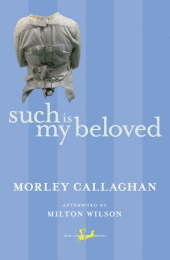
Book Club: Morley Callaghan, Such is My Beloved

I recently finished reading Morley Callaghan’s 1934 novel Such is My Beloved, which was the first selection for a new reading group I have joined. Yes, I know: I have openly expressed my skepticism about the ‘reading group approach,’ and I never expected anyone to upset my long-held belief that nobody would want to belong to such a club if I were a member. Yet lo and behold, I have a (non-academic) book-loving friend who has another (non-academic) book-loving friend, and so on and so on, and now here we are, a group of eight women (is that inevitable? the on-site husband served wine and promptly absented himself) pledged to meet every other month to talk about our chosen text. As it turns out, the friend of my friend knows another of my friends, also an English professor, and so there are two of “us” in the group. We have vowed to be on our best behaviour, and at the inaugural meeting at least, I think neither of us betrayed any particular classroom habits. I admit, though, it felt odd just letting the discussion go wherever it went, when I’m so used to steering or focusing seminars. It was at once freeing, as I had no responsibility for things like making sure we tested our interpretations against specific passages from the novel, and frustrating–because I had no authority for things like making sure we tested our interpretations against specific passages from the novel! It was certainly an energetic and engaged discussion, and I’m looking forward to getting to know everyone better at our January meeting.*

It helped me adapt to this new reading environment that I approached Such is My Beloved with absolutely no preconceptions, and that even after reading it I came to our discussion with no fixed interpretations, or even frameworks for interpretation. If, as Henry James says, “the house of fiction has not one window, but a million,” the window of Canadian modernism is one (of many) I haven’t looked out of often–OK, not at all, really, until now. The closest I’d come is helping edit an essay on Elizabeth Smart’s By Grand Central Station I Sat Down and Wept for Open Letters Monthly a couple of issues ago. If we had started with something I know well–Vanity Fair, say, or Atonement–I would have had a lot more trouble letting our conversation be a conversation and not trying to subvert it into a seminar. But I didn’t know what I would find when I read the book, and having read it, I was (am) still a beginner at thinking about it, so in some respects the randomness (or, putting that more positively, the range) of our discussion was helpful because it let me consider different ideas and see if they resonated with my experience of reading the novel.

Thinking back over our meeting and then looking again at the book, I find it interesting that the issue that proved most controversial (is Father Dowling sincerely disinterested? is his love for Midge and Ronnie really pure?) is precisely the one I had thought was not at issue and which, for me, gave the novel its great poignancy. As I read Such is My Beloved, Father Dowling is absolutely sincere and noble in his motives. He may be misguided in his methods, perhaps even in the objects of his love (though I believe, also, in his commitment to loving the girls precisely because they are not particularly special or beautiful or deserving, but simply because their full humanity needs and deserves to be redeemed). He is certainly foolish, unworldly, and morally extravagant. He has the simplistic obduracy of the idealist; that in Callaghan’s world he is perceived first as disruptive (the opening paragraph tells us that Father Anglin and “some of the old and prosperous parishioners” find his ardour “disturbing,” and Father Anglin wonders if “the bishop could be advised to send him to some quiet country town where he would not have to worry about so many controversial problems”) and finally as insane, reflects on that world and its moral and spiritual limits, surely, not on Father Dowling. He reminded me of Trollope’s Mr Harding, in The Warden: having discerned the right thing to do, he can hardly bear the discovery that others cannot, or will not, support his principled effort to do it, and though he persists, he isn’t strong enough to defy his antagonists outright. And just as no particular good comes from the Warden’s resignation–except (and of course this is crucial) to the Warden’s conscience–so too no particular good comes from Father Dowling’s efforts to save Midge and Ronnie. I suppose we can hope that the priest’s influence has changed them just enough that when they get off the train in some new town, they will think a little bit more of themselves and continue to take halting steps towards a better life. Father Dowling himself vacillates between hope and despair. “I know what will happen to them,” he thinks;

“They’ll drift into the old way of life. They’ll go from one degradation to another, they’ll be poor and hungry and mean. No one will ever love them for themselves. No one will ever want to help them and they’ll get harder and harder till they’ll be immune to all feeling.” . . . Then he straightened up and thought, “I shouldn’t say that. That’s blasphemy. They’re abandoned from my help. Surely not from the mercy of God.” This comforted him. He walked more easily with the strong city sunlight shining on his face that was now almost confident and trustful. . . . He looked up, and again he was thinking, “They’ll be lost to all human goodness. What will become of them?”

If there’s hope, surely it lies as much in his own actions as in the mercy of God: he took an interest in them; he fell in love with them–not physically or romantically (I never thought so, anyway, though at least one group member suspected repressed prurience in his attentions) but divinely. Why them, as was asked at our meeting? Isn’t he surrounded with other needy people? I suppose, but that’s why I describe it as falling in love, to try to account for the idiosyncrasy of his choice, which isn’t even a deliberate choice but one that steals upon him as he pursues, not the girls, but their lost innocence.  I was touched by his happiness the night he brings them the new dresses. When they try them on, they stand “shyly” in front of him, “looking around with an awkward uncertainty,” and it seems their real natures are briefly illuminated as the harsh protective attitudes of the streets fall away. It seems “wonderful to him that he had discovered these new traits in them”:

He felt very happy to have thought of the dresses. It seemed that for a long time he had been scraping and groping away at old reluctant surfaces and suddenly there was a yielding life, there was a quickening response. He sat there hardly smiling, looking very peaceful.

We can juxtapose that moment with the scene of the client who leaves an encounter with Midge with his “dark eyes shining with new life, . . . laughing and shaking his head happily.” Here are two models of satisfaction, one of the spirit, the other of the flesh. Perhaps I’m a naive reader, or perhaps it’s the result of years of reading Victorian novels, but I’m prepared to take Father Dowling’s happiness at face value: he is moved precisely for the reasons, and in the ways, he says he is. It’s true that his love becomes obsessive, and also that it leads him into ecstasies that are passionate, even erotic. For me, the most striking passages of the novel were those in which the priest’s swelling sense of love infects Callaghan’s otherwise fairly inelegant, even pedestrian, prose (something in the sound of it kept making me think of Steinbeck, though it has been so long since I read Steinbeck that I don’t really trust myself on this point). Here’s one example I particularly liked, in which the impending arrival of spring brings young lovers out into the softening evening and also brings out the love in Father Dowling’s heart:

There was a freshness in the air that made him think of approaching spring. He passed a young man and a girl walking very close together and the girl’s face was so full of eagerness and love Father Dowling smiled. As soon as the mild weather came the young people began to walk slowly around the Cathedral in the early evening, laughing out loud or whispering and never noticing anybody who smiled at them. The next time Father Dowling, walking slowly, passed two young people, he smiled openly, they looked at him in surprise, and the young man touched his hat with respect. Father Dowling felt suddenly that he loved the whole neighborhood, all the murmuring city noises, the street cries of newsboys, the purring of automobiles and rumble of heavy vehicles, the thousand separate sounds of everlasting motion, the low, steady, and mysterious hum that was always in the air, the lights in windows, doors opening, rows of street lights and fiery flash of signs, the cry of night birds darting around the Cathedral and the soft low laugh of lovers strolling in the side streets on the first spring nights. He felt he would rather be here in the city and at the Cathedral than any place else on earth, for here was his own home in the midst of his own people.

There’s certainly more at stake here than ascetic religion–something sensual, earthly, and also aesthetic. But I don’t think that makes Father Dowling a hypocrite. Rather (and here I take a hint from the title) I thought the book called into question forms of religious devotion that exclude the world and the flesh, that attempt too strict a separation between holy and earthly love. The failure is not Father Dowling’s, not his inability to ration his dedication to the girls he has made his personal mission, but belongs to the professed Christians around him who reject his vision of an all-encompassing ardour. His vision threatens those around him, of course, not only because he urges them to act as they speak, but because he redefines morality as an economic problem–a symptom of poverty, not spiritual corruption. He thus becomes a social radical as well, though in this he believes he is simply perfecting the theories preached (but not practised) by his church. Ever the Victorianist, when I read that Father Dowling becomes “convinced that moral independence and economic security seemed very closely related,” I thought of Becky Sharp‘s “I could be a good woman if I had £5000 a year.”

So for me, it turned out to be a somewhat familiar book after all, with a protagonist who joins Mr Harding or Jude Fawley in testing and ultimately exposing, and suffering for, the limits of a religious ideal. Father Dowling is an extremist of virtue in a world of moral compromises, a dreamer among prudish (and prurient) pragmatists, a leveller in an entrenched hierarchy. No wonder the poor man ends up catatonic. For me, the evidence that we are not to leave him at the doors of the asylum but should rather follow him on his quest, though it leads nowhere, is the quiet beauty of the closing imagery:

There was a peace within him as he watched the calm, eternal water swelling darkly against the one faint streak of light, the cold night light on the skyline. High in the sky, three stars were out. His love seemed suddenly to be as steadfast as those stars, as wide as the water, and still flowing within him like the cold smooth waves still rolling on the shore.

It’s the gentlest martyrdom imaginable.

*In case you were wondering, the reading group’s organizer proposed that our next book should be prompted in some way by its connection to our first. If depressing novels about Catholic priests is our genre, there’s really only one obvious place to go, and thus for January we will be reading and discussing Graham Greene’s The Power and the Glory.

Cross-posted (with a little trepidation) to Editing Modernisms in Canada; thanks to my colleague Dean Irvine for the invitation, and especially for lending me his vintage New Canadian Library edition of Such is My Beloved, with its interesting introduction by Malcolm Ross.