The Case for “Intelligent, Bloggy Bookchat By Scholars”: How’s It Looking?

JVCOn Thursday I participated in a Twitter Q&A with the members of Karen Bourrier‘s University of Calgary graduate seminar on Victorian women writers. The students had been assigned my JVC essay on academic blogging (anticipated in my 2011 BAVS presentation, which you can see the Prezi for here, if you aren’t one of those people who get sea-sick from Prezis!). The group showed up very well prepared with questions for me, and the half hour went by in a flash, with me thinking and typing as fast as I could. (Here’s the Storify, if you’re interested.)

In preparation for the session, I did some rereading, not just of my essay but of some of my old meta-blogging posts (many of which are listed under the “On Academia” tab here, or in the “blogging” category). I also looked back a bit further, to John Holbo’s founding post for The Valve, where I was a contributor from 2008 to 201o. I’ve actually reread this essay, “Form Follows the Function of the Little Magazine,” fairly often over the years, but I hadn’t previously gone back further from it to the Crooked Timber posts it links to on “Academic blogging and literary studies.” The second one of these especially, “Lit Studies Blogging Part II: Better breathing through blogging,” strongly anticipates the Valve essay, while The Valve itself is obviously what Holbo meant when he said “After this post I swear I am going to settle down to just doing the sort of thing I have in mind, rather than talking about how nice it would be to do it. Proof in pudding.”

I’m always swearing off meta-blogging (and meta-criticism more generally). And yet just when I think I’m out, something pulls me back in! This time the trigger is one of the questions I was asked during the Twitter session: whether my thoughts about academic blogging had changed since my essay was published. Also, rereading Holbo’s posts, now a decade old, I found it hard not to wonder: what happened? how did it turn out? Does Holbo’s call for improving the condition of scholarly publishing in the literary humanities by “rub[bing] its sorry limbs vigorously with … conversations” seem outdated now? or misguided? or utopian? Holbo advocated “intelligent, bloggy bookchat by scholars. . . . That isn’t scholarship,” he acknowledged, “but – in a world with too much scholarship – it may be an indispensable complement to scholarship.” Has that hope for the beneficent effects of blogging fizzled out, or has it been (even to a minor extent) realized? Was Holbo wrong in his premise that academic literary studies were in need of any such thing? Or was he right, but there has proved to be too much inertia in the larger system to which academic scholarship and publication belong (especially, systems of institutional credentialing and validation) for the pro-blogging arguments to make much of a difference?

My immediate answer to the question on Twitter was that my thoughts about blogging have not changed but my attitude has. To explain in more than the 140 characters I could use there, I remain convinced that blogging is (or can be) a good thing in all the ways Holbo talked about, and in some ways he didn’t (my own blogging, for instance, has never been “academic” in quite the ways he emphasizes, such as hunting out and promoting the best academic scholarship, but I stand by its value as a form of criticism). Overall, more academics are probably blogging now than in 2005, though I really don’t have any sense of the big picture and certainly no data to back up this impression. But I haven’t seen much change in the way things operate generally in the academy, and if anything, the number of bloggers actively promoting a significant shift in the way we understand scholarship and publishing seems to have declined. In my own immediate circles, I don’t see any signs that anyone is interested in actually doing any blogging of the kind Holbo described (some do now write blogs that address academic issues or serve professional associations, both good things but different), and I never hear anyone mention reading any academic blogs either (again, with the exception for blogs about academia, rather than “bookchat” blogs of the kind in question). I have no reason to believe most of my colleagues ever read my blog: if they do, they never mention it to me! (That might be different if Novel Readings were more academic and less bookish. I’m never a good example for my own arguments about all this!)

What it looks like to me, more or less (and again, my perspective is inevitably limited, so I’d be interested to hear how others perceive the situation) is that not much has changed since 2005. People who were into blogging then are often still into it (several of my former Valve colleagues, for instance, continue to maintain their personal blogs, though The Valve has been closed for renovation since 2012). But they seem less likely to make claims for, or express hope for, the form as something that can and should change how the profession of literary studies works.  I think blogging as such is no longer likely to be held against you as an academic — but it’s also not going to work for you, particularly at any of the key professional moments (hiring, tenure, promotion), when you’ll still need a defensible record of conventional publishing.

I still see the situation of literary studies pretty much as I did then, which is much the way Holbo describes it in his posts. There’s more published scholarship than we can ever hope to process in a meaningful way, and the reasons for that have more to do with professional imperatives than with any need to churn out so much so fast for the intellectual benefit of so few.   “How many members of the MLA?” asked Holbo in 2005;

30,000? That a nation can support a standing army of literary critics is a wondrous fact, and quite explicable with reference to the volume of freshman papers, etc. that must be marked. The number is inexplicable with reference to any critical project. Yes, we need new scholarship (don’t bother me with more false dichotomies, please.) The point is: no one has a clear (or even unclear) sense of what work in the humanities presently needs approximately 30,000 hands to complete. I don’t mean we should therefore hang our heads in shame, although being a member of a standing army of literary critics must be a semi-comic fate, at least on occasion. But the utter lack of any justification for 30,000 literary critics assiduously beavering away explicating, interpreting, erecting new frameworks, interrogating the boundaries, etc., has consequences. Notably, when a book or article is up for publication and the hurdle is set, ‘if it has real scholarly value’, we discover this condition is just not as intelligible as we would like, conditions being what they are. It isn’t true that literary scholars value the output of 30,000 other literary scholars. They just don’t, and that is quite sensible of them, really.

That seems fair enough, although I also think we  all value the output of a select subgroup of that 30,000, as well as of the larger ends we believe the whole enterprise serves — which is why Holbo was not, and I am not, calling for an end to it all, the way Mark Bauerlein seems to. But the sheer chaotic vastness of it all still occasionally provokes despair.

And, dedicated as I am to preserving the forest, I do often recoil from individual trees — and the less time I spend reading properly “academic” criticism, the harder it is for me to tolerate it when I dip back in. I recognize, however, that other people genuinely relish both reading and writing it, which is more than fine with me, because that’s how (to stick with the arborial metaphor!) the trees I do appreciate are able to take root and flourish. It continues to mystify me, though, that so many academics seem so content to keep planting trees in those woods knowing that hardly anybody will hear their hard-won knowledge or insight when it falls into its safely peer-reviewed place. Even people who have no professional reason to play it safe any more seem oddly uninterested in, or even resistant to, getting the word out about their research in other ways (I say this because I have proposed it to some of them!) — and I get no sense that this has changed in the past decade. Is it anxiety or snobbery that makes it seem preferable to them to hold out for acceptance by a journal or press that will deposit their work safely where almost nobody will read it, rather than to tell other people about it directly through the magic of WordPress? Surely at some point you have enough credibility just to speak for yourself, and you should do that if your actual goal is to increase the overall sum of understanding in the world. Mind you, then you’d also have to try your hand at self-promotion, something else that, as Melonie Fullick has observed, runs against deep-seated academic prejudices.

I always find myself going back to Jo Van Every’s comments about validation vs. communication. The display case in our department lounge, our faculty-wide book launch, the list of recent books by members of NAVSA — these all seem to me monuments to the triumph of validation in academic priorities, because by and large these books and articles (representing so much ardent labor!) are reasonably responded to as Lawrence White (quoted by Holbo) responded to the “current project” of John McWhorter, “some modest essay modestly proposing modest new perspectives on some modest problem in linguistics”:

At this point I say to myself, “Yes, we should all be working hard & earning those paychecks, & I’m sure Professor McWhorter does fine work in his field, & I have no doubts as to his fine intentions, but what are the odds that this essay will make any difference to anything?”

“We have to learn to live,” Holbo observes, “with dignity, with the effluent of institutionalized logorrhea.” That ardent labor is not in vain, and there is dignity in pursuing our scholarly interests rigorously and in achieving our professional goals. (What fate isn’t “semi-comic,” anyway, seen in the right light?) Still, I would add that we ought to learn to let go of the quantitative imperatives that structure our professional processes, as well as to break away from the rigid prestige economy that clearly still governs our publishing priorities. But these changes seem a little less likely to me now than they did in 2007, when I gave my first presentation to my colleagues on blogging — or than they did in 2011 when I made my case at BAVS, or in 2012 when my essay was published.

I’d love to know what other academic bloggers think — especially (but definitely not exclusively) any other former Valve-ers who might be out there. Were we wrong about the problem, or about blogging as a potential solution? What difference, if any, do you think academic blogging has made to academic writing, or publishing, or conversations? Has its moment passed without its potential ever being realized — which is what I rather fear?
That Which We Call A Blog By Any Other Name …

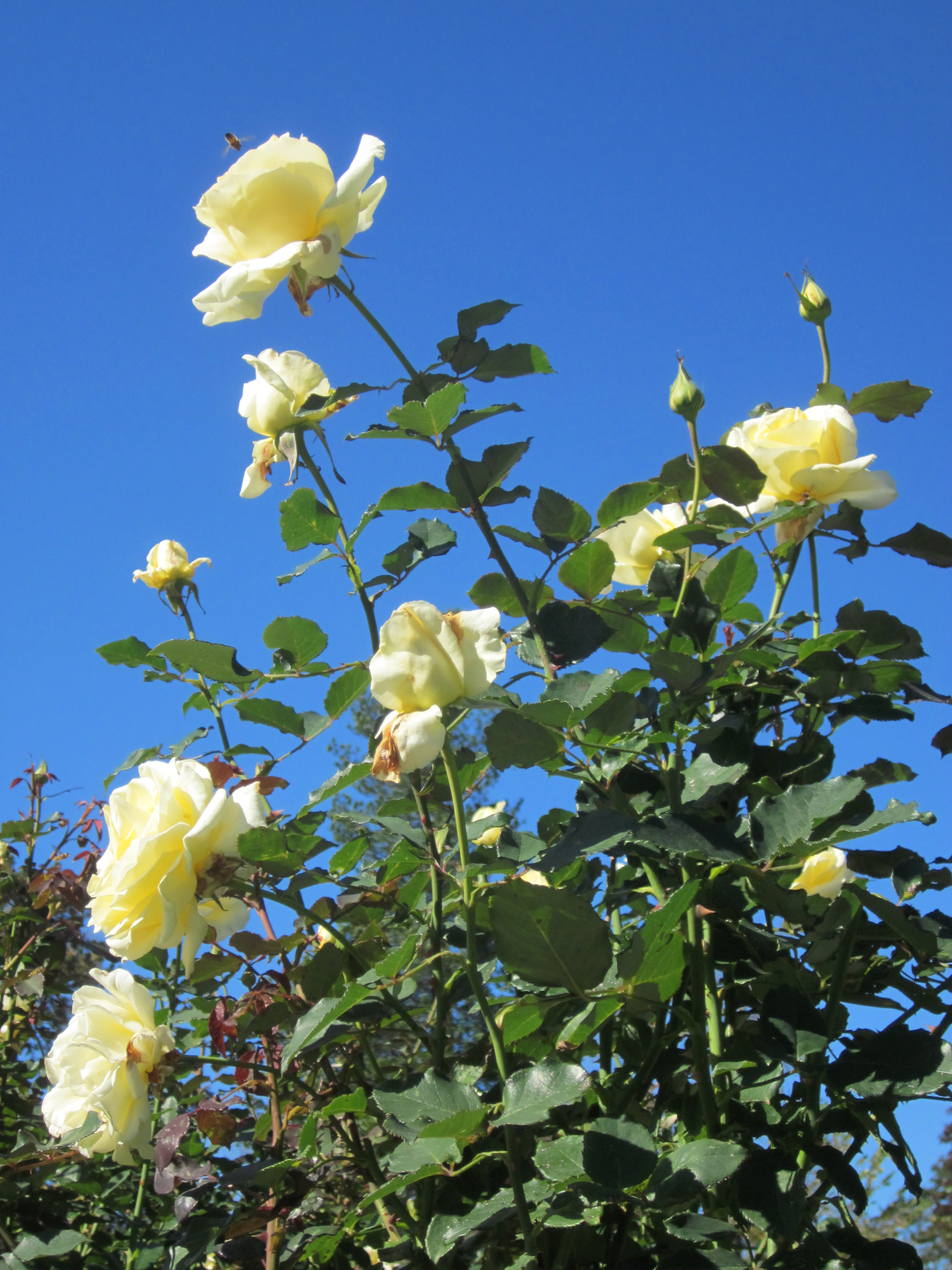
LastRose2013… would be the same thing it always was, which is also the point about the rose in the original line, of course. Names are (more or less) arbitrary labels, sure, no problem. But they have connotations as well as denotations, effects and associations as well as literal referents.  And lately I’ve been wondering: how much does the label “blog” (still) influence people’s assumptions about the substance and value of online writing?

This is not a new question, of course. Remember Princeton professor Jeff Nunokawa, who staunchly refused to call his series of Facebook “essays” a “blog”? As he explained in an interview, this is because

“I hate that particular syllable,” but also, more importantly, because “it doesn’t catch what I’m really trying to do, whether successfully or not. These are essays. When I think of a blog — and maybe I’m being unfair to bloggers because I don’t spend much time in the blogosphere — my sense of blogs is that that they’re written very quickly. This is stuff that I compose and recompose, and then recompose and recompose and recompose. It’s very written.”

There’s much that could be said about this self-consciously ignorant generalization (I said some of it in my JVC essay on blogging, and I’ve said lots more on related topics in numerous other posts here on blogging.) The assumption that somehow by definition blog posts aren’t “very written” is particularly annoying. But for today let’s focus on his comment “I hate that particular syllable.” I don’t much like it either, insofar as it is not particularly euphonious, but disdaining it on those grounds has something of a “Wragg is in custody” feeling about it (“Higginbottom, Stiggins, Bugg!”). A “hideous name” is not, of course, actually a symptom of any particular coarseness — but is it possible that the ugly syllable “blog” has created for many people an Arnoldian disdain, as if it signals “an original short-coming in the more delicate spiritual perceptions” of literary form, such as those of the more mellifluous “essay”?

I have been thinking about this again because I had a good session recently with a colleague who wanted some tips on using WordPress. While we poked around my various sites, he commented that he’d been reading around in my blog archives. “There’s lots of good stuff here!” he said, a generous remark which I sincerely appreciated. I think there is too! But I couldn’t help but notice the faintly astonished tone in which he said it, as if he hadn’t expected to find much “good stuff” but had been pleasantly surprised. That’s all good, of course — better that way around than the other way, for sure! But what had set his expectations low in the first place? Could it be assumptions stemming from “that particular syllable”?

Now, it’s entirely possible that I heard something that wasn’t there, and more than anything I was genuinely happy (almost absurdly so!) to be conferring with someone who was taking an interest in what I’ve been doing and learning online all this time. If I projected my own lingering anxieties on him, though, it’s precisely because  so few of my colleagues have shown any similar interest. Some, in fact, have been openly derisive about the whole concept of blogging. A precious few have been engaged and supportive, but most have simply been indifferent (as far as I’ve ever been able to tell). It’s not that I expect everyone I work with to drop what they’re doing and read everything I write! But I’ve wondered why the perception that blogs are not worth reading persists to the extent that when I asked a couple of colleagues once if they read any at all (never mind mine), they both laughed before they said no. How much of that has to do with the word “blog” itself, do you suppose, and what they take it to signify? If we talked about “essays on our websites” instead of “posts on our blogs,” would that sound different enough that it might bring more people across the threshold who might then stay long enough to discover that, indeed, there is “good stuff” to be found?

Why does “blogging” have such negative connotations, anyway? When Paul started his blog on “The Big C” and couldn’t stop talking about it, I admit I was filled with self-conscious horror at how annoying and narcissistic it seemed: what if I sound that way when I mention my blog? (Which isn’t that often, honest! At least, I don’t think it is…) Even I turned against him! But all shared writing is, in its own way, a demand for attention, a claim that your voice is worth hearing. Blogging is just a form: why, in this case, do a lot of people still assume the form defines the content? Was Nunokawa right, not about blogs themselves, but about avoiding the label if he wanted his short pieces to be read differently — or at all?

I think most of us actual bloggers have made our peace with the admittedly ugly vocabulary associated with the online writing and discussions we have (though I bet most of us would happily vote to ban “blogosphere”). But do you think that a lot of non-bloggers (we need a term for them, the way wizards have “muggles” — maybe “Higginbottoms”?) still hear the word “blog” and think “shallow, hasty, and self-promoting”? I don’t suppose it really matters, not for us, anyway, since we’re doing what we want, whatever it’s called, but the prejudice against it continues to puzzle and sometimes provoke me.

And that, speaking of ugly vocabulary, is quite enough meta-blogging! Next up, I hope, will be a post  essay  review  column  discussion excursus  disquisition  confabulation on an actual book. I’m still reading The Stonehenge Letters; I’ve just started Mapp and Lucia; and I’ve downloaded The Duchess War — we’ll see which one I finish first.

Where Blogging Leads: A Bit More About How Things Add Up

When I read this post by Eric Grollman at Conditionally Accepted a little while back, it got me thinking about the various opportunities that have arisen for me since I started blogging in 2007. Whether these “extracurricular activities” (Grollman’s term — though he too puts it in scare-quotes) count in some strict professional way is not really the point, or at least not the whole point. Some day I may well make the case that they should count; increasingly the vocabulary seems to be available to explain how and why (outreach, knowledge mobilization or dissemination, public scholarship, whatever). In the meantime, what struck me reading Grollman’s post is that I may have underestimated the impact of blogging on my own activities. Grollman notes that he “received ten speaking/writing requests in 10 months, primarily because I write publicly about my experiences in academia.” That’s a lot, in a hurry! My timeline is a bit slower, and most of the specifics differ (as you’d expect, given our different fields), but one thing we have in common — and I know other bloggers who’ve remarked this too — is that by dint of being among the first and few academics in our circles to venture onto public platforms, that experience itself becomes something people want to hear from us about. (I always feel a bit odd about that, because my own blog is not exactly an “academic” blog — which is something I usually address, if not in the presentation itself, then in the Q&A. But the general issues around blogging for and by academics are things I have thought and written a lot about, nonetheless.)

Here’s my quick tally of things I have done more or less directly because of this blog:

Presentations, workshops, and interviews:

  • In 2007 (when I was just a newbie myself!) I gave a presentation on academic blogging in my department’s colloquium series.
  • In 2008, I was an invited guest speaker in a class on ‘Writing in the Digital Age’; I spoke about academic blogging and online writing more generally.
  • In 2009, I was interviewed about George Eliot by Nigel Beale, for his website The Bibliofile (now The Literary Tourist). (Gah! That picture!)
  • Also in 2009, while at ACCUTE to present a paper on Ahdaf Soueif (one that grew out of some blog posts about her novels), I led an informal workshop on academic blogging.
  • In 2011, I was invited to participate in a panel on “Knowledge Dissemination in Canada” at the British Association of Victorian Studies; that presentation became a paper in the Journal of Victorian Culture.
  • In 2012, I gave a presentation on academic blogging at our Faculty’s research retreat.
  • In 2012-13 and 2013-14 I spoke in our graduate students’ professionalization seminar about blogging (and Twitter). I expect (though I guess I don’t know for sure!) that I’ll be asked back again in 2014-15.
  • In 2013 I was interviewed for an article in the Globe and Mail about Richard III. (I don’t think the interview I did about Jane Austen had anything to do with blogging: as I recall, that was an occasion when the reporter just called the department and got handed off to me).
  • Later this month I will participate in a Twitter Q&A about Middlemarch hosted by the Atlantic‘s #1book140— I was invited to do this because of Middlemarch for Book Clubs, but that site is itself the result (you guessed it) of a blog post.

Writing:

  • In 2008, I was invited to become a regular contributor to the group blog The Valve.
  • In 2009, I was invited to contribute to Open Letters Monthly, and in 2010 I moved my blog there and signed my soul over to them became an editor there too.
  • In 2011, I was invited to contribute a short piece to John Williams’s blog The Second Pass (currently on hiatus as he now has a great gig working for the New York Times!)
  • Also in 2011, I was invited to write an essay on the Martin Beck books for the Los Angeles Review of Books (the immediate prompt for this was on Twitter, but the original impetus was – again — a blog post). Encouraged by this experience I have since pitched and published two more essays with them.
  • This year I was invited to contribute to the British Library’s Discovering Literature site, on the basis of my ‘public’ writing more generally — especially at OLM — but since everything that happens there is fruit of the Novel Readings tree, I count that too!

There have been many other more diffuse effects as well, of course, including courses developed from reading interests initially pursued here “only” out of curiosity and course assignments such as student blogs, wikis, and pecha kuchas that I would never have thought of if it weren’t for the time I spend online. And there are all the intangible intellectual benefits I referred to the last time I wrote about what this whole experiment adds up to. This tally overlaps with the list of specific publications on my c.v. (the ones that “don’t add up to anything,” you remember) but it’s a somewhat different angle on the whole question — I think it shows that in some ways my role as an academic has changed along with my work habits and publication platforms.

Summer Plans: Adding Things Up

Finally, the winter term is well and truly concluded (our annual May Marks Meeting was yesterday). As my last few posts show, I wallowed in aimless reading for a while after classes ended (aimless in the sense of “not in service of anything else,” not pointless or useless: it was certainly a very interesting run of books!), and then this past week my parents have been visiting, so I’ve been spending less time on social media and more time being sociable in person. (I had written “actually being sociable” but then realized how much that would misrepresent how I feel about my time online and the relationships I’ve formed here, which are just as “actual” to me as any of my “F2F” ones!)

And now it’s time for another end of term ritual, which is sorting out what I hope to accomplish in the next couple of months, while the fall term is still remote enough not to demand any attention beyond monitoring my waiting lists. I have mixed feelings as I look back at last year’s post about this. I did get the Middlemarch for Book Clubs site completed, but I haven’t really figured out how to get the word out about it. I’ve made some tentative efforts on my own, and I had some dim but disappointed hopes about possible synergies with the Middlemarch readalong at The Toastbut the biggest boost has certainly come courtesy of the generous mention of it by the Atlantic’1book140 Twitter book clubThis month I’ve also been invited to participate in a Twitter “party,” so if you’re on Twitter, feel free to join in! I’ll post a notice here when I know the details. I may make some changes to the site this summer based on my observation of what actual book clubs talk about when they talk about Middlemarch, though I remain determined that the site will reflect the kind of conversations I like best and want to promote, not the more solipsistic kind that still seem to be typical of the guides included with new releases.

This time last year I also had aspirations to get a lot done on my phantom book project: “the final, most ambitious but at this point most amorphous plan is to think about where I’m going with the various George Eliot essays I’ve written over the past few years: do they, could they, add up to something larger, perhaps some kind of cross-over book project?” That question of what my “various” publications add up to has been fraught to me since a dispiriting interview last year at work about my prospects for promotion. Now, I knew perfectly well that if I chose to apply, mine would be (will be) a tricky case, and I wasn’t at all sure that I was in a position to make a strong application, which is why I set up the meeting in the first place. (Getting promoted to full professor is not a high priority for me anyway: if it were, I would be doing different kinds of things with my time, for just this reason!) But as my list of non-traditional publications and projects grew, it seemed like it was worth having a chat about how my c.v. looked to someone who would have to make a supporting case if I did apply … and the response (to put it mildly) was dismissive: “All this [with a wave of the hand towards the Open Letters and LA Review of Books essays] doesn’t really add up to anything.” There are ways and ways to deliver negative judgments, of course, and that one could have been made in a less deflating way. It might have been worth considering the possibility that they do add up to something (knowledge dissemination, anyone?), if not the usual thing. Still, that was a good preview of the challenges I would face if I chose to pursue promotion without a c.v. that looks more like what academics expect. If there were a book there, however — even a different kind of book … well, academics really like books.

Now, the book I aspire to write is not an academic book. And the reason I want to write it is not that it might help me get promoted. But the observation that my work wasn’t adding up to much is the kind of thing that mattered anyway because it made me think about what I hoped “all this” would add up to, or, indeed, whether I thought it already did add up to something. A body of work is a cumulative something, isn’t it? So there’s that, which isn’t nothing. And yet it isn’t a whole lot, compared to some (as bodies of work go, mine is petite, we might say!) and it’s not as if I’ve established myself in the non-academic world in some marked way. Indeed, the challenge of making yourself known in the broader book world is pretty overwhelming!

It would be nice if I was learning from the process, though, as if the small steps I have taken so far were building up to some kind of greater insight, if not some separate and larger-scale accomplishment. Who am I, as a critic? What can I do? That’s the kind of question that my book project will help me answer, for myself if for no one else. I did not get as far on it last summer as I hoped, but I did do some ground-clearing work, including a survey of everything I’d written so far on George Eliot and a stop-overthinking-it post on why I like George Eliot “so very much.” I got caught up in smaller writing projects over the fall and spring, but one of those was my review of Rebecca Mead’s My Life in Middlemarch, so that kept me thinking about how to write about George Eliot for a broad audience. I have also started several files and documents to help me conceptualize the project. It helps me to believe it will all actually come to something that last summer I began talking informally with an agent interested in helping me get it done; this summer I am determined to ward off the distraction and temptation of other reviews and essays (for instance, I was really thinking about pitching a Robert B. Parker piece to the LA Review of Books to follow on from last year’s Dick Francis essay! that would be so fun to do!) and start turning the brainstorming into actual readable writing.

In the last couple of weeks, and especially the last couple of days, I have just begun doing this…and here’s an interesting thing I’ve noticed. I have already looked up several old blog posts of mine to draw on ideas or references in them that bear on the critical framework I am trying to set up. Yes, the ones explicitly on George Eliot are among them, but so too are some of the ones I’ve written about principles of criticism more generally (such as, just today, this one on Ronan McDonald’s The Death of the Critic,). Will this material end up in the final version of whatever it is that I’m writing? I don’t know. But it was encouraging to realize that my previous work (unofficial and informal as it may seem in some contexts) was relevant and helpful: ideas I’ve been working out here, both explicitly and implicitly, are shaping the way I am now thinking and writing. The critical voice I’ve been practicing, too, here and at OLM and LARB, is the one I want to write the book in — not the much dryer, drearier tone of even my most recent academic papers. This scattered work may not add up to a single thing that’s tangible or measurable, then, but it may do that eventually, and in the meantime what it adds up to is, quite simply, the intellectual sum of all of its parts. Looked at that way, it seems like quite a lot.

The First Ever Novel Readings Book Giveaway!

When I put up my last post, I realized that it was #899 – making this my 900th post at Novel Readings. That seemed like a milestone that ought to be recognized with something a bit out of the ordinary! But what? As I was musing about options, I remembered that not long ago I had contemplated holding a book giveaway for my anthology, The Victorian Art of Fiction, to put a more positive spin on its rather sluggish sales. (OK, “sluggish” is putting it nicely: my last royalty statement shows it selling -3 copies in Canada!) Clearly this is the perfect opportunity for just such a special event. It can also double as my way of celebrating World Book Day!

WP_20140306_002

Lest the sorry story of my book’s recent sales makes you skeptical that you even want a free copy, let me tell you just a little bit about it. (You can also read more about it at Wuthering Expectations, where once upon a time it was the book of the week!) It’s actually the project I was working on in 2007 during the same sabbatical that I launched this blog, making it the perfect prize for this occasion. (The first person to joke that “second prize is two copies” is banned from Novel Readings forever.)  I had been reading quite a lot of Victorian essays about and reviews of fiction — partly because I was asking questions about the kind of criticism we do and how it sometimes seemed to me to fit the primary sources uncomfortably. I wanted to get a better sense of the contemporary conversation into which the Victorian novels actually emerged. I found this material fascinating but also diffuse, and I thought a collection of the choicest examples would be a nice thing to make available, for interested readers as well as for students and teachers of the history of criticism; happily, Broadview Press agreed.

My introduction to the volume that resulted sums up some key themes across the various readings as well as what seemed to me some notable and thought-provoking differences between the way they did criticism then and the way we do it now. But the real fun is in the essays themselves. There are some that are canonical (as far as that concept can even be applied to 19th-century essays about the novel): George Eliot’s “Silly Novels By Lady Novelists,” for instance, and Henry James’s “The Art of Fiction.” There are some by writers whose names are certainly familiar to readers of Victorian fiction: Margaret Oliphant’s “Modern Novelists – Great and Small,” or Anthony Trollope’s “Novel Reading.” There are some by people who, though not widely known today, were major critical or intellectual figures at the time: David Masson’s “Thackeray and Dickens” or Walter Bagehot’s “The Novels of George Eliot.” There are essays on “lady novelists,” sensation fiction, and the morality of fiction; there are discussions of Jane Austen and Charlotte Brontë by writers including George Henry Lewes and Leslie Stephen. The essays are perceptive, idiosyncratic, sometimes puzzling, often surprising, and occasionally profound. Above all, they reflect a common conviction that fiction is an art form worth talking about, which is a feeling I think is likely to be shared by anyone stopping by a blog called Novel Readings.

So here’s the plan. If you’d like a chance at a free copy of this elegant, entertaining, and edifying volume, just say so in the comments below, in the next 24 hours (it’s 10:00 a.m. Atlantic time here in frosty Halifax, so that will be the cut-off time tomorrow). As an extra incentive, I will also include a pretty bookmark in an appropriately bookish pattern made by a local paper artist! Then I’ll put all (both? the only?) names in a hat and Maddie will draw out one winner. I’ll identify the winner in the comments and invite him or her to contact me by email to sort out mailing information. (With regret, after looking at international shipping rates on Canada Post, I do have to limit this offer to US, Canadian, and UK addresses only. Maybe for my 1000th post I’ll go completely global.)

I hope someone is interested. If it turns out that I can’t even give copies of the book away, just think how depressed I’ll be: what could be sadder than so much ardent labour all in vain? And so, as James says in the exuberant conclusion to “The Art of Fiction,” go in!

UPDATE: It’s heartening to see so much interest in the book! I wish I could send everyone a copy – but I can’t. The ‘contest’ is now closed. I promised Maddie she could do the actual drawing, so it will have to wait until after work. Then I’ll make the big announcement of the winner. Thanks to everyone for joining in!

AND THE WINNER IS …

http://www.youtube.com/watch?v=FSImGzWVJW8

February Break(down) Posticle

IcebergIt’s odd how it sometimes seems I need to break the ice on my own blog — but as I’m sure other bloggers can attest, leave a blog alone for long enough (which in my experience needn’t even be very long) and it starts to loom imposingly and inhospitably across the horizon of one’s other activities. How can this be — why should this be — when blogging is something I do wholly voluntarily? It’s possible, actually, that its gratuitousness adds to the difficulty: there’s no obligation, no accountability — and so when you fall into a slump, there’s no external pressure to get on with it. There’s just, at least in my case, an uncomfortable feeling of disappointment in myself that, as the days go by, becomes a self-defeating conviction that when — if — I ever post something again, it had better be good!

In my defense, it has’t really been that long. Also, it is our February break from classes, and so I’ve been doing other writing, which often leaves me mentally lazy by the end of the day. It hasn’t helped that I’m struggling much more than expected with what I thought would be a fairly straightforward writing project, so when I stop working I feel little sense of accomplishment, only bemused frustration. I’ve also (and I know from Twitter that I’m not alone!) been rather in the doldrums. It’s partly because of this dreary winter, which just makes everything harder to do; it’s partly because I’ve fallen prey to a bad case of what I think of as ‘Salieri Syndrome’ (I’m guessing the symptoms are familiar to all aspiring writers but perhaps especially those who spend a lot of time online); it’s partly that I worked for several days preparing a public talk that apparently wasn’t of much public interest, which was both anticlimactic and a bit demoralizing; and it’s partly that — probably because for a few years now my center of intellectual gravity has been tilted away from my academic colleagues and department — I’ve been feeling somewhat adrift and even unmotivated at work. I’ve actually started dreaming about retirement, which isn’t necessarily a good thing as it will be many years (18, but who’s counting?) before I reach retirement age and even then it isn’t clear I will be able to realize my dream of finally moving back to Vancouver. (And as far as that goes, I seem to have regressed significantly since the progress I had made towards reconciling myself to Halifax.)

I don’t need anyone to tell me how lucky I actually am and that this is all hardly the stuff of great tragedy. I know!  But it’s been enough to make me feel kind of blah, and during this break I’ve chosen to hunker down and read or watch TV and just try to be cozy while I have the chance. Classes start up again Monday and from that point on we will hurtle unrelentingly towards the end of term. There won’t be time for moping!

And actually I’ve about had enough with moping in any case, while as far as this blog goes, I’ve decided to forget about good and settle for posted. Then perhaps I’ll get my momentum back. So here’s my own version of the much-loathed (including by me) “listicle” — a “posticle” of things I have almost but (obviously) not actually posted about in the past week or so.

  1. Attendance. This was going to be the next entry in my “This Week In My Classes” series but every time I turned to it, it turned into a rant and I didn’t really want to stir up that kind of negative energy. Seriously, though, what’s up with students not coming to class, and especially with the accelerating trend of students leaving early for and returning late from scheduled breaks? I believe very strongly that you learn to be a critic by trading ideas with other readers (coduction!) and that in English classes we both exchange and analyze information and practice vital skills. So I take attendance seriously — and I also take it literally, every class meeting. Over the years I have used various policies to encourage students to attend regularly, from strict “every [unexcused] absence counts against your mark” versions to “there’s no explicit penalty for missing class but there are also no make-ups for graded in-class work.” I have tried being authoritarian, paternalistic, encouraging, or simply detached (“come or don’t come, it’s your choice — just don’t make it my problem”); I have even cited research (it is out there!) showing that good attendance is strongly correlated with success in a class. I try not to take it personally when, as last week in my Intro class, a whole mess of people just don’t show up … and yet, inevitably, I do take it personally, because I not only show up but work hard preparing for every precious hour we have together…oops. This is getting rant-like! Fellow teachers, what do you do about attendance?
  2. Books we “should” read. I spent a fair amount of my scarce mental energy this week imagining a response to the recent piece at The Millions urging us (tongue in cheek? surely!) to choose our next book to read for some pretty random reasons. Even assuming the author didn’t actually mean her suggestions, or at least not the silliest ones (“read the book that you find left behind in the airplane seat pocket”? “read the book whose main character has your first name”?) I wonder if there isn’t a better conversation to be had about whether there are any books we “should” read, or about how we pick and choose among the many books we could read, given just how many more books there are than we’ll ever have time to read (well, unless we’re Steve!). I wouldn’t want to rule out serendipity altogether, of course, but it seems pretty risky and, indeed, wasteful to follow around behind random strangers, see what makes them cry, and assume that is the best next option for me. They might be idiots! But I don’t find it much better to line up behind (most) reviewers either. When I’m not reading deliberately (for work or research or reviewing myself, that is) I tend to listen to other readers I trust, whose take on books I find sharp and interesting, whose taste I think I understand something about. Where there’s a good conversation, I usually expect to find good reading, or at least reading I won’t regret. I do also think, though, that depending on the relationship you want to have to literature, or the conversation you want to be part of, there probably are some books you should read. How do you choose your next book? Do you think there should be no “shoulds” in reading?
  3. Middlemarch on Toast. Actually, I think I do need to write this post, but it’s going to take me a while to do the reading and thinking for it. Ever since The Toast ran its My Life in Middlemarch book club I’ve been brooding puzzling thinking about why I felt so incapacitated by it. When I first heard about it, I thought it might create some synergy with my Middlemarch for Book Clubs site. It totally didn’t, and once it was underway I could see why not: by and large, the kinds of things I built into my site, including into its discussion questions, were not the things people were talking about at The Toast. There were plenty of sharp comments, and there was also plenty of enthusiasm, but somehow the conversation was in a different register, and it was mostly (eventually I’m going to do some statistical analysis!) about characters and motives, not about literary form, narration, history, philosophy… which is fine, of course: people should (there’s that word again) talk about what interests them in a book (“to start with,” says the irrepressible teacher in me). I wasn’t very familiar with The Toast before they did this, and what I’ve seen of it since suggests that it aims for a certain hip insouciance. So I should not necessarily take away any lessons from this about how to revise my own materials. Or should I? The number of people who want to chat at The Toast (like, apparently, the number of people who like the idea of choosing their next book from their neighbor’s trash can or something) is apparently  much higher than the number of people who want … oh dear, here comes Salieri again.
  4. Rules of Civility. I enjoyed reading this novel a lot. And yet, this is as much as I felt like writing about it. (But here’s an excellent review of it by Lisa Peet at Like Fire.)
  5. Farthing. I also mostly enjoyed reading this novel, and yet. (Jo Walton is a good example of a writer I picked up because so many other readers I’m interested in have mentioned her.)

OK, that’s the dam broken. It’s actually a relief to clear those topics out of the way, even though I still feel annoyed with myself for not having addressed each of them properly in turn in its own post. Now I’m reading We Wish to Inform You That Tomorrow We Will Be Killed With Our Families, which I mentioned as a pending interest in my post on Sonali Deraniyagala’s devastating memoir Wave. Then I’ve got Elena Ferrante’s The Story of a New Name lined up; it’s the sequel to My Brilliant Friend. In class Monday we’re picking up with Night in Intro and An Unsuitable Job for a Woman in Women & Detective Fiction (Dorian’s probing post has helped rekindle my interest in it). My book club, which met last week to discuss This Rough Magic, is following Amateur Reader’s advice and reading The Murderess for next month. It seems impossible that with so much interesting material around, I won’t be blogging up a storm. We’ll see, anyway.

This Week In My Classes: Moving Right Along!

We seem to have passed that tipping point past which we hurtle towards the end of term. I feel as if it was only just the weekend, and tomorrow it will be Friday again! Happily, it will also be the Friday before a long weekend, which will give us all time to catch up, or rest up, a bit.

beckIn Mystery & Detective Fiction it continues to be a good term. For whatever reason, I have one of the most lively groups I’ve had in that class, with 15-20 students who pitch in regularly to discussion. In a class of about 80, that’s a pretty good percentage, especially considering that larger classes can themselves be intimidating. It makes the class time go by very fast, and it keeps me on my toes: the closer I stick to the notes I’ve brought in, the less likely I am to be asked a question I can’t answer easily enough, whether it’s about a detail of the plot or a broader issue of interpretation. In my own rereadings I don’t (I can’t) pay equal attention to absolutely everything, and I’m usually focused on the elements that are most important to what I’m planning to talk about. The more open the conversation, the more likely, in contrast, that I’ll discover what I don’t know, or know enough about. I like it, even if it’s sometimes disconcerting. I hope my having to say, occasionally, “Actually, I don’t know,” or “I really can’t remember — can anyone help me out by finding a relevant passage?” doesn’t undermine my students’ confidence in my expertise. Besides, keeping the plot of The Big Sleep straight is hard enough that Chandler himself couldn’t do it, right? This week we’ve wrapped up our discussion of The Terrorists, and tomorrow we start on Ian Rankin’s Knots and Crosses. In what’s probably becoming a boring refrain about readings for this class, I’ve been wondering for ages about switching it out for one of his longer, richer ones — but Knots and Crosses is usually a crowd-pleaser, and I do enjoy working through its Gothic twists and turns.

In 19thC Fiction from Austen to Dickens we are almost done our time on David Copperfield. It was a rocky start, but the last couple of classes have felt better to me, not just because the level of participation has been higher but because my own sense of what I want us to get out of the conversation is also improving. It has been feeling like a somehow spongier novel to work with than Bleak House or Great Expectations, and though I thought I had a lot of ideas about it, I haven’t been entirely clear in my own mind about how to bring them into focus. The further we read, though, the clearer Dickens’s own patterning becomes, and that has helped. Tomorrow we will have read up to the end of the amazing chapter called “Tempest,” so I’m going to focus on the three major crises of this installment (**spoiler alert**!): Micawber’s take-down of Uriah HEEP, Dora’s decline and death, and Steerforth’s drowning. We’ll talk about them as things that have to happen for David to complete his development — but why? I’ve got some suggestions about Steerforth and Heep as important examples of “not-David”: reflections of David himself that he has to outgrow or reject, figures of what he isn’t, or doesn’t want to be. (There’s plenty of critical writing about this that has been helpful to me as I’ve thought about this, including Oliver Buckton’s essay on ‘Homoerotic Secrets in David Copperfield” and Tara MacDonald’s on ‘race, sexuality, and Uriah Heep‘). As for Dora, I think it’s painfully obvious that she’s not the mature choice for David (some students have already expressed their shock that he actually marries her, instead of realizing his mistake in time). So we’ll talk about his love for her as evidence of his ‘undisciplined heart,’ I expect; I’m interested in why she’s presented with so much pathos and tenderness, too, rather than satirically, given how bad a choice she is. I expect we’ll tie his feelings for her into his love for Steerforth. There is something precious and beautiful in these mistakes, I think: just because childish love is not right (and may even be destructive) doesn’t mean the world would be a better place if we were all smart and knowing and invulnerable to error. My idea for our final class, next Wednesday (after the long weekend!) is to go through some of the claims made for David Copperfield in the context of ethical criticism, looking especially at work by Martha Nussbaum and Marshall Gregory, so trying to get at the value Dickens places on Dickens’s loving mistakes should be good preparation.

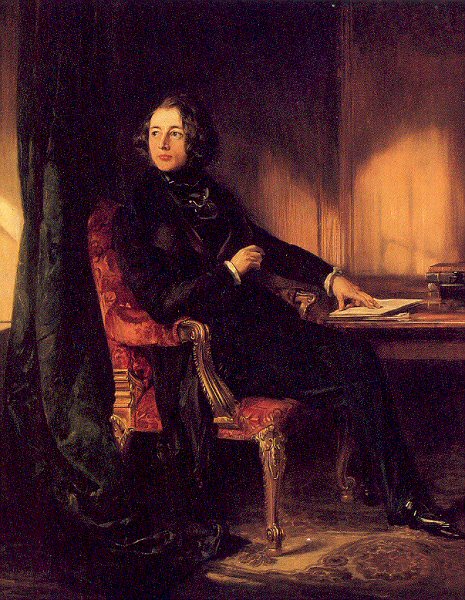
Maclise DickensI will be a bit relieved to be done with David Copperfield and on to North and South, which I know much better, but I do relish the challenge of working up a new novel, and I do think, too, that I should assign it again before too long, because teaching it is definitely a learning experience for me as well as for the students. I like the open-endedness of working through a novel without a strong pre-existing interpretation or set of priorities, but it is also hard to lead a discussion without being entirely committed to a particular direction! The ideal class discussion is a good blend of purpose and freedom: next time I think I will get closer to that.

The other major assignment I had this week was presenting to our graduate students’ professionalization seminar, something I also did last year (which prompted this post on whether graduate students should blog). I think it went fine! I have lots to say, and there was plenty of discussion and, as far as I could tell, interest. One thing I found myself stressing that I don’t remember feeling as strongly about last year was that there is exciting literate life outside the academy. My understanding is that the majority of our current cohort of MA students are not heading into PhD programs, and of course PhD students too need to be thinking about non- or alt-academic routes. Lately I have heard from quite a lot of students that they think about doing at least an MA because they want to continue the serious discussion of literature that they have enjoyed as undergraduates. So a new part of my “thinking of going to grad school?” talk is “but you don’t have to be in school to do that”! I don’t think I would have really understood that myself, despite having grown up among passionate readers, if it weren’t for the time I’ve spent among bloggers and reviewers in the last few years.

The Reader as Writer: Giraldi and His Gratuitous Grumblings

giraldiI don’t teach creative writing classes or attend MFA workshops or writers’ conferences, so I have no first-hand experience of the lamentable species William Giraldi is so annoyed about in his recent essay at the Los Angeles Review of Books: wannabe writers with “no usable knowledge of literary tradition [who] are mostly mere weekend readers of in-vogue books.” For all I know, his generalizations are entirely accurate, and speaking as someone who will almost certainly never write any novels but certainly does love reading them, it does seem wrong to assume (if anyone does assume this) that “writing doesn’t demand special skills” and right to urge (or even demand, if you’re in a position to) that aspiring authors read both widely and deeply.

I’m not quite so sure that I would second Giraldi’s specific prescription, however: “decades [of] training … in canonical literature” and “an unflagging religious immersion in the great books.” As Giraldi’s own examples show, there has always been disagreement about which books are “great” or what literature is or should be “canonical.” He is confident that Henry James underestimated Middlemarch (and I, obviously, concur entirely), and it’s obvious to him that the key to writing “the next great social novel” is to study “Stendhal, James, and Austen’s half-dozen” and that Keats represents “the perfection of craft.”  But these are evaluative claims to be debated, not absolutes to be declared. Moreover, the ideal of the “important writer” as one who “kneels at the altar of literature” has its conservative as well as its elevating aspect. That the many names he drops are so predictable seems to me a symptom of the limits of his own approach: he’s so much a product of his own canonical literary education (as, of course, we all are) that it doesn’t occur to him to mention Scott, Pope, or Elizabeth Barrett Browning, or to mention Elizabeth Gaskell or Winifred Holtby as great social novelists. Which is fine in a way, as of course he can’t mention everybody, but he also should not imply that we all know just what books really deserve our attention.  And this is all before we even get into the discussion about whether someone aspiring to write about contemporary society might not learn something from the novels of Jodi Picoult. Giraldi apparently reads Jeffrey Eugenides without regret (at any rate, he quotes from The Marriage Plot): who is he to turn his nose up at other people’s choices? (And if people want to write like Dan Brown, well, neither Giraldi nor I will buy their books, but not all bestsellers are “lobotomized,” and before we conflate “popular” and “worthless” let’s pause to think about Dickens for a moment.)

Still, I think that discussions about which books we value and why are important ones to have. I feel fortunate to have had some very stimulating conversations about this kind of thing here at Novel Readings, usually to my own edification. Giraldi’s tone strongly suggests he isn’t interested in having a conversation – his piece is a polemic. However, it does quite rightly, if only implicitly, challenge us to think about how far we agree with him, who we might rather, or also, cite, and what we think books are for anyway. That’s all good, then. The bone I really want to pick with him is about something else – something tangential, it seems to me, to his main purpose, and gratuitously insulting to a lot of people who actually share his evident passion for reading and writing about literature.

You see, among his litany of complaints about “troubled twenty-somethings who have been bamboozled by second-raters such as Jack Kerouac and Charles Bukowski and have arrived to molest you with spontaneous prose which ought to remain incarcerated inside their diaries” (see, I told you it was a polemic!) he includes swipes at things I do have first-hand experience of and indeed invest a good deal of my own time and energy on: blogs and “‘literary’ websites” (his ‘scare quotes’). “The abracadabra of the internet,” he explains,

 has transformed us into a society of berserk scribblers; now anyone can have a public voice and spew his middling stories and thoughts at will. Forget that blog is just one letter away from bog, or that the passel of burgeoning “literary” websites is largely a harvest of inanity with only the most tenuous hold on actual literature. Our capacity for untamed, ceaseless communication has convinced us that we have something priceless to say.

Seriously, William: why did you have to go there? The whole ‘bloggers are ruining everything’ trope is so old, for one thing (see, just for instance, here, here, and here). If the best you have to bring to this particular game is “blog is just one letter away from bog,” it’s actually hard to know how to respond – some old line about “what’s in a name” comes to mind. But of course it’s easier to spew hasty generalizations than to explore the literary blogosphere with an open mind and rejoice that so many people care enough about books to write about them (or to write their own). Sure, some book blogs are middling or worse, but I have always found the same to be true of an awful lot of more formally published writing in forms ranging from peer-reviewed academic journals to the pages of mainstream newspapers. For range, originality, and enthusiasm, blogs can’t be beat: if you want to read about something more than “in-vogue books,” you’re much better off exploring some of the sites on my blogroll, for instance, than reading the New York Times Book Review, and if you enjoy hearing from different voices and getting surprised by what you read, well, you’re better off reading a lot of those “literary” websites than New York Review of Books. Further, as an editor at one of those literary websites (and I’ll abandon those condescending scare quotes now!), I feel pretty good about our “hold on actual literature,” and I feel very proud of what we accomplish every month with no resources but our own deep commitment to just what Giraldi claims to be defending — that is, the art of taking literature seriously.

Don’t get me wrong: I’m not countering Giraldi’s sweeping dismissal with a blanket endorsement. The challenge of the internet, as I’ve often said, is filtering. But it’s not an impossible task, and I genuinely believe it is a worthwhile one. I just wish more professional critics would not just follow Daniel Mendelsohn’s lead and acknowledge the presence of “serious longform review-essays by deeply committed lit bloggers” but also curate blogrolls of their own. And since it seems that Giraldi exempts the Los Angeles Review of Books from his indictment of online inanity (else why publish in it?), wouldn’t it do more for the cause of literature to find and encourage and promote other sites (or at least individual pieces) that live up to his standards, instead of ranting about kids these days and their dang computers?

LARBI actually hesitated to write any kind of response to Giraldi. When I mentioned his essay on Twitter, a wise friend counselled me to “skip it, not worth the stress!” And in some ways he was right. Whenever someone goes off on an anti-blogging, anti-internet rant on the internet, you know you’re being trolled, and “don’t feed the trolls” is almost as important an online rule as “don’t read the comments” (though happily that last rule mostly doesn’t apply in my corner of the blogosphere, where the comments make the whole exercise worthwhile!). Giraldi has just enough qualifiers (“largely a harvest of inanity”), too, that he can shield himself from the fall-out (“hey, I didn’t mean you guys! some of my best friends are bloggers / run ‘literary’ websites!”).

But I guess I’m just a slow learner. I don’t see why things have to be this way: I don’t see why slagging off about bloggers has to be part of anybody’s defense of criticism or literature, or why people who should know better insist on conflating form (or platform) with content…except that it’s more work to draw finer distinctions. Giraldi has said this kind of thing before (worse, really):

If you’ve ever attempted to read a review on Amazon or on someone’s personal blog, you know it’s identical to seeking relationship advice on the wall of a public restroom.

The bottom line is that I don’t think he should be able to get away with it. Frankly, I don’t think his editors should let it go by either: though I’m sure they appreciate the link-bait, they might keep in mind that some of their other contributors write “personal blogs” — or, to take it less personally, they might at least insist on some specifics and some qualifying nuances. I happen to agree with Giraldi’s summary of a critic’s ideal credentials: “the assertion of an aesthetic and moral sensibility wedded to a deep erudition.” He just needs to stop belligerently proclaiming that these qualities aren’t to be found “on the Net.” He needn’t become one of the “online coddlers” he so despises, but there’s no special virtue in being sloppily vitriolic either.  He could at least take his own advice and read widely before writing.

Blogging: Accept No Substitutes!

Lady (Waterhouse)Some time ago (two years, to be precise — where does the time go?!), I wrote a testy post about some things Leonard Cassuto said about blogging in an online discussion about academic publishing. One of my chief complaints was that he threw “a veil of pragmatism” over “an argument for accepting (even reinforcing) the status quo”:
Yes, it’s true: there is a “prestige deficit.” But I would have expected a discussion about ways the digital age is changing academic publishing to at least evaluate, if not actually challenge, that normative thinking. . . . We might also consider whether there are other goals in academic publishing (particularly related to work in progress or collaboration) or other values (such as open access) that are better served by non-traditional forms including blogging.

“Nobody that I know of,” I went on to say, “is trying to argue that blogging in general, or even particular highly scholarly blogs, should replace traditional publications.” As far as I’m concerned, the question should always be what forms of publication best serve the multiple goals and interests that motivate us to write and publish in the first place. These are diverse, and so too, I think should be our styles and outlets.

Plus ça change… The debate about what place, if any, blogging has in academic publishing not only continues but continues to stress the is over the ought.  A post this weekend at ‘dagblog’ explained the way things are:

You can’t blog your way to a tenure-track professorship. You simply can’t. Even a gig at IHE orThe Chronicle for Higher Education is not enough. That doesn’t mean blogging is not professionally useful to you. It means you need to be clear about what it’s useful for.

Blogging and other social media serve academics by bringing you to other people’s attention and building your professional network. It works largely as publicity for your other work, and it widens your potential audience while strengthening your connections. . . .

 What blogging never does is substitute for other academic writing. It doesn’t get counted as scholarship. It does not serve as an employment credential. (If you wish to argue that it should, I can’t help you. I’m interested in describing what is, not what ought to be…)

I don’t altogether disagree with this as a statement of how things are. In fact, I made similar points in my own post “Should Graduate Students Blog?“:

it would be naive to ignore that blogging (for some good and some bad reasons) is not yet widely recognized as a legitimate form of academic publishing and that the case for it as productive academic work at all remains a difficult one to make. Graduate students aspiring to tenure-track positions hardly need to be told that for most hiring committees, the crucial measure of their competitiveness as candidates will be the number of conventional peer-reviewed scholarly publications on their c.v.–and the more prestigious the venue, the better.

I also said, however, that

blogging is increasingly acknowledged as having a place in the overall ecology of academic scholarship. Graduate students who choose to blog should by now be able to make a thoughtful and well-supported case for the value of that effort as part of their overall scholarly portfolio.

Notice that I do not say that it “substitutes” for other academic writing but that it has a place alongside what we have for some time (but not for-absolutely-ever) seen as the only legitimate (that is, countable for hiring / tenure / promotion) forms of academic writing.

I strongly believe this, and I have some local evidence that such a view is taking hold: the recently developed Tenure & Promotion guidelines in my own Faculty of Arts and Social Sciences include, under the heading “Indicators of Academic Research and Scholarship” (and right after “peer-reviewed publications or performances)”,  “Other forms of publication or public performance, peer-reviewed or otherwise, in venues such as blogs, policy publications, public concerts, etc.” I don’t know if acknowledging that this is a pretty significant change sounds like the kind of “blog triumphalism” dismissed as passé in the dagblog comments thread — but it certainly seems significant to me.

But this is still focusing on the is, rather than the ought. Is acknowledging blogging as a valuable supplement to other kinds of academic writing and publishing as far as we ought to go? As Ted Underwood notes in his comment at dagblog, “blog is a baggy category.” So too, I’d add, is “academic writing,” which comes in many flavors even within any given discipline. Of most interest to me is, of course, my own discipline, in which the bulk of academic writing falls into the extremely baggy category “literary criticism.”

After reading the dagblog article on the weekend, I tweeted, “If your job is criticism and you write criticism on your blog, why doesn’t that “substitute” for academic writing?” In response, Miriam Burstein asked, “Is it really equivalent, though? I think of much blogged crit as being, at best, like a highly-polished 1st draft…Something that may take 3-5 days is a “long” composition time for a blog, as opposed to 2-3 mos. for an article.” I agree that these two kinds of publication are not the same thing. As far as that goes, if by “substitution” we mean “replacing with something that’s exactly the same,” then OK, we’re done.  But I would also say, as I replied to Miriam on Twitter, that a blog post is not the same as a blog, which over time is more than the sum of its individual parts. It’s blogging, not (usually) writing one blog post, that I would argue could be defended as an academic contribution. I would certainly support Miriam’s blog on these grounds! (Notice my careful qualifiers here: I’m sure we can all imagine and may even have seen a blog post that is every bit as substantial and lasting as a conventionally published article, as well as a blog that for whatever reasons is simply not a convincing part of an academic’s portfolio.)

I would say too that the differences between blog posts and academic articles are not all to the disadvantage of the former. And I would say that for literary critics, at least in some ways or some cases, the difference in kind is not as great as all that — not as great as it might be in other fields. It depends, for one thing, on what kind of literary criticism we’re talking about. In the dagblog post,  the author suggests that

the distinction [between blogging and scholarship] doesn’t pose a problem to science bloggers, or to most social scientists or historians, where the difference between a journal article and a blog essay is usually self-evident. But it can be tricky for people who work in literature or cultural studies, who can be tempted to blur the distinction between writing scholarship about new media and doing other writing on new media platforms.

That makes us literary types sound kind of clueless! (I admit, however, there’s some justice in that comment, as I have more than once explained to my own colleagues that no, writing literary criticism online does not mean I’m doing “digital humanities.”) I’d actually like to suggest, though, that, setting aside that kind of confusion between content and form, “the difference between a journal article and a blog essay”  is not entirely self-evident when we’re talking about literary criticism, and that’s precisely because literary criticism is not a science or a social science. Our preoccupation with publishing in peer-reviewed academic journals reflects some anxiety on our part about that: it’s a kind of scientism that has been beneficial in making some aspects of literary scholarship more rigorous and accountable, more historically attentive, and more theoretically sophisticated, but that has also shaped our profession and our professional lives in occasionally disheartening ways. To be taken seriously, we know we have to look serious, which means avoiding at all costs what was scathingly described (by a peer reviewer of my one and only — and of course unsuccessful — SSHRC application) as “the whiff of belles-lettres.” Bonnard The Letter

There are kinds of literary research and scholarship that have a lot in common with history and the social sciences, or that are so well insulated with theoretical implications that no such unsavory whiff could possibly be detected. But a lot of what literary academics do is not so much produce new knowledge as pursue new understandings of, or ways of understanding, literary texts. Careful close readings lie at the heart of many more elaborate scholarly projects. It is certainly possible to do this kind (or this part) of criticism in an open, accessible way, without the specialized language and complex apparatus of argumentation and citation that differentiate academic from non-academic versions of it. Academic training can be hugely beneficial for this enterprise, but such training need not be conspicuous to be effective. We are experts at reading literature in interesting ways and articulating those readings — that’s what we do. What difference does it really make where we do it? Why should we value it, or consider it “professional writing,” only if we do it in a style and form that severely limits the audience for it and the conversation we can have about it?

Where is the self-evident line, then, between the interpretations of novels we find in academic essays and the interpretations of novels we can find on blogs — besides (again) some specialized vocabulary and a lot more footnotes? In both cases we can and should look closely at the quality (the intelligence, the care, the subtlety, the persuasiveness) of the interpretation, but I would argue that there is a fundamental similarity in the activity represented that — while (to reiterate) it does not mean the final products are exactly the same — is at least as important as any differences. It really is the same kind of thing, just done under different circumstances, for different audiences. 

The author of the dagblog post adds in the comments a statement that seems to shift from description to prescription: “blogs are really not good vehicles for academic or professional writing.” Well, again there’s the bagginess problem that makes any such big generalizations about blogs imperfect. But besides that, what I object to is the implication that academic writing really can’t be done in other forms or venues, or that it’s the form or venue, not the content or purpose, that defines “academic or professional writing.” That may be true pragmatically, and in some disciplines it may be necessarily true (I’ll let scholars in those fields hash this out), but at least for literary folks, I think a case can be made that, as literary criticism is our profession, any time we engage in it we are doing professional writing. The desire to draw a firm line between what we do in academic journals and what we do elsewhere seems to me more reflective of our desire to defend ‘professing English’ as a profession than with any really principled or inevitable difference between the two. And, again, the results of that effort have not been altogether salutary, for criticism or for our profession.

jameswoodHere’s another way to think about the academic / non-academic divide. James Wood has done (as far as I’m aware) no conventional academic publishing (including How Fiction Works, which, however interesting and thought-provoking, is not really scholarly). However, he holds an academic appointment: he is the Professor of the Practice of Literary Criticism in Harvard’s English Department. Sure, it’s Harvard and he’s James Wood — but can’t we take away from this high-profile blurring of the boundaries between the academic and the non-academic critical worlds some support for other critics, at least as qualified as Wood, to practise criticism in other ways and other places than scholarly journals? And if we can make that concession, why not accept blogs as one perfectly good place for some of that work? Aren’t there even advantages to making the academy more porous, to engaging more personally and, yes, casually, with the rest of the world? It’s not as if academics are the only ones interested in literature, after all. In Canada we have been hearing a lot about ‘knowledge mobilization‘: if some of the value of conventional peer-reviewed publications is precisely their stability, the value of blogs could be said to be their mobility, their flexibility, and, in their own way, their accountability — because after all, there they are, open for anyone to read and argue with. Their basic model is coduction – again, not a scientific model, but one supremely well suited to the ongoing process that is criticism.

I understand the pragmatic issues, but if we think there is both intellectual and professional value in changing the norms of our profession, we have to keep making the argument, not shrugging our shoulders and reiterating the status quo. As I said in a further back-and-forth with Cassuto, this is a job for “senior, ‘established,’ faculty” above all:

we are the ones in a position to encourage alternative models of productivity and scholarship, and if blogging is valuable to me in the ways I described, there would be real hypocrisy in my case if I didn’t consider it valuable work for people at earlier stages of their careers and work to recognize it as such when they do it.

 I don’t know how much my own advocacy affected my faculty’s new T&P guidelines: I wasn’t on the committee and made no direct submission to it. But I have given three presentations at Dalhousie on blogging and academic publishing, including at a faculty research retreat, and I’ve been including my blog on my c.v. and a statement on blogging in my annual report for six years now. So I’m doing my best to walk the walk.

What matters to me most, though, is that I continue to practice literary criticism, including on my blog. That’s what I trained for, after all. I’ve made conventional academic contributions to my field, and that specialized work informs all the other writing I do. Blogging, though, is where I have the most fun with that expertise, and make it the most freely available. My scholarly articles and books are, I hope, good of their kind — but they are no substitute for Novel Readings!

Update: a shortened version of this post ran on the LSE Impact blog.

Should Graduate Students Blog?

blogger-logoOn Thursday I’m speaking to our graduate students’ “professionalization” seminar about academic uses of social media, particularly blogging. I’ve given related talks a few times now, but this is the first time I will have led a session about blogging specifically for an audience of graduate students, for whom some of the issues I typically address have somewhat different implications. Thinking about this, I was reminded that last spring Leonard Cassuto (with whom I had a couple of initially testy but ultimately amicable exchanges about the place and value of academic blogging) asked me for my thoughts about whether graduate students should blog. He was working up a piece for the Chronicle of Higher Education on the question that, as far as I know, never ended up in final form — at any rate, I didn’t see it, and he never got back to me to ‘preview’ his use of any quotations from my reply, which he had promised to do. I thought I might as well “repurpose” the response I sent him, as I had taken some pains over it, so here it is, lightly updated. I’d be very interested in any responses, qualifications, objections, or counter-arguments, not least because they will help me refresh my own thinking about this as I head into Thursday’s seminar.

Should Graduate Students Blog?

Should graduate students blog? That’s a tricky question with at least two important aspects to it. One is whether graduate students should blog with the specific aim of advancing their professional academic careers (that is, improving their chances of getting tenure-track work). Another is whether they should blog for its intrinsic benefits.

These are not, of course, entirely separate questions: some of the things that can be gained from blogging (greater ease and confidence in writing, experience with the give-and-take of post-publication peer review, connections with other people in your field but also with a wider audience, a sense of purpose and accomplishment, freedom to experiment with topics and with voice) can contribute to professional success by making better scholars, teachers, and intellectuals of us all. It can also inculcate work habits conducive to producing more conventional publications: regular bloggers can all testify to the ever-present awareness that the blog needs to be fed!

But it would be naive to ignore that blogging (for some good and some bad reasons) is not yet widely recognized as a legitimate form of academic publishing and that the case for it as productive academic work at all remains a difficult one to make. Graduate students aspiring to tenure-track positions hardly need to be told that for most hiring committees, the crucial measure of their competitiveness as candidates will be the number of conventional peer-reviewed scholarly publications on their c.v.–and the more prestigious the venue, the better. Though blogging one’s research projects can be a useful stage en route to achieving those conventional publications, or even to finishing the dissertation (Scott Kaufman’s Acephalous blog was once the place to look to see this in action!), in itself it is not the same thing and will almost certainly not be valued in the same way. And maintaining a good blog takes time–not necessarily or exactly time away from that kind of clearly marketable scholarly work and publication, but time that might be better used to focus directly on finishing that thesis and getting those lines for your c.v. There are definitely risks involved, then, in deciding to blog.

That said, blogging is increasingly acknowledged as having a place in the overall ecology of academic scholarship. Graduate students who choose to blog should by now be able to make a thoughtful and well-supported case for the value of that effort as part of their overall scholarly portfolio. I think a crucial point is that this case needs to be backed up by faculty members who can explain, to their colleagues and to administrators, the role blogging can play in developing original scholarship as well as in knowledge dissemination and outreach. Those of us who have used the protection of tenure, for instance, to experiment ourselves with alternative modes of writing and publishing need to be advocates for graduate students who take the risk of doing less conventional kinds of work. (See, for instance, Kathleen Fitzpatrick’s piece on supporting students working in Digital Humanities, which is not the same thing as blogging but raises many similar issues, including how such non-traditional work can be recorded and evaluated).

There’s one more angle that’s maybe worth considering: with tenure-track positions so rare, graduate students may look at blogging, not just as an activity related (however equivocally) to their potential academic careers, but as one way of turning their skills and knowledge outward from the academy. Though this can hardly be counted on, blogging can help someone establish an identity and a following that might create new kinds of opportunities–in online journalism, for instance, or in other ways not strictly imagined at the outset. Again, there are risks in investing time and effort in something without a clear professional pay-off, but just what that profession or pay-off might be should certainly no longer be defined in solely academic terms. Aaron Bady, proprietor of the blog zunguzungu and one of my former colleagues at The Valve, comes to mind as a good example of someone who has established a significant online presence.

So, do I think graduate students should blog? I do think they should consider it, because I know from my own experience how intellectually beneficial blogging is and how it creates contacts and opportunities. It would be hypocritical of me to recommend against graduate students engaging in work I believe to be good for us and for our profession. But I think they need to be aware that as far as I can tell, my view remains a minority one, and they should think carefully about how they manage their time and about what kind of blog, if any, might serve them best. Defining a niche, for instance, might be important; collaborating in a group blog might be a way to spread the work around (see, for instance, The Floating Academy, whose contributors would be good people to ask about blogging — I’d be happy if they weighed in here). If graduate students do decide to blog, I think they should be ready to explain clearly how doing so contributes to their professional development and to the advancement of understanding in their field, and I think we should listen to them and find a responsible way to evaluate the value of the work they’re doing. (Blogs are just a form, after all; their value and impact depend on how that form is used, on what it is used for. We should be well past the point of generalizing about blogging as such.)

I certainly don’t think we (t-t faculty, administrators) should expect or demand that graduate students blog, at least not until we’ve normalized giving professional credit for blogging: that just adds one more thing to the already daunting set of expectations they labor under.

What do you think?