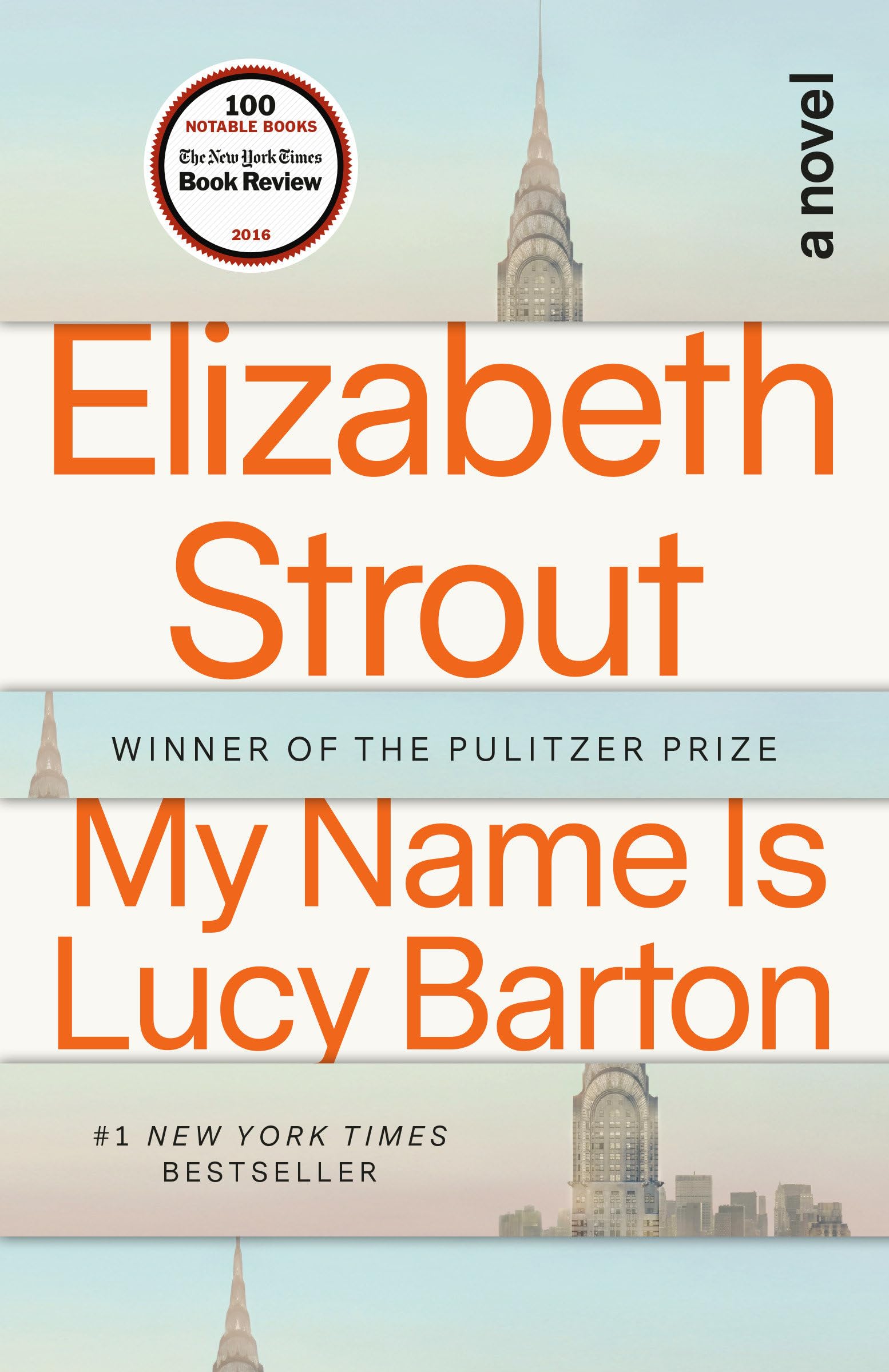
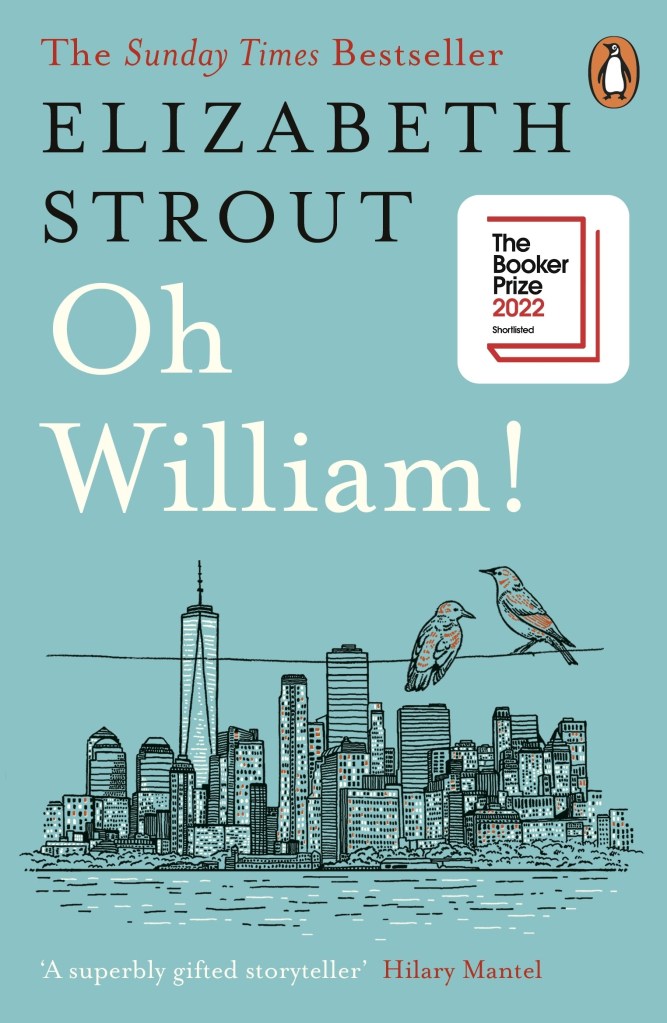
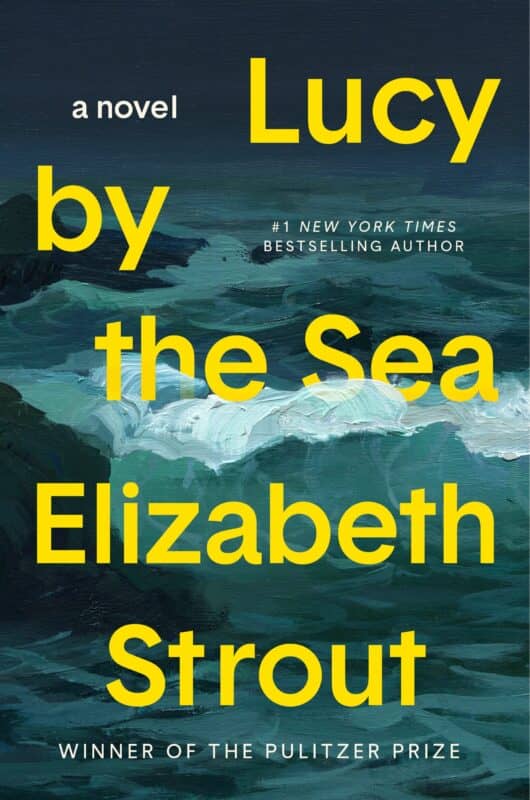
As I’m going to be reviewing Elizabeth Strout’s new novel, I thought it would be a good idea to revisit some of her earlier fiction, so I went to the library and signed out a stack. I remembered not having altogether liked My Name is Lucy Barton when I read it before, but you never know: it might have just been the wrong time. I honestly could not remember if I’d read Oh William! or Lucy by the Sea–and in fact I am still not sure. They did both seem familiar in spots, but I have no record of reading them here on the blog. That is not as definitive, as there have been gaps in both my posting and my memory over the past few years! Maybe I started and abandoned them, or read them in such a desultory spirit that they didn’t stick.
I still didn’t love My Name is Lucy Barton. There are things about it I liked the first time and still liked, but the flatly intrusive narrative voice irritated me, and this continued to be my reaction through both Oh William! and Lucy By the Sea. Our response to this series relies heavily on our reactions to Lucy herself, I expect, and for me her character remained too elusive, too remote, despite being the one doing all the talking. After three novels, I feel I know a lot of details about her life and about her verbal (narrative) tics, but I still have little sense of her as a person. At one point her ex-husband William describes her as “joyful” and I was surprised: I had no such impression of her. How can a first-person narrator be so vaporous? It is surely deliberate (Olive Kitteredge, by comparison, is a conspicuously forceful presence), but to what end?
Lucy By the Sea made both the best and the worst impression on me this time. I appreciated (though I didn’t really enjoy) its evocation of the surreal qualities of lockdown, its reminders of the distancing protocols and other precautions we adopted and adapted and (mostly) eventually have abandoned. (Many stores here still have markers on their floors asking people to keep 6 feet apart; they are worn and faded and, of course, completely ignored now.) I remember very well the overwhelming proximity of two people always together in the same house, the development of new routines to vary the monotonous days, the wariness of having or being visitors, the anxieties of getting groceries–it all feels so close and so far away at the same time. But Lucy’s narrative interruptions–not quite metafictional, never at all revelatory–kept pulling me away. Then the novel’s conclusion–that “we are all in lockdown, all the time. We just don’t know it, that’s all”–felt forced to me. Let us get there on our own, was my reaction. I think we would have, just as I think I would have liked all three novels a lot more if Strout had made Lucy less self-conscious.
I have Tell Me Everything out as well now and I’m not really that motivated to read it, although it does bring Lucy together with Olive, which might give it more energy than the others. Strout’s new book is a stand-alone novel, so my ambivalence about the Lucy books doesn’t (necessarily) foretell my reaction to it!
 Novel Readings
Oh, I can relate to this! There are legions of fans out there and Strout is always being nominated for prizes for this never-ending series, but I cannot see what the fuss is about.
LikeLike
They seem like just the kind of novels I would love and yet. I did like Olive Kitteredge though.
LikeLiked by 1 person
Yes, and I liked Amy and Isabelle but I can’t remember why. But I have a low tolerance for this kind of Inner Life of a Woman fiction. One or two, every far-apart now and again is enough for me.
LikeLike
Oh goodie, an honest book review. Wowzer! Thank you. I am not a fan either and I thought it was just me being overly picky.
LikeLike
For better and for worse, I am always honest here! And when reviewing more ‘officially’ too. I don’t see the point, otherwise.
I don’t think you are being overly picky! I believe other people are also being honest when they are enthusiastic about her, but it takes all kinds. 🙂
LikeLiked by 1 person
If only getting Lucy together with Olive had livened her up! I didn’t think so when I read Tell Me Everything.
LikeLike
Ah, OK. I think I will just take it back to the library! (This is a good boost to my resolve to borrow rather than buy more often this year – with the rising price of books, I resent being disappointed in them more than I used to.)
LikeLiked by 1 person
Gotta say, you’re not making me want to read these books, which I’d been mildly curious about.
LikeLike
Well of course YMMV, but for my money anyway other writers in this sort of vein are better – Carol Shields, Anne Tyler for instance.
LikeLiked by 1 person
Tyler in particular is someone I’ve been wanting to read.
LikeLike
My favorites are among her earlier ones – I am especially fond of Ladder of Years.
LikeLiked by 1 person
Making a note!
LikeLike
Strout’s Lucy novels have never worked for me, either. They do rely so heavily on our reactions to Lucy, and I just don’t like her – I find her scatterbrained and fey, which may be another way of saying “elusive”, as you do. The Olive novels have always worked for me, on the other hand. I haven’t tried anything else by Strout but some of her earlier novels feature neither character (Abide With Me and The Burgess Boys, in particular), so I’m reasonably interested in trying one to see where they fall.
LikeLike
“Fey” is an interesting term: I think we are both struggling with the sense that she is just not fully realized for us. Fey suggests that is an aspect of her character, and maybe that is Strout’s idea – that Lucy is more present in her fiction Thani n her life or something like that.
LikeLike
I think that is Strout’s intention, but it strikes me as a huge authorial gamble (and clearly one that hasn’t paid off in the case of either of us!)
LikeLike
I recently read Tell me Everything and to my surprise, enjoyed it.
I think it was the raw humanity revealed in those lives perhaps the ordinary tragedies in them. Started Olive Kittridge, who is such an interesting, miserable beggar, but well developed by Strout. Haven’t read others but may get back to them sometime… haven’t given up.
LikeLike